American Guerrilla Marketing
Nationwide Service
Media planning, media buying, billboard advertising, & guerrilla marketing
Flyposting in San Juan, planned around the placement
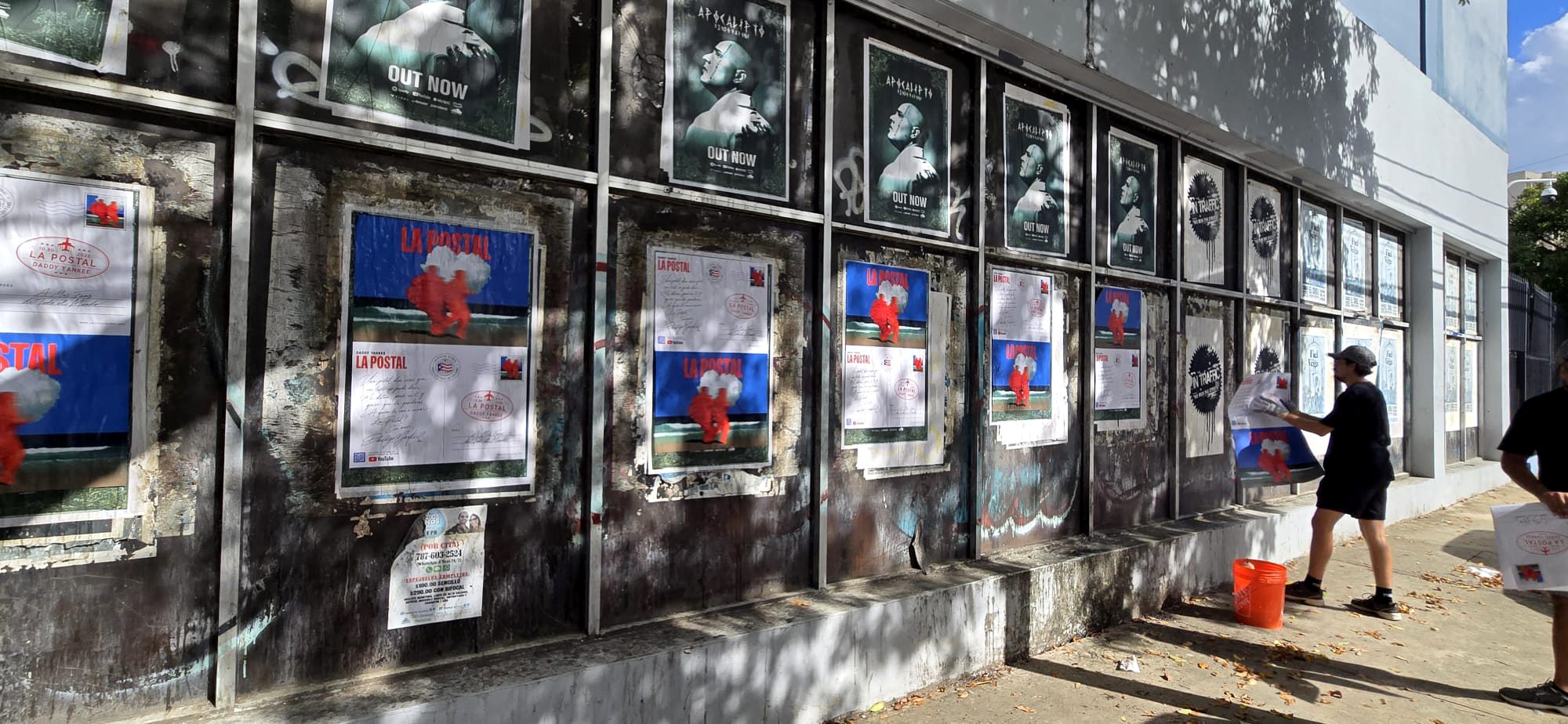
In San Juan, the campaign plan has to work on the wall as well as on the map. Humidity, rain, heat, the artwork’s orientation and the surface itself can all affect which placements are suitable. We coordinate flyposting campaigns around the audience you need to reach, the authorized locations available for your dates and the practical details that should be settled before printing.
Our San Juan work can include audience and district planning, local print coordination, site scouting, installation and placement reporting. Start with your campaign goal, dates, artwork and target areas. We will assess the format against candidate locations, confirm what permissions or approvals are needed, and set out the proposed scope before production begins.
That local planning matters most when a campaign uses a distinctive creative. A landscape design, for example, needs a wider uninterrupted surface than a portrait sheet. The right size is the one that fits an approved location and keeps the message legible at street level—not simply the largest sheet that can be printed.
Plan a flyposting campaign in San Juan
Send your target areas, campaign dates, artwork, orientation and estimated quantity. We’ll review the brief against available approved placements and local production requirements, then share a proposed scope and quote.
What A San Juan Flyposting Campaign Can Include
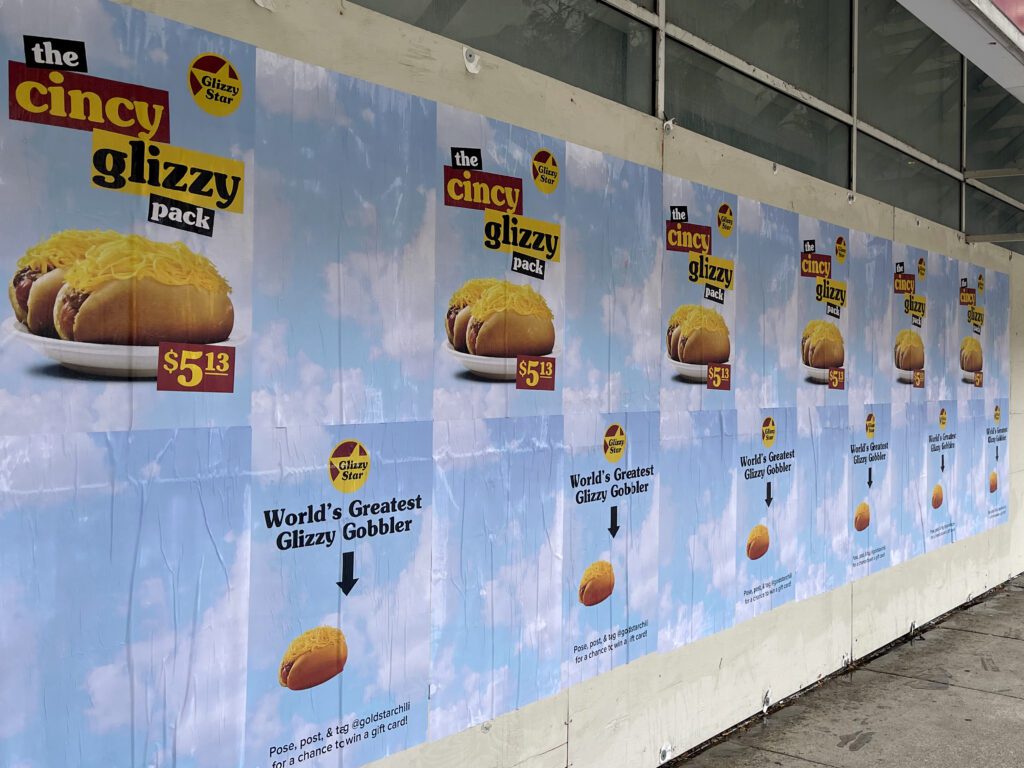
Flyposting—also called wheatpasting or street poster advertising in many campaign briefs—places repeated paper artwork on approved surfaces or booked display inventory. It gives a campaign a street-level presence within selected areas. It is different from buying a fixed billboard or a digital shelter panel, where the format, site, dates and display specifications are set by the media owner.
We can coordinate the parts of a poster campaign as a single brief: district recommendations, placement scouting, artwork and format checks, local production, installation, and agreed photo or location reporting. The proposal should specify the installation scope, the permission basis for each placement type, what documentation is included and when it will be delivered.
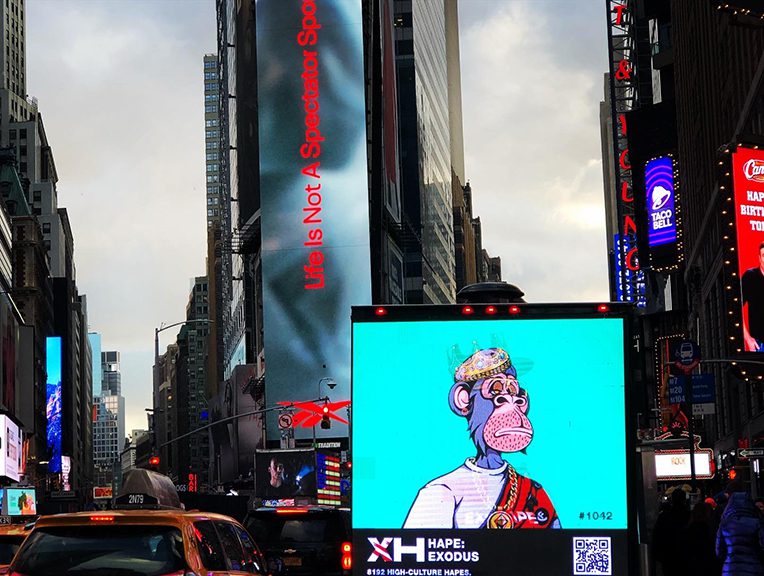
San Juan has established fixed and digital outdoor inventory. A provider such as Streetview Media promotes static and digital bus-shelter formats across the metropolitan area. Those options may suit a brief seeking booked transit placements; a flyposting plan is considered separately and should not imply access to public property or another owner’s surface.
San Juan Poster Sizes And Artwork Formats
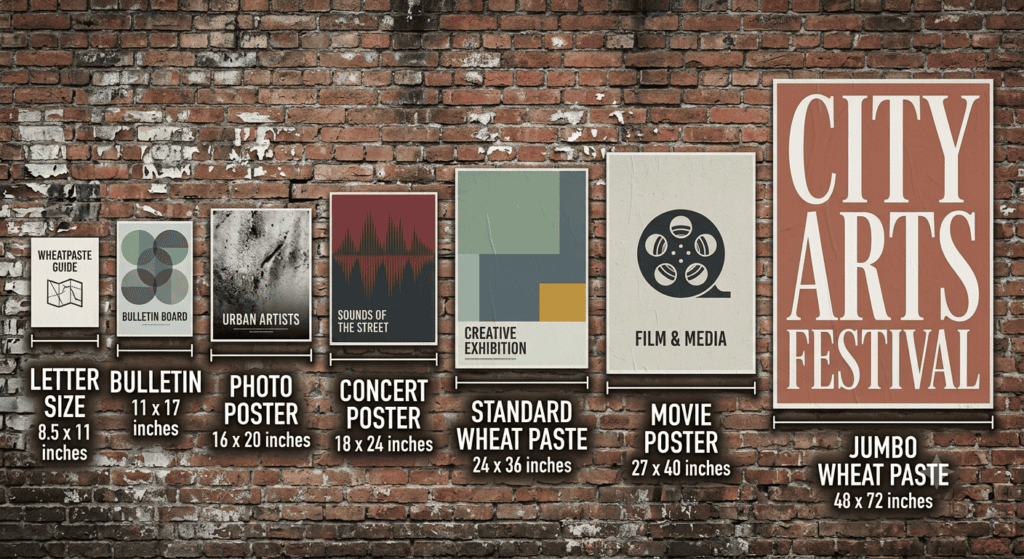
San Juan campaigns can use a range of street-level poster and snipe formats depending on the creative, targeted neighborhoods, available surfaces and overall campaign scale. Building artwork directly to the selected production size helps preserve the intended proportions and gives the field team more flexibility when creating individual placements, repeated clusters and larger-format executions.
Before artwork is released for printing, dimensions, orientation, bleed, resolution and overall layout should be checked against the selected format. Smaller formats are useful for creating frequency throughout targeted areas, while larger posters provide greater visibility where appropriate surfaces are available.
| Format | Millimeters | Inches | Where It Fits on the Street |
|---|---|---|---|
| A4 Snipes | 210 × 297 | 8.3 × 11.7 | Compact street-level placements and high-volume, localized campaigns. |
| A3 Snipes | 297 × 420 | 11.7 × 16.5 | Larger street-level placements with greater creative visibility. |
| B2 Posters | 500 × 707 | 19.7 × 27.8 | Narrow wall sections, shutter panels, and clustered poster installations. |
| B1 Posters | 707 × 1,000 | 27.8 × 39.4 | Standard large-format street posters and repeated hero wall installations. |
| 4-Sheet Posters | 1,016 × 1,524 | 40 × 60 | Larger localized placements, construction hoardings, and prominent street-facing surfaces. |
| 6-Sheet Posters | 1,200 × 1,800 | 47.2 × 70.9 | Large-format installations designed for greater visibility along busy pedestrian corridors. |
For campaigns requiring broader saturation, multiple formats can be combined within the same market. A4 and A3 snipes can establish frequency at street level, B1 and B2 posters can create larger repeated clusters, and 4-sheet or 6-sheet posters can provide hero-scale visibility where suitable surfaces are available.
Creative orientation should also be considered early in the planning process. Landscape artwork generally requires a wider uninterrupted surface, while portrait creative provides more flexibility across narrower walls and vertical surfaces. If the creative is already finalized, it should be provided during campaign planning so the field team can account for its proportions when evaluating placement opportunities.
The table should be used as a starting point for production planning. Final formats, quantities and specifications should be confirmed for the approved San Juan campaign before artwork is released for printing.
Choose San Juan Areas By Audience And Approved Inventory
Neighborhood names are useful starting points, not placement guarantees. We assess each candidate area against the audience, campaign objective, available approved surfaces, access and timing. A concentrated route can make more sense than scattering a small quantity across the whole city.
- Santurce and Calle Loíza: Consider for culture, music, dining or nightlife briefs when the specific route and approved display options fit.
- Río Piedras: Assess when the campaign is intended to reach a university-area or local commercial audience.
- Hato Rey: Consider for briefs tied to weekday business activity or nearby commercial routes.
- Condado and Isla Verde: Evaluate when visitor, hospitality or retail audiences matter, while checking the limited suitability of each proposed surface.
- Miramar and Puerta de Tierra: Include only when the route connects to the audience and the placement partner can confirm authorized inventory.
- Old San Juan: Treat as a special review area. Historic-site and municipal requirements can differ; confirm the precise location and approval path before including it.
For every proposed route, ask which entity controls the display, what written permission or booking applies, whether a permit or other approval is needed, and what happens if the location becomes unavailable. A visible wall is not automatically an advertising placement.
Plan installation around weather and surface conditions
Humidity, recent rain, direct sun and the condition of a wall can affect the installation process and how a paper poster behaves. Coastal exposure and heat are relevant factors to assess, but they do not support a guaranteed display life. The crew and print partner should select the material and installation approach for the actual surface and forecast rather than rely on a citywide rule of thumb.
The Atlantic hurricane season officially runs from June 1 through November 30. That is a scheduling consideration, not a prediction that a specific campaign will be disrupted. For dates in this period, agree on a weather contingency and the decision point for rescheduling before production is locked. Check current advisories close to installation.
After an installation, photos document what was completed at that time. If a campaign includes a second wave, the first round’s location notes and observed condition can help inform the next placement list. Any revisit, maintenance or refresh should be explicitly included in the campaign scope.
Our San Juan Flyposting Process
- Share the brief. Tell us the audience, objective, dates, target areas, quantity, artwork status and preferred orientation.
- Assess format and sites. We compare the proposed artwork with available approved display options and identify permissions, access or timing questions.
- Confirm production. The chosen printer or local partner confirms the final template, stock, proof, print schedule and delivery plan.
- Approve the plan. You review the placement types, responsibilities, dates, reporting, weather contingency and quote before the run is authorized.
- Install and document. The local team completes the agreed placements and provides the photography and location records listed in the proposal.
For multi-market campaigns, centralized creative and reporting requirements can be coordinated with local production and installation. The public La Postal case study describes AGM’s work across seven cities, including San Juan, and two installation rounds.
San Juan campaign example: Daddy Yankee’s La Postal
AGM’s published case study describes 100 wheatpaste posters in San Juan during the October rollout for Daddy Yankee’s La Postal, followed by another 100 in November. Across the wider campaign, the team worked in seven cities and coordinated production, scouting, installation and campaign reporting. The example shows how a shared creative can be adapted to each market’s available surfaces and campaign calendar. Read the La Postal campaign case study.
Use this as evidence of a completed campaign, not a promise that every San Juan brief will have the same quantity, sites, timing or reporting arrangement. Those details are set for each project.
San Juan flyposting FAQs
Flyposting is a street-poster campaign format. In US market discussions, it is often called wheatpasting or wild posting. Campaigns may use paper posters on specifically approved surfaces or other booked inventory; the actual display type should be clear in the proposal.
Do not assume that a wall, pole, shelter or public fixture is available for an advertisement. Confirm the property or media owner’s written permission and check the applicable Puerto Rico and San Juan requirements for the proposed format and site. The exact approval route depends on the placement; this service page is not legal advice.
AGM’s La Postal case study documents 24 × 36 inch posters. Other dimensions may be possible, but the printer’s template and the approved location’s measurements should decide the final size. See the table above and send the artwork orientation with your inquiry.
Santurce, Calle Loíza, Río Piedras, Hato Rey, Condado, Isla Verde, Miramar, Puerta de Tierra and Old San Juan can be assessed according to the brief. The available authorized placements and audience objective determine the final route.
The Atlantic season runs June 1–November 30. Campaigns can be planned year-round, but dates during the season should include an agreed weather contingency and a final forecast check. A specific delay or display duration cannot be guaranteed.
Reporting is agreed in the proposal and may include installation photographs and a placement list or location records. Confirm whether GPS data, daylight checks, follow-up visits or refreshes are included, as these are separate deliverables.
Yes, a second round can be scoped where timing, approved inventory and campaign goals support it. The first wave’s placement records can inform the next plan; any reinstallation or maintenance is agreed in advance.
Our Campaign Locations
Browse All States
Explore Fly Posting Advertising opportunities across the United States.
49 States • 192 Cities