American Guerrilla Marketing
Nationwide Service
Media planning, media buying, billboard advertising, & guerrilla marketing
From the Indianapolis Motor Speedway to Big Ten university corridors, AGM executes fly posting and wheatpasting campaigns across Indiana’s most powerful pedestrian markets — with in-house installation crews, GPS-documented reporting, and zero subcontractors involved in production or placement.
Indiana occupies a distinct position in the national fly posting landscape — a state whose advertising potential is defined not by corporate density or fashion-industry pedestrian corridors, but by something more powerful: event-driven foot traffic that concentrates hundreds of thousands of visitors into defined geographic zones at predictable points throughout the year. The Indianapolis 500 alone stands as the highest single-day attendance sporting event on earth, flooding the capital city with an out-of-state audience composition that no digital campaign can reach from a couch. These visitors are here, they’re on the streets, and wheat paste poster campaigns are one of the few advertising formats that reaches them at eye level in the neighborhoods where they eat, drink, and explore the city.
Beyond the motorsport anchor, Indiana’s street advertising market is sustained by a statewide university system that generates reliable year-round pedestrian density across major population centers. Indiana University Bloomington, Purdue University in West Lafayette, Notre Dame in South Bend, Ball State in Muncie, and IUPUI in Indianapolis collectively enroll more than 175,000 students — a consumer base that has historically responded to street-level marketing at rates that outpace digital display in comparable demographic segments. When a well-placed wheat paste poster appears on a campus-edge corridor on a Tuesday afternoon, it reaches the same student body that social advertising competes with algorithmically but street posters reach physically, at zero skip rate, in the pedestrian environment where attention is actually available.
Indiana’s cities have also developed distinct neighborhood characters that matter for campaign targeting. Indianapolis has a mature arts district along Mass Avenue, a counterculture hub in Fountain Square, and a college-adjacent entertainment scene in Broad Ripple. Fort Wayne has transformed a decommissioned industrial site into the Electric Works creative campus, which has concentrated the city’s entire creative professional class into a walkable, event-rich geography. Evansville built its identity as a regional entertainment hub around the Franklin Street bar and music corridor, drawing audiences from across the Ohio River. South Bend is mid-renaissance, with downtown infrastructure investment creating new pedestrian zones in corridors that were dormant a decade ago. Each of these conditions creates specific fly posting opportunities that reward market-specific knowledge and strategic neighborhood selection over generic Midwestern assumptions.
American Guerrilla Marketing brings both national execution infrastructure and Indiana-specific market knowledge to campaigns here. The result is street poster advertising that connects to the state’s real advertising rhythms — tied to motorsport windows, university calendars, live event programming, and the neighborhood-level demographic patterns that differentiate one Indiana city from the next.
AGM executes fly posting and wheatpasting campaigns across Indianapolis, Fort Wayne, Evansville, and South Bend with in-house crews, GPS-documented reporting, and the event-window expertise that Indiana's unique advertising calendar demands. Get your campaign started today.
Select a city to explore Fly Posting Advertising opportunities.
Indiana’s capital and largest city anchors every statewide fly posting strategy. With nearly two million people across the broader metropolitan area and an event calendar that includes professional sports franchises, major motorsport events, nationally recognized festivals, and the annual Indianapolis 500 race month, Indianapolis offers campaign inventory ranging from intimate arts district walls in Mass Avenue to high-visibility positions near the Indianapolis Motor Speedway. The Mass Avenue Arts District, Fountain Square, Broad Ripple, the IUPUI corridor, and Meridian-Kessler provide distinct neighborhood targets across contrasting demographics — from arts professionals in their late twenties to sports-event visitors traveling from out of state. Indianapolis is where you run the marquee campaign, the motorsport-window activation, and the statewide campaign anchor. AGM has crew infrastructure in this market with the precision timing that event-window activations demand.
Indiana’s second-largest city has undergone a genuine creative economy transformation over the past several years. The Electric Works arts campus — a 1.2-million-square-foot redevelopment of the former General Electric industrial complex — has become the city’s most compelling gathering point for creative professionals, tech entrepreneurs, arts organizations, and event attendees. The Wells Street corridor north of downtown has developed into Fort Wayne’s arts and independent retail strip, with galleries, restaurants, and walkable foot traffic that provide the surface density and demographic profile fly posting campaigns require. Purdue Fort Wayne adds a college-adjacent consumer population in the northeastern part of the metro. For brands that need Indiana’s second market, Fort Wayne delivers creative economy access, university consumer reach, and growing young professional density.
Evansville functions as the cultural and commercial capital of southwestern Indiana, drawing from a regional catchment that extends across the Ohio River into Kentucky. The Franklin Street entertainment district is the primary fly posting zone — a concentrated strip of music venues, bars, restaurants, and arts-adjacent spaces where pedestrian density peaks on Thursday through Saturday evenings. Haynie’s Corner Arts District provides a secondary target with gallery-adjacent demographics that skew toward arts professionals, creative independents, and the University of Evansville community. Downtown Evansville rounds out the market with the commercial density and event venue infrastructure — anchored by the Ford Center arena — that brings a broader professional demographic into the same geographic footprint. Summer Ohio River events and the UE academic calendar structure campaign timing throughout the year.
South Bend punches significantly above its population weight because of Notre Dame. The university’s football program generates eight home game weekends per season — each one a concentrated event that transforms campus-edge corridors into high-pedestrian zones with national visitor composition. Notre Dame football fans travel from across the country to attend home games, representing a consumer demographic of alumni, families, and out-of-state brand loyalists who wouldn’t otherwise intersect with South Bend’s street advertising environment. Downtown South Bend has added a second campaign dimension through Smart Streets infrastructure investment and River District development that has concentrated new pedestrian activity in Colfax Avenue and Michigan Street corridors. The East Bank Village creative corridor provides an arts-adjacent third zone that operates independently of the Notre Dame event calendar.
The Indianapolis 500 isn’t a sporting event in the conventional sense — it’s a monthlong economic phenomenon that transforms the capital city every May. Practice sessions begin in the second week of May and run through Memorial Day weekend race day. During those three-plus weeks, Indianapolis experiences elevated hotel occupancy, restaurant reservations booked weeks in advance, and pedestrian density in entertainment neighborhoods that exceeds any other period of the year. Visitors arriving for motorsport month aren’t just attending the race — they’re exploring Mass Avenue restaurants, visiting Fountain Square bars, and encountering street poster campaigns in the exact corridors where AGM installs them. No other Midwestern city offers a comparable event-driven pedestrian advertising window for three consecutive weeks each year.
The Brickyard 400 NASCAR event in August extends the Indianapolis Motor Speedway’s advertising calendar into late summer, reaching a motorsport audience with distinct demographic characteristics from the 500’s broader appeal. Between the two events, brands focused on automotive, racing, and performance-adjacent categories have a two-window annual strategy available in Indianapolis that no other American city provides within a twelve-month calendar.
The Colts NFL schedule begins in September and runs through January, concentrating professional sports event traffic in downtown Indianapolis around Lucas Oil Stadium on home game Sundays. The Pacers NBA season bridges fall through spring, with Gainbridge Fieldhouse driving consistent downtown pedestrian activity across the full basketball calendar. Together, the professional sports infrastructure creates an event-driven foot traffic pattern that extends fly posting campaign reach well beyond the motorsport season into every quarter of the year.
Big Ten football at Indiana University and Purdue adds a second tier of event-driven campaign timing across the fall. IU home games in Bloomington and Purdue home games in West Lafayette create localized pedestrian surges outside Indianapolis — useful for brands running coordinated statewide campaigns that need to saturate multiple markets across the same game-weekend window. Notre Dame’s football schedule in South Bend functions as its own event economy, independent of the Big Ten calendar but equally powerful as a campaign timing anchor in northern Indiana.
Award Winning Personalized Service
You will get thoughtful, devoted, and individualized attention from our experienced, qualified, and professional personnel. Being one of the most illustrious agencies in Brooklyn, New York, American Guerrilla Marketing has been awarded the Best of Brooklyn title.
Nationwide
Industry City, Brooklyn, New York 11232
American Guerrilla Marketing
Hours
Mon - Fri: 9 AM - 5 PM
Sat & Sun: Closed
Automate your campaign with AGM’s Request for Proposal Builder. Simply answer a few quick questions about your campaign goals, markets, and timeline, and the system will generate a tailored presentation with recommended strategies, quantities, and pricing. Click the RFP Builder to instantly receive your customized proposal.
Indiana University Bloomington is one of the largest residential campus communities in the United States, with over 45,000 students concentrated in a mid-sized city where campus culture defines the commercial landscape. Bloomington’s arts programming, nationally recognized music scene, and annual events like the Little 500 bicycle race create consistent pedestrian activity that extends well beyond class hours and academic weeks. For brands targeting 18-24 consumers, IU Bloomington represents one of the Midwest’s most concentrated and demographically homogeneous advertising targets — a campus population large enough to sustain campaign impressions across multiple weeks without exhausting the available audience pool.
Purdue University in West Lafayette brings a STEM-dominant academic culture that produces meaningfully different consumer patterns from IU’s humanities and arts orientation. Engineering programs, technology concentrations, and a significant international student enrollment make Purdue’s campus-edge corridors a target for brands in tech, software, professional services, and performance-oriented consumer categories. West Lafayette’s consumer geography is compact and walkable, allowing fly posting campaigns to achieve dense neighborhood saturation within a contained footprint that IU’s more distributed campus geography doesn’t replicate.
Notre Dame in South Bend carries national prestige that translates into campus-adjacent consumer demographics with higher average purchasing power than typical state university markets. Graduate students, faculty, and visiting alumni during football weekends add layers of demographic diversity that pure undergraduate campus markets lack. The campus-edge retail corridors function as a commercial connection between the university community and South Bend’s broader downtown, extending the university’s consumer reach into the city’s emerging restaurant and bar scene.
IUPUI’s position in downtown Indianapolis creates an urban commuter campus zone where student, professional, and event-going populations overlap in ways that don’t occur at residential campuses. Ball State University in Muncie adds an additional market node in east-central Indiana for campaigns requiring comprehensive coverage of the state’s university consumer demographic. The combined Indiana university market spans every corner of the state — making fly posting campaigns targeting college-age and young professional consumers uniquely executable through a single coordinated statewide strategy that no other advertising format can match for geographic efficiency.
Indiana’s physical market characteristics shape format selection in ways that vary meaningfully across the state’s different cities and neighborhoods. Indianapolis’s active real estate development cycle has generated significant plywood construction barrier inventory in Mass Avenue, Fountain Square, and downtown — surfaces ideal for dense 24×36 poster installations that layer impressions across multiple positions within a single entertainment corridor. The continuous development activity in Indianapolis keeps fresh surface inventory available through multiple campaign cycles per year.
The 24-inch by 36-inch format is the working standard for Indiana arts district and entertainment corridor campaigns. At 100 posters for contact us for pricing or 200 posters for contact us for pricing the 24×36 campaign delivers the coverage density that earns pedestrian notice over repeated exposure — building brand recognition through accumulation rather than relying on a single encounter. Additional creative executions at Contact us for pricing. allow campaigns to rotate messaging within a zone, extending engagement across multi-week runs. Rush fulfillment up to 500 posters is available within 72 hours for event-timed activations around the Indianapolis 500 or major Notre Dame game weekends where timing precision is non-negotiable.
The 48-inch by 72-inch format answers a different strategic question. For campaigns where dominant presence at specific high-visibility locations matters more than zone saturation, the large-format poster creates the kind of street-level statement that commands attention independently rather than through accumulation. At 100 pieces for contact us for pricing or 200 for contact us for pricing the 48×72 format makes sense for brand launches, event announcements targeting specific landmark corridors, or campaigns that need to establish authority in high-traffic positions near the Indianapolis Motor Speedway, Lucas Oil Stadium, Gainbridge Fieldhouse, or a major festival venue. Many Indiana campaigns use both formats together — 24×36 building zone saturation and 48×72 anchoring the campaign at specific landmark locations.
May is Indiana’s premier campaign window. The Indianapolis 500 race month begins with practice sessions in early May and culminates with race day on Memorial Day weekend — nearly four weeks of elevated visitor volume in the capital city that no seasonal event in any other Midwestern market matches. Street poster campaigns timed to front this window reach an audience composition that includes motorsport enthusiasts, casual event tourists, local residents experiencing the city’s highest-energy month, and national media presence that amplifies the street-level visual environment well beyond the immediate pedestrian audience.
The college football season from early September through late November drives the second major campaign period. Statewide campaigns timed to coincide with Big Ten conference home game weekends can front installations in Indianapolis, West Lafayette, Bloomington, and South Bend simultaneously — creating a coordinated presence that reaches Indiana’s most mobile and socially active consumer demographic during the weeks of peak athletic-event pedestrian activity. The combination of Indianapolis sports infrastructure and distributed university football calendars creates a fall campaign window with statewide coverage potential that spring and summer campaigns can’t replicate.
The summer festival corridor between the two major sports windows sustains campaign activity through June, July, and August. Indianapolis hosts Indy Jazz Fest, Indy Pride, and a rotating outdoor events calendar. Evansville’s Ohio River summer programming draws regional attendance from both sides of the state border. Fort Wayne’s Three Rivers Festival in mid-July anchors the summer social calendar for northeastern Indiana. Summer campaigns across Indiana face reduced competitive posting pressure relative to the primary sports windows — which can mean longer natural campaign lifespan for posters installed during the quieter summer weeks when fresh surface availability is highest and competitor installations are fewest.
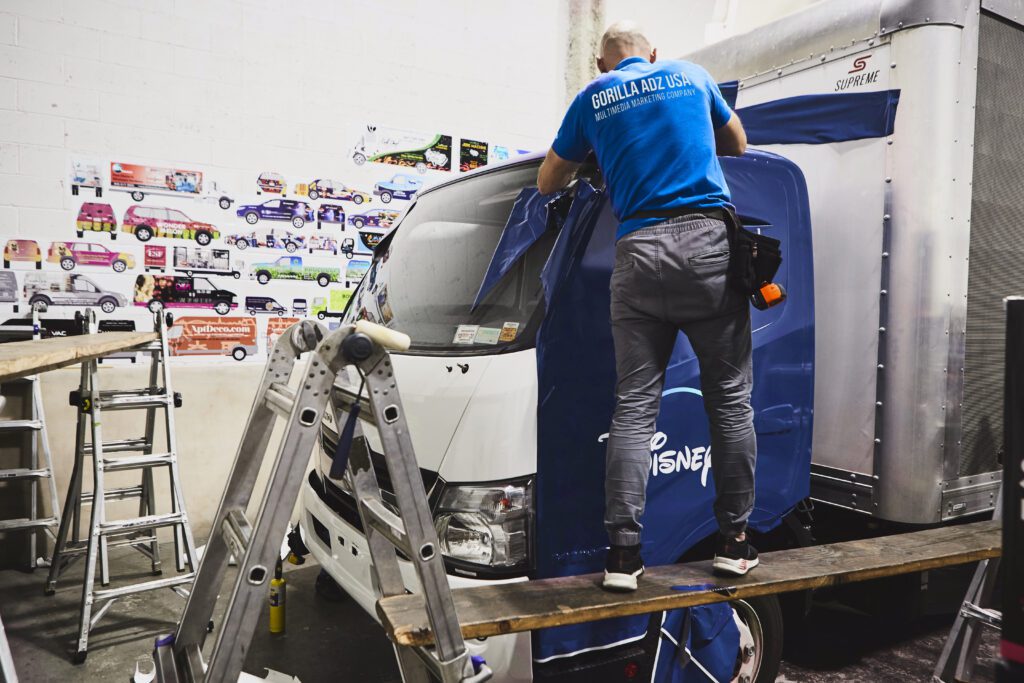
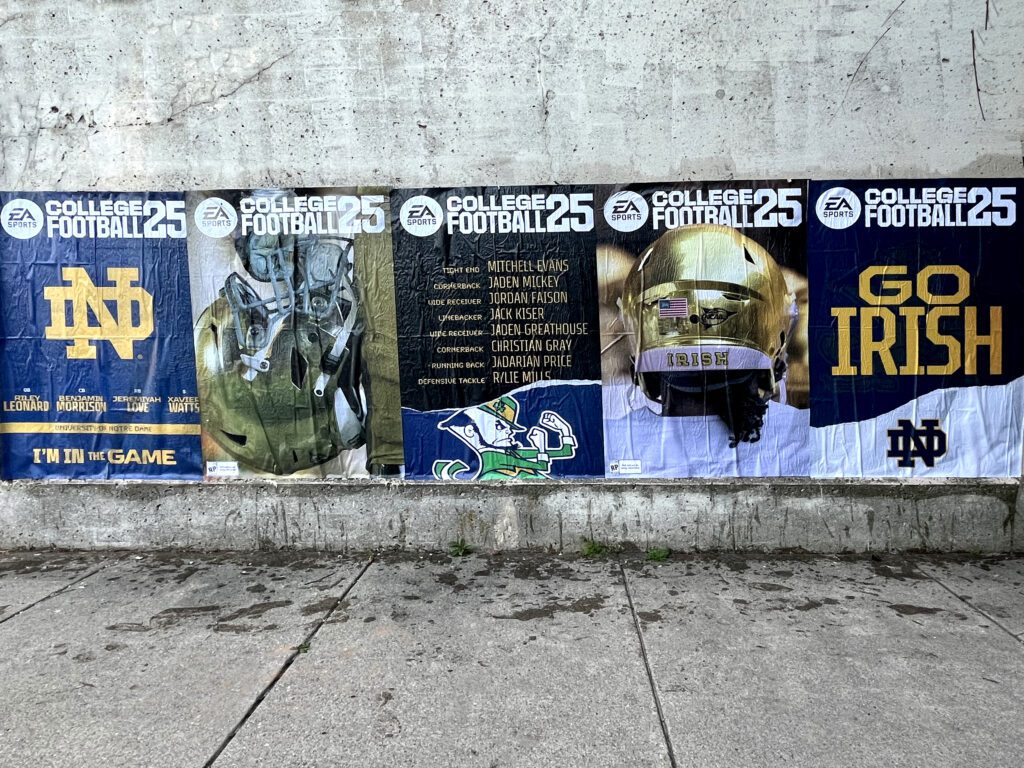
American Guerrilla Marketing operates as a direct execution firm — printing and installing every poster in-house with no subcontractors involved in either stage of the campaign. This matters when campaign timing is tied to a specific event window. The EA Sports FC 25 launch required simultaneous street poster activations across multiple major markets on a single installation day — the kind of coordinated national execution that demonstrates the operational difference between a poster company and a genuine campaign execution firm. Indiana campaigns run under the same unified management framework: centralized campaign direction, in-house print production, and field installation crews operating to a specific delivery timeline rather than a vague placement window.
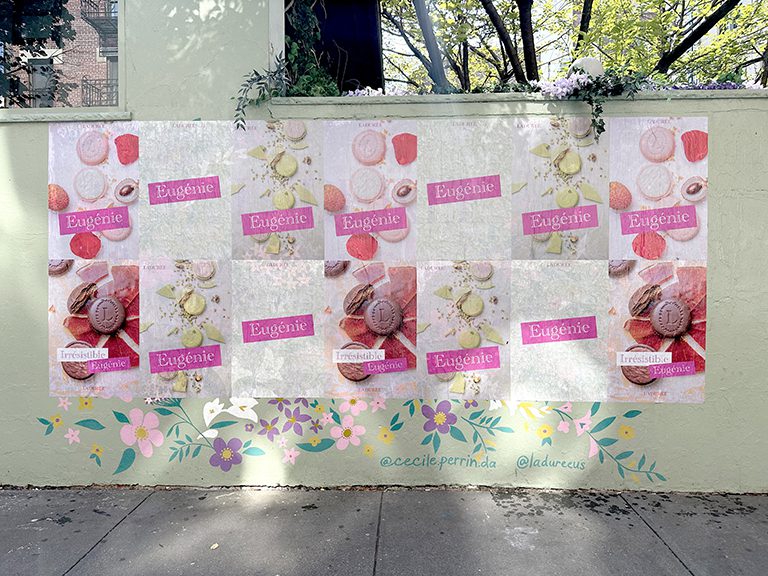
The Biossance “Illuminate Your World” campaign demonstrated AGM’s capacity to layer wheat paste poster installations with complementary sidewalk stenciling — a multi-format execution that surrounds a neighborhood in brand presence from multiple surface types simultaneously. For Indiana brands targeting creative professional corridors in Indianapolis or Fort Wayne’s arts zones, this kind of layered format architecture delivers street saturation that single-format campaigns can’t replicate. When a pedestrian encounters brand presence both overhead on a wall and underfoot on a stenciled sidewalk within the same corridor, the combined impression depth exceeds what either format achieves independently.
The Party to the Polls × Daybreaker activation across 15 states in 2024 demonstrated AGM’s capacity to include Indiana market installations within coordinated nationwide campaign frameworks without sacrificing local execution quality. For brands running Indiana as one node in a multi-state campaign — where Indianapolis needs to perform alongside Los Angeles or Chicago with equal documentation accountability — AGM’s national infrastructure ensures Indiana installations operate at the same standard as the campaign’s primary markets. GPS-tagged proof-of-installation photography documents every placement in every market, delivering the performance accountability that modern marketing organizations require from every channel in their mix.
Motorsport-adjacent brands have an advertising environment in Indiana that exists nowhere else in the country. Automotive manufacturers, racing equipment suppliers, motorsport media brands, apparel companies with racing heritage, and event promoters targeting the Indianapolis 500 audience find that the May campaign window delivers consumer access that no comparable format achieves at equivalent cost. A 200-poster 24×36 campaign during May motorsport month at contact us for pricing reaches an audience composition that would cost multiples of that figure to replicate through paid digital targeting of the same visitor demographic — and does it without competing in the crowded digital advertising auction that every other brand is running simultaneously.
Consumer packaged goods brands targeting 18-24 demographics find Indiana’s university market uniquely efficient. The combination of IU Bloomington, Purdue, Notre Dame, IUPUI, and Ball State creates a statewide student demographic target reachable through coordinated campus-edge campaigns without requiring brand-specific university sponsorship infrastructure or compliance with athletic association advertising restrictions. Wheat paste posters in student entertainment corridors function as peer-level brand communication rather than institutional advertising — a distinction that matters in a demographic that actively tunes out formats that feel purchased or sponsored.
Live music promoters, touring entertainment brands, and streaming services launching content find Indiana’s event-calendar structure a natural fit for fly posting timing. The state’s active concert venue network — anchored in Indianapolis, Bloomington, Evansville, and South Bend — creates a ready audience of entertainment consumers who already engage with physical show announcements and poster culture as part of their daily navigation. Street posters in these corridors register as belonging rather than interrupting.
Political campaigns and civic advocacy organizations running Indiana activations have used wheat paste poster campaigns to build voter awareness and event attendance in urban precincts of Indianapolis, Fort Wayne, and South Bend. Craft beverage brands, consumer apps, fitness and wellness companies, and regional retail brands building Indiana-wide awareness across multiple city demographics round out the active advertiser base in this market.
Every Indiana campaign starts with a neighborhood identification process. AGM’s teams map target zones based on the specific campaign objective — motorsport-window saturation in Indianapolis, university demographic targeting across multiple campus cities, event promotion in Evansville’s entertainment corridor, or South Bend game-weekend coverage — and select installation locations based on pedestrian flow patterns, surface availability, and demographic match to the campaign’s intended audience. This mapping phase happens before a single poster is printed, ensuring production quantities align with actual installation capacity in the selected zones rather than producing volume that can’t be placed effectively.
Print production happens entirely in-house. AGM manufactures campaign posters without third-party print fulfillment involvement — meaning production timelines are under AGM’s direct operational control rather than dependent on an external vendor’s scheduling. This matters most for rush campaigns timed to specific event windows. When an Indianapolis 500-adjacent campaign needs to be installed in the days before race weekend, there’s zero tolerance for a print vendor missing a delivery window that would collapse the entire campaign timing logic.
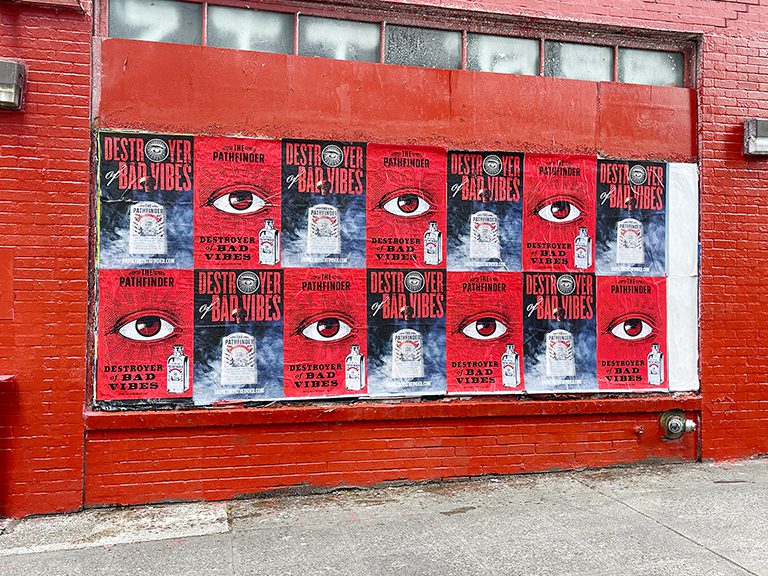
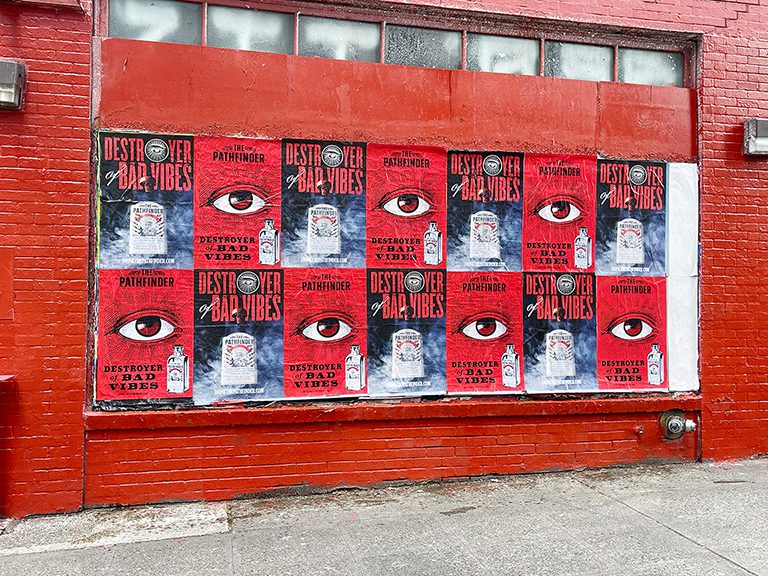
Installation crews arrive at target zones with wheat-based adhesive and complete all installations within the campaign’s designated timing window. The adhesive is environmentally responsible, bonds securely to approved urban surfaces, and remains removable by pressure washing — a practical consideration for surface owners and a genuine operational differentiator from vinyl applications that leave residue requiring mechanical removal. After installation, every location is documented with GPS-tagged photography that records the exact placement address, surface condition, and installation quality of each poster in the campaign.
Clients receive a complete post-campaign reporting package that includes installation photographs, location records, and timing documentation. AGM treats campaign reporting as a deliverable with the same priority as the installation itself — because brands investing in street poster advertising are accountable to the same performance evidence standards that apply to every other channel in their marketing mix, and documentation delivered days or weeks after a campaign closes is documentation that arrives too late to inform the decisions that matter.
Yes. AGM executes fly posting and wheatpasting campaigns across Indiana’s major markets — Indianapolis, Fort Wayne, Evansville, and South Bend — with in-house installation crews and GPS-documented reporting for every campaign regardless of size. Statewide multi-city campaigns are available for brands requiring simultaneous coverage across Indiana’s key population centers.
AGM currently executes campaigns in Indianapolis, Fort Wayne, Evansville, and South Bend. Each market has dedicated neighborhood targeting intelligence covering the primary pedestrian corridors where fly posting delivers consistent impression depth against the demographic profiles most relevant to those specific cities. Statewide campaign coordination is available for brands running all four markets simultaneously.
The Indianapolis 500 race month runs for approximately three weeks each May, delivering sustained elevated visitor density across Indianapolis’s entertainment neighborhoods over a compressed period unlike any other Midwestern market. Hotel occupancy approaches race-weekend peaks across the full month, and the pedestrian composition of Mass Avenue, Fountain Square, and downtown includes a significant proportion of out-of-state visitors who encounter street posters while exploring the city. There is no comparable event-driven campaign window in the Midwest of comparable duration, visitor volume, and audience engagement with the street environment.
Yes. AGM coordinates multi-city Indiana campaigns with unified campaign management, simultaneous installation timing across markets, and consolidated post-campaign reporting. Brands targeting the full Indiana market — or specific combinations like Indianapolis and South Bend for a Big Ten football campaign window — run under a single campaign structure with consistent creative execution and documentation standards applied across all markets in the activation.
The Indianapolis 500 race month in May is the premier timing for capital-city campaigns with strong visitor-audience components. The college football season from September through November is optimal for university market activations across IU, Purdue, Notre Dame, and IUPUI. Summer months offer reduced competitive posting pressure with sustained festival and outdoor event audiences in all four Indiana markets. Winter campaigns in Indianapolis around Pacers and Colts home schedules carry consistent downtown pedestrian volume that doesn’t disappear outside the sports seasons.
Indiana’s major university campuses collectively enroll over 175,000 students, creating a distributed statewide target for 18-24 consumer campaigns. Each campus has distinct campus-edge corridor geography with specific surface inventory, pedestrian patterns, and demographic profiles that differ meaningfully from each other. IU Bloomington runs toward arts and humanities consumers; Purdue skews toward STEM and engineering student profiles; Notre Dame carries graduate-student and alumni demographic weight with higher purchasing power; IUPUI overlaps with Indianapolis’s professional population. A well-structured multi-university Indiana campaign can reach fundamentally different student consumer segments within a single coordinated campaign buy.
The 24×36-inch format is the standard for Indiana arts district and entertainment corridor campaigns — delivering the density and coverage depth needed to generate repeated impressions within a neighborhood through accumulated visual exposure. The 48×72-inch format is the right choice for landmark placements near major event venues like the Indianapolis Motor Speedway, Lucas Oil Stadium, or Gainbridge Fieldhouse, and for campaigns requiring a dominant visual statement at specific high-visibility positions. Many Indiana campaigns use both formats together for layered campaign architecture.
The 24×36 format starts at contact us for pricing for 100 posters and contact us for pricing for 200 posters. Additional creative executions are Contact us for pricing. and rush fulfillment on 24×36 campaigns up to 500 pieces is available within 72 hours for time-sensitive event-window activations. The 48×72 large-format starts at contact us for pricing for 100 pieces and contact us for pricing for 200 pieces, with additional creative at Contact us for pricing. . Campaigns typically run one to two weeks depending on weather conditions, surface competition, and the specific market’s posting activity level.
Yes — AGM is a direct execution firm. Printing and installation are both handled in-house with no subcontractors involved in either stage. This means production timelines are under AGM’s direct operational control, which is particularly important for rush campaigns timed to the Indianapolis 500 window or other specific event dates where timeline precision determines whether the campaign reaches the target audience at peak pedestrian density or misses the window entirely.
Every Indiana installation is photographed with GPS-tagged proof-of-placement images at the time of installation. Clients receive a complete post-campaign reporting package that includes installation location records, proof photographs for each placement, and installation timing documentation. This reporting standard applies uniformly across all Indiana markets regardless of campaign size — a 100-poster Evansville activation receives the same documentation accountability as a 200-poster Indianapolis motorsport-window campaign.
Motorsport-adjacent brands, automotive and performance categories, consumer packaged goods targeting university demographics, live music and touring entertainment, streaming services, craft beverage brands, fitness and wellness companies, consumer apps, and political campaigns all run active Indiana fly posting campaigns. The combination of the Indianapolis 500 window, Big Ten athletics, Notre Dame’s football calendar, and a statewide university consumer base makes Indiana particularly well-suited to brands in entertainment, sports, consumer goods, and beverage categories with 18-35 target demographics.
Standard Indiana campaigns benefit from two to three weeks of lead time for location planning, print production, and installation scheduling. Indianapolis 500-window campaigns should be confirmed by early April at the latest to secure optimal installation timing during race month’s peak pedestrian weeks. Rush fulfillment is available for urgent campaigns within 72 hours for 24×36 formats up to 500 posters — contact AGM directly to discuss specific timing requirements for event-timed activations across any Indiana market.