American Guerrilla Marketing
Nationwide Service
Media planning, media buying, billboard advertising, & guerrilla marketing
Street poster campaigns across Boston, Cambridge, Springfield, Worcester, and the college towns of the Pioneer Valley. In-house crews. GPS photo proof. No subcontractors, ever.
Massachusetts is one of the most strategically concentrated advertising markets in the United States. Within a geography that fits comfortably within a single day’s drive end to end, you have a college-educated professional class, one of the country’s most passionate and active sports fan bases, a globally recognized biotech and innovation economy, and a street-level arts culture that has been producing credible creative talent for generations. That convergence means your campaign isn’t simply reaching people — it’s reaching people who are primed to notice it, absorb it, and act on it.
American Guerrilla Marketing has executed fly posting and wheat paste campaigns across the entire Northeast corridor, and Massachusetts consistently produces some of the strongest impression-to-engagement ratios we see anywhere in the country. The state’s urban cores are walkable. Its neighborhoods are layered in a way few states can match — graduate students living above working artists, biotech researchers eating lunch at the same counters as independent musicians, longtime neighborhood residents and recent arrivals sharing the same commercial blocks. That layering creates the kind of audience density where a poster campaign generates real organic visibility, not just passive exposure.
Fly posting in Massachusetts has a legitimate cultural lineage. Boston, Cambridge, and Worcester all have documented histories of street-level visual culture — the kind of cities where a well-executed wheat paste campaign lands as authentic creative presence rather than intrusion. That cultural context is part of what brands are buying when they invest in this format here. The audience knows what fly posting is, respects when it’s done well, and has decades of experience reading street-level media critically.
American Guerrilla Marketing is a Best of Brooklyn award-winning agency with a client roster that includes Netflix, The Onion, EA Sports, Biossance, and Shepard Fairey. Our Massachusetts deployments are handled exclusively by in-house crews — never subcontracted — with GPS-documented post-campaign photo reporting on every install.
From the Fenway corridors of Boston to the Pioneer Valley college towns, American Guerrilla Marketing covers every key Massachusetts market with in-house crews and full GPS photo documentation. No subcontractors. No guesswork. Just verified street presence.
Select a city to explore Fly Posting Advertising opportunities.
There is no city in New England that brings to a fly posting campaign what Boston delivers. Sports fandom that transforms entire neighborhoods on game days. An arts and music scene that spans from the galleries of the South End to the venues of Allston. A restaurant and nightlife corridor stretching from the Seaport to Jamaica Plain that has expanded continuously for more than a decade. And a student and young professional population that is, by any measure, one of the most culturally engaged in the country.
The Fenway Park neighborhood is a textbook case study in what makes Boston extraordinary for street-level media. On any given game night, Lansdowne and Ipswich streets function as a pedestrian funnel channeling tens of thousands of people past every available surface for hours at a time. That sustained concentration of foot traffic — before the gates open, during the game in the surrounding bars, and long after the final out — produces impression totals that rival campaigns in much larger metro areas. Pre-event saturation posting in the Fenway corridor is among the highest-impression fly posting opportunities available in all of New England.
The Seaport District brings an entirely different order of opportunity. The district’s ongoing development cycle has left block after block of plywood construction hoarding along premium commercial corridors — some of the most abundant legal fly posting surface in the city, positioned squarely in front of a young professional, startup, and restaurant-going demographic. A campaign along the Seaport’s active development blocks catches that audience at the precise moment they’re in exploration mode, discovering new venues and brands in real time.
Back Bay delivers something again different: Newbury Street is one of the highest-income pedestrian retail corridors in New England, where a fly posting campaign intercepts a discretionary-spend audience actively browsing in a leisurely, receptive state of mind. The South End’s gallery and arts district — the densest concentration of galleries in Boston — brings a culturally sophisticated audience that is knowledgeable about branding and authentically responsive to street-level creative presence. And Allston-Brighton, Boston’s enduring music and college nightlife corridor, offers among the greatest raw surface inventory and the youngest, most event-driven audience anywhere in the metro.
No other state in the country matches Massachusetts for the density of college and university enrollment relative to its population and geography. More than a hundred degree-granting institutions operate within the state — from Harvard and MIT in Cambridge to UMass Amherst in the Pioneer Valley, from Boston University and Northeastern along the Fenway to Worcester Polytechnic Institute and Clark University in Central Massachusetts. That institutional presence creates a permanent population of young adults who move through cities on foot, pay genuine attention to visual culture, and represent a high-conversion audience for brands willing to reach them in the environments where they actually live and move.
College campuses don’t only generate student foot traffic. They generate faculty, research staff, adjacent neighborhood residents, and the dense ecosystem of independent commerce — coffee shops, record stores, bookshops, music venues, and galleries — that forms around universities and is precisely where fly posting performs at its best. Massachusetts has more of these environments per square mile than almost anywhere in the country, and they’re distributed across the state in a way that gives statewide campaigns genuine geographic reach without requiring the logistical overhead of larger states.
The academic calendar also creates predictable campaign windows that most states don’t offer. The late-August and September back-to-school surge — when Boston, Cambridge, Worcester, and the Pioneer Valley college towns simultaneously refill with students — is one of the highest-value fly posting windows of the year. End-of-semester activity, alumni weekends, graduation seasons, and major campus cultural events are all predictable audience concentrations that a strategically timed street poster campaign can take advantage of. American Guerrilla Marketing helps Massachusetts clients map their campaign timing against these windows as a standard part of campaign planning.
Award Winning Personalized Service
You will get thoughtful, devoted, and individualized attention from our experienced, qualified, and professional personnel. Being one of the most illustrious agencies in Brooklyn, New York, American Guerrilla Marketing has been awarded the Best of Brooklyn title.
Nationwide
Industry City, Brooklyn, New York 11232
American Guerrilla Marketing
Hours
Mon - Fri: 9 AM - 5 PM
Sat & Sun: Closed
Automate your campaign with AGM’s Request for Proposal Builder. Simply answer a few quick questions about your campaign goals, markets, and timeline, and the system will generate a tailored presentation with recommended strategies, quantities, and pricing. Click the RFP Builder to instantly receive your customized proposal.
Massachusetts is home to the most concentrated life sciences and biotechnology economy in the United States. The Route 128 and I-95 corridor hosts hundreds of pharmaceutical, biotech, and medical device companies. Kendall Square in Cambridge — occupying just a few blocks adjacent to MIT — has become one of the most cited examples of innovation geography in the world, with a density of venture capital investment, biotech startups, and major research institutions that is unmatched anywhere in the country.
For brands operating in health, wellness, science, technology, or professional services, this concentration of highly educated, high-income workers represents an extremely valuable street-level advertising audience. The professionals who work in Kendall Square and across the Route 128 corridor live in Boston, Cambridge, Somerville, Newton, Brookline, and surrounding communities — all of which fall within a coordinated fly posting deployment footprint. A campaign that wraps the innovation economy corridor reaches decision-makers, researchers, and entrepreneurs during their daily commute and social hours, outside the digital filters and inbox noise that make online advertising increasingly difficult to break through.
Health and wellness brands, consumer technology companies, professional services firms, and premium consumer brands targeting an educated, income-qualified demographic have all found the Massachusetts market — and particularly the Cambridge and Boston metro — to be among the most productive fly posting environments in the country. The combination of foot traffic density, surface availability, and audience quality is difficult to replicate anywhere else in New England.
One of Massachusetts’s underappreciated campaign advantages is straightforward geography. The state’s primary markets — Boston, Cambridge, Worcester, Springfield, Lowell, and the college towns of the Pioneer Valley — are all reachable within a logistics footprint that, in most other states, would require completely separate regional deployments with independent crews and vendor relationships. That compactness means a coordinated Massachusetts campaign can achieve genuine statewide presence without the complexity and overhead that multi-state campaigns typically demand.
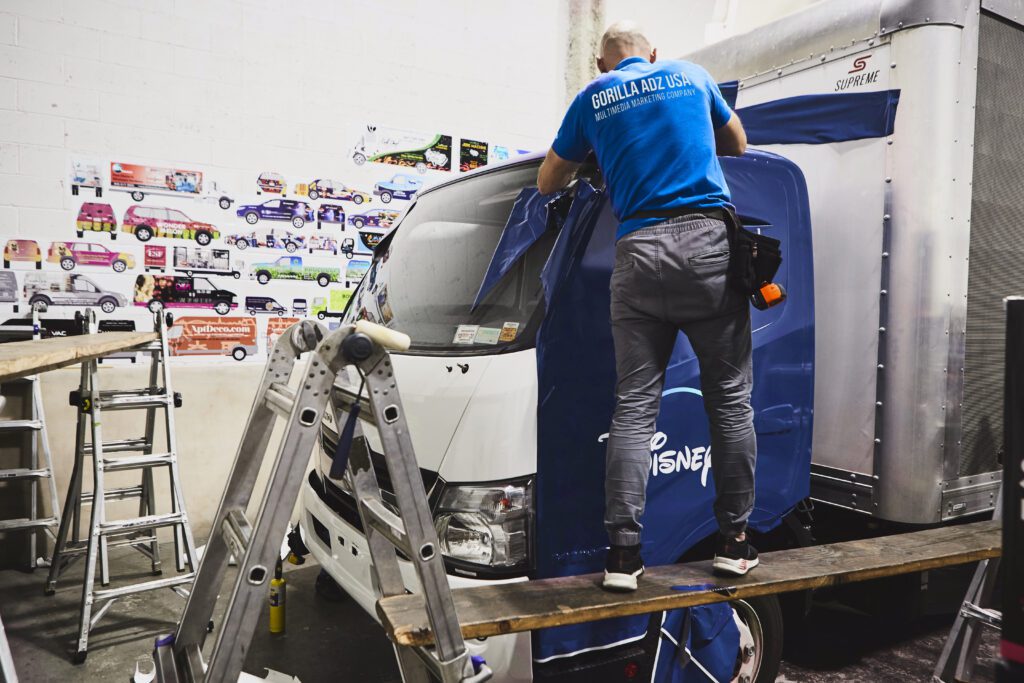
American Guerrilla Marketing’s in-house crews manage the full deployment cycle — printing, logistics, and installation — across all Massachusetts markets from a single unified campaign plan. There are no handoffs to regional vendors, no coordination gaps between separate crews, and no variability in installation quality between markets. Your campaign looks identical and is executed to the same standard in Springfield as it is in Cambridge, tracked with the same GPS photo documentation, reported in the same post-campaign format.
For brands planning multi-market campaigns across the Northeast, Massachusetts is frequently the logical starting point precisely because this compactness makes it the most operationally efficient state to cover comprehensively. The efficiency translates directly to cleaner campaign execution, tighter deployment timelines, and more consistent creative impact across every posting location.
Massachusetts sports fandom isn’t passive consumption — it’s an active, repeated, predictable mobilization of audience. Red Sox fans fill Fenway Park for 81 home games across the spring and summer season. Celtics and Bruins fans converge on the TD Garden corridor in the West End during their respective seasons. Patriots fans generate surges into Foxborough and surrounding communities across the fall and into January. And across the state, every major college sports program produces its own audience concentrations that align predictably with fly posting campaign windows.
The venue corridors surrounding Massachusetts’s major professional and collegiate sports facilities are among the most reliable high-foot-traffic environments in the entire state. Pre-game and post-game windows produce sustained pedestrian activity in neighborhoods that would otherwise be relatively quiet during evening hours. A fly posting campaign timed intelligently against a sports season — or targeted specifically at a playoff run, a championship series, or a major rivalry game — achieves impression concentrations that rival much larger campaigns in non-sports markets. The emotional context of sports fandom also primes audience receptivity: people filing past your poster on their way to a game are in an elevated state of engagement that carries over into everything in their visual environment.
Beyond the primary metro areas, Massachusetts has a network of genuinely walkable college towns that extend the state’s fly posting footprint in meaningful and often underutilized ways. Northampton, anchored by Smith College and the broader Five Colleges consortium, is one of the most arts-forward small cities in New England — home to independent venues, a celebrated gallery scene, a culturally engaged permanent resident community, and excellent brick building wall inventory along Main Street and the arts district. Amherst, home to UMass Amherst and Amherst College, channels the state’s largest single-campus enrollment into a compact and walkable downtown commercial zone. Lowell, with UMass Lowell embedded in a revitalized mill district, connects academic foot traffic to a growing restaurant and arts corridor in genuinely historic industrial architecture.
These markets may be secondary in absolute size, but they lead in cultural receptivity. A fly posting campaign that extends from the Boston metro into the Pioneer Valley and the college belt of central Massachusetts achieves a breadth of audience exposure that no single-city effort can replicate. And because traditional out-of-home advertising options are comparatively limited in these smaller markets, fly posting achieves higher visual salience than it would in the larger metros — your poster faces fewer competitors for attention and lands with correspondingly greater impact per installation.
When EA Sports launched FC 25, the objective was street-level credibility across multiple metros simultaneously — the kind of presence that signals cultural authority rather than advertising spend. American Guerrilla Marketing deployed a coordinated wheat paste campaign across key cities, using high-traffic arts districts, nightlife corridors, and college-adjacent zones as primary installation targets. The campaign’s multi-city simultaneity was central to the strategy: FC 25 needed to feel omnipresent organically, the way a genuine cultural moment does rather than a manufactured marketing push.
Massachusetts campaigns benefit from exactly this multi-market logic. The state’s compact geography makes simultaneous or rapid sequential deployment across Boston, Cambridge, Worcester, and Springfield genuinely feasible within a single campaign cycle. A brand seeking to signal Massachusetts-wide presence can accomplish it without the logistics friction that comparable coverage would require in a larger state. That’s the Massachusetts flyposting advantage operating in practice — the ability to be everywhere the right audience is, all at once, without the operational overhead that usually comes with that ambition.
The Greater Boston market anchors every Massachusetts campaign we run. Installation targets span the Fenway/Lansdowne game-day corridor, Seaport District plywood construction hoarding along the innovation and restaurant zone, Newbury Street’s retail pedestrian environment, the South End’s gallery and arts residential blocks, and Allston-Brighton’s music and nightlife commercial strip along Harvard Avenue and Lower Allston. Smooth-faced warehouse walls and plywood hoarding are primary surfaces throughout the metro; building exterior sides in the arts and nightlife districts retain paste well and support extended campaign duration. Boston is typically the foundational layer of any Massachusetts statewide deployment.
Cambridge and adjacent Somerville deliver the academic, biotech, and arts audiences that the wider Boston metro can’t fully replicate on its own. Harvard Square’s global tourist and student pedestrian concentration, Central Square’s music venue and nightlife density, Kendall Square’s innovation economy professional population, and Davis Square’s walkable arts corridor in Somerville combine for a campaign environment that is simultaneously high-traffic and culturally credible. Brick building walls along Massachusetts Avenue, Holland Street, and the Kendall Square approach blocks are excellent fly posting surfaces with strong paste retention on the textured brick common throughout these neighborhoods.
Western Massachusetts operates as its own distinct regional market with a strong cultural identity. Springfield’s MGM casino entertainment corridor, downtown revitalization blocks along Main and Bridge Streets, and the Basketball Hall of Fame tourism zone anchor the market anchor. Northampton’s arts district and Five Colleges community extends the fly posting footprint into one of the most culturally engaged small-city audiences in New England. Amherst’s UMass environs and the Holyoke arts district give Pioneer Valley deployments genuine regional breadth. Posting in Springfield signals presence across the entire western Massachusetts market — a population that Boston and Worcester campaigns don’t directly reach.
Worcester’s Canal District represents the most event-driven, nightlife-dense fly posting zone in central Massachusetts. The Palladium, Electric Haze, and the surrounding bar and live music venue cluster drive concentrated foot traffic that the Canal District approach blocks capture consistently. Polar Park — home of the Worcester Red Sox — has turned the nearby corridors into a predictable sports-audience window through the spring and summer season. Clark University and WPI generate academic foot traffic within the downtown fly posting footprint. The Green Street corridor is an emerging arts district with growing gallery density and a neighborhood identity that is genuinely receptive to fly posting as a creative medium.
Every Massachusetts fly posting campaign includes full-service printing, in-house installation, neighborhood targeting strategy, and GPS-documented post-campaign photo reporting. Two format options are available based on your coverage objectives and creative approach.
The standard fly posting format — built for coverage density, neighborhood saturation, and the repeated-impression effect that drives audience recall across a campaign’s live period.
Duration: 1–2 weeks depending on weather and surface conditions.
Statement-scale fly posting that dominates key locations and high-traffic intersections. Ideal as anchor placements in your most important corridors, or as the centerpiece of a mixed-format campaign strategy.
Duration: 1–2 weeks depending on weather and surface conditions.
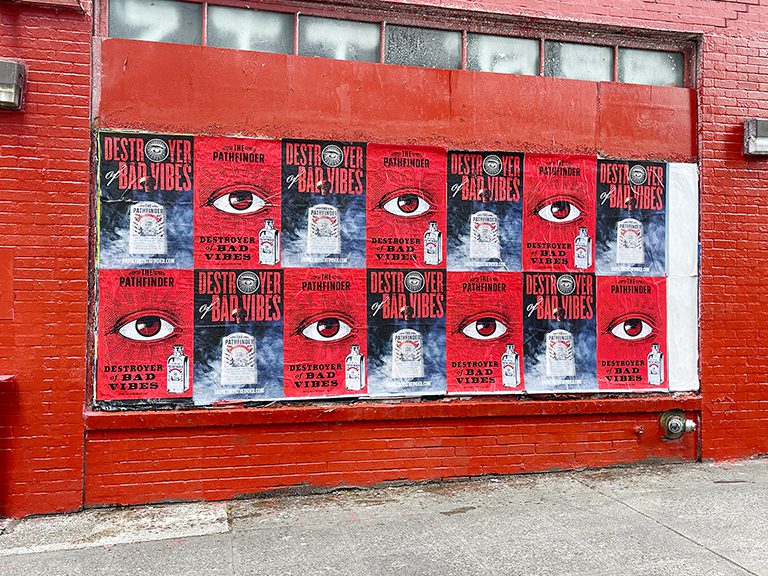
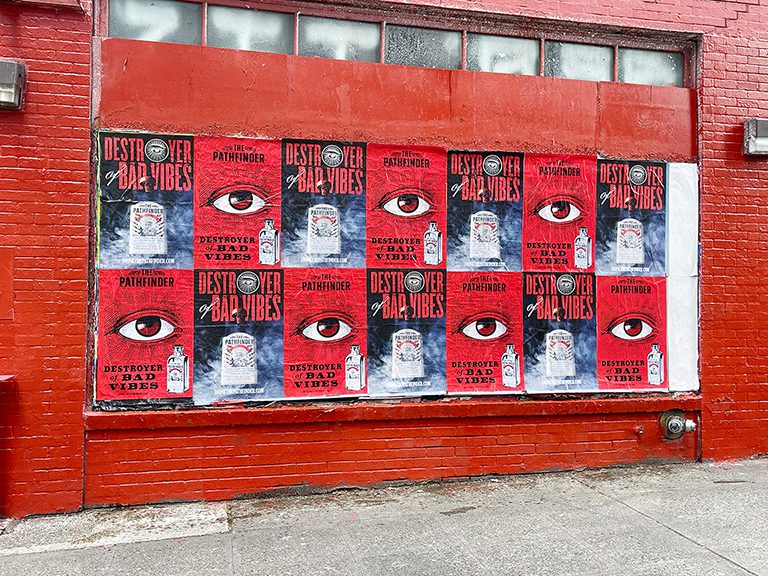
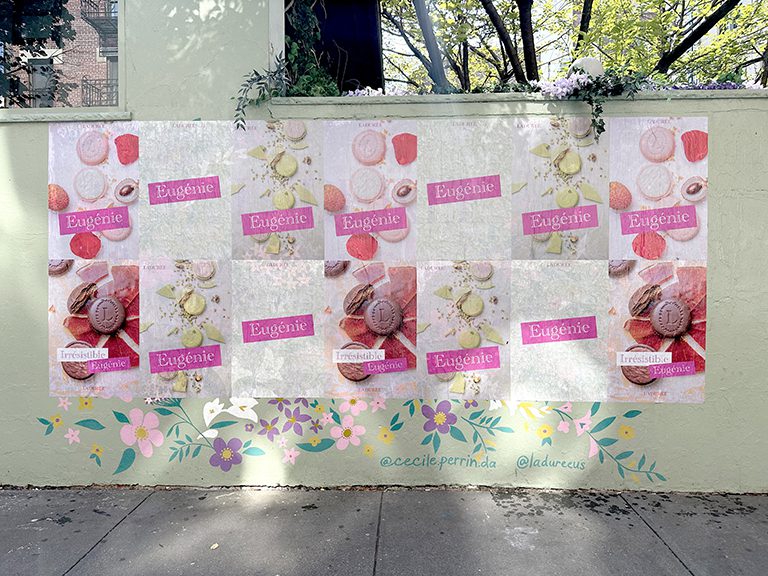
Fly posting — also called wheatpasting or street poster advertising — is the practice of using wheat paste adhesive to install printed posters on approved outdoor surfaces including plywood construction barriers, warehouse walls, and blank exterior sides of commercial buildings. In Massachusetts, the format has a well-established presence in Boston, Cambridge, Worcester, and Springfield, where street-level visual culture has long been part of how audiences engage with brands, events, music releases, and cultural moments.
Boston and Cambridge consistently deliver the highest overall impression volume, driven by pedestrian density, walkable neighborhoods, and a culturally engaged audience that actively pays attention to street-level media. Worcester is particularly effective for event-driven and music-adjacent campaigns, with the Canal District’s nightlife concentration producing excellent results. Springfield works well for regional brand campaigns that need Pioneer Valley presence, especially around the MGM entertainment corridor and the Basketball Hall of Fame tourism zone. Each market has a distinct audience profile and surface environment that we match to campaign objectives.
Massachusetts’s geographic compactness is a genuine operational advantage. All primary state markets can be covered in a coordinated deployment cycle managed by our in-house crews from a unified campaign plan. There are no subcontractor handoffs, no regional vendor coordination gaps, and no variability in installation quality between markets. Multi-city campaigns are scheduled against any event windows or seasonal peaks you’ve identified, and GPS photo reporting covers the complete statewide footprint in a single post-campaign report.
The most effective fly posting surfaces across Massachusetts include plywood construction hoarding (particularly abundant in Boston’s Seaport and active development corridors), blank warehouse walls in arts and nightlife districts, and smooth exterior sides of commercial buildings in pedestrian zones. Smooth painted surfaces retain paste longest under New England weather conditions. Our crews scout and select surfaces based on pedestrian traffic patterns, surface condition, and how well a given location matches your campaign’s target audience before every deployment begins.
Never. American Guerrilla Marketing operates exclusively with in-house crews across every market and every campaign, including all Massachusetts deployments. This policy is non-negotiable and has been consistent since our founding. In-house-only execution means uniform installation standards, direct accountability at every location, and no quality variability between your first poster and your last.
Campaign duration is typically one to two weeks, depending on weather conditions and surface type. New England weather — particularly sustained rain events — can affect paste longevity, which is why our crews select surfaces with strong retention characteristics and installation standards are calibrated for regional climate. For event-based campaigns, we schedule installation to maximize coverage during the highest-traffic window, whether that’s around a game-day series, a festival weekend, or a product launch period.
The minimum campaign size is 100 posters — available in the 24×36 standard format Contact us for pricing. icing. For multi-city Massachusetts campaigns, a minimum of 200 units is typically recommended to achieve meaningful visual coverage across more than one market. Rush campaigns up to 500 units are available within a 72-hour turnaround on the 24×36 format when timeline demands it.
Every installation across your Massachusetts campaign is photographed on-site by our crews, with GPS coordinates embedded in the image metadata at the moment of capture. After the campaign completes, you receive a complete photo report documenting every posting location, every surface used, and every placement made across your entire Massachusetts footprint. This gives you verifiable proof of placement and a full coverage map suitable for internal reporting, client documentation, or campaign analysis.
Spring through fall delivers the longest paste durability and the highest outdoor foot traffic statewide. Late summer and early September — the back-to-school period — are especially high-value windows given Massachusetts’s massive student population returning to campuses across the state. Winter campaigns are effective in the highest-traffic urban corridors, particularly in Boston’s Fenway neighborhood and the Seaport, where indoor-outdoor pedestrian activity remains strong year-round. We advise clients on seasonal timing considerations during the initial campaign planning process.
Absolutely — timing campaigns around Red Sox, Celtics, Bruins, or Patriots game schedules is a standard tactic in the Massachusetts market and consistently produces elevated impression results. Pre-season launches, playoff pushes, and championship windows all generate predictable foot traffic concentrations in venue corridors that amplify campaign reach significantly. Identify your target event windows during the initial consultation and we structure the installation schedule to maximize the overlap between your campaign’s live period and peak event-day pedestrian traffic.
Most clients provide final print-ready artwork, and we review it for format compatibility before production begins. For clients who need design support, additional creative is available at contact us for pricing for 24×36 campaigns and contact us for pricing for 48×72 campaigns. Effective fly posting design is a distinct discipline from digital creative — it requires high contrast, strong typographic hierarchy, and imagery that reads clearly at distance and in motion. We can advise specifically on what performs well in the Massachusetts market based on our deployment experience here.