American Guerrilla Marketing
Nationwide Service
Media planning, media buying, billboard advertising, & guerrilla marketing
Fort Collins is simultaneously a 34,000-student CSU college town, the birthplace of New Belgium Brewing, and a Front Range city with a pedestrian commercial core so concentrated that it outperforms markets three times its size on impressions per poster. AGM executes wheat paste campaigns across Old Town, the CSU corridor, and the brewery district.
Fort Collins contains one of the most strategically efficient fly posting environments in the entire Mountain West, and the reason is geographic: the city’s pedestrian-only Old Town Square core on College Avenue and Mountain Avenue creates a naturally bounded impression zone that concentrates foot traffic through a compact commercial area rather than distributing it across miles of commercial arterials the way that sprawling metro markets do. A brand running 100 wheat paste posters in Denver distributes impressions across multiple neighborhoods with varying pedestrian densities, and the per-poster impression average reflects that distribution. A brand running 100 wheat paste posters in Fort Collins’ Old Town can saturate the primary commercial zone, both approach corridors on College Avenue and Mountain Avenue, and the connecting residential streets within a single poster budget — achieving saturation-level visibility in the market for the same investment that buys meaningful but not dominant presence in a larger city.
This geographic efficiency is what makes fly posting in Fort Collins, Colorado a qualitatively different proposition than simply running the same campaign you’d run in Denver or Colorado Springs at smaller scale. Fort Collins isn’t a smaller version of a bigger city — it’s a city with a distinct spatial organization that rewards wheat paste campaigns in ways that neither larger metros nor smaller, more dispersed towns can match. The Old Town core’s car-free plaza, the CSU student population concentrated in a compact residential geography south of the commercial core, the New Belgium and Odell brewery district on Linden Street and Lincoln Avenue forming a craft culture anchor to the northeast, and Mountain Avenue’s residential-commercial connector to the west all flow into and out of Old Town Square with pedestrian patterns that are predictable, consistent, and densely concentrated in a small enough geographic footprint to cover comprehensively with a standard campaign budget.
Fort Collins has also developed an independently thriving music and arts scene centered on Old Town that gives the market a cultural depth beyond its population size. The Aggie Theatre at 204 S College Avenue is the city’s primary live music venue — a mid-capacity room that books regional and national acts and generates consistent show-night foot traffic on College Avenue before and after performances. Avogadro’s Number at 605 S Mason Street books acoustic and Americana acts in an intimate venue environment that draws the city’s arts-adjacent older young adult population. Bohemian Nights at NewWestFest brings tens of thousands of attendees to Old Town Square and the adjacent streets across its August weekend run, generating the single largest annual foot traffic concentration in the Fort Collins street poster market. These cultural anchors give Fort Collins fly posting campaigns access to a music and arts audience that is proportionally as significant as any larger Colorado market’s entertainment demographic, concentrated in an area small enough to dominate with a fraction of the poster count that Denver’s dispersed venues require.
The Fort Collins craft culture ecosystem — built over three decades starting with New Belgium’s founding in 1991 and now including Odell Brewing, Horse and Dragon Brewing, Equinox Brewing, Wolverine Farm Publick House, and more than twenty independent craft beer establishments — has given the city a national reputation among craft beverage consumers that far exceeds what its population size would typically generate. This reputation draws visitors from across the Front Range, the mountain communities, and nationally for brewery tourism that flows directly through the Old Town core and the brewery district on Linden Street. A wheat paste campaign covering Old Town and the brewery district doesn’t just reach Fort Collins residents — it reaches the pilgrimage audience that comes to Fort Collins specifically because they identify with the craft culture the city represents. That audience — environmentally conscious, outdoor-active, brand-selective, 25-38 — is one of the most commercially valuable demographics for outdoor lifestyle, craft beverage, and outdoor recreation brands operating in any market in the Mountain West.
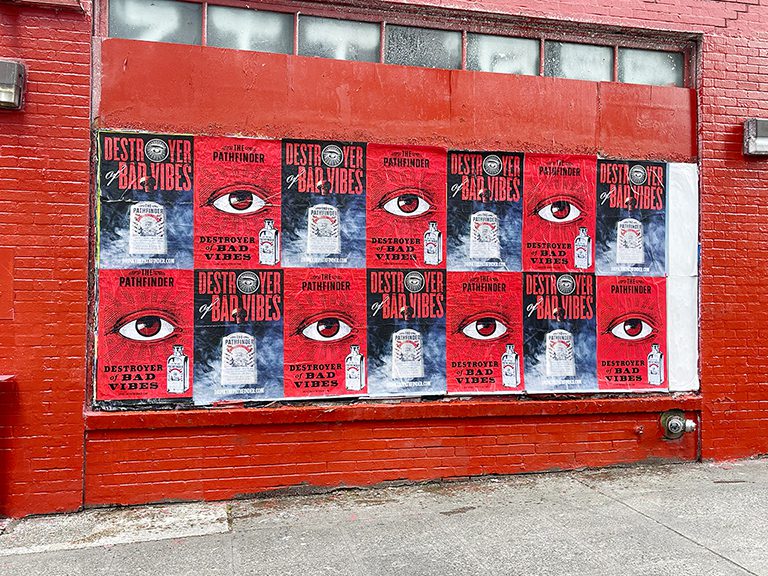
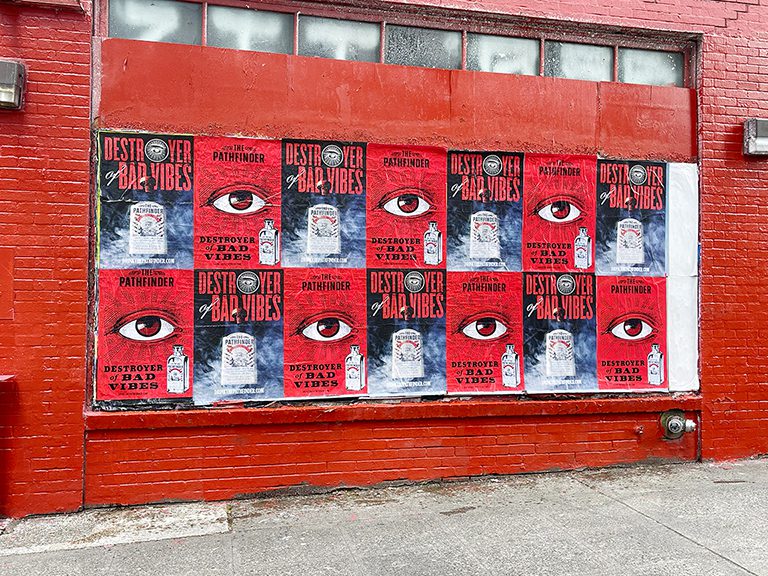
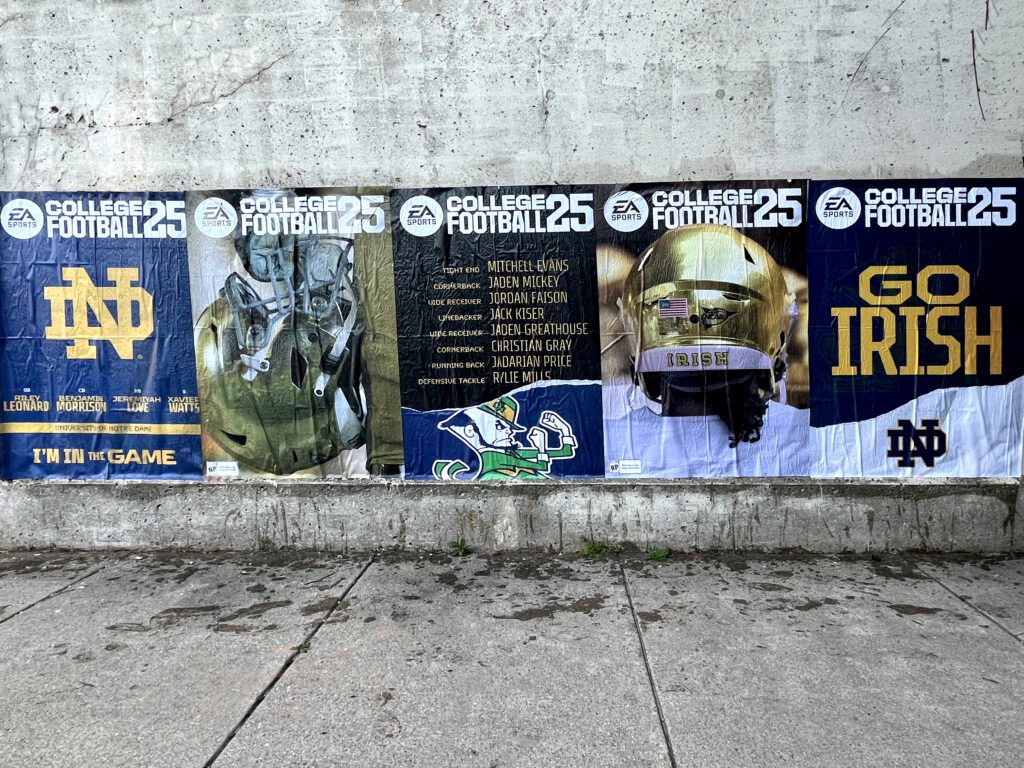
AGM executes wheat paste campaigns across Fort Collins' Old Town Square, the CSU College Avenue corridor, the New Belgium brewery district on Linden Street, and Mountain Avenue — with in-house installation crews, GPS-documented photo reporting, and semester-calendar-aware timing. Clients include EA Sports. Direct execution, no subcontractors.
Select a city to explore Fly Posting Advertising opportunities.
Old Town Square is Fort Collins’ pedestrian-only commercial plaza, bounded by College Avenue to the east, Mountain Avenue to the north, and the connecting blocks of Linden Street and Jefferson Street that frame the square’s western and southern edges. The car-free plaza itself — a human-scale brick courtyard surrounded by independent retail, restaurants, bars, and the Old Town Square stage that hosts outdoor music and community events throughout the year — functions as the gravitational center of Fort Collins’ pedestrian economy, pulling foot traffic from every direction and holding it in a concentrated space where dwell time runs far longer than on a standard commercial street. On Friday and Saturday evenings, the density of the young adult and young professional population moving through Old Town Square, College Avenue between Mountain and Oak, and Mountain Avenue between College and Howes creates an impression density that is genuinely difficult to replicate in any Fort Collins neighborhood outside the core. Farmers market Saturdays add a morning foot traffic layer from spring through fall that extends the Old Town Square impression window into the early part of the day, reaching a slightly older and more local demographic than the evening crowds. Wheat paste positions on the building facades surrounding Old Town Square — on the Mountain Avenue approach, on the College Avenue block faces between Old Town and the Linden Street corner, and on the Jefferson Street corridor — achieve among the highest per-day impression counts of any positions in the Fort Collins market, because the geographic concentration of the core means that nearly every person who enters Old Town on a given day passes the same approach corridors multiple times.
Colorado State University’s main campus sits immediately south of Fort Collins’ Old Town core, with College Avenue serving as the primary arterial connecting the university to the commercial center of the city. The 34,000-plus enrolled students who use this corridor daily — commuting between campus and Old Town, navigating the off-campus housing concentrated in the Elizabeth Street, Laurel Street, and Prospect Road neighborhoods, and accessing the restaurant, retail, and entertainment businesses that serve the student population along the College Avenue spine — create a sustained pedestrian flow that makes the CSU approach corridor one of the most consistent impression environments in the Fort Collins market. Elizabeth Street’s cross-traffic between College Avenue and the residential grid to the east and west serves as a secondary student arterial with its own commercial density — coffee shops, pizza restaurants, student services, and the kind of informal gathering spaces that generate dwell time and social foot traffic patterns. Laurel Street, running parallel to Elizabeth one block north, carries a similar population through a slightly more residential character. For brands targeting the 19-26 demographic that constitutes CSU’s core enrollment — including gaming brands, streaming services, music and entertainment companies, outdoor gear brands, and campus-adjacent food and lifestyle products — the College Avenue CSU corridor delivers the most direct and concentrated access to this audience of any Fort Collins campaign position. Semester timing matters significantly here: campaigns installed during the first weeks of fall and spring semesters reach students at their peak discovery phase — when they’re establishing new shopping and brand habits for the semester rather than running on autopilot.
Award Winning Personalized Service
You will get thoughtful, devoted, and individualized attention from our experienced, qualified, and professional personnel. Being one of the most illustrious agencies in Brooklyn, New York, American Guerrilla Marketing has been awarded the Best of Brooklyn title.
Nationwide
Industry City, Brooklyn, New York 11232
American Guerrilla Marketing
Hours
Mon - Fri: 9 AM - 5 PM
Sat & Sun: Closed
Automate your campaign with AGM’s Request for Proposal Builder. Simply answer a few quick questions about your campaign goals, markets, and timeline, and the system will generate a tailored presentation with recommended strategies, quantities, and pricing. Click the RFP Builder to instantly receive your customized proposal.
The New Belgium Brewing Company at 500 Linden Street is one of the most recognizable addresses in American craft beer — a pilgrimage destination for the craft beverage community that draws visitors from across the country and internationally to Fort Collins specifically because of New Belgium’s foundational role in the American craft beer movement. The brewery’s taproom and adjacent outdoor spaces generate sustained foot traffic from afternoon through evening on every day of the week, with peak volumes on weekend afternoons when brewery tourists from across the Front Range and beyond make New Belgium one stop on a Fort Collins craft beer circuit that also includes Odell Brewing at 800 E Lincoln Avenue — the other anchor of the city’s brewery district and the second most-visited craft brewery in Colorado by many measures. The Linden Street corridor between the two breweries, connected by the Cache la Poudre River trail and the city’s bike path network, carries bicycle and pedestrian traffic that is distinct from the Old Town core foot traffic in character and pace: these are people who specifically sought out the brewery district, who came to Fort Collins in part because of craft culture, and who identify with the outdoor-active, environmentally conscious, quality-oriented consumer values that New Belgium has represented for over three decades. For craft beverage brands, outdoor lifestyle brands, and any company whose target consumer is the 25-38 craft culture enthusiast, the New Belgium brewery district in Fort Collins provides a contextually native advertising environment that no other position in Colorado quite replicates — because nowhere else is the concentration of self-identified craft culture consumers as high, in a geographic footprint as compact, as on Linden Street between New Belgium and the Poudre Trail approaches.
Mountain Avenue runs west from Old Town Square’s northwestern edge through a transitional zone of older residential properties, independent arts businesses, and the neighborhood galleries and studios that fill the spaces between College Avenue’s commercial energy and the quieter residential streets to the west. The Mountain Avenue corridor between College Avenue and Mathews Street has developed a modest but genuine gallery and arts studio presence — small exhibition spaces, artist studios with street-facing windows, and the kind of creative micro-businesses that signal neighborhood creative density before it becomes commercially dominant. Avogadro’s Number at 605 S Mason Street, just south of the Mountain Avenue corridor, is a longtime Fort Collins institution for acoustic, folk, and Americana music — a venue that draws the city’s older young adult arts community in a way that the Aggie Theatre’s more mainstream programming doesn’t capture. The Mountain Avenue corridor’s pedestrian character is slower and more residential than College Avenue or Old Town Square — foot traffic is consistent rather than dense, and the audience is predominantly neighborhood residents rather than commercial visitors. This slower character translates into higher poster dwell time for wheat paste positions on Mountain Avenue: the pedestrian who passes a Mountain Avenue poster is moving at a residential pace rather than a commercial-corridor pace, and the time spent in visual engagement with a poster is correspondingly longer. For brands whose campaign creative rewards extended viewing rather than quick recognition — arts events, gallery shows, community programming, and brand campaigns with narrative rather than logo-driven creative — Mountain Avenue positions provide a qualitatively different impression than the high-density, quick-read positions on Old Town Square’s approach corridors. The two corridor types work best in combination: Old Town Square and College Avenue positions for impression volume and recognition frequency, Mountain Avenue positions for higher-quality individual engagement with audiences already in the neighborhood’s creative mindset.
AGM’s street poster work for EA Sports FC 25 — a rapid, simultaneous multi-city campaign launch designed to create visible street presence across multiple markets at the moment of the game’s release — demonstrated precisely the campaign strategy that gaming, streaming, and entertainment brands should apply to college town markets like Fort Collins. The EA Sports FC 25 campaign succeeded because it understood something critical about gaming launch windows: the social dynamic of a game release in a college environment is not just individual purchasing behavior — it’s community behavior. When a major gaming title launches, college students don’t just individually encounter the advertising and individually make purchasing decisions. They talk, share, and validate each other’s choices in dormitory hallways, dining halls, campus common areas, and apartment living rooms where group gaming culture is the social context.
A wheat paste campaign that covers College Avenue and Old Town Square in the week before or the week of a major game, streaming series, or entertainment release reaches CSU’s 34,000 students not just as individual impressions but as social objects — posters that students photograph, share, and discuss in exactly the community communication channels that brands spend enormous sums trying to infiltrate through influencer marketing and social media seeding. When a poster appears on the College Avenue approach to campus and on the Old Town Square building facades simultaneously, it creates the visual saturation effect that signals cultural moment to a student population already primed to understand what street-level campaign presence means: this is something that matters right now, in the places I move through every day.
The EA Sports FC 25 parallel also applies to Fort Collins’ craft culture and young professional demographic, not just to the student market. Gaming brands targeting the 25-35 young professional who still maintains gaming as a primary leisure category find Fort Collins’ dual market — students on the College Avenue corridor and post-college young professionals in Old Town and the brewery district — unusually efficient for a city its size. A campaign covering both corridors reaches both segments of the 19-35 gaming demographic within a single coordinated activation, without the geographic dispersal that covers those same two demographic layers in a larger metro market at significantly higher cost. For gaming, streaming, consumer technology, and entertainment brands that treat college town markets as high-efficiency reach vehicles for early adopter demographics, Fort Collins represents one of the most concentrated examples of that market type in the entire Mountain West.
The broader lesson from the EA Sports campaign — that rapid, simultaneous, multi-position street presence creates a cultural moment rather than an advertising exposure — applies to Fort Collins’ compact geography with particular force. Because Old Town Square, the College Avenue CSU corridor, Linden Street’s brewery district, and Mountain Avenue’s residential corridor all fall within a geographic footprint small enough to cover in a single installation day, a Fort Collins campaign can achieve genuine market saturation — the feeling of being everywhere simultaneously — with a poster count that would barely constitute a neighborhood campaign in Denver. For brands launching into the Mountain West market, the efficiency of that saturation effect in Fort Collins often makes it the most strategically valuable starting point in the state, even for brands whose ultimate target is the larger Denver market.
Fort Collins’ geographic compactness creates a format strategy calculus that’s distinct from larger Colorado markets. In Denver’s dispersed neighborhood grid, the primary format question is coverage versus impact across multiple miles of pedestrian environment. In Fort Collins, the coverage-versus-impact question is answered within a much smaller radius — the decision is not which neighborhoods to reach but which positions within the compact core to prioritize for maximum impression quality within the market’s naturally concentrated footprint.
The 24×36 format is the dominant choice for most Fort Collins campaigns because it allows genuine saturation of the Old Town core and CSU corridor within the standard 100-poster campaign budget at contact us for pricing. At 100 positions distributed across Old Town Square’s approaches, the College Avenue spine from campus to Old Town, and selected Mountain Avenue and Linden Street positions, a 24×36 campaign in Fort Collins covers the market comprehensively in a way that 100 posters in a larger city cannot achieve. The saturation effect — when a brand appears to be everywhere in the market simultaneously — is achievable in Fort Collins with a poster count that produces only meaningful-but-not-dominant presence in Denver or Colorado Springs.
The 48×72 format has specific applications in Fort Collins where the larger scale creates a landmark effect rather than just a larger impression. The New Belgium brewery district on Linden Street has building surfaces — the brewery’s own exterior walls and adjacent warehouse and commercial buildings — where a 48×72 installation reads as a neighborhood visual anchor for the entire craft beer tourism corridor. Old Town Square has specific building faces on the Mountain Avenue approach where a full-sheet installation commands the entire pedestrian approach axis for everyone entering the square from the west. These positions are rare in Fort Collins relative to Denver’s abundant warehouse wall inventory, but they are correspondingly more valuable when they are available — because the entire market’s pedestrian population passes them, rather than only the foot traffic of a single street in a much larger city. For craft brands, lifestyle labels, and entertainment campaigns seeking to make a statement in Fort Collins’ craft culture corridor, the 48×72 format at a single landmark brewery district position can produce disproportionate impact relative to its cost.
100 posters: contact us for pricing
200 posters: contact us for pricing
Extra creative: contact us for pricing
Fort Collins’ compact geography makes 100 posters in the 24×36 format a genuine market saturation campaign — covering Old Town Square approaches, the College Avenue CSU corridor, and selected brewery district positions within a single activation budget. The format that makes Fort Collins feel covered end to end. 72-hour rush available up to 500 qty.
100 posters: contact us for pricing
200 posters: contact us for pricing
Extra creative: contact us for pricing
Maximum impact at Fort Collins’ specific landmark positions — brewery district walls on Linden Street, Old Town Square building faces on the Mountain Avenue approach, and the large-format surfaces near New Belgium and Odell that the craft culture audience walks past on every brewery circuit visit. The format for brands making an arrival statement in Colorado’s craft capital.
AGM’s Fort Collins campaign planning begins with the academic and community event calendar, because Fort Collins’ dual nature as a college town and a craft culture destination creates campaign windows with meaningfully different audience compositions at different points in the year. Fall semester opening in late August and early September is the highest-priority window for brands targeting CSU students — incoming freshmen and returning students establishing new brand habits for the year are more discovery-oriented during the first six weeks of fall semester than at any other point in the academic cycle. The Bohemian Nights at NewWestFest festival in August, which runs across Old Town Square and the adjacent streets, creates the single largest foot traffic concentration of the year for Fort Collins’ craft culture and community audience. The spring semester opening window in January and the New Belgium Tart and Funky festival in the summer create additional campaign anchors for beverage, lifestyle, and outdoor brands.
Installation is performed by AGM’s in-house crews who know Fort Collins’ specific position inventory — which Old Town Square building facades offer the highest pedestrian visibility on the College Avenue approach, which Linden Street buildings adjacent to New Belgium hold large-format installations through the Front Range’s variable weather, and where the Elizabeth Street student corridor concentrates the most consistent CSU foot traffic during the academic day. Position selection in Fort Collins is managed at a higher precision than larger markets because every position in the compact core matters more — a mediocre position in Denver is one of dozens; a mediocre position in Fort Collins is a meaningful fraction of the market’s available prime inventory. AGM’s crews bring the market knowledge to make that distinction on-site.
GPS-tagged photo documentation follows every Fort Collins installation, with a complete photo report delivered to the client after installation. Fort Collins campaign location photography is particularly valuable as organic content because the city’s visual context — New Belgium’s iconic building exterior on Linden Street, the Poudre River trail backdrop, Old Town Square’s brick facades and mountain views — creates inherently shareable imagery that craft culture brands, outdoor lifestyle labels, and food and beverage companies routinely share through their own channels. Clients whose campaigns include Linden Street brewery district positions frequently find that those location photos generate more organic social engagement than campaign materials from larger, less visually distinctive market positions.
Craft beer and beverage brands represent the most naturally aligned category for Fort Collins fly posting campaigns — the city’s identity as the birthplace of New Belgium Brewing and the home of Odell Brewing gives it a craft culture credibility that functions as authentic context for any beverage brand seeking to position itself within the craft tradition. Independent craft breweries entering the Colorado market use wheatpasting in Fort Collins as a brand-building tool that establishes credibility in the community that cares most about craft authenticity before expanding to the larger Denver market where craft brand noise is significantly higher. Spirits brands, kombucha and functional beverage companies, craft coffee brands, and non-alcoholic craft alternatives all find Fort Collins’ craft-culture consumer a primary target for the same reasons that make beer brands natural fits.
Gaming, streaming, and consumer technology brands targeting the 19-26 CSU student demographic find Fort Collins one of the most efficient college town markets in the Mountain West precisely because the compact geography allows genuine market saturation at a budget that would only reach a fraction of the relevant audience in a major metro market. EA Sports’ multi-city campaign logic — where simultaneous urban street presence creates a cultural moment rather than just an advertising exposure — applies to Fort Collins with particular force because the social density of campus life means that organic amplification through the student community happens rapidly once the visual saturation threshold is crossed. A Fort Collins campaign that covers College Avenue, Old Town Square, and the Elizabeth Street corridor simultaneously is visible to every CSU student within a matter of days through the intersection of direct poster encounters and peer social sharing.
Outdoor apparel, trail running, climbing, and mountain lifestyle brands find Fort Collins’ dual CSU-and-craft-culture demographic a natural target because the city’s population is disproportionately represented by people who moved to or stayed in Fort Collins specifically for access to Horsetooth Reservoir, Lory State Park, the Poudre Canyon, and the foothills trail network immediately west of the city. This outdoor recreation concentration is comparable to Denver’s but compressed into a smaller and more walkable city footprint, which means that the outdoor lifestyle consumer in Fort Collins is encountered on foot in commercial environments — Old Town, College Avenue, the brewery district — at higher frequency than in a car-centric suburb with similar outdoor recreation access. Music and entertainment brands, arts organizations, film and streaming services, and lifestyle brands all find Fort Collins’ combined student and young professional market a reliable activation environment for campaigns targeting the 19-34 demographic across its full range.
Fort Collins’ pedestrian-only Old Town Square core concentrates foot traffic through a compact geographic area that can be covered comprehensively with a poster count that only reaches a fraction of Denver’s much larger neighborhood geography. In Denver, 100 posters distributed across RiNo, Capitol Hill, and Colfax achieves meaningful but not dominant presence in any single neighborhood. In Fort Collins, 100 posters covering Old Town Square’s approaches, the College Avenue corridor, and selected Mountain Avenue and Linden Street positions achieves genuine saturation — the market feels covered end to end — because the entire primary pedestrian zone fits within a significantly smaller footprint. The per-impression efficiency is fundamentally different, not just proportionally smaller.
The fall semester opening in late August and early September is the single highest-priority campaign window for brands targeting the CSU student demographic, because incoming students and returning students at the beginning of the academic year are establishing new brand relationships and shopping habits in a discovery mode that they don’t maintain mid-semester. Spring semester opening in January represents a secondary window with similar dynamics at smaller scale. Finals periods, conversely, depress discretionary pedestrian activity significantly — campaigns installed during finals weeks reach a stressed, distracted version of the student audience rather than the engaged, brand-receptive version that makes semester-opening campaigns disproportionately effective.
Yes — the New Belgium brewery district on Linden Street and the Odell Brewing approaches on E Lincoln Avenue are specific campaign zones that AGM can target independently of Old Town Square and the CSU corridor. A brewery-district-only campaign covering Linden Street from Jefferson Street to the Poudre River trail approaches, plus selected E Lincoln Avenue positions near Odell, creates a craft-culture-specific activation that reaches the brewery tourism audience directly in the physical environment where they’re most engaged with craft beverage brand identity. This positioning is particularly effective for craft brands launching in Fort Collins before the Denver market, as the brewery district audience includes industry professionals and early adopters whose opinions carry weight throughout the Front Range craft community.
Fort Collins consistently ranks as one of the most bike-friendly cities in the United States, with a trail network connecting the brewery district on Linden Street to Old Town Square via the Cache la Poudre River trail and a city bike infrastructure that puts a significant percentage of the young adult population on bikes for daily transportation rather than in cars. Cyclists navigating the Old Town approaches on College Avenue and Mountain Avenue move at speeds where a well-placed poster at a stop sign or crosswalk creates genuine dwell time — substantially longer than vehicular viewing and comparable to pedestrian viewing for a poster at a key intersection. The Poudre Trail connecting New Belgium to Old Town Square generates a cyclist corridor that wheat paste positions at trailhead approaches and street crossings can reach effectively during the trail’s high-use morning and afternoon windows.
Bohemian Nights at NewWestFest in August is the single largest annual foot traffic event in Fort Collins, drawing tens of thousands of attendees to Old Town Square and adjacent streets over its multi-day run. Odell Brewing’s annual Roots and Branches Festival in spring, New Belgium’s Tart and Funky in summer, and the Tour de Fat cycling and music festival are craft culture anchors that draw regional attendance beyond the local population. Aggie Theatre show nights generate College Avenue foot traffic on a weekly basis during the academic year. CSU home football game Saturdays in fall produce the largest single-day foot traffic volume of the year on College Avenue, with stadium approaches creating pedestrian density comparable to a major metro market’s event night.
EA Sports FC 25’s multi-city simultaneous street launch created cultural moment through rapid, coordinated visual saturation — the sense that a brand had arrived everywhere at once. Fort Collins’ compact geographic core makes this saturation effect achievable with a fraction of the poster count required in larger markets. A Fort Collins campaign covering College Avenue, Old Town Square, and the Elizabeth Street corridor simultaneously creates genuine market saturation within a matter of installation hours, reaching 80-90% of the CSU student pedestrian population within days through direct poster encounters and peer social sharing. For gaming, streaming, and entertainment brands, that rapid saturation dynamic in Fort Collins’ student market produces early-adopter activation at a campaign cost that larger markets cannot match.
The 24×36 format is the most effective in Old Town Square’s immediate pedestrian zone because the human-scale architecture and close building setbacks create an environment where the standard poster format reads at exactly the right pedestrian pace — large enough to be immediately readable at approach, small enough to integrate with the visual environment rather than overpower it. The Old Town Square brick facades and Mountain Avenue building surfaces that face the plaza are specifically sized for pedestrian-scale visual communication, and the 24×36 format fits within that grammar naturally. The 48×72 format makes its strongest case in Fort Collins on the larger building surfaces in the brewery district and on selected Old Town approach corridors where the setback from the street is large enough to benefit from the additional scale.
AGM’s Fort Collins campaign documentation tracks each installation position with GPS coordinates and street-level photography, organized by district — Old Town Square approaches, College Avenue CSU corridor, New Belgium brewery district, Mountain Avenue — so that clients can analyze performance by neighborhood segment rather than treating Fort Collins as a single undifferentiated market. For brands running campaigns across multiple districts, the district-level documentation allows comparison of which corridor generated the most organic social amplification, which positions produced the most documented community response, and which district warrants increased investment in future campaign rounds. The compact Fort Collins geography makes district-level performance tracking particularly actionable because the distances involved are walkable rather than cross-metro.
Fort Collins represents one of the most cost-efficient early-adopter markets in the Mountain West for gaming, streaming, and consumer technology brands targeting the 19-26 demographic. The CSU student population of 34,000 is concentrated in a compact off-campus residential geography around Elizabeth Street, Laurel Street, and the College Avenue corridor — all of which can be covered with wheat paste positions within the standard 100-poster campaign budget. Students are demographically identified as among the highest per-capita adopters and social amplifiers of new gaming titles, streaming releases, and consumer technology products, which means that the organic amplification value of a Fort Collins student-market campaign compounds the paid impression value with social reach into the same peer networks that brands pay significant sums to access through influencer marketing.
Fort Collins’ semi-arid Front Range climate — lower average humidity than the Pacific Northwest markets, significant annual sunshine, and relatively low precipitation except during summer monsoon months — provides favorable poster retention conditions. On the older masonry building stock of Old Town’s Colorado Avenue and Linden Street’s brewery district, wheat paste campaigns typically maintain structural integrity for two to four weeks without refresh. The main degradation variable in Fort Collins is summer monsoon weather in July and August, which can accelerate edge lifting on exposed positions. Winter campaigns face wind and cold temperature considerations but benefit from significantly reduced moisture. For most Fort Collins campaign objectives — a one-to-two week market activation window — poster refresh is not required within the standard campaign duration.
Fort Collins has a significant population of post-CSU graduates who remained in the city after completing their degrees — attracted by employment in the city’s growing tech sector, the brewing industry, outdoor recreation businesses, and the broader Front Range professional economy. This population, in the 24-35 range, shares the Old Town Square pedestrian zone and many of the College Avenue commercial anchors with the current student population, creating geographic overlap that allows a single campaign covering Old Town and the College Avenue corridor to reach both demographic layers simultaneously. The brewery district on Linden Street tends to skew toward the post-graduate young professional layer relative to the student population, while the Elizabeth Street and Laurel Street approaches near campus skew toward current students — allowing campaigns with distinct targeting goals to allocate positions toward the relevant layer within the market’s compact geography.