American Guerrilla Marketing
Nationwide Service
Media planning, media buying, billboard advertising, & guerrilla marketing
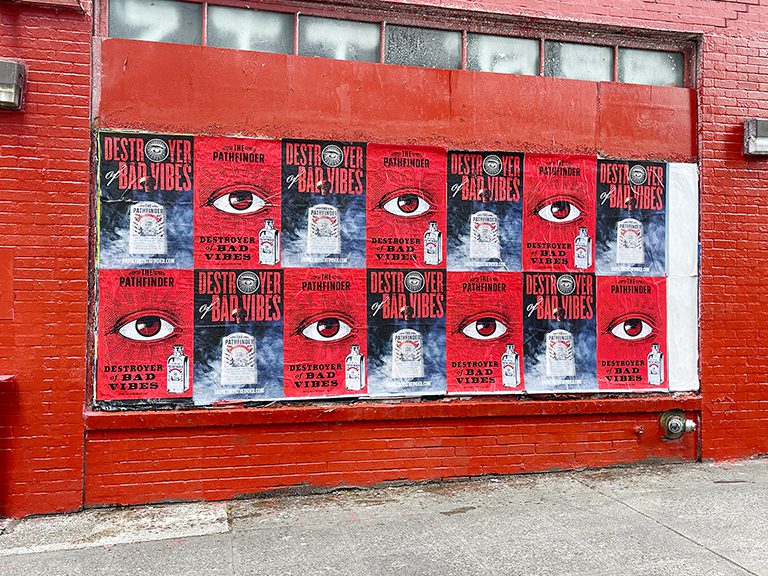
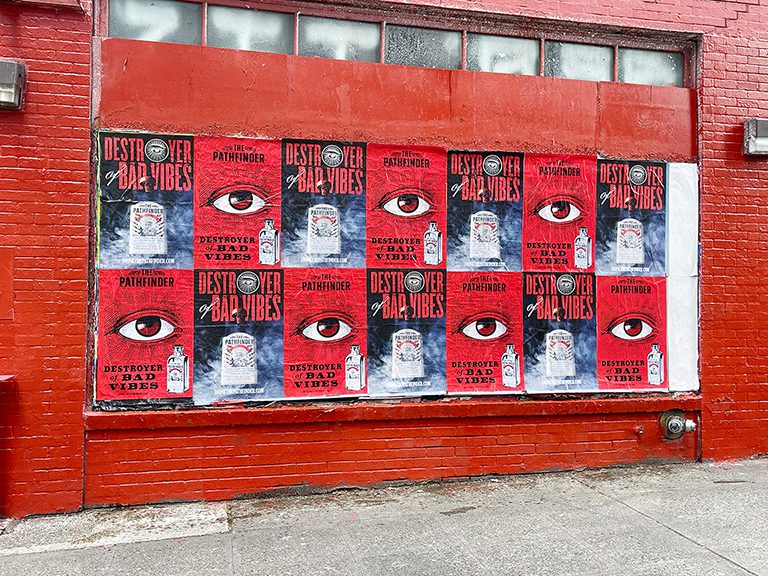
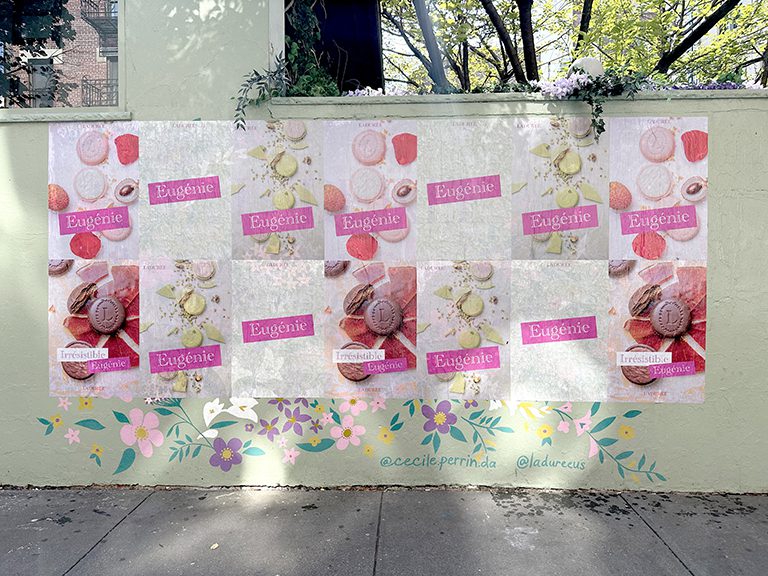
AGM’s Brooklyn-based crews execute fly posting and wheatpasting campaigns across New York — Bushwick warehouse walls, Williamsburg corridors, LES storefronts, Buffalo’s Elmwood Village, Rochester’s East End, and Yonkers’ waterfront district. Printed, installed, documented. No brokers.
New York is the country’s definitive fly posting market. The wheatpaste tradition that started on the utility poles and plywood construction barriers of lower Manhattan and Brooklyn in the 1980s has become a permanent feature of the city’s visual culture — so embedded in how New Yorkers process street-level communication that a well-placed poster campaign in Bushwick or Williamsburg generates a different category of engagement than the same poster in a market where the format is unfamiliar. Audiences in New York’s creative neighborhoods don’t just see fly posting — they read it, discuss it, photograph it, and share it. That cultural context is what makes New York the most productive fly posting market in the country for brands that understand how to use the format.
AGM’s base at Industry City, Unit 28, Brooklyn, NY 11232 is not incidental — it is the operational foundation of a New York fly posting program that has been executing campaigns in this market for clients including The Onion, Jay Ellis, Netflix, and brands across entertainment, consumer goods, and advocacy. The crews that install campaigns in Bushwick, Williamsburg, the Lower East Side, and Hell’s Kitchen are the same crews that handle the client relationship from first call through final reporting. No subcontractors, no regional vendors, no quality gap between what was promised and what was executed.
AGM's Brooklyn crews execute wheatpasting and street poster campaigns across New York City, Buffalo, Rochester, and Yonkers — printed, installed, and documented with no brokers and no subcontractors in the chain. Contact us at (646) 776-2770.
Select a city to explore Fly Posting Advertising opportunities.
Bushwick’s warehouse blocks between Flushing Avenue and the Cypress Hills L train corridor contain some of the largest, flattest, most adhesion-ready exterior wall surfaces in any American city. Former industrial buildings with four- and five-story blank masonry facades hold wheat paste adhesive through rain and wind in a way that smaller urban posting surfaces cannot. These walls are also in the direct eyeline of the walking audience that populates Bushwick’s nightlife, arts, and creative professional community — people who are out, walking, and conditioned by their neighborhood to notice and engage with what is on those walls. Williamsburg’s Bedford Avenue corridor and the plywood construction barriers that cycle through the neighborhood as development continues provide a secondary high-density posting zone with near-constant fresh inventory. The Lower East Side’s Orchard and Rivington Street corridors, Hell’s Kitchen’s 9th and 10th Avenue blocks, and the Soho/Nolita pedestrian zone each serve distinct demographics that specific campaign types — entertainment releases, fashion launches, food and beverage, advocacy — target with precision fly posting placements.
Buffalo’s Elmwood Village is the most walkable and arts-engaged neighborhood in western New York — a linear corridor of independent restaurants, coffee shops, boutiques, and music venues along Elmwood Avenue between Forest and Bidwell that draws the city’s 28-to-45 creative professional population on a daily basis. The foot traffic regularity on Elmwood Avenue means that fly posting campaigns accumulate repeat impressions from the same audience over multiple days — a compounding recall effect that broader-reach formats cannot match. The Allentown arts district immediately east of Elmwood carries a similar density of arts-engaged pedestrian traffic, with the added presence of galleries, live music venues, and the Allentown Arts Festival window in June. Buffalo’s building stock — brick industrial and commercial construction with large side-wall surfaces — provides excellent posting inventory in both neighborhoods.
Rochester’s East End district on East Avenue between Goodman and Culver concentrates the city’s arts-engaged entertainment community in a walkable nightlife zone. Independent restaurants, bars, music venues, and the proximity of the George Eastman Museum and Memorial Art Gallery make the East End one of the most culturally receptive streets in upstate New York for fly posting campaigns targeting the educated 28-to-45 professional demographic. Monroe Avenue’s commercial and dining corridor serves a slightly broader residential audience from the adjacent South Wedge, Park Avenue, and University neighborhoods — people who shop, eat, and socialize along a stretch that runs through three of Rochester’s most valuable residential target demographics. Fly posting on Monroe Avenue compounds with the independent-minded retail and dining audience that the street serves throughout the week.
Yonkers’ Hudson River waterfront redevelopment has brought a new density of arts and residential activity to a corridor that was underutilized for decades. The Yonkers Waterfront Arts District adjacent to the Metro-North station creates a pedestrian gathering zone that draws both creative residents and commuters who live in Yonkers and work in Manhattan. Getty Square’s downtown commercial strip serves the city’s diverse residential population with banking, retail, and dining — generating consistent daily foot traffic through the blocks immediately surrounding the transit hub. For brands seeking suburban New York coverage in a market where fly posting advertising saturation is dramatically lower than Manhattan, Yonkers delivers New York City proximity with significantly less visual competition for street-level attention.
New York campaigns use both the 24-by-36-inch standard format and the 48-by-72-inch large format depending on the campaign’s geographic and creative objectives. In Bushwick and Williamsburg, where the posting surface inventory includes large-format wall sections, the 48-by-72-inch format creates a dominant visual presence that commands the block-level attention its size justifies. In the Lower East Side and Hell’s Kitchen, where posting surfaces are more fragmented and the audience is more concentrated in smaller pedestrian corridors, the 24-by-36-inch format allows broader neighborhood coverage across more locations simultaneously. AGM advises on format selection based on the specific campaign market, the client’s creative, and the density objectives for each target zone within the New York market.
100 posters: contact us for pricing · 200: contact us for pricing · Extra creative: Contact us for pricing. · 72-hour rush up to 500 quantity available. Best for LES, Hell’s Kitchen, and multi-neighborhood NYC campaigns where broad coverage across many posting surfaces delivers maximum impression density.
100 posters: contact us for pricing · 200: contact us for pricing · Extra creative: Contact us for pricing. . Best for Bushwick and Williamsburg warehouse walls and Buffalo’s Elmwood Village where large posting surfaces justify the dominant visual scale that the 48×72 format commands.
Award Winning Personalized Service
You will get thoughtful, devoted, and individualized attention from our experienced, qualified, and professional personnel. Being one of the most illustrious agencies in Brooklyn, New York, American Guerrilla Marketing has been awarded the Best of Brooklyn title.
Nationwide
Industry City, Brooklyn, New York 11232
American Guerrilla Marketing
Hours
Mon - Fri: 9 AM - 5 PM
Sat & Sun: Closed
Automate your campaign with AGM’s Request for Proposal Builder. Simply answer a few quick questions about your campaign goals, markets, and timeline, and the system will generate a tailored presentation with recommended strategies, quantities, and pricing. Click the RFP Builder to instantly receive your customized proposal.
AGM’s New York fly posting campaigns begin at Industry City in Brooklyn — the same location where the crews stage their materials before heading into Bushwick, the Lower East Side, or Williamsburg for installation. Clients provide print-ready digital artwork at the specified poster dimensions; AGM handles print production, surface scouting, installation, and post-campaign GPS photo documentation. The documentation package covers every installed location with photographs confirming the poster’s position in context of the surrounding street environment, so clients can see exactly where their campaign ran and how it looks to the pedestrians who walk past it.
New York’s posting surface environment is highly competitive in the most active neighborhoods. AGM’s installation crews know which legal posting surfaces in Bushwick, Williamsburg, and the Lower East Side turn over quickly, which new construction barriers have fresh inventory, and which building owners have granted permission for campaign installations on their exterior walls. That operational knowledge, built from repeated New York campaign execution, is what separates AGM’s New York flyposting results from a national operator approaching the city without market familiarity.
Campaign duration in New York averages one to two weeks depending on the neighborhood, the season, and the competing poster inventory on the targeted surfaces. High-competition zones like Bedford Avenue in Williamsburg see faster turnover than the larger warehouse walls in deeper Bushwick. AGM factors this variability into campaign planning and timing recommendations.
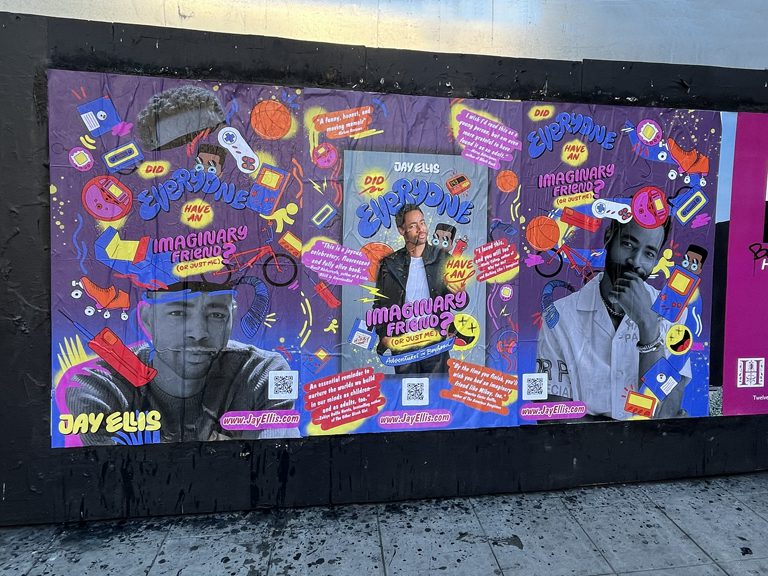
Entertainment and music releases are the backbone of New York fly posting demand. The Jay Ellis campaign AGM executed in Manhattan covered the Williamsburg, Lower East Side, Hell’s Kitchen, and Midtown corridors in the launch window before the entertainment release date — reaching the same audiences in their own neighborhoods that a digital campaign reaches in a feed but with the tactile, physical presence that a poster on a Williamsburg building wall carries that a social ad cannot. The Onion’s wheatpasting campaign in Manhattan targeted the media professional corridors in Midtown and Midtown West, reaching the editorial and advertising professional audience that The Onion needed to reach in a format those audiences themselves respect as authentically urban.
Consumer brands with national distribution and a specific New York cultural positioning objective — brands that need to be seen as authentically present in Bushwick, not just digitally targeted at Bushwick — use fly posting to establish the physical street presence that feeds credibility back into their broader marketing. The brand that appears on a Bushwick warehouse wall is perceived differently than the brand that only appears in a social feed by the same Bushwick residents — even when the same people see both.
AGM executes fly posting campaigns across all five New York City boroughs — Manhattan (Lower East Side, Hell’s Kitchen, Soho, Nolita, Midtown), Brooklyn (Bushwick, Williamsburg, Greenpoint, Flatbush, Park Slope, Crown Heights), Queens (Astoria, Long Island City, Ridgewood, Flushing), the Bronx, and Staten Island. The most active campaign zones are Brooklyn’s creative corridors and lower Manhattan’s entertainment and nightlife districts. AGM also covers upstate New York markets including Buffalo, Rochester, and Yonkers.
Yes. AGM has executed fly posting and wheatpasting campaigns in New York City for clients including The Onion (Manhattan), Jay Ellis (Williamsburg, Lower East Side, Hell’s Kitchen, Midtown), and others across entertainment, consumer goods, and advocacy categories. The campaigns covered the key creative and nightlife corridors of Brooklyn and lower Manhattan.
New York campaigns run at AGM’s standard national pricing: 24×36-inch posters at contact us for pricing for 100 and contact us for pricing for 200. The 48×72-inch large format starts at contact us for pricing for 100 posters and contact us for pricing for 200. Additional creative designs are contact us for pricing and contact us for pricing respectively. A 72-hour rush posting option is available on the 24×36 format up to 500-poster quantity. Contact AGM’s Brooklyn office at (646) 776-2770 for a specific New York campaign quote.
Bushwick’s warehouse-block exterior walls between Flushing Avenue and the Cypress Hills L corridor remain the highest-quality large-format posting surface inventory in New York City — the building heights, wall scale, minimal window interruption, and nighttime pedestrian density from the arts and nightlife community make it the top option for large-format wheatpaste campaigns. Williamsburg is better for saturation campaigns that target Bedford Avenue’s retail and pedestrian corridor. The Lower East Side is best for entertainment and music campaigns targeting the nightlife-engaged 24-to-35 demographic. AGM matches the campaign’s creative objectives to the neighborhood that delivers the most productive audience for that specific campaign.
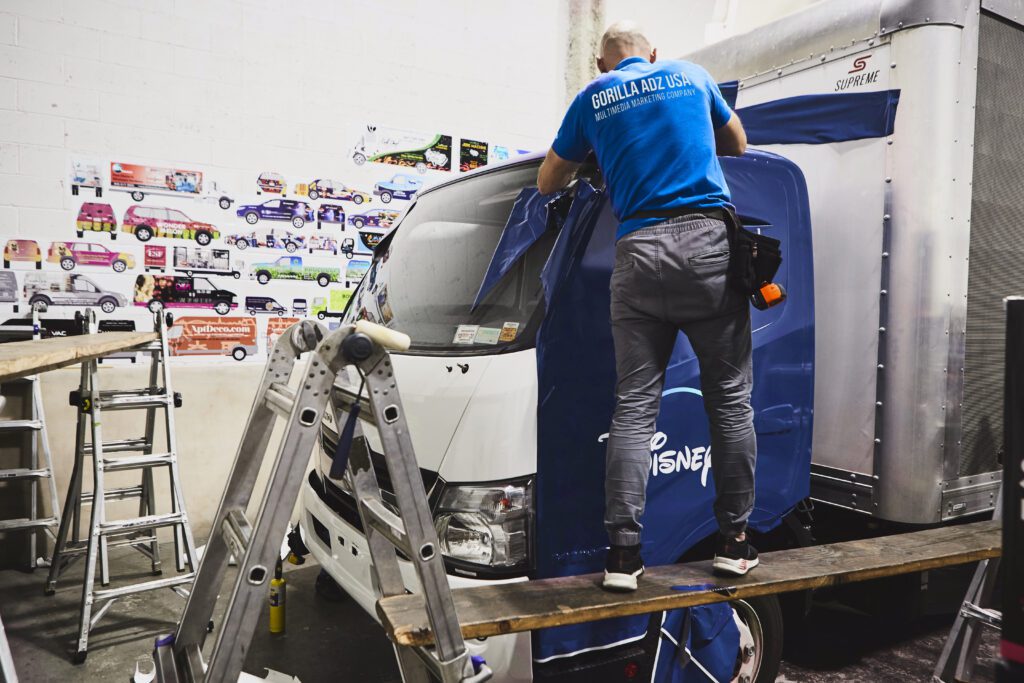
AGM operates from Industry City, Unit 28, Brooklyn, NY 11232 — the same facility from which LED billboard trucks deploy, where stencil and decal campaigns are staged, and where the fly posting crews prep their materials before installations. The Brooklyn base means zero transit overhead for most New York City campaigns: crews can reach Bushwick, Williamsburg, and the Lower East Side in minutes, which reduces staging time and allows more flexible campaign scheduling including short-notice activations that national operators cannot match.
Yes. AGM coordinates multi-market New York campaigns covering New York City alongside Buffalo, Rochester, and Yonkers as unified campaign bookings. A campaign hitting Bushwick on a Thursday and the Elmwood Village in Buffalo on a Saturday is a standard multi-city New York booking — planned, installed, and documented as a single campaign with one contact and one reporting package. Contact AGM to discuss multi-city New York fly posting pricing.
Campaign duration varies by neighborhood, surface type, and seasonal conditions. High-competition zones like Bedford Avenue in Williamsburg and the lower East Village see faster poster turnover — typically five to seven days before competing campaigns reduce visibility. Bushwick’s warehouse wall installations, because of their surface scale and lower posting competition from other advertisers, frequently last the full one-to-two-week window. AGM factors expected duration into campaign volume recommendations — higher competition zones benefit from larger quantity deployments to maintain presence as the campaign runs.
Post-campaign documentation includes GPS-referenced photographs of every installed location showing the poster in street context, with enough surrounding environment visible to confirm the neighborhood and the poster’s visibility to pedestrians. For multi-zone NYC campaigns covering Bushwick, the Lower East Side, and Hell’s Kitchen, documentation covers each zone separately. Campaign documentation is delivered digitally within 24 hours of campaign completion.
Yes. The Onion campaign AGM executed in Manhattan specifically targeted the Midtown West and 6th Avenue corridors where media professional foot traffic concentrates during the workday — K Street equivalent corridors for the New York media industry. The 24×36-inch format on the utility structures and building facades along these corridors reaches the editorial, advertising, and marketing professional audience in their commute and lunch-hour pedestrian environment. This is a genuinely different audience from the Bushwick creative community, and AGM routes campaigns differently for each.
New York combines four factors that no other market replicates at the same scale: the highest pedestrian density in the US across the most diverse and concentrated neighborhoods; a street culture that actively reads and engages with fly posting as authentic communication rather than advertising intrusion; the largest concentration of media, entertainment, and cultural professionals whose attention translates directly into press coverage and social amplification; and AGM’s direct operational presence in Brooklyn that reduces campaign setup time and increases installation precision. The format works everywhere — it works differently, and better, in New York.