American Guerrilla Marketing
Nationwide Service
Media planning, media buying, billboard advertising, & guerrilla marketing
Street-level poster campaigns in one of the most foot-traffic-rich cities in America. American Guerrilla Marketing’s permanent Las Vegas office plans, prints, installs, and GPS-documents every campaign — no subcontractors, no handoffs, no accountability gaps.
Las Vegas presents a combination of foot traffic volume, pedestrian entertainment density, cultural geography, and street-level audience access that makes it one of the most strategically compelling fly posting markets in the country. No city of comparable size has a pedestrian entertainment economy operating at the scale Las Vegas does — one that draws visitors from every state and dozens of countries, concentrates them in walkable entertainment districts for multi-day stays, and supplements them with a local population of over 650,000 residents who use the city’s arts and entertainment infrastructure as part of their regular cultural life.
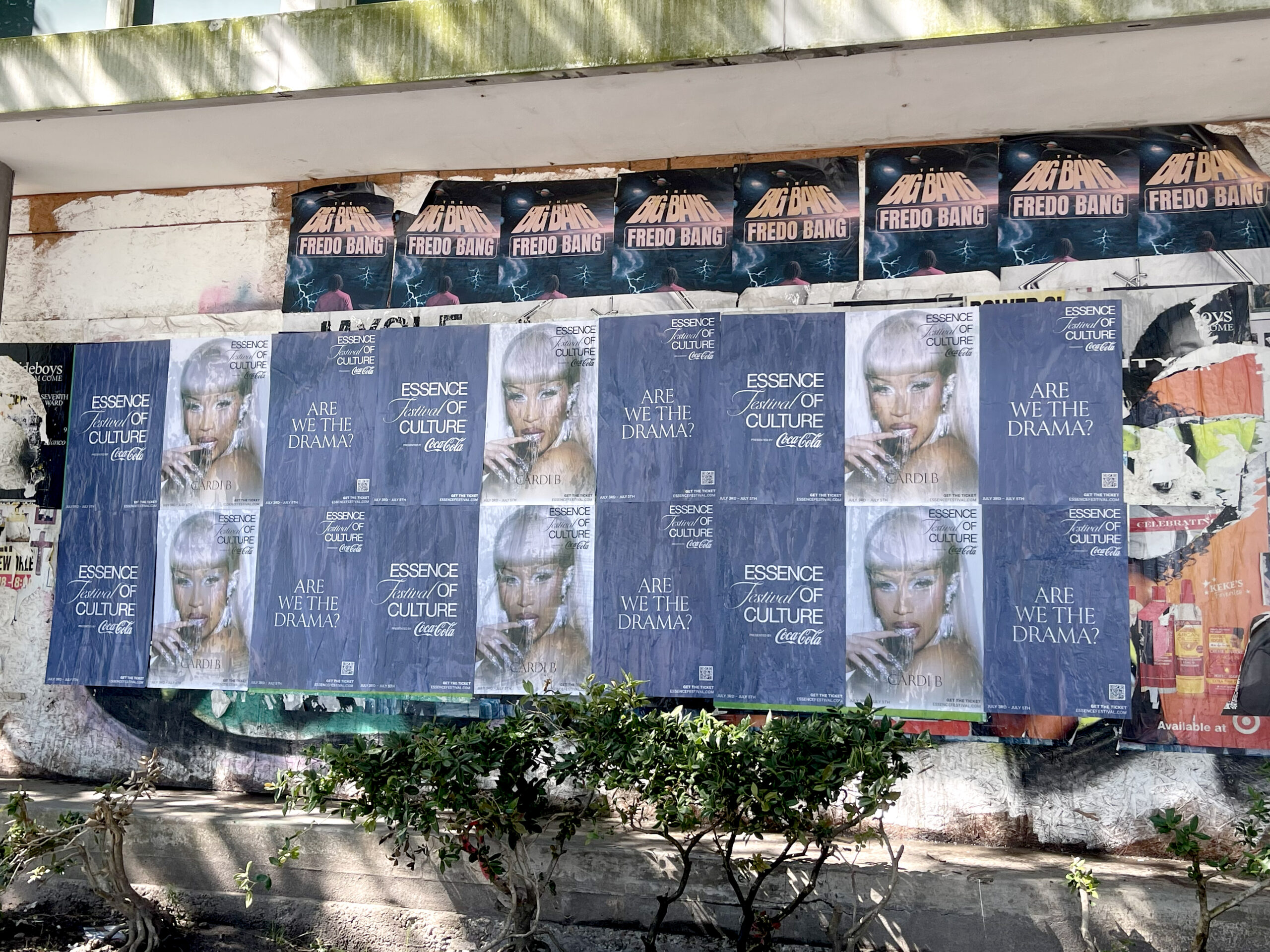
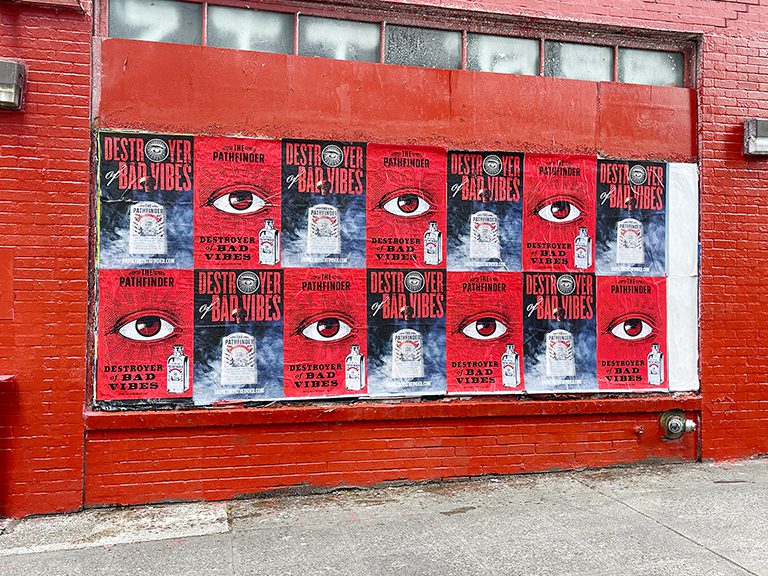
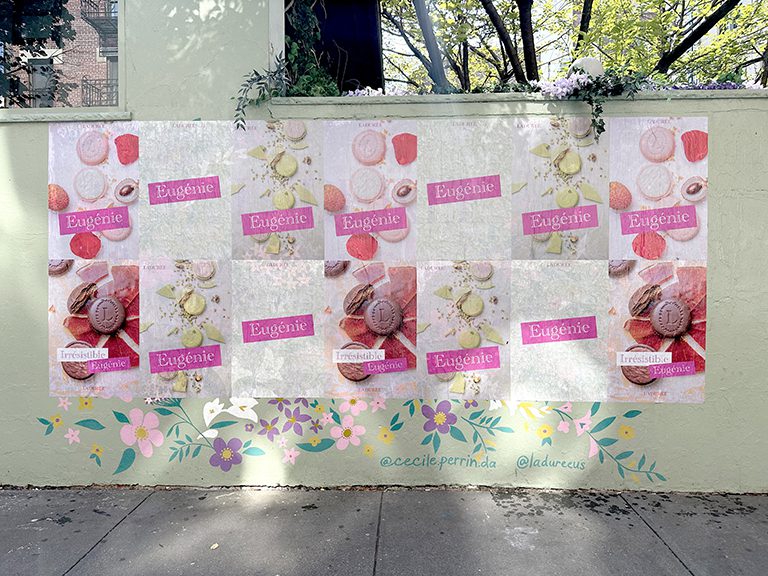
Fly posting — also called wheatpasting, wheat paste advertising, and street poster advertising — places large-format poster installations on high-visibility urban surfaces using durable wheat paste adhesive. The format has a long history in entertainment, fashion, and cultural marketing specifically because it operates at street level, in the physical environment where people move on foot, and registers as part of the city’s visual identity rather than as purchased advertising layered over it. In Las Vegas, where the built environment is itself a primary consumer experience, that integration into the physical landscape is not just a creative advantage — it is the mechanism by which street poster advertising achieves its reach.
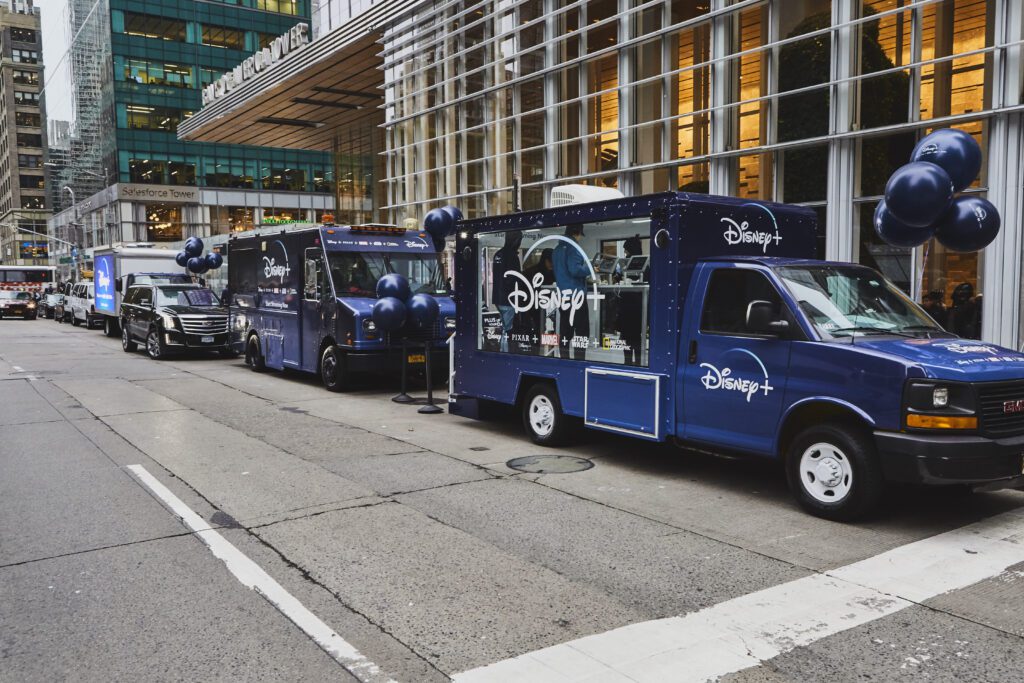
The Netflix wheatpasting campaign in Miami stands as one of the clearest demonstrations of what fly posting achieves in a major leisure market when executed with operational precision. In a city built around tourism, nightlife, and an entertainment-oriented pedestrian economy, Netflix’s campaign established brand presence at street level in the neighborhoods where its target audience was most physically concentrated — not through an algorithm that found those people digitally, but by occupying the surfaces they walked past. Las Vegas is that same kind of city at twice the visitor volume. The logic of street-level poster presence in a leisure market becomes more powerful, not less, as the audience density grows. For brands that want to reach the Las Vegas market the way Netflix reached Miami — with physical street presence that meets the audience where they are walking — fly posting is the format.
AGM maintains a permanent office in Las Vegas at 5940 S Rainbow Blvd PMB 1205, Las Vegas NV 89118, reachable at (702) 996-1806. This is not a campaign coordination number that routes to an out-of-state team — it is a local operational hub staffed by people who work in Las Vegas daily, know its surface landscape across every zone from the 18b Arts District to the UNLV perimeter, and can plan, execute, and adjust campaigns with the market intimacy that long-distance campaign management cannot replicate. Having a permanent Las Vegas office is the operational foundation that makes every other AGM claim about Nevada campaign quality meaningful.
The surface landscape available in Las Vegas for fly posting and guerrilla poster advertising is among the most varied and valuable in any American market. The 18b Arts District provides the kind of warehouse-era building exteriors that are the gold standard for wheat paste campaigns — clean, large, and positioned at eye level on pedestrian-scale streets. Fremont Street’s downtown corridor delivers the construction barrier inventory that only a city undergoing active downtown redevelopment can provide. The UNLV perimeter and Maryland Parkway corridor offer campus-adjacent surfaces reaching a concentrated young adult audience. East Fremont’s expanding Mojave Arts District provides frontier surfaces — largely unclaimed, visually clean, with almost no competing visual noise. Each of these zones has distinct surface characteristics and distinct audience profiles, and a well-structured Las Vegas campaign uses them in combination to achieve the kind of market-wide coverage that single-zone campaigns cannot generate.
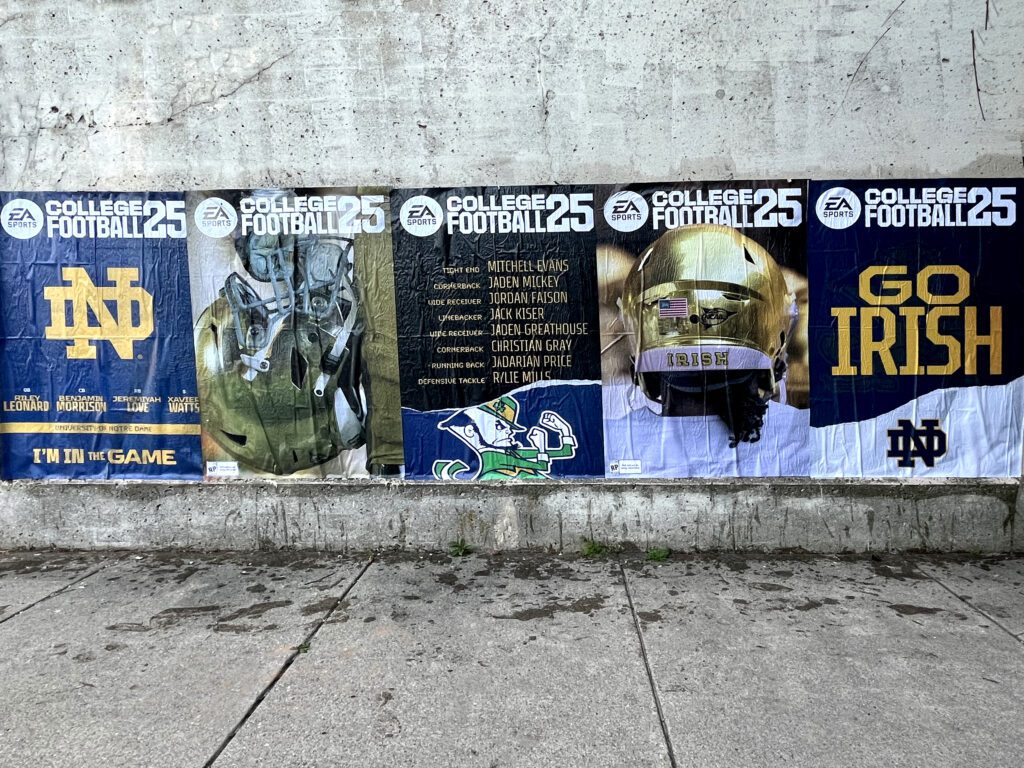
AGM’s client history reflects the breadth of what fly posting delivers in entertainment-economy cities. Netflix, The Onion, EA Sports, Biossance, and Shepard Fairey have all entrusted campaigns to AGM’s execution — brands whose target audiences and campaign objectives span entertainment, media, sports, beauty, and visual culture. That breadth matters in Las Vegas specifically because the city’s audience is itself unusually broad: a single Arts District fly posting campaign on First Friday reaches visual artists, independent business owners, music fans, and culture-seeking tourists simultaneously. Campaigns built around this audience diversity — rather than a narrow demographic slice — are where the format delivers its most outsized returns.
Recognition with the Best of Brooklyn award established AGM’s reputation as the standard-setter in urban guerrilla marketing. That recognition reflects the operational standards that clients in demanding markets — New York, Miami, Los Angeles — came to rely on: in-house print production, direct installation crews, GPS-documented photo proof, and complete post-campaign accountability. Every one of those standards applies in full to Las Vegas campaigns executed out of AGM’s local Nevada office.
AGM's Las Vegas office is your local partner for Arts District anchor placements, Fremont Street coverage, UNLV campus perimeter campaigns, and multi-zone Las Vegas strategy. We print every poster, install every placement, and deliver GPS-documented photo proof — with no subcontractors anywhere in the chain.
Select a city to explore Fly Posting Advertising opportunities.
Most American cities have a fly posting market. Las Vegas has a fly posting opportunity. The distinction is meaningful: in a typical market, fly posting reaches the people who regularly move through a city’s pedestrian zones — local residents, commuters, arts-district visitors. In Las Vegas, fly posting reaches all of those people plus an additional 40-million-visitor-per-year audience that has specifically chosen to spend multiple days walking the city’s entertainment districts in a state of heightened visual and sensory engagement.
The Las Vegas visitor is a fundamentally different fly posting target than a commuter or a casual urban pedestrian. They are in the city deliberately, for leisure or entertainment, moving through neighborhoods on foot rather than by car, with their attention directed outward at the environment they came to experience. They are not scrolling a social feed on a morning commute. They are looking at the city. A fly posting installation on a Fremont Street construction barrier or an Arts District warehouse wall intercepts that outward-directed attention with a physical brand message that registers in the same moment of experience as the restaurants, murals, and storefronts the visitor is consciously taking in.
Beyond the tourism audience, Las Vegas has developed a robust local cultural economy anchored in the 18b Arts District, supported by the University of Nevada Las Vegas academic community, and expressed through the independent creative economy that has grown alongside the city’s arts infrastructure over the past decade. This local creative class — artists, musicians, designers, gallerists, food and beverage entrepreneurs — is a permanent resident audience that interacts with the Arts District’s surface landscape on a regular basis. First Friday, the monthly art walk that runs through the 18b Arts District, concentrates this audience in a single geographic zone on a predictable monthly schedule, providing a known high-traffic window that campaign timing can be built around. The convergence of the local creative community and the event-driven visitor audience during First Friday represents one of the highest-density fly posting impression windows available in any American market.
Las Vegas’s convention economy adds a third audience layer that few other American cities can offer. The Las Vegas Convention Center and the resort-based convention infrastructure host some of the largest professional trade events in the world — CES, SEMA, the International Builders’ Show, and hundreds of other events that bring targeted professional audiences to the city on a predictable annual schedule. Convention attendees are a captive street audience: they arrive in Las Vegas for a specific professional purpose, stay for multiple days, and move through the city’s streets, restaurants, and entertainment zones during off-convention hours. Fly posting campaigns timed to align with specific convention dates can reach these highly targeted professional audiences at street level in the days surrounding the event — a precision-timing capability that has significant value for B2B brands, technology companies, and industry-specific marketing campaigns.
Las Vegas’s fly posting surface landscape spans five primary zones, each serving a distinct audience segment and offering specific surface characteristics that inform format selection and campaign placement density.
The 18b Arts District is the premier fly posting environment in Las Vegas and one of the most valuable wheat paste advertising surfaces in the American Southwest. The district’s building stock — former light-industrial and commercial structures from Las Vegas’ mid-century growth period — provides the kind of large, blank, street-facing exterior walls that are the ideal substrate for wheat paste campaigns. The surfaces are clean, the walls are tall, and the pedestrian orientation of the district’s streets puts those walls directly in the sightline of foot traffic at conversational distances. First Friday, the monthly art walk that draws thousands of attendees through the Arts District on the first Friday of every month, creates a recurring high-density impression window that makes the 18b Arts District one of the most temporally predictable fly posting environments in the country. Construction barriers from ongoing Arts District development provide additional rotating surface inventory. For campaigns targeting Las Vegas’s creative, culturally engaged, and arts-adjacent consumer population, the 18b Arts District is the essential surface zone — and the one where 48×72 large-format dominance placements achieve their maximum visual authority.
The Fremont Street corridor — encompassing the Fremont Street Experience, Container Park, and the surrounding independent venues and bars that have made Downtown Las Vegas a distinct entertainment destination — generates evening and weekend foot traffic from a dual audience: locally embedded Las Vegas residents who prefer downtown’s character over the Strip’s scale, and the adventurous tourist who seeks out what Las Vegas looked like before the mega-resort era. The ongoing downtown development projects that have characterized Las Vegas’s core redevelopment effort over the past decade produce construction barriers that are among the most visible and high-quality fly posting surfaces in the city — fresh, clean, well-positioned, and adjacent to foot traffic that moves at leisure pace rather than commuter speed. Fremont East, the stretch of Fremont Street beyond Charleston Boulevard, has developed its own distinct bar, art, and music venue ecosystem that draws a younger local audience with strong cultural brand engagement. For campaigns that want to occupy the physical environment of authentic Las Vegas rather than the tourist-facing identity of the Strip, Fremont Street and its surrounding downtown blocks are the primary surface zone.
The University of Nevada Las Vegas campus, approached from Tropicana Avenue to the south and Paradise Road to the west, generates a concentrated student, faculty, and university-event audience with year-round pedestrian presence. Maryland Parkway — the major commercial arterial running north along the eastern edge of the UNLV campus — supports independent retail, food and beverage, entertainment venues, and the kind of college-adjacent commercial ecology that creates consistent foot traffic from the student demographic throughout the academic year. Fly posting on the campus perimeter and along Maryland Parkway reaches a 30,000-student audience at the points of highest daily movement — walking to and from campus, accessing commercial services along the corridor, and gathering at the independent venues that serve the university community. UNLV’s event calendar — games, concerts, productions, graduation — adds event-driven foot traffic surges that amplify campaign impressions during high-attendance windows. For brands targeting the young adult Las Vegas consumer, the UNLV perimeter and Maryland Pkwy corridor provide surface access that no other Las Vegas zone concentrates in a comparable geographic footprint.
The Mojave Arts District — the frontier zone of Las Vegas’s arts district expansion moving eastward along Fremont Street beyond the established 18b boundary — represents one of the most strategically interesting fly posting environments in the city precisely because it is still being claimed. Blank warehouse walls and industrial building sides in this zone carry almost no competing visual noise — no murals, no existing poster campaigns, no commercial signage layering that reduces individual poster visibility. A 48×72 dominance-format installation on an East Fremont warehouse wall stands in an environment where it does not compete for visual attention; it owns its surface completely. The emerging foot traffic that follows arts district expansion — the bars, studios, and pop-up venues that have begun opening east of the established Arts District boundary — is a forward-looking audience: the early adopters and arts-scene participants who will define the neighborhood’s cultural identity in the next several years. For brands that want to establish presence on the frontier of Las Vegas’s most culturally active neighborhood before that space becomes competitive, the Mojave Arts District offers timing advantage that cannot be replicated once the zone matures.
The commercial and entertainment corridors immediately east of the Las Vegas Strip — particularly Paradise Road between Flamingo and Tropicana — serve a mixed audience of hotel workers, locals navigating off-Strip services, and tourists exploring destinations beyond their resort zone. This corridor captures people in motion between the Strip and off-Strip destinations: the restaurant worker commuting to their shift, the tourist walking to a venue their concierge recommended, the local heading to a gym or a grocery store adjacent to the tourism infrastructure. Fly posting in this zone reaches the Strip-adjacent audience without the extreme visual competition of the Strip itself — where every surface is already monetized and the advertising environment is so saturated that individual placements struggle to achieve differentiated recall. The east-of-Strip corridors are where a brand can establish street-level presence that the tourism audience encounters in its movement through the city’s broader geography, without the cost and competition of trying to cut through the Strip’s own advertising density.
Award Winning Personalized Service
You will get thoughtful, devoted, and individualized attention from our experienced, qualified, and professional personnel. Being one of the most illustrious agencies in Brooklyn, New York, American Guerrilla Marketing has been awarded the Best of Brooklyn title.
Nationwide
Industry City, Brooklyn, New York 11232
American Guerrilla Marketing
Hours
Mon - Fri: 9 AM - 5 PM
Sat & Sun: Closed
Automate your campaign with AGM’s Request for Proposal Builder. Simply answer a few quick questions about your campaign goals, markets, and timeline, and the system will generate a tailored presentation with recommended strategies, quantities, and pricing. Click the RFP Builder to instantly receive your customized proposal.
Las Vegas’s varied surface landscape — from the warehouse walls of the 18b Arts District to the construction barriers of Fremont Street to the campus-perimeter surfaces of the UNLV corridor — accommodates both primary fly posting formats in ways that are specific to each zone’s physical characteristics. Format selection in Las Vegas is not a generic decision; it is a zone-by-zone judgment about which scale of presence achieves the campaign’s objectives at each surface type.
The 24×36 standard format is the tactical foundation for Las Vegas campaigns built around coverage density — reaching multiple districts within a single campaign window by placing enough posters across the Arts District, Fremont Street, and the UNLV corridor to generate cumulative impression frequency rather than singular statement presence. At two feet wide by three feet tall, the standard format operates effectively on the range of surface types available across Las Vegas’s fly posting zones: construction barriers, building wall sections, utility structures, and smaller commercial building facades. For campaigns with a broad Las Vegas audience objective — reaching the Arts District creative community, the downtown entertainment visitor, and the UNLV student population within a single coordinated buy — the 24×36 format provides the per-unit efficiency needed to achieve meaningful density across all three zones.
The 48×72 large format — four feet wide by six feet tall — finds its highest expression in Las Vegas on the warehouse-era exterior walls of the 18b Arts District and on the large construction barrier panels of the Fremont Street corridor. At this scale, a poster does not share attention with its environment; it defines the visual reference point for the block it occupies. Arts District walls built for industrial use offer the raw square footage that makes the 48×72 format read at its intended scale — filling the wall, commanding the sightline, and creating the kind of neighborhood-landmark presence that drives the word-of-mouth and social media secondary exposure that supplements a campaign’s direct street impressions. For entertainment launches, cultural campaigns, and premium brand entries into the Las Vegas market, the 48×72 format on an Arts District wall is the highest-impact single placement available in Nevada.
Both formats carry a one-to-two-week on-surface campaign duration. Las Vegas’s desert climate maintains adhesion quality and color fidelity across the full campaign window — dry air and low humidity preserve the visual intensity of poster installations in ways that more humid markets cannot guarantee. Many Las Vegas campaigns employ a combined format strategy: 24×36 for district-wide density across multiple zones and 48×72 for anchor statement placements at the campaign’s most strategically important surfaces. This combination achieves both reach and presence simultaneously within a unified campaign budget. Contact AGM’s Las Vegas office at (702) 996-1806 to discuss format strategy specific to your Las Vegas campaign objectives.
For campaigns timed to Las Vegas event windows — convention weeks, major entertainment events, or the First Friday art walk — installation scheduling accounts for the lead time needed to establish poster presence before the event’s peak foot traffic. Posters going up three to five days before a major event allow awareness to build in the zone before the target audience concentration reaches its maximum. AGM’s Las Vegas team manages event-calendar alignment as part of campaign planning, not as an afterthought.
Las Vegas campaign execution begins with a planning conversation at AGM’s local office. The first question is always audience geography: which Las Vegas zones concentrate the people this campaign needs to reach? The Arts District creative community, the Fremont Street entertainment visitor, the UNLV student population, the convention-attending professional, and the Strip-adjacent mixed audience are five different people who move through five different Las Vegas environments. Campaign zone selection is the decision that determines everything downstream — surface selection, format mix, installation timing, and impression volume per audience segment.
Once the zone strategy is established, AGM’s Las Vegas team conducts current-condition surface scouting across the selected zones. Construction barrier availability on Fremont Street changes as development projects progress. The Arts District’s wall inventory shifts as new buildings go up and existing buildings change use. The UNLV corridor’s available surfaces vary by academic calendar timing. Scouting confirms the specific placements that will maximize campaign impact given conditions at the time of installation, rather than executing against a static surface map that may not reflect current availability. This field-level planning is something only a team physically operating in Las Vegas can do with accuracy.
Print production for Las Vegas campaigns is handled entirely in-house by AGM. Every poster installed on a Las Vegas surface was printed by AGM — not sourced from a third-party vendor whose color consistency and substrate quality vary from run to run. In-house production means the organization accountable for the campaign’s visual impact controls every variable in the production chain: paper weight, ink density, color fidelity to client brand standards, and poster dimensions that match the specified format exactly. There are no surprises at installation time from print vendor errors or inconsistencies.
Installation crews operate with the market knowledge that comes from working in Las Vegas regularly. The team executing your campaign knows which Arts District surfaces hold paste best, which Fremont Street construction barriers are freshest, and which UNLV corridor locations generate the highest student pedestrian volume at different times of day. That operational knowledge translates directly into placement quality — the difference between a poster that occupies a technically available surface and one that occupies the right surface for maximum impression impact.
Every Las Vegas placement is GPS-tagged and photographed at installation. The post-campaign photo proof package covers every poster in the campaign — location, surface, and condition at time of installation. Because AGM executes without subcontractors, the documentation chain is clean: the team that went up with the poster is the team delivering the proof that it went up. No third-party reports, no aggregated logs from multiple crews, no gaps between what was planned and what appears in the post-campaign package. The GPS photo documentation AGM delivers from Las Vegas campaigns is the same standard the company has maintained across clients including Netflix, The Onion, EA Sports, Biossance, and Shepard Fairey — and it is what clients receive on every Las Vegas execution regardless of campaign scale.
AGM’s Las Vegas office remains the ongoing point of contact throughout the active campaign window. If a placement needs attention during the one-to-two-week surface period, the local crew can respond without the logistics overhead of coordinating from out-of-state. That proximity — the same team planning the campaign is the same team that can respond to it in real time — is one of the concrete advantages that a permanent Las Vegas operational presence provides over campaign operators who run Nevada from a remote base.
It doesn’t — and that’s the point. Fly posting in Las Vegas is not about competing with the Strip’s visual saturation; it is about operating in the zones where the Strip’s advertising density does not reach. The 18b Arts District, Fremont Street, and the UNLV corridor are environments where street poster advertising is the highest-visibility format available, not one of dozens fighting for the same sightline. This is precisely why brands choose fly posting for Las Vegas over Strip-adjacent media: instead of being one more light among thousands, a fly posting campaign occupies a surface where it has no direct competition. The visual environment in these zones is orders of magnitude less saturated than the Strip, which makes individual placements far more impactful per impression delivered.
First Friday is a monthly community arts event organized around the 18b Arts District that has grown into one of the most well-attended recurring cultural events in Las Vegas. On the first Friday of each month, galleries open their doors, artists set up outdoor installations, food vendors activate, and the district’s streets fill with thousands of attendees — local residents, arts community regulars, and visitors who have included the event on their Las Vegas itinerary. For fly posting, First Friday creates a predictable and recurring high-density impression window: if a campaign’s posters are on Arts District walls before First Friday, they reach the city’s most culturally engaged consumer population at the moment of highest foot traffic concentration in the zone. AGM’s Las Vegas team accounts for First Friday timing in Arts District campaign installation scheduling as a standard practice.
Strip billboard placements in Las Vegas are among the most expensive out-of-home advertising positions in the country — and they operate in an environment so visually saturated that individual placements struggle to achieve differentiated recall against dozens of competing messages in the same sightline. Fly posting operates in the pedestrian zones where the advertising environment is not saturated, where individual placements face no visual competition at the surface level, and where the format’s street-level physicality registers with the kind of cultural authenticity that mass out-of-home placements cannot replicate. Fly posting is also dramatically more cost-efficient than Strip billboard inventory, allowing a brand to achieve coverage across three or four high-value Las Vegas zones within a campaign budget that would fund only a fraction of a Strip billboard face’s weekly rate. The return calculation consistently favors fly posting for brands whose target audience moves through the Arts District, Fremont Street, and campus-adjacent zones rather than through the Strip’s resort corridor.
AGM’s Las Vegas office at 5940 S Rainbow Blvd PMB 1205, Las Vegas NV 89118 is a working operational base, not a mailing address. The team based there scouts surfaces, manages installation scheduling, executes campaigns, and monitors placement conditions across the active window — all with the daily market familiarity that comes from working in Las Vegas continuously. When a construction barrier on Fremont Street changes availability, when an Arts District wall becomes newly accessible, or when a campaign needs a reinstallation response during the active window, the Las Vegas team responds in real time rather than coordinating remotely. That operational proximity is the difference between a campaign that adapts to current market conditions and one that executes against a plan built on outdated surface information. No out-of-state campaign operator can replicate what a permanent local office provides.
UNLV enrolls approximately 30,000 students across its Las Vegas campus, with additional graduate and professional program enrollment that brings the campus community to a total of roughly 35,000. The university’s location in the central Las Vegas urban area — bordered by Tropicana Avenue, Maryland Parkway, and Paradise Road — means the student population moves through a dense commercial and residential environment during their daily campus life, not through a suburban college-town bubble isolated from the city. Fly posting on the campus perimeter walls, along Maryland Parkway, and on the commercial surfaces of the surrounding corridors reaches this student audience during its daily movement between campus, residential areas, and off-campus commercial destinations. The format’s cultural register — street-level, physical, arts-adjacent — aligns naturally with the aesthetic sensibility of a young urban university population in a city with an active arts scene, making it more resonant than digital advertising competing for attention on the same screens students use for coursework, social media, and entertainment.
The Mojave Arts District refers to the zone east of the established 18b Arts District boundary along Fremont Street — a corridor that is actively developing as the arts district’s footprint expands eastward. The neighborhood’s current state is characterized by blank warehouse walls and industrial building sides with minimal existing visual clutter: no established mural programs, no legacy signage competing for wall space, no existing poster campaigns that a new installation has to cut through. For fly posting, this visual cleanliness translates directly into placement impact — a campaign in the Mojave Arts District has wall surfaces to itself in a way that the more established 18b District does not. The emerging foot traffic from new bars, studios, and cultural venues opening in the zone adds a forward-looking audience that will grow as development accelerates. Brands that establish fly posting presence in the Mojave Arts District now position themselves ahead of the zone’s maturation.
Las Vegas operates on a denser major-event calendar than virtually any other American city — conventions at the Las Vegas Convention Center, residencies at major casino venues, music festivals, sports events at T-Mobile Arena and Allegiant Stadium, and annual cultural events like Life Is Beautiful create recurring windows of concentrated specific-audience foot traffic that can dramatically amplify fly posting impression volume when campaigns are timed to align with them. AGM’s Las Vegas team incorporates event calendar analysis into campaign planning as a standard service: identifying which events align with a brand’s target audience, establishing installation timing that places posters in the relevant zones before peak event attendance, and structuring campaign geography around the areas where event audiences move most densely. For brands with audience profiles that align with specific Las Vegas event demographics, timing is a multiplier on campaign impact that requires local event-calendar knowledge to execute correctly.
The 18b Arts District offers some of the most varied and high-quality fly posting surfaces of any American urban arts district. Primary surfaces include the large blank exterior walls of former warehouse and light-industrial buildings that line the district’s pedestrian streets — typically brick or concrete facades oriented toward foot traffic with significant unoccupied square footage that comfortably accommodates 48×72 installations. Construction barriers from ongoing Arts District development projects provide additional rotating inventory of freshly installed, clean surfaces directly in the path of the district’s heaviest pedestrian corridors. Utility infrastructure, commercial building sides, and blank façade sections on transitional buildings between the Arts District’s established and developing zones round out the available surface inventory. AGM scouts specific surfaces in advance of each campaign to identify those with the current best adhesion conditions and highest foot traffic exposure.
Yes, and convention-aligned timing is one of the most effective strategies for reaching targeted professional audiences in Las Vegas at street level. Major conventions like CES, SEMA, and the International Builders’ Show bring tens of thousands of industry professionals to Las Vegas for multi-day stays, during which they move through the city’s restaurants, bars, and entertainment zones outside of convention hours. Fly posting campaigns installed in the zones surrounding convention venues and in the downtown and arts district entertainment corridors that convention attendees frequent reach this concentrated professional audience during its off-convention leisure time — the moments when attention is highest and the guard against marketing messaging is lowest. AGM’s Las Vegas team can plan convention-timed installations around the LVCC perimeter, along Paradise Road, and in downtown zones that convention-goers populate in the evenings. Reach (702) 996-1806 to discuss convention-aligned Las Vegas campaign timing.
The commercial corridors immediately east of the Strip — particularly Paradise Road between Flamingo and Tropicana — are approached as a reach zone rather than a prestige zone in AGM’s Las Vegas campaign strategy. Surface availability in this corridor is more constrained than in the Arts District or Fremont Street zones, because the commercial environment immediately adjacent to the Strip is densely developed with retail, hospitality, and service infrastructure that leaves fewer available blank wall or barrier surfaces. Where surfaces exist, they reach a mixed audience that includes hotel employees, locals accessing off-Strip commercial services, and tourists in motion between their resort and a specific off-Strip destination. The Strip-adjacent corridor works best as a complement to Arts District and Fremont Street anchor placements rather than as a standalone fly posting zone, extending campaign geographic reach without relying on the saturated visual environment of the Strip itself.
Las Vegas fly posting is effective year-round with meaningful seasonal variation in audience composition rather than total audience volume. Summer months bring higher heat — which does not materially affect paste adhesion in Nevada’s dry climate — and a slight shift in the visitor demographic toward families and heat-seekers rather than the convention-heavy fall-through-spring calendar. Fall, winter, and spring are the peak convention seasons, making them particularly valuable for campaigns targeting professional audiences aligned with specific industry events. The First Friday art walk runs monthly throughout the year, making the Arts District a consistent high-impression zone regardless of season. The UNLV campus audience peaks during the academic year, making fall semester launch and spring semester close the highest-foot-traffic windows for campus-perimeter campaigns. Year-round Las Vegas campaigns are viable; seasonally timed campaigns optimize for specific audience concentrations that align with event and academic calendars.
Fremont East is the stretch of East Fremont Street beyond the Fremont Street Experience canopy, running into a dense concentration of independent bars, live music venues, cocktail lounges, and creative establishments that have made it one of the most locally beloved entertainment zones in Las Vegas. Unlike the Strip, which is built around resort mega-properties and their internal entertainment ecosystems, Fremont East is a street-level, independently operated entertainment corridor where pedestrian traffic moves between venues on foot at the leisurely pace of an evening out. This creates a fly posting audience that is engaged, mobile, and moving slowly enough to read and absorb street-level messaging without the sensory overwhelm that the Strip generates at larger scale. The Fremont East demographic skews more local, younger, and more culturally engaged than the mid-Strip tourist — making it a distinctly valuable fly posting environment for brands whose target consumer is the Las Vegas creative and entertainment-scene participant rather than the mass tourism visitor.
Every Las Vegas placement in an AGM campaign is GPS-tagged and photographed at the time of installation by the crew executing the work. The GPS coordinates embedded in installation photos provide verifiable location data that clients can cross-reference against the planned surface zone map. Photographic documentation captures each placement in context — showing the surface, the poster condition, and the surrounding environment at the time of installation. Because AGM operates without subcontractors in any Las Vegas campaign, the documentation chain is closed: the team accountable for installing the campaign is the team responsible for the photo proof, eliminating the information gaps that occur when installation and documentation are handled by different organizations. The post-campaign photo package is delivered to clients as a complete record of their Las Vegas street-level presence, suitable for internal campaign reporting, agency review, and brand portfolio documentation.