American Guerrilla Marketing
Nationwide Service
Media planning, media buying, billboard advertising, & guerrilla marketing
Street poster campaigns in one of the mid-Atlantic’s most creatively charged cities — Station North, Fells Point, Hampden, Charles Village, and beyond.
Baltimore operates at a frequency that most mid-Atlantic cities don’t. It has the bones of a post-industrial city — warehouses, brick facades, blank commercial building sides, plywood-hoarded redevelopment sites — layered over a neighborhood culture that is intensely local, deeply creative, and fiercely independent. That combination produces exactly the kind of surface inventory and audience engagement that makes fly posting campaigns perform above expectation.
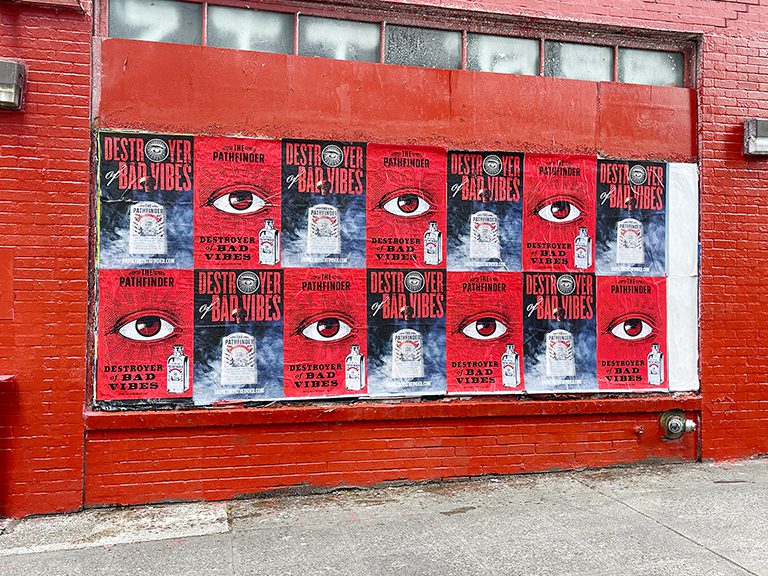
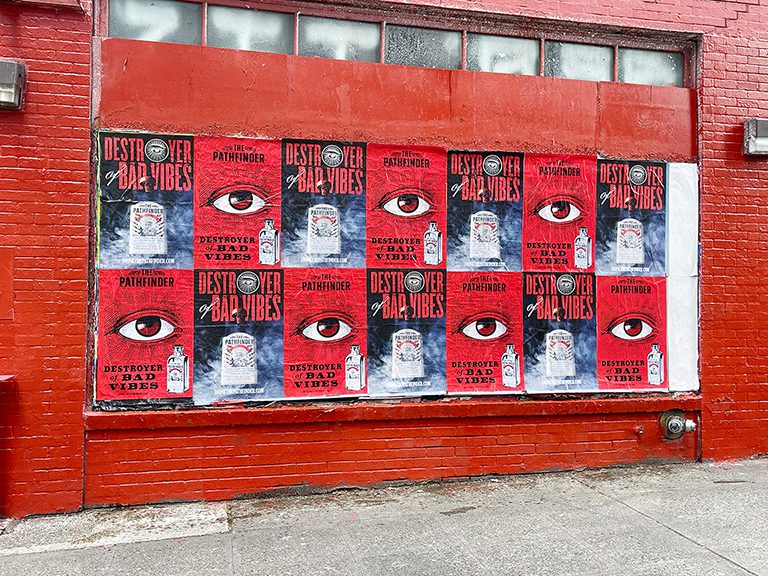
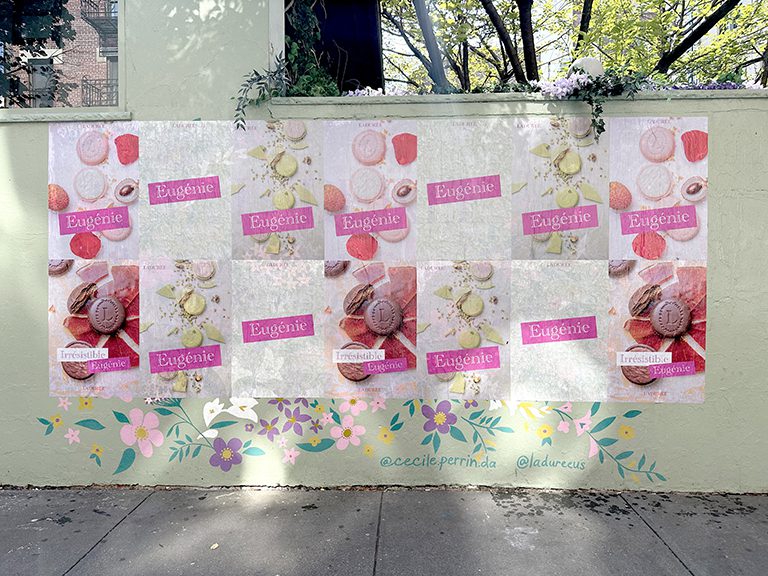
American Guerrilla Marketing brings the same standard of installation craft and neighborhood targeting that built our reputation in Brooklyn to every Baltimore campaign we run. Our direct in-house crews — no subcontractors, ever — know how to find the right surfaces, place posters at the right height and angle for the pedestrian sightline, and maximize coverage in the corridors that actually matter. When the campaign is done, you get a full GPS-tagged photo report showing exactly where every poster landed.
Baltimore is a city where people notice walls. The arts community is enormous relative to the city’s size — more arts organizations per capita than most American metros — and that arts culture shapes how residents and visitors navigate neighborhoods. People who attend gallery openings at Motor House, catch shows at Ottobar, browse the galleries lining North Charles Street, or walk Fells Point’s cobblestone blocks are genuinely looking at what’s around them. A well-placed fly posting campaign in Baltimore doesn’t fight for attention — it earns it.
Station North, Fells Point, Hampden, Charles Village — we know Baltimore's neighborhoods, we know its surfaces, and we know how to run a campaign that actually lands.
Select a city to explore Fly Posting Advertising opportunities.
Baltimore’s geography rewards specificity. The city is organized around distinct neighborhoods with very different characters, foot traffic patterns, and audience profiles. Knowing which blocks to hit in which neighborhoods — and which surface types hold best in each — is what separates an effective Baltimore campaign from a wasted one. Here’s how we think about the city’s core fly posting territory.
Station North is Baltimore’s officially designated arts district, and its surface inventory matches that designation. The neighborhood contains a concentration of blank warehouse walls, gallery-adjacent building sides, and construction plywood barriers that rivals creative-market neighborhoods in Brooklyn and LA. The audience here is deeply arts-engaged — creative professionals, gallery visitors, musicians, students from MICA and nearby institutions, and the service and retail workers who keep Baltimore’s creative economy running. North Avenue at Charles Street is the heart of the district, but the inventory extends across multiple walkable blocks in every direction. For entertainment campaigns, arts events, cultural releases, and consumer brands targeting a creative demographic, Station North is Baltimore’s highest-priority fly posting territory.
Charles Village sits on the academic axis connecting the Maryland Institute College of Art to Johns Hopkins University’s Homewood campus, which puts a dense concentration of art students, faculty, graduate students, and young professionals in a walkable neighborhood with excellent surface characteristics. The commercial blocks along North Charles Street have brick facades and blank building sides that hold wheat paste exceptionally well. The audience here is educated, culturally engaged, and receptive to visual campaigns that take design seriously. Brands in fashion, music, entertainment, and creative technology consistently find this corridor a strong performer. The foot traffic patterns here are driven by academic rhythms — busiest during the academic year, still active year-round due to the neighborhood’s commercial and residential density.
Fells Point is one of Baltimore’s oldest and most intact historic neighborhoods, built around a working waterfront that’s now a restaurant, bar, and retail destination. The surface character is distinct from the rest of the city: historic brick facades on Thames Street and the Broadway corridor, narrow cobblestone blocks that create a pedestrian experience unlike anywhere else in the mid-Atlantic. Foot traffic in Fells Point is driven by nightlife, dining, and weekend tourism — the audience here skews toward the 25–40 demographic that’s highly receptive to brands with character, authenticity, and a point of view. Evening and weekend foot traffic is particularly concentrated, making Fells Point an ideal complement to daytime-heavy arts district coverage in a multi-neighborhood Baltimore campaign.
Hampden is Baltimore’s beloved quirky neighborhood — home to the annual HonFest festival, a strip of independently owned shops and restaurants on 36th Street (“The Avenue”), and a community identity that’s genuinely unlike anything else in the city. The pedestrian foot traffic on The Avenue is among Baltimore’s highest for a non-downtown corridor, and the audience includes both longtime local residents and the stream of visitors who come specifically to experience Hampden’s character. Surface availability is concentrated around the commercial strip and the residential blocks that fan out from it. For brands that want to signal authenticity, local connection, and independence, Hampden placement delivers a cultural credibility signal that more polished commercial corridors can’t replicate.
Remington is one of Baltimore’s fastest-evolving neighborhoods — a former industrial corridor that has attracted the city’s young creative professional population thanks to the anchor pull of R. House, the converted automotive space turned food hall, and the residential development that has followed it. The neighborhood’s building stock still carries significant blank wall and warehouse-side inventory, even as the population and amenity base has shifted upmarket. That combination of raw industrial surface character and a newly arrived creative-professional audience is exactly the profile that makes a fly posting campaign perform. Remington rounds out a North Baltimore campaign that hits Station North, Charles Village, and Hampden, giving a campaign both the arts-district credibility and the emerging-neighborhood momentum.
Award Winning Personalized Service
You will get thoughtful, devoted, and individualized attention from our experienced, qualified, and professional personnel. Being one of the most illustrious agencies in Brooklyn, New York, American Guerrilla Marketing has been awarded the Best of Brooklyn title.
Nationwide
Industry City, Brooklyn, New York 11232
American Guerrilla Marketing
Hours
Mon - Fri: 9 AM - 5 PM
Sat & Sun: Closed
Automate your campaign with AGM’s Request for Proposal Builder. Simply answer a few quick questions about your campaign goals, markets, and timeline, and the system will generate a tailored presentation with recommended strategies, quantities, and pricing. Click the RFP Builder to instantly receive your customized proposal.
Baltimore’s sports venues are among the most beloved in American professional sports. Oriole Park at Camden Yards is widely regarded as the gold standard of baseball stadium design, and M&T Bank Stadium is one of the most consistently sold-out venues in the NFL. The approach corridors to both stadiums — running through downtown Baltimore and the neighborhoods immediately surrounding the stadium complex — draw massive, concentrated audience flows on game days and major event dates throughout the season.
For campaigns that want to reach a mass-appeal Baltimore audience rather than a niche creative demographic, the stadium approach corridors provide surface inventory with exceptional foot traffic concentration. This is a different audience profile from the arts district neighborhoods — broader demographic range, more sports and entertainment-oriented, higher percentage of suburban visitors who come into the city specifically for the event. A Baltimore campaign built across both the arts district corridors and the stadium approach zones covers the city’s audience landscape comprehensively.
Baltimore’s music scene has long punched above its weight. Venues like Ottobar, Rams Head Live, Soundstage, and the Modell Lyric generate consistent event-driven foot traffic in specific corridors across the city. A city with venues like these embedded across multiple neighborhoods means that on any given Friday night, multiple audiences are concentrated in specific zones — and street posters placed near the right venues reach exactly the right people at exactly the right moment.
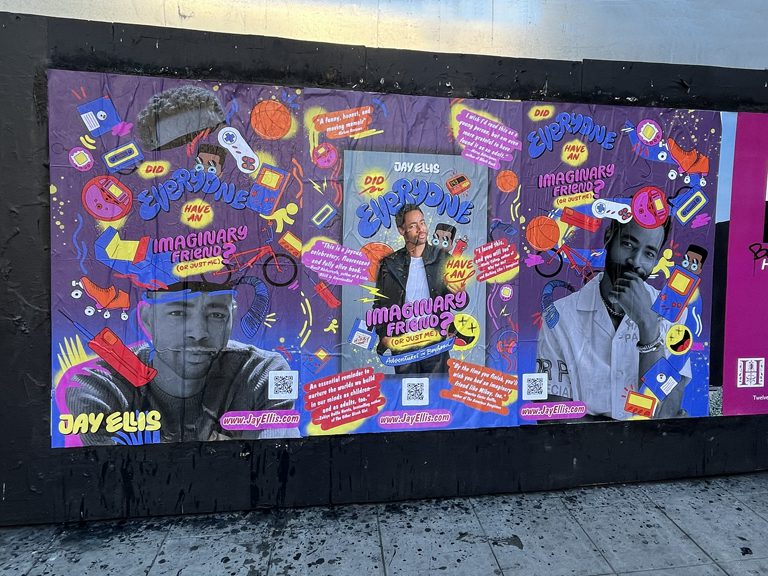
The parallel to our work with Jay Ellis on a Manhattan entertainment release is relevant here. That campaign succeeded not by blanketing an entire city but by identifying the exact corridors and surfaces where the target audience was guaranteed to encounter the message — neighborhood blocks near entertainment venues, creative hubs, and audience-specific gathering points. That same logic applies directly to Baltimore. We know where Baltimore’s entertainment audience concentrates, and we design campaigns around it.
Film campaigns, album releases, podcast promotions, streaming service launches, and event advertising all perform well in Baltimore’s arts district territory. The audience is engaged with culture, accustomed to finding out about new things through the street-level signals their neighborhood produces, and disproportionately likely to share what they discover.
Fly posting campaigns fail in three ways: wrong surfaces, wrong neighborhoods, or poor installation. We’ve seen all three. Posters placed on rough textured brick don’t hold. Posters placed in the wrong neighborhood reach the wrong audience. Posters installed without attention to height, overlap, and sightline waste money on invisible placements.
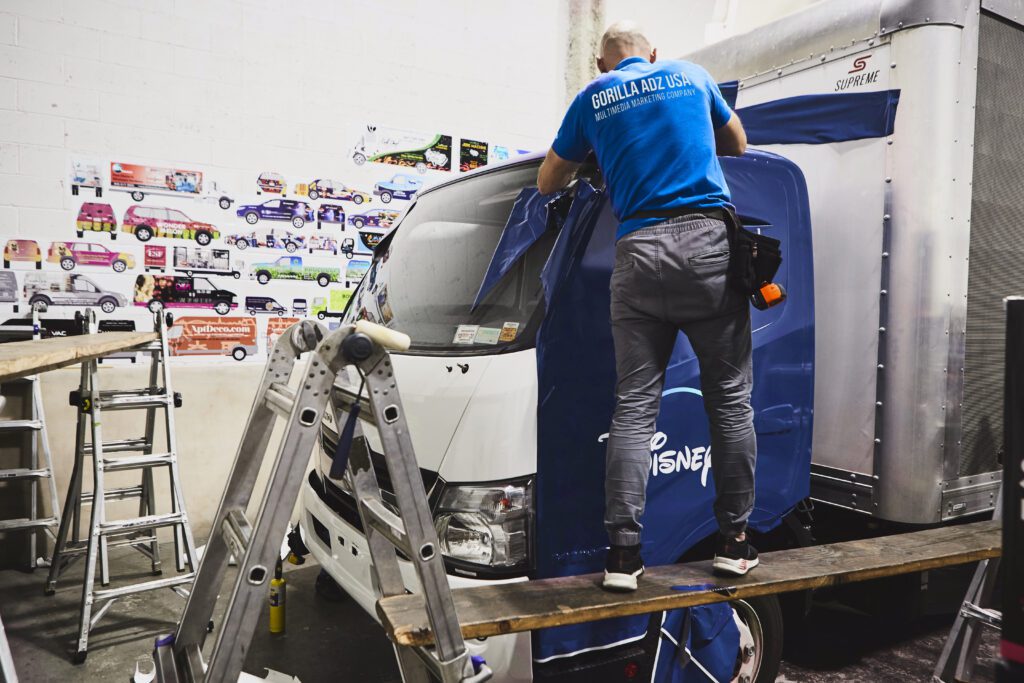
Our full-service model means we handle every stage: printing your artwork at the right spec, routing the installation through the right neighborhoods based on your objectives, selecting surfaces that will hold for the campaign duration, and executing the install with crews who know Baltimore’s streets. You don’t have to figure out which blocks in Station North work and which ones don’t. We already know.
After installation, the GPS photo report gives you complete visibility into where every poster landed. You can review coverage, document the campaign, and use the installation photos for social content — real street photography of your campaign in Baltimore’s most recognizable neighborhoods is content in itself.
The standard fly posting format — multiple locations across multiple neighborhoods, building frequency of impression and creating the sense that your campaign owns the city. In Baltimore’s arts districts, a well-run 24×36 campaign creates the street presence of a brand that belongs there.
Statement-scale posters for the most important intersections and walls. In Station North and Fells Point, a 48×72 poster commands attention at a distance and makes a dominant visual impression at the high-traffic locations that matter most to a Baltimore campaign.
The consistent feedback we hear from Baltimore clients is about recognition — people who had no prior awareness of a brand or campaign encountered it on the street and sought it out. That’s the specific superpower of fly posting versus digital advertising: the discovery happens in the physical world, which means it registers differently. There’s no scroll context, no competing thumbnail. Just the poster and the wall and the person walking past.
In Baltimore’s arts district corridors specifically, we’ve heard from clients that their street posting campaigns generated direct social sharing — people photographing posters and posting them organically, extending campaign reach beyond the physical installations. That organic amplification is built into the nature of a well-designed, well-placed fly posting campaign in a neighborhood where people document their environment as part of their social identity.
Station North and Fells Point consistently deliver the highest engagement rates because of the combination of blank wall inventory, pedestrian density, and an audience that’s actively looking at their surroundings. Charles Village performs strongly for academic and cultural campaigns. Hampden is best for brands that want to signal local authenticity and independent character. Remington is strong for campaigns targeting young creative professionals. We’ll recommend the right mix based on your specific audience and objectives.
Yes, and this is one of the highest-performing use cases for Baltimore fly posting. If you’re promoting a show at Ottobar, Rams Head Live, or Soundstage — or a gallery opening, film screening, or product launch — timing the installation to go up three to seven days before the event puts your campaign in front of the relevant audience at exactly the right moment. We offer 72-hour rush turnaround for 24×36 campaigns up to 500 posters to accommodate time-sensitive event windows.
Smooth plywood construction barriers hold wheat paste the longest and produce the cleanest poster presentation. Blank concrete or painted masonry on warehouse and commercial building sides also performs well. The historic brick of Fells Point can be used but requires more careful surface prep. We select surfaces on every campaign based on a combination of traffic visibility and paste longevity, and we know which specific streets and buildings in each neighborhood offer the best conditions.
Our standard minimum is 100 posters. For a city with Baltimore’s neighborhood diversity, 100 posters in 24×36 format can cover two to three neighborhoods effectively, creating meaningful frequency in each. For broader coverage across four or more neighborhoods — arts districts, Fells Point, Hampden, and stadium corridors — 200 posters gives more territory and stronger frequency simultaneously.
Digital advertising in Baltimore reaches screens; fly posting reaches streets. The audiences are technically overlapping but the experience is completely different — and for creative, entertainment, and lifestyle brands, the street experience carries a cultural credibility that no digital placement can manufacture. The people walking Station North or browsing Fells Point aren’t on a screen; they’re in a neighborhood, engaging with their environment. That’s exactly where fly posting lives.
You provide the artwork; we handle the production and installation. We accept high-resolution digital files — PDF, AI, or high-resolution PNG/TIFF — formatted to the correct poster dimensions. We review for print readiness and flag any issues before going to press. If you need design work, we can point you in the right direction, but our core service is production and installation.
Baltimore gets rain and humidity, particularly in spring and fall, which is part of why surface selection matters so much. Posters on plywood barriers under building overhangs or on sheltered wall sections hold significantly longer than those on fully exposed surfaces in wet conditions. Our crews factor weather forecasts into installation timing and surface selection to maximize campaign life. We target one to two weeks of posting duration and make placement decisions accordingly.
Yes. Mixed-format campaigns are common and often the strongest strategic choice — the 24×36 format builds density and frequency across multiple neighborhoods, while 48×72 posters anchor the most important intersections and walls with a dominant visual statement. A campaign that combines both formats typically feels more complete than one that runs exclusively in either size.
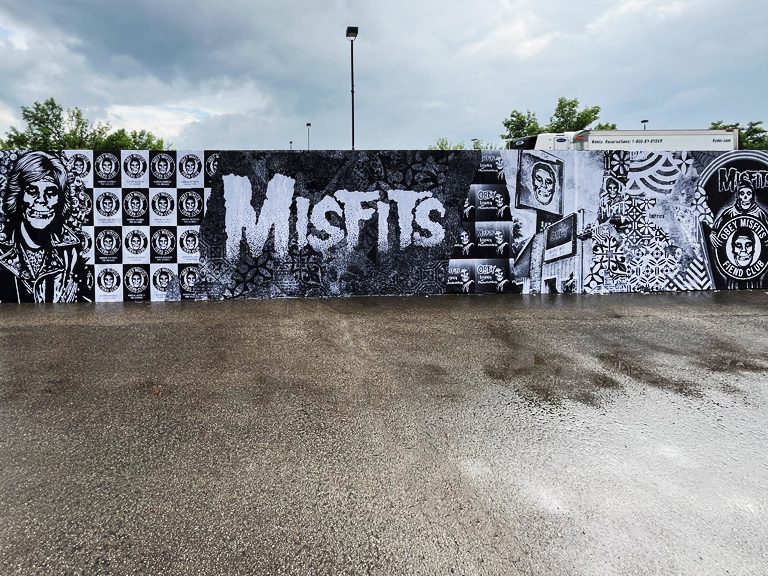
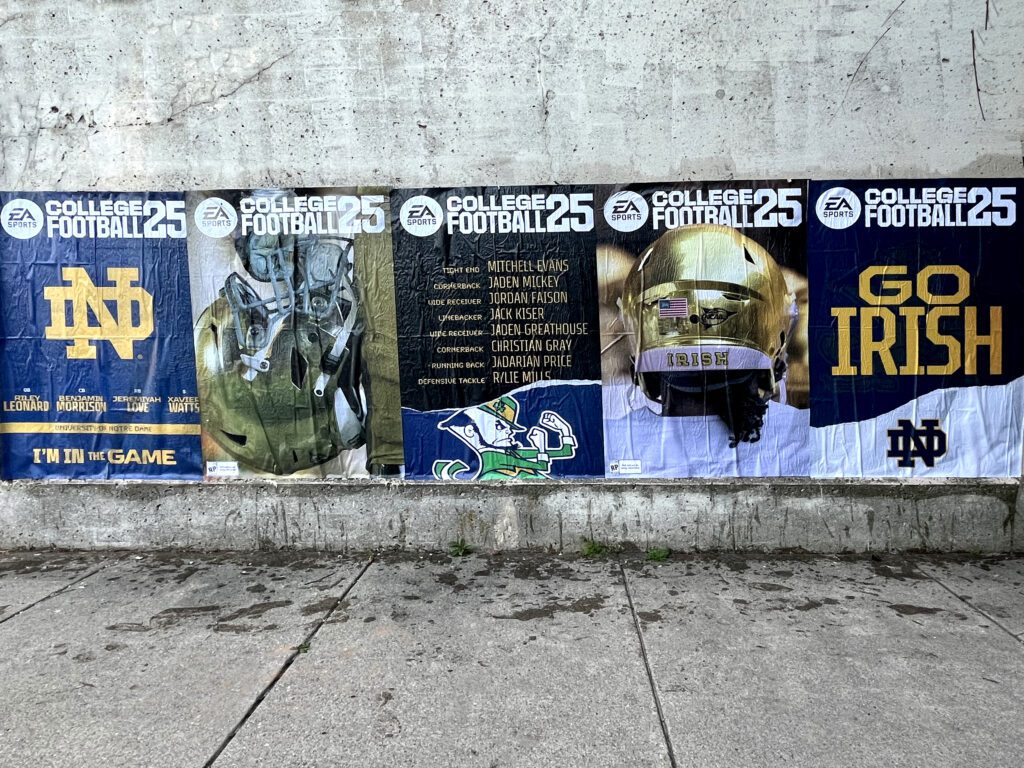
Our entertainment and arts market experience includes campaigns for clients like Jay Ellis on a Manhattan entertainment release — a campaign built around reaching a culturally engaged urban audience in specific neighborhood corridors using the same approach we bring to Baltimore. We’ve also worked with Netflix, The Onion, EA Sports, Biossance, and Shepard Fairey, among many others. We’re Best of Brooklyn award winners with a track record across the markets that matter.
We recommend booking two to three weeks in advance for standard campaigns to allow time for artwork review, print production, and installation scheduling. For rush turnaround — 72-hour execution for 24×36 posters up to 500 quantity — we can compress the timeline significantly, but early contact matters even for rush builds so we can hold crew availability for your dates.
Yes. The GPS photo report is delivered after installation is complete and typically within 48 hours of the install date. If you’re in Baltimore during the campaign, you’re also welcome to walk the territory yourself — our crews can share the installation route so you can see your campaign in person. Many clients find that street-checking a campaign is genuinely exciting, especially in neighborhoods as visually compelling as Station North or Fells Point.