American Guerrilla Marketing
Nationwide Service
Media planning, media buying, billboard advertising, & guerrilla marketing
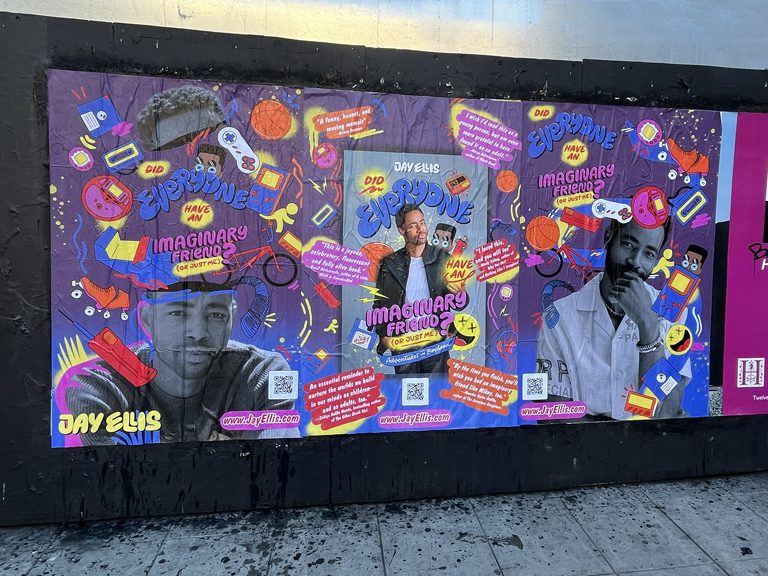
Wheat paste poster campaigns across Kenosha’s Harbor District, Uptown, Sheridan Road, and the Lake Michigan corridor that bridges Wisconsin and Chicago markets.
Kenosha occupies one of the most strategically unusual positions of any mid-size American city — sitting precisely at the point where Wisconsin ends and Illinois begins, with Lake Michigan defining its eastern edge and the Metra Electric commuter rail line running through its center connecting directly to Chicago’s Union Station in under ninety minutes. At approximately 50 miles from Chicago’s Loop, Kenosha functions as both a genuine Wisconsin lakefront city with its own deep civic identity and as the outermost anchor of the greater Chicago metropolitan area. This dual-market character is the core of what makes Kenosha exceptional as a fly posting location: campaigns placed on Kenosha’s walls reach Wisconsin consumers living in a Wisconsin city, Chicago-area commuters maintaining Wisconsin residence, and Illinois visitors drawn north by Kenosha’s Lake Michigan harbor, outlet mall complex, and distinctive lakefront cultural institutions.
Kenosha’s population of approximately 100,000 carries a demographic complexity that belies its size. The city’s manufacturing heritage — anchored for much of the twentieth century by American Motors Corporation and Nash Motors before them, and today by Snap-on Tools’ global headquarters and dozens of regional industrial employers — created a working-class culture of craftsmanship, brand loyalty, and community identity that persists through generations of residents. The Latino community, concentrated along the 22nd Avenue corridor and the Uptown neighborhood, represents one of Kenosha’s most vibrant and economically active demographic segments. UW-Parkside’s campus in Somers adjacent to the city limits brings a student population of approximately 4,500 that circulates through Kenosha’s commercial corridors. Carthage College’s campus on the Lake Michigan shoreline south of downtown adds a private liberal arts student community of 2,700 to the city’s demographic mix.
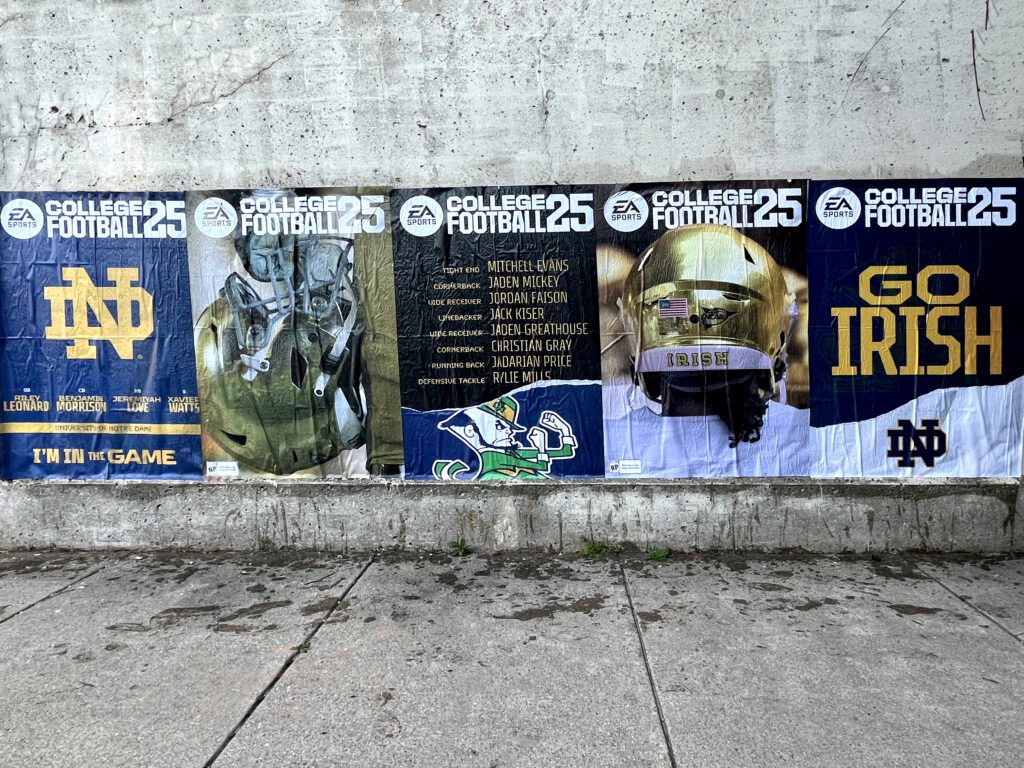
American Guerrilla Marketing has executed fly posting campaigns for clients including Netflix, The Onion, EA Sports, Biossance, and Shepard Fairey — brands whose campaigns have spanned markets from New York City to smaller regional cities where authentic community engagement creates outsized brand loyalty returns. Kenosha’s particular combination of manufacturing heritage, Latinx cultural vibrancy, lakefront recreation culture, and Chicago-commuter affluence creates a layered audience that responds powerfully to campaigns that demonstrate real knowledge of the city’s distinct character rather than treating it as a generic regional secondary market.
The Kenosha Public Museum, the Dinosaur Discovery Museum, the Civil War Museum at the Southport Light Station, and Carthage College’s Siebert Family Concert Hall — cultural institutions that punch well above their weight for a city of 100,000 — establish Kenosha as a city with genuine intellectual and cultural ambitions. The Electric Street Railway Museum on 54th Street and the adjacent lakefront operates vintage streetcars that transport visitors along the Lake Michigan waterfront, creating a tourism experience unique in the entire Midwest and generating consistent visitor foot traffic through the Harbor District throughout the summer season. These visitors — many arriving from Chicago, Milwaukee, and surrounding Illinois and Wisconsin communities — represent an expanded regional audience for Kenosha fly posting campaigns placed in the Harbor District and downtown corridor.
Kenosha is where the Chicago market ends and the Wisconsin market begins. AGM builds fly posting campaigns that work both sides of that line — from the Harbor District's visitor-dense lakefront to Uptown's Latinx commercial corridor, from Southport's commuter professionals to the 22nd Avenue community. Call (646) 776-2770 to build your Kenosha campaign.
Kenosha’s border-city geography creates a fly posting opportunity that exists in very few American markets: the ability to reach two major metropolitan audiences — Chicago and Milwaukee — with a single campaign investment. This dual-market reach is not hypothetical. Chicago commuters who live in Kenosha carry their brand experiences into the Chicago metropolitan area through their professional and social networks. Milwaukee consumers who drive I-94 south to the Pleasant Prairie Premium Outlets pass through Kenosha’s commercial corridors and have their brand awareness shaped by what they see on Kenosha’s walls. Illinois visitors driving north on Route 41 through Winthrop Harbor and Zion enter Kenosha’s Harbor District and downtown with existing Chicago brand associations that Kenosha fly posting can reinforce or introduce at the point of first Wisconsin contact.
This geographic bridging function means that Kenosha fly posting campaigns have an effective reach that extends beyond the city’s 100,000 residents. The Chicago commuter rail system — Metra Electric’s University Park line terminates in downtown Kenosha — delivers thousands of Wisconsin residents into Chicago’s commercial and cultural networks every weekday, carrying brand associations formed by Kenosha’s streetscapes into the nation’s third-largest city. Brands seeking a cost-effective toehold in the Chicago market can use Kenosha fly posting as a testing ground, building brand awareness among Chicago-connected Wisconsin consumers before committing to the dramatically higher campaign costs that Chicago’s own media market demands.
The I-94 commercial corridor running through Pleasant Prairie south of Kenosha — home to the Pleasant Prairie Premium Outlets, the LakeView Corporate Park, and a cluster of major national retailers and hospitality businesses — generates enormous vehicle and pedestrian traffic from both Wisconsin and Illinois zip codes. This corridor is technically outside Kenosha’s city limits but functions as Kenosha’s commercial suburb and draws consumers from a two-state radius. Brands seeking exposure to the I-94 corridor audience should consider combining downtown Kenosha fly posting with positioning in the commercial areas along 75th Street and Sheridan Road that bridge the city’s residential core to the Pleasant Prairie commercial zone.
Kenosha’s Latinx community — concentrated in the 22nd Avenue corridor through Uptown, with strong commercial presence in the blocks from 22nd to 30th Avenue between 52nd and 60th Streets — is one of Wisconsin’s most established Latinx communities, with second- and third-generation families who maintain strong community networks, active consumer behavior, and deep loyalty to brands that demonstrate genuine respect for their cultural identity. The Latinx population in Kenosha and Racine combined represents one of Wisconsin’s largest concentrations of Latino purchasing power, and fly posting campaigns that reach this community through placement in their neighborhood commercial zones reach an audience that is significantly underserved by mainstream Wisconsin advertising.
All Kenosha fly posting campaigns include professional location scouting, licensed installation by experienced crews, GPS coordinates and full photo documentation within 24 hours of installation, and dedicated account management from AGM’s Brooklyn, NY headquarters. All pricing below is fully inclusive with no additional fees.
Kenosha’s relatively compact urban geography makes 100 standard-size posters sufficient for meaningful citywide saturation across the Harbor District, Downtown, Uptown, and Southport. For brands seeking to specifically target the dual Wisconsin-Illinois market that Kenosha uniquely serves, AGM can configure placement to prioritize the harbor and downtown corridors that draw the highest proportion of out-of-city visitors. For brands seeking to reach Kenosha’s residential community — the Latino neighborhoods, the lakefront Southport district, and the working-class neighborhoods around the Snap-on Tools campus — a more distributed placement strategy covering 22nd Avenue, Pershing Boulevard, and 52nd Street creates thorough neighborhood-level penetration.
Brands running combined Kenosha-Racine campaigns can discuss custom southeastern Wisconsin packages with AGM’s account team. The two cities are adjacent and share significant consumer overlap along the Sheridan Road and Green Bay Road corridors, making combined placement strategies particularly cost-efficient for brands seeking to establish a southeastern Wisconsin market presence.
Award Winning Personalized Service
You will get thoughtful, devoted, and individualized attention from our experienced, qualified, and professional personnel. Being one of the most illustrious agencies in Brooklyn, New York, American Guerrilla Marketing has been awarded the Best of Brooklyn title.
Nationwide
Industry City, Brooklyn, New York 11232
American Guerrilla Marketing
Hours
Mon - Fri: 9 AM - 5 PM
Sat & Sun: Closed
Automate your campaign with AGM’s Request for Proposal Builder. Simply answer a few quick questions about your campaign goals, markets, and timeline, and the system will generate a tailored presentation with recommended strategies, quantities, and pricing. Click the RFP Builder to instantly receive your customized proposal.
Kenosha campaign strategy begins with an honest accounting of which Kenosha the campaign is trying to reach. Kenosha is not a single community but at least four distinct communities sharing a geography: the lakefront recreation and tourism community centered on the harbor and Carthage College campus; the working-class manufacturing community whose families have been in Kenosha for generations and whose identity is shaped by the AMC-Nash automotive legacy, Snap-on Tools, and the network of smaller manufacturers in the city’s industrial corridor; the Chicago commuter professional community that has brought new income and new consumer expectations to the Southport and lakefront neighborhoods; and the Latinx community along the Uptown corridor that maintains its own commercial and cultural ecosystem largely independent of the other three.
Each of these Kenosha communities requires a different fly posting approach. The harbor and lakefront community responds to campaigns that engage with Kenosha’s Lake Michigan identity — the marina, the Electric Street Railway, the public beach at Simmons Island, and the cultural institutions along the lakefront. The working-class manufacturing community responds to brands that present themselves as honest, American, and community-invested — brands that feel built rather than marketed. The Chicago commuter professional community responds to campaigns that acknowledge urban sophistication and demonstrate quality — brands that wouldn’t be out of place in Lincoln Park but are being positioned in Kenosha’s lakefront Southport neighborhood. The Latinx community responds to campaigns that include Spanish-language elements, reference community-specific cultural touchstones, and demonstrate genuine investment rather than extractive marketing.
Timing in Kenosha benefits significantly from the summer lakefront calendar. Kenosha’s Lake Michigan shoreline — particularly the Harbor Park area between the Kenosha Lighthouse and the KHC Public Market, and Simmons Island beach to the north — draws visitors from across the Chicago and Milwaukee metropolitan areas throughout summer weekends. The Kenosha HarborMarket, operating every Saturday morning from May through October along the lakefront between 54th and 56th Streets, draws 5,000 to 8,000 visitors on peak summer weekends — a remarkable concentration for a city of Kenosha’s size. Fly posting campaigns installed in the harbor and downtown areas the week before HarborMarket season opens in May reach this concentrated visitor audience throughout the entire summer run.
UW-Parkside’s presence in Somers activates Kenosha’s commercial corridors along 52nd Street and the Sheridan Road approaches to campus for the academic year from September through May. The approximately 4,500 UW-Parkside students represent a demographically young, price-conscious consumer segment that circulates through Kenosha’s commercial districts regularly. Campaigns that reach UW-Parkside students during the academic year build brand awareness that extends beyond Kenosha through the students’ networks across southeastern Wisconsin and northern Illinois — many Parkside students are from Chicago suburbs and carry Kenosha brand associations back to their home communities.
The Harbor District along Pershing Boulevard and 2nd Avenue between 54th and 58th Streets is Kenosha’s most distinctive and visitor-dense commercial zone. The Electric Street Railway Museum’s operating vintage streetcar line runs along this corridor, connecting the Union Station Metra terminal to the harbor and to the public museums along the lakefront. The Kenosha HarborMarket, the Kenosha Public Museum, the Civil War Museum, and the Kenosha History Center all draw visitors to this compact lakefront corridor throughout the summer and fall seasons. Pershing Boulevard’s boulevard-scale pedestrian design — wide sidewalks, street trees, historic lamp posts — creates ideal conditions for fly posting visibility, with slow-moving pedestrian traffic examining the surrounding visual environment rather than rushing to a destination.
Downtown Kenosha’s core commercial zone along 56th Street from Sheridan Road east toward the lakefront, and Sheridan Road from 52nd Street through the downtown corridor, hosts a mix of local restaurants, service businesses, government offices, and the Federal Building at 6th Avenue. The Kenosha County Courthouse complex and city government offices along 56th Street generate consistent daytime weekday foot traffic from professionals, residents conducting municipal business, and the county workforce. 58th Street through Downtown approaching the harbor hosts independent restaurants and bars that serve both the downtown professional community and harbor visitors. Fly posting in this corridor reaches Kenosha’s civic and professional community during their most active daytime pedestrian moments.
The 22nd Avenue corridor from 52nd Street through Uptown to 60th Street is Kenosha’s Latinx commercial heart — a stretch of Mexican and Central American restaurants, panaderías, carnicerias, quinceañera boutiques, Latin music shops, and community-serving businesses that reflect the deeply rooted Latinx community that has shaped Kenosha for decades. This corridor maintains its own commercial rhythm largely independent of Kenosha’s lakefront tourism economy, operating as a genuine neighborhood main street for the surrounding residential blocks. Fly posting along 22nd Avenue reaches a highly engaged community consumer base with significant family purchasing power and strong loyalty to brands that demonstrate cultural respect and genuine community investment.
Southport is the neighborhood name for Kenosha’s southern lakefront residential community, generally bounded by 75th Street to the south and Sheridan Road on the west, with the lake forming the eastern boundary. Carthage College’s campus anchors the southern edge of Southport along the lakefront, bringing 2,700 students into the surrounding residential neighborhood. The Sheridan Road commercial strip through Southport hosts the restaurants, coffee shops, and neighborhood retail that serve both the Carthage student population and the Chicago-commuter professional households that have concentrated in Southport’s lakefront residential areas. Fly posting along Sheridan Road through Southport reaches Kenosha’s highest-income residential demographic alongside an active college student population.
The 75th Street commercial corridor through Kenosha’s Allendale neighborhood and extending into adjacent communities hosts the regional-scale retail, dining, and service businesses that serve Kenosha’s broader residential population. Allendale’s character as a stable working-class and middle-class residential community means its commercial strip serves residents who conduct most of their purchasing within walking or short driving distance of their homes. Fly posting along the 75th Street commercial segment through Allendale reaches a representative cross-section of Kenosha’s permanent residential population — the families who have been in Kenosha for generations and whose loyalty and word-of-mouth carry significant community weight.
The commercial corridor along 75th Street approaching the Pleasant Prairie border and Sheridan Road extending south through Kenosha into Pleasant Prairie Township connects the city’s southern residential neighborhoods to the massive Pleasant Prairie Premium Outlets complex at 11211 120th Avenue. The outlet mall draws approximately four million annual visitors — a figure that exceeds Kenosha’s own regional metro population many times over — primarily from Chicago, Milwaukee, and the surrounding two-state metro area. Fly posting on commercial building surfaces along the 75th Street and Sheridan Road approaches captures visitors navigating toward the outlet complex, creating brand impressions among a transient but high-volume audience that includes significant proportions of both Illinois and Wisconsin consumers with demonstrated retail spending intent.
Kenosha’s position on the Illinois-Wisconsin border, combined with the Metra Electric commuter rail connection to Chicago’s Union Station and the I-94 corridor to Milwaukee, means that brands with presence on Kenosha’s walls are visible to consumers who carry those brand impressions into both Chicago and Milwaukee social networks. Chicago commuters who live in Kenosha’s Southport neighborhood walk Kenosha’s downtown streets daily and share brand awareness with Chicago colleagues. Milwaukee consumers driving south on I-94 to Pleasant Prairie Premium Outlets pass through Kenosha commercial corridors and form brand associations that they carry back to Milwaukee. A single Kenosha fly posting campaign generates real impressions in a geographic catch basin that spans from Chicago’s North Shore to Milwaukee’s South Side.
The Harbor District is Kenosha’s most effective fly posting zone during the May-through-October visitor season. The Electric Street Railway Museum’s vintage streetcar operation, the Kenosha HarborMarket’s Saturday crowds of 5,000 to 8,000 visitors, the Kenosha Public Museum and Civil War Museum, and the Lake Michigan public beach at Simmons Island collectively make Kenosha’s harbor one of the most visitor-intensive lakefront environments in Wisconsin. During summer weekends, the Harbor District population expands dramatically with visitors from the Chicago metropolitan area and southern Wisconsin who have driven to Kenosha specifically for the lakefront experience. Fly posting in this zone during peak season captures an audience that extends well beyond Kenosha’s resident population.
Kenosha’s Chicago commuter population — professionals who have relocated to Kenosha for more affordable housing and quality-of-life benefits while maintaining Chicago careers via the Metra Electric line — represents one of Kenosha’s highest-income demographic segments. This group concentrates residentially in the Southport and lakefront neighborhoods, and their daily commute pattern puts them on Kenosha’s downtown sidewalks twice a day, five days a week, adjacent to the Kenosha Metra station on 54th Street. Fly posting in the Harbor District and downtown corridor — particularly within walking distance of the Metra station — captures this commuter demographic during their daily pedestrian moments in Kenosha’s commercial zone.
UW-Parkside’s approximately 4,500 students commute from campus in Somers into Kenosha’s commercial corridors for dining, entertainment, and weekend activities. The 52nd Street commercial corridor connecting the campus area to downtown Kenosha carries significant student vehicle and pedestrian traffic, particularly in the evening hours and on weekends. Sheridan Road through Southport near Carthage College is another natural student corridor for the 2,700 Carthage students who live in and around the campus neighborhood. AGM’s Kenosha location scouting specifically includes the commercial surfaces along these campus-approach corridors to maximize student demographic reach, particularly during the academic year’s first and last months when students are most actively engaged with brand discovery in their immediate community.
The Pleasant Prairie Premium Outlets draws approximately four million visitors annually — one of the highest-traffic retail destinations in Wisconsin — primarily from the Chicago metropolitan area and southeastern Wisconsin. The commercial building surfaces along 75th Street and Sheridan Road approaching the outlet complex from Kenosha’s city limits are legal private-surface posting opportunities that capture outbound and inbound visitors navigating the corridor. These placements reach consumers with demonstrated retail purchase intent — people who have driven specifically to this corridor to spend money on name-brand goods. Brands seeking to intercept this audience with awareness messaging en route to or from the outlet complex can achieve cost-effective impressions among a concentrated high-purchasing-intent audience.
The 22nd Avenue corridor through Uptown Kenosha is the geographic center of the city’s Latinx commercial and social community, hosting Mexican and Central American restaurants, specialty food markets, beauty supply stores, and community organizations that generate consistent daily foot traffic from the surrounding residential blocks. AGM approaches Latinx community targeting with cultural specificity — we can advise on Spanish-language creative elements, cultural reference points, and community-specific design choices that communicate genuine respect and knowledge of the community rather than tokenism. Fly posting in this corridor reaches a consumer demographic with significant purchasing power and strong brand loyalty for brands that demonstrate authentic community investment rather than extractive advertising posture.
The 56th Street corridor from Sheridan Road east to the harbor, and Pershing Boulevard along the lakefront from 54th to 58th Streets, represent Downtown Kenosha’s highest-impact fly posting zones. The 56th Street approach to the harbor captures both the civic professional workforce navigating the courthouse and city office area and the visitors approaching the harbor’s cultural and recreational amenities from the west. Pershing Boulevard’s lakefront design — wide sidewalks, waterfront views, and the Electric Street Railway track running along the boulevard — creates a pedestrian environment where visual attention is naturally heightened and poster impressions occur with higher awareness than in conventional commercial street environments. For anchor-statement placements, the commercial building surfaces facing the harbor along 54th-56th Streets are Kenosha’s most visible privately owned commercial surfaces.
Kenosha’s manufacturing employer community — including Snap-on Tools’ corporate headquarters and manufacturing operations, Uline’s distribution campus, and dozens of smaller manufacturers — faces recruiting, community relations, and brand reputation challenges that fly posting can address in specific ways. Employer brand campaigns targeting Kenosha’s manufacturing workforce reach potential recruits in the residential and entertainment corridors where working-class community members spend leisure time — along 22nd Avenue, on Military Road, and in the commercial areas surrounding the major industrial employment zones. Fly posting creates a persistent, neighborhood-level brand presence that reinforces message delivered through job boards and LinkedIn, adding the community credibility dimension that digital recruiting channels lack.
Kenosha’s summer lakefront calendar includes multiple events that dramatically amplify fly posting impressions in the Harbor District. Kenosha Kickers Soccer Club home games at the Anderson Athletic Complex draw local sports fans. Star-Spangled Celebration on the Fourth of July at the harbor is one of the largest fireworks events in southeastern Wisconsin, drawing tens of thousands of visitors to the lakefront. Kenosha HarborMarket’s weekly Saturday operation from May through October provides consistent elevated traffic. The Electric Street Railway’s operating season from May through October continually draws visitors from both Wisconsin and Illinois. Installing campaigns in the harbor area five to seven days before these major lakefront events ensures full poster visibility during peak attendance windows.
Yes. Kenosha and Racine are adjacent Wisconsin cities separated by approximately twelve miles along the Lake Michigan shoreline, connected by Sheridan Road and Green Bay Road. The two cities share significant economic and demographic overlap — both have manufacturing heritage, significant Latinx communities, Chicago commuter populations, and lakefront cultural assets. AGM can coordinate simultaneous installation across both cities, creating a southeastern Wisconsin corridor presence that covers the roughly 250,000-person population of Kenosha County and Racine County in a single campaign operation. Brands with regional consumer goods, healthcare, education, or entertainment products can achieve meaningful southeastern Wisconsin market saturation through a combined Kenosha-Racine fly posting campaign at substantially lower cost than equivalent digital reach in the Chicago-Milwaukee corridor.
The Kenosha harbor’s unusually high proportion of out-of-city visitors — drawn by the Electric Street Railway Museum, the Kenosha Public Museum, the Dinosaur Discovery Museum, the Civil War Museum, and the lakefront HarborMarket — creates a fly posting audience that extends far beyond Kenosha’s resident population in a way that is unusual for a city of this size. In most Wisconsin cities, fly posting reaches primarily local residents whose purchasing behavior is already shaped by local brand awareness. In Kenosha’s harbor zone, a significant proportion of poster impressions go to Chicago-area visitors and regional Wisconsin consumers who are encountering the brand for the first time in Kenosha — making Kenosha harbor fly posting function as a genuine regional brand introduction touchpoint rather than solely a local awareness reinforcement mechanism.
Kenosha’s municipal code governs exterior signage and outdoor advertising within city limits, with specific provisions distinguishing between public and private property installations. AGM’s Kenosha campaign preparation includes full location compliance research, identification of legally authorized private-surface posting locations with documented owner permission, and avoidance of any municipal, county, or state property surfaces. Kenosha’s harbor-area public spaces — including Simmons Island, Veterans Memorial Park, and the lakefront trail — are publicly managed and outside AGM’s posting scope. The commercial building surfaces immediately adjacent to the harbor on private property, along Pershing Boulevard and 2nd Avenue, are pre-scouted legal locations that deliver equivalent proximity to the harbor foot traffic without any public property compliance concerns.