American Guerrilla Marketing
Nationwide Service
Media planning, media buying, billboard advertising, & guerrilla marketing
Wicker Park. Logan Square. Pilsen. Lakeview. Chicago has one of the most layered street-level advertising ecosystems in the country — a city of distinct neighborhoods, each with its own visual culture, its own nightlife density, and its own fly posting legacy. AGM executes here with in-house crews and zero subcontractors.
Spend an afternoon walking Milwaukee Avenue from Wicker Park north through Bucktown and you’ll understand why Chicago has earned its reputation as one of the country’s premier fly posting cities. The walls here carry history — decades of concert posters, record release announcements, gallery show fliers, and brand campaigns layered onto brick faces and plywood barriers that have served as the city’s informal bulletin board for generations. The visual culture of Chicago’s street-level advertising didn’t emerge from a marketing strategy. It grew organically from the same creative energy that built the city’s music scene, its comedy culture, and its independent retail corridors. Fly posting in Chicago is native — it belongs here in a way that makes it feel essential rather than intrusive.
That organic legitimacy is precisely why street poster advertising works so well in this market. A fly posting campaign on Milwaukee Avenue, on Damen Avenue, on the walls surrounding the Empty Bottle or Subterranean or the Metro, doesn’t interrupt the visual landscape — it participates in it. Chicago audiences read street posters the way other cities read billboards: as a natural part of the urban environment, something to notice, engage with, and sometimes photograph and share. The social amplification that well-executed fly posting campaigns generate in Chicago is real, measurable, and impossible to replicate through any paid digital placement.
American Guerrilla Marketing brings to Chicago what AGM brings to every market: the combination of genuine street-level intelligence and the operational infrastructure of a national agency. Our installation crews know Chicago’s neighborhoods by block — they know which surfaces on North Avenue have the highest pedestrian sightlines, which Pilsen walls catch the most foot traffic from gallery-goers on First Fridays, which Logan Square corridors are packed with bar patrons Thursday through Saturday. That neighborhood knowledge, combined with GPS-documented installation reporting and in-house printing, gives Chicago clients a campaign execution standard that matches the city’s sophisticated street culture.
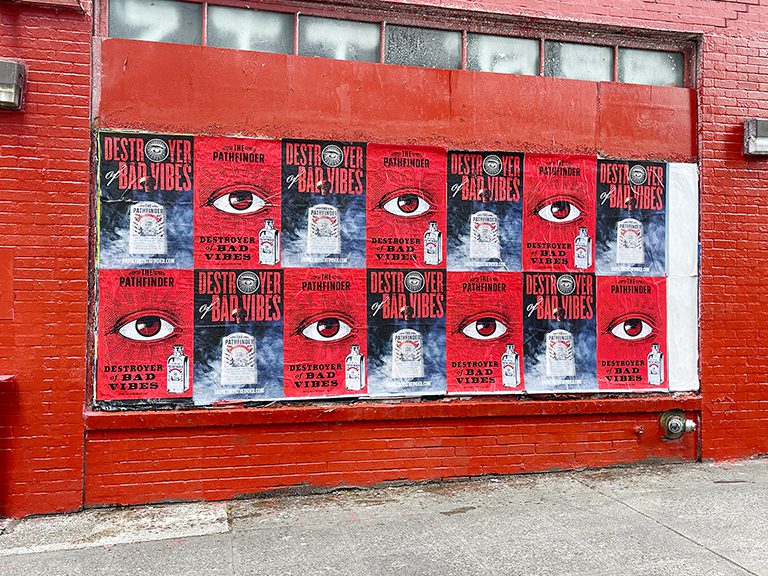
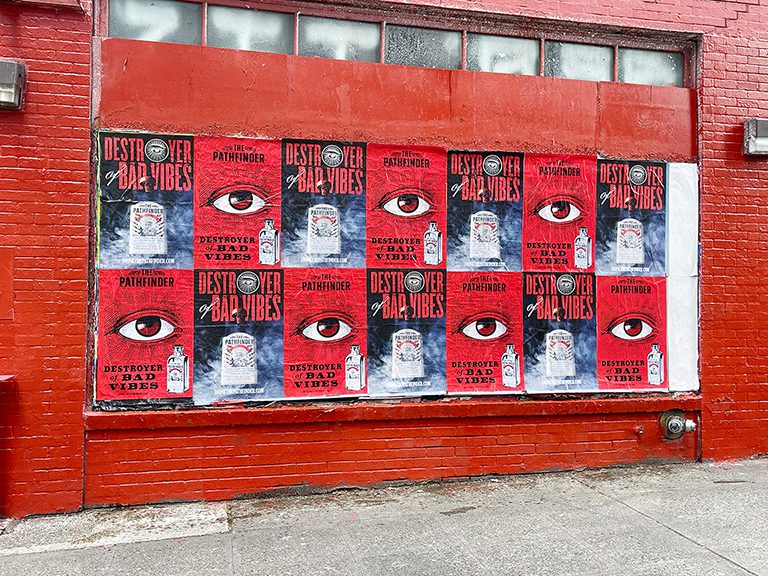
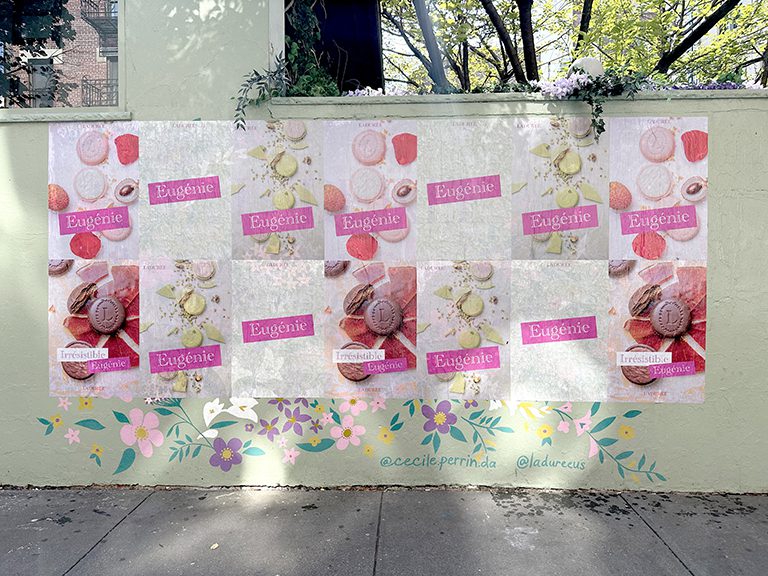
Wicker Park, Logan Square, Pilsen, Lakeview — AGM's Chicago installation crews know every corridor. GPS-documented, wheat paste installed, fully reported. No subcontractors. Just results on the street.
Chicago’s transit-centered urban geography is the fundamental reason fly posting works so well here. Unlike sprawling Sun Belt metros where residents move almost entirely by car, Chicago’s densely populated North Side, Near South Side, and Near West Side neighborhoods are full of people on foot — walking to and from CTA Blue and Red Line stations, moving between independent shops and restaurants along commercial strips that have remained vibrant and walkable for decades. Pedestrian traffic in Chicago’s core neighborhoods is not an occasional phenomenon; it’s a constant, daily reality that makes street poster advertising a genuinely high-reach format.
The bar and nightlife density of Chicago’s key neighborhoods amplifies that foot traffic further. On any Thursday, Friday, or Saturday night, Milwaukee Avenue, Division Street, Western Avenue, and Halsted Street fill with the kind of concentrated, exploratory foot traffic that is ideal for fly posting exposure. People moving between bars and restaurants walk slowly, look around, stop to talk — they are far more likely to register a wall installation than commuters moving with purpose toward a transit station. A well-placed 24×36 poster on a high-traffic bar corridor in Wicker Park on a Friday night may be seen by thousands of people in a single evening.
The demographic concentration of Chicago’s poster-friendly neighborhoods is another critical advantage. Wicker Park, Logan Square, Pilsen, and Lakeview collectively concentrate some of the highest densities of 22-to-40-year-old creative professionals, music fans, arts consumers, and culturally engaged adults outside of Brooklyn and Lower Manhattan. These are not generic urban audiences — they are the specific people who respond to street poster campaigns, who share them on social media, who tell friends about brands they discovered on a wall. Reaching them in Chicago is a matter of knowing exactly which neighborhoods they inhabit and placing the campaign where their daily lives take them.
The Milwaukee Avenue corridor through Wicker Park and Bucktown is the historic and current center of Chicago street poster culture. The intersection of Milwaukee, North, and Damen — known as the Six Corners — anchors a commercial district dense with independent music venues, streetwear boutiques, record shops, bars, and restaurants that collectively draw some of the city’s heaviest young adult foot traffic. North Avenue from Western through Damen provides a secondary corridor with its own concentration of entertainment venues and creative businesses. Bucktown’s residential density feeds daily pedestrian volume into the commercial strips along Damen and North, sustaining consistent campaign visibility even on weekday mornings when the nighttime crowds have dissipated. This is the neighborhood where Chicago street poster campaigns begin, and often where they deliver their highest impression counts.
Pilsen’s visual culture is unlike any other Chicago neighborhood. The murals that cover building exteriors throughout the neighborhood — particularly along 18th Street and the alleys east of Halsted — create a visual environment where large-format street art is not just accepted but celebrated. The National Museum of Mexican Art, anchored on West 19th Street, draws art-engaged visitors from across the city and generates foot traffic through the surrounding residential and commercial blocks. The 18th Street corridor is the neighborhood’s commercial spine, lined with Mexican restaurants, bakeries, independent shops, and cultural organizations that sustain consistent daily and evening foot traffic. Fly posting in Pilsen reaches the city’s most culturally active Latinx arts community — an audience that engages deeply with visual culture and responds to campaigns that respect the neighborhood’s creative intelligence.
Logan Square has evolved over the past decade into one of Chicago’s most concentrated creative professional neighborhoods. The Milwaukee Avenue corridor through Logan Square hosts an extraordinary density of independent cocktail bars — Longman & Eagle, The Whistler, Scofflaw — alongside indie music venues like the Hairpin Arts Center and the Comfort Station, galleries, and the kind of eclectic independent retail that signals genuine neighborhood creative character. The Logan Square Farmers Market draws thousands of visitors to the boulevard on summer Sundays. The neighborhood’s young professional population has high media and culture consumption rates, strong social media engagement, and demonstrated responsiveness to street-level advertising campaigns. Logan Square fly posting installations consistently generate organic social sharing, extending campaign reach beyond the physical footprint of the installation.
The Halsted Street corridor through Lakeview and Boys Town is one of Chicago’s most continuously trafficked entertainment corridors. The LGBTQ+ community and allies move through this strip in concentrated patterns throughout the week — shopping at independent retailers, dining at the corridor’s established restaurant row, and anchoring the nightlife economy at the area’s bars and clubs. Wrigleyville’s proximity adds a massive sports-audience overlay during Cubs home games, creating seasonal traffic surges that rival any entertainment event in the city. Fly posting along Halsted and the adjacent Broadway corridor reaches an engaged, diverse audience with demonstrated brand loyalty toward companies that show up authentically in LGBTQ+ spaces and contexts. Campaigns timed to Pride Month in June see extraordinary audience amplification in this corridor.
Ukrainian Village sits immediately south of Wicker Park and west of Noble Square, occupying a transitional zone where legacy Eastern European community institutions share blocks with new restaurants, artist studios, and the independent businesses that tend to arrive as neighborhood creative energy builds. The Chicago Avenue commercial strip through Ukrainian Village carries consistent foot traffic from a rapidly diversifying resident population that skews young, creative, and culturally engaged. Construction activity in the neighborhood provides abundant plywood barrier surface for fly posting installations. The proximity to Wicker Park means that campaigns covering both neighborhoods share a contiguous audience corridor — people who live in Ukrainian Village often move daily into the Wicker Park commercial zone, creating natural multi-neighborhood impression opportunities.
Lincoln Park’s commercial corridors — particularly Armitage Avenue and Webster Avenue — concentrate a young professional and student demographic with strong discretionary spending and high brand engagement. DePaul University’s Lincoln Park campus pushes thousands of students into the neighborhood’s commercial blocks daily during the academic year, creating a sustained young adult pedestrian presence that supplements the area’s established resident base. The Armitage-Halsted shopping corridor draws visitors from across the North Side for its concentration of independent boutiques and nationally recognized retailers. Fly posting in Lincoln Park reaches an audience with demographic characteristics that align strongly with entertainment, fashion, health and wellness, and premium consumer product campaigns.
Award Winning Personalized Service
You will get thoughtful, devoted, and individualized attention from our experienced, qualified, and professional personnel. Being one of the most illustrious agencies in Brooklyn, New York, American Guerrilla Marketing has been awarded the Best of Brooklyn title.
Nationwide
Industry City, Brooklyn, New York 11232
American Guerrilla Marketing
Hours
Mon - Fri: 9 AM - 5 PM
Sat & Sun: Closed
Automate your campaign with AGM’s Request for Proposal Builder. Simply answer a few quick questions about your campaign goals, markets, and timeline, and the system will generate a tailored presentation with recommended strategies, quantities, and pricing. Click the RFP Builder to instantly receive your customized proposal.
Chicago’s sheer geographic scale gives brands a range of strategic choices that smaller markets can’t offer. A hyper-targeted Wicker Park campaign can build extraordinary neighborhood-level saturation with 100 posters concentrated in a four-by-six-block footprint. A city-wide deployment of 200 posters across five or six neighborhoods creates a distributed impression that follows target audiences across their daily routines — from home neighborhoods into transit zones, from transit zones into work corridors, from work corridors into entertainment districts.
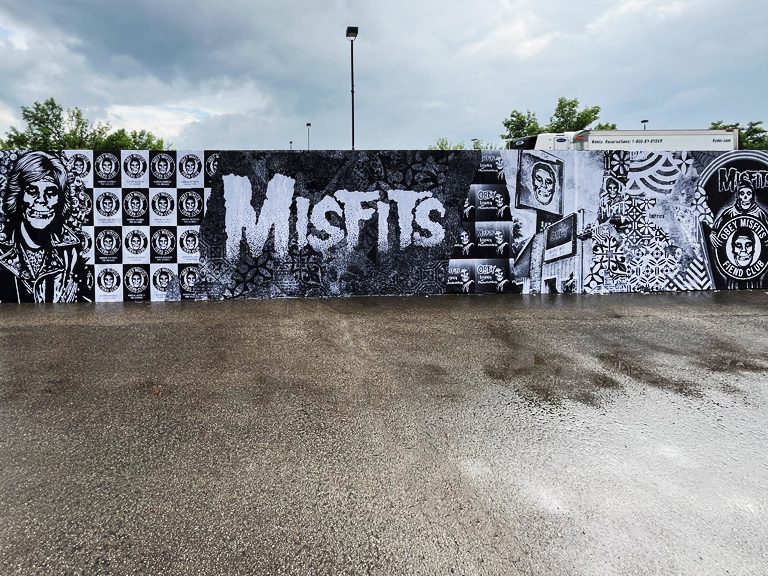
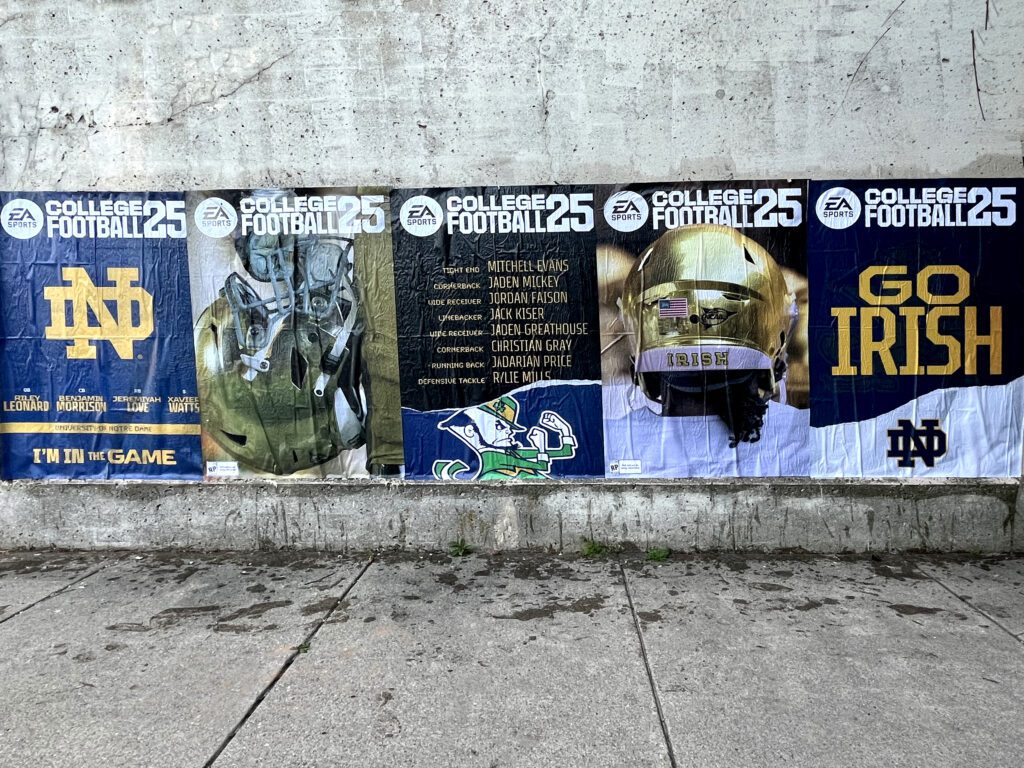
AGM has executed large-scale multi-city launches that prove the operational capacity for Chicago-level complexity. When EA Sports needed simultaneous street-level presence across multiple major cities for the FC 25 launch, AGM coordinated rapid, parallel deployments across markets — the kind of logistical execution that only an agency with truly nationwide in-house infrastructure can deliver. When Party to the Polls activated across fifteen states for their nationwide political touring campaign, AGM demonstrated the ability to manage installation quality and campaign documentation at a scale that would challenge any subcontractor-dependent operation. When Netflix needed high-pedestrian entertainment corridor coverage in Miami, AGM showed exactly what large-format, high-impact wheatpasting looks like when it’s executed without shortcuts. When Shepard Fairey’s Sonic Temple Festival installations needed to carry the visual weight of original art as much as advertising, AGM proved that street poster execution can honor the creative at the highest standard. These campaigns — across formats, cities, and client categories — represent the range of capability AGM brings to every Chicago engagement.
The 24×36 format is the engine of Chicago fly posting campaigns. It’s the format that builds repetition — the ability to deliver the same message to the same person multiple times across the same corridor over the course of a campaign week. A 200-poster 24×36 deployment across Wicker Park, Logan Square, and Pilsen creates dozens of distinct surface touchpoints in each neighborhood, ensuring that anyone moving through those areas regularly will see the campaign multiple times. Repetition is the mechanism through which fly posting builds brand awareness — a single poster sighting is interesting, but the fifth sighting in three days is persuasive.
The 48×72 format serves Chicago’s marquee placement opportunities: the blank wall on Milwaukee Avenue that every Wicker Park regular knows, the high-sightline surfaces near Wrigley Field visible to thousands of game-day pedestrians, the warehouse walls along the 18th Street Pilsen corridor that are large enough to make a 48×72 look proportional. A statement-piece 48×72 in one of these locations creates a landmark visual presence — something that people navigate by, photograph, and reference in conversation. For entertainment brands, fashion campaigns, and any client launching something that benefits from perceived cultural scale, the 48×72 in a marquee Chicago location is worth the investment.
Many Chicago campaigns run a hybrid format strategy: 48×72 for one or two statement placements that create visual anchors, 24×36 for the density deployment that builds frequency across the full neighborhood footprint. AGM’s campaign planning process helps clients identify the right format mix based on budget, neighborhood targets, and campaign objectives.
Chicago’s festival calendar creates the most clearly defined campaign windows in the Illinois market. Lollapalooza’s four-day August run in Grant Park is the single highest-audience event in the city, drawing roughly 400,000 attendees plus tens of thousands of visiting tourists who fill hotels, restaurants, and bars across the North Side and downtown for the surrounding week. Fly posting campaigns installed in the two weeks before Lollapalooza launch hit a city that is at full cultural engagement — residents who normally treat Chicago as home are treating it as a destination, and out-of-towners are primed to discover what the city’s neighborhoods have to offer.
Riot Fest in Douglass Park, typically held in early September, concentrates Chicago’s punk, alternative, and indie music audience for a three-day event that generates its own distinct campaign opportunity. The neighborhoods adjacent to Douglass Park — Logan Square, Pilsen, and Humboldt Park — are already natural fly posting territories, and the Riot Fest window amplifies their ambient audience volume significantly. Pitchfork Music Festival in Union Park in July draws the city’s most music-literate tastemaker audience — a demographic that has historically been among the most receptive to wheatpaste campaign aesthetics.
Outside the festival calendar, Chicago’s consistent nightlife economy keeps the entertainment advertising window essentially year-round. The CTA Blue Line serves Wicker Park and Logan Square with reliable late-night frequency, sustaining bar-district foot traffic even in cold weather months. Winter campaigns in Chicago — counterintuitively — can be highly effective in the transit-adjacent corridors where covered surfaces near stations and underground connections keep posters visible even when outdoor exposure is limited. The spring return of warm weather creates a powerful rebound window in March and April, as residents who have been largely indoor-bound emerge back into neighborhood commercial life with heightened engagement and exploratory energy.
Music and entertainment is the dominant industry category for Chicago fly posting campaigns. The city’s concert venue ecosystem — from large amphitheaters to neighborhood clubs — generates year-round demand for street poster advertising. Record labels, concert promoters, venue operators, and streaming platforms all use Chicago fly posting as a standard tool for building advance awareness and driving ticket sales. The format’s natural alignment with music culture makes it particularly effective in a city where the connection between street visual culture and live music has been sustained for decades.
Streetwear and fashion brands have made Wicker Park and Logan Square reliable campaign destinations. The independent boutique concentration in those neighborhoods creates a shopping environment where style-conscious consumers are already primed to notice and engage with visually strong advertising. Fashion campaigns in Chicago often use the 48×72 format for key Wicker Park placements, creating statement installations that resonate with the neighborhood’s fashion-forward resident community.
Food and beverage brands targeting the 22-to-40 urban professional demographic find Chicago’s bar corridors to be highly efficient deployment zones. A craft beer launch, a spirits brand expansion, or a new restaurant opening can build rapid neighborhood-level awareness through a concentrated fly posting campaign in the specific corridors where the target consumer is already spending discretionary income on food and beverage. Tech companies building consumer brand recognition in Chicago’s startup community use fly posting to establish physical presence in the creative professional neighborhoods where their target employees and users concentrate.
Political campaigns and civic organizations have deep roots in Chicago street advertising. The city’s precinct-level political sophistication extends to advertising strategy — campaigns understand the value of reaching voters in their own neighborhoods through physical, persistent media rather than relying entirely on digital targeting. Issue advocacy campaigns, voter registration drives, and candidate introductions all use fly posting in Chicago as part of a multi-channel strategy that combines physical presence with digital and broadcast reach.
Every Chicago campaign begins with a neighborhood targeting conversation. AGM’s planning team works with the client to identify priority districts based on the campaign’s target demographic, geographic objectives, and creative format. From that conversation, AGM produces a surface map — a specific list of installation targets across the agreed neighborhoods, chosen for pedestrian volume, surface quality, and demographic alignment with the campaign’s audience.
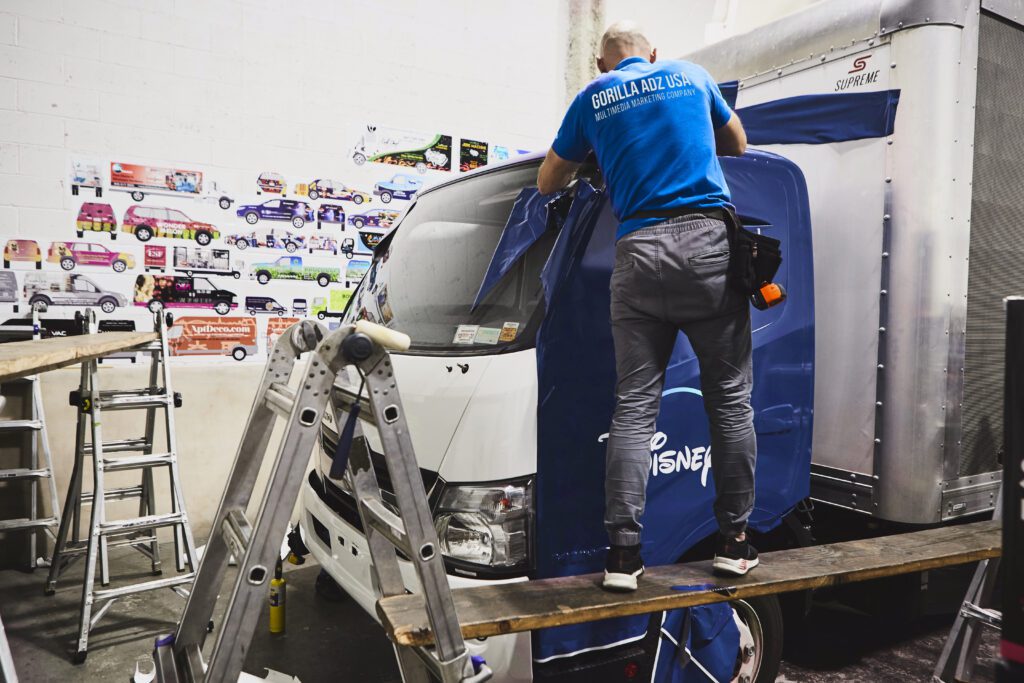
Printing is handled entirely in-house. AGM’s production operation delivers finished posters on the campaign schedule without relying on third-party print vendors who could introduce quality or timing variability. Chicago installation crews — AGM’s own employees, not subcontractors — execute the installation route across the planned surfaces, applying wheat-based adhesive and installing posters to the consistent standard that clients receive in every AGM market. Wheat paste’s plant-derived formula bonds strongly to exterior surfaces and removes cleanly with pressure washing, making it the environmentally responsible choice for campaigns in a city that takes its public space seriously.
Documentation occurs throughout the installation process. Every surface placement is photographed and GPS-tagged. After the campaign period ends, AGM delivers a complete post-campaign report: installation photos organized by location, GPS coordinates for every surface, and a total placement count. This GPS-documented proof-of-performance framework is the same accountability standard AGM applies in every city — from Chicago to Miami to Los Angeles — giving clients a consistent and measurable report of exactly what their campaign delivered on the street.
Wicker Park and Bucktown — particularly the Milwaukee Avenue corridor — consistently deliver the highest pedestrian impressions per poster for campaigns targeting 22-to-40 music and arts audiences. For Latinx-targeted campaigns, Pilsen’s 18th Street corridor is the strongest deployment zone. For LGBTQ+ audiences and entertainment-adjacent campaigns, the Halsted corridor through Lakeview is the priority. The right neighborhood depends on the campaign’s target audience — AGM can recommend the optimal zone based on your specific demographic.
Yes, meaningfully so. Wicker Park skews slightly younger and more nightlife-focused, with stronger streetwear and music culture energy. Logan Square has a higher concentration of creative professionals and cocktail bar regulars, and a bit more of an indie-sophisticated aesthetic. Both are excellent fly posting markets — many Chicago campaigns cover both simultaneously, treating them as a connected but distinct audience corridor along the Milwaukee Avenue spine.
In Chicago’s active fly posting corridors, 24×36 campaigns typically maintain strong visibility for seven to fourteen days before competition, weather, or surface wear begins to affect poster integrity. The city’s variable weather — particularly winter cold and summer humidity — can affect adhesion timelines. AGM advises on campaign duration based on the specific neighborhoods, installation surface types, and the time of year when the campaign runs.
For most Chicago campaigns, 24×36 is the primary format — it allows for the high poster counts that build frequency and neighborhood saturation across multiple surfaces. The 48×72 format works as a statement anchor when there’s a specific high-sightline wall or marquee location that justifies the larger investment. Many Chicago clients run a hybrid strategy: a few 48×72 statement pieces paired with a 100-to-200 poster 24×36 density campaign.
Yes. Winter campaigns in Chicago are viable, particularly in the transit-adjacent corridors of Wicker Park, Logan Square, and Lakeview where underground and covered surfaces extend campaign visibility. Foot traffic decreases in the coldest months but concentrates more predictably in covered zones near CTA stations — which can actually improve per-impression targeting efficiency for campaigns focused on transit-oriented audiences.
Campaigns targeting the Lollapalooza audience should install two to three weeks before the festival’s August start date. This timing ensures the campaign is active and visible during the peak anticipation period, reaching both local Chicago residents who have purchased tickets and out-of-towners beginning to plan their Chicago experience. Campaign presence during festival week itself maximizes exposure to the full audience influx.
Yes. Pilsen is one of the strongest Latinx fly posting markets in the entire country — the neighborhood’s visual culture celebrates large-format street art, and the 18th Street commercial corridor delivers consistent Latinx community foot traffic throughout the week. AGM can target Pilsen specifically, pair it with Aurora’s Galena corridor for a multi-city Latinx market campaign, or incorporate it into a broader Chicago neighborhood deployment.
Chicago’s permitting landscape for street poster advertising is complex and varies by surface type and location. AGM’s Chicago installation team navigates the city’s specific requirements as part of standard campaign planning. We identify surfaces that accept installations under the applicable local conditions and brief clients on any market-specific considerations that affect the campaign plan. This is part of the standard AGM service — clients don’t need to manage the surface permitting question independently.
Billboards in Chicago are expensive, geographically fixed, and audience-generic — they reach whoever happens to drive past. Fly posting concentrates campaign presence in the specific pedestrian corridors where your target audience already spends time, at a fraction of the cost. The format also generates organic social amplification that billboards don’t — people photograph and share fly posting campaigns in ways that extend reach beyond the physical poster count. For audience-specific, neighborhood-targeted campaigns, fly posting consistently delivers better cost-per-targeted-impression than outdoor billboard placements in Chicago.
The minimum campaign size is 100 posters in the 24×36 format at contact us for pricing which delivers strong saturation of a single Chicago neighborhood. A 200-poster campaign at contact us for pricing extends coverage across two to three neighborhoods, which is the more common starting point for Chicago clients who want multi-district presence. Additional creative designs are available at Contact us for pricing. for 24×36 campaigns.
Yes. AGM offers 72-hour rush production for 24×36 campaigns up to 500 posters. Rush campaigns are available in Chicago when a campaign brief requires rapid deployment — around a breaking news moment, an accelerated entertainment release, or an event-tied campaign with a compressed preparation window. Rush timelines are subject to crew availability and should be confirmed with AGM at the time of booking.