American Guerrilla Marketing
Nationwide Service
Media planning, media buying, billboard advertising, & guerrilla marketing
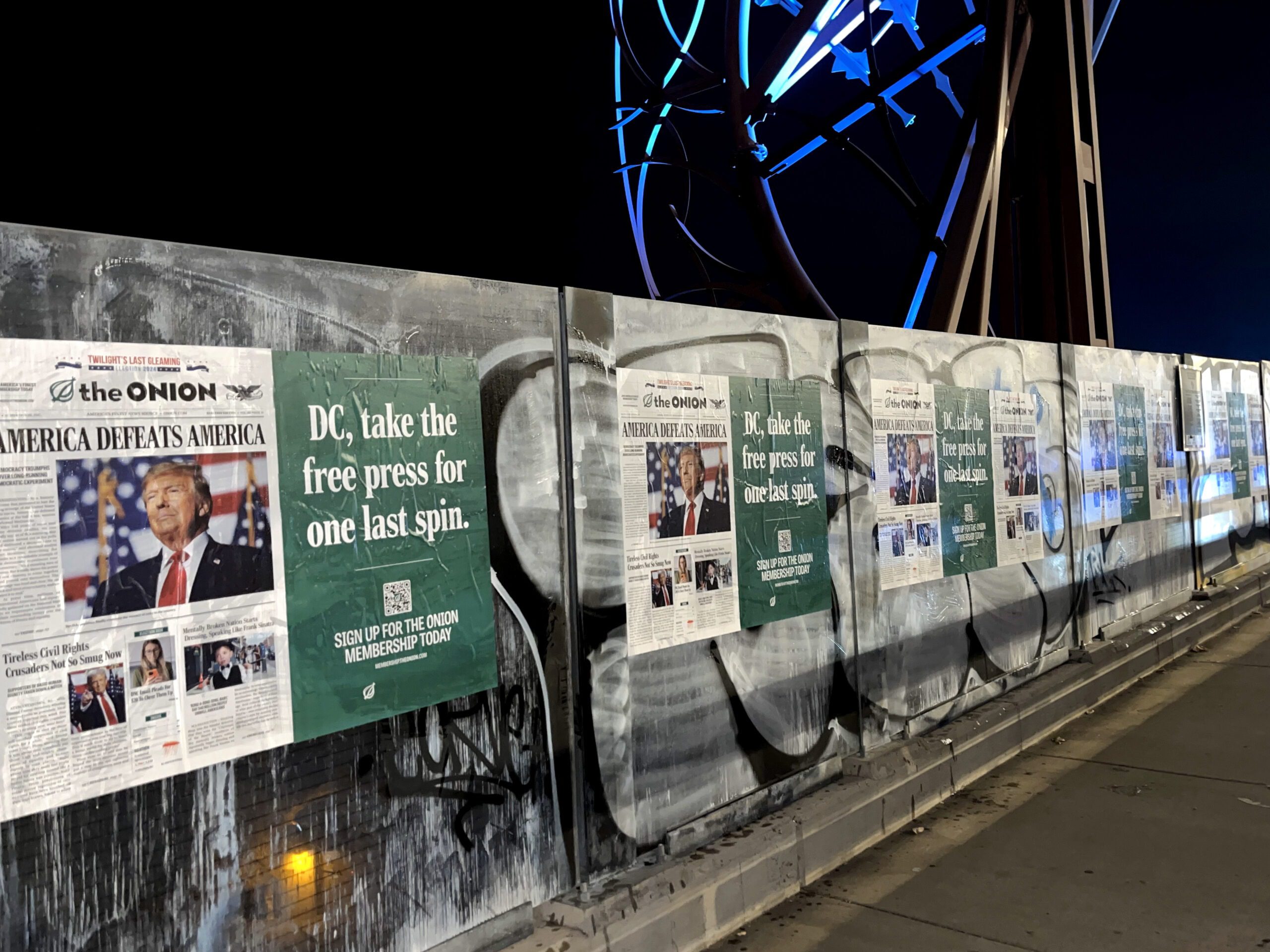
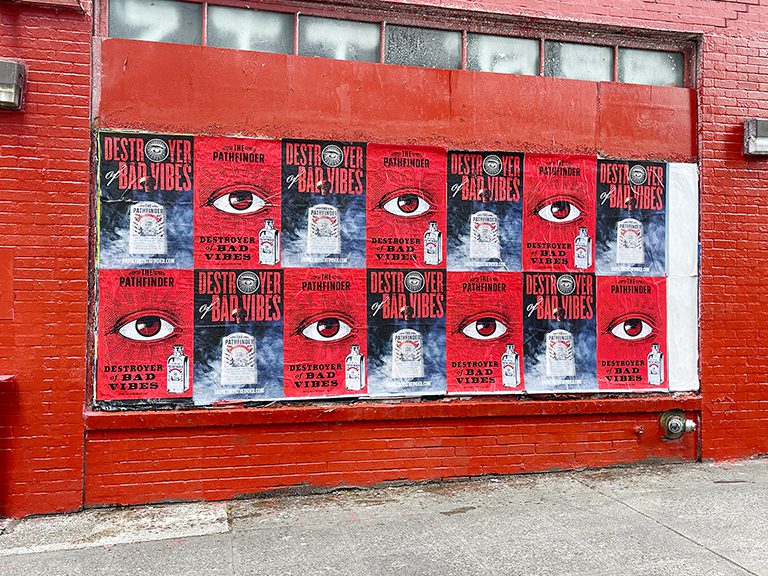
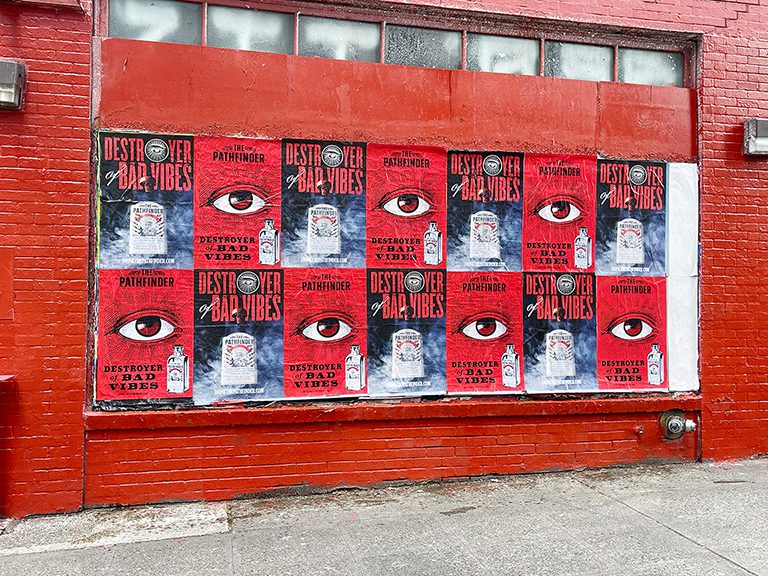
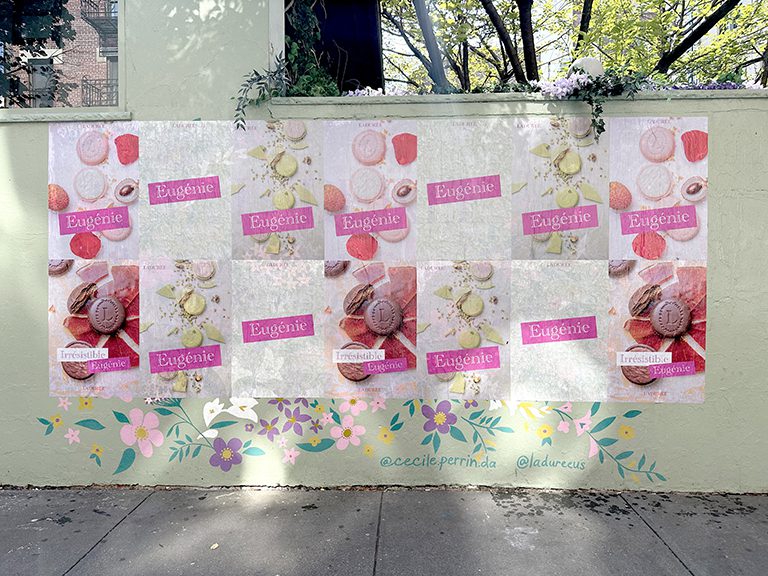
The NOTO arts district along North Kansas Avenue has made Topeka one of the most genuinely wall-conscious cities in the region — a state capital actively rewriting its street-level identity through murals, galleries, and independent creative culture. AGM installs wheat paste campaigns that land in exactly that context.
Topeka doesn’t show up on most national brand activation shortlists, and that oversight belongs entirely to the brands missing it. Over the past decade, North Topeka has undergone one of the more authentic arts district transformations in the region — not a developer-driven gentrification project, but a ground-up revitalization driven by artists, independent business owners, and community members who chose a forgotten stretch of North Kansas Avenue as the place to build something real. The result is NOTO: a concentrated corridor where gallery spaces, independent studios, food and beverage destinations, and community murals have collectively turned a previously overlooked urban strip into one of the most visually active blocks in northeast Kansas.
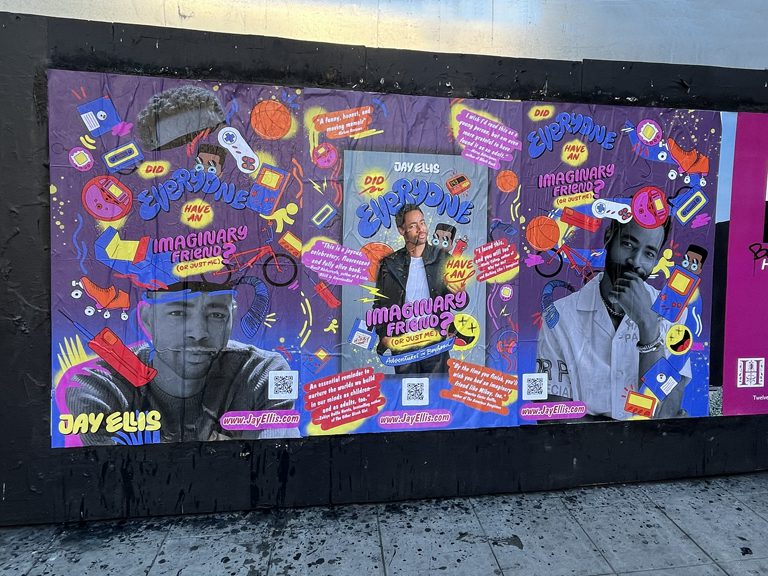
For fly posting specifically, the NOTO corridor has a characteristic that many better-known arts districts in larger cities have lost to over-development: genuine visual hunger. The audience that circulates through NOTO on gallery nights, on weekend afternoons, and during the district’s rotating events and pop-ups is already looking at what’s on the walls. This is not a passive audience that absorbs advertising incidentally while focused on a screen or a destination. This is a community of 22-to-35-year-old creatives, arts professionals, gallery visitors, and engaged young residents who have chosen to spend their time in an environment where visual communication is the organizing principle. A wheat paste poster installed on a NOTO wall is not an intrusion into that environment — it is a participant in the same visual conversation the neighborhood is already having with itself.
The NOTO revitalization also carries a specific narrative that matters for brand alignment. The district represents exactly the kind of authentic, community-built urban renewal that culturally engaged young consumers respond to. Brands that show up in NOTO with fly posting are not buying ad space — they are physically present in a neighborhood that the local creative community has built from the ground up and continues to defend as a genuine arts environment rather than a commercial approximation of one. For brands in entertainment, music, craft beverage, independent fashion, arts institutions, and any category where cultural authenticity is a brand value, NOTO is the right address in Topeka.
The Washburn University campus corridor on SW 17th Street adds a second, complementary audience layer. Washburn’s student population of approximately 7,000 undergraduates and graduate students circulates through the campus commercial zone and into the broader Topeka urban core on a daily basis, creating a younger demographic supplement to the NOTO arts community audience. The overlap between Washburn students engaged with arts, media, social justice, and creative culture and the NOTO district’s core audience is significant, and campaigns that address both zones reach a combined young-adult creative audience that punches well above what Topeka’s population rank would suggest.
Downtown Topeka along SW 6th Avenue and Kansas Avenue adds a third dimension: the state capital’s professional and civic audience. Government employees, nonprofit workers, legal and administrative professionals, and the downtown business community circulate through the SW Kansas Avenue corridor on weekdays, creating a daytime professional audience distinct from the NOTO arts crowd and the Washburn student demographic. The three audiences together — NOTO creatives, Washburn students, and downtown professionals — give Topeka a more complex demographic profile than a single-corridor market, and AGM’s campaign planning accounts for all three zones as distinct targeting opportunities within a single city campaign.
AGM brings fly posting to NOTO's North Kansas Avenue arts corridor, the Washburn University campus zone, and downtown Topeka's SW Kansas Avenue — reaching the city's arts community, student population, and professional audience with in-house crews and GPS-verified reporting.
Select a city to explore Fly Posting Advertising opportunities.
Topeka’s fly posting geography clusters around three primary zones that correspond to the city’s three primary audience segments. North Topeka along North Kansas Avenue is the NOTO arts district proper — the heart of the city’s creative revitalization and the zone where the visual culture audience is most concentrated and most receptive to street-level brand communication. Downtown Topeka along SW 6th Avenue and Kansas Avenue is the civic and professional core — a daytime business corridor where state government workers, legal professionals, nonprofit staff, and downtown employees circulate on regular schedules. The Washburn University corridor on SW 17th Street is the campus-adjacent commercial zone where student foot traffic feeds into coffee shops, casual dining, and the residential blocks surrounding the university’s compact urban campus.
Between these three zones, a well-structured Topeka fly posting campaign can reach three distinct audience segments — arts community creatives, university students, and downtown professionals — without any single creative execution trying to address all three simultaneously. The campaign architecture that works best in Topeka is a zone-specific approach: different creative executions deployed in each zone to address the specific audience and context of each corridor, coordinated under a single campaign timeline and reported back as a unified Topeka deployment. AGM’s multi-creative campaign capability makes this approach straightforward to execute and verify across all three zones.
The Potwin Place historic district adds a fourth geographic element — a beautiful Victorian residential neighborhood with a strong community identity and a locally engaged resident population that includes a significant arts and professional community cohort. Posting in the Potwin Place vicinity reaches an audience that is invested in the Topeka community fabric and receptive to brands that present themselves with the neighborhood’s aesthetic standards in mind. It is a secondary zone rather than a primary posting corridor, but for campaigns targeting the established creative professional demographic rather than the younger arts-community or student audience, Potwin Place adds genuine geographic depth to a Topeka campaign.
The NOTO arts district on North Kansas Avenue is the defining fly posting environment in Topeka and the primary reason that AGM treats the city as a genuine campaign destination rather than a secondary add-on to a Kansas City or Wichita focus. Gallery spaces, independent studios, food and beverage destinations, and community murals create an environment where visual communication has established legitimacy and the audience has been trained by the district itself to look at what’s on walls. Gallery opening nights, district events, and the organic weekend foot traffic of NOTO regulars all generate consistent pedestrian density in a tight corridor. For brands targeting 22-to-35-year-old creatives, arts community participants, and the culturally engaged young residents of northeast Kansas, NOTO is the starting and ending point of every Topeka campaign conversation.
Downtown Topeka’s main commercial and civic corridor runs along SW 6th Avenue and Kansas Avenue — the functional spine of the state capital’s business district, connecting government buildings, law offices, nonprofits, and the retail and dining destinations that serve the downtown workforce. The daytime professional audience that circulates through this corridor is distinct from the NOTO arts crowd: older, more professionally oriented, more likely to be in the 28-to-45 age range rather than the 22-to-35 creative demographic. For brands targeting the professional services audience, civic organizations, and downtown Topeka’s business community, this corridor provides access to a population that does not circulate through NOTO with any regularity and requires its own distinct targeting approach.
Washburn University’s campus on SW 17th Street anchors a student-adjacent commercial corridor that extends into the surrounding residential and retail blocks. The approximately 7,000-student enrollment generates consistent foot traffic through the coffee shops, casual dining destinations, and campus-edge retail that serve the student population throughout the academic year. Washburn students in programs including art, media, communications, law, and education overlap meaningfully with the NOTO arts district audience in values and cultural orientation, even when they don’t physically circulate through NOTO on a regular basis. Posting near the Washburn campus corridor reaches this student audience in its own natural environment during the academic year’s peak activity windows.
Potwin Place is one of Topeka’s most architecturally distinctive residential neighborhoods — a Victorian-era historic district immediately east of downtown that has attracted a significant creative professional and arts community resident population. The neighborhood’s walkable character, its proximity to NOTO and downtown, and its strong community identity make it a legitimate secondary posting zone for campaigns targeting Topeka’s established arts professional demographic rather than the younger NOTO gallery crowd. Foot traffic in Potwin Place is quieter than in the primary commercial corridors, but the audience is highly engaged with the visual environment and receptive to brand communication that respects the neighborhood’s aesthetic standards.
The block surrounding the YWCA and adjacent arts center institutions in Topeka represents a community-rooted posting environment where audiences attending events, classes, and programs at these institutions circulate on foot through a zone that has genuine community trust and civic legitimacy. For brands in health and wellness, community services, arts education, and civic engagement categories, posting in proximity to these institutions reaches an audience that is already engaged with community life in a way that lends credibility to brands willing to show up in the same physical space. This is a supplementary zone rather than a primary campaign anchor, but it adds meaningful audience depth for campaigns with a community engagement dimension.
Award Winning Personalized Service
You will get thoughtful, devoted, and individualized attention from our experienced, qualified, and professional personnel. Being one of the most illustrious agencies in Brooklyn, New York, American Guerrilla Marketing has been awarded the Best of Brooklyn title.
Nationwide
Industry City, Brooklyn, New York 11232
American Guerrilla Marketing
Hours
Mon - Fri: 9 AM - 5 PM
Sat & Sun: Closed
Automate your campaign with AGM’s Request for Proposal Builder. Simply answer a few quick questions about your campaign goals, markets, and timeline, and the system will generate a tailored presentation with recommended strategies, quantities, and pricing. Click the RFP Builder to instantly receive your customized proposal.
The NOTO arts district’s audience is defined less by demographic metrics and more by a shared orientation toward the visual environment that makes them unusually receptive to street-level brand communication. These are people who chose a neighborhood specifically because of what it puts on the walls — gallery works, community murals, street art, and the organic visual texture of an arts district that has been built by people who care about aesthetics. That active, self-selected visual engagement means that a well-designed wheat paste poster installed in NOTO is not background noise: it is foreground, considered, and remembered in a way that a digital advertisement served to the same person on their phone never achieves.
The demographic specifics support the cultural profile: NOTO’s core audience skews 22 to 35 years old, with arts education or creative professional career backgrounds, above-average engagement with social media and cultural content sharing, and strong community loyalty to the businesses and organizations that have invested in the district’s growth. This is an audience that researches brands, shares discoveries through their networks, and rewards authenticity with genuine affinity. A brand that posts in NOTO is not just reaching the individuals who see the poster — it is potentially reaching the broader network those individuals communicate with, because NOTO regulars talk about what they see in the district.
The revitalization energy in NOTO also means the audience is growing. New gallery spaces and independent businesses continue to open along North Kansas Avenue, and the district’s rising profile within Kansas’s creative community draws visitors from Wichita, Lawrence, and the Kansas City metro who come specifically to experience what NOTO has built. A fly posting campaign in NOTO today reaches not only Topeka’s existing creative community but also the regional creative audience that is increasingly treating the district as a destination worth the drive from other Sunflower State markets.
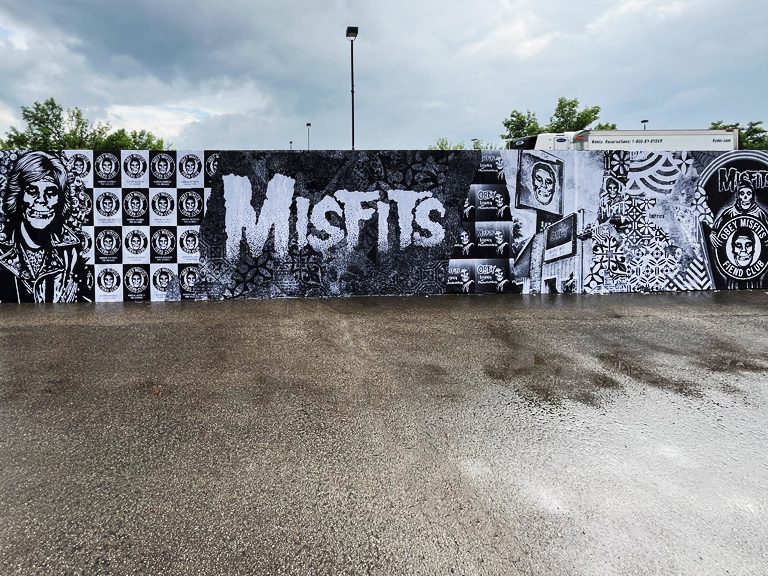
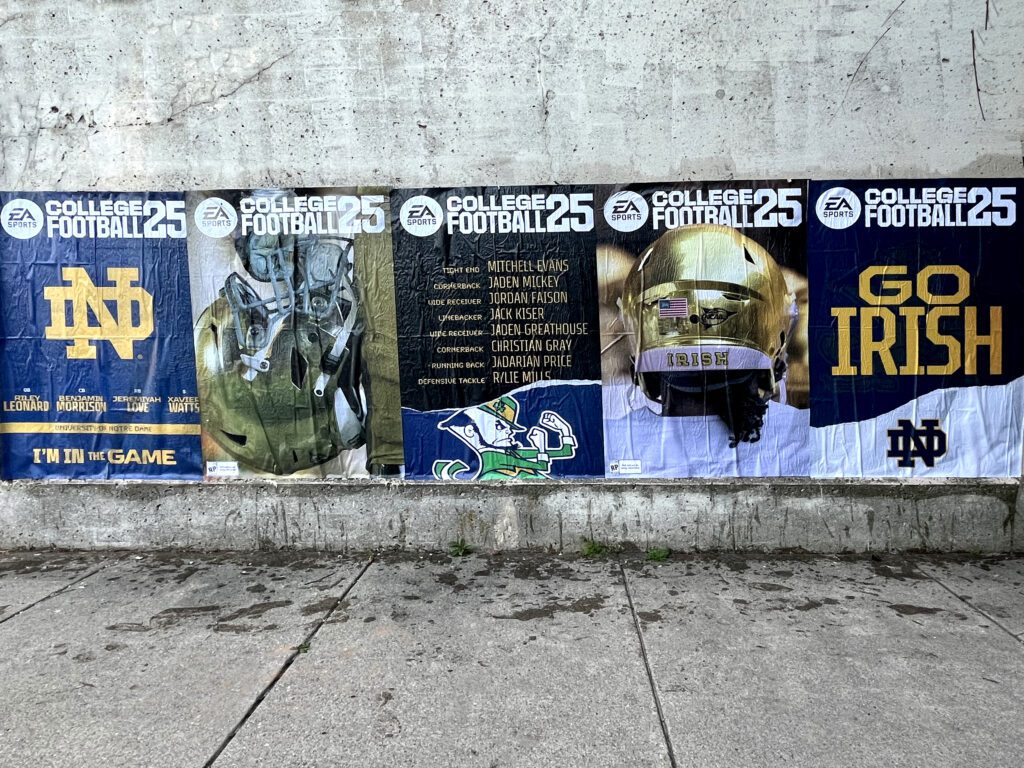
American Guerrilla Marketing executed large-format wheat paste art installations for the Shepard Fairey Sonic Temple Festival 2024 campaign in Columbus, Ohio — a music and arts festival deployment that placed Fairey’s iconic visual work at street level in the corridor surrounding the festival’s event zone. The campaign demonstrated fly posting’s unique capacity to function simultaneously as advertising and as genuine artistic contribution to the streetscape — placing work that the arts community was already excited to see in physical locations where that same community circulates and engages with visual culture in their daily environment.
The parallel to NOTO’s fly posting environment is precise and substantive. The Sonic Temple Festival campaign worked in Columbus because it placed arts-adjacent brand communication in a corridor where the audience already had high visual engagement and genuine receptivity to seeing art in the street environment. NOTO operates on exactly the same principle: it is a district where the audience expects to see and engage with visual communication at street level, where art and advertising occupy the same interpretive framework, and where a well-executed wheat paste installation is received as a legitimate contribution to the district’s visual vocabulary rather than an intrusion into it. What AGM demonstrated for Shepard Fairey in Columbus — that large-format wheat paste can land as both advertisement and artwork in an arts-district posting environment — is directly replicable in NOTO’s North Kansas Avenue corridor.
Arts brands, music festival promoters, cultural institutions, and any organization whose audience self-identifies as arts-community-adjacent benefit most clearly from the NOTO posting environment. But the Sonic Temple campaign also demonstrates that mainstream entertainment brands whose creative is strong enough to meet the arts district’s aesthetic standards can achieve genuine integration with the NOTO visual landscape rather than sitting awkwardly alongside it. The medium is the same; the creative standard is what determines whether the installation is embraced or ignored by the district’s audience.
NOTO’s compact geography makes the 24-inch by 36-inch format the strategic default for Topeka campaign planning. The North Kansas Avenue corridor is not a sprawling entertainment district but a concentrated stretch where surface availability and foot traffic density are tightly co-located — meaning a campaign of 100 posters at the 24×36 format can achieve genuine saturation of the NOTO corridor while also extending coverage to the Washburn University campus zone and a portion of the downtown Topeka corridor. Contact us for pricing. t over-investing in coverage beyond the district’s natural geographic boundaries.
The 200-poster option at contact us for pricing makes sense for Topeka campaigns that need to cover all three primary zones — NOTO, downtown SW Kansas Avenue, and the Washburn campus corridor — at sufficient density to generate meaningful frequency within each zone rather than single-occurrence impressions scattered across the geography. At this coverage level, the campaign reaches the arts community audience in NOTO, the student audience near Washburn, and the professional audience in downtown Topeka simultaneously, making it the appropriate choice for brands with broad Topeka awareness objectives rather than audience-specific targeting within one zone.
The 48-inch by 72-inch large-format option serves a specific purpose in Topeka that is distinct from its urban use cases in larger markets. In NOTO’s intimate corridor, a single large-format installation on a prominent North Kansas Avenue wall does not compete with dozens of other large-format pieces — it stands alone as a visual landmark that every visitor to the district encounters. At 100 posters Contact us for pricing district where the arts community audience has elevated expectations for what goes on the walls. Additional creative designs run Contact us for pricing. at the 24×36 format and Contact us for pricing. at the 48×72, allowing Topeka campaigns to differentiate their NOTO creative from the messaging deployed in the Washburn and downtown zones within a single coordinated campaign order.
Topeka’s arts district revitalization is ongoing, and the surface landscape of NOTO continues to evolve as new buildings are renovated, new murals are commissioned, and new businesses open along North Kansas Avenue. AGM’s campaign planning accounts for this evolution by conducting current-condition surface mapping before each Topeka campaign rather than relying on static reference information from a previous installation. The specific walls, utility structures, and blank building surfaces available in NOTO today are not necessarily the same ones that were available six months ago, and the quality of a Topeka campaign depends on working from accurate current surface information rather than outdated maps.
The installation crew’s role in a NOTO campaign is also different from an urban entertainment corridor deployment. In a dense nightlife district, the priority is speed and volume — getting a high number of posters up quickly across a broad corridor before the morning foot traffic arrives. In NOTO, precision matters more than speed: identifying the specific locations where a poster will sit within the district’s visual landscape in a way that respects the aesthetic standards the community has built, rather than simply filling the first available surface regardless of context. AGM’s crews bring that aesthetic attentiveness to NOTO installations because the district’s audience is discerning in a way that generic urban outdoor audiences are not.
Post-installation documentation follows the same GPS-coordinates-and-photography standard that AGM applies in every market. In Topeka specifically, the verification report gives clients confidence that their campaign reached the NOTO district’s specific corridors rather than landing in lower-value adjacent blocks that don’t carry the same audience or cultural context. That geographic specificity in reporting is what distinguishes an accountable fly posting partner from a general street marketing vendor who delivers vague geographic confirmation without location-level verification.
Music venues and festival promoters driving attendance for Topeka-area shows and events at the White Concert Hall, the Maner Conference Center, and the NOTO district’s own intimate performance spaces. Arts organizations and cultural nonprofits building community awareness of exhibitions, workshops, and programming that aligns with NOTO’s audience values. Craft beverage brands — local breweries, regional wine producers, specialty coffee roasters — reaching the arts community audience in the bar and café corridor that has emerged within and adjacent to NOTO. Independent fashion labels and specialty retail brands entering the Topeka market through NOTO’s culturally engaged consumer base. Political campaigns and civic advocacy organizations targeting the young creative and student vote in Washburn University–adjacent corridors. University and continuing education programs building awareness among Topeka’s young adult creative demographic. Streaming and media brands whose creative is strong enough to land in an arts district as a visual contribution rather than an intrusion. Community organizations building grassroots visibility among the revitalization advocates and arts community leaders who define NOTO’s cultural direction.
Topeka is also a market where brands with a state government or public policy dimension find genuine audience access. The downtown Kansas Avenue corridor concentrates state employees, lobbyists, policy advocates, and the professional legal and administrative community that orbits the state capitol building. For brands with a civic or policy message — a government-facing technology firm, a public health organization, an advocacy campaign with a state legislative audience — the downtown Topeka corridor offers a posting environment that reaches that professional audience in a context that no digital channel accesses with the same physical directness. The state capital dimension is one of Topeka’s unique market characteristics, and AGM’s campaign planning incorporates it as a distinct targeting opportunity rather than treating downtown Topeka as simply a generic professional zone.
NOTO works for fly posting because the audience that circulates through the district is already actively engaging with visual communication in the environment — galleries, murals, and street art have trained NOTO regulars to look at what’s on the walls with genuine attention rather than passive indifference. A well-executed wheat paste poster installed in NOTO enters a visual conversation the district is already having with itself, which means it receives a quality of audience attention that passive media environments simply cannot replicate. The arts community audience’s tendency to share visual discoveries through their social networks also extends the campaign’s reach beyond the physical pedestrian count.
AGM conducts current-condition surface mapping before each Topeka campaign rather than working from static reference information, because the NOTO corridor’s surface landscape evolves as new buildings are renovated and new murals are commissioned. Installation decisions in NOTO also account for the district’s aesthetic standards — identifying locations where a poster sits within the visual landscape in a way that respects the community’s creative investment, rather than simply filling the first available surface regardless of context. The revitalization energy in NOTO is an asset to the campaign environment, and AGM’s approach is designed to work with it rather than against it.
NOTO Gallery Crawl events, which draw the district’s arts community and regional visitors to North Kansas Avenue for gallery openings and pop-up experiences, are among the highest-value timing windows for fly posting installations in Topeka. The First Friday gallery walk tradition creates reliable monthly traffic peaks in NOTO. Washburn University’s homecoming, semester opening weeks, and major campus events drive student foot traffic through the campus corridor. Downtown Topeka’s legislative session calendar brings heightened professional traffic to the SW Kansas Avenue corridor during state government activity windows. AGM’s campaign planning incorporates event timing as a deliberate installation scheduling factor.
Yes. The Washburn University campus on SW 17th Street and the surrounding commercial corridor that serves the student population are standard AGM targeting zones for Topeka campaigns with a student audience objective. The campus-adjacent coffee shops, casual dining destinations, and residential blocks east of the campus provide consistent student foot traffic during academic year hours. Campaigns timed to the first weeks of fall and spring semesters, to homecoming weekend, and to the end-of-semester activity peak reach the Washburn student population at maximum campus energy and engagement.
Downtown Topeka’s SW Kansas Avenue corridor performs comparably to other mid-sized state capital business districts as a daytime professional audience posting environment. The concentration of state government offices, legislative buildings, law firms, and nonprofit organizations within the SW 6th Avenue and Kansas Avenue zone creates a consistent weekday professional foot traffic pattern that makes the corridor effective for brands targeting the civic and government-adjacent professional audience. The performance is strongest during the legislative session calendar when the downtown professional population is augmented by lobbyists, advocates, and state government visitors from across Kansas.
Potwin Place draws primarily 30-to-55-year-old creative professionals, arts community members, and established Topeka residents who chose the neighborhood for its Victorian architectural character and proximity to the city’s cultural institutions. This audience is more established and financially stable than the younger NOTO arts crowd, and it has strong community loyalty to businesses and organizations that respect the neighborhood’s historical and aesthetic character. For brands in home goods, premium food and beverage, arts and cultural institutions, and professional services with a community investment positioning, Potwin Place adds a meaningful secondary audience to a Topeka campaign focused primarily on NOTO.
Fly posting is particularly well-suited to arts organizations and cultural nonprofits in Topeka because the NOTO audience is precisely the community those organizations are trying to reach, and the medium is contextually native to the district’s visual culture rather than an imported advertising format that sits awkwardly in the environment. Festival campaigns timed to NOTO district events, arts institution exhibition announcements, and cultural programming awareness campaigns all benefit from the NOTO posting environment’s built-in audience receptivity. Budget-conscious nonprofit organizations also benefit from fly posting’s cost efficiency relative to traditional media options that charge premium rates for significantly lower audience specificity.
Yes. Multi-zone Topeka campaigns covering NOTO and downtown simultaneously within a single campaign order are a standard AGM execution option. Different creative executions can be deployed in each zone to address the distinct audience profiles — arts community creative for NOTO, professional or civic messaging for downtown — with installation timing coordinated so that both zones are active simultaneously. The 200-poster option at contact us for pricing at the 24×36 format provides sufficient volume to cover both zones at meaningful density, and separate creatives add Contact us for pricing. at the standard format.
In Topeka’s climate, well-adhered wheat paste posters on suitable surfaces typically maintain good condition for one to two weeks, which aligns with the standard campaign window. Kansas weather variability — including wind, rain, and temperature swings that are more pronounced in Topeka than in more climatically stable markets — can affect lifespan at the margins, particularly for posters on exposed surfaces rather than sheltered walls or building ends. AGM’s installation standard accounts for surface durability when selecting posting locations in Topeka, prioritizing sheltered and structurally stable surfaces that provide the longest campaign lifespan in the local climate.
Financial services brands that want presence in the downtown Topeka professional corridor — including insurance companies with state regulatory relationships, financial advisory firms targeting the professional workforce, and banking institutions building brand familiarity among government and professional employees — have used fly posting in the SW Kansas Avenue zone. Government-facing technology firms and public sector software providers building awareness among the state agency professional community benefit from the downtown corridor’s concentrated professional audience. Civic advocacy organizations, policy campaigns, and public health initiatives targeting the governmental and professional downtown audience also use Topeka fly posting effectively during the legislative session window.
The NOTO arts district is most active during the spring and fall seasons, when gallery crawl events, outdoor programming, and the academic calendar converge to bring the largest concentrations of arts community members and Washburn students into the North Kansas Avenue corridor simultaneously. The early fall window — late August through October — is particularly strong because it combines the return of the Washburn student population with the fall gallery and events calendar in NOTO. The spring window from March through May mirrors this pattern as the academic year reaches its end-of-semester peak. Summer is the quieter season in both the NOTO and campus corridors, though downtown professional traffic remains consistent year-round.
Documentation in NOTO follows the same GPS-coordinates-and-photography standard that AGM applies in every market, adapted for the corridor’s specific physical characteristics. Because NOTO’s posting surface density is lower than in a dense urban entertainment district — placements are spread across a defined stretch of North Kansas Avenue rather than across a dozen tightly packed city blocks — each placement location carries more individual weight in the verification report, and the photography for each location provides more specific visual confirmation of the posting context. Clients reviewing a NOTO campaign report can identify each specific placement location on the North Kansas Avenue corridor and assess the visual quality of every installation individually.