American Guerrilla Marketing
Nationwide Service
Media planning, media buying, billboard advertising, & guerrilla marketing
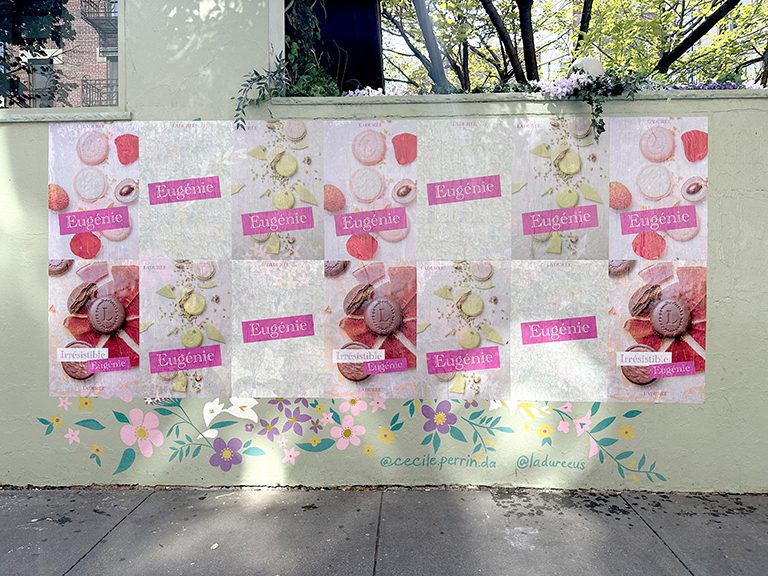
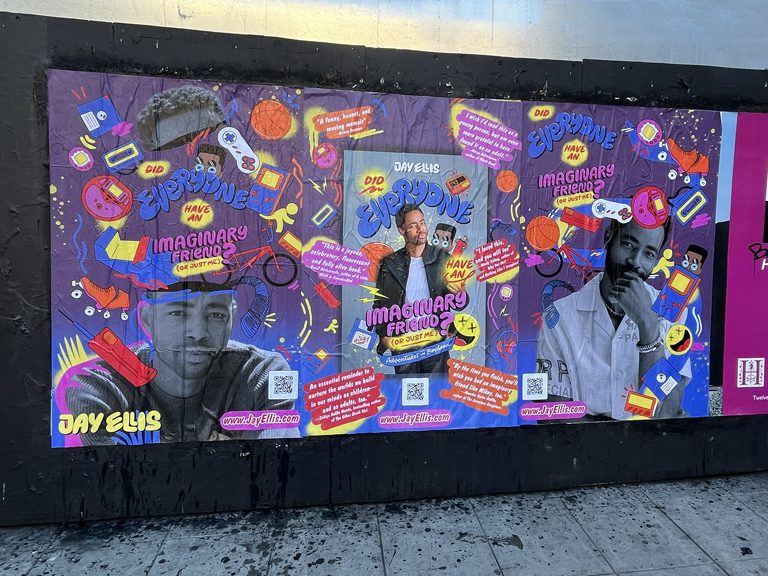
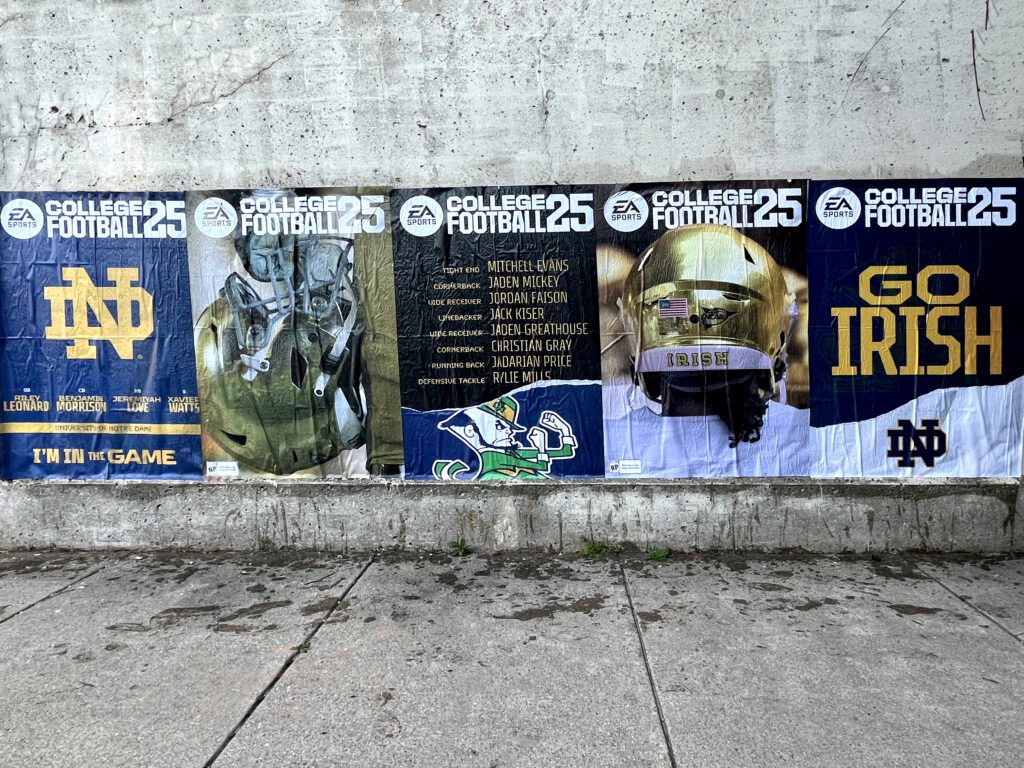
Campus corridors, arts districts, and a working-class downtown — AGM installs wheat paste street posters across Nampa’s student-populated neighborhoods and the 12th Avenue South creative corridor.
Nampa doesn’t show up on most national advertising plans. That’s a mistake — one that gives brands willing to look more carefully a genuine competitive window. Northwest Nazarene University sits within Nampa’s residential fabric, generating several thousand students who move through downtown Nampa on a regular basis. College of Idaho, located in adjacent Caldwell, adds another substantial student population that treats the Nampa-Caldwell corridor as its extended commercial neighborhood. Combined, these two campuses inject year-round young adult foot traffic into a downtown commercial core that, without them, would simply be a mid-sized Idaho city’s historic Main Street. With them, it’s a campus-adjacent street environment where consumer brands can reach a young, brand-forming demographic at a cost that no college-market campaign in a major metro can match.
The commercial case for fly posting in Nampa is built on that student foundation but extends well beyond it. Nampa’s working-class character — the city has historically been one of the more affordable communities in the Treasure Valley — means the non-student population is also underserved by conventional advertising. This is a community that isn’t getting the sophisticated brand messaging that saturates larger metros, which means a well-executed wheat paste campaign registers with impact that would be diluted in a more advertising-dense environment. American Guerrilla Marketing has operated in underserved markets across the country and consistently finds that the impression quality in these environments is higher precisely because the consumer’s visual attention hasn’t been exhausted by competing advertising stimulus. Nampa offers that attention quality at a price point that makes campaigns here among the most efficient in the Idaho market.
AGM runs fly posting campaigns across Downtown Nampa, the 12th Avenue South arts corridor, and campus-adjacent streets — reaching the Treasure Valley's college activation market with in-house printing, professional installation, and GPS-documented proof of every placement.
Select a city to explore Fly Posting Advertising opportunities.
The case for fly posting in Nampa rests on three overlapping audience dynamics that most brands overlook when they assess this market on population numbers alone. First, the student audience from Northwest Nazarene University creates a predictable foot traffic pattern through downtown Nampa across the full academic year — from late August through May, with a summer lull that still sees significant student population retention. Students move through the city’s commercial corridors for groceries, dining, entertainment, and the general errands of independent adult life — and they do so on foot, on bicycles, and through the kind of slow-paced urban mobility that makes street advertising visible rather than peripheral.
Second, Nampa’s working-class demographic is authentically street-media receptive in a way that differs from the ironic appreciation of street art among creative professionals. For the working adult who drives a trade route, stops for lunch on 1st Street South, and walks downtown blocks on weekend afternoons, a well-placed street poster is simply information in the environment — noticed, absorbed, remembered. The absence of digital advertising sophistication in this demographic doesn’t make them a lesser audience; it makes them a less defended one. Brands that show up on Nampa streets with clear, culturally appropriate messaging reach a consumer who hasn’t developed the trained dismissiveness that characterizes brand encounters in more advertising-saturated environments.
Third, Nampa’s 12th Avenue South arts corridor represents something genuinely valuable to brands trying to reach a young creative audience: an established visual culture zone where street-level art and commercial messaging share the same walls without friction. The gallery corridor atmosphere of 12th Avenue South creates an audience that already exists in a visual-receptivity mode — the same cognitive state that makes Boise’s Freak Alley corridor so effective for brand campaigns that want to be perceived as culturally embedded rather than conventionally advertised. In Nampa, that corridor is accessible at a fraction of the cost of comparable zones in larger markets.
Downtown Nampa’s commercial spine runs along 1st Street South and the surrounding historic brick blocks that have gradually filled with independent restaurants, coffee shops, specialty retailers, and community gathering spaces over the past decade. This is not a revitalized downtown in the glossy sense — it retains the honest, unpolished character of a working-class Idaho city finding its cultural footing while serving a genuinely mixed demographic of students, young adults, working families, and long-term residents. That character is exactly what makes it a strong fly posting environment. The walls here are authentic, the consumers are real, and a brand that appears in downtown Nampa is signaling community presence rather than calculated aspirational marketing. For brands that want to communicate authenticity to a skeptical young adult audience, that distinction carries significant weight.
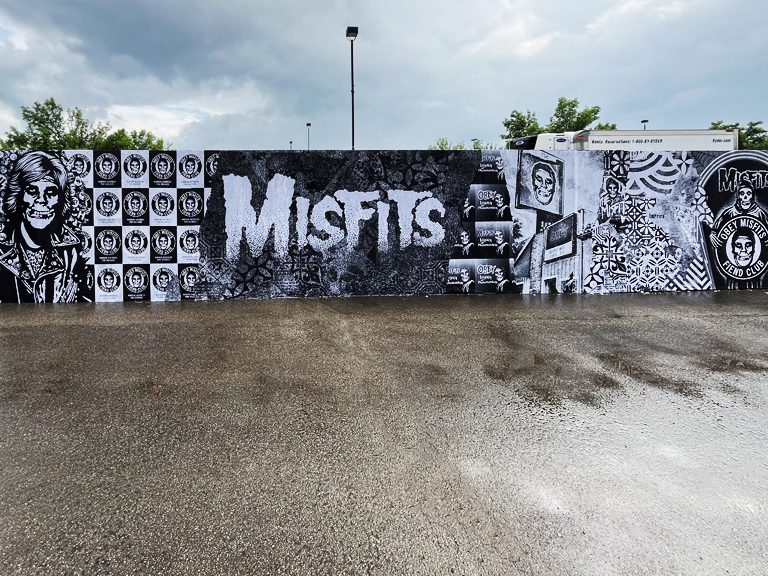
The 12th Avenue South corridor is Nampa’s most concentrated creative zone — a stretch of commercial and mixed-use space that hosts local galleries, artist studios, independent creative businesses, and the kind of community-anchored art events that draw the young arts-oriented crowd from across Nampa and the adjacent Treasure Valley communities. Murals appear on the buildings here, street-level art installations are a regular occurrence, and the visual culture of the corridor makes it a natural home for wheat paste advertising that respects the creative environment it inhabits. AGM’s experience with visually sophisticated campaigns — including work for clients like Shepard Fairey whose entire career is built on street art credibility — means we know how to execute in arts corridor environments where placement context and creative execution need to meet a higher standard than the blank-wall industrial environments that accommodate any poster without cultural scrutiny.
The Snake River corridor and the recreation areas along Nampa’s waterway access provide a third fly posting zone with a distinct audience behavioral profile. Community events, outdoor gatherings, park-adjacent commercial activity, and the general foot traffic that congregates around accessible outdoor recreation in a landlocked western city all contribute to surface exposure opportunities in this zone. The recreation audience here skews toward the active outdoor and family demographic rather than the urban arts crowd of 12th Avenue South or the student-oriented commercial traffic of downtown. For campaigns targeting active lifestyle consumers, family-oriented brands, and community-identity campaigns that want to reach Nampa residents in their leisure and recreational contexts, the Snake River area provides a complementary posting environment that extends campaign reach beyond the two primary commercial corridors.
Award Winning Personalized Service
You will get thoughtful, devoted, and individualized attention from our experienced, qualified, and professional personnel. Being one of the most illustrious agencies in Brooklyn, New York, American Guerrilla Marketing has been awarded the Best of Brooklyn title.
Nationwide
Industry City, Brooklyn, New York 11232
American Guerrilla Marketing
Hours
Mon - Fri: 9 AM - 5 PM
Sat & Sun: Closed
Automate your campaign with AGM’s Request for Proposal Builder. Simply answer a few quick questions about your campaign goals, markets, and timeline, and the system will generate a tailored presentation with recommended strategies, quantities, and pricing. Click the RFP Builder to instantly receive your customized proposal.
Northwest Nazarene University’s campus sits within Nampa’s residential grid, with University Boulevard functioning as the primary connective tissue between campus and the city’s commercial core. Students who live on campus make routine trips into downtown Nampa on foot and by bicycle, passing through the commercial corridors where fly posting campaigns are installed. The commute from the NNU campus to the downtown coffee shops, restaurants, and retail that serve the student population runs through exactly the streets that form Nampa’s fly posting environment — which means a campaign targeting the NNU student audience doesn’t require campus-specific placement; it simply needs to be present along the corridors students actually travel.
College of Idaho students in adjacent Caldwell regularly extend their commercial activity into Nampa, which offers a broader and more diverse array of dining, entertainment, and retail options than Caldwell’s smaller downtown. The Nampa-Caldwell commercial corridor effectively functions as a single market for the combined student population of both campuses, and fly posting in downtown Nampa reaches both COI and NNU students as they move through the area’s shared commercial geography.
The student audience is brand-forming at the most fundamental level. College students are making product category choices, brand loyalties, and consumption pattern decisions that will persist for decades — the coffee brand they drink daily as a sophomore, the fitness brand they buy into as a junior, the streaming service they subscribe to as a senior. Brands that establish recognition among the Nampa student demographic during the academic year are investing in long-term consumer relationships, not just transactional impressions. Fly posting is uniquely suited to this brand formation objective because the repeated exposure model — seeing the same campaign across multiple locations over a one-to-two-week window — matches the repeated-encounter brand building process through which student consumers most durably form brand associations.
Campus activation timing creates specific campaign windows that are predictably high-value. Welcome Week in late August concentrates the highest density of brand-receptive students in Nampa’s commercial corridors — new students actively exploring their new city’s commercial landscape, open to discovering which brands belong in their daily life. Homecoming events in October generate weekend activity concentrations in and around the campus and downtown corridor. Spring semester kickoff in January marks the second major campus activation window of the academic year. Each of these moments represents a defined audience spike that a well-timed fly posting campaign can enter deliberately rather than accidentally.
Nampa’s commercial geography and the behavioral characteristics of its primary audiences shape specific format recommendations that differ from the approaches AGM takes in Boise’s larger urban districts or Meridian’s suburban retail corridors.
The 24×36 format is the right choice for most Nampa campaigns, particularly those targeting the student and young adult population through downtown and the 12th Avenue South corridor. The density advantage of the smaller format is critical in a market where impressions come from walkers and cyclists rather than passing vehicles — these are consumers who see street posters up close rather than from moving cars, which means the 24×36 format registers as a complete, readable visual communication rather than a large-scale impression designed for distance viewing. A 100-poster 24×36 campaign distributed across downtown Nampa and 12th Avenue South creates enough coverage density that the campaign is genuinely inescapable for regular walkers through the corridor. For a student who walks to coffee every morning and back to campus every afternoon, a well-distributed 100-poster campaign becomes a familiar visual presence that accumulates brand recognition naturally over the campaign window.
The 48×72 large format earns its premium in Nampa at specific landmark moments — a primary intersection in the downtown core, the approach to the 12th Avenue South gallery corridor, or a high-traffic entry point at the Snake River recreation area. The large format in these locations creates visual anchors that give the campaign a signature moment of impact within the broader density created by 24×36 placements. For brands that want to signal premium positioning within the Nampa market — beauty brands, wellness labels, and consumer brands that need to communicate quality alongside presence — a mixed-format approach that leads with 48×72 statement pieces and fills coverage with 24×36 delivers both the prestige impression and the saturation that smaller format provides.
Nampa’s campaign calendar is shaped by two overlapping rhythms: the academic year at Northwest Nazarene University and College of Idaho, and the general Treasure Valley seasonal activation pattern that affects foot traffic across all Idaho markets. Understanding how these rhythms interact is essential for timing campaigns that want to reach either the student audience or the broader Nampa community at peak receptivity.
Back-to-school in late August and September is the single most valuable student audience window in Nampa’s annual calendar. New and returning students arrive with unformed local brand loyalties and actively explore the commercial corridors adjacent to campus during the first weeks of the semester. This exploration phase — when students are mapping their new city and deciding which coffee shops, restaurants, and retailers will become fixtures in their daily routine — is the moment when brand impressions carry the most long-term value. A fly posting campaign that’s present throughout the downtown Nampa corridor during late August Welcome Week reaches the student audience at the exact moment of maximum brand openness.
Homecoming season in October concentrates both current students and returning alumni in Nampa’s commercial areas during campus event programming. The alumni component of homecoming weekend extends the typical student audience reach to include recent graduates in their late 20s and early 30s — a cohort with real purchasing power who retain strong affinity for brands they associated with their college experience. For consumer brands, this homecoming window creates an unusual opportunity to reach both current students and their slightly older counterparts within the same campaign installation.
Spring semester launch in January represents the second major student activation window. Students return to Nampa from winter break with fresh academic year energy and a renewed cycle of commercial activity in downtown corridors. January in Idaho is cold, but the student population’s routines — daily class schedules, campus-to-downtown commutes, social gatherings — continue through winter in patterns that sustain foot traffic through Nampa’s commercial core despite the seasonal conditions.
May graduation season generates the academic year’s closing audience concentration, with families visiting Nampa for commencement events and the city experiencing its last peak of full student population density before summer. Graduation window campaigns reach not just students but the parents, siblings, and extended family members who arrive from across Idaho and neighboring states for commencement — an audience segment with higher household income and strong purchasing intent for celebration-adjacent consumer categories.
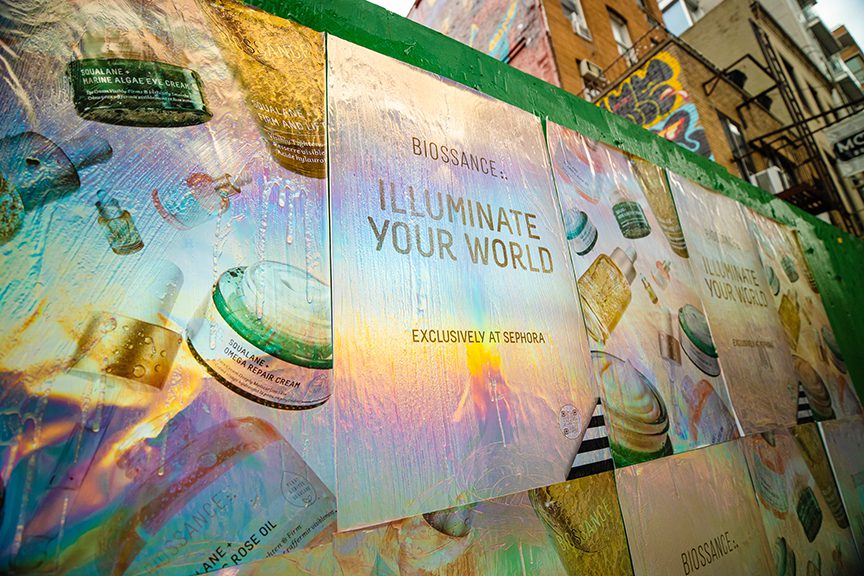
The Biossance “Illuminate Your World” campaign is one of AGM’s most instructive beauty and wellness brand activations — notable not just for the brand category it served, but for the dual-format approach that made it distinctive: combining traditional wheat paste poster installations with sidewalk stencil applications to create a multi-surface campaign that transformed the visual environment of beauty and wellness corridors in New York City and Los Angeles. The sidewalk stencil component added a dimension of brand presence that the poster alone couldn’t deliver — literally putting the brand underfoot in the high-traffic pedestrian zones where the Biossance consumer moves, creating a 360-degree street-level brand environment where the poster on the wall and the stencil on the sidewalk together communicated the campaign message more completely than either would have in isolation.
The Biossance campaign is directly relevant to Nampa for several reasons. First, beauty and wellness brand categories perform particularly well in campus-adjacent markets — college women represent one of the highest per-capita spending demographics for beauty and skincare products, and Northwest Nazarene University’s student population creates a dense concentration of this audience within walking distance of downtown Nampa’s commercial corridors. A beauty brand fly posting campaign in Nampa that targets the NNU corridor and downtown commercial areas reaches this consumer in the physical environment where she moves daily. Second, the dual-format approach Biossance used — combining wheat paste with complementary sidewalk applications — demonstrates the creative latitude that street advertising allows relative to conventional media. AGM brings that creative flexibility to every Nampa campaign, matching format choices to the specific environment and audience of each placement zone.
The “Illuminate Your World” campaign also illustrates why wellness and lifestyle brands specifically benefit from street advertising: the physical presence of a brand in a consumer’s daily walkable environment creates a different kind of product association than digital advertising can manufacture. When a skincare brand appears on the walls and sidewalks of the commercial corridor where a student buys her morning coffee and evening takeout, the brand becomes part of the texture of her daily environment — not a sponsored post she scrolls past, but a familiar visual presence that signals community belonging. That association, built over a campaign window through repeated environmental encounters, produces brand recall and purchase intent that conventional media channels can’t efficiently replicate.
AGM’s experience with the Biossance activation also reflects our broader track record with consumer and lifestyle brand campaigns that require creative sensitivity alongside street advertising muscle. Beauty brands, wellness labels, and lifestyle companies need their street presence to be executed with the same aesthetic intelligence that their above-the-line marketing applies. A poorly placed or sloppily executed wheat paste poster doesn’t just miss its audience — it can actively damage brand perception among the very consumers the campaign is trying to reach. AGM’s execution standards, applied to every Nampa campaign from installation quality through surface selection, ensure that brand equity is protected rather than compromised by the street advertising execution.
Nampa’s dual audience — student and working-class — creates a specific fit with brands and campaign types that speak authentically to both cohorts without requiring fundamentally different creative approaches:
Nampa campaigns begin with a targeting discussion that maps your audience profile — student demographic, working-class community, arts corridor regulars, recreation area visitors — against the specific pedestrian patterns of the city’s commercial zones. The proximity of NNU’s campus to downtown and the 12th Avenue South corridor allows campaign geography to be drawn precisely around the movement routes of your target audience rather than the broader geographic logic that drives larger-metro campaign planning.
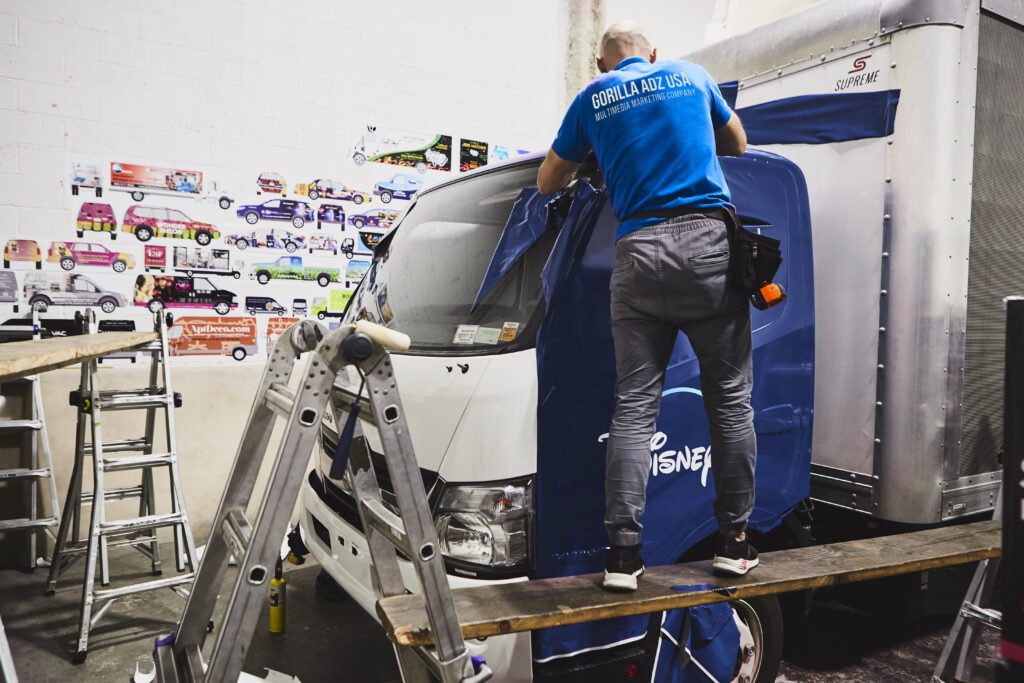
Print production is handled entirely in-house at AGM, which means the creative you approve is the poster that appears on Nampa walls with no print quality dilution from third-party vendors. All installations use wheat-based adhesive that bonds reliably to exterior surfaces while remaining environmentally responsible and pressure-wash removable. For a campus-adjacent market where property relationships matter and responsible execution signals respect for the community, this approach is particularly important — AGM’s environmentally conscious installation methodology is a substantive distinction, not a marketing claim.
Every Nampa placement receives GPS-tagged, timestamped photographic documentation, compiled into a post-campaign proof package that gives clients verifiable evidence of where their campaign ran and what condition each installation was in at time of posting. For brands that are new to fly posting as a channel and want to evaluate the format against their other media investments, this documentation standard is essential — it provides the concrete evidence needed to compare street advertising performance against digital and print alternatives on a fair basis. AGM’s campaign documentation has been a differentiating factor for clients across categories and markets, and that same transparency applies to every Nampa activation regardless of campaign budget scale.
Northwest Nazarene University’s campus sits within Nampa’s residential grid, with University Boulevard connecting the campus directly to the city’s commercial core. Students walking or cycling from campus to the downtown coffee shops, restaurants, and retail along 1st Street South pass through the fly posting corridors that AGM targets in Nampa campaigns. The proximity means no special campus-specific placements are needed — the regular downtown posting zones naturally capture the student commute route.
Yes. Downtown Nampa is the primary off-campus commercial destination for NNU students, and College of Idaho students from adjacent Caldwell extend their commercial activity into Nampa regularly. Students who walk or cycle through the downtown corridor daily encounter a well-distributed fly posting campaign with the kind of repeated exposure frequency that builds brand recognition most effectively. The academic year calendar creates predictable audience concentration moments — Welcome Week, homecoming, semester kickoff — that allow campaign timing to target peak student density periods.
Late August through September — covering Welcome Week and the first weeks of fall semester — is the single most valuable student audience window in Nampa. This is when new and returning students are actively mapping their commercial environment and making brand choices that persist through the academic year. January semester kickoff is the second priority timing window. Spring commencement in May adds a final peak moment that includes visiting family members alongside the graduating student cohort.
The two zones attract different audience behavioral profiles and work best for different campaign types. Downtown Nampa along 1st Street South generates general commercial foot traffic from students, residents, and workers throughout the week. The 12th Avenue South corridor draws a more specifically arts-oriented audience during gallery events and creative community programming — consumers who have a more developed relationship with street-level visual culture and respond to campaigns that demonstrate creative sophistication. For campaigns targeting the arts-adjacent audience, 12th Avenue South is the higher-priority zone; for broad student and community reach, downtown is the primary target.
Yes, and in a specific way that makes Nampa more efficient than more advertising-dense markets. The working-class Nampa resident hasn’t developed the advertising defensiveness that characterizes consumers in major metros who are continuously bombarded by competing brand messages. A well-placed, clearly communicated street poster in Nampa reaches this consumer with fewer competitive distractions and a more authentic visual environment than the same campaign would encounter in a larger market where every surface has already been claimed by other advertisers.
Yes. Coordinated Treasure Valley campaigns that run in Nampa and Boise simultaneously reach the full western Idaho young adult consumer base across both the campus-adjacent student environment and the urban arts and entertainment corridors. AGM’s direct installation infrastructure handles multi-city Treasure Valley campaigns without quality or timing misalignment between cities, and a combined Nampa-Boise activation can share creative assets or run distinct market-specific messaging depending on your campaign strategy.
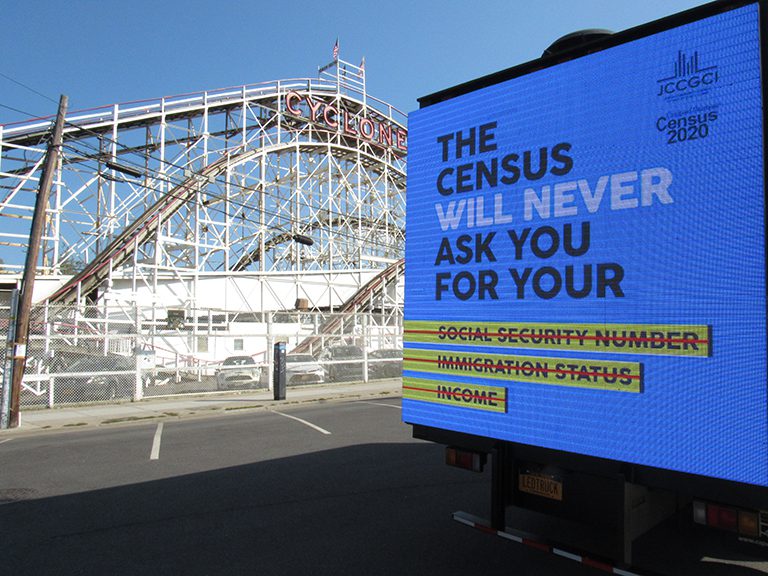
Beauty and personal care, entertainment and streaming, consumer apps and subscription services, food and coffee brands, fitness and wellness labels, and civic campaigns all perform well in Nampa’s student and working-class environment. The common thread is that these categories speak to the actual purchasing priorities of the college-age and young working adult demographic — brands that arrive in Nampa with culturally relevant messaging for a 20-28-year-old audience consistently find the fly posting environment here highly receptive.
Meridian targets the young suburban professional homeowner — typically 28-40, dual-income, family-oriented, with established consumer preferences and strong retail purchasing behavior in a planned retail corridor context. Nampa targets the young adult student and working-class community — typically 18-28, in the brand-formation phase, less digitally defended, with high entertainment, beauty, food, and experiential purchasing behavior. The two campaigns reach complementary life stages of the same broad generational cohort — brands that want to influence consumers from their student years through their young professional home-ownership phase can build a coherent Treasure Valley strategy that includes both markets.
Nampa’s commercial geography is compact enough that 100 posters in the 24×36 format, strategically distributed across downtown and the 12th Avenue South corridor, creates meaningful brand presence among the city’s regular pedestrian population. Brands that want to extend into the Snake River recreation area or add 48×72 statement pieces at key downtown intersections typically scale to 150-200 total units. AGM’s Nampa targeting recommendations are calibrated to your specific audience goals rather than a one-size-fits-all quantity formula.
The Snake River recreation corridor and adjacent community gathering spaces attract an outdoor-recreation and family-oriented audience distinct from the arts and student populations that concentrate downtown and on 12th Avenue South. Summer event programming, weekend outdoor activity, and the general foot traffic around Nampa’s waterway recreation access all create audience exposure opportunities for campaigns targeting the active outdoor and family demographic rather than the student or arts-community audience. For brands with broad consumer appeal, adding Snake River area placements to a downtown campaign extends reach into a third Nampa audience segment without requiring an entirely separate campaign.
The Biossance “Illuminate Your World” campaign demonstrated that beauty brands achieve outsized impact in street advertising when the creative execution respects the cultural environment of the placement zone. In Nampa, that means understanding the arts corridor character of 12th Avenue South, the authentic community character of downtown, and the student audience’s well-developed visual literacy. Beauty and wellness brands that arrive in Nampa with creative work that meets those environmental standards — rather than generic product photography pasted indiscriminately — find the street advertising response here significantly stronger than campaigns that treat Nampa as just another market on a national rollout list.