American Guerrilla Marketing
Nationwide Service
Media planning, media buying, billboard advertising, & guerrilla marketing
Bourbon corridor activations, Derby week street campaigns, and university market saturation across Louisville, Lexington, Bowling Green, and Owensboro — AGM prints, installs, and delivers GPS-documented proof.
Kentucky occupies a distinct and strategically powerful position in the American brand landscape. The state produces more than 95% of the world’s bourbon supply, anchoring a year-round tourism economy that draws brand-aware, high-spending visitors through Louisville and the surrounding distillery corridor every single month. The Kentucky Derby alone generates one of the most concentrated single-event activation windows in the country — a nationally covered spectacle that floods Louisville’s walkable entertainment districts with affluent visitors and creates earned media lift for any street-level campaign installed in the days surrounding the first Saturday of May. Layer onto that three active university markets at the University of Kentucky in Lexington, Western Kentucky University in Bowling Green, and the University of Louisville, and the result is a state where fly posting campaigns find genuinely receptive audiences across dramatically different demographic contexts within a few hours of each other.
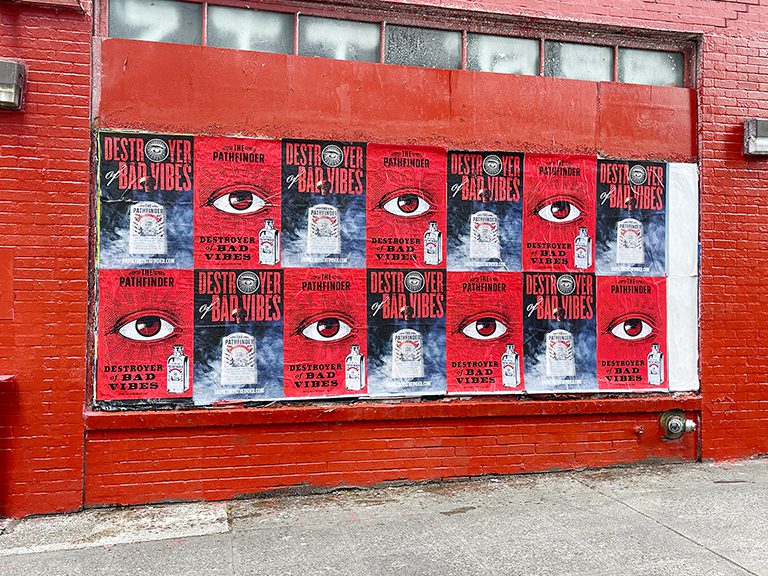
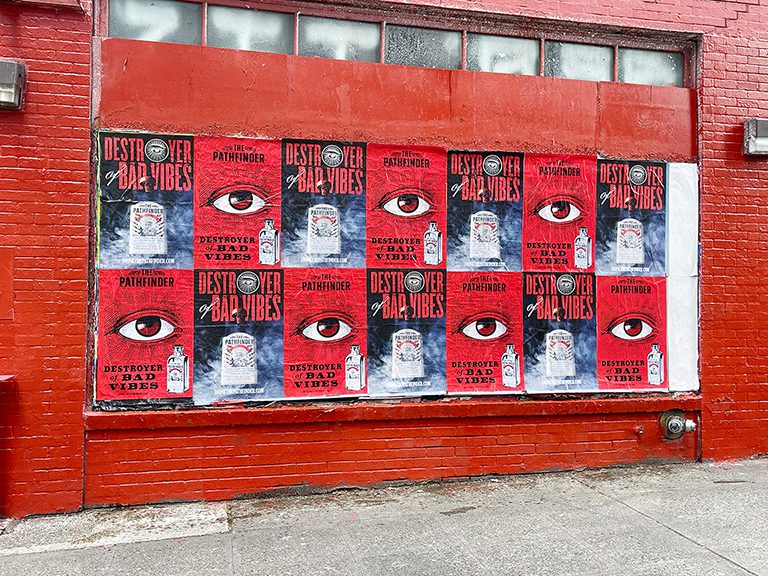
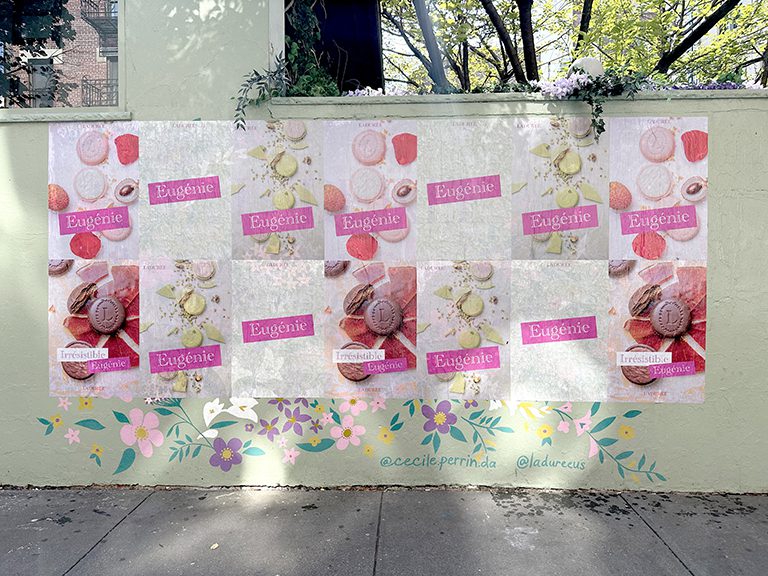
Fly posting — also called wheatpasting or street poster advertising — works in Kentucky for the same structural reason it works in Brooklyn, Austin, and Portland: foot traffic concentration, walkable blocks, and audiences moving through physical space with their attention available. When a 30,000-student university sits adjacent to a commercial arts district, or when a nationally recognized whiskey corridor funnels tourism foot traffic through a compact grid of brick-faced storefronts, the physical conditions for high-impact street poster placement are exactly right. AGM executes fly posting campaigns statewide, handling every component from print production and neighborhood targeting to GPS-documented installation and post-campaign photo reporting — no subcontractors, no hand-off points, no ambiguity about whether the work happened as planned.
Kentucky’s geography also makes coordinated multi-city campaigns logistically practical. Louisville and Lexington are roughly 80 miles apart on Interstate 64. Bowling Green sits 110 miles south of Louisville on I-65. Owensboro is 120 miles west along the Ohio River. A statewide deployment covering all four markets in the same campaign window is genuinely executable as a single, coordinated activation — unified creative, simultaneous installation, and consolidated documentation across the full Kentucky footprint.
AGM executes fly posting campaigns across Louisville, Lexington, Bowling Green, and Owensboro with direct installation crews and GPS-documented photo reporting. Tell us your target market and campaign window.
Select a city to explore Fly Posting Advertising opportunities.
Kentucky’s distillery economy has created a category of visitor with no close equivalent anywhere else in the United States: the bourbon tourist. These are brand-aware, culturally engaged, high-spending adults who travel specifically to experience whiskey culture, and they move through a defined geographic corridor that runs from Louisville’s West Main District and Whiskey Row outward through Bardstown, Clermont, and the distilleries of central Kentucky. The street surfaces along the Louisville end of this corridor — particularly West Main Street between 5th and 9th, the East Market Street stretch running through NuLu, and the Bardstown Road independent corridor through the Highlands — represent prime fly posting territory precisely because the audiences using those sidewalks are in exploration mode rather than transit mode.
Bourbon tourists walk. They read storefronts. They photograph alley murals and brick facades. They share imagery on social media at a rate that few other visitor demographics match, which means a well-placed wheat paste poster in the NuLu arts district or along Whiskey Row generates earned reach that extends well beyond the physical installation itself. This earned amplification — where a poster in the background of a visitor’s photograph gets carried to thousands of additional viewers — is one of the structural advantages of fly posting in a tourism-heavy market. Brands in the spirits and hospitality category, luxury lifestyle, experiential entertainment, and premium consumer goods have an obvious fit along the bourbon corridor. But the audience’s cultural awareness and brand engagement also make this zone effective for apparel, music, and entertainment campaigns targeting the same creative, 30–50-year-old demographic that bourbon tourism self-selects.
In Lexington, the bourbon corridor audience converges with horse racing tourism along the Keeneland corridor and the entertainment districts surrounding Rupp Arena. Chevy Chase along Euclid Avenue and the Distillery District along Manchester Street carry a consumer profile — affluent, aesthetically engaged, high disposable income — that is active year-round, not only during the spring meets. The combination of bourbon tourism and equine-sector wealth creates a consumer base in Lexington with few parallels in markets of similar physical size.
The Kentucky Derby doesn’t simply fill Churchill Downs on the first Saturday of May. In the two weeks surrounding the event, Louisville becomes one of the most photographed and nationally media-covered cities in the country. More than 150,000 people pass through Churchill Downs on race day alone, but the broader Kentucky Derby Festival — encompassing Thunder Over Louisville, the Pegasus Parade, Oaks Day, and dozens of satellite events — pushes hundreds of thousands of visitors through Louisville’s walkable entertainment districts during the campaign window that matters most for street poster advertising.
For brands activating around Derby week, the mechanics are straightforward: concentrated pedestrian volume, nationally engaged visitor demographics, and a cultural moment that generates enormous amounts of organic social media documentation. Every visitor walking NuLu’s East Market Street, browsing the Bardstown Road corridor through the Highlands, or exploring Whiskey Row on West Main is likely to photograph the experience and share it. A wheat paste campaign installed on the brick facades of those corridors before Derby weekend appears in the background of those organic posts — extending the campaign’s reach without extending its cost. For entertainment brands, lifestyle companies, bourbon and spirits labels, and any category targeting the upscale 28–50 demographic, the first Saturday of May in Louisville is among the highest-leverage outdoor advertising windows available in the entire mid-South region.
AGM recommends beginning the planning process for Derby week campaigns at least four to six weeks before the target installation date to allow for print production, surface coordination, and the logistical preparation that ensures a Derby-week deployment executes cleanly within the narrow timing window. The two to three days preceding Oaks Day are typically the optimal installation target, capturing the full peak pedestrian period from the opening of Derby Festival events through race weekend.
Award Winning Personalized Service
You will get thoughtful, devoted, and individualized attention from our experienced, qualified, and professional personnel. Being one of the most illustrious agencies in Brooklyn, New York, American Guerrilla Marketing has been awarded the Best of Brooklyn title.
Nationwide
Industry City, Brooklyn, New York 11232
American Guerrilla Marketing
Hours
Mon - Fri: 9 AM - 5 PM
Sat & Sun: Closed
Automate your campaign with AGM’s Request for Proposal Builder. Simply answer a few quick questions about your campaign goals, markets, and timeline, and the system will generate a tailored presentation with recommended strategies, quantities, and pricing. Click the RFP Builder to instantly receive your customized proposal.
Kentucky’s three major university markets each bring a distinct campus culture, pedestrian geography, and demographic profile that shapes how fly posting campaigns should be structured and targeted. The University of Kentucky in Lexington enrolls more than 30,000 students on a campus whose pedestrian spine along Limestone Street and Euclid Avenue connects directly to the South Limestone arts district and the upscale Chevy Chase commercial corridor. Wildcat Nation’s student demographic — concentrated in the 18–24 cohort, brand-engaged, culturally active — responds consistently to entertainment releases, fashion brands, consumer technology campaigns, and experiential events executed at street level.
Western Kentucky University in Bowling Green brings approximately 20,000 students to a campus that sits within a 10-minute walk of the downtown commercial core along College Street and State Street. This geographic compression — WKU’s campus zone along Normal Drive and University Boulevard sharing an immediate boundary with the downtown bar and restaurant row — means a single fly posting deployment in Bowling Green can simultaneously reach students leaving morning classes and young professionals gathering for a Friday dinner without requiring separate deployment zones or distinct targeting logic for each audience. Few mid-sized university markets offer this kind of natural corridor overlap.
The University of Louisville, situated in the southwest quadrant of the city near Cardinal Stadium, channels student pedestrian traffic into Louisville’s broader entertainment network through NuLu and the Highlands along Bardstown Road. U of L’s 20,000+ students contribute to the year-round walkability of Louisville’s most active districts and represent a secondary demographic layer for campaigns anchoring in NuLu and extending outward. SEC game windows at Rupp Arena in Lexington and Conference USA matchups at Bowling Green’s Houchens Industries-L.T. Smith Stadium create discrete activation opportunities when student and alumni populations converge on campus-adjacent entertainment zones — natural timing windows for campaigns targeting the 18–32 sports fan demographic with entertainment, beverage, or lifestyle brand creative.
Louisville is Kentucky’s largest city and its most layered fly posting market. The NuLu arts district along East Market Street, the independent retail corridor of Bardstown Road through the Highlands, and the Whiskey Row stretch of West Main Street each attract distinct audiences at distinct times — but all three converge during Derby season into one of the most concentrated pedestrian activation footprints in the mid-South. AGM campaigns in Louisville typically anchor in the NuLu–Highlands axis as the primary density corridor, with West Main as the premium placement zone for bourbon-adjacent and luxury brand activations targeting the upscale visitor demographic.
Lexington’s walkable commercial districts serve a demographic spectrum that ranges from UK undergraduates in their first semester to 45-year-old equine professionals, tech sector workers, and healthcare executives. The Chevy Chase corridor along Euclid Avenue carries upscale independent retail foot traffic throughout the week. South Limestone Street bridges the campus zone to the arts community. Cheapside near Main Street anchors the civic and entertainment core. The Manchester Street entertainment strip and Distillery District add an evening and weekend layer. Campaigns layering two or three of these corridors reach audiences Tuesday morning through Saturday night with essentially no demographic redundancy between zones.
Bowling Green’s compact geography creates a structural advantage for fly posting campaigns. The downtown corridor along College Street and State Street sits within a 10-minute walk of WKU’s campus zone along Normal Drive and University Boulevard, meaning a coordinated deployment covering both zones achieves the coverage density of a much larger city within a smaller geographic footprint. Fountain Square Park and the State Street bar row concentrate evening foot traffic heavily toward the 18–30 demographic that fly posting reaches most reliably at street level.
Owensboro functions as the commercial and cultural anchor for western Kentucky and portions of southern Indiana, drawing a regional population to its downtown core that exceeds what the city’s 60,000 permanent residents alone generate. The International Bar-B-Q Festival transforms the Smothers Park riverfront and the 2nd Street corridor into one of the most densely populated single-event pedestrian environments in the state each spring, with 80,000+ visitors moving through a compact downtown footprint over two days. The Frederica Street commercial corridor sustains consistent year-round foot traffic between festival events, making Owensboro a viable campaign market across the full calendar — not only during its signature event window.
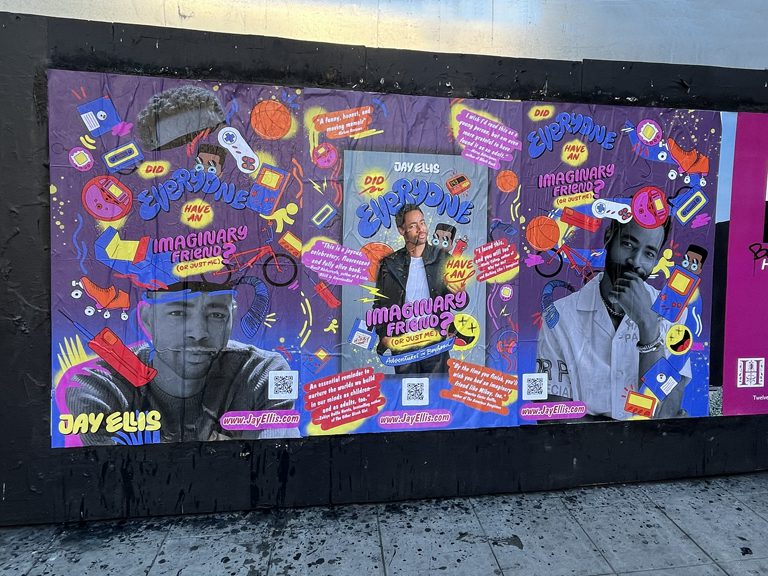
When AGM executed the Jay Ellis wheatpasting campaign across Manhattan, the strategic objective was precisely defined: create a large-format street presence in the entertainment-district neighborhoods where the target audience — young, culturally engaged adults with genuine interest in television and film — concentrated their daily movement. Williamsburg, the Lower East Side, and Hell’s Kitchen were selected because their pedestrian environments combine the density of active foot traffic with the specific demographic profile that entertainment release campaigns require. The campaign was not designed for commuters with ten-second glances. It was built for the person who walks the block, notices the creative, reads it fully, and mentions it — either to a friend on the sidewalk or to their followers online.
The strategic logic behind that Manhattan deployment maps with precision to how AGM approaches Louisville’s NuLu district and the Bardstown Road corridor through the Highlands. East Market Street in NuLu carries the same creative class foot traffic that Williamsburg generates in Brooklyn — walkable blocks, independent galleries, restaurant patios crowded onto the sidewalk, and an audience that has opted into cultural engagement as a lifestyle rather than encountering it incidentally. During Derby season, this baseline audience is augmented by an influx of nationally connected visitors with strong social media engagement and genuine interest in brand experiences. A wheat paste campaign installed on the brick facades along East Market Street in the two weeks preceding the Derby achieves the same combination of demographic density, dwell time, and earned amplification that made the Jay Ellis Manhattan deployment effective at building entertainment release awareness among a culturally active young adult demographic. The geography changes. The underlying mechanics do not.
The Jay Ellis case study also demonstrates the compounding value of coordinated multi-neighborhood coverage. A campaign that saturates only one district leaves significant reach on the table when adjacent corridors carry the same demographic. AGM’s approach in Manhattan — covering Williamsburg, the Lower East Side, and Hell’s Kitchen as a unified deployment rather than a single-neighborhood buy — is the same strategic framework that makes a Louisville campaign most effective when NuLu, Bardstown Road, and the West Main District are covered as a coordinated activation rather than separate executions.
The right choice for campaigns prioritizing saturation across multiple blocks and neighborhoods. In Louisville, 24×36 deployments along East Market Street and Bardstown Road build the repetition necessary for brand recognition through a deployment zone. In Lexington, this format covers the South Limestone corridor and Chevy Chase without requiring the premium surface area that a large-format deployment demands. In Bowling Green and Owensboro, 24×36 enables full coverage of compact downtown grids at an efficient cost-per-surface rate.
Built for dominant visual impact at key intersections and premium locations. In Louisville, 48×72 installations perform strongest on Whiskey Row along West Main Street and at the primary NuLu corridor intersections where pedestrian volume peaks during evening and weekend hours. In Lexington, the Cheapside area near Main Street and the Manchester Street entertainment strip are natural large-format zones. Many Kentucky campaigns combine both: 48×72 anchor placements at high-visibility intersections, surrounded by 24×36 coverage that extends reach through the broader deployment zone.
Every Kentucky fly posting campaign begins with a neighborhood analysis specific to the target market and the campaign’s strategic objective. AGM’s planning process maps the blocks and corridors within each city where the target demographic concentrates at the times of day most relevant to the campaign’s category. A bourbon brand activating around Derby week requires a different surface selection and timing strategy than a gaming campaign targeting WKU students in Bowling Green, which in turn requires a different approach than a streaming release targeting the creative professional demographic in Lexington’s Chevy Chase corridor. Neighborhood targeting is not interchangeable across campaign types — AGM treats each deployment as a market-specific strategy, not a template.
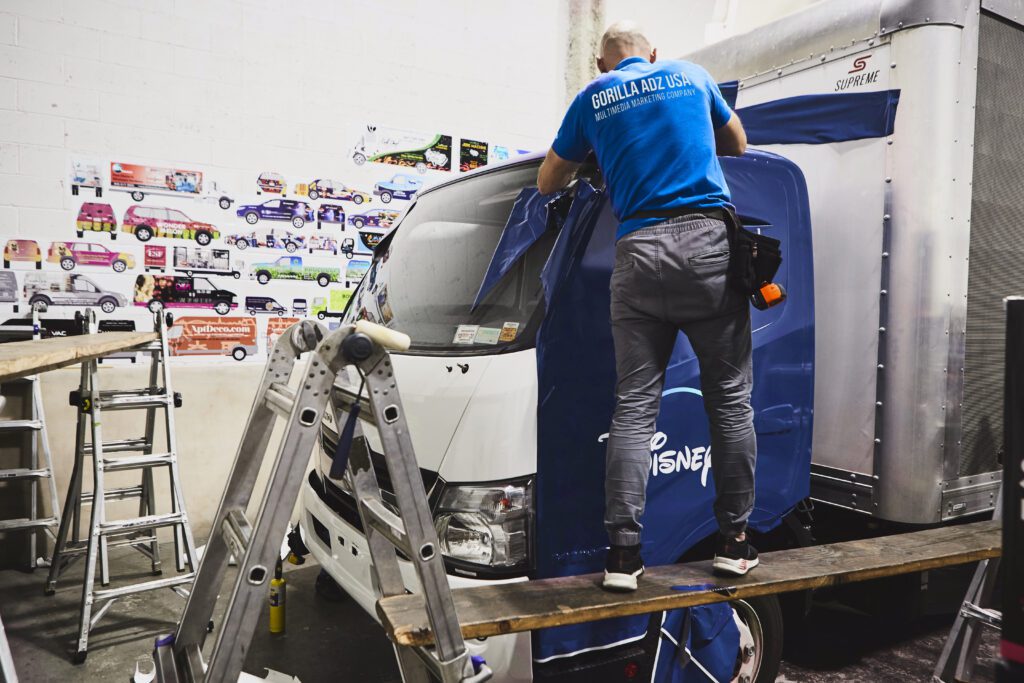
Print production is handled entirely in-house. AGM does not outsource printing to external vendors and then coordinate with separate installation crews — a handoff model that introduces quality control gaps and logistical fragility. The same team that plans the campaign produces the posters and manages the field deployment. This direct-execution model enables real-time tactical adjustment when weather conditions, surface availability, or competitive posting activity shifts during the campaign window. Installation uses wheat-based adhesive — environmentally responsible, pressure-wash removable, and strong enough to maintain bond through Kentucky’s variable spring and fall weather conditions.
Every installation across every Kentucky market is documented with GPS-tagged photography capturing the placement location, surrounding street context, and poster condition at the moment of installation. Clients receive a comprehensive photo report at campaign close that confirms every placement occurred as planned and documents the full footprint across all neighborhoods and markets covered. This GPS-documented reporting is not an optional add-on — it is standard practice on every AGM campaign, in every market.
Kentucky’s market mix supports a broad range of fly posting campaign categories. The bourbon and spirits industry represents the most distinctly Kentucky category — both for established distillery brands reinforcing brand equity in their home state and for craft spirits entrants building awareness in the urban markets where category consideration is highest. Entertainment properties — streaming releases, concert tours, film openings — consistently perform well in university markets where the 18–24 demographic is responsive to street-level creative and quick to share discoveries with social networks. Louisville’s NuLu and Bardstown Road corridors attract entertainment campaigns targeting the 24–38 creative professional cohort with particular effectiveness during Derby season and fall.
Fashion and apparel brands with a streetwear or independent retail positioning find Kentucky’s university markets and arts district corridors genuinely receptive. Consumer technology, gaming, and mobile app campaigns targeting the college-age demographic use university market fly posting as part of coordinated launch strategies on a regular basis. Food and beverage brands, fitness and wellness companies, and hospitality properties round out the category mix. Political campaigns and advocacy organizations have activated consistently in Louisville and Lexington, where concentrated pedestrian foot traffic in defined walkable corridors makes street poster advertising an effective voter contact tool in the weeks before an election — one of the few outdoor formats that delivers genuine impressions at the neighborhood level rather than the highway corridor level.
AGM prints full-size street posters, identifies placement surfaces in high-pedestrian neighborhoods across the target Kentucky market, and installs using wheat-based adhesive. The complete pipeline — printing, neighborhood targeting, surface identification, installation, and GPS-documented photo reporting — is executed by AGM’s direct crews. No subcontractors handle any part of the process. Clients receive a photo report at campaign close confirming every placement and documenting the full deployment footprint.
Yes. Derby week is one of the highest-value activation windows in the state, with concentrated pedestrian volume through Louisville’s NuLu arts district, Bardstown Road through the Highlands, and the West Main Street whiskey corridor. AGM recommends beginning the planning process at least four to six weeks before the target installation date. Campaigns installed in the days leading up to Oaks Day and Derby Saturday achieve maximum earned media lift as visitors photograph and share street-level imagery throughout the festival window.
AGM serves Louisville, Lexington, Bowling Green, and Owensboro for fly posting campaigns in Kentucky. Louisville campaigns focus on NuLu along East Market Street, the Bardstown Road corridor through the Highlands, and the West Main Street whiskey district. Lexington campaigns target Chevy Chase, South Limestone, Cheapside, and Manchester Street. Bowling Green campaigns cover the downtown core and WKU campus zone. Owensboro campaigns focus on the 2nd Street and Frederica Street corridors and the Smothers Park riverfront area adjacent to the Ohio River.
The 24×36 format is right for campaigns prioritizing density and coverage across multiple blocks — it enables enough volume to build brand recognition through the full deployment zone. The 48×72 format works best when the goal is a small number of dominant, visually unmissable placements at key intersections. Many Kentucky campaigns combine both formats: 48×72 anchor placements at the highest-traffic intersections in NuLu or along Whiskey Row, supported by 24×36 coverage extending through the broader neighborhood deployment.
Bourbon tourists move through Louisville’s West Main District and NuLu in exploration mode — they’re walking, looking at storefronts, photographing facades, and sharing what they find online. This behavioral profile creates extended dwell time with street-level creative that commuter or transit-adjacent audiences don’t generate. Brands targeting the affluent 30–55 demographic associated with bourbon tourism benefit from placement along Whiskey Row and East Market Street because the audience isn’t in transit — they’re specifically engaged with the physical environment around them.
Bourbon and spirits brands, entertainment properties, fashion and streetwear, consumer technology, food and beverage, gaming, fitness and wellness, and political and advocacy campaigns are all regularly active across Kentucky fly posting markets. University markets in Lexington and Bowling Green skew toward entertainment, gaming, and consumer tech. Louisville’s NuLu and Highlands corridors attract bourbon brand campaigns, hospitality activations, and entertainment releases targeting the creative professional demographic. Owensboro’s festival-driven calendar attracts event-aligned and experiential brand campaigns.
Most Kentucky fly posting campaigns run one to two weeks. Duration depends on weather conditions, surface type, and the competitive poster environment in each market. Kentucky’s spring and fall seasons offer the most stable conditions — moderate temperatures, low humidity, and surfaces that hold adhesive bond reliably. Derby season in late April and early May combines peak pedestrian volume with favorable installation conditions. AGM monitors campaign condition throughout the window and advises on duration and any replacement needs based on real-time field reporting.
AGM handles the complete location logistics pipeline. Clients provide a campaign brief, approved artwork, and target neighborhood preferences. AGM identifies available surfaces in those corridors, manages all placement coordination, and executes the full installation without requiring client involvement in day-to-day logistics. Where property owner coordination or campaign-specific permitting is part of the planning process, AGM handles that as part of its standard campaign preparation.
Kentucky fly posting campaigns start at contact us for pricing for 100 posters in the 24×36 format, covering a single market or split across multiple neighborhoods. A 200-poster deployment covering multiple Kentucky markets runs contact us for pricing in the 24×36 format. Large-format 48×72 campaigns start at contact us for pricing for 100 posters and contact us for pricing for 200. Additional creative designs — for campaigns running multiple visuals across different neighborhoods or demographic segments — are Contact us for pricing. for 24×36 and Contact us for pricing. for 48×72.
Yes. AGM regularly executes coordinated multi-city Kentucky deployments. Louisville, Lexington, Bowling Green, and Owensboro can all be activated in the same campaign window with unified creative and synchronized installation timing. Multi-city deployments are particularly effective for statewide brand campaigns, entertainment releases with broad Kentucky distribution, and event-driven activations that want to build market-wide momentum simultaneously rather than sequentially. AGM’s direct-execution model enables coordinated deployment timing across all four Kentucky markets without the coordination gaps that multi-vendor subcontracted campaigns introduce.
Kentucky’s three major university markets — UK in Lexington, WKU in Bowling Green, and U of L in Louisville — each sit in immediate proximity to commercially active, walkable downtown or arts-district corridors. This geographic adjacency means campus-zone foot traffic and entertainment-district foot traffic overlap in the same blocks, rather than existing as separate, disconnected zones as they do in many college towns. A fly posting campaign in Bowling Green can reach WKU students and downtown young professionals with placements that are geographically unified — a compactness that significantly increases cost efficiency per demographic impression.
Every installation in every Kentucky market is captured with GPS-tagged photography at the moment of placement, documenting the specific location, surrounding street context, and poster condition. Clients receive a comprehensive photo report at campaign close that confirms every placement occurred as planned and maps the full deployment footprint across all neighborhoods and markets covered. This documentation is standard on all AGM campaigns — not a premium add-on — and provides clients with direct verification that the work executed as briefed.