American Guerrilla Marketing
Nationwide Service
Media planning, media buying, billboard advertising, & guerrilla marketing
Utah’s most diverse city, America’s most underestimated market — fly posting campaigns built for West Valley City’s growth.
West Valley City is the market that most national brands skip and almost all of them regret missing. As Utah’s second-largest city with more than 140,000 residents — and with a demographic profile that bears almost no resemblance to the predominant image of Utah as a homogeneous LDS-majority suburban state — West Valley City represents a concentrated consumer opportunity that is genuinely underserved by most brand marketing efforts targeting the Wasatch Front. The city is Utah’s most ethnically diverse community, with a Latino population exceeding 30 percent of residents, a Polynesian and Tongan community comprising approximately 8 percent of residents (one of the largest concentrations of Pacific Islander Americans in the interior West), and significant Southeast Asian communities that have established deep roots in the city’s neighborhoods over the past three decades. This is not a demographic footnote — this is the defining character of West Valley City’s consumer market.
The spending power within West Valley City’s diverse communities is routinely underestimated by brands operating from assumptions about low-income urban demographics. The Latino community in West Valley is not a monolith — it includes established multigenerational families who have owned businesses and homes in the city for decades, alongside more recent arrivals building households and community networks with notable speed. Tongan and broader Pacific Islander families are among the most tightly community-bonded consumer units in the United States, with purchasing decisions frequently made at the family and extended-family level, creating consumer environments where a single trusted brand recommendation can cascade through community networks with viral speed. Southeast Asian business owners and their families have built commercial roots along the 3500 South corridor that give them significant local economic influence. Brands that enter these communities with genuine respect and cultural intelligence — rather than treating them as afterthoughts in a campaign designed primarily for the mainstream LDS market — discover consumer loyalty and community engagement that is extraordinarily difficult to replicate in more saturated, competitive metro markets.
The physical geography of West Valley City reinforces its consumer market characteristics. The city has no single downtown in the traditional sense — instead, its commercial life organizes along two primary axes: the 3500 South corridor running east-west as the city’s main commercial spine, and the 5600 West corridor running north-south through the city’s more recently developed western sections. This strip-mall-and-corridor geography, combined with a car-dependent lifestyle that sees residents moving along these commercial arteries multiple times per day, creates the kind of high-frequency vehicle and pedestrian exposure environment that makes large-format fly posting exceptionally effective. Every major shopping trip, grocery run, auto service visit, and restaurant outing channels West Valley residents through the same commercial corridors repeatedly — and fly posting on the building surfaces along those corridors delivers cumulative daily impressions that build brand familiarity with a consistency that digital advertising, which these communities use at lower per-capita rates than SLC’s tech-forward demographic, simply cannot match.
West Valley City’s median age of 30 — among the lowest of any comparable Utah city — means that the consumer base here skews young and is in the household formation stage of life: buying first cars, furnishing first homes, establishing brand loyalties in categories from food and beverage to insurance and financial services that will persist for decades. Brands that establish awareness and trust in West Valley City now are not just acquiring current customers — they are building the foundation of long-term loyalty with a demographic cohort that is at the beginning of its peak earning and spending trajectory. That demographic math, combined with the relatively low competition from other brands running sophisticated fly posting campaigns in this market, makes West Valley City one of the highest-potential-return fly posting environments in the entire Mountain West.
3500 South, Jordan Landing, USANA Amphitheatre corridors — AGM knows this market and builds campaigns that actually reach the people who live and spend here. Let's talk strategy.
Select a city to explore Fly Posting Advertising opportunities.
In neighborhoods like West Valley City, where community identity is tight, local geography is well-known, and residents move through the same commercial corridors day after day, fly posting operates differently than it does in transient metro markets with high tourist populations and rapid neighborhood turnover. Here, fly posting is less about making a first impression on a stranger and more about becoming a recognized part of the visual landscape that an established, rooted community encounters in its daily life. When a 48×72 poster appears on the building wall of a familiar 3500 South strip mall or on the commercial surface of a Granger area shopping center, it doesn’t just reach the people who walk past it on the day of installation — it reaches the same residents over and over again throughout the weeks it remains in place, building brand familiarity through the kind of repeated daily exposure that no digital campaign can manufacture without spending far more than fly posting costs.
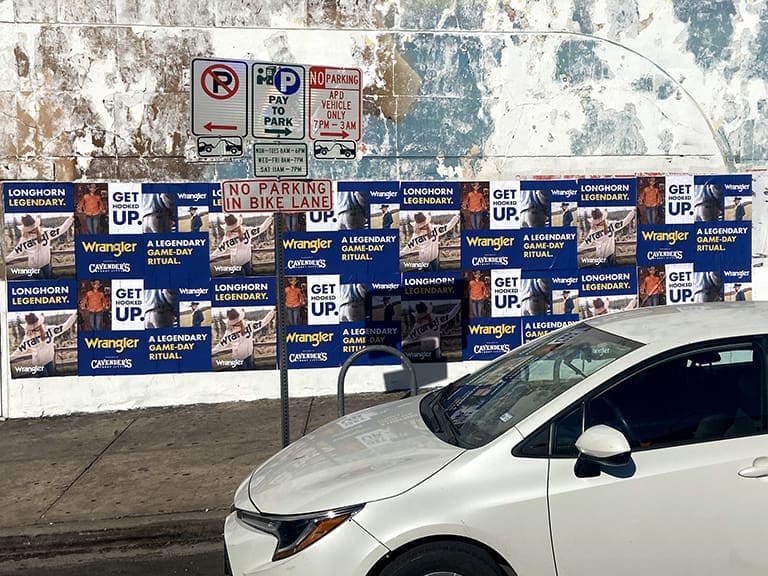
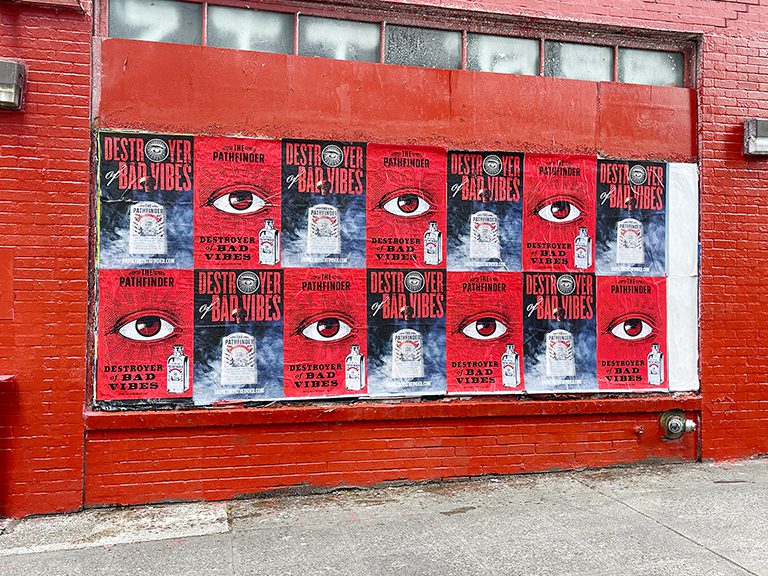
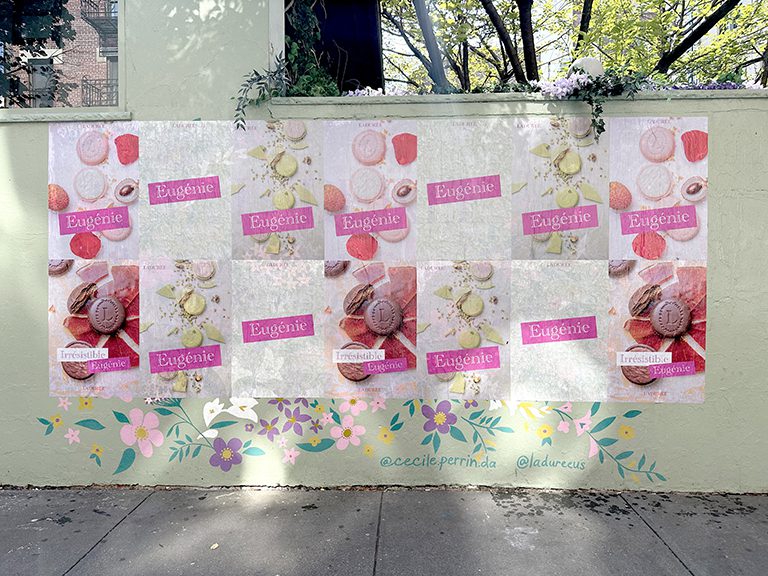
Fly posting is the professional placement of large-format printed posters on authorized wall surfaces — building sides, commercial hoardings, approved retail surfaces, and licensed signage locations — throughout a target geography. American Guerrilla Marketing manages every aspect of this process: identifying and securing high-traffic surfaces along the specific corridors where your target demographic concentrates, coordinating with property owners, scheduling professional installation crews, and documenting every completed placement with geo-tagged photography. In a market like West Valley City, where local knowledge of which commercial strips serve which community subgroups is essential to reaching the right audience, AGM’s location scouting process goes beyond mapping pedestrian counts to understanding the cultural geography of the corridor — which blocks serve the Latino grocery and restaurant cluster, which sections of 3500 South are anchored by Polynesian community businesses, and where the general-population family traffic concentrates at Jordan Landing.
The inability of fly posting to be filtered, skipped, or algorithmically deprioritized is particularly significant in a market like West Valley City where the target demographics include communities that are lighter users of digital advertising platforms than the national average. The Latino community in West Valley City consumes significant Spanish-language media — radio, Spanish-language television, community newspapers — but is not as heavily saturated by the digital advertising ecosystem that dominates brand marketing to coastal urban demographics. A fly posting campaign in WVC therefore reaches its audience with lower competitive noise and higher relative impact per impression than the same campaign would generate in more digitally saturated markets. Your brand on a wall on 3500 South is not competing with a hundred other digital ad impressions for the same consumer’s limited attention — it is often one of the only brand-advertising touchpoints that consumer is experiencing in that physical corridor on that day.
American Guerrilla Marketing’s fly posting pricing for West Valley City is consistent with rates across all Utah markets. Both the 24×36 and 48×72 formats are well-suited to the WVC commercial corridor environment — the larger format performs particularly well on the building sides and commercial walls along 3500 South and Jordan Landing, while the 24×36 format is effective at shopping center entry approaches and pedestrian-level commercial surfaces near Harmon’s and other community grocery anchors. Contact us for multi-city pricing if you’re running WVC as part of a broader Wasatch Front campaign.
Both formats include full-service location scouting, property owner coordination, professional installation, and comprehensive photo documentation delivered within 48 hours of campaign completion. For brands running Spanish-language or Tongan-language creative, we manage the same full-service process with your culturally specific poster content placed on the surfaces most likely to reach those specific communities within the WVC market.
Award Winning Personalized Service
You will get thoughtful, devoted, and individualized attention from our experienced, qualified, and professional personnel. Being one of the most illustrious agencies in Brooklyn, New York, American Guerrilla Marketing has been awarded the Best of Brooklyn title.
Nationwide
Industry City, Brooklyn, New York 11232
American Guerrilla Marketing
Hours
Mon - Fri: 9 AM - 5 PM
Sat & Sun: Closed
Automate your campaign with AGM’s Request for Proposal Builder. Simply answer a few quick questions about your campaign goals, markets, and timeline, and the system will generate a tailored presentation with recommended strategies, quantities, and pricing. Click the RFP Builder to instantly receive your customized proposal.
A West Valley City fly posting campaign built around the 3500 South corridor is the strategic foundation for reaching the broadest cross-section of the city’s consumer base, because 3500 South functions as West Valley City’s de facto Main Street for all demographics. The corridor’s dense mix of Mexican restaurants, Polynesian barbecue spots, Filipino grocery stores, auto dealerships, tire shops, national chain fast food outlets, and independent retail creates a commercial environment where every major demographic group in the city has a reason to be on 3500 South multiple times each week. Fly posting along the building surfaces on this corridor — particularly on the larger commercial walls at major intersections and at the approaches to Harmon’s and other community grocery anchors — achieves a breadth of audience contact that no other single fly posting corridor in the city can match.
For brands specifically targeting West Valley City’s Latino community, campaign strategy should be built around the commercial clusters where Mexican and Central American businesses concentrate — the restaurants, carnicerías, panaderías, beauty supply stores, and money transfer offices that serve as community gathering points for WVC’s Latin American families. The stretch of 3500 South between 5600 West and 4000 West contains the highest concentration of these community-specific businesses, and fly posting on the building surfaces in this section reaches the Latino consumer base with a level of precision that zone-based demographic targeting in digital advertising cannot replicate. Spanish-language creative placed in these locations signals cultural respect and community investment in a way that English-only campaigns in the same geography cannot achieve.
For brands targeting West Valley City’s Pacific Islander community, strategy centers on the residential and commercial areas of the Granger and Hunter neighborhoods west of the 5600 West corridor, as well as the community gathering points along 3500 South where Tongan, Samoan, and other Pacific Islander businesses and community organizations are concentrated. The Polynesian community in WVC makes consumer decisions through strong community and family networks — a brand that becomes visible and familiar in the physical environments where this community gathers creates opportunities for word-of-mouth endorsement and community-level brand adoption that is far more powerful than any individual advertising impression. Fly posting is uniquely suited to this dynamic because its persistence in the physical landscape mirrors the persistence of community networks themselves.
USANA Amphitheatre is West Valley City’s single most powerful campaign accelerator for entertainment, beverage, and lifestyle brands. Utah’s largest outdoor concert venue at 20,000 capacity draws more than 250,000 visitors across its summer concert season — a summer-long stream of concert-goers from across the Wasatch Front who approach the venue primarily via West Valley City’s residential and commercial corridors. The approach routes on 3500 South and 5600 West, the parking areas surrounding the venue, and the commercial strips along the pre-show driving routes all represent premium fly posting opportunities for brands targeting a young, entertainment-oriented consumer demographic. Concert-night pedestrian flows are among the highest-density foot traffic events in all of West Valley City, making venue-adjacent fly posting particularly effective for brands in music streaming, beverage, fashion, and consumer electronics.
Maverik Center, the 16,000-seat arena that hosts Utah Grizzlies hockey, major concert tours, and event tenants from across the sports and entertainment spectrum, adds a second major venue-adjacent campaign opportunity in West Valley City. The Maverik Center’s event calendar spans October through April for hockey, with major concert events filling the non-hockey windows. Its position at 3200 South and 1300 West places it at the intersection of West Valley City and the broader south Salt Lake County market, and fly posting in the surrounding commercial corridors reaches a metro-wide entertainment audience that extends well beyond WVC’s resident base. For brands targeting Utah’s sports and entertainment audience across the full metro, coordinating fly posting near Maverik Center with placements near Delta Center in downtown SLC creates a campaign that follows the same consumer audience to both of their primary entertainment venue destinations.
The 3500 South corridor is West Valley City’s dominant commercial artery and the highest-priority fly posting zone in the city for campaigns targeting any demographic segment. The street runs east-west across the full width of WVC and serves as the city’s de facto Main Street, concentrating the full range of community retail, dining, automotive, and service businesses in a dense continuous strip. Building walls along 3500 South, particularly at major east-west intersections and at the entries to the commercial clusters between 3200 West and 5600 West, deliver high-frequency vehicle and pedestrian exposure to the broadest cross-section of West Valley City’s resident base. Major commercial anchors like Harmon’s grocery stores function as community hubs that generate consistent daily traffic from all demographic segments of the city.
Jordan Landing at the intersection of 5600 West and 3500 South is West Valley City’s primary big-box and suburban lifestyle retail destination, anchored by major national retailers and surrounded by restaurant and service commercial development. The Jordan Landing area draws a more broadly suburban family demographic than the eastern sections of 3500 South, with shopper traffic concentrated on weekends and weekday evenings. Fly posting on the commercial walls and building surfaces in the Jordan Landing zone reaches a family-oriented consumer audience from across the western portions of West Valley City and the adjacent Magna community, providing complementary demographic reach to the more ethnically diverse 3500 South corridor placements.
USANA Amphitheatre at 5150 Upper Ridge Road draws Utah’s largest summer concert crowds to a venue that is only accessible via West Valley City’s road network — making the approach corridors along 5600 West, 3500 South, and the surrounding residential streets de facto high-foot-traffic campaign zones on every event night from late May through September. On major event nights, tens of thousands of concert-goers move through WVC’s corridors to reach the venue, representing a concentrated, entertainment-oriented young adult audience that is highly receptive to brand messaging in the outdoor and beverage categories. Fly posting in the WVC commercial zones visible along the approach routes maintains brand presence not just on event nights but across the full weeks surrounding major shows.
The Maverik Center arena at 3200 South and 1300 West is the anchor of WVC’s northern entertainment zone, drawing hockey fans, concert attendees, and event-goers from across the Salt Lake metro on a near-weekly basis throughout the fall and winter months. The arena’s 16,000 capacity and its position adjacent to I-215 make it one of the most accessible entertainment venues in the metro, drawing audiences from Sandy, Murray, Draper, and other south valley communities in addition to West Valley City residents. Fly posting on the commercial building surfaces within a half-mile radius of the arena reaches this broad metro audience during the high-energy pre- and post-event windows when brand receptiveness is elevated.
The Granger and Hunter residential areas of West Valley City, located west of the 5600 West corridor, house significant concentrations of the city’s Polynesian and Pacific Islander communities alongside established Latino and working-class Anglo families. Commercial surfaces along the neighborhood arterials serving these areas — the convenience stores, beauty supply shops, and community food businesses along the cross streets between 3500 South and 4100 South — offer fly posting opportunities that reach a deeply rooted residential community with high levels of neighborhood loyalty and strong community word-of-mouth networks. These placements are particularly effective for brands in food and beverage, automotive, fitness, and telecommunications that serve everyday household needs.
The Westgate Entertainment District on the southern border of West Valley City, immediately adjacent to the WVC city boundary, adds a sports and entertainment venue cluster — anchored by America First Field, home of Real Salt Lake — that draws metro-wide audiences into the WVC corridor. Major Real Salt Lake matches and special events at America First Field generate significant vehicle traffic through WVC’s southern commercial arteries. Fly posting in the commercial zones along the WVC side of the Westgate approach captures this broad, sports-oriented audience in the approach and departure windows around match days.
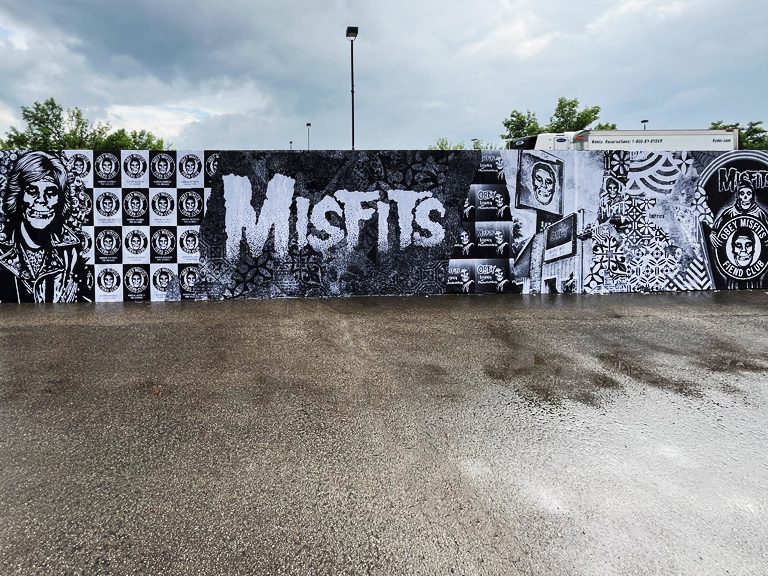
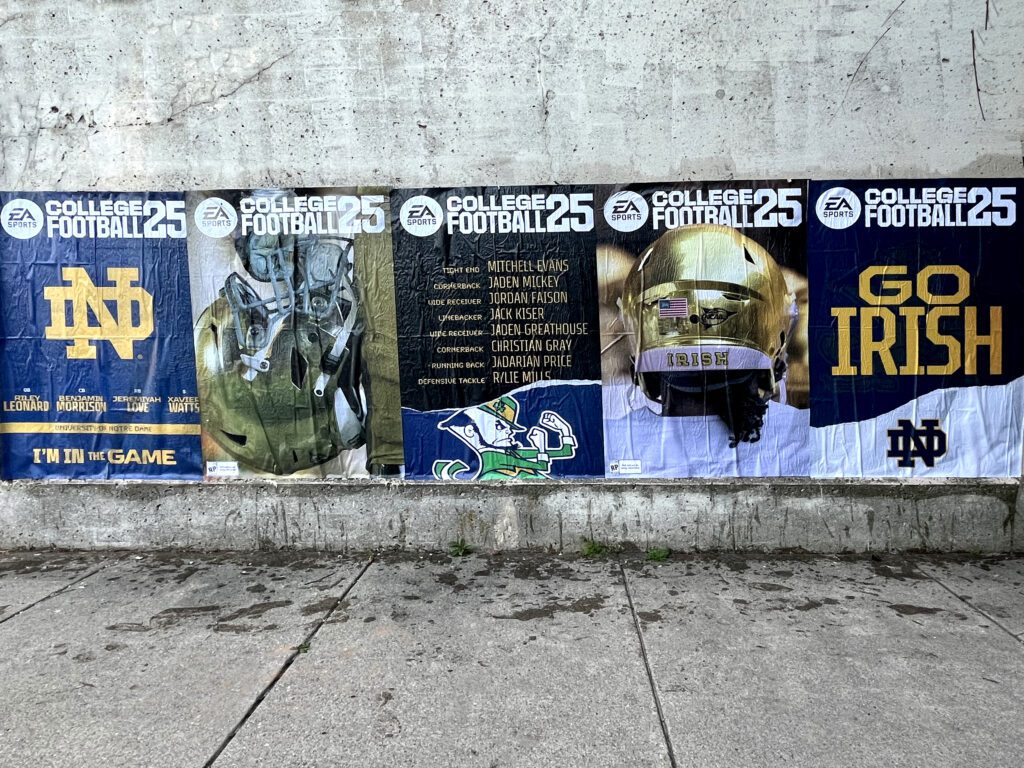
American Guerrilla Marketing has executed fly posting campaigns on behalf of clients ranging from global entertainment brands like Netflix and EA Sports to cultural institutions like The Onion and artist Shepard Fairey. The common thread across all of these campaigns is that effective fly posting requires understanding not just where people are, but what they are paying attention to and why — and that requires genuine, on-the-ground familiarity with the specific community context of each market. West Valley City is not a market where generic Wasatch Front campaign templates work. The city’s cultural geography — the community clusters, the commercial corridors, the venue-adjacent flow patterns — requires a placement strategy built from direct knowledge of how WVC’s residents actually move through their city.
AGM’s campaign process begins with demographic and geographic consultation — we work with you to define the specific community or communities you want to reach within West Valley City, then design a placement strategy that puts your posters on the surfaces those specific audiences move past most frequently and most consistently. For campaigns targeting the Latino community, this means building the placement map around the commercial nodes where Latin American community businesses anchor daily life. For campaigns targeting the broader family-oriented WVC consumer base, it means prioritizing the Jordan Landing and Harmon’s-adjacent surfaces that serve all-demographic household shopping traffic. For entertainment brands targeting the USANA or Maverik Center audiences, it means timing installation to maximize presence in the pre-event window that builds anticipatory awareness before a specific show date.
Our Las Vegas office manages all WVC operations, providing the geographic proximity necessary for rapid site visits, timely installation, and fast-response campaign adjustments. Every placement in West Valley City is photographically documented with geo-tagged images, and the complete campaign documentation report is delivered to you within 48 hours of installation completion — giving you a precise, verifiable record of where your brand appeared and what surfaces it occupied throughout the campaign window.
West Valley City is Utah’s second-largest city with more than 140,000 residents, and it is dramatically underserved by most brand marketing campaigns that default to targeting Salt Lake City’s creative districts and Provo’s tech corridor. The city’s diverse demographic profile — with Latino, Pacific Islander, and Southeast Asian communities that collectively represent substantial consumer spending power — gives brands access to consumer audiences that are highly brand-loyal once engaged and far less saturated by sophisticated advertising campaigns than SLC’s more commercially targeted urban neighborhoods. The city’s young median age of 30, combined with its household formation demographics, means WVC residents are actively building the brand preferences they will maintain throughout their peak spending years. Early presence in this market creates long-term loyalty value that is difficult to quantify but extremely difficult to displace once established.
Effectively reaching West Valley City’s Latino community with fly posting requires both precise placement geography and culturally appropriate creative. On the geography side, AGM focuses placements in the sections of 3500 South between 5600 West and 4000 West where Mexican restaurants, carnicerías, panaderías, beauty supply stores, and Latin American grocery and service businesses cluster — the commercial environment where WVC’s Latino families conduct a significant portion of their daily shopping and dining. This is where the foot traffic of this specific community is most concentrated and most consistent. On the creative side, Spanish-language poster content — headlines and messaging in Spanish that signals genuine engagement with this community rather than an afterthought translation — dramatically increases the relevance and impact of placements in these corridors. AGM can execute campaigns with Spanish-language creative on the same full-service basis as English-language campaigns.
West Valley City’s Tongan, Samoan, and broader Pacific Islander community is one of the most economically cohesive and community-networked consumer segments in the Utah market — and one of the most underappreciated by mainstream brand campaigns. Pacific Islander families in WVC are among the most intensely family-unit-oriented consumer groups in the country, with purchasing decisions frequently made collectively across extended family networks. When a brand earns trust and visibility within this community, the word-of-mouth cascade through family and church networks can deliver brand advocacy that no paid advertising can replicate at equivalent cost. Fly posting in the residential and commercial corridors of the Granger and Hunter neighborhoods, combined with placements near the community gathering points — churches, cultural centers, and community businesses — that anchor Pacific Islander social life in WVC, creates the kind of repeated physical visibility that initiates that trust-building process.
USANA Amphitheatre fly posting is one of AGM’s most effective event-adjacent campaign strategies in the West Valley City market. The venue draws more than 250,000 visitors across its summer season — July, August, and September are particularly dense with major touring acts — and every one of those concert-goers arrives and departs via West Valley City’s road network. Fly posting along the 5600 West approach corridor, on the commercial walls along the 3500 South stretch leading to the venue, and on building surfaces visible from the main parking areas creates a brand presence that every concert-goer encounters during the pre-show approach drive and the post-show departure. These high-energy, entertainment-context moments are among the strongest brand receptiveness windows in the advertising calendar — consumers at concerts are in a positive, experiential mindset that makes them more open to discovering new brands than in almost any other context.
The comparison between 3500 South and Downtown SLC reveals very different but equally valuable campaign environments. Downtown SLC on Main Street and 300 South delivers primarily pedestrian foot traffic from office workers, tourists, and downtown residents — a high-income, brand-sophisticated audience concentrated during weekday business hours and evening entertainment windows. The 3500 South corridor in West Valley City delivers primarily vehicle traffic from residents on daily commercial errands — grocery shopping, auto services, restaurant visits, and retail — with a consumer base that is younger, more diverse, and more consistently present seven days a week than the weekday-heavy downtown SLC foot traffic pattern. The right corridor for your campaign depends entirely on which demographic you need to reach. For brands whose target consumer is the diverse, working-class, and family-oriented WVC resident base, 3500 South delivers far higher daily exposure frequency to the right audience than downtown SLC placements would.
West Valley City’s demographic profile creates particularly strong performance environments for several brand categories. Automotive brands — both new vehicle dealers and aftermarket parts and service retailers — find an exceptionally receptive audience in WVC’s car-dependent, vehicle-proud consumer culture, where auto ownership is a priority household investment across all demographic segments. Food and beverage brands targeting Latin American or Pacific Islander cuisine and flavor profiles find virtually no competitive advertising clutter in these community corridors. Music brands — particularly in Latin, reggaeton, Polynesian, and hip-hop genres — that promote events at USANA Amphitheatre or Maverik Center can use fly posting to build awareness among the specific communities whose concert attendance is highest for these genres. Fitness, health, and telecom brands also see strong performance given WVC’s young demographic profile and household formation stage.
West Valley City is a critical component of any campaign claiming to reach the full Wasatch Front consumer market. A Wasatch Front campaign that concentrates exclusively on Salt Lake City’s creative districts and Provo’s tech corridor leaves a 140,000-person city — Utah’s second-largest — entirely unaddressed and leaves significant gaps in the demographic coverage that any total-market strategy requires. WVC adds the diverse working-class and family demographic that is absent from SLC’s Sugar House and Granary District targeting, providing the full socioeconomic and ethnic cross-section of the Wasatch Front that a genuinely comprehensive campaign needs. For brands in automotive, food and beverage, entertainment, and household goods, WVC is not a supplementary add-on to a Wasatch Front strategy — it is a required component of it. The city’s geographic position between SLC and the Jordan Valley also makes it a natural corridor addition that fits logistically within a multi-city installation plan without significant additional effort.
On the 3500 South corridor, the highest-performing placement zones are concentrated at major east-west intersections where multiple traffic streams converge and vehicle speeds slow enough for drivers to read and register poster content — specifically the intersections with 3200 West, 4000 West, 4800 West, and 5600 West, and the commercial walls adjacent to the Harmon’s grocery anchor locations that draw consistent multi-daily shopper traffic. Building sides on the north and south faces of commercial strips along this corridor are prioritized for their perpendicular visibility to the east-west vehicle flow. In the Jordan Landing area, the commercial walls on the perimeter of the outdoor retail center facing 5600 West and the south face of major box retail structures facing 3500 South deliver the highest daily vehicle exposure from the commuter and shopper traffic that uses these two corridors as the primary access routes to the Jordan Landing retail complex.
West Valley City’s median age of 30 — among the lowest of any similarly sized city in Utah — means the city’s consumer base is overwhelmingly in the 18-to-40 demographic bracket, concentrated in the life stage where brand preferences are being actively formed and household consumption patterns are being established for the first time. This is the most valuable demographic window for brand acquisition: consumers in this life stage are building their first real relationships with automotive, financial services, retail, food and beverage, and lifestyle brands, and those early brand associations tend to persist with remarkable durability. The young median age also means that WVC’s consumer base is disproportionately present on mobile platforms, at entertainment venues, and in the social environments — restaurants, fitness centers, barbershops, community events — where fly posting in adjacent commercial corridors reaches them in the contexts most closely tied to their active daily life rather than their screen-based consumption.
Yes. AGM executes fly posting campaigns with culturally and linguistically specific creative on the same full-service basis as standard English-language campaigns. For Spanish-language campaigns targeting West Valley City’s Latino community, the placement strategy focuses on the sections of 3500 South and adjacent corridors where Latin American community businesses and services concentrate, ensuring that Spanish-language posters appear in the cultural geography where that audience is most active and most receptive. For campaigns targeting the Tongan or broader Pacific Islander community, placement focuses on the residential and community commercial corridors in the Granger and Hunter neighborhoods where this community is most concentrated. We work with clients to ensure that cultural specificity extends not just to language but to imagery, tone, and cultural reference within the poster creative, because culturally authentic messaging dramatically outperforms generic translated content in tight-knit community markets like WVC.