American Guerrilla Marketing
Nationwide Service
Media planning, media buying, billboard advertising, & guerrilla marketing
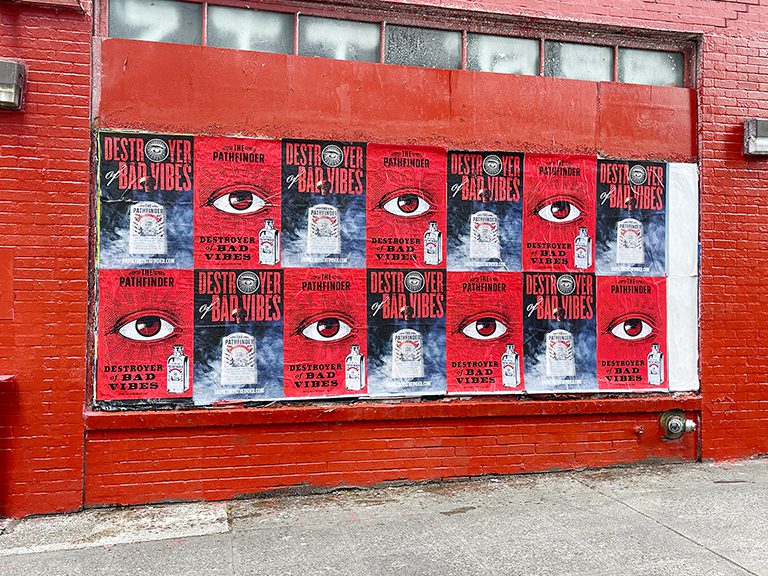
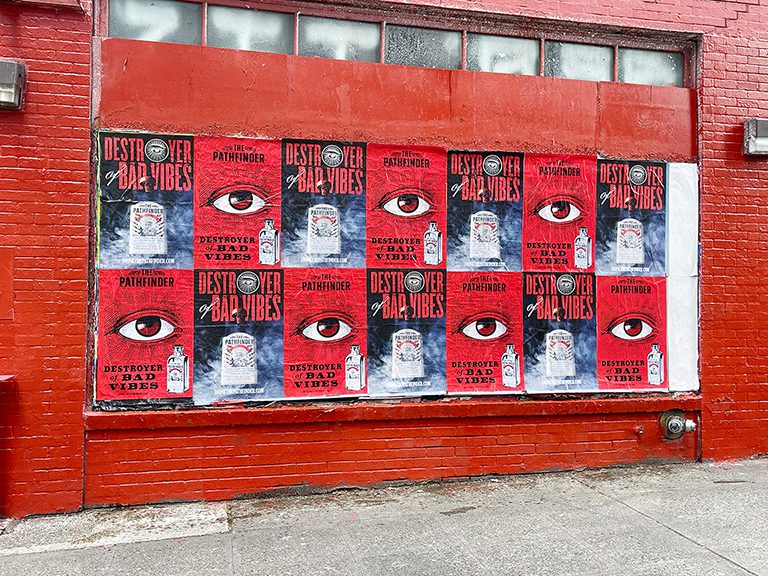
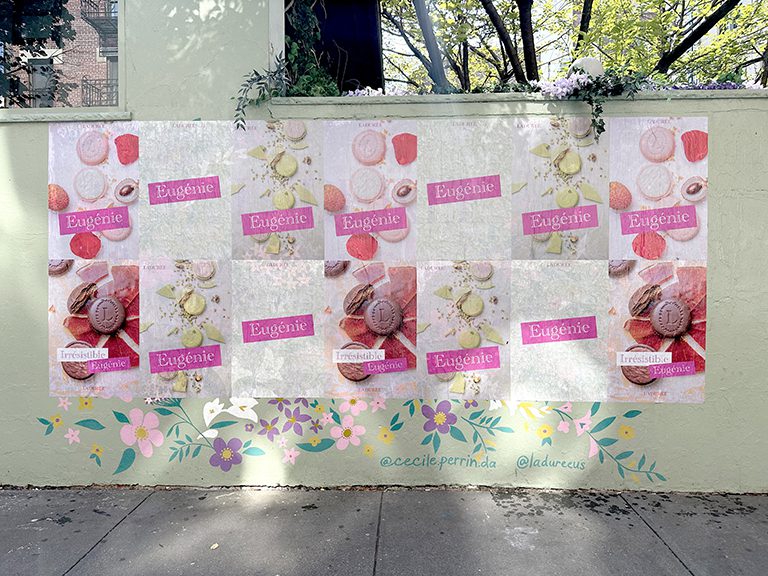
Wheat Paste Poster Campaigns Across the Pacific Northwest
Washington State is one of the most economically dynamic and culturally distinct regions in the entire country. Home to the global headquarters of Amazon and Microsoft, the historic assembly lines of Boeing, and the fastest-growing tech corridor west of Silicon Valley, the state draws a uniquely educated, mobile, and visually sophisticated population. These are consumers who tune out digital ads, skip pre-roll video, and reach reflexively for an ad blocker the moment a banner loads — but they stop and look at a striking poster on the wall of a building they walk past every single day. That’s the essential insight that makes fly posting so powerful across Washington’s urban cores.
The Pacific Northwest identity is built around authenticity. From the Cascades to the Olympic Peninsula, from the Columbia River Gorge to the Palouse, Washingtonians have a deeply ingrained radar for anything that feels manufactured or corporate. Fly posting — the craft of wheat-pasting large-format posters directly onto construction hoardings, painted walls, and urban surfaces — carries an organic credibility that no digital impression can replicate. When your brand appears at the corner of Pike Street and Broadway or along Monroe Street in Spokane’s downtown core, it feels like part of the cultural landscape rather than an intrusion into it.
American Guerrilla Marketing has run street-level poster campaigns for brands including Netflix, EA Sports, The Onion, Biossance, and Shepard Fairey. Our Washington State deployments cover the full width of the state — from the dense, walkable neighborhoods of Seattle’s Eastside to the emerging arts corridors of Tacoma, the historic streets of Spokane, and the fast-growing suburb of Vancouver just north of the Oregon border. We know where people walk, where they linger, and where a well-placed 48×72 wheat paste commands genuine attention rather than getting lost in the visual noise.
Washington’s population skews younger and more educated than the national average. The state’s median age is among the lowest for large states, and its share of residents holding a bachelor’s degree or higher consistently ranks in the top quartile nationally. This demographic profile — young professionals, college students, tech workers, outdoor enthusiasts, and members of Washington’s thriving creative economy — is precisely the audience that responds to street-level advertising done with craft and intention. Fly posting reaches them where digital advertising cannot: on the sidewalk, mid-commute, grabbing coffee, or heading to a show.
From the Pike-Pine corridor to the Spokane River gorge, AGM posts your brand in the Pacific Northwest streets where your audience actually lives. Let's build your campaign.
Select a city to explore Fly Posting Advertising opportunities.
Fly posting is the practice of affixing large-format printed posters to exterior surfaces using wheat paste — a thick, adhesive paste traditionally made from flour and water that bonds paper to walls with remarkable durability. The technique dates back centuries and was the dominant mode of public advertising long before the commercial printing press made mass media possible. In its modern guerrilla marketing application, fly posting is a precision-targeted, culturally embedded medium that places brand messaging directly within the lived environments of the target audience.
In Washington State, fly posting carries particular resonance because of the region’s storied relationship with street-level visual culture. The grunge era of the late 1980s and early 1990s — which exploded from Seattle’s Capitol Hill and Belltown venues — was promoted almost entirely through hand-drawn and photo-copied posters stapled and pasted across the city. That tradition never fully died. Today’s Seattle resident grew up in a city where street posters were the first announcement of a Sub Pop record release, a new restaurant opening in Fremont, or a political rally in the Central District. Fly posting doesn’t feel foreign here — it feels like the city’s native language.
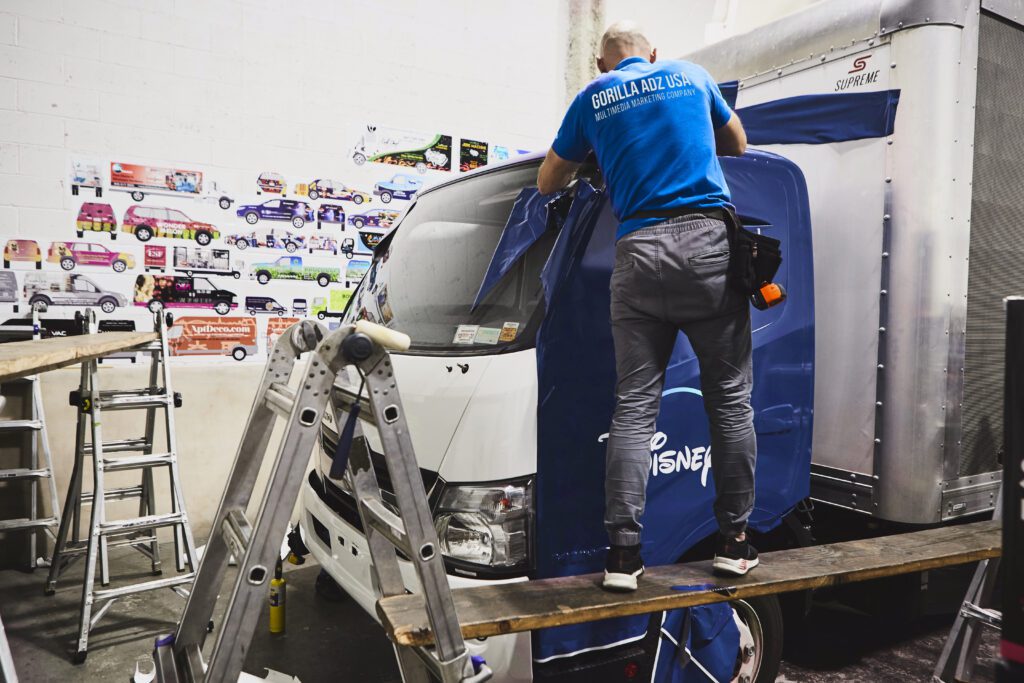
The mechanics of a modern fly posting campaign involve substantially more planning and craft than the punk-rock origins might suggest. AGM’s production team prints at high resolution on weather-resistant stock, applies industrial-grade wheat paste with professional equipment, and deploys posters in coordinated waves to maximize simultaneous visual impact across multiple neighborhoods. Campaigns are documented with geo-tagged photography so clients receive proof of placement and can correlate poster locations with website traffic spikes, social media engagement, and point-of-sale data. The result is a medium that feels spontaneous and organic while being executed with the same rigor as any premium outdoor buy.
What distinguishes Washington State as a fly posting market is the sheer diversity of its urban environments. Seattle’s Capitol Hill offers dense pedestrian traffic and a highly engaged, culturally attuned population within a few walkable blocks. Spokane’s downtown corridors provide strong visibility in a regional hub that serves all of Eastern Washington. Tacoma’s rapidly gentrifying 6th Avenue and Hilltop districts offer early-adopter audiences on the leading edge of the city’s cultural transformation. Vancouver’s Main Street and Uptown Village corridors capture the growing population of Portland-area residents who are building a distinct community identity on the north side of the Columbia River. A statewide campaign with AGM is not a one-size-fits-all blanket — it’s a curated multi-market deployment that reads the specific character of each city and plants your brand within it.
Pricing covers production, paste, placement, documentation, and post-campaign photography. For multi-city Washington deployments spanning Seattle, Spokane, Tacoma, and Vancouver simultaneously, contact our Los Angeles office to discuss statewide campaign architecture and consolidated pricing.
Award Winning Personalized Service
You will get thoughtful, devoted, and individualized attention from our experienced, qualified, and professional personnel. Being one of the most illustrious agencies in Brooklyn, New York, American Guerrilla Marketing has been awarded the Best of Brooklyn title.
Nationwide
Industry City, Brooklyn, New York 11232
American Guerrilla Marketing
Hours
Mon - Fri: 9 AM - 5 PM
Sat & Sun: Closed
Automate your campaign with AGM’s Request for Proposal Builder. Simply answer a few quick questions about your campaign goals, markets, and timeline, and the system will generate a tailored presentation with recommended strategies, quantities, and pricing. Click the RFP Builder to instantly receive your customized proposal.
A Washington State fly posting campaign requires a fundamentally different strategic framework than a single-city buy. The state’s population is not concentrated in one metro — it’s distributed across a diverse set of urban environments separated by significant geographic and cultural distance. Seattle’s South Lake Union tech corridor and Spokane’s Kendall Yards neighborhood may both be in Washington State, but they are almost 300 miles apart and serve entirely different demographics with distinct media consumption habits, daily movement patterns, and cultural touchstones. AGM builds Washington campaigns around this diversity rather than trying to paper over it with generic creative.
For statewide campaigns, we typically recommend a tiered deployment strategy. The first tier anchors the campaign in Seattle, where population density and media amplification are highest — a striking poster on Capitol Hill or in Fremont has a meaningful probability of being photographed and shared organically on social media, extending earned reach beyond the immediate pedestrian audience. The second tier targets Spokane and Tacoma simultaneously, capturing the regional hubs that anchor Eastern Washington and the South Sound respectively. The third tier addresses markets like Vancouver, Bellevue, and Olympia, where specific demographic pockets — Portland commuters, Eastside tech workers, state government employees — warrant targeted saturation.
Washington’s transportation infrastructure creates natural amplification corridors for fly posting campaigns. The I-5 corridor running from Vancouver through Tacoma and Seattle to Everett is the state’s economic spine, and the walkable commercial districts that have grown around its exits and interchanges represent high-traffic environments for poster placements. State Route 99 through Seattle — Aurora Avenue North through Shoreline and into Belltown — provides a secondary arterial with strong foot traffic and excellent visibility for large-format 48×72 placements. On the east side of the Cascades, Division Street and Monroe Street in Spokane function as equivalent arterials, carrying the daily movement of the city’s largest neighborhoods.
Washington’s seasonal rhythms also shape campaign timing. Summer in the state brings significantly increased pedestrian traffic, as residents emerge from the grey winter months and the state’s outdoor culture kicks into high gear. Events like Spokane’s Bloomsday race in May, Seattle’s Capitol Hill Block Party in July, Tacoma’s Tall Ships Festival, and the Clark County Fair in Vancouver generate concentrated foot traffic in exactly the corridors where fly posting performs best. Fall is an equally strong window, capturing the return of university students to campuses at UW Seattle, Gonzaga, Washington State, and UW Tacoma. Planning campaigns to bracket these high-traffic windows maximizes the return on each placement.
Industry verticals that consistently perform well with fly posting across Washington State include: tech product launches targeting the state’s outsized population of early adopters; entertainment and live event promotion (concerts, festivals, film openings) where the poster format has native cultural legitimacy; craft beverage brands entering new distribution markets; outdoor gear and apparel brands speaking to the state’s deeply embedded outdoor culture; and retail openings or grand-reopenings where localized saturation drives foot traffic to a specific address. Washington consumers are also highly receptive to cause-driven and activist-inflected creative — the state’s progressive political culture means campaigns with a social dimension generate disproportionate organic amplification.
Seattle’s most walkable and culturally active neighborhoods sit within a few miles of each other on the north end of downtown. Capitol Hill’s Pike-Pine corridor — the stretch of Pike Street and Pine Street between Broadway and 12th Avenue — is one of the densest foot-traffic environments in the entire Pacific Northwest. This is where Seattle’s LGBTQ+ community, music scene, independent restaurant culture, and young creative class converge daily. A fly posting saturation in this corridor reaches an audience that is simultaneously highly connected digitally and deeply invested in the physical cultural spaces of the neighborhood. The walls along Broadway Avenue E and 10th Avenue E have hosted legendary poster campaigns for decades, and brands that appear here carry an instant credibility signal.
Belltown, just north of downtown on 2nd and 3rd Avenues, captures a different slice of the Seattle audience — nightlife attendees, music venue crowds at The Showbox and other venues, and the overflow of Amazon employees from South Lake Union who flood the neighborhood’s bars and restaurants after work. Fremont — self-styled as the Center of the Universe — offers a more bohemian, arts-forward environment along Fremont Avenue N and 36th Street. Ballard’s 17th Avenue NW and Market Street corridors reach Seattle’s Scandinavian-heritage neighborhood, now transformed into a craft brewery and restaurant destination that draws visitors from across the city.
Spokane’s fly posting landscape is defined by the city’s distinct neighborhood character and the strong community identity of its commercial districts. The downtown core along Main Avenue and Riverside Avenue provides the highest pedestrian traffic in Eastern Washington, capturing the daily movement of office workers, medical center employees, Gonzaga students, and the visitors who come downtown for Spokane’s growing restaurant and bar scene. Monroe Street, running north-south through the heart of the city, is the city’s primary commercial spine and offers strong visibility for poster placements at a range of intersections.
The Perry District, centered on Perry Street between 10th and 14th Avenues, has emerged as Spokane’s most talked-about neighborhood — a walkable, small-business-forward commercial strip that draws the city’s young professional and creative class. Browne’s Addition on the west side offers historic architecture, a dense residential population, and strong foot traffic along West Pacific Avenue. Kendall Yards, the new mixed-use development on the north bank of the Spokane River, has become the city’s highest-profile address for brands targeting affluent, design-conscious consumers. The West Main Avenue corridor in Kendall Yards is a premier location for large-format 48×72 placements visible to both pedestrians and drivers crossing the Division Street Bridge.
Tacoma’s cultural renaissance over the past decade has transformed the city from a post-industrial port town into one of the most interesting art and entertainment markets in the Pacific Northwest. The 6th Avenue District, running along 6th Avenue between Pine Street and Sprague Avenue, is the city’s most vibrant commercial strip — packed with independent restaurants, bars, music venues, and retail. Foot traffic here is strong throughout the week and peaks on weekend evenings when the strip draws visitors from across Pierce County. Poster placements along 6th Avenue benefit from the corridor’s strong day-night duality: morning coffee shop foot traffic, evening dining and bar crowd.
The Stadium District, surrounding the historic Stadium High School along North 4th Street and Tacoma Avenue N, offers a neighborhood of stately homes, independent businesses, and strong community identity. Hilltop, Tacoma’s historically Black neighborhood now in rapid transition, has become an emerging arts corridor with real cultural momentum along Martin Luther King Jr. Way. The Foss Waterway and Murray Morgan Bridge area attracts visitors to the Museum of Glass and the working port, offering a unique industrial-waterfront backdrop for large-format poster campaigns.
Vancouver, Washington occupies a unique position in the Pacific Northwest regional landscape — large enough to have a distinct urban character, yet close enough to Portland that brands operating in the Portland metro cannot ignore it. The city’s Uptown Village neighborhood, centered on Main Street between 29th and 34th Streets, is the city’s most walkable commercial district, home to independent restaurants, boutiques, and the kind of small-business ecosystem that the city’s growing creative class has embraced. Esther Short, anchored by the historic Esther Short Park downtown, draws residents and visitors for farmers markets, events, and everyday errand traffic.
The 4th Plain Boulevard corridor reaches Vancouver’s most densely populated residential areas and offers high-volume foot traffic from residents of the Hough and Fruit Valley neighborhoods. Mill Plain Boulevard, the city’s primary east-west commercial spine, connects the downtown core to suburban commercial nodes and captures a broad cross-section of the city’s demographics. McLoughlin Boulevard along the Columbia River waterfront provides scenic backdrop and strong visibility in a corridor that’s undergoing significant investment and development.
Washington’s Eastside tech corridor — anchored by Bellevue, Kirkland, and Redmond — represents one of the highest-income and most brand-responsive demographic concentrations in the entire country. The Microsoft campus in Redmond and the dozens of smaller tech companies concentrated along the SR-520 and I-405 corridors create a daily flow of highly educated, highly paid professionals whose discretionary spending power is exceptional. Fly posting in the Old Bellevue neighborhood along Main Street and in Kirkland’s downtown waterfront district reaches this demographic with a medium that cuts through the digital clutter that saturates their professional lives.
Olympia, Washington’s capital city, offers a distinct market anchored by state government employees, The Evergreen State College, and a famously independent arts and music scene that has produced artists including Bikini Kill and Beat Happening. Downtown Olympia along 4th and 5th Avenues, and the Capitol Way corridor connecting the State Capitol to the downtown core, offers strong visibility with a progressive, culturally engaged demographic that responds enthusiastically to creative street advertising.
The legality of fly posting varies by jurisdiction within Washington State. Seattle, Spokane, Tacoma, and Vancouver each have their own municipal codes governing signage and poster placement on public and private property. AGM’s Washington campaigns are executed on surfaces where placement rights have been secured through property owner agreements, and our teams are thoroughly briefed on the specific regulations in each city. We do not place posters on prohibited surfaces such as utility boxes, traffic signs, or city-owned structures without appropriate authorization. Our compliance-forward approach means your campaign operates cleanly in every market.
Washington State’s famously wet climate — particularly in the west of the Cascades — is the most common concern brands raise about fly posting longevity. The honest answer is that modern wheat paste and weather-resistant poster stock perform significantly better in wet conditions than most people expect. In typical Seattle or Tacoma weather, a properly pasted large-format poster will maintain full visual integrity for four to eight weeks. On eastern Washington surfaces in Spokane’s drier climate, longevity extends further. AGM uses UV-protective coatings and water-resistant paper stock specifically selected for Pacific Northwest deployment, and our teams monitor placements and refresh them when weather damage occurs within the campaign window.
Washington State’s demographic profile makes it particularly receptive to fly posting campaigns in several key verticals. Technology products and software launches perform exceptionally well given the state’s outsized concentration of tech workers and early adopters — Seattle and the Eastside are among the most tech-forward consumer markets in the world. Live entertainment and music promotion has a native cultural alignment with fly posting that generates strong earned media results. Outdoor gear and apparel brands resonate with the state’s deeply outdoor-oriented culture. Craft beverages — beer, spirits, cider, coffee — are a natural fit for Washington’s artisanal food and drink ecosystem. Cannabis brands entering the Washington market, which has had legal adult-use cannabis since 2012, also find fly posting highly effective for reaching their target demographics.
Yes — multi-city Washington State deployments are one of AGM’s core competencies. We regularly execute coordinated campaigns that launch simultaneously in Seattle, Spokane, Tacoma, and Vancouver within the same 48-hour deployment window. This synchronized approach is critical for brands running product launches or event campaigns where consistent market presence across the state is essential. Our network of Pacific Northwest-based placement teams allows us to coordinate statewide activations with a single point of contact managing the entire operation from our Los Angeles office, which serves as the closest AGM base to Washington State.
Fly posting works best as a component of an integrated campaign rather than a standalone medium. In Washington State, we typically recommend pairing fly posting with geo-targeted digital advertising in the same neighborhoods where posters are placed — a consumer who sees your poster on Capitol Hill and later encounters your Instagram ad in that zip code experiences a powerful frequency effect that neither medium achieves alone. Washington’s strong local media ecosystem (The Stranger, The Seattle Times, Crosscut, Inlander in Spokane, and The News Tribune in Tacoma) also provides earned media opportunities for campaigns with compelling creative that generates organic coverage and social sharing.
AGM’s minimum campaign size for Washington State is 100 posters in the 24×36 format, priced at contact us for pricing for a single-market deployment. For a multi-city statewide campaign spanning Seattle, Spokane, Tacoma, and Vancouver, we typically recommend a minimum of 200 posters per market to achieve meaningful saturation in each city’s primary commercial corridors. The 48×72 large-format option is particularly effective in high-visibility Washington locations like construction hoardings in South Lake Union, large building walls in Tacoma’s Foss Waterway area, and the prominent commercial surfaces along Spokane’s riverside corridors.
Every AGM Washington State campaign is documented with a full photographic proof-of-posting report. Our placement teams photograph each location at the time of posting, capturing the poster in context with its surrounding environment. Geo-tagged metadata is included in the documentation, allowing clients to verify the precise location of every placement on a map. This report is delivered within 72 hours of campaign completion and includes both individual placement photographs and a summary map showing the full geographic distribution of the campaign across the targeted Washington State markets.
Washington State consumers — particularly in Seattle and the other major urban markets — are visually sophisticated and respond to design that reflects genuine craft and cultural awareness. Bold, high-contrast graphics that hold up at distance perform best in the fly posting format; fine details are lost when a viewer is catching a glimpse of a poster from across the street. The state’s outdoor aesthetic — clean lines, natural color palettes, imagery that references the Cascades, the coast, or the urban street scene — resonates strongly. Avoid anything that reads as overtly corporate or mass-produced; Washington audiences reward authenticity and will engage more deeply with creative that feels locally made even when it comes from a national brand.
Location selection for Washington State campaigns involves a combination of on-the-ground research, foot traffic analysis, and proprietary placement rights databases. Our teams physically walk target neighborhoods prior to each campaign to identify the highest-visibility walls, assess current competition from other postings, and verify property agreements are current. We prioritize locations at pedestrian eye level on high-volume sidewalks, near transit stops, adjacent to popular retail anchors, and at the corridor intersections where foot traffic naturally converges. In Seattle, that means locations like the intersection of Broadway and Pike on Capitol Hill or the Aurora Avenue bridge approach in Fremont. In Spokane, it means the Monroe Street Bridge area and the Division Street corridor through downtown.
From contract execution to first poster on the wall, AGM’s typical Washington State turnaround is ten to fourteen business days for a standard campaign. This window covers final creative approval, print production, shipment to our Pacific Northwest placement teams, location scouting and confirmation, and scheduled deployment. Rush campaigns with client-supplied print-ready files and expedited print production can be deployed in as few as seven business days. For large-scale statewide campaigns coordinating multiple cities, we recommend a fifteen to twenty-business-day lead time to ensure all markets are fully prepared for a synchronized launch.
Washington State has operated one of the most mature adult-use cannabis markets in the country since legalization in 2012, and AGM has worked with cannabis brands navigating the Pacific Northwest’s competitive dispensary landscape. Fly posting is one of the few high-impact advertising mediums available to cannabis brands in Washington, given the significant restrictions on digital advertising platforms like Google and Meta. Our Washington cannabis campaigns focus on neighborhoods with high concentrations of adult consumers 21 and older, using creative that communicates brand identity without making specific product claims that might trigger regulatory concerns. We are experienced in navigating Washington State Liquor and Cannabis Board advertising guidelines for out-of-home media.
The tech professional population of Seattle and the Eastside corridor between Bellevue and Redmond is one of the most valuable and hardest-to-reach consumer demographics in the country. These are individuals who use ad-blocking software, subscribe to premium streaming services to avoid commercials, and commute by car or transit rather than consuming outdoor advertising from a highway billboard. Fly posting reaches them on foot — during the lunchtime walk from an Amazon or Microsoft campus to a nearby restaurant, on the weekend stroll through Capitol Hill or Old Kirkland, during the Saturday morning farmers market run. These are the moments when a well-executed 48×72 poster stops someone mid-step and actually lands.