🚀 NEW WHEATPASTING MARKETS Discover our wheatpasting campaigns in : 🇬🇧 London • 🇨🇦 Canada • 🇲🇽 Mexico City

American Guerrilla Marketing

Nationwide Service

Media planning, media buying, billboard advertising, & guerrilla marketing

Fly Posting in Mesa, AZ

Fly Posting in Mesa, AZ

The East Valley’s sports and concert venue density makes Mesa one of Arizona’s most underestimated street advertising markets. AGM installs directly, documents every placement, and delivers results that move the needle.

The East Valley’s Street Advertising Infrastructure

Mesa is Arizona’s third-largest city, and for years it occupied an odd space in the state’s advertising conversation — large enough to matter, but overshadowed by Phoenix and Scottsdale in media planning discussions that defaulted to the more obviously glamorous markets. That dynamic has been shifting decisively over the past several years, and the advertising community is catching up to what Mesa’s street life has already proven: this is a city with real pedestrian corridors, real event density, and a suburban young adult population that has nowhere near the media saturation of comparable markets on the coasts.

Downtown Mesa has undergone a genuine transformation along Main Street. The stretch between Centennial Way and the Mesa Arts Center has developed into an independent arts, food, and music corridor with a character distinct from anything else in the East Valley. New restaurants, local breweries, live music venues, and gallery spaces have turned what was once a quiet suburban downtown into a walkable destination that draws visitors from across the metropolitan area on weekends. For fly posting campaigns, this kind of emerging corridor is a strategic opportunity — foot traffic is high and growing, the audience is culturally engaged and young, and the visual environment hasn’t yet reached the saturation levels of more established districts in Phoenix proper.

The Mesa Arts Center complex anchors the cultural infrastructure of this corridor. As one of the largest arts centers in the Southwest, the MAC hosts hundreds of performances, exhibitions, and events annually, each of which generates its own audience flow through the surrounding streets. Concert nights and major performance events create evening foot traffic peaks that rival anything the Valley has to offer for a market of Mesa’s size. Campaigns timed to major MAC programming events earn impressions from exactly the audience that arts-adjacent, entertainment, and lifestyle brands most want to engage.

Along University Drive — which runs east-west through Mesa toward Arizona State University’s main campus in adjacent Tempe — the demographic skews younger and the street energy reflects the student-adjacent culture of one of the largest university communities in the country. Mesa Community College adds a second academic anchor to the University Drive corridor, extending the student-age audience beyond ASU’s direct draw. For campaigns targeting the 18-to-28 segment that responds most enthusiastically to fly posting, the University Drive stretch gives Mesa a campus-edge energy that brands and promoters can leverage without fighting for space in Tempe’s more crowded and competitive street advertising environment.

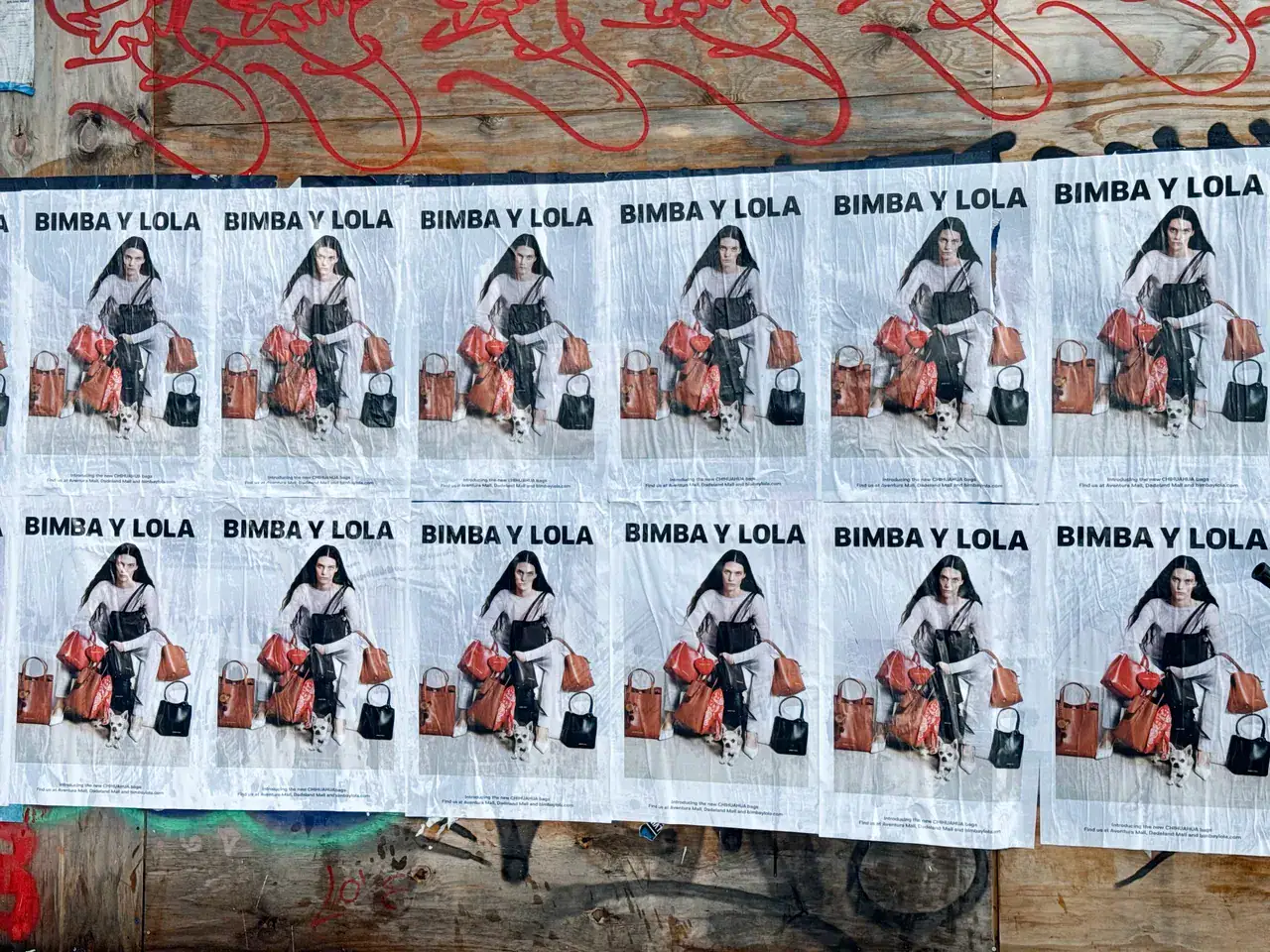
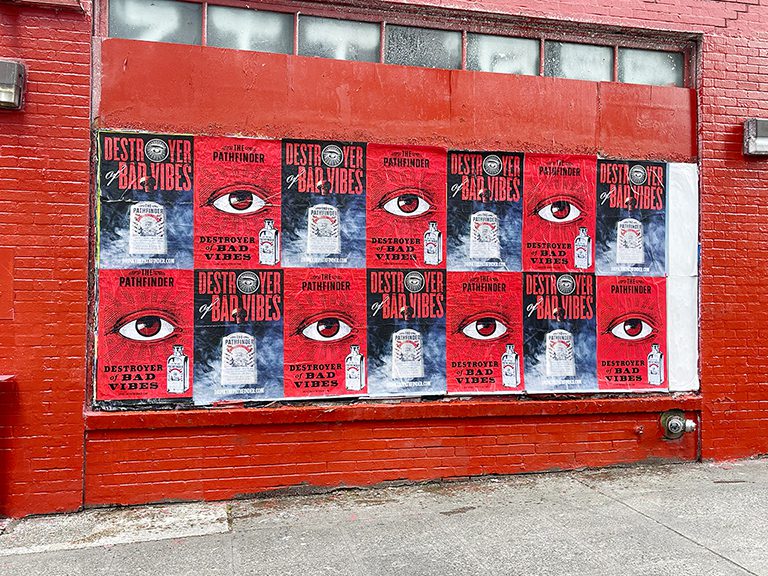
Ready to Own Mesa's Streets?

AGM installs fly posting campaigns across Mesa's highest-traffic corridors — Downtown Main Street, the Mesa Arts Center zone, University Drive, and the East Valley sports districts. In-house printing, direct crew installation, GPS-documented delivery.

Browse Cities in Arizona

Select a city to explore Fly Posting Advertising opportunities.

Where Campaigns Earn Attention In Mesa

Fly posting performance in Mesa is a function of neighborhood selection. The city is geographically large, and not every street carries the pedestrian density needed to justify poster placement. The corridors that consistently deliver for street advertising campaigns are the ones where foot traffic, demographic alignment, and street-level visual culture converge — and Mesa has several of them.

Downtown Mesa — Main Street Corridor

The core of Mesa’s urban revitalization, Main Street between Centennial Way and Country Club Drive concentrates the city’s independent food and arts economy into a walkable stretch that draws a diverse audience of young adults, families, and arts-engaged visitors throughout the week and heavily on weekends. Construction surfaces, blank warehouse faces, and independent retail storefronts along this corridor offer the kind of visual real estate that fly posting occupies at its best. Campaigns placed here land in front of an audience that is actively present, not moving through at highway speed.

Mesa Arts Center Corridor

The blocks surrounding the Mesa Arts Center on West Main Street generate concentrated foot traffic on every performance night, and the MAC’s programming calendar means those events occur multiple times per week throughout the season. The audience arriving for MAC performances trends 25-to-50, with a cultural engagement level that makes them highly receptive to creative street advertising. Fly posting in this zone earns impressions from an audience that already has its attention dialed in to arts and entertainment content — a receptivity that translates directly into recall and conversation.

University Drive

Running east through the heart of Mesa toward Tempe, University Drive carries a student-adjacent demographic that trends younger and more culturally experimental than Mesa’s broader population. The presence of Mesa Community College along the corridor adds density to the 18-to-24 segment. Independent businesses, music-adjacent retail, and food establishments serving a budget-conscious young adult clientele line this stretch, and the pedestrian activity generated by bus and light rail connectivity makes it a reliable surface for campaigns targeting the college-age demographic in the East Valley.

Sloan Park and the Riverview Sports District

Sloan Park, home of the Chicago Cubs during Cactus League spring training, and the surrounding Riverview area in northwest Mesa generate some of the most concentrated sports-fan foot traffic in the East Valley from late February through March. The approach corridors to Sloan Park, the parking areas surrounding Riverview Park, and the restaurant and bar strip serving the stadium district fill with baseball fans from across the country during this window — an out-of-state audience that pays close attention to the visual environment precisely because they’re in unfamiliar territory. Campaigns in this zone during spring training reach a uniquely attentive, economically active audience with no equivalent anywhere else in the Valley.


The Sports Calendar: Spring Training, Concerts, And East Valley Events

Mesa’s event calendar is one of the most compelling in the East Valley, and its density creates campaign timing opportunities that brands and promoters with good timing instincts can exploit directly. The Cactus League spring training season — which brings the Chicago Cubs to Sloan Park and the Oakland Athletics to Hohokam Stadium over six weeks each February and March — is the single biggest event-driven foot traffic generator in Mesa’s annual calendar. During spring training, the city absorbs tens of thousands of baseball fans who fly in from Chicago, Oakland, and points nationwide, filling local hotels, restaurants, and bars while providing street advertising campaigns with an audience that has disposable income, an enthusiasm for being out and about, and the kind of heightened visual attention that comes from navigating an unfamiliar city.

Mesa’s concert infrastructure has also grown significantly. The Mesa Amphitheatre, which hosts mid-size touring acts throughout the outdoor season, draws audiences that park and walk through surrounding corridors before and after shows. The Mesa Arts Center theater series, already noted for its cultural programming density, runs a full calendar of musical performances alongside theater and visual arts events. Taken together, Mesa’s live entertainment venues generate consistent event-night foot traffic patterns that fly posting campaigns can be designed to intersect at exactly the moments of highest pedestrian activity.

The broader East Valley event calendar adds further campaign windows throughout the year. Mesa’s proximity to the Phoenix Rising FC soccer stadium in Peoria and the Footprint Center in downtown Phoenix (a short light rail ride away) means that Mesa residents with sports-oriented demographics are regularly mobilized by events happening at venues accessible from Mesa’s corridors. A campaign that achieves street saturation in Mesa’s entertainment zones in the 48-hour window preceding a major Phoenix concert or sporting event captures an audience in the process of planning and anticipating an experience — which is exactly the moment when brand messaging registers most effectively.

Build Your Fly Posting Campaign In Mesa

    Award Winning Personalized Service

    You will get thoughtful, devoted, and individualized attention from our experienced, qualified, and professional personnel. Being one of the most illustrious agencies in Brooklyn, New York, American Guerrilla Marketing has been awarded the Best of Brooklyn title.

    Nationwide

    Industry City, Brooklyn, New York 11232

    American Guerrilla Marketing

    +1 (646) 776-2770

    [email protected]

    Telegram: @americanguerillamarketing

    Hours

    Mon - Fri: 9 AM - 5 PM

    Sat & Sun: Closed

    Automate your campaign with AGM’s Request for Proposal Builder.

    Automate your campaign with AGM’s Request for Proposal Builder. Simply answer a few quick questions about your campaign goals, markets, and timeline, and the system will generate a tailored presentation with recommended strategies, quantities, and pricing. Click the RFP Builder to instantly receive your customized proposal.

    Suburban Young Adults And Valley Sports Fans: Mesa's Dual Demographic

    Mesa has one of the most interesting demographic profiles in the East Valley for street advertising purposes. On one side of the equation sits a growing population of suburban young adults — the 22-to-35 cohort that moved to the East Valley for its housing affordability relative to Phoenix proper, stayed for its growing independent restaurant and arts scene, and now circulates through Main Street and the Downtown Mesa corridor with the same frequency and intensity that their Phoenix counterparts move through Roosevelt Row or the 7th Street strip. This audience is fully plugged into social media, shares content reflexively, and encounters fly posting with a fresh eye that isn’t yet habituated to ignoring it.

    On the other side sits Mesa’s deep sports culture. This is a city that has hosted spring training for decades and whose identity is genuinely shaped by the baseball culture that descends every February. The Valley sports fan demographic — the Cubs season-ticket holder who flies in from Chicago every March, the ASU alum who drives in from the suburbs for Sun Devils games, the Phoenix Suns fan who schedules their social calendar around playoff windows — represents a second audience layer in Mesa that is distinct from the arts-focused young adult and responds to different messaging. A well-constructed Mesa campaign recognizes both audiences and places creative where each cluster moves.

    The intersection of these two demographics — the young professional who is also a sports fan, the college student who attends both MAC concerts and spring training games, the East Valley resident who does both — is also where Mesa’s most interesting campaign opportunities sit. Brands that bridge the arts-and-entertainment and sports-and-lifestyle worlds find Mesa’s combined demographic profile unusually receptive, particularly when campaigns are placed in corridors where both audience segments actually move.

    Case Study: Party to the Polls × Daybreaker Purple Tour 2024

    The Party to the Polls collaboration with Daybreaker’s Purple Tour 2024 represented one of the more logistically ambitious fly posting campaigns AGM has executed in recent years. The campaign required simultaneous street presence across fifteen states, coordinating consistent creative execution in markets that ranged from dense urban cores to mid-size cities with less established street advertising infrastructure. The campaign’s dual mandate — voter mobilization and Daybreaker brand awareness — demanded creative placement that reached young adults in environments where they were socially engaged and culturally receptive, not just physically present.

    AGM managed the full production pipeline: in-house printing to a consistent quality standard across all fifteen markets, coordinated installation scheduling that kept all markets launching within the same 72-hour window, and GPS-documented photo reporting that gave the campaign team real-time confirmation of street presence across the entire national footprint. The wheat-based adhesive used in every market — pressure-wash removable, environmentally responsible — met the surface stewardship standards that both Party to the Polls and Daybreaker required as conditions of the campaign approval. The documentation package delivered after installation gave the campaign team the post-campaign reporting needed to assess street-level reach across fifteen state markets simultaneously.

    That level of coordination across a geographically dispersed campaign is exactly the capability that makes AGM relevant for Mesa clients who need their Mesa campaign to connect with a broader regional or national execution. Whether a Mesa fly posting campaign is a standalone East Valley push or a single node in a multi-state rollout, the production discipline and documentation standards remain identical. AGM’s Best of Brooklyn recognition reflects precisely this kind of consistent execution across markets where the standards don’t change because the geography does — and Mesa clients get the same rigorous approach applied to their corridor-specific campaign as any of AGM’s highest-profile national clients.

    Sizing Your Mesa Campaign: 24×36 Vs. 48×72

    Format selection for a Mesa fly posting campaign should reflect the specific character of the target corridor. Main Street and the Downtown Mesa zone reward density — 24×36 posters stacked in repeating patterns that build visual weight through repetition. In an emerging corridor where pedestrians are moving at walking pace and have the time to register multiple placements over a single block, the cumulative effect of 15 to 20 poster positions within a half-mile stretch creates a saturation experience that tells the brand’s story through repetition rather than expecting a single placement to carry the full persuasive load.

    The University Drive corridor and the Sloan Park sports district present opportunities where larger format works differently. A 48×72 anchor placement at a major intersection or on a high-visibility construction barrier near Sloan Park during spring training earns individual attention from an audience moving by car and on foot — drivers and pedestrians passing a four-foot-by-six-foot poster at an intersection have time to take it in fully, and the visual authority of that format communicates brand investment and seriousness that smaller posters can’t replicate at the same scale.

    For most Mesa campaigns, AGM recommends a primary reliance on 24×36 density across the Main Street and University Drive corridors, with the option to incorporate 48×72 anchor placements at high-visibility intersection and construction barrier sites where large format earns its premium. The two formats complement each other in a well-structured campaign — standard format builds saturation and frequency across the neighborhood, large format establishes landmark presence at the intersections that everyone passes.

    24×36 — Standard Format

    100 posters: contact us for pricing  |  200 posters: contact us for pricing

    The core of any density-focused Mesa campaign. Two feet wide, three feet tall — the format that builds saturation through repetition across the Main Street corridor, the University Drive strip, and the entertainment zones surrounding the Mesa Arts Center. Extra creative designs available at contact us for pricing each. 72-hour rush production available for campaigns up to 500 posters.

    48×72 — Large Format

    100 posters: contact us for pricing  |  200 posters: contact us for pricing

    Four feet wide, six feet tall. Built for high-traffic intersections and construction barriers where an individual poster needs to carry visual authority without the support of surrounding repetition. The format of choice for Sloan Park spring training approaches, major Mesa intersections, and anchor placements in the Downtown Mesa core. Additional designs at contact us for pricing each.

    How AGM Plans and Installs in Mesa

    An AGM Mesa campaign begins with a conversation about the campaign’s specific objectives. Which demographic is the priority — the Downtown Mesa arts crowd, the University Drive college-adjacent audience, the spring training sports fan, or some combination of the three? What’s the campaign’s timing relative to Mesa’s event calendar — is there a MAC performance, a spring training opening week, or a local concert that creates a traffic spike worth building around? These questions shape the neighborhood allocation that determines where in Mesa the campaign’s posters actually land.

    Once the strategy is confirmed, AGM’s production team executes printing in-house. There are no third-party print vendors in AGM’s chain — the output quality that the client approves in the press proof is the same quality that appears on Mesa’s streets. Wheat-based adhesive is used for every installation: it holds reliably in Arizona’s low-humidity climate, bonds cleanly to properly prepared surfaces, and is designed to be removed cleanly by pressure washing at the campaign’s conclusion, making it the right choice for markets where surface condition matters to property owners and municipalities alike.

    Installation is performed by AGM’s own crew, not contracted laborers. Each poster is placed and then photographed from street level with GPS coordinates embedded in the image. The post-campaign documentation package clients receive includes a photograph of every poster in its installed position, the GPS location data for each site, and a summary of the campaign’s full neighborhood distribution. That documentation is delivered consistently, on every campaign, regardless of budget or scope — because AGM’s accountability standard doesn’t have a lower tier.

    Who Books Fly Posting Campaigns In Mesa

    The Mesa fly posting client base reflects the city’s dual cultural identity. On the entertainment side, concert promoters, touring act management teams, and venue operators who want to build anticipation among the East Valley audience use fly posting to create pre-show street presence that drives last-minute ticket sales and generates social sharing in the 48-to-72-hour window before an event. The visual impact of a well-placed fly posting campaign the week of a show is a proven driver of walk-up ticket demand in markets where street culture is alive.

    Consumer brands launching in the Arizona market increasingly include Mesa in their street advertising plans alongside Phoenix and Scottsdale. The East Valley’s growing young adult demographic represents a consumer audience that is underserved by advertising relative to its purchasing power, and brands that arrive on Mesa’s streets before the market becomes more saturated establish themselves with an authenticity that later entrants can’t buy. Early movers in Mesa’s street advertising environment consistently report that their campaigns land with more recall and conversation than comparable investments in more crowded Phoenix corridors.

    Political and advocacy organizations active in Arizona’s swing-district politics have used fly posting in Mesa’s dense urban precincts to place voter mobilization messaging where it reaches young adults who don’t engage with traditional media in any meaningful way. The speed-to-street that fly posting enables — from approved creative to installed poster in as few as 72 hours on a rush campaign — makes it an effective last-push tool for campaigns working with tight political timelines. Mesa’s urban precinct concentration along Main Street and University Drive makes it a particularly efficient market for targeted political fly posting.

    Frequently Asked Questions: Fly Posting in Mesa

    The strongest fly posting corridors in Mesa are the Downtown Mesa Main Street district, the blocks surrounding the Mesa Arts Center on West Main Street, the University Drive corridor running toward Tempe, and the approach zones around Sloan Park during Cactus League spring training season. Each of these corridors offers the combination of genuine pedestrian foot traffic and a culturally engaged demographic that makes fly posting perform at its best.

    Spring training is Mesa’s single highest-demand fly posting window. The six-week Cactus League season, typically running from late February through late March, floods the city with out-of-state baseball fans from Chicago, Oakland, and dozens of other markets — a visitor audience that is attentive to the street environment, economically active, and unfamiliar with local streets in exactly the way that makes fly posting highly visible. Brands targeting sports fans, hospitality, and entertainment during this period compete for spring training placement from AGM well in advance of the season.

    Yes — the Mesa Arts Center corridor is one of AGM’s primary Mesa target zones. The blocks surrounding the MAC on West Main Street carry consistent foot traffic on performance nights and draw culturally engaged audiences who are predisposed to notice and engage with creative street advertising. AGM places campaigns in this zone timed to major MAC programming events for maximum impression density during peak audience flow.

    Mesa fly posting campaigns primarily reach suburban young adults aged 22 to 38 who are active in the city’s arts, food, and nightlife scene, and Valley sports fans aged 21 to 50 who attend spring training, college sports, and local concert events. The University Drive corridor specifically skews 18-to-28, with a strong student-adjacent component from Mesa Community College and the broader ASU population. A well-planned Mesa campaign can address both of these demographic layers through strategic corridor allocation.

    Fly posting delivers physical, unskippable street presence that cannot be blocked, muted, or scrolled past. A 100-poster 24×36 campaign covering Mesa’s primary corridors over a two-week window costs contact us for pricing and generates impressions from every person who walks or drives through those zones during that period. Digital advertising of comparable reach in a local market, delivered through social or display channels with any targeting precision, typically costs substantially more while remaining invisible to audiences who use ad blockers or simply don’t engage with in-feed advertising. Fly posting’s organic social amplification — when people photograph and share creative street placements — extends the campaign’s reach further still at no additional cost.

    Yes. Local promoters, venue operators, and event producers in Mesa are among AGM’s most consistent clients. Whether the event is a MAC performance, a Mesa Amphitheatre show, or a private venue activation, AGM builds campaign timing and neighborhood targeting around the specific event’s audience and venue location. Event-timed fly posting in Mesa generates measurable pre-show buzz and contributes directly to walk-up ticket demand in the 48-to-72-hour window before an event date.

    Standard Mesa campaigns require two to three weeks of lead time from creative approval to installation. This window covers print production, location scouting, and scheduling coordination. Rush campaigns for 24×36 posters are available with a 72-hour production turnaround for quantities up to 500, making it possible to launch a Mesa street campaign within days of finalizing creative for time-sensitive event or launch windows. Contact AGM early to ensure preferred installation dates are available.

    Every fly posting market has surface considerations, and Mesa is no different. AGM’s planning team identifies appropriate surfaces during the pre-campaign location scouting phase — construction barriers, permitted wall spaces, and other approved surface types that are standard in the fly posting industry. Surface selection directly affects both campaign performance and regulatory compliance, and AGM manages this process as part of standard campaign planning rather than leaving it to the client to navigate independently.

    Absolutely — event-timed campaigns are one of the most effective use cases for Mesa fly posting. AGM designs installation schedules to put posters on the street three to five days before an event date, creating a visual buildup window that peaks during the 24-to-48 hours of maximum audience mobilization. This approach works for concerts at the Mesa Arts Center and Mesa Amphitheatre, sporting events at Sloan Park, and any other Mesa venue programming that draws a concentrated audience in a defined time window.

    Every AGM Mesa campaign includes in-house printing at the client’s specified format, installation by AGM’s own crew across the target corridors, wheat-based adhesive application, and GPS-documented post-campaign photo reporting. There are no subcontractors in AGM’s production chain, and the documentation package — which includes street-level photography of every placement with embedded GPS location data — is a standard component of every campaign, not an optional add-on.

    Mesa’s geography requires a more deliberate approach to neighborhood concentration than a denser urban core like Downtown Phoenix. The city is physically large, and spreading a poster budget thinly across a wide geographic area produces weak impressions across many zones rather than strong saturation in the zones that actually matter. AGM’s Mesa campaigns are designed around corridor concentration — heavy poster density in the Downtown Main Street zone, the MAC corridor, and University Drive, rather than a geographically dispersed placement pattern that fails to achieve the repetition needed for genuine brand recall.

    Browse All States

    Explore Fly Posting Advertising opportunities across the United States.

    No locations found

    American Guerrilla Marketing Blog Posts