American Guerrilla Marketing
Nationwide Service
Media planning, media buying, billboard advertising, & guerrilla marketing
Missoula is where the Clark Fork meets the Rattlesnake, where the Hip Strip already has a poster culture, and where the University of Montana keeps the streets full of a curious, engaged audience nine months a year. AGM’s wheatpaste campaigns belong here.
Missoula occupies a position in the Montana cultural landscape that no other city in the state can claim. It is simultaneously a university city, an outdoor recreation capital, a progressive arts community, and the spiritual center of western Montana’s independent cultural identity. The University of Montana anchors an academic community of students, faculty, and researchers that keeps the streets dense with an educated, culturally engaged, media-literate population nine months a year. The outdoor recreation community — trail runners, fly fishers, kayakers, climbers, backcountry skiers, cyclists — adds an enthusiast layer whose brand literacy and purchasing power far exceeds what the city’s modest overall income statistics would suggest. And the Hip Strip on South Higgins Avenue has long served as the natural home of an independent, arts-forward culture that doesn’t just tolerate fly posting — it expects it as part of the neighborhood’s visual language.
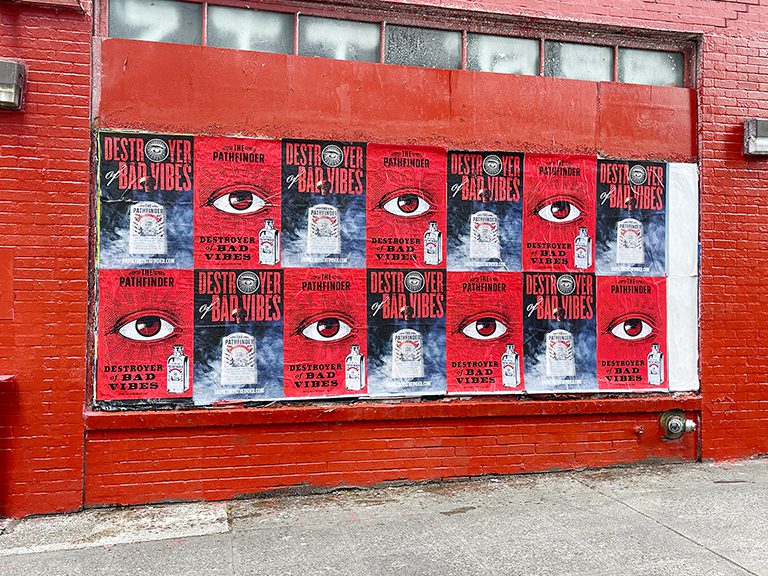
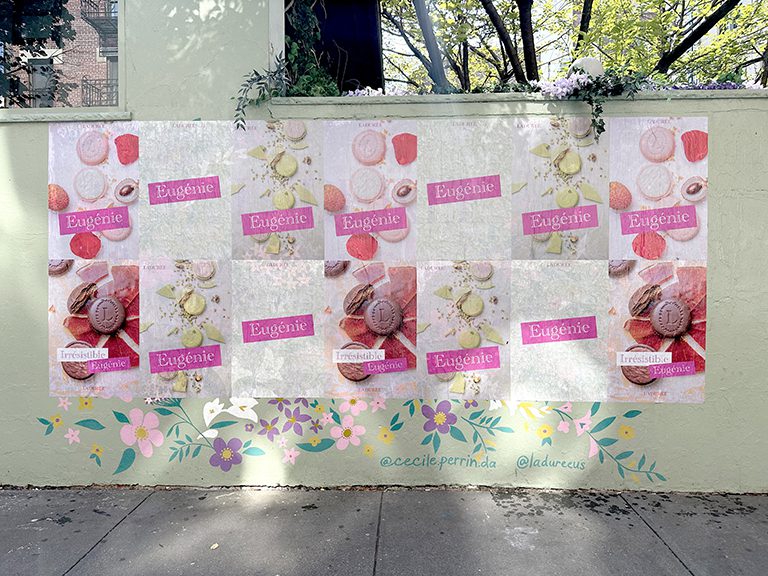
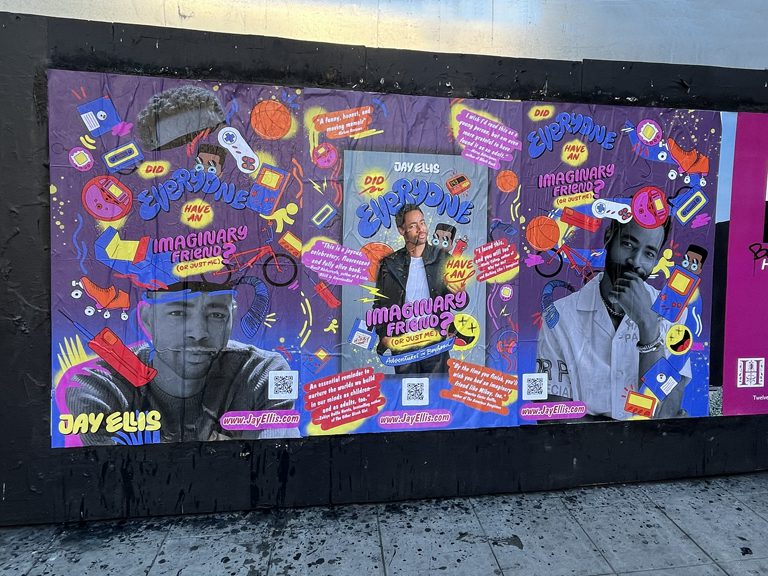
That last point is worth emphasizing. Missoula is not a market where wheat paste advertising needs to be introduced to a skeptical audience. The poster culture on and around the Hip Strip has existed for decades, built by music venues promoting shows, artists announcing exhibitions, and community organizations running awareness campaigns. When AGM executes a fly posting campaign in Missoula, it is operating in a city whose street-level audience already understands the format, already engages with it, and already has a positive cultural association with the medium. That preexisting relationship between Missoula’s audience and its poster culture is an asset that no other Montana market offers at the same depth.
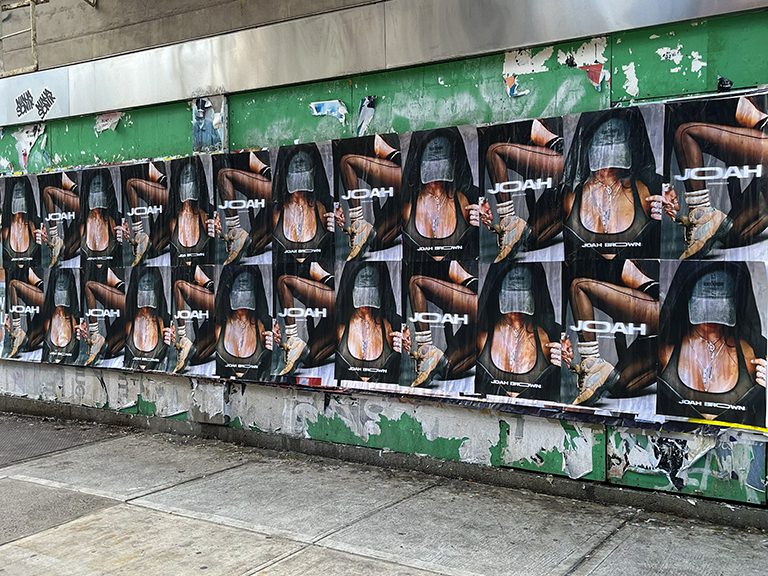
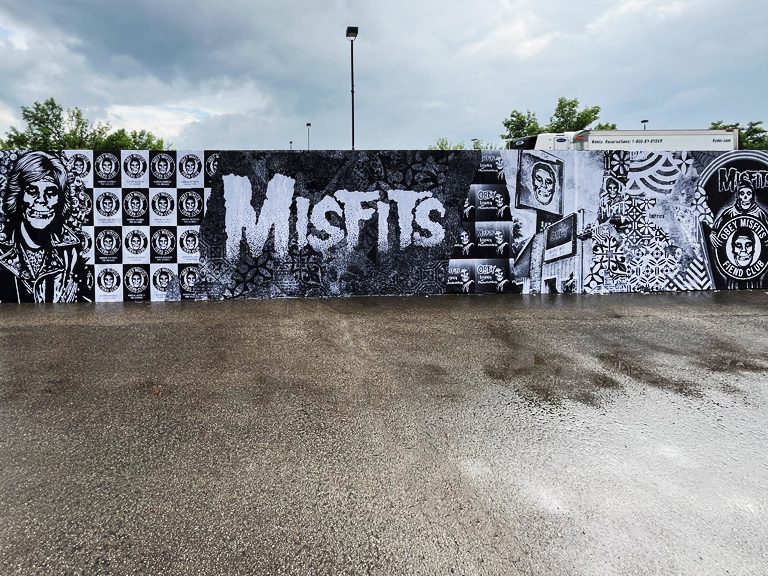
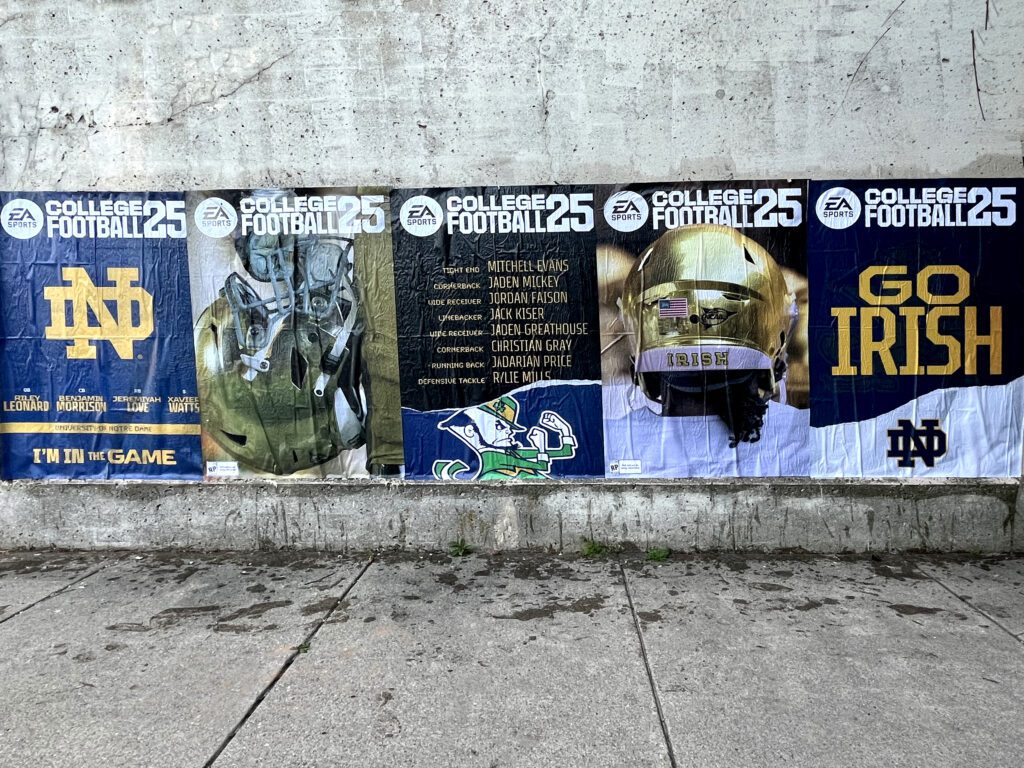
AGM carries the Best of Brooklyn award as a marker of operational consistency across every market we enter — from the Manhattan streets where Shepard Fairey’s Sonic Temple festival campaign ran to the emerging western cities where outdoor brands are building their regional presence. The Sonic Temple campaign required AGM to work at the intersection of high-profile artistic identity and street-level media execution in a context where both the artist’s brand and the festival’s reputation depended on the poster work being done right. That calibration between cultural credibility and technical execution is precisely what Missoula’s sophisticated audience demands, and precisely what AGM brings to it. Clients including Netflix, EA Sports, Biossance, and The Onion have relied on AGM’s track record of connecting brand-level campaigns to street-level audiences with the precision and accountability that national advertisers require.
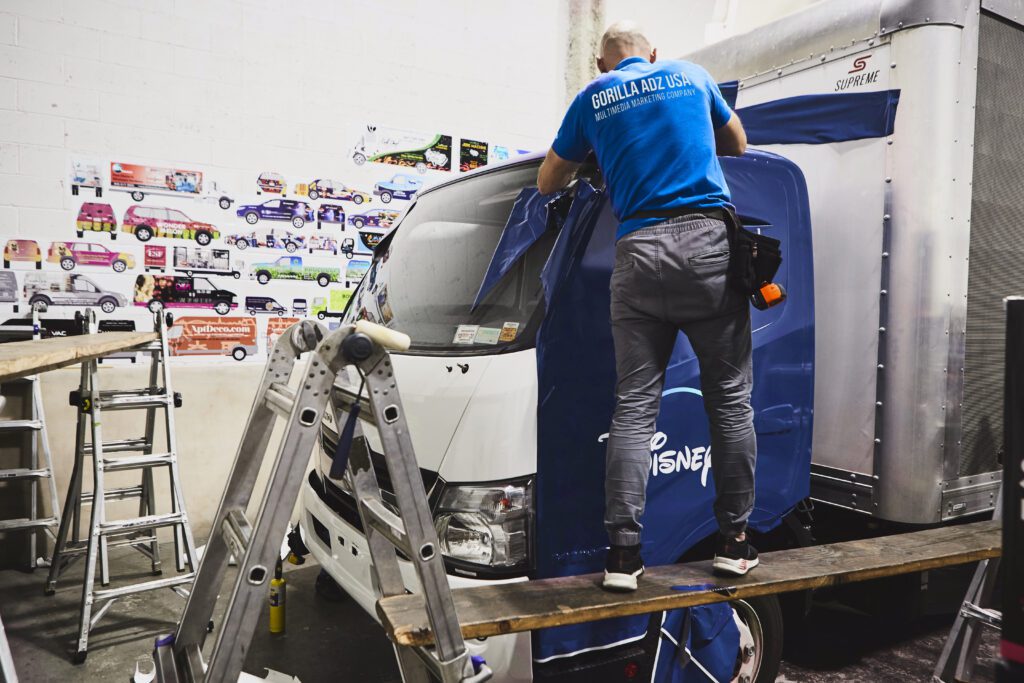
From the first print run to the last poster installed, AGM handles everything with in-house teams — your campaign is never contracted out to a third-party posting service, and your creative is never handed off from a print vendor to an unconnected field crew. This matters particularly in a market like Missoula, where the audience is visually sophisticated enough to notice when a campaign is executed carelessly. Missoula residents who live with and around the poster culture of the Hip Strip have an intuitive sense of what quality wheat paste work looks like — and a campaign pasted by crews who treat it as a commodity job rather than a craft operation reads differently to that audience than one executed with the attention that AGM’s in-house model enforces. Every installed location is photographed with GPS coordinates embedded, giving you a verifiable record of exactly where your campaign ran in the city and exactly what it looked like when it went up.
Western Montana’s geographic concentration works in a Missoula campaign’s favor. Unlike Billings, which serves a sprawling eastern Montana catchment area across a very wide radius, Missoula draws its regional population from the valleys immediately surrounding it — the Bitterroot to the south, the Blackfoot corridor to the northeast, and the Clark Fork drainage communities to the west. These regional visitors are in Missoula frequently rather than periodically, and their movement through the downtown and Hip Strip corridors means the campaign footprint reaches them on multiple occasions during the campaign window rather than as a single first-exposure event. For brands seeking repeated impression contact with a defined regional audience, Missoula’s concentrated regional geography is a structural advantage over markets with wider but thinner catchment areas.
AGM has worked with Shepard Fairey, Netflix, EA Sports, and Biossance. The same in-house print and installation team, the same GPS-documented proof, and the same zero-subcontractor execution model that runs those campaigns runs yours in Missoula. Call us and we'll tell you exactly which Missoula walls your brand should be on.
Select a city to explore Fly Posting Advertising opportunities.
The Hip Strip is the neighborhood anchor of Missoula’s independent cultural identity, and it is the single most contextually appropriate fly posting zone in the state of Montana. South Higgins Avenue below the Higgins Bridge is dense with independent retail, craft beverage establishments, music venues, record shops, specialty food businesses, and the gathering infrastructure of a community that defines itself explicitly against chain commercial culture. It is a walkable strip where residents and visitors spend hours rather than minutes, where the pace of movement encourages visual engagement with the built environment, and where a wheat paste poster on the right wall is not an advertising intrusion but a natural element of the neighborhood’s visual identity.
The physical building stock of the Hip Strip includes the blank wall surfaces and independent business facades that are the natural canvas for fly posting campaigns. Unlike a managed commercial district where every exterior surface is controlled and standardized, the Hip Strip’s architecture has the organic variety — unexpected blank walls, covered hoarding opportunities, the side walls of buildings whose primary facades face perpendicular to Higgins — that creates genuine posting opportunities rather than forcing campaigns onto a small number of compromised placements. AGM’s scouting process on the Hip Strip identifies the walls that carry the campaign with maximum visual impact rather than the walls that merely exist.
The audience on the Hip Strip is the most design-aware and poster-literate in Missoula. These are people who attend local music shows advertised by posters they saw on this same street, who recognize the aesthetic traditions of wheat paste advertising, and who engage with well-executed street poster campaigns as a form of cultural communication rather than as commercial noise. For brands in music, entertainment, outdoor recreation, craft food and beverage, independent retail, lifestyle, and any category that carries authentic cultural credibility, the Hip Strip is not just an effective fly posting location — it is the highest-alignment brand environment in western Montana.
Downtown Higgins Avenue north of the Clark Fork River bridge is Missoula’s commercial spine — the zone where the city’s professional services, government offices, independent restaurants, specialty retail, and the civic infrastructure of a mid-size western city concentrate into a walkable corridor. The downtown Higgins audience is demographically broader than the Hip Strip’s more culturally specific community, pulling in the working professional, the government employee, the downtown resident, and the visitor passing through the city’s commercial center. For fly posting campaigns that need to reach the full Missoula professional population rather than its arts-forward cultural core specifically, downtown Higgins is the necessary complement to the Hip Strip’s more targeted posting environment.
The pedestrian activity on downtown Higgins is sustained across the full business week — lunch hour foot traffic concentrates the professional audience in a compressed window, while evening dining and entertainment programming extends the impression opportunity into the early nighttime hours. Weekend activity brings a different audience composition: fewer professionals, more families, recreational shoppers, and the tourist demographic that Missoula attracts as a base for adventure travel in western Montana. A poster placed at a high-traffic intersection on downtown Higgins generates impressions from these rotating audience compositions across the full seven-day campaign window, not just during the working week’s peak hours.
The historic commercial architecture of downtown Missoula provides the brick and masonry building faces that make wheat paste advertising visually compelling in an urban context. The contrast between aged building facades and a fresh, bold poster — the visual signature of well-executed fly posting in a historic commercial district — is a combination that Missoula’s downtown Higgins corridor delivers in the same way that the best posting environments in larger western cities do. For a campaign that needs both Hip Strip cultural alignment and downtown professional reach, the two zones are a natural pairing that covers the full width of Missoula’s adult audience in a single campaign strategy.
The University of Montana enrolls approximately 10,000 students and maintains a faculty and staff community that adds several thousand more daily presences to the university’s physical footprint. The campus perimeter corridors — Arthur Avenue, Maurice Avenue, and University Avenue — form the ring where student, faculty, and campus-visitor movement is most concentrated and most consistent during the academic year. Fly posting on building walls and permitted structures along these corridors reaches the 18-to-25 demographic at the stage of life where brand preferences are being formed, where entertainment and cultural consumption is at a lifetime high, and where the social contagion dynamics of a dense student population multiply the impressions from a single poster placement far beyond the physical viewer count.
The U of M campus perimeter also serves the faculty and academic staff whose professional incomes and cultural consumption patterns represent a meaningfully different buyer profile than the undergraduate student population. Faculty moving between campus and the adjacent residential neighborhoods that abut the university — particularly the quiet, tree-lined streets between campus and the downtown Higgins corridor — encounter campus perimeter postings as part of their daily commute movement. For brands in the professional services, cultural institution, outdoor recreation, and consumer goods categories that resonate with an educated, culturally engaged adult professional, the campus perimeter reaches that audience at an extremely competitive cost-per-impression relative to the purchasing power it represents.
The U of M’s academic calendar creates distinct timing windows that significantly affect campaign strategy. The fall semester return — late August — marks the single most concentrated population surge in Missoula’s annual rhythm: 10,000 students arriving simultaneously, oriented to their new environment, visually attentive to the city around them in a way that established residents are not. A campaign launched in the final week of August and running through the first two weeks of September reaches these newly arrived students during their period of maximum environmental openness, when they are most actively processing and cataloging their new surroundings and the brands that inhabit them.
The Rattlesnake neighborhood is the geographic home of Missoula’s most committed outdoor recreation community. Trail access to the Rattlesnake National Recreation Area begins at the neighborhood’s north edge, making it the literal departure and return point for thousands of trail runs, hikes, and backcountry excursions annually. The residential streets and commercial infrastructure of the Rattlesnake serve a population whose identity is organized around outdoor recreation in a way that no other Missoula neighborhood replicates at the same density — this is where the gear-literate, brand-aware, high-engagement outdoor consumer actually lives, not just passes through.
Greenough Park runs along Rattlesnake Creek through the heart of the neighborhood, functioning as the daily outdoor green space for residents who use the trails, the creek corridor, and the park infrastructure as the backdrop of their everyday recreation. The commercial zones serving the Rattlesnake neighborhood — the gathering points, specialty retail, and food businesses that cater to the trail-and-outdoors lifestyle community — offer posting surfaces that put your brand in direct context with the outdoor recreation identity the Rattlesnake represents. For outdoor gear, athletic apparel, endurance sports, adventure travel, natural food and beverage, and any brand category that resonates specifically with the self-selected outdoor enthusiast community, this neighborhood is the highest-alignment posting zone in Missoula.
The posting dynamic in the Rattlesnake is different from the high foot-traffic volume of the Hip Strip or downtown Higgins. The audience is smaller but more definitionally consistent — every pedestrian in this neighborhood on a weekday morning or weekend trail day is, with very high probability, an active outdoor recreation participant with the lifestyle profile that outdoor brands most want to reach. For brands whose campaign is optimized for audience quality over raw impression volume, the Rattlesnake and Greenough Park corridor offers something that the downtown Missoula zones cannot: a geographically concentrated, lifestyle-defined audience that encounters your brand in the physical space most directly associated with their identity.
Missoula’s posting environment rewards deliberate format selection because the city’s distinct zones are each best served by different approaches. The Hip Strip’s audience responds to bold, design-forward creative that respects the neighborhood’s visual intelligence. The campus perimeter demands density to cover the geographic spread of student and faculty movement paths. The Rattlesnake benefits from precision — fewer, more targeted placements in the specific commercial nodes the outdoor recreation community passes through. Understanding which format serves which zone determines how efficiently your Missoula budget translates to actual audience impact.
The 24×36 fly posting format is the tool for building Missoula presence across multiple neighborhoods simultaneously. At 100 to 200 placements across the Hip Strip, downtown Higgins, the campus perimeter, and the Rattlesnake commercial nodes, this format creates the city-is-covered impression that Missoula’s compact but multi-zone geography rewards — every neighborhood in the campaign footprint has your brand on its walls.
The second-design add-on at contact us for pricing is particularly valuable in Missoula, where the demographic diversity across zones — Hip Strip arts crowd, campus students, downtown professionals, Rattlesnake outdoor community — can be addressed with different creative executions deployed in the zones where each resonates most. One campaign buy, two creative messages, tailored by neighborhood context.
For Missoula’s blank warehouse walls, building sides, and the larger surface opportunities on South Higgins, the 48×72 oversized wheat paste format creates the kind of unavoidable visual presence that defines a campaign rather than merely contributing to one. At four feet wide and six feet tall, a well-placed 48×72 poster on the Hip Strip is a landmark in the neighborhood’s visual geography — something that people begin using as a reference point rather than simply noticing as an ad.
The 48×72 format is the choice for brands that want Missoula to feel the campaign rather than simply observe it. For high-impact brand moments — album releases, film launches, major product drops, festival announcements — the oversized format at the Hip Strip’s strongest walls delivers the presence that the moment requires.
Missoula’s four distinct posting zones each serve a specific audience segment: Hip Strip for the design-literate cultural consumer, downtown Higgins for the professional and general population, campus perimeter for the student and faculty demographic, and Rattlesnake for the outdoor recreation community. The most precise Missoula campaigns allocate format and placement density by zone based on where the target audience is most concentrated — rather than spreading a flat distribution across the full city.
AGM’s Missoula campaign planning process begins with a zone prioritization conversation that maps your brand’s specific target demographic to the neighborhoods where that demographic lives and moves. The result is a placement strategy that puts the most resources behind the zones that matter most for your campaign goals and supports them with lighter coverage in secondary zones where the target audience still appears but at lower density.
Award Winning Personalized Service
You will get thoughtful, devoted, and individualized attention from our experienced, qualified, and professional personnel. Being one of the most illustrious agencies in Brooklyn, New York, American Guerrilla Marketing has been awarded the Best of Brooklyn title.
Nationwide
Industry City, Brooklyn, New York 11232
American Guerrilla Marketing
Hours
Mon - Fri: 9 AM - 5 PM
Sat & Sun: Closed
Automate your campaign with AGM’s Request for Proposal Builder. Simply answer a few quick questions about your campaign goals, markets, and timeline, and the system will generate a tailored presentation with recommended strategies, quantities, and pricing. Click the RFP Builder to instantly receive your customized proposal.
The Hip Strip is the local name for South Higgins Avenue below the Higgins Street Bridge — the stretch of independent retail, craft brewery taprooms, music venues, record shops, and locally owned food businesses that define Missoula’s distinct alternative commercial identity. It has been a center of Missoula’s street-level cultural communication for decades, with poster and flyer culture embedded in the neighborhood’s visual environment long before modern guerrilla marketing terminology existed. The effectiveness of fly posting here derives from that established context: Missoula’s Hip Strip audience has a learned, positive relationship with the format that most markets don’t possess. A wheat paste poster on the Hip Strip is not an intrusion — it is a participation in the neighborhood’s ongoing visual conversation. For brands whose identity aligns with independence, craft, music, outdoor culture, or any form of authentic community engagement, no other posting location in Montana matches the Hip Strip’s combination of contextual alignment and audience receptivity.
The UM academic calendar is one of the most impactful timing variables in any Missoula campaign targeting the student demographic. The population surge in late August — when the full student body returns — represents the highest-value single window in the Missoula calendar for campaigns targeting the 18-to-25 demographic: new students arriving and mapping their new environment, returning students reorienting to the city after summer, and the collective social energy of a campus community reconvening. Fall semester (late August through December) and spring semester (January through early May) represent the primary active campaign windows for student-targeted work. Summer campaigns shift the strategy toward Missoula’s trail tourism, music festival, and regional visitor audience, which replaces the campus population with a smaller but geographically mobile outdoor and cultural tourism demographic. Campaigns bridging the late-summer return window and the fall semester’s first month capture both the new-student orientation energy and the established-student audience at full density.
Missoula’s progressive cultural identity is real, and it does create a brand-fit variable that is more pronounced here than in Billings, Great Falls, or even Bozeman. The Hip Strip and campus perimeter audiences, in particular, have a well-developed skepticism toward brands they perceive as opportunistically adopting progressive or outdoor cultural signals without earned authenticity. This doesn’t mean only left-leaning or outdoor-specific brands can run effective Missoula campaigns — it means that the creative execution and brand positioning need to acknowledge rather than ignore the community’s sensibility. Brands in outdoor recreation, craft food and beverage, music and entertainment, independent retail, environmental and sustainability categories, and the cultural arts find Missoula’s progressive identity is an alignment asset rather than a friction point. Brands in categories that feel incongruous with that identity can still run effective campaigns if they focus on the downtown Higgins professional corridor and adjust creative to lead with universal appeal rather than cultural signaling they haven’t earned.
The Rattlesnake neighborhood and Greenough Park corridor is specifically designed for this purpose — to concentrate fly posting placements in the physical geography where Missoula’s outdoor recreation community is most densely present. This is the neighborhood where trail runners, mountain bikers, backcountry skiers, and fly fishers actually live, where they leave for and return from the recreational activities that define their daily schedules, and where the commercial infrastructure serving their lifestyle is concentrated. A posting strategy that combines the Rattlesnake commercial nodes with the outdoor-relevant independent businesses on the Hip Strip creates two distinct touchpoints with the same outdoor recreation demographic — the neighborhood context and the cultural consumer context — from a single campaign budget. For outdoor brands targeting the Missoula enthusiast market, this dual-zone approach reaches the audience in both the physical environment most associated with their recreation identity and the cultural commercial environment where they make the consumption decisions surrounding that identity.
The two zones serve fundamentally different strategic purposes and the right choice depends entirely on what your campaign is trying to accomplish. Downtown Higgins delivers volume and demographic breadth — the widest cross-section of Missoula’s adult population moves through it, making it the highest-total-impression zone in the city. The Rattlesnake delivers demographic specificity — a smaller but more definitionally consistent audience of outdoor recreation participants whose lifestyle profile is highly predictable and whose brand affinity with outdoor, active lifestyle, and natural product categories is extremely strong. If your campaign goal is maximum Missoula reach across all demographics, downtown Higgins is the anchor. If your campaign goal is maximum impact with a specific outdoor recreation consumer profile, the Rattlesnake’s concentrated audience justifies its lower absolute impression volume. Many effective Missoula campaigns run both zones simultaneously, using downtown Higgins for breadth and the Rattlesnake for depth with the outdoor recreation segment.
The existing poster culture is overwhelmingly an advantage, not a competitive challenge. Missoula’s street-level audience on the Hip Strip and around the campus perimeter is already conditioned to read and engage with wheat paste posters as a meaningful form of communication — they have decades of practice with the format as part of the neighborhood’s informational and cultural landscape. This learned engagement means that a well-executed fly posting campaign in Missoula receives the kind of active audience attention that markets without an established poster culture have to earn before a campaign can deliver its message. The competitive dimension — other campaigns also occupying wall space — is real but manageable. AGM’s location scouting in Missoula identifies the surfaces where existing poster density is lowest and positioning quality is highest, so your campaign leads the visual field at its chosen locations rather than competing in already-crowded posting environments.
The difference is the cultural multiplier that Missoula’s arts and outdoor recreation community adds around the university’s core student and faculty audience. In a market where the university is the dominant institution but the broader community doesn’t carry a strong independent cultural identity, a fly posting campaign is primarily a campus-perimeter operation targeting the student demographic. In Missoula, the University of Montana is one of three overlapping cultural ecosystems — the student and academic community, the arts and independent cultural community centered on the Hip Strip, and the outdoor recreation community concentrated in the Rattlesnake and adjacent neighborhoods — that collectively create an audience far richer and more multi-layered than any single-institution university market. A campaign can reach all three simultaneously through intelligent zone selection, or it can focus on whichever ecosystem most directly maps to the brand’s target demographic. That strategic optionality, within a single compact city, is the defining advantage of Missoula over markets where the university is the only significant cultural institution.
Timing a campaign around the International Wildlife Film Festival — which runs for approximately a week in late April and draws filmmakers, conservationists, educators, and outdoor and environmental industry professionals from around the world to Missoula — is a particularly effective strategy for brands in the outdoor, conservation, natural products, environmental technology, and wildlife-adjacent categories. The festival concentrates exactly the kind of informed, values-driven consumer that many brands in those categories most want to reach, and it does so in Missoula’s downtown and university corridors where fly posting campaigns operate. Other Missoula events worth building campaign timing around include the River City Roots Festival in late summer, the Out to Lunch summer concert series that activates the Caras Park area weekly, and the Montana International Youth and Family Film Festival. AGM recommends identifying the one or two events that create the most relevant audience concentration for your specific brand and building campaign launch timing backward from those dates.
Fly posting works well for locally owned Missoula businesses — and Missoula’s existing poster culture means the format has established legitimacy as a local communication tool rather than exclusively a national brand activation vehicle. The Hip Strip’s independent business community has historically used wheat paste and fly posting to promote events, products, and openings in a way that is deeply consistent with the neighborhood’s anti-chain commercial identity. A local Missoula brand running an AGM campaign gets the benefit of professional-quality execution — in-house print production, proper wheat paste adhesion, GPS-documented proof — combined with the cultural authenticity of a format that already belongs to Missoula’s independent business community. The pricing structure, Contact us for pricing. rketing budgets, and the compact city scale means that 100 well-placed posters covers a meaningful portion of Missoula’s commercial geography without requiring a national budget.
Summer in Missoula represents a population shift rather than a population loss — the student body disperses, but a combination of trail tourism, music festival audiences, regional outdoor recreation visitors, and the permanent resident population that activates more intensively during warm months replaces a significant portion of the academic-year audience. The Downtown Higgins and Hip Strip corridors maintain strong foot traffic through the summer as tourism and local recreation activity compensates for the reduced campus population. The Rattlesnake neighborhood and Greenough Park corridor actually see peak usage during summer, when trail traffic hits its annual high and the outdoor recreation community that lives in the neighborhood is most active in its daily recreation patterns. Summer campaigns that de-emphasize the campus perimeter zone and concentrate resources on the Hip Strip, downtown Higgins, and Rattlesnake commercial nodes capture the warm-weather Missoula audience with minimal disruption to overall campaign performance — the strategic adjustment is zone weighting, not a fundamental reconsideration of whether Missoula works as a summer fly posting market.
The Clark Fork River corridor — including Caras Park, the Riverfront Trail, and the commercial and entertainment infrastructure along the riverfront — serves as one of Missoula’s primary public gathering spaces, particularly during the warm-weather months when Out to Lunch concerts, festivals, and recreational activity concentrate significant foot traffic in the park and along the river. The commercial and event-support structures adjacent to Caras Park and the riverfront can offer posting surfaces that intercept this audience at the moment of leisure and community engagement. The riverfront zone is worth including in a Missoula campaign strategy when timing aligns with major riverfront events, as the concentrated weekend audience at a peak riverfront event day can deliver impression volumes that exceed what the same physical location produces during the normal weekday flow. AGM’s Missoula location scouting assesses the riverfront corridor as part of the full-city surface evaluation, incorporating it where it contributes incremental reach beyond the Hip Strip and downtown Higgins coverage that anchors most Missoula campaigns.
The two corridors call for different strategic treatment even within the same campaign run. On the Hip Strip, AGM prioritizes surface quality and visual positioning over raw quantity — identifying the walls that carry the most visual authority in the neighborhood, where the audience moves slowly enough to engage with creative in depth, and where contextual alignment between the posting location and the surrounding business environment is strongest. A smaller number of excellent Hip Strip placements outperforms a larger number of mediocre ones because the audience quality and engagement depth justify prioritizing the best walls over maximizing placement count. On downtown Higgins, the approach shifts toward coverage breadth — the professional foot traffic through the downtown core is moving with more purpose and at a faster pace than the Hip Strip’s more leisurely pedestrian flow, so multiple placements distributed across the corridor create more total impression contact than a smaller number of anchor locations would. The two zones reward different deployment logics, and running them with the same placement philosophy is a missed opportunity that AGM’s zone-specific planning avoids.