🚀 NEW WHEATPASTING MARKETS Discover our wheatpasting campaigns in : 🇬🇧 London

American Guerrilla Marketing

Nationwide serivce

Media planning, media buying, billboard advertising, & guerrilla marketing

Reverse Graffiti Advertising

Reverse Graffiti Advertising for Brands

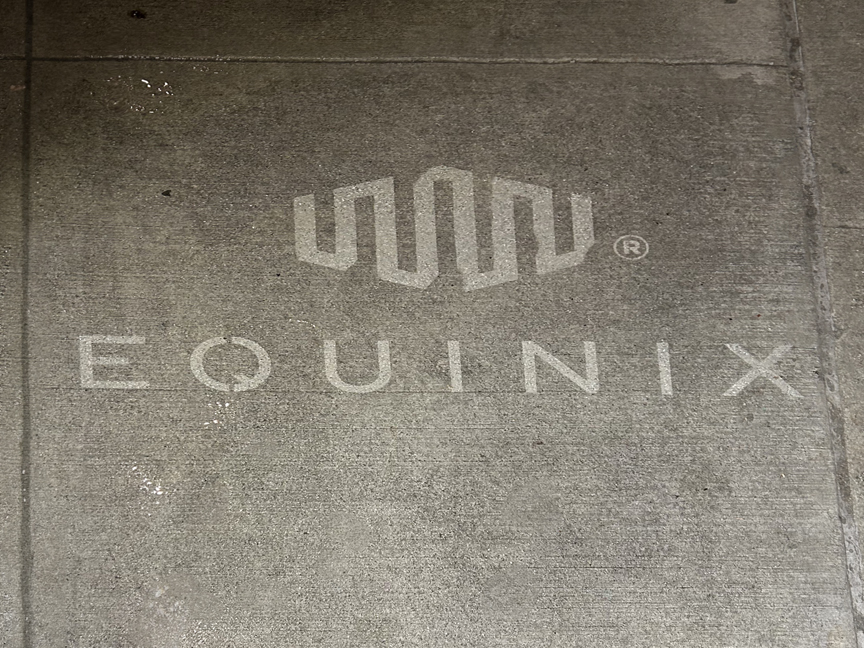
Reverse graffiti advertising creates your brand message by cleaning a surface rather than marking it. No paint. No chemicals. No residue. The message appears in the natural contrast between a dirty surface and the area we clean. When the surface eventually re-dirties evenly, the message disappears on its own.

Reverse Graffiti Advertising

We have been running reverse graffiti campaigns in New York City and across the country since 2010. If you want a street-level campaign that turns heads without leaving a trace, this is the format.

What Is Reverse Graffiti Advertising?

Reverse graffiti advertising is the practice of creating a brand message or image on a dirty surface by selectively cleaning areas of it. The technique works because urban surfaces accumulate grime, soot, algae, and particulate matter over time. When we apply a stencil and use high-pressure water or a cleaning solution to remove the dirt only within the stencil opening, the cleaned area stands out visibly against the surrounding dirty surface. The result is a message that reads as a positive image even though nothing was added to the surface. Everything you see is simply the clean version of what was already there.

The medium is sometimes called clean graffiti or pressure wash stencil advertising, and all three names describe the same technique. At American Guerrilla Marketing, we have used reverse graffiti on sidewalks, on tunnel walls, on parking garage aprons, on building facades, on bus shelter pads, and on the rough concrete columns that support elevated highway structures. Each surface type presents different challenges in terms of baseline grime level, stencil adhesion, and cleaning method, and we tailor our approach to the specific surface at every location we scout.

The appeal for brands is threefold. First, reverse graffiti advertising adds nothing to the environment: no paint, no adhesive, no chemical residue beyond the cleaning agent itself, which is typically biodegradable. Second, it creates a genuinely unexpected visual experience for the people who encounter it. A cleaned shape in a dirty surface is a genuinely unusual thing to see in an urban environment, and that strangeness drives attention and social sharing. Third, the format has an ethical messaging angle that works well for brands with sustainability commitments. You can truthfully say your campaign left the environment cleaner than it found it.

Reverse graffiti campaigns generate higher rates of organic social sharing than most street advertising formats because the visual effect is genuinely surprising. People who encounter a clean-cut brand message in a grimy tunnel or on a dark urban sidewalk take photos almost reflexively. That unprompted documentation extends campaign reach well beyond the physical placement count.

Get a Custom Reverse Graffiti Quote

Tell us your city, your target area, and your campaign goals. We respond within one business day.

How Reverse Graffiti Advertising Works: The Process

The process starts with surface assessment. Not every dirty surface is a good candidate for reverse graffiti. We look for surfaces with consistent grime buildup that will produce a clear contrast when cleaned. A surface that is too clean already will not show enough contrast. A surface with oil-based grime that resists water-based cleaning is also not suitable. Our scouts assess grime type, surface material, and structural condition before we commit to any location.

Once surfaces are qualified, we move to stencil design and production. Reverse graffiti stencils are typically cut from heavy waterproof material because they need to adhere tightly to the surface during the cleaning process. Water pressure from a sprayer can lift a loose stencil and blur the design edges, so we use weighted or adhesive-backed stencil systems depending on the surface orientation and the cleaning pressure required. For horizontal surfaces like sidewalks, we can use gravity to hold flat stencils in place. For vertical surfaces like tunnel walls or building facades, we use an adhesive backing that releases cleanly without leaving residue.

Cleaning equipment varies by surface and grime type. For most sidewalk applications, a commercial-grade pressure washer with a controlled nozzle is the right tool. For tunnel walls and concrete columns, we sometimes supplement water pressure with a biodegradable degreaser to cut through accumulated automotive exhaust particulate. For building facades, we use low-pressure steam cleaning where the surface material is too delicate for direct high-pressure water. Our crews are trained in surface-appropriate cleaning protocols so we do not damage the substrate while creating the campaign impression.

Deployment happens during off-peak hours. For sidewalk placements, we work between 3 AM and 6 AM. For tunnel or underpass placements, timing depends on traffic management requirements at the specific location. We handle all access coordination and present clients with a full deployment photo report within 24 hours of the campaign run.

Step-by-Step: A Reverse Graffiti Campaign

  • Surface assessment and location scout: We physically evaluate candidate surfaces for grime level, material type, and cleaning compatibility. Not every surface works, and we tell you upfront if a desired location is not feasible.
  • Stencil design and production: Waterproof stencil cut to your artwork specifications. Design is proofed before production.
  • Cleaning method selection: Pressure wash, biodegradable degreaser, or low-pressure steam, selected by surface type.
  • Access and timing coordination: Permits, property owner permissions where required, and off-peak deployment scheduling.
  • Overnight deployment: Crews execute all placements in a coordinated window.
  • Post-deployment report: Geo-tagged photography of every placement delivered within 24 hours.
  • Fade monitoring: For longer campaigns, we revisit placements to assess contrast degradation and advise on touch-up cleaning if needed.

Where AGM Deploys Reverse Graffiti Advertising

In New York City, reverse graffiti advertising works particularly well in areas with high pedestrian density and surfaces that accumulate significant atmospheric grime. The tunnel approaches to the Holland Tunnel and the Lincoln Tunnel in Manhattan develop thick grime deposits from vehicle exhaust that make ideal reverse graffiti substrates. The underside of the Williamsburg Bridge approach structure in the Lower East Side, the rough concrete columns supporting the elevated BQE in Brooklyn Heights, and the pedestrian tunnels under the Long Island Rail Road tracks near Penn Station are all surfaces where we have run successful reverse graffiti campaigns.

On sidewalk level in Manhattan, the heaviest grime accumulation tends to be in areas with high vehicle traffic and minimal rainfall clearance: the avenues of Midtown Manhattan (Eighth and Ninth Avenues near the Lincoln Tunnel approach), the Canal Street corridor in Chinatown and Tribeca, and the truck route sidewalks of the Meatpacking District near the loading zones on West 14th Street and Gansevoort Street.

In other cities, tunnel and underpass structures are our most-used reverse graffiti substrates. In Los Angeles, the concrete underbelly of the elevated 110 Freeway through downtown creates visually dramatic reverse graffiti placements that reach heavy pedestrian foot traffic in the Historic Core neighborhood. In Chicago, the lower-level streets under the Loop’s elevated train structure provide dark, grime-heavy concrete surfaces that produce vivid reverse graffiti results. In Philadelphia, the concrete pedestrian underpasses near 30th Street Station are a strong location for campaigns targeting commuters.

Every reverse graffiti placement requires property or jurisdiction assessment before we commit to it. Public surfaces under city jurisdiction, private property surfaces, and MTA or transit authority structures each have different permission requirements. We research and handle permission coordination for every location we scout, and we do not deploy on surfaces where we cannot confirm authorization.

Who Uses Reverse Graffiti Advertising

Environmental brands and sustainability-focused companies are among the most frequent users of reverse graffiti advertising because the format directly reinforces their message. A brand that makes cleaning products, sustainable packaging, or eco-conscious consumer goods can legitimately say their street campaign made the environment cleaner. We have run reverse graffiti campaigns for consumer packaged goods brands with sustainability commitments, organic food companies targeting urban health-conscious demographics, and electric vehicle companies promoting a cleaner transportation message.

Technology companies with environmentally conscious brand positioning use reverse graffiti to reach city-dwelling demographics who are skeptical of conventional advertising. The format’s novelty and its genuinely additive-free character tend to resonate with urban professionals who have strong ad-avoidance instincts. Finding a reverse graffiti impression in an unexpected place creates a discovery moment rather than a disruption, which changes how the brand encounter registers emotionally.

Film studios, record labels, and entertainment companies use reverse graffiti to generate the kind of street-level buzz that social media can amplify. A reverse graffiti impression in a well-traveled tunnel or on a prominent sidewalk near a venue generates photography and sharing at a rate significantly higher than a conventional poster placement. The format works particularly well for horror film releases, where the atmospheric quality of a cleaned image in a grimy surface fits the aesthetic, and for music releases targeting urban audiences who are culturally attuned to street-level creative work.

Sports teams and major league franchises have used reverse graffiti near stadium approaches to build game-day energy. A cleaned stencil of a team logo on the grimy approach sidewalks near Barclays Center in Brooklyn or on the concrete surfaces under the overpasses surrounding MetLife Stadium creates an immersive pre-game environment. Corporate sponsors and partner brands have used the same approach to activate near event venues without the clutter of conventional signage.

Retail brands use reverse graffiti for store openings and traffic-driving campaigns when the brand story calls for something less conventional than a standard poster or banner. A reverse graffiti impression pointing pedestrian traffic toward a new location creates a moment of genuine curiosity rather than a straightforward directional message, which draws attention more effectively from people who would otherwise ignore conventional advertising.

Reverse Graffiti vs. Other Street Advertising Formats

The practical differences between reverse graffiti and other street formats matter when you are deciding which approach fits your campaign goals. Reverse graffiti uses no added materials, which means there is nothing to remove at the end of the campaign. The impression fades naturally as the surrounding surface re-accumulates grime at a uniform rate. This is an advantage for brands that want a clean ending to the campaign without the compliance overhead of removing applied materials.

Chalk stencil advertising is faster to deploy and easier to place on a wider variety of surfaces, but the impression is shorter-lived (three to seven days for chalk, versus two to six weeks for a reverse graffiti impression on a moderately dirty surface). Chalk is better for event-specific campaigns with a defined short window. Reverse graffiti is better for campaigns that need sustained presence over several weeks without requiring re-application.

Paint stencil advertising offers longer visibility (four to eight weeks) and works on clean surfaces that do not accumulate enough grime for reverse graffiti contrast. But paint stencil requires cleanup at campaign end and is subject to more regulatory scrutiny than reverse graffiti in most jurisdictions. Reverse graffiti’s “cleaning” framing has historically been treated more favorably by city authorities, though this varies by market and specific location.

From a pure cost-per-impression standpoint, reverse graffiti performs well in high-grime, high-traffic corridors where the contrast is maximum and foot traffic delivers high daily impression counts. The format generates disproportionate earned media and social sharing relative to its physical footprint, which is why some brands treat it as a content creation tool as much as a placement medium.

Reverse Graffiti Advertising Pricing

Reverse graffiti pricing is not fixed on a standard per-placement scale like our chalk stencil service. The variables that affect cost are surface area of each placement, the cleaning method required, location access complexity, and the number of placements in the campaign. A simple single-placement sidewalk campaign involving a manageable surface area will cost significantly less than a multi-placement tunnel campaign requiring specialized equipment access and extended crew time.

We price reverse graffiti campaigns on a custom basis. When you contact us, we will ask about your target cities and neighborhoods, the size of the impression you are looking to create, your campaign length, and any surface types you have in mind. From those details, we will build a line-by-line proposal that shows exactly what you are paying for. There are no opaque bundled rates with hidden cost components.

Rush timelines (less than five business days from inquiry to deployment) are possible for reverse graffiti but are less accommodating than for chalk stencil campaigns because surface assessment cannot be fully rushed. We always recommend at least two weeks from initial contact to campaign start for reverse graffiti, and four weeks is preferable for multi-location campaigns or placements that require access permissions from property owners or transit authorities.

Custom Quote: Reverse Graffiti Advertising

Pricing depends on surface area, location, and campaign scope.

    Award Winning Personalized Service

    You will get thoughtful, devoted, and individualized attention from our experienced, qualified, and professional personnel. Being one of the most illustrious agencies in Brooklyn, New York, American Guerrilla Marketing has been awarded the Best of Brooklyn title.

    Nationwide

    Industry City, Brooklyn, New York 11232

    American Guerrilla Marketing

    +1 (646) 776-2770

    [email protected]

    Telegram: @americanguerillamarketing

    Hours

    Mon - Fri: 9 AM - 5 PM

    Sat & Sun: Closed

    Automate your campaign with AGM’s Request for Proposal Builder.

    Automate your campaign with AGM’s Request for Proposal Builder. Simply answer a few quick questions about your campaign goals, markets, and timeline, and the system will generate a tailored presentation with recommended strategies, quantities, and pricing. Click the RFP Builder to instantly receive your customized proposal.

    Why American Guerrilla Marketing

    We have been running reverse graffiti advertising campaigns since before most marketing agencies had heard of the format. Our first reverse graffiti deployments were in New York City in the early 2010s, and in that time we have built up the surface-specific knowledge, equipment protocols, and regulatory navigation experience that this medium requires. Reverse graffiti is not a straightforward operation. Surface assessment, grime typing, cleaning method selection, and access coordination each require expertise, and getting any of them wrong produces a campaign that either does not read clearly or creates compliance problems that cost more to address than the campaign was worth.

    Our team physically scouts every location. We do not generate placement lists from satellite imagery or foot traffic data alone. We walk the surfaces, test small cleaning areas, assess grime type, check for surface irregularities that would break a stencil line, and evaluate the ambient lighting at different times of day to confirm that the cleaned impression will be visible in the conditions your audience will encounter it. That physical due diligence is what separates campaigns that perform from campaigns that produce mediocre results and client frustration.

    We are direct about what works and what does not. If you bring us a location that is not suitable for reverse graffiti, we tell you and we suggest alternatives. If your timeline is too compressed for a high-quality reverse graffiti execution, we say so and we offer the format that can actually be done well within your window. Our job is to get your brand onto the street in a way that reflects well on you, not to take every booking regardless of feasibility. Contact us at (646) 776-2770 or [email protected].

    Frequently Asked Questions

    The legal status of reverse graffiti varies by jurisdiction and surface type. On private property with owner permission, it is generally straightforward. On public surfaces, the regulatory picture is more complex. Because reverse graffiti adds nothing to a surface and involves only cleaning, many jurisdictions have treated it as inherently permissible. However, some cities have issued guidance treating selective cleaning for advertising purposes as subject to signage regulations. Our team researches the regulatory environment in every target market before we propose locations, and we do not deploy in locations where we cannot confirm authorization. We have run successful campaigns in New York, Los Angeles, Chicago, and other major markets by working within the specific rules of each jurisdiction.

    Longevity depends on two factors: how dirty the surrounding surface is relative to the cleaned area, and how fast the surrounding area re-accumulates grime. In high-exhaust environments like tunnel approaches and underpass surfaces, a reverse graffiti impression can remain clearly visible for four to six weeks because new grime accumulates on both the cleaned and uncleaned areas, but the differential stays legible for an extended period. On sidewalks in lower-exhaust areas, the contrast may be visible for two to four weeks. Heavy rain can speed up the process by partially cleaning the surrounding surface, reducing contrast. We assess longevity expectations during the surface scout and give clients a realistic range before committing to a campaign.

    The ideal surface has substantial, even grime accumulation and a material that responds well to pressure washing or controlled cleaning. Concrete tunnel walls and underpass columns are our highest-performing surfaces because they accumulate automotive exhaust grime heavily and evenly. Grimy sidewalk concrete in high-traffic pedestrian corridors also works well. Surfaces that are too clean (such as recently pressure-washed plazas), too irregular (such as brick), or too porous (such as exposed aggregate that traps grime too deeply for surface cleaning to reveal contrast) are not suitable. We assess every surface individually before committing to a placement.

    No. For most surfaces, pressure water alone is sufficient. When the grime type requires a cleaning agent, we use biodegradable, non-toxic degreasing compounds that are safe for use on urban surfaces and do not contribute harmful runoff. This is consistent with the environmentally responsible framing that makes reverse graffiti an appealing format for sustainability-oriented brands.

    Reverse graffiti requires a surface color differential created by cleaning. If a surface is painted and the paint itself is dirty, pressure washing may clean the paint without revealing a different underlying color, which can still create a visible contrast if the paint has a distinct dirty-versus-clean appearance. This varies considerably by paint type and grime composition. We test a small section of any painted surface during the scout to evaluate whether the contrast will be legible before we commit to a full placement.

    Pricing is based on surface area of each placement, the cleaning method and equipment required, location access complexity, number of placements, and any permit or property owner coordination costs. We build custom quotes for every reverse graffiti campaign. Call or email us with your target city, preferred surface type, and the number of placements you are considering and we will respond with a detailed proposal.

    Yes. We have qualified crews and vendor partners in New York, Los Angeles, Chicago, Philadelphia, Boston, Austin, Miami, and Washington DC. Multi-city reverse graffiti campaigns can be coordinated to deploy within the same timeframe. We handle all coordination centrally and provide a unified post-deployment report covering all markets.

    Every placement is photographed from multiple angles immediately after completion, with geo-tagged timestamps. We compile a deployment report and deliver it within 24 hours of campaign execution. For longer campaigns, we can schedule follow-up photography at agreed intervals to document how the impression is holding over time.

    American Guerrilla Marketing Blog Posts