
November 25, 2026
Billboards Company: How It Actually Works
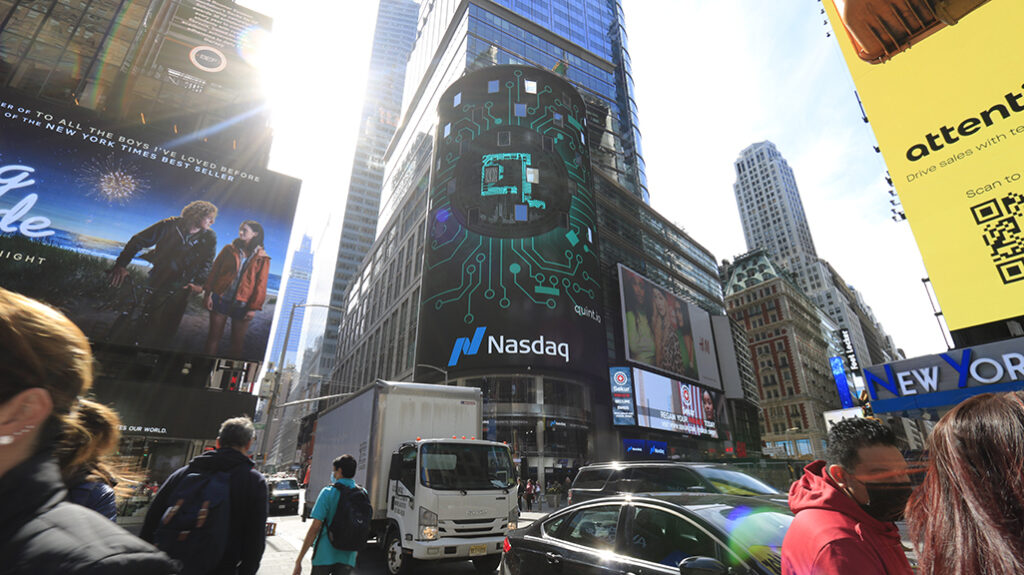
When somebody tells me they are looking for a billboards company, they almost always mean one of two things. Either they have a specific road in mind and want their brand on something beside it, or they have a vague sense that a billboard is what a serious brand does and they want to find out what is involved.
Both are reasonable. Neither survives first contact with the industry, because the industry does not organise itself the way buyers expect. There is no single company that takes your brief and handles everything. There is a chain, and you need to know where you sit in it.
I work the street-level end of outdoor advertising, which means posters, decals, projection and screens on vehicles. I coordinate with the fixed-structure side constantly, because most good outdoor plans use both. What follows is the practical mechanics: who controls what, what happens between signing and seeing your creative in the air, where things break, and the honest list of situations where a billboard is the wrong purchase.
Anatomy of the thing you are buying
A billboard is a structure, a face, a location and a permission, and different parties can control each.
**The structure.** Steel, a monopole or a trestle, a catwalk for crews, usually lighting, sometimes a digital screen instead of a face. Someone owns it.
**The land.** Often not owned by the same party. Structures commonly sit on leased ground, with a lease term and a landowner who has their own interests.
**The permit.** Fixed signage is heavily regulated. Structures sit under local zoning and sign codes, and in many places new ones cannot be built at all. That restriction is exactly why existing inventory holds its value, and it explains why the map of available billboards is a map of where building was once allowed, not a map of where your customers are.
**The face.** The surface your creative goes on. Sized to a standard for that format, with specific bleed and mounting requirements.
**The audience.** Whoever passes, at whatever speed, with whatever view.
When you buy, you are leasing the face for a period. The structure, land and permit stay somebody else's problem, which is a genuine benefit and part of what you are paying for.
Who actually does what
**Media owners** hold structures and screens and sell their own inventory. Their crews install. Fast and direct when you already know the structure you want. The limitation is built in: every recommendation points at something they own.
**Agencies and media buyers** own nothing and buy across owners. They compare locations neutrally, negotiate, handle specs and manage the schedule. Worth their place when you need to know which of three competing locations is genuinely better, or when a campaign spans markets.
**Production houses** print and fabricate. Vinyl, paper, sometimes custom extensions and cut-outs.
**Installation crews** hang it. Sometimes inside the owner, sometimes contracted.
**Street-level operators** like us work the formats that are not structures at all. We do not own highway inventory. We put media into the places structures cannot reach.
Knowing which of these you are talking to is the single most useful thing in a first call. If the answer to every question is that they can handle it, ask which parts they do with their own people.
What happens after you say yes
This is the sequence nobody explains, and the stage where most campaigns lose time.
**Availability and hold.** Good locations are not sitting empty. You identify candidates, the owner confirms availability for a posting period, and a hold is placed. Posting periods on static inventory typically run four weeks, because that is how crews schedule changeovers.
**Spec issue.** You receive exact dimensions, bleed, resolution and material requirements for that specific face. These are not generic. A face on one structure is not interchangeable with a face on another.
**Creative to spec.** Your designers rebuild the artwork at the correct size and proportion. Not resize. Rebuild, because type weight and copy length that worked at one scale rarely survive another.
**Approval.** Owners review content against their standards. Rejections happen and they cost days.
**Production.** Printing on vinyl or paper. This is where colour becomes a real issue: large-format print does not reproduce a screen colour exactly, and at building scale a slightly wrong brand colour is obvious. If colour carries your identity, ask for a printed draw-down on the actual substrate before the full run.
**Shipping.** Material has to physically arrive at the right depot before the posting window.
**Installation.** Crews work routes of structures within a defined period, which is why your start date is a window rather than a moment. Weather moves it. High wind stops work entirely, because somebody on a catwalk is handling a sheet of material that behaves like a sail. Vinyl is stretched and tensioned onto the face; badly tensioned vinyl ripples, and ripples are visible from the road.
**Proof of posting.** A dated photograph of your creative on the specified structure. Insist on this. It is the only evidence the buy delivered.
Add it up and six to eight weeks from decision to live is a normal planning assumption for static formats. Digital compresses this substantially, since no physical material exists. Street-level formats compress it further, often to a couple of weeks.
Late artwork is the most common cause of a missed start date in this entire industry, and it is almost always the advertiser's side that is late.
Static or digital
The decision is usually made on the wrong basis, which is that digital sounds more modern.
**Static** gives you the whole face for the whole posting period. Your creative is there continuously, every time somebody passes, for four weeks. That continuity is the format's real strength and it is often undervalued.
**Digital** gives you speed, day-parting, rapid creative changes and the ability to respond to conditions. The trade is that you occupy a share of a rotation. If eight advertisers are in the loop, your creative is on screen for a slice of each cycle. That is not inferior, but it is different from what most buyers picture, and the pitch rarely foregrounds it.
The question to ask before buying any screen: how many advertisers are in the rotation and how long is each slot. Then decide whether that share matches what you imagined.
Digital suits time-sensitive messages, short campaigns, countdowns, multiple creative variants and anything that benefits from changing by hour. Static suits sustained presence on a commute route.
Where billboards genuinely win
I am not here to talk you out of them.
Scale and credibility. Nothing makes a brand look as established as a large, well-placed board. That effect is real and street media does not replicate it.
Guaranteed, documented placement. Exact structure, exact dates, photographic proof. When a stakeholder needs certainty, this matters more than anything else.
Repetition on commute routes. The same drivers pass the same board twice a day for weeks. That frequency is hard to buy any other way.
Geographic anchoring. A board on the approach to a location drives awareness of that location simply and reliably.
If your campaign is broad awareness against a driving audience with a comfortable lead time, buy boards.
Where they fall down, and what we do instead
**Pedestrian audiences.** Roadside inventory is built around vehicle traffic. Dense walking neighbourhoods, nightlife corridors, campus edges and transit-heavy districts are full of people who will never pass your board. [Wheatpasting & Poster Campaigns] covers exactly this, at eye level, at whatever density you choose.
**Precision.** If the objective is the six blocks around one venue, the structures may not be there. Street media goes where you point it rather than where permitting once allowed.
**Speed.** A three-week lead usually rules out the static catalogue entirely.
**Specific moments.** A structure cannot be outside an arena for two hours before doors and then somewhere else. A vehicle can, which is most of why [LED Trucks & Mobile Billboards](/services/led-trucks-mobile-billboards) exists as a category. A mobile screen is a billboard that chooses its own location and changes it hourly. The trade is duration: hours rather than weeks, but hours you select.
**The last few metres.** Nothing at highway scale helps somebody standing outside your door deciding whether to come in. [Sidewalk Decals & Stencils](/services/sidewalk-decals-stencils) work at exactly that distance.
How a mobile billboard route actually runs
Since this is the alternative I recommend most often, here is what it looks like as a job rather than as a photograph.
A vehicle format is a driver, a screen or a printed panel, and a route. The route is the whole product. Everything else is equipment.
Building a good route starts with where the screen will be seen while stationary or moving slowly, because that is when it is read. Covering distance is not the objective. A route that looks efficient on a map frequently fails in practice, because the productive hours get spent on fast-moving road where nobody is looking sideways, or stuck in a stretch with no pedestrians at all.
So we build around dwell. Junctions with long signal cycles. Queued traffic on approach to a venue. Retail streets at walking pace. Defined parking positions near an entrance during the window when people are arriving. Those positions have to be genuinely viable for a vehicle to occupy, which is a question you answer by going and looking, not by reading a map.
Timing is the other half. Event ingress is a short, dense window, and arriving twenty minutes late means missing most of it. Lunchtime in a business district is a real window. Late evening on a nightlife strip is a real window. Mid-morning on an arterial road is usually not.
Brightness on a screen is scheduled rather than set once, because the same creative that looks balanced at dusk is glaring at midnight and washed out at noon.
Documentation is a route log with timestamped photographs at the dwell points, so you can see where the vehicle actually was and when.
Measuring a billboard buy honestly
The industry quotes impressions. Understand what that figure is before you build a case on it. For most formats it is modelled: traffic or movement data adjusted for visibility factors, producing an estimate of likely exposure. It is a fair basis for comparing one location against another and a poor basis for a precise claim.
What is genuinely solid is documented placement, which you should treat as the baseline deliverable on any format.
Beyond that, the most honest read available for physical media is a geographic comparison. Run in one market or one set of corridors, deliberately not in a comparable one, and watch the difference. Without a control you are comparing a campaign period against a previous period, which mixes your media up with the season, the news and your own promotions.
Brand search volume in the treated area, measured against both its own baseline and the untreated area, is the clearest supporting signal. A board cannot be clicked, but it can be remembered and typed in later.
What we talk clients out of
**One board in a large market.** It will be seen by the people who drive past it and nobody else. If the plan supports only one structure, it almost always supports a street-level campaign with far wider coverage instead. I say this even though the board is easier to justify internally, because the internal justification is not the same as the result.
**Too many words.** Universal across every outdoor format. A driver at speed reads a handful of words. The most common revision we request is less text and bigger type.
**Buying location from a map.** A board that looks perfect on a map can be obscured by a tree, angled away from traffic, or stacked behind another structure. Ask for approach photographs taken at the time of day your audience passes. They settle the question in a minute.
**Ignoring the surround.** Your creative sits inside a frame, against sky, beside whatever else lines that road. Art that tested beautifully on a white slide can disappear against a bright sky or clash with what is behind it.
**Long static buys behind short offers.** A four-week minimum does not serve a ten-day promotion. Either the message stretches or the format changes.
**One asset across every format.** A bulletin, a poster, a decal and a vehicle screen each need their own crop, type weight and copy length. Resizing one asset loses the small formats completely.
**Lighting assumptions.** Not every structure is illuminated. If your audience passes mainly in darkness, confirm it before you buy, because an unlit board in winter is a daytime-only purchase.
Permission, ordinance and the grey area
Fixed structures come with their permissions settled. Zoning, sign codes and the permit are the owner's responsibility. That is part of the value and worth naming clearly.
Street-level formats are a different and much greyer picture. Rules vary by municipality and sometimes by district within one city. Enforcement is inconsistent. Whether a specific placement is a problem depends on who owns the surface, what the local ordinance says, and whether permission was obtained. I will not describe anything as legal or illegal, because that turns on local facts and is not advice I can responsibly give.
What I can describe is the discipline. We work private surfaces with owner permission wherever the campaign allows: property managers, construction firms, independent retail, venue operators. We exclude residential frontage, places of worship, memorials, historic facades and anything damaged by removal. We commit to a removal pass at the end of the run and we carry it out, because an operator who comes back and strips the hoarding gets invited back and one who leaves paper shredding in the weather closes the corridor for everybody. Every placement is photographed, geotagged and timestamped.
Vehicle formats sit in a more conventional picture. A truck is a vehicle, driving and parking under the same rules as other vehicles, with commercial display and standing time varying by city.
How to brief whoever you hire
Have these ready before the first call.
The geography, stated as corridors, neighbourhoods, venues and routes rather than as a city name.
The window, with the real start date and whether it moves. This single fact determines what is available to you.
The objective in one sentence. Brand awareness, traffic to a location, attendance at a date, product trial. Each produces a different plan.
Whether your audience drives or walks. This selects the format category before anything else.
What creative exists and whether it can be rebuilt to format specs.
Who approves, and how quickly. Approval speed decides whether a tight timeline is real or imaginary.
If a company cannot explain why its recommendation fits your objective, rather than why its inventory is good, keep looking.
Frequently asked questions
What does a billboards company actually control?
It depends which kind you are talking to. A media owner controls specific structures, their permits and their installation crews, and sells only its own inventory. An agency controls none of that and instead plans and buys across multiple owners. Production and installation are sometimes in-house and sometimes contracted. Ask which functions a company performs with its own people.
How long does it take to get a billboard up?
Six to eight weeks is a realistic planning assumption for static formats, covering availability, specs, creative rebuilt to size, owner approval, printing, shipping and the next installation round. Digital screens are much faster because nothing is physically produced. Street-level poster campaigns and vehicle routes can often run within a couple of weeks.
Is static or digital better?
Different, not better. Static gives you the entire face continuously for the posting period, usually four weeks. Digital gives you speed, day-parting and creative changes, but your spot occupies a share of a rotation shared with other advertisers. Ask how many advertisers are in the loop and how long each slot runs before deciding.
Can a small local business use billboards?
Sometimes, when a structure happens to sit on the approach to your location. Often not, because structures exist where zoning historically allowed them rather than where your customers are. A tight radius around one location is usually served better by street-level media, which can be placed precisely rather than rented where inventory happens to exist.
What is a mobile billboard and when is it the better choice?
A large screen mounted on a vehicle, driven on a planned route with defined dwell points. It is the better choice when your audience is spread across a car-dominated market with no useful structures, when your moment is time-specific such as event ingress, or when your lead time is too short for the static catalogue.
How do I verify the campaign ran?
Proof of posting is standard on fixed inventory: a dated photograph of your creative on the specified structure. Digital screens produce play logs. Street-level work produces geotagged, timestamped photographs of every placement, plus a mid-run pass reporting what is still standing. Agree the documentation standard before the campaign starts rather than afterwards.
Request a campaign quote
Tell us the corridors, the dates and whether your audience drives or walks, and we will tell you honestly whether a structure is the right purchase, where it leaves gaps, and what the street-level and mobile layers should look like around it.
Request a campaign quote.

Ready to Run Your Campaign?
Call us or email us. We’ll tell you exactly what we can do in your market and what it costs.
Related Services
Explore similar advertising solutions offered by American Guerrilla Marketing.
American Guerrilla Marketing — Los Angeles
Street-level campaigns in Los Angeles and nationwide. Wheatpasting, LED trucks, street teams, and more.
(646) 776-2770
Related Articles
-
LED Trucks & Mobile Billboards in Long Beach
November 25, 2026
-
Mobile billboard: How It Actually Works
November 25, 2026
-
LED Trucks & Mobile Billboards in Los Angeles
November 25, 2026
-
Mobile Billboard Advertising Explained for Brand Marketers
November 25, 2026
-
Planning LED Trucks & Mobile Billboards in Lexington
November 24, 2026