American Guerrilla Marketing
Nationwide Service
Media planning, media buying, billboard advertising, & guerrilla marketing
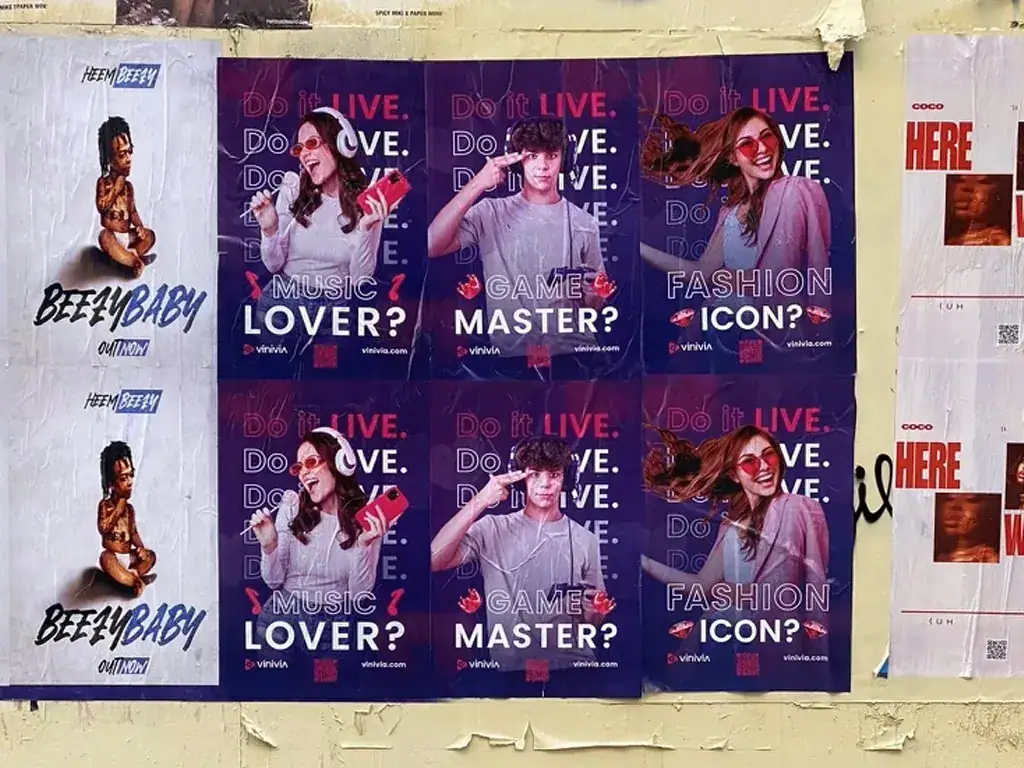
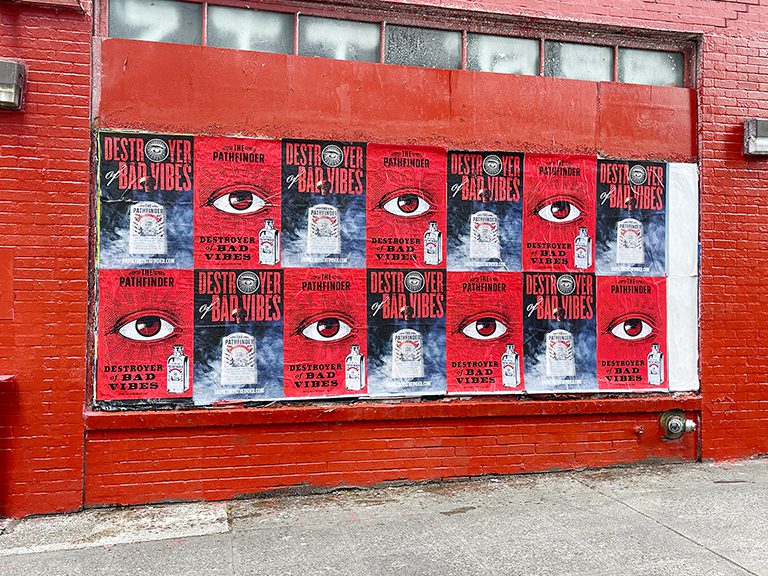
Franklin Street is Evansville’s live music and entertainment spine — a concentrated corridor of bars, venues, and arts-adjacent businesses where wheat paste poster campaigns saturate the pedestrian environment that matters most. Haynie’s Corner adds arts district depth. AGM installs, documents, and delivers.
Evansville built its identity as southwestern Indiana’s cultural capital around a live music and entertainment ecosystem that punches well above its city-size weight class. Franklin Street — the beating heart of that ecosystem — runs through a dense concentration of music venues, bars, restaurants, and arts-adjacent businesses where pedestrian foot traffic peaks on Thursday through Saturday evenings and sustains through weekend afternoons. The physical character of the corridor — building walls, blank facades along the entertainment strip, construction barriers at renovation sites — provides consistent fly posting surface inventory in exactly the geography where the 21-35 entertainment consumer spends leisure time and is receptive to brand discovery through street-level visual communication.
This isn’t generic Midwestern commercial density. Franklin Street has character — the kind that makes pedestrians slow down, look around, and notice what’s on the walls. A wheat paste poster campaign that earns placement in this environment doesn’t compete with a cluttered billboard landscape or a digital ad auction. It occupies the same visual register as the show posters, gallery announcements, and community-event flyers that Franklin Street’s audience already navigates as part of their cultural life in Evansville. That cultural fluency makes the street advertising environment here unusually receptive for entertainment brands, consumer lifestyle campaigns, and anything targeting a 21-35 audience that self-identifies as arts-aware.
Haynie’s Corner Arts District adds a second campaign dimension with a distinct demographic profile — more gallery-oriented, more arts-professional, and more creative-economy focused than the bar-and-venue concentration of Franklin Street proper. Together, the two corridors give fly posting campaigns in Evansville layered targeting capability that covers most of the demographic range that arts-forward, entertainment, and lifestyle brands need to address in this market.
American Guerrilla Marketing executes Evansville campaigns with in-house print production and installation crews, GPS-documented reporting, and no subcontractors involved in any stage of the campaign. Every poster goes up through AGM’s direct execution infrastructure, with proof-of-placement photography documenting the full campaign before the first performance metric is calculated.
AGM executes fly posting and wheatpasting campaigns on Franklin Street, in Haynie's Corner, and across downtown Evansville with in-house installation crews and GPS-documented proof of placement. Your campaign is one conversation away.
Select a city to explore Fly Posting Advertising opportunities.
Evansville sits at the southwestern corner of Indiana in a geographic position that makes it the commercial and cultural anchor for a regional catchment that crosses state lines. The Ohio River marks Evansville’s southern boundary, with Henderson, Kentucky immediately across and a broader regional audience from western Kentucky treating Evansville as the primary destination for entertainment, dining, and events that smaller Kentucky communities can’t provide. This cross-border draw extends a fly posting campaign’s natural reach beyond Evansville’s city limits — creating a pedestrian audience that includes regular visitors from communities on the Kentucky side of the river who are already present on Franklin Street on weekend evenings.
The University of Evansville campus sits within walkable distance of the Franklin Street entertainment corridor. UE’s enrollment of approximately 1,600 full-time undergraduates is modest by state flagship standards, but the campus’s proximity to Evansville’s entertainment core means students are physically integrated into the entertainment district rather than isolated in a campus bubble. The Franklin Street corridor simultaneously reaches UE students walking from campus and the broader young adult entertainment population who live in Evansville’s surrounding residential neighborhoods. That dual-demographic reach within a single corridor footprint is a meaningful campaign efficiency that larger markets with isolated campuses don’t offer.
The University of Southern Indiana, located on the western edge of Evansville, adds a second collegiate demographic layer. USI enrolls more than 12,000 students, with a significant portion of the student body living in or regularly visiting Evansville’s entertainment districts. The combined collegiate and young professional population that concentrates in Evansville’s entertainment corridors on evenings and weekends creates the kind of pedestrian density that transforms a good fly posting market into an excellent one.
The Ford Center arena anchors the downtown entertainment ecosystem, with a capacity approaching 11,000 for concerts, minor league hockey, and touring events. Concert nights at the Ford Center generate predictable post-show pedestrian spillover toward Franklin Street and the downtown bar corridor — creating a specific event-adjacent campaign window that AGM accounts for when scheduling installation timing for entertainment brand activations in Evansville.
Franklin Street is where Evansville’s live music culture concentrates. The corridor functions as the city’s primary evening entertainment destination — a strip of bars, music venues, restaurants, and arts-adjacent spaces that generates consistent Thursday-through-Saturday pedestrian foot traffic from the young adult, student, and entertainment-going audience that every lifestyle, entertainment, and consumer brand wants to reach. The physical environment along Franklin Street provides solid fly posting surface availability: blank building walls, plywood construction barriers at renovation projects, and facade sections between storefronts where wheat paste poster placements earn visibility across a corridor that pedestrians walk end-to-end rather than arriving and departing from a single point. A well-executed 24×36 campaign with multiple poster positions across Franklin Street’s entertainment strip builds impression depth through repeated exposure for the same pedestrian on multiple visits over the campaign’s run.
Entertainment launches, show announcements, festival promotions, streaming platform campaigns, and consumer brands with music or nightlife adjacency find Franklin Street an environment where their messaging lands in natural context rather than as an interruption. The audience walking this corridor on a Friday night is already in discovery mode — looking for what’s on, what’s new, and what’s worth their attention. A strong wheat paste poster campaign positions a brand inside that discovery process rather than competing against it from the outside.
Haynie’s Corner occupies a compact geography in Evansville’s northwest quadrant, anchored by a concentration of galleries, indie cafes, arts event spaces, and creative-economy businesses that have found a home in the neighborhood’s Victorian-era commercial buildings. The demographic profile here runs toward arts professionals, independent creatives, young families with cultural affiliations, and the gallery-adjacent cultural consumer who attends openings, frequents independent coffee shops, and engages with aesthetically sophisticated brand executions. This is a different audience from Franklin Street’s bar-and-venue crowd — it’s quieter, more curated, and more receptive to campaigns that lead with concept rather than volume.
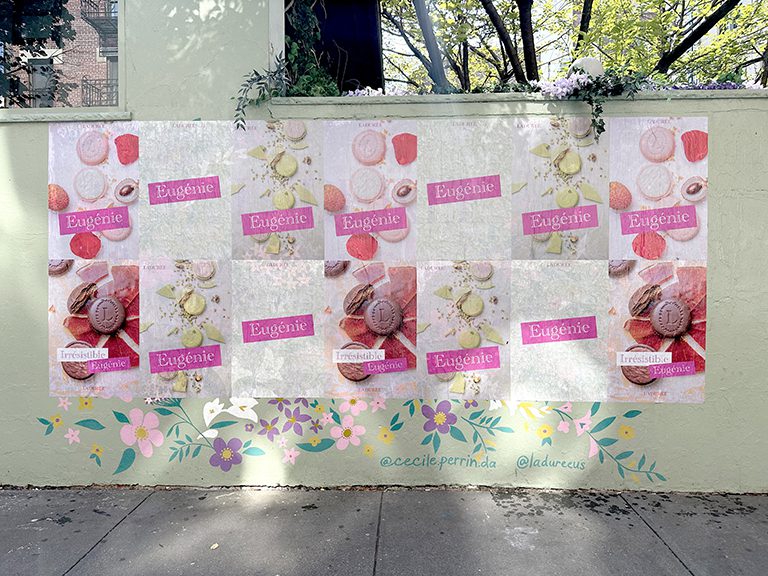
Wheat paste poster campaigns in Haynie’s Corner benefit from a neighborhood visual culture that already treats street art and poster displays as part of the district’s aesthetic identity. Visually ambitious creative executions land in this environment as cultural participation rather than advertising intrusion — a distinction that changes how brand encounters register with the audience. For brands where creative quality is as strategically important as placement precision, Haynie’s Corner offers a canvas that rewards well-executed design.
Downtown Evansville provides a third campaign zone with broader demographic composition than either Franklin Street or Haynie’s Corner. The commercial core includes government buildings, corporate offices, the Old National Events Plaza, mixed retail, and the Ford Center, generating a weekday professional pedestrian population supplemented by event-going crowds on evenings and weekends. The demographic mix — working professionals on their lunch hour, event attendees before and after Ford Center shows, weekend visitors exploring the waterfront — rounds out campaign reach beyond the more specialized corridor demographics of the two arts-adjacent districts.
Downtown’s foot traffic profile makes it useful for campaigns targeting a broader Evansville demographic: professional services building local awareness, political campaigns reaching city voters, consumer goods brands with wide demographic appeal, and entertainment brands whose audience extends beyond the 21-30 Franklin Street demographic into the 30-45 professional and event-going population. Downtown and Franklin Street together give Evansville campaigns a layered demographic reach that single-corridor strategies can’t achieve.
Award Winning Personalized Service
You will get thoughtful, devoted, and individualized attention from our experienced, qualified, and professional personnel. Being one of the most illustrious agencies in Brooklyn, New York, American Guerrilla Marketing has been awarded the Best of Brooklyn title.
Nationwide
Industry City, Brooklyn, New York 11232
American Guerrilla Marketing
Hours
Mon - Fri: 9 AM - 5 PM
Sat & Sun: Closed
Automate your campaign with AGM’s Request for Proposal Builder. Simply answer a few quick questions about your campaign goals, markets, and timeline, and the system will generate a tailored presentation with recommended strategies, quantities, and pricing. Click the RFP Builder to instantly receive your customized proposal.
The University of Evansville campus sits within a walkable commute from Franklin Street, making the campus-edge streets along Lincoln Avenue and surrounding corridors a natural extension of the entertainment district’s reach into the student body. Placements in the campus-edge zone intercept UE students during the daily movement patterns between academic buildings, the residential and dining core, and the off-campus entertainment and food options that Franklin Street provides. A student who encounters a wheat paste poster on their walk toward campus in the afternoon and then sees the same creative again on Franklin Street that evening receives a two-impression exposure sequence within a single day — the kind of repetition that builds brand recall without requiring a campaign to flood a single zone with poster density.
UE’s academic programs concentrate heavily in liberal arts, business, and pre-professional tracks — creating a student consumer profile that skews toward culturally engaged, brand-aware, and entertainment-oriented consumers rather than the engineering or pre-med demographics that dominate STEM-heavy campuses. Entertainment launches, consumer apps, lifestyle brands, and creative-economy companies find UE’s student body particularly receptive to visually distinctive street poster campaigns that meet the aesthetic standard the audience brings from their academic and arts exposure. The relatively compact UE enrollment means a campus-edge campaign achieves saturation within that community more quickly than it would on a flagship state university campus ten times the size — efficient targeting with measurable saturation achieved at a lower poster count.
The University of Southern Indiana’s larger enrollment on Evansville’s west side adds a secondary academic demographic target. USI students in off-campus housing across Evansville regularly move through the Franklin Street corridor and downtown for entertainment, dining, and social activity — extending the student demographic’s contribution to these corridors beyond UE’s enrollment alone. Combined, Evansville’s two university communities make the entertainment district pedestrian population significantly younger and more brand-discovery-oriented than the city’s overall population age distribution would suggest.
Evansville’s position on the Ohio River creates a cross-state regional draw that no other Indiana city below Indianapolis can match. Henderson, Kentucky — a community of approximately 30,000 people immediately across the river — regularly sends residents to Evansville for entertainment, dining, and retail options unavailable at Henderson’s scale. Owensboro, Kentucky, located east along the river, and communities in northwestern Kentucky and southern Illinois contribute regular visitors to Evansville’s commercial and entertainment ecosystem. This cross-border regional audience shows up on Franklin Street on weekend evenings, at the Ford Center for major events, and in Haynie’s Corner for arts programming — extending a fly posting campaign’s reach to an audience that will never encounter advertising targeting Evansville-specific digital geographies.
For brands with regional rather than narrowly Evansville-specific geographic objectives, this cross-border audience represents genuine added campaign value. A Franklin Street fly posting campaign reaches both Evansville residents and Kentucky-border visitors who are already present in the entertainment corridor — expanding geographic reach into neighboring state audiences without requiring installation infrastructure across the river. The cost-per-impression economics shift favorably when a campaign placed in Evansville reaches Henderson visitors who don’t live in Indiana but are physically present in Evansville’s advertising environment on a weekend night.
Summer Ohio River events concentrate this regional audience during specific campaign windows. Evansville’s riverfront programming through June, July, and August draws attendance from both sides of the state border, making summer campaign timing particularly valuable for brands targeting the combined regional audience rather than a narrowly defined Evansville city resident target. Evansville Riverfest and other seasonal outdoor events generate pedestrian activity that positions fly posting campaigns in front of an audience that’s already in an exploratory, entertainment-receptive mindset.
Franklin Street’s entertainment corridor rewards 24×36 saturation campaigns. The format’s density allows multiple poster positions within a four-to-six-block entertainment strip, building the layered visual presence that distinguishes a campaign from a single placement. Pedestrians who walk Franklin Street repeatedly over a campaign’s one-to-two-week run encounter the creative multiple times across different positions — creating the impression accumulation that generates brand recall in an environment where a single encounter doesn’t reliably stick. At 100 posters for contact us for pricing or 200 posters for contact us for pricing the 24×36 campaign delivers Evansville coverage depth at a cost that makes street poster advertising genuinely accessible for entertainment companies, independent labels, regional brands, and consumer-product campaigns that don’t have major-market budget requirements.
The 48×72 format earns its place at specific landmark positions — the edges of the Ford Center entertainment zone, high-visibility wall sections at the intersections that anchor Franklin Street’s busiest blocks, or in Haynie’s Corner at a building scale where the larger format fits the architecture rather than overwhelming it. Large-format pieces in Evansville create a different kind of street presence than the saturation approach: they’re singular statements at specific high-value positions rather than distributed impressions across a corridor. For brand launches, entertainment campaigns announcing a major release, or political campaigns needing dominant visual presence in key precincts, the 48×72 delivers the visual authority that 24×36 campaigns achieve through accumulation.
Campaigns that combine both formats — 24×36 coverage across Franklin Street and Haynie’s Corner with 48×72 anchor placements near the Ford Center or at the corridor’s signature building positions — achieve both broad reach and landmark dominance simultaneously. AGM’s installation teams plan format mix based on available surface inventory and campaign objectives during the pre-campaign neighborhood mapping process.
The University of Evansville academic calendar anchors the student demographic window — September through April represents peak campus activity, with late August move-in and back-to-school week creating a particularly high-value installation window for brands targeting incoming students establishing purchasing habits and brand loyalties in their first weeks of college life. A wheat paste campaign in the campus-edge corridor during the first two weeks of fall semester intercepts new UE students while they’re actively exploring their neighborhood environment and forming first impressions of Evansville’s commercial landscape.
Summer brings a different campaign logic. With the academic-year student demographic reduced during June through August, summer campaigns in Evansville rely on the Ohio River events calendar and Evansville’s own festival programming to maintain pedestrian density. Evansville Riverfest and the broader riverfront events calendar draw regional audiences from Kentucky and neighboring Indiana communities — replacing the academic-year student foot traffic with a regional entertainment audience that includes demographics the academic calendar alone doesn’t reach, particularly 25-40 adults with event-going habits and the discretionary income that university students typically lack.
Ford Center events — concerts, minor league hockey games with the Evansville Thunderbolts, touring shows, and arena events — create predictable pedestrian concentration windows throughout the year that AGM factors into campaign installation scheduling. Pre-event and post-event foot traffic around the Ford Center and spilling toward Franklin Street’s after-show bar scene represents a high-attention moment for street poster exposure — audiences arriving at or departing from the entertainment zone where fly posting campaigns have maximum contextual relevance.
Holiday and seasonal shopping periods bring downtown Evansville pedestrian activity that creates additional brand exposure for campaigns running from Thanksgiving through the new year. Brands in retail, consumer goods, and gift categories find the December downtown pedestrian environment provides extended campaign visibility into a commercially active audience beyond the typical entertainment and student demographic windows.
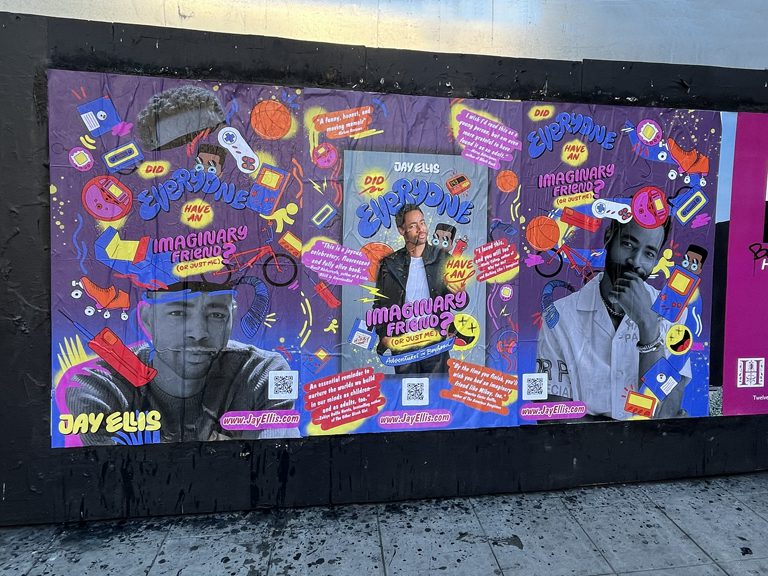
The logic behind Jay Ellis’s wheatpasting campaign in Manhattan maps directly to what makes Evansville’s Franklin Street an effective entertainment corridor target. That campaign concentrated street poster presence in Williamsburg, the Lower East Side, and Hell’s Kitchen — neighborhoods defined by live music venues, bars, and entertainment-adjacent pedestrian culture where the target audience for an entertainment release actually spends leisure time. Franklin Street operates on the same principle at Evansville’s scale: the audience that entertainment brands need to reach is already here, already oriented toward discovery, and already engaging with the physical street environment as part of how they navigate their cultural life. Street posters in this context land as belonging, not advertising.
Netflix’s wheatpasting campaign approached entertainment corridor saturation with the scale-and-repetition logic that makes street poster work effective for major launches — concentrating visible poster presence across high-pedestrian entertainment zones so that encounter becomes inevitable rather than incidental. For streaming platforms, record labels, and entertainment brands activating in Evansville, the Franklin Street environment offers a corridor where that saturation logic applies: the audience pool is bounded, the geography is walkable, and repetition across a week-long campaign run compounds into brand recall that a single placard could never achieve.
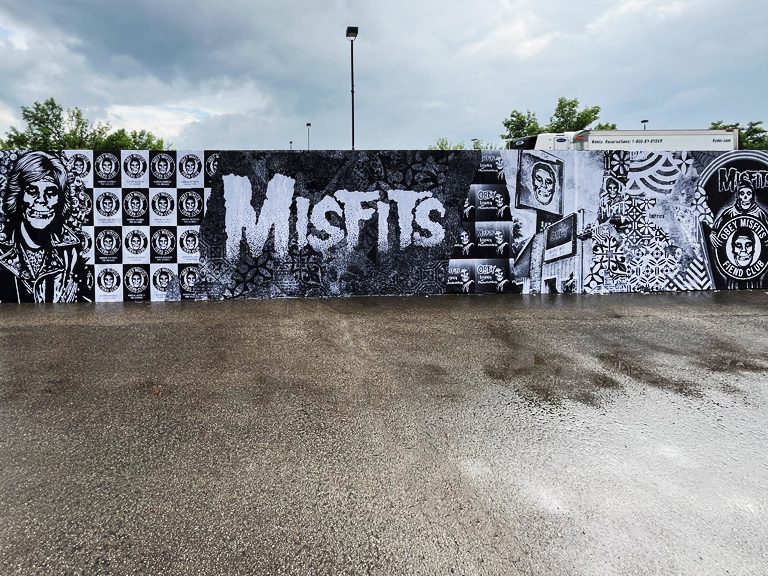
Shepard Fairey’s installation work at Sonic Temple Festival 2024 demonstrated something relevant for Haynie’s Corner activations specifically — that arts-adjacent street poster work can function as cultural expression within an environment that already treats street imagery as part of its visual identity. Haynie’s Corner’s gallery culture and arts-community aesthetic creates the same kind of receptive environment: campaigns executed here with visual ambition and genuine creative quality earn neighborhood acceptance in a way that transactional advertising formats never achieve in arts districts.
Live music promoters and touring entertainment brands are the most natural fit for Evansville fly posting campaigns. The Ford Center concert calendar and Franklin Street’s venue ecosystem create a ready audience of entertainment consumers who already engage with show poster culture as part of how they track what’s happening in the city. A fly posting campaign announcing a major show or festival activation at the Ford Center or an independent venue on Franklin Street reaches this audience in the exact environment where they make entertainment decisions.
Consumer goods brands targeting the 21-30 bar-and-entertainment demographic — breweries, spirits, lifestyle apparel, casual food and beverage — find Franklin Street’s concentration of entertainment consumers a natural match for campaigns that position the brand alongside the cultural activities the target audience prioritizes. Regional consumer brands building southwestern Indiana market presence use Evansville as the anchor market for coverage that extends through the Ohio River regional catchment into neighboring Kentucky communities.
University-targeted campaigns for consumer apps, financial services, music platforms, and student-oriented products reach both UE and USI student demographics through campus-edge corridor placements that intercept students during daily movement patterns. Political campaigns reaching Evansville city voters and Vanderburgh County precincts have used fly posting as a street-level awareness tool in neighborhoods where traditional mail and digital targeting doesn’t achieve comparable pedestrian visibility. Advocacy organizations and civic campaigns also find Evansville’s pedestrian corridors effective for message saturation in the community contexts where their audience engages with neighborhood-level communication.
AGM’s Evansville campaigns begin with a neighborhood mapping session that identifies the specific installation zones within Franklin Street, Haynie’s Corner, downtown, and campus-edge corridors based on the campaign’s targeting objectives. Surface availability in Evansville — blank building sections, plywood barriers at active renovation sites, and approved posting structures — is assessed during this planning phase to ensure production quantities align with realistic installation capacity in the targeted zones. This eliminates the waste that occurs when campaigns over-produce posters for surfaces that don’t exist at the required density.
All printing happens in-house at AGM. There are no third-party print vendors, no outsourced production, and no timeline uncertainty created by external fulfillment dependencies. For Evansville campaigns timed to specific events — Ford Center shows, Riverfest, UE back-to-school week — production timelines under AGM’s direct control are what make same-week or 72-hour rush installations feasible.
Installation crews arrive in Evansville with wheat-based adhesive and complete all placements within the campaign’s designated timing window. The adhesive bonds securely to approved urban surfaces and remains removable by pressure washing — a practical environmental consideration that building owners and property managers appreciate as the operational reality of the city’s outdoor surfaces. Each installation is photographed with GPS-tagged documentation at the time of posting, creating an immutable record of placement location, surface condition, and installation quality for every poster in the campaign.
Post-campaign reporting is delivered as a complete package — installation location records, proof-of-placement photographs, and timing documentation organized by campaign zone. AGM’s reporting doesn’t function as an afterthought to the installation; it’s the documentation layer that makes street poster advertising defensible to CFOs, brand managers, and marketing directors who need evidence of execution before the next campaign budget conversation happens.
Franklin Street concentrates Evansville’s live music venues, bars, restaurants, and arts-adjacent businesses into a walkable entertainment corridor where Thursday-through-Saturday pedestrian foot traffic reaches its city-wide peak. The consistent evening and weekend audience composition — young adults, UE and USI students, entertainment consumers, and Ohio River regional visitors — makes it Evansville’s highest-density demographic target for fly posting campaigns aimed at the 21-35 entertainment consumer segment. The corridor’s pedestrian character means repeated exposure over a campaign’s run rather than single-incident encounters at high-speed traffic positions.
Haynie’s Corner and Franklin Street serve different parts of Evansville’s young adult and creative demographic. Franklin Street delivers entertainment consumer density — bar-goers, concert attendees, and nightlife participants predominantly in the 21-30 range. Haynie’s Corner delivers arts professional and creative community reach — gallery visitors, independent cafe regulars, and creative-economy workers in a neighborhood that treats street imagery as part of its visual identity. Campaigns targeting creative professionals, arts organizations, premium lifestyle brands, and consumer categories where creative credibility matters often find Haynie’s Corner a more precise target than Franklin Street’s broader entertainment consumer base.
The University of Evansville campus is within comfortable walking distance of the Franklin Street entertainment corridor — close enough that UE students regularly travel between campus and Franklin Street for off-campus dining, bar visits, and entertainment. Campus-edge corridors along Lincoln Avenue and nearby streets provide installation opportunities that intercept students during daily movement patterns before they reach Franklin Street. This proximity creates an efficient dual-coverage strategy: campus-edge placements reach the student body in their academic environment, and Franklin Street placements reach the same demographic in their leisure environment, building impression depth across two distinct daily contexts.
Yes. Henderson, Kentucky residents treat Evansville as their primary regional destination for entertainment, dining, and events that Henderson’s smaller commercial base can’t provide. This cross-border audience shows up on Franklin Street on weekend evenings as a regular component of the corridor’s pedestrian population — meaning an Evansville fly posting campaign reaches Kentucky-border visitors without requiring additional installation infrastructure across the river. The regional audience reach is real but unpredictable, as it depends on Kentucky visitors being physically present in Evansville rather than being targeted through a geographic digital boundary.
The fall and spring academic semesters are strongest for UE student demographic targeting — September through November and February through April deliver peak campus foot traffic in the entertainment corridor. Summer campaigns trade student foot traffic for Ohio River regional event audience activity, with Riverfest and summer waterfront programming maintaining pedestrian density through June and July. Ford Center event-adjacent campaign timing works year-round, with major touring acts and the Thunderbolts hockey season providing specific high-traffic windows throughout the calendar.
Riverfest draws significant regional attendance to Evansville’s waterfront and downtown areas, bringing pedestrian density to the downtown corridor and spillover foot traffic toward Franklin Street during the multi-day event. Brands targeting the regional audience — including Kentucky border visitors who attend Riverfest in higher numbers than they might visit Evansville for ordinary weekends — find Riverfest campaign timing multiplies the cross-border audience reach of Evansville fly posting. AGM can schedule installations in the week preceding Riverfest to ensure full campaign visibility during the event’s highest-attendance days.
The 24×36-inch format is the standard choice for Franklin Street corridor campaigns — the format’s density allows multiple installation positions along the entertainment strip, building impression accumulation for repeat pedestrian visitors over a campaign’s run. The 48×72-inch format is the right choice for landmark placements near the Ford Center, at the high-visibility building corners that anchor Franklin Street’s busiest blocks, or in Haynie’s Corner at positions where the larger format fits the neighborhood’s scale. Many Evansville campaigns use both: 24×36 for Franklin Street saturation and 48×72 for one or two landmark anchor positions.
Yes. AGM coordinates multi-city Indiana campaigns with unified campaign management and simultaneous installation timing across markets. An Indianapolis and Evansville campaign running in the same week operates under a single campaign structure with consolidated reporting — one post-campaign package with installation documentation from both markets. This approach is particularly useful for consumer brands building statewide Indiana awareness or entertainment campaigns covering both the capital market and southwestern Indiana’s regional audience in a single coordinated buy.
Most Evansville fly posting campaigns run one to two weeks under normal conditions. Poster lifespan depends on weather conditions — rain accelerates deterioration on unsheltered surfaces — competitive posting activity in the same zones, and surface type. Franklin Street’s high-posting-activity environment means posters may face competitive coverage, which is why 200-poster campaigns with multiple positions across the corridor maintain campaign visibility more reliably than minimal-count placements that create single points of failure. AGM plans installation timing and zone distribution to maximize expected campaign lifespan based on current market conditions.
Live music promoters and touring entertainment brands, streaming platforms with content launch campaigns, consumer goods targeting the 21-30 entertainment demographic (breweries, spirits, lifestyle brands), university-targeted consumer products, regional consumer brands building southwestern Indiana coverage, and political campaigns running Evansville city and Vanderburgh County activations are the most active campaign categories in this market. The Ford Center concert calendar creates natural entertainment brand timing, and UE’s academic calendar structures the student demographic window.
Summer Ohio River events bring regional visitors from Henderson, Owensboro, and neighboring Kentucky communities to Evansville’s waterfront and entertainment districts in higher concentrations than typical weekend foot traffic. This cross-border audience supplements the reduced academic-year student demographic during the summer months — maintaining overall pedestrian density in the entertainment corridors while shifting the audience composition toward a slightly older regional adult demographic. Brands targeting the regional audience rather than specifically the UE student body often find summer Evansville campaigns more effective than they expect based on city population size alone.
Every Evansville installation is photographed with GPS-tagged proof-of-placement images at the time of posting. Clients receive a complete post-campaign reporting package that includes installation location records, proof photographs for each placement position, and installation timing documentation. The documentation covers every poster in the campaign regardless of campaign size — a 100-poster Franklin Street activation receives the same per-placement accountability as a 200-poster multi-district Evansville campaign covering Franklin Street, Haynie’s Corner, and downtown.