🚀 NEW WHEATPASTING MARKETS Discover our wheatpasting campaigns in : 🇬🇧 London • 🇨🇦 Canada • 🇲🇽 Mexico City

American Guerrilla Marketing

Nationwide Service

Media planning, media buying, billboard advertising, & guerrilla marketing

Fly Posting in Missouri

Sidewalk Decals Advertising in Missouri

Kansas City Crossroads. Cherokee Street. Columbia’s District. Springfield’s C-Street. Missouri’s multi-anchor street poster landscape is one of the Midwest’s most strategically rich environments for brands that want to be seen where culture actually lives.

Why Missouri Is One of the Midwest’s Premier Fly Posting States

Missouri occupies a rare position in the American street advertising landscape. Unlike single-anchor states that funnel creative energy into one dominant metro, Missouri operates as a genuine three-anchor system — Kansas City commanding the west, Saint Louis anchoring the east, and a pair of interior cities in Columbia and Springfield that punch significantly above their weight in terms of concentrated, culturally engaged audiences. That geographic spread translates directly into strategic flexibility that most Midwest states simply cannot offer.

Kansas City’s Crossroads Arts District has earned its reputation as one of the premier fly posting environments in the entire Midwest. The corridor of converted warehouse buildings along the southwest edge of downtown delivers exactly what street poster campaigns demand: premium large-format wall surfaces with strong structural integrity, dense foot traffic from the creative class residents and gallery visitors who have made this neighborhood their home, and an arts community that doesn’t just tolerate outdoor advertising — it reads it, engages with it, and shares it. First Fridays, Kansas City’s monthly gallery walk that draws tens of thousands through Crossroads, creates recurring traffic spikes that no other Midwest arts event can match for sheer street-level density.

Saint Louis offers a fundamentally different but equally compelling street poster ecosystem. Cherokee Street’s eclectic independent business corridor, South Grand Boulevard’s international dining and arts scene, the Grove’s concentrated LGBTQ+ cultural hub, and Soulard’s historic neighborhood density together create a walkable patchwork of surfaces and audiences that rewards careful placement strategy. Saint Louis has been experiencing a genuine arts revival across its near-south neighborhoods, and the historic brick building stock across these corridors provides the kind of authentic building-face texture that makes fly posting look exactly right.

Columbia’s identity as a college town is inseparable from its street advertising potential. The University of Missouri enrollment of roughly 30,000 students generates a foot traffic environment in and around The District that compresses enormous impressions into a compact geography. Game days amplify this further — Memorial Stadium draws 60,000-plus for major matchups, and the streets around campus and downtown fill with exactly the kind of young, brand-aware audience that makes street-level creative so effective. Springfield rounds out the interior anchor position as the gateway city for Ozarks culture and the home of Missouri State University, delivering a distinct regional audience identity that differs meaningfully from either of the major metros.

American Guerrilla Marketing has executed fly posting campaigns across Missouri’s key markets, working with clients ranging from global entertainment brands to independent cultural organizations. We print every poster in-house, install every placement with our own crews, and deliver GPS-documented photo proof of every location. No subcontractors. No guesswork. No gap between what was promised and what went up on the wall.


Ready to Poster Missouri?

Kansas City Crossroads. Cherokee Street Saint Louis. Columbia's District. Springfield's C-Street. Tell us which markets matter and we'll build a campaign that delivers. Direct execution, in-house printing, GPS-documented proof — no subcontractors, no gaps.

Browse Cities in Missouri

Select a city to explore Fly Posting Advertising opportunities.

Missouri's Key Fly Posting Markets

Kansas City — Crossroads Arts District

The Crossroads Arts District sits in the southwestern quadrant of downtown Kansas City, occupying what was once a dense industrial zone of warehouses, cold storage facilities, and manufacturing lofts. That industrial architecture never left — it transformed. Today those same buildings house art galleries, design studios, creative agencies, coffee roasters, and the residential lofts that have drawn Kansas City’s creative class into the city center. For fly posting purposes, the physical outcome of that transformation is exceptional: wide, structurally sound exterior walls with clean faces, minimal competing signage, and surfaces that were essentially designed — by accident of history — to hold large-format printed imagery.

The First Fridays phenomenon is the single largest recurring street-level traffic event in any Midwest arts district. On the first Friday of every month, Crossroads swells with thousands of visitors moving between galleries, studios, restaurants, and bars along a walkable grid. For a fly posting campaign, this creates a predictable and reliable high-impression moment — place in the week leading up to First Friday and your posters are fresh and clean exactly when foot traffic peaks. The jazz heritage identity of Kansas City, anchored historically at 18th & Vine just east of Crossroads, runs through the cultural DNA of this neighborhood and the audiences it draws. Creative work that references authenticity, craft, and musical heritage resonates here in ways that feel organic rather than imposed.

Recommended surfaces include the warehouse corridors along Southwest Boulevard approaching the district, the building faces along 19th and 20th Streets in the heart of Crossroads, and plywood construction barriers from the ongoing residential and commercial development projects that have been reshaping the neighborhood’s eastern edge. 48×72 format works exceptionally well here given the scale of available wall surfaces. 24×36 saturation posting is effective for deep penetration along the foot-traffic corridors connecting galleries.

Saint Louis — Cherokee Street & South Grand Boulevard

Cherokee Street is the kind of street that street poster campaigns were made for. Stretching through the Benton Park neighborhood on Saint Louis’s near south side, Cherokee is densely packed with independent businesses — vintage stores, galleries, taquerias, record shops, bars, and music venues — that collectively define the eclectic, multicultural character of the corridor. The pedestrian culture here is genuine: people walk Cherokee Street on purpose, browsing storefronts, stopping for food, checking what’s new on the walls. That intentional pedestrian engagement makes fly posting placements significantly more effective than in car-dependent commercial corridors where visual content is consumed at 35 miles per hour.

South Grand Boulevard, one neighborhood north, adds a complementary dimension. The international restaurant density along South Grand draws visitors from across the metro, and the visual culture of the corridor — murals, storefront graphics, independent signage — establishes a context in which street posters feel completely at home. The Grove on Manchester Avenue provides a third concentrated area of dense nightlife and entertainment foot traffic. Soulard, Saint Louis’s oldest neighborhood and the home of one of the country’s largest Mardi Gras celebrations, adds seasonal traffic spikes of significant scale. The historic brick building stock across all of these neighborhoods provides exterior wall surfaces with genuine character — the kind of aged, textured brick face that makes a well-printed fly posting campaign look like it belongs to the place rather than being imposed upon it.

Saint Louis is particularly well-suited to 24×36 saturation campaigns that build visible presence across multiple corridors simultaneously. A Cherokee-to-South-Grand-to-Grove routing creates a cohesive multi-neighborhood saturation that follows the natural flow of how Saint Louis’s creative-class audiences move through the near south side.

Columbia — The District & University of Missouri Campus Edge

Columbia’s downtown entertainment zone, known locally as The District, functions as the social and commercial core for a combined student and young professional population that makes it one of Missouri’s most concentrated young-adult fly posting environments. The blocks surrounding the intersection of Ninth Street and Broadway anchor a dense cluster of bars, restaurants, music venues, coffee shops, and retail that generates consistent foot traffic across afternoon, evening, and late-night windows throughout the academic year. University of Missouri’s enrollment adds a reliable base of over 30,000 potential viewers within walking or biking distance of The District’s key streets.

Game-day traffic in Columbia is a genuine campaign event. When Missouri’s football program hosts a major opponent at Memorial Stadium, the streets around campus and downtown see foot traffic that rivals Missouri’s much larger metros on an impressions-per-block basis. Fly posting installed in the week prior to a major home game benefits from both the normal weekday audience and the massive game-day surge — a compound impression effect that is unique to college town markets. The student population’s high social media sharing rates also mean that distinctive, visually compelling poster creative placed in key pedestrian locations has meaningful earned-media potential beyond direct impressions.

Blank building sides along the commercial blocks adjacent to campus, construction barrier plywood from the ongoing University infrastructure projects, and the alley-facing walls of the entertainment district’s multi-story buildings all offer effective fly posting surfaces. 24×36 is the dominant format recommendation for Columbia given the compressed geographic scale of the core target zone.

Springfield — Commercial Street Arts Corridor (C-Street)

Commercial Street, universally known as C-Street, is Springfield’s answer to the question of where independent arts and creative culture live in Missouri’s third-largest city. The corridor runs through the Historic Commercial Street neighborhood just north of downtown, hosting a mix of independent galleries, antique dealers, music venues, boutique retailers, and the kind of eclectic food and drink businesses that tend to cluster around genuine arts districts rather than manufactured entertainment zones. The presence of Missouri State University within the broader Springfield market provides a student and young faculty audience that overlaps with C-Street’s core visitors while also generating its own distinct campus-edge foot traffic.

Springfield’s position as the Ozarks cultural gateway gives the city an identity that is distinct from either Kansas City or Saint Louis — more regional, more rooted in a specific geographic and cultural tradition, and accordingly more receptive to creative work that speaks to that identity rather than importing a generic metro aesthetic. Brands expanding from the major Missouri markets into the interior of the state, or regional brands based in the Ozarks looking to establish street-level presence in their home city, find C-Street to be a natural anchor point. The building stock along C-Street includes restored commercial facades from the early twentieth century — solid masonry construction with broad flat exterior faces well-suited to fly posting at both standard and large formats.


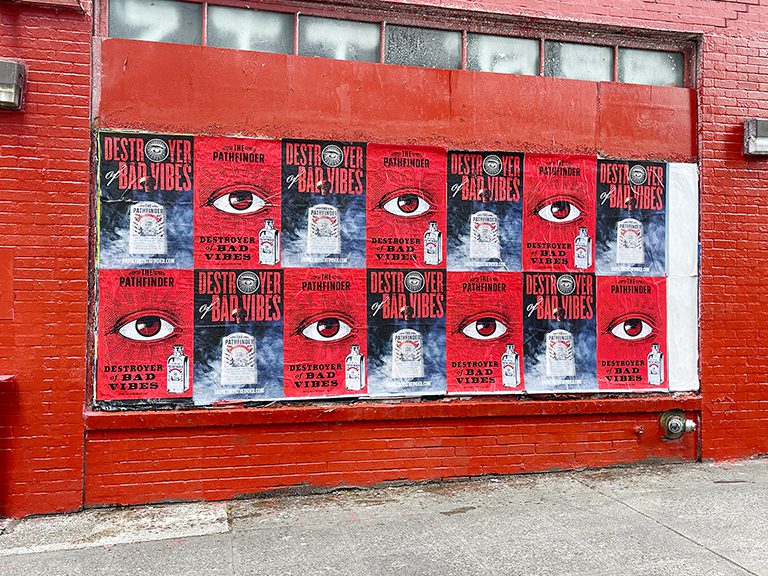
Fly Posting Formats For Missouri Campaigns

Format selection in Missouri depends primarily on which markets you are targeting and which surfaces within those markets anchor your campaign. The Crossroads warehouse walls in Kansas City and the brick facades along Cherokee Street in Saint Louis both support large-format 48×72 placements that create visual anchor points within the corridor. The more compressed pedestrian geographies of Columbia’s District and Springfield’s C-Street tend to favor 24×36 saturation approaches that build cumulative presence across multiple blocks rather than relying on single statement placements.

24×36 — Standard Fly Posting

  • 100 posters: contact us for pricing
  • 200 posters: contact us for pricing
  • Extra creative design: contact us for pricing
  • Duration: 1–2 weeks

Ideal for single-city corridor saturation in Kansas City’s Crossroads, Saint Louis’s Cherokee Street, Columbia’s District, or Springfield’s C-Street. Effective for building frequency impressions across a defined walking geography.

48×72 — Large Format Wild Posting

  • 100 posters: contact us for pricing
  • 200 posters: contact us for pricing
  • Extra creative design: contact us for pricing
  • Duration: 1–2 weeks

Built for anchor placement at Kansas City Crossroads key intersections and Cherokee Street’s major pedestrian nodes. The warehouse-scale surfaces in KC and brick building faces in STL are purpose-suited to this format’s visual impact.

Build Your Fly Posting Campaign

    Award Winning Personalized Service

    You will get thoughtful, devoted, and individualized attention from our experienced, qualified, and professional personnel. Being one of the most illustrious agencies in Brooklyn, New York, American Guerrilla Marketing has been awarded the Best of Brooklyn title.

    Nationwide

    Industry City, Brooklyn, New York 11232

    American Guerrilla Marketing

    +1 (646) 776-2770

    [email protected]

    Telegram: @americanguerillamarketing

    Hours

    Mon - Fri: 9 AM - 5 PM

    Sat & Sun: Closed

    Automate your campaign with AGM’s Request for Proposal Builder.

    Automate your campaign with AGM’s Request for Proposal Builder. Simply answer a few quick questions about your campaign goals, markets, and timeline, and the system will generate a tailored presentation with recommended strategies, quantities, and pricing. Click the RFP Builder to instantly receive your customized proposal.

    The Ea Sports Multi-city Playbook Applied To Missouri

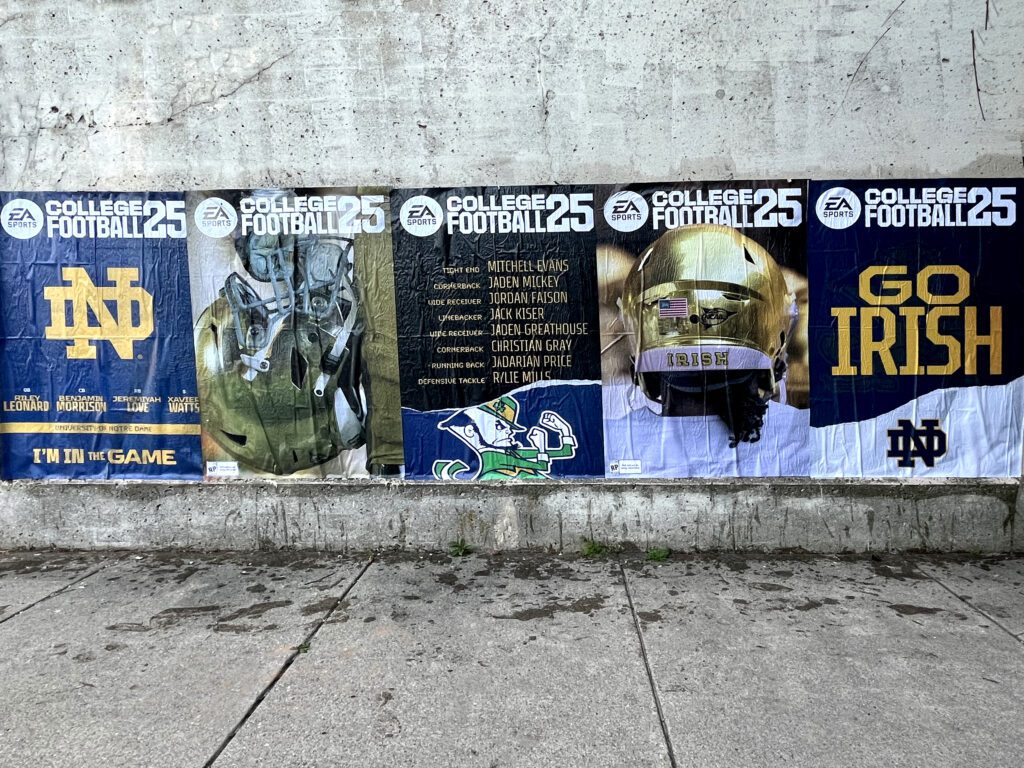
    When EA Sports launched its FC 25 street poster campaign, the strategy was built around simultaneous multi-city coordination — the kind of execution where a campaign appears in multiple markets on the same day, creating a national cultural moment rather than a series of isolated local placements. Missouri’s multi-anchor structure — Kansas City in the west, Saint Louis in the east, Columbia and Springfield anchoring the interior — is precisely the kind of geographic framework that multi-city coordination strategy was designed to exploit.

    A Missouri campaign modeled on the EA Sports approach would stage simultaneously in Crossroads and Cherokee Street on the same install day, with Columbia’s District adding a third market leg that extends reach into the college-town audience segment. The result is a campaign that reads as statewide rather than local — a brand presence that spans Missouri’s cultural geography in a way that no single-market placement can replicate. For campaigns where statewide awareness is the primary objective, this coordinated approach multiplies earned-media potential significantly: multiple markets posting and sharing street-level creative on the same day generates social amplification that a single-market rollout simply cannot produce.

    Alternatively, the EA Sports model also informs focused single-city saturation. When one Missouri market is the strategic priority — a Kansas City product launch, a Saint Louis event campaign, a Columbia back-to-school push — the same coordinated execution discipline applies at the city level, deploying throughout the target corridors on a compressed timeline to maximize simultaneous impressions at campaign launch. Missouri’s multi-anchor structure means you can choose between focused depth and coordinated breadth. The EA Sports playbook proves that both approaches work when execution is disciplined and surfaces are right.

    How an AGM Missouri Fly Posting Campaign Works

    Every Missouri campaign starts with a conversation about your objectives, timeline, and target audience. We need to understand which markets matter most — whether you’re building a focused Kansas City Crossroads saturation, a multi-city Missouri launch, or something in between — before we recommend formats, quantities, and routing. That clarity on the front end is what separates campaigns that achieve their goals from campaigns that simply go up on walls.

    1. Brief and Strategy Call: We discuss your campaign goals, target audience, Missouri markets of interest, and timeline. You leave this call with a clear format and quantity recommendation, a pricing breakdown, and a proposed install schedule.
    2. Creative Submission or Design: You provide print-ready artwork at the correct dimensions, or we produce original creative for your campaign at the stated design rates. All creative is reviewed before print to confirm it will perform at full scale on Missouri wall surfaces.
    3. In-House Printing: AGM prints every poster on our own equipment. We do not outsource printing. This means quality control lives entirely within our operation — we see every poster before it goes into the install kit.
    4. Install Coordination: Our install teams work from approved surface routing maps for each target market. Kansas City Crossroads, Cherokee Street Saint Louis, Columbia’s District, and Springfield’s C-Street each have established routing logic built from prior campaign execution in those corridors.
    5. GPS-Documented Proof: Every placement is photographed with GPS metadata at time of install. You receive a complete photo report showing every surface, every location, confirming exactly what went up and where.
    6. Campaign Wrap: Photo documentation is compiled and delivered within the campaign window. We review performance against stated objectives and provide recommendations for follow-on campaign planning if applicable.

    Surface Strategy Across Missouri's Key Corridors

    Surface selection is not a detail — it is a primary determinant of campaign effectiveness. The same poster creative will perform dramatically differently depending on whether it goes up on a premium warehouse wall in Crossroads, a historic brick building face on Cherokee Street, a plywood construction barrier in Columbia, or a blank building side in Springfield’s C-Street. Understanding which surfaces exist in each Missouri market, and which surfaces within those markets are best suited to each format, is core competency that AGM has developed through direct field experience across Missouri’s anchor cities.

    Kansas City Crossroads warehouse walls represent the premium large-format surface category in Missouri. These are broad, structurally stable exterior walls — in many cases full building-side faces — that provide the kind of surface area and visual isolation that makes 48×72 placements genuinely commanding. The industrial aesthetic of the surrounding architecture makes large-format printed imagery feel native rather than intrusive. Cherokee Street in Saint Louis offers a different surface character: historic commercial brick facades with the texture and patina that gives fly posting an authentic street-level quality. Brick surface posting requires careful application technique, and AGM’s installation teams have the expertise to achieve clean adhesion on aged masonry.

    Plywood construction barriers from Kansas City and Saint Louis’s ongoing development activity provide a rotating inventory of temporary large-surface options that can be highly visible in specific corridors depending on timing. These surfaces require monitoring — a barrier that exists during campaign planning may be removed by the time of install — and our routing process accounts for this variability. Blank building sides in Columbia’s District and Springfield’s C-Street form the backbone of interior-market campaigns, providing clean surfaces in the heart of each city’s pedestrian core.

    Missouri Audience Profiles That Fly Posting Reaches

    Missouri’s diversity of market anchors translates directly into diversity of reachable audience segments. A Kansas City Crossroads campaign reaches a creative-class audience that skews toward design, music, technology, and arts professions — early adopters with high disposable income, strong brand awareness, and significant social influence networks both locally and nationally. The jazz heritage identity of Kansas City runs through this community’s self-image, making creative work that acknowledges craftsmanship and authenticity particularly resonant.

    Saint Louis’s near-south corridor audiences — Cherokee Street, South Grand, the Grove, Soulard — are notably diverse in age, income, and cultural background compared to the Crossroads creative cluster. This is a strength for campaigns with broad appeal objectives. A Cherokee Street saturation reaches working artists and creative professionals alongside international immigrant communities, young urban families who have chosen the historic brick neighborhood stock of south Saint Louis over suburban alternatives, and the bar and music venue regulars who anchor the corridor’s nighttime economy.

    Columbia’s student population represents the highest-concentration young-adult audience in Missouri outside of the major metro entertainment districts. For brands targeting the 18-to-24 demographic with significant purchase intent in fashion, entertainment, food, and technology categories, a Columbia District saturation delivers density of impressions within that demographic that is very difficult to replicate through conventional outdoor advertising formats. Springfield’s C-Street audience skews toward independent cultural consumers — people who actively seek out local and regional creative culture, who support independent businesses as a values expression, and who are skeptical of brands that feel nationally manufactured rather than genuinely present in their community.

    Frequently Asked Questions — Fly Posting in Missouri

    The combination of large-format warehouse wall surfaces, dense creative-class foot traffic, and the First Fridays monthly gallery walk creates conditions that are difficult to replicate elsewhere in the Midwest. The converted industrial architecture provides premium exterior wall faces with minimal competing signage, and the community that occupies the district actively engages with street-level visual culture in a way that makes fly posting feel like a natural part of the environment rather than an imposition on it. First Fridays alone draws tens of thousands of visitors monthly — a predictable, recurring traffic spike that makes install timing highly strategic.

    Yes, and this is one of the structural advantages Missouri offers as a state. Kansas City, Saint Louis, Columbia, and Springfield can all receive installs within a coordinated campaign window, allowing a brand to establish statewide presence rather than city-level presence in a single campaign execution. This approach mirrors the multi-city coordination strategy that clients like EA Sports have used for national street poster campaigns — simultaneous presence across markets creates a different kind of cultural impact than sequential single-city rollouts. We provide coordinated GPS-documented proof across all markets regardless of how many cities are included.

    Historic brick surfaces require a different application approach than smooth plywood or painted masonry. The mortar joints and surface texture of aged brick affect adhesion, and improper application results in bubbling, peeling edges, and poor longevity. AGM’s installation teams are experienced with brick-surface posting and use application techniques specifically developed for textured masonry — including paste formulations and application sequences that achieve clean adhesion across the surface irregularities of Cherokee Street’s historic commercial building stock. The result is placements that look clean and hold well for the full campaign duration.

    Fly posting regulations in Missouri are governed at the municipal level rather than statewide. Kansas City, Saint Louis, Columbia, and Springfield each have their own municipal code provisions relating to outdoor advertising and temporary signage. AGM works within established legal frameworks in each market, securing property owner permissions for private wall surfaces and navigating municipal requirements for each city. We handle the compliance framework as part of campaign setup — clients do not need to navigate local municipal code independently. Our routing maps are built from surfaces where we have established working relationships with property owners.

    The minimum campaign unit is 100 posters in the standard 24×36 format at contact us for pricing or 100 posters in the 48×72 large format at contact us for pricing. A 100-poster campaign in a single Missouri city — concentrated in Crossroads, Cherokee Street, Columbia’s District, or Springfield’s C-Street — delivers meaningful corridor saturation within that market. Clients looking to cover multiple Missouri cities simultaneously typically scale to 200 posters or more to ensure adequate presence in each target market rather than spreading a small quantity thin across multiple geographies.

    Game-day traffic in Columbia is a meaningful campaign multiplier. Memorial Stadium’s capacity of 60,000-plus, combined with the pedestrian flow through downtown and The District before and after major home games, creates single-day impression counts that significantly exceed normal weekday or weekend traffic. A fly posting campaign installed in the days immediately preceding a major home game benefits from compound impressions — normal weekday traffic, pre-game pedestrian flow, and post-game foot traffic all interacting with fresh, clean placements. For brands specifically targeting the 18-to-30 demographic, game-day Columbia is among the highest-concentration impression environments in the state.

    Missouri’s multi-anchor structure means the answer differs by market. Crossroads Kansas City over-indexes for creative-industry brands, music and entertainment releases, fashion and lifestyle campaigns, and technology products with design-forward identities. Cherokee Street and South Grand Saint Louis perform strongly for food and beverage brands, arts and cultural organizations, music releases with roots or independent-label positioning, and social cause campaigns. Columbia’s University of Missouri proximity makes it particularly effective for entertainment, gaming, streaming, fashion, and consumer technology targeting the 18-to-24 segment. Springfield’s C-Street performs well for regional brands establishing local market presence and cultural organizations with Ozarks or interior-Missouri geographic identity.

    Both options are available. Clients who provide their own print-ready artwork at the correct dimensions — 24×36 or 48×72, with specified resolution and bleed requirements — can proceed directly to print. Clients who need creative development can engage AGM’s design services at Contact us for pricing. for the 24×36 format or Contact us for pricing. for 48×72. Additional creative variants — for example, a campaign with multiple poster designs running simultaneously across Missouri markets — are priced per additional design at the same rates. For clients running city-specific creative variants across Kansas City, Saint Louis, Columbia, and Springfield, multiple design fees apply per variant.

    Every poster placement made by AGM’s installation teams is photographed at the time of install. Each photograph carries embedded GPS metadata confirming the geographic coordinates of the placement location. The full photo documentation set — one image per placement or placement cluster, with location data — is compiled into a campaign proof report and delivered to the client within the campaign window. For multi-city Missouri campaigns, the report is organized by market, allowing clients to review Kansas City, Saint Louis, Columbia, and Springfield placements separately. This documentation standard applies regardless of campaign size — a 100-poster single-city campaign receives the same documentation rigor as a 200-poster multi-city coordinated rollout.

    Standard timeline from campaign brief to completed install is approximately two to three weeks for campaigns with client-supplied print-ready artwork. The sequence runs: brief and strategy call, creative confirmation, in-house print production, install scheduling and crew routing, and install execution across target markets. Campaigns requiring AGM creative development add approximately one additional week for design production and client approval. Rush timelines are accommodable for Kansas City and Saint Louis in most cases given our established crew presence in both markets; Columbia and Springfield rush scheduling depends on crew availability at time of booking. Contact us with your target install date and we will confirm feasibility immediately.

    The primary distinctions are cultural positioning, cost efficiency, and audience specificity. Billboard advertising in Missouri — whether digital or static — places brand creative in a mass-market, high-traffic context that carries no inherent cultural resonance with arts, music, or creative communities. Fly posting in Crossroads, Cherokee Street, or Columbia’s District places creative in the exact physical context where the target audience lives, works, and spends discretionary time. The cultural legitimacy of street poster advertising in arts-forward districts is a meaningful differentiator — a poster in Crossroads feels like part of the neighborhood’s visual culture, while a billboard on I-70 feels like a media buy. For brands that want the former, fly posting is the format. Price-per-impression in the specific corridors AGM targets in Missouri also compares favorably to billboard rates for equivalent audience quality within the creative and young-adult demographic segments.

    Browse All States

    Explore Fly Posting Advertising opportunities across the United States.

    No locations found

    American Guerrilla Marketing Blog Posts