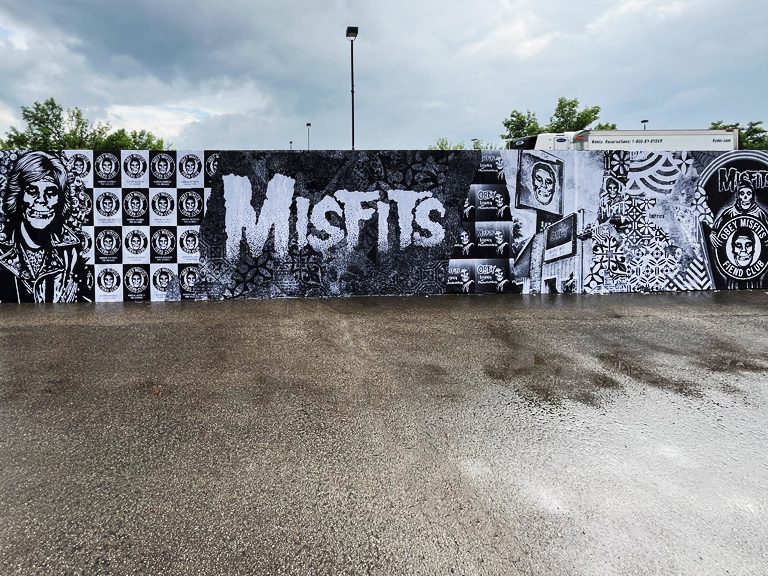
🚀 NEW WHEATPASTING MARKETS Discover our wheatpasting campaigns in : 🇬🇧 London • 🇨🇦 Canada • 🇲🇽 Mexico City

American Guerrilla Marketing

Nationwide Service

Media planning, media buying, billboard advertising, & guerrilla marketing

Fly Posting in Connecticut

Sidewalk Decals Advertising in Connecticut

Four cities. One linear corridor. Coordinated wheatpasting campaigns that reach Stamford’s NYC creative overflow, Bridgeport’s emerging arts scene, New Haven’s Yale-driven academic market, and Hartford’s state capital audience — executed as a single statewide activation.

Connecticut’s Corridor Position Creates a Street Poster Market Unlike Any Other in New England

Few states present the geographic and cultural architecture that makes Connecticut genuinely exceptional for fly posting campaigns. Stretched along roughly 100 miles of I-95 coastline and then angling north toward the state capital, Connecticut connects four economically and demographically distinct cities — Stamford, Bridgeport, New Haven, and Hartford — in a linear sequence that brands can activate with a single coordinated build. Each stop reaches a meaningfully different audience: the NYC-adjacent creative professional in Stamford, the emerging arts community in Bridgeport, the Yale-educated young adult in New Haven, the commuter student and arts worker in Hartford. No other state in the Northeast offers this combination of market diversity and logistical simplicity at Connecticut’s geographic scale.

What drives the value of Connecticut’s corridor is the cultural heterogeneity packed into that 100-mile stretch. Stamford operates as a satellite extension of New York City’s creative economy, populated by advertising agency employees, media workers, and finance-adjacent young professionals who commute on Metro-North and consume New York culture while living in Fairfield County. The fly posting demographic in Stamford — concentrated in the Harbor Point nightlife district and the Bedford Street and Summer Street entertainment corridor downtown — is indistinguishable in profile from what you find in Williamsburg or the Lower East Side, except the cost of reaching that audience through street poster advertising is substantially lower than a Manhattan build. Brands that run campaigns in New York consistently and need Connecticut presence without a full secondary market budget have a natural solution in Stamford.

Bridgeport occupies a different and equally compelling moment. The city is in the early stages of an arts-driven revival cycle — warehouse conversions to studio space in the South End, younger artists relocating from New Haven and New York for relative affordability, an emerging creative community forming in the Stratford Avenue corridor before surface competition increases and rents rise. Fly posting in Bridgeport today is structurally similar to fly posting in Bushwick before it became a destination: blank wall inventory is abundant, audience engagement is genuine and concentrated, and the cost of reaching an arts-conscious young adult population is meaningfully lower than any comparable market in the region. The Total Mortgage Arena downtown generates consistent event-driven foot traffic through the Main Street and Broad Street corridor for concerts and sports, and Housatonic Community College adds a steady daytime student presence through the surrounding blocks.

New Haven punches far above its population size because of Yale University, which functions as a permanent cultural engine regardless of economic cycles or seasonal variation. The art school, graduate programs across every discipline, and the broad undergraduate enrollment create a concentrated population of young adults who are disproportionately engaged with culture, design, and brand messaging — and who respond to fly posting campaigns with the kind of creative literacy that makes street-level advertising land differently here than in markets without an institution of Yale’s stature. The Chapel Street retail corridor from College to Orange Street is the city’s primary pedestrian artery, Whalley Avenue provides a longer community-and-arts corridor extending toward Westville, and the Westville arts district itself — centered on Blake and Fountain streets — hosts regular gallery programming that draws a committed arts-engaged crowd rather than casual pedestrian traffic.

Hartford rounds out Connecticut’s quartet as a state capital with layered opportunity across multiple distinct audience segments. The Colt Gateway arts complex — the historic Colt firearms factory on Huyshope Avenue, now converted to artist studios, residential lofts, restaurants, and creative workspace — anchors a genuine creative-professional community that makes Hartford’s arts scene significantly more developed than its population ranking would suggest. UCONN Hartford and Trinity College together bring a substantial commuter student population through downtown and the Asylum Hill corridor on daily schedules, creating the kind of repeated-impression opportunity that compounds street poster effectiveness over a campaign’s run. The XL Center at 1 Civic Center Plaza generates consistent arena-scale foot traffic for concerts, hockey, and touring shows, and the Blue Hills and Albany Avenue corridor provides reach into working-class residential and commercial neighborhoods that are chronically underserved by conventional outdoor advertising.



Ready to Run a Fly Posting Campaign Across Connecticut?

AGM handles printing, installation, and GPS-documented reporting across Stamford, Bridgeport, New Haven, and Hartford. One coordinated campaign. Four distinct audiences. Tell us your goals and we'll build a statewide strategy around them.

Browse Cities in Connecticut

Select a city to explore Fly Posting Advertising opportunities.

The Four Connecticut Markets Agm Serves For Fly Posting

Stamford — NYC Creative Economy Overflow and Professional Nightlife

Stamford is where New York’s creative, media, and finance professional workforce lives when it prices out of or deliberately exits the city. Major employers including Synchrony Financial, Charter Communications, Gartner, and NBC Sports maintain large office campuses in the Stamford and Greenwich corridor, while Metro-North’s New Haven Line makes the commute to Midtown Manhattan feasible for a substantial portion of the downtown residential population. The young professional concentration — renters in new Harbor Point apartment buildings along the waterfront, bar-goers on Bedford Street and Summer Street, diners on Atlantic Street — represents purchasing power and media sophistication comparable to Brooklyn’s most sought-after zip codes. Fly posting in Stamford reaches this audience at a fraction of what an equivalent build costs in Lower Manhattan or North Brooklyn, making it one of the most efficient reach extensions available to brands already active in New York.

Bridgeport — Emerging Arts Corridor and Pre-Saturation Opportunity

Bridgeport is in the specific and valuable moment that precedes market saturation — a city where the creative community is forming, surface inventory is abundant, and the cost of reaching an arts-engaged young adult audience is at its lowest relative to the engagement quality on offer. The South End arts corridor along Stratford Avenue is where warehouse and industrial buildings are converting to studio and gallery space, and where younger artists relocating from more expensive markets are establishing the critical mass that will eventually drive rents up and compete away the blank wall inventory that makes fly posting campaigns efficient. Downtown, the Main Street and Broad Street revival is actively underway, anchored by Total Mortgage Arena foot traffic and a street-level retail reactivation that’s creating new audiences on corridors that were dormant a decade ago. Getting into this market early — before competition for wall space intensifies — is precisely the strategic advantage that forward-thinking brands should recognize.

New Haven — Yale Academic Pipeline and Independent Retail Density

New Haven is one of the most intellectually and culturally concentrated markets in the entire Northeast, and the density of Yale’s academic community creates a permanent audience for fly posting campaigns that persists across economic cycles, regardless of what conventional outdoor media does or doesn’t do in the region. Chapel Street from College to Orange is the city’s most walkable commercial artery, with independent boutiques, coffee shops, bookstores, and restaurants drawing consistent foot traffic from students, faculty, local young professionals, and arts community members who live throughout the city. Whalley Avenue extends that reach through Edgewood and into Westville, a district that hosts Thursday evening gallery walks and maintains a genuinely committed arts-going audience — not casual pedestrian traffic, but people who seek out creative work and respond to it with the kind of active attention that makes wheat paste advertising in this corridor compound in value over a campaign’s run.

Hartford — State Capital Arts Infrastructure and Arena Venue Ecosystem

Hartford’s fly posting market is built on a combination of assets that rarely coexist in a city of its size. Colt Gateway on Huyshope Avenue is the city’s most authentic creative-professional neighborhood — a converted factory complex where artists, designers, restaurateurs, and creative industry workers have built a genuine community around gallery programming and event space that draws regular audiences from across the Hartford region. The XL Center arena creates consistent large-scale foot traffic events through the Trumbull Street, Pearl Street, and Pratt Street entertainment corridor, layering event-driven impression spikes onto a baseline of state government worker weekday density and bar and restaurant post-work traffic. UCONN Hartford and Trinity College bring tens of thousands of commuter students through downtown on regular schedules, and the Blue Hills neighborhood on Albany Avenue provides access to dense residential communities where authentic street-level engagement with working-class and Black community demographics is difficult to achieve through conventional media at any price.


Connecticut's Fly Posting Calendar — Seasonal Windows Across The Corridor

Connecticut’s campaign calendar is defined by three overlapping seasonal windows, each of which activates different city markets and audience concentrations in ways that brands can plan around strategically. Understanding which window aligns with a campaign’s target demographic — and which city markets are most activated during that window — is the first step in building an effective statewide fly posting strategy.

The academic year window is the highest-value period for campaigns targeting younger adult demographics, running from late August through May commencement at Yale and the surrounding commuter institutions. New Haven’s Chapel Street corridor and Whalley Avenue see a measurable and sustained surge in pedestrian density when students return after Labor Day, and that elevated foot traffic holds through the spring semester. September through November represents the opening academic window — when student engagement is fresh, arts programming is ramping up for the fall season, and the combination of campus energy and independent retail corridor activity creates the kind of concentrated impressions that make fly posting campaigns in New Haven and Hartford particularly effective. Trinity College and UCONN Hartford create a parallel seasonal uplift in Hartford’s downtown and Asylum Hill corridors during the same period.

Summer entertainment season activates Stamford and Bridgeport most directly. Harbor Point’s waterfront programming draws consistent outdoor audiences from June through early September, and Stamford’s Bedford Street and Summer Street nightlife corridors maintain their strongest post-work and weekend foot traffic volumes during the same months. Total Mortgage Arena in Bridgeport runs a robust summer concert and event schedule, generating regular foot traffic spikes through the downtown core that create reliable impression windows for fly posting placements in the surrounding blocks. For brands targeting the young professional demographic that dominates Stamford and the arts-engaged emerging community in Bridgeport, summer campaigns combine street-level daytime reach with post-event nightlife corridor activation in a way that no other season replicates.

Fall arts programming season — running roughly October through mid-December — activates Hartford’s Colt Gateway gallery circuit, New Haven’s Westville arts district, and Bridgeport’s forming South End creative spaces with regular programming that draws arts-engaged audiences specifically to the corridors where fly posting campaigns have the most impact. Gallery openings, artist studio events, cultural programming, and arts district activation cluster in this window, and the audiences they draw are among the most responsive demographics for wheat paste advertising campaigns anywhere in the state. A Connecticut fly posting build timed to the fall arts season can deliver impressions directly to the audience most likely to engage with creative work, share it on social channels, and carry the brand impression outward into their networks.

Build Your Fly Posting Campaign

    Award Winning Personalized Service

    You will get thoughtful, devoted, and individualized attention from our experienced, qualified, and professional personnel. Being one of the most illustrious agencies in Brooklyn, New York, American Guerrilla Marketing has been awarded the Best of Brooklyn title.

    Nationwide

    Industry City, Brooklyn, New York 11232

    American Guerrilla Marketing

    +1 (646) 776-2770

    [email protected]

    Telegram: @americanguerillamarketing

    Hours

    Mon - Fri: 9 AM - 5 PM

    Sat & Sun: Closed

    Automate your campaign with AGM’s Request for Proposal Builder.

    Automate your campaign with AGM’s Request for Proposal Builder. Simply answer a few quick questions about your campaign goals, markets, and timeline, and the system will generate a tailored presentation with recommended strategies, quantities, and pricing. Click the RFP Builder to instantly receive your customized proposal.

    Corridor-to-corridor Execution — The Case For Coordinated Multi-city Connecticut Campaigns

    The linear geography of Connecticut’s four major markets is one of the most practically useful structural facts for any brand planning statewide fly posting coverage. Stamford, Bridgeport, New Haven, and Hartford sit on or adjacent to the I-95 and Route 9 corridor in a sequence that AGM installation crews can execute as a single continuous activation — moving up the corridor from Stamford through Bridgeport, into New Haven, and north to Hartford without the logistical restart that typically separates individual market campaigns. That operational continuity is what makes coordinated statewide Connecticut fly posting campaigns genuinely achievable at a budget that four independently managed market campaigns could never reach.

    American Guerrilla Marketing’s Party to the Polls × Daybreaker Purple Tour 2024 campaign demonstrated this corridor-to-corridor execution capability at its most demanding scale — a 15-state nationwide activation requiring simultaneous installation across dozens of markets in a compressed campaign window, with GPS-documented reporting delivered across every location. The operational discipline that makes a 15-state build work is the same discipline that allows AGM to treat Connecticut’s Stamford–Bridgeport–New Haven–Hartford corridor as a unified campaign execution rather than four sequential market builds. Brands planning statewide Connecticut coverage can think about all four cities as one activation: one timeline, one reporting deliverable, one coordinated campaign rather than four separate line items on a media plan.

    AGM handles the full campaign internally — strategy, printing at AGM’s own production facilities, direct installation by AGM crews (not subcontractors), and GPS-documented post-campaign reporting. Clients receive proof-of-install photography and geographic confirmation for every placement across all Connecticut markets, consolidated into a single deliverable that makes it straightforward to verify coverage, evaluate reach quality, and present results internally or to stakeholders. For brands running Connecticut as part of a larger multi-state activation, AGM’s reporting integrates Connecticut documentation into the broader campaign record without additional administrative overhead.

    Format Strategy for Connecticut — Matching Poster Size to Market and Objective

    The 24″×36″ format is the standard recommendation for Connecticut fly posting campaigns that prioritize coverage and density across multiple neighborhoods and corridors within a single activation. At this size, campaigns can build consistent presence across the full range of available surfaces — utility structures, plywood construction barriers surrounding active development projects, blank commercial and warehouse walls — and repeat impressions across the pedestrian routes that define each city’s highest-traffic zones. A 100-poster deployment at the 24″×36″ format covers one to two Connecticut markets at meaningful density; a 200-poster deployment gives statewide coverage across all four corridors with the volume to maintain presence through a typical one-to-two-week campaign run.

    The 48″×72″ format is the right call when brands need maximum visual impact at specific high-visibility anchor locations — near Total Mortgage Arena in Bridgeport, on the primary Chapel Street stretch in New Haven, along the Summer Street entertainment corridor in Stamford, or at the Colt Gateway complex in Hartford. Large-format placements at these locations create the kind of landmark visibility that no smaller-format campaign can replicate, and they produce strong photography for earned media and social amplification. The 48″×72″ format works particularly well as a complementary layer alongside a 24″×36″ coverage campaign: large-format anchor placements at the most prominent positions in each city’s highest-traffic corridor, with standard-format saturation building density across the broader neighborhood footprint surrounding those anchors.

    Industries And Campaign Types That Use Fly Posting Across Connecticut

    Connecticut’s demographic mix — arts communities, commuter professionals, university populations, entertainment venue audiences, and dense working-class urban neighborhoods — supports a wide and varied range of brand categories for fly posting campaigns. Entertainment clients targeting release windows, tour announcements, streaming platform launches, and live event promotion find the state’s venue ecosystem directly useful: Total Mortgage Arena in Bridgeport, the XL Center in Hartford, and New Haven’s independent music and arts venues all create foot traffic windows that fly posting placements can activate immediately before and after events. Streaming platforms, music labels, film distributors, and television networks have used Connecticut wheatpasting campaigns specifically for the combination of young-professional reach in Stamford and the academic-creative audience in New Haven that no conventional outdoor format can aggregate as efficiently.

    Fashion, lifestyle, and beauty brands find Connecticut’s arts community concentration — in Bridgeport’s South End, Hartford’s Colt Gateway complex, New Haven’s Westville district — directly aligned with the creative professional and arts-engaged young adult demographic that responds most actively to visual brand campaigns. These are the same audience segments that fly posting campaigns have historically reached effectively in larger arts districts in New York and Los Angeles; Connecticut’s equivalents offer the same demographic profile with less competition for surface inventory and meaningfully lower cost per impression. Brands that have run campaigns in NYC arts corridors and want to understand what that reach extension looks like in New England markets should start with Connecticut’s arts district inventory.

    Political campaigns have executed Connecticut fly posting campaigns at both the state and federal level, and the state’s I-95 corridor makes statewide reach operationally efficient to achieve in a single coordinated build. The combination of a dense urban professional population in Stamford, a large student population across New Haven and Hartford, engaged working-class communities in Bridgeport, and state government worker density in Hartford creates the kind of cross-demographic statewide reach that complements conventional media buys without duplicating the same audiences. AGM has executed fly posting for political campaigns nationally and understands the targeting discipline, message control, and installation timing that make street poster advertising effective in electoral contexts.

    Consumer brands, tech companies, and app-launch campaigns targeting 22–40 year-olds across Connecticut’s urban cores have used street poster advertising to build street-level awareness during market entry campaigns, product launches, and brand refresh activations. The combination of organic repeat impressions through high-traffic pedestrian corridors, social amplification from audiences who photograph and share street-level installations, and GPS-documented reporting that verifies geographic reach makes fly posting a measurable and defensible addition to the media mix for any brand managing performance across a regional or national campaign.

    Connecticut Fly Posting Formats and Pricing

    24″ × 36″ — Standard Format

    100 posters: contact us for pricing
    200 posters: contact us for pricing
    Extra creative: contact us for pricing

    The recommended format for statewide Connecticut coverage campaigns. Fits the full range of available surfaces across Stamford, Bridgeport, New Haven, and Hartford — construction barriers, utility structures, commercial walls — and allows for density across multiple neighborhoods in a single deployment. 72-hour rush available up to 500 qty.

    48″ × 72″ — Large Format

    100 posters: contact us for pricing
    200 posters: contact us for pricing
    Extra creative: contact us for pricing

    Maximum visual impact for anchor placements at Connecticut’s highest-traffic corridors — Total Mortgage Arena in Bridgeport, Chapel Street in New Haven, Summer Street in Stamford, Colt Gateway in Hartford. Best for brand awareness builds where fewer, more dominant placements outperform high-density coverage.

    Campaigns typically run one to two weeks across Connecticut markets, with actual duration varying based on weather conditions, surface type and availability, and market competition for posting locations in each city. Multiple creative executions are available within a single campaign — a brand can run different messaging for the Stamford professional audience versus the New Haven academic audience without requiring separate campaign builds or separate deployment timelines for each market.

    Frequently Asked Questions — Fly Posting in Connecticut

    AGM runs fly posting and wheatpasting campaigns in Stamford, Bridgeport, New Haven, and Hartford — the four primary urban markets distributed along Connecticut’s I-95 and Route 9 corridor. Each city has distinct neighborhood targeting strategies built around its specific demographic profile, venue ecosystem, and surface inventory. AGM can execute single-city campaigns in any of these four markets individually, or coordinate multi-city builds that cover some or all of them in a single statewide activation.

    Yes — Connecticut’s linear corridor geography is specifically suited for coordinated multi-city campaign execution. AGM’s installation crews can move from Stamford through Bridgeport, New Haven, and up to Hartford in a single coordinated build, delivering statewide presence across four distinct audience profiles without requiring separate campaign management for each market. This corridor execution capability is one of Connecticut’s primary structural advantages for brands seeking regional reach without the overhead of four independently managed campaigns.

    Pricing is based on total poster count and format size rather than the number of cities included in the campaign. A 200-poster 24″×36″ deployment at contact us for pricing can be distributed across two, three, or all four Connecticut cities according to the brand’s targeting priorities and audience concentration goals. AGM’s team provides neighborhood-level distribution strategy as part of the campaign planning process, advising on how to allocate poster inventory across markets to maximize reach within the campaign’s objectives and budget parameters.

    Connecticut has three distinct high-engagement campaign windows that align with different audience concentrations across the state’s four cities. The fall academic season — September through November — delivers the highest foot traffic in New Haven and Hartford as Yale’s enrollment returns and commuter student populations cycle back through the downtown corridors. Summer activates Stamford’s waterfront entertainment district and Bridgeport’s concert venue circuit from June through August. Fall arts programming from October through December is the optimal window for campaigns targeting Connecticut’s gallery and arts communities in all four markets. Campaigns can run successfully year-round; these windows represent the periods of maximum alignment between campaign timing and peak audience density.

    Connecticut campaigns typically remain visible for one to two weeks from installation, though actual duration varies by location, surface type, weather conditions, and competitive posting activity on the same surfaces. High-traffic commercial corridors in busy downtown areas tend to see faster turnover than arts-district and warehouse-zone locations where competition for surface space is lower. AGM’s GPS-documented reporting captures installation photography and location data at the time of placement, providing a verifiable record of the campaign independent of how long individual placements remain visible after installation.

    AGM handles printing in-house for all Connecticut fly posting campaigns. The end-to-end service covers design review or production support if needed, printing at AGM’s own facilities, and direct installation by AGM crews — no external print vendors or third-party installation contractors are involved in the process. Clients can provide print-ready files or work with AGM’s production team on design. The extra creative fee applies when additional distinct design executions are needed beyond the first included in the campaign: Contact us for pricing. for 24″×36″ campaigns and Contact us for pricing. for 48″×72″ campaigns.

    Connecticut’s four city markets reach audience segments that a New York-only campaign doesn’t efficiently access, even at higher New York budgets. Stamford’s young professional demographic is demographically comparable to Brooklyn or Lower Manhattan but reachable through street posters at significantly lower cost per impression. New Haven’s Yale-driven academic and arts community is one of the most culturally engaged audiences in the entire Northeast, with no direct equivalent in the New York market at a comparable price point. For brands already running New York campaigns who want regional reach extending into New England, Connecticut is the most efficient corridor extension available — four distinct audiences, one linear deployment, one campaign timeline.

    Connecticut’s four urban markets offer the surface inventory typical of active mid-size American cities — plywood construction barriers surrounding development projects (particularly abundant in Bridgeport’s South End and downtown Hartford, where active construction is ongoing), blank commercial and warehouse walls throughout arts districts and industrial conversion zones, utility structures along major pedestrian corridors, and permitted posting locations in entertainment districts and arts neighborhood corridors. AGM’s neighborhood targeting process identifies and evaluates the specific surface inventory in each city’s highest-value zones before campaign builds, ensuring placements land in positions that maximize both foot traffic and demographic alignment.

    Yes — AGM uses wheat-based adhesive for all fly posting installations across Connecticut and every other market where AGM operates nationally. The adhesive is environmentally responsible, biodegradable, and fully removable with standard pressure washing, making it the safest and most property-friendly option available for street poster campaigns in urban environments. This approach has been standard across hundreds of AGM campaigns in cities throughout the Northeast and nationwide without property damage or cleanup complications for surface owners.

    Connecticut’s audience composition across its four cities supports a broad range of brand categories. Entertainment — streaming platforms, music labels, film and television distributors, live event promoters — benefits directly from the state’s venue ecosystem and university-age population concentration. Fashion, lifestyle, and beauty brands activate through Connecticut’s arts community concentration in Bridgeport, Hartford, and New Haven. Political campaigns use Connecticut’s I-95 corridor for efficient statewide reach. Consumer tech and app-launch campaigns use Connecticut fly posting to build street-level awareness among the 22–40 demographic concentrated in Stamford and the university markets. AGM’s Connecticut campaign experience spans all of these categories.

    AGM delivers GPS-documented photography for every installation location across all Connecticut cities included in a campaign. Post-campaign reporting includes time-stamped installation photos, geographic location confirmation for each placement position, and a comprehensive proof-of-install package organized by city and neighborhood. For multi-city statewide Connecticut campaigns, all four markets are documented in a single consolidated reporting deliverable — not separate reports per city — so clients can review coverage across the entire corridor in one pass and present results to stakeholders without assembling fragmented documentation from multiple sources.

    The entry point for a Connecticut fly posting campaign is contact us for pricing which covers 100 posters at the 24″×36″ format with full in-house printing, direct crew installation, and GPS-documented reporting. At 100 posters, a single-city campaign builds meaningful density in one to two neighborhoods within a given market. For multi-city coverage across Connecticut’s full I-95 corridor, a 200-poster deployment at contact us for pricing (24″×36″) provides the inventory to maintain presence in multiple neighborhoods across two to four markets simultaneously. AGM’s campaign planning team can advise on optimal poster distribution for any budget level and target audience combination.

    Browse All States

    Explore Fly Posting Advertising opportunities across the United States.

    No locations found

    American Guerrilla Marketing Blog Posts