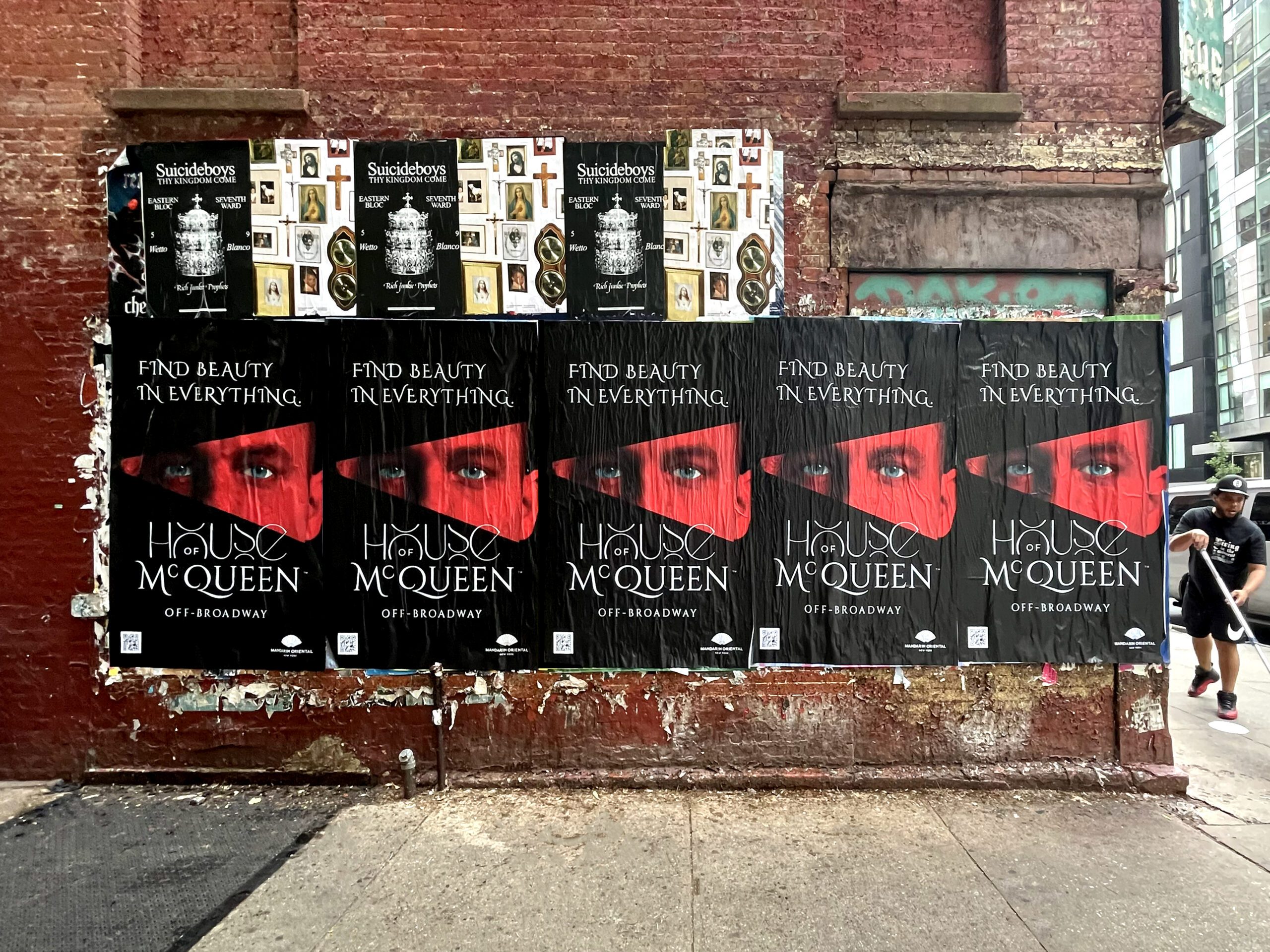
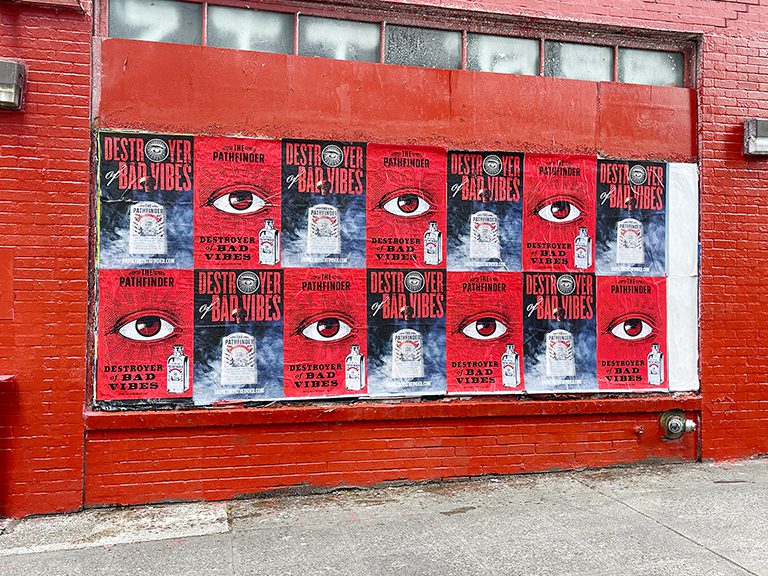
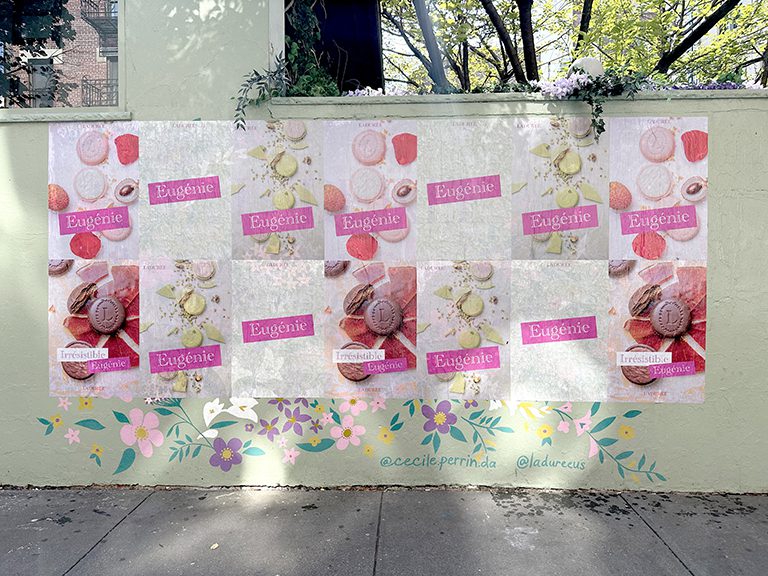
American Guerrilla Marketing
Nationwide Service
Media planning, media buying, billboard advertising, & guerrilla marketing
Wheat paste campaigns across the Canal District, Polar Park corridor, Clark University and WPI campus zones, Hanover Theatre block, and Green Street arts corridor. In-house crews. GPS photo proof. No subcontractors, ever.
Worcester is New England’s second-largest city, and it has spent the last several years making a credible claim on something more interesting than that statistic: a genuine cultural identity. The Canal District’s nightlife scene, the arrival of Polar Park and the Worcester Red Sox, the nationally ranked universities embedded in its downtown, the Hanover Theatre’s restored grandeur, and the emerging Green Street arts corridor have collectively produced a city with distinct audience nodes, real pedestrian energy, and the kind of street-level creative environment where fly posting does its best work.
For brands planning Massachusetts campaigns, Worcester fills a gap that neither Boston nor Springfield can cover. It is central Massachusetts — geographically, commercially, and culturally. The half million people who live within the Worcester metro area represent a substantial regional consumer base that does not commute to Boston, does not identify as part of the Pioneer Valley, and is served by its own distinct commercial and entertainment ecosystem. Reaching them requires being in Worcester, not assuming that Boston-based campaigns spill over.
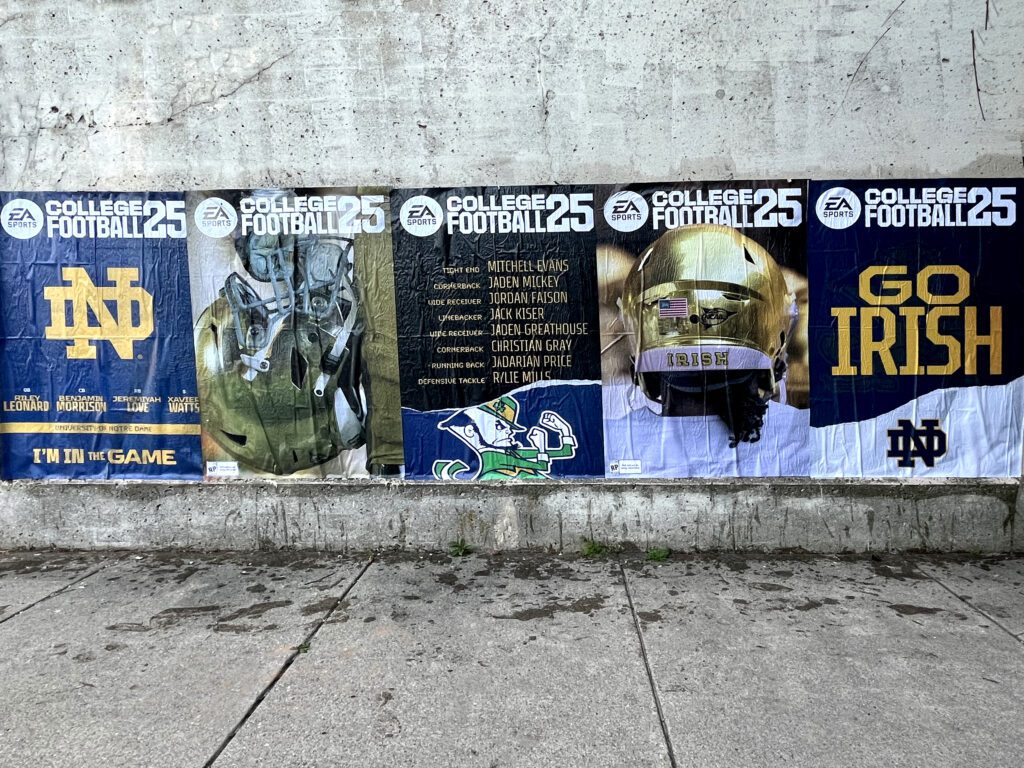
American Guerrilla Marketing brings in-house crews to Worcester campaigns with the same no-subcontractor standard we maintain in every market, from our Brooklyn flagship to Los Angeles. GPS photo documentation covers every installation. Our post-campaign reports give you a verifiable record of every posting location across your Worcester footprint, with geographic coordinates on each image. We are a Best of Brooklyn award-winning agency with campaigns completed for Netflix, The Onion, EA Sports, Biossance, and Shepard Fairey, and we approach Worcester with the same strategic seriousness we bring to the country’s largest metros.
The Canal District. Polar Park. Clark. WPI. Green Street. The Hanover Theatre. Worcester has more audience density than most brands realize — and less competition than any of them expect. American Guerrilla Marketing brings in-house crews and GPS-verified documentation to every Worcester campaign. No subcontractors. No shortcuts.
Select a city to explore Fly Posting Advertising opportunities.
The Canal District is the part of Worcester that flies posting campaigns are built for. Anchored by the Palladium — one of New England’s premier mid-capacity concert venues, with a national booking calendar that draws touring acts and their audiences from across central Massachusetts and beyond — the Canal District concentrates more event-driven nightlife per block than anywhere else in the city. Electric Haze, located just steps from the Palladium, adds a club and late-night dimension to a corridor that already carries strong show-night foot traffic from the adjacent concert venue. Surrounding bars and restaurants complete an entertainment ecosystem that activates the district’s streets consistently from Thursday through Sunday across the full year.
The Canal District’s physical character suits fly posting exceptionally well. The neighborhood takes its name from the Blackstone Canal industrial history that shaped it, and that industrial heritage has left behind exactly the kind of building stock that produces outstanding poster surfaces: blank warehouse walls, masonry commercial building exteriors, utility structures, and the occasional plywood hoarding from the development activity that has been gradually transforming the district’s edges. The smooth-face brick and painted masonry walls in the core of the Canal District provide paste retention that supports campaign durations at the longer end of the one-to-two week range, maximizing impression accumulation across the event nights that define this neighborhood’s rhythm.
For entertainment brands — music labels, streaming platforms, touring acts, club and venue operators, entertainment media — the Canal District is the obvious primary zone for a Worcester deployment. But it also serves non-entertainment brands that want to reach young adults in an entertainment mindset. The audience arriving at a Palladium show or spending a Friday night at Electric Haze is not processing commercial messages from a skeptical, ad-fatigued stance — they are in a leisure state, socially primed, and highly receptive to visual brand presence in the environment surrounding the evening’s entertainment. That receptivity is the audience condition that fly posting leverages most effectively.
Polar Park opened in 2021 as the home of the Worcester Red Sox, the Triple-A affiliate of the Boston Red Sox. The stadium’s arrival in the Canal District transformed the neighborhood’s seasonal dynamics in a way that few single development projects can. From April through early September, the Polar Park calendar anchors an 80-home-game schedule that delivers a sports audience — Red Sox fans, family visitors, baseball enthusiasts, and the general sports-going public — into the Canal District’s approach corridors on a relentless rhythm. Game nights that would have previously been ordinary Tuesday and Wednesday evenings in the Canal District now carry the kind of organized pedestrian density that transforms fly posting impression potential.
The Polar Park corridors along Madison Street and the connecting blocks between the stadium and the Canal District’s commercial core are among the most predictable high-impression posting environments that Worcester offers. Pre-game traffic builds for the two hours before first pitch along the approach routes from downtown parking, the nearby T station, and the residential streets that surround the stadium. Post-game traffic compresses that audience further as thousands of fans file out simultaneously and spread through the Canal District’s bars and restaurants for the post-game period. A well-timed poster installation in the Polar Park approach zone accumulates disproportionate impressions relative to its location because of this event-rhythmed density.
The sports audience that Polar Park delivers is also commercially valuable in a specific way: it skews toward families, longtime Red Sox fans, and the regionally loyal central Massachusetts audience that treats Worcester Red Sox games as a community event rather than a transient entertainment option. That loyalty and community investment translate into an audience that is genuinely embedded in the Worcester market — people who live here, shop here, eat here, and are influenced by what they see in their home city’s streets.
Award Winning Personalized Service
You will get thoughtful, devoted, and individualized attention from our experienced, qualified, and professional personnel. Being one of the most illustrious agencies in Brooklyn, New York, American Guerrilla Marketing has been awarded the Best of Brooklyn title.
Nationwide
Industry City, Brooklyn, New York 11232
American Guerrilla Marketing
Hours
Mon - Fri: 9 AM - 5 PM
Sat & Sun: Closed
Automate your campaign with AGM’s Request for Proposal Builder. Simply answer a few quick questions about your campaign goals, markets, and timeline, and the system will generate a tailored presentation with recommended strategies, quantities, and pricing. Click the RFP Builder to instantly receive your customized proposal.
Worcester is home to a remarkable density of higher education institutions given its size — Clark University and Worcester Polytechnic Institute are both nationally ranked research universities located within a short walk of downtown, and Holy Cross, Assumption University, and Worcester State add thousands more students to the city’s pedestrian footprint. The combined enrollment of Worcester’s colleges and universities gives the city a student population that shapes its commercial culture in substantial ways: driving demand for the independent restaurants, music venues, and bars that fill the Canal District, and creating a sustained young-adult pedestrian presence in the downtown blocks connecting the campuses to the entertainment district.
Clark University’s Main South neighborhood location places its student and faculty population in natural proximity to the Canal District — the walk from Clark’s campus to the Palladium is under ten minutes, making Clark students and Green Street arts corridor residents among the most consistent Canal District users outside of the immediate neighborhood. Clark’s identity as a liberal arts and social sciences research university brings a particular kind of student: politically engaged, culturally forward, and exactly the audience that responds most strongly to creative, independent-feeling brand campaigns at street level.
WPI’s engineering and technology focus delivers a different but equally valuable campus audience. WPI’s students are sophisticated about design, technology, and innovation; they are the people who will be driving purchasing decisions in the innovation economy within a few years. A fly posting campaign that reaches WPI students in their campus-adjacent pedestrian zone is planting a brand impression with an audience whose lifetime value to any technology or professional services brand is among the highest of any demographic reachable through street-level media.
The campus-zone posting environment around Clark and WPI — particularly the blocks along Chandler Street, Main Street, and Highland Street connecting the campuses to the Canal District — provides good brick masonry wall surfaces and utility structures within a walkable zone that student commuters traverse multiple times daily. Campus-adjacent wheat paste campaigns accumulate impressions through frequency in a way that more transient tourist or visitor-based zones cannot — these are students who walk the same blocks every day and see your campaign not once but repeatedly across its entire live period.
Green Street is Worcester’s emerging creative district, and its emergence is the most interesting story in the city’s arts scene right now. The concentration of galleries, studios, artist-live-work spaces, and the community-building activity of the local arts organizations that have taken root on and around Green Street represents the early stage of a neighborhood arts identity that is still forming its character. That formation stage is the most exciting moment to be a fly posting brand in the district — when the neighborhood is actively developing its creative identity, a visible presence in its key corridors carries associative weight that would be harder to achieve once the district has fully arrived and brand presence there has become normalized.
The Hanover Theatre for the Performing Arts is a restored 1920s venue on Main Street that has become one of Worcester’s most reliable entertainment anchors for the broader county audience. Its programming spans Broadway touring productions, comedy headliners, classical performances, and family shows — a calendar that draws audiences from across Worcester County on a regular event cadence. Unlike the Canal District’s nightlife-focused crowd, the Hanover Theatre audience skews slightly older and more broadly demographically varied, drawing the suburban and regional Worcester County residents who don’t regularly visit the Canal District’s bar and venue ecosystem but do come into downtown Worcester for a well-known touring production or a comedian they follow.
The blocks surrounding the Hanover Theatre on Main Street, particularly the pedestrian approaches from the downtown parking structures and the Main Street retail corridor, offer fly posting surface inventory in front of this distinctive audience segment. A campaign that covers both the Canal District and the Hanover Theatre zone reaches the full spectrum of Worcester’s active entertainment-going population — from the late-twenties concert crowd to the forties-and-up cultural event audience — within a single coordinated downtown deployment.
Worcester’s status as New England’s second-largest city is not merely a geographic footnote — it is the defining fact about what a Worcester fly posting campaign can accomplish strategically. The city serves as the commercial, healthcare, educational, and cultural anchor for a central Massachusetts region that spans from Framingham in the east to the Quabbin Reservoir in the west, from Fitchburg in the north to the Connecticut state line in the south. The people who live in this catchment area shop in Worcester, receive medical care in Worcester, attend events in Worcester, and define themselves in relation to Worcester in the way that smaller city residents define themselves in relation to the nearest large city.
A fly posting campaign in Worcester therefore reaches not just the city’s residents but the broader central Massachusetts regional audience that orbits it. A brand that is visible on Worcester’s walls is visible to the Worcester native who lives downtown and to the Shrewsbury resident who drove in for a Red Sox game and the Millbury family that comes downtown for a Hanover Theatre show. That regional audience multiplier is something that campaign planning for Worcester can deliberately leverage — targeting installation zones that are most visible to regional visitors arriving by car from the east and west, while simultaneously reaching the resident audience that moves through the downtown on foot daily.
This regional anchor role also means that Worcester operates as a practical alternative entry point to central Massachusetts for brands that cannot justify a full Boston campaign budget. A Worcester deployment reaches a different audience — not the Boston metro, but the substantial and commercially active central Massachusetts population — at a cost structure that reflects a secondary market rather than a major metro. For regional brands, challenger brands building market presence, and national brands seeking to extend established coastal market campaigns into the interior of New England, Worcester is the logical and frequently underutilized next step.
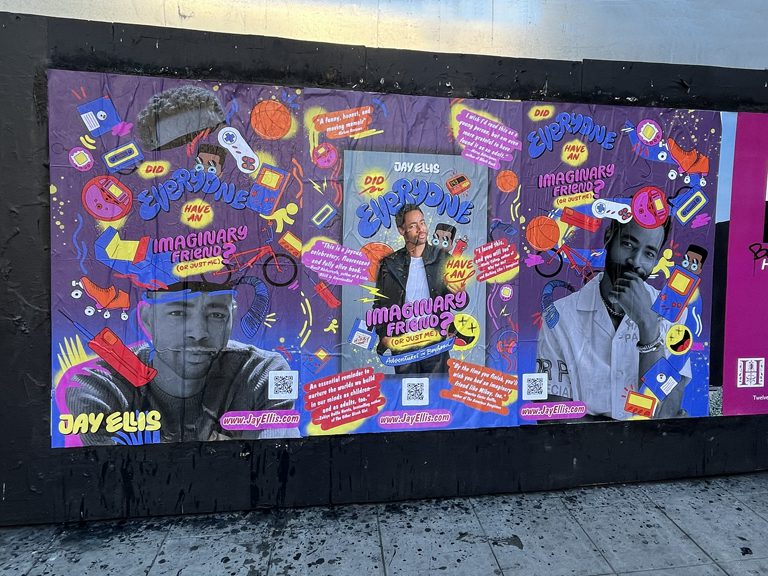
The Jay Ellis Manhattan entertainment release campaign demonstrated a principle that applies directly to Worcester: emerging market momentum — the energy generated when a brand or creative work arrives in a market that is actively building its cultural identity — produces disproportionate engagement relative to what the same campaign would generate in a fully established, fully saturated market. Manhattan is the most advertising-saturated environment in the country; a campaign there competes with decades of accumulated brand presence at every corner. But a campaign that captures a moment of genuine excitement in a market that is still defining itself hits differently.
Worcester in 2024 is a market in exactly that formative moment. The Canal District has established itself as a genuine regional nightlife destination. Polar Park has given the city a sports identity that connects it to the most passionate fan base in New England. The Green Street arts community is developing a creative neighborhood character that will attract further investment and attention. A fly posting campaign here now — while the momentum is building rather than after it has become mainstream — achieves exactly the outsized organic resonance that the Jay Ellis Manhattan deployment was designed to capture: the feeling that a brand arrived at exactly the right moment, in exactly the right place, before it became obvious that this was where to be.
The Palladium and Electric Haze blocks in the Canal District represent the highest event-night foot traffic concentration in Worcester. Installation targets in this zone include the blank warehouse and masonry walls along the primary approach blocks, utility structures in the Canal District core, and the building exterior sides that line the pedestrian routes between the T-stop, the Canal District parking, and the venue entrances. Show-night timing is a primary scheduling consideration — campaigns timed to align with major Palladium bookings achieve dramatically amplified impressions over the campaign’s live period. Smooth painted masonry and brick surfaces in this zone hold paste well and support the full one-to-two week campaign duration.
Polar Park’s game-day approach corridors along Madison Street and the blocks connecting the stadium to the Canal District commercial core are among Worcester’s most predictable high-impression posting environments from April through early September. The approach zone concentrates Red Sox fans and family visitors who are on foot, unhurried, and visually engaged with the environment between their arrival point and the stadium gates. Installation targeting in this zone prioritizes maximum visibility from the primary pedestrian approach directions; oversized 48×72 formats are particularly effective here given the open sightlines along the blocks approaching the park. Post-game deployment windows, when thousands of fans simultaneously flow from the stadium into the Canal District’s bars and restaurants, are the highest-density impression periods.
The walking corridors connecting Clark University and WPI to the Canal District — primarily Chandler Street, Main Street through the Main South neighborhood, and Highland Street — carry a consistent student and academic staff pedestrian flow across all hours of the academic week. Brick commercial building walls and masonry surfaces along these routes provide paste-friendly posting surfaces within the natural daily commute paths of the student population. Campus-zone fly posting accumulates impressions through repetition — the same student audience walks these blocks multiple times per day for the full duration of the campaign, producing a frequency of exposure that amplifies recall beyond what a single-contact placement achieves.
Green Street’s emerging gallery and studio cluster provides a creative district posting environment with a genuinely arts-native audience — local artists, arts-adjacent professionals, and the early adopters who are already engaged with the neighborhood’s creative identity before it reaches wider public awareness. Brick building walls and blank commercial exterior sides in the Green Street zone are the primary surface inventory. The Hanover Theatre approaches on Main Street add a complementary pedestrian flow from the broader county audience that comes downtown for performances — a demographic that complements the Canal District’s younger nightlife crowd with a more varied age and geographic profile. Combined coverage of both zones gives Worcester campaigns access to the full downtown entertainment-going audience across its full demographic range.
Every Worcester fly posting campaign includes full-service printing, in-house installation, market-specific neighborhood targeting, and GPS photo documentation of every placement. Two format options are available based on your coverage density or visual impact objectives.
The standard format for Worcester market coverage — effective for building density across the Canal District, campus corridors, and the Green Street and Hanover Theatre zones, with the repeated-impression frequency that drives recall in a market where your audience moves through the same blocks regularly.
Duration: 1–2 weeks depending on weather and surface conditions.
High-impact anchor format for Worcester’s most open sightline corridors — the Polar Park approach blocks, blank warehouse walls in the Canal District, and the wide commercial stretches of Main Street. Scale-dominant placements that command attention at the city’s highest-traffic intersections.
Duration: 1–2 weeks depending on weather and surface conditions.
Worcester combines a genuine nightlife and music venue concentration in the Canal District, a newly anchored sports audience through Polar Park, two nationally ranked university campuses adjacent to the downtown, and an emerging arts district along Green Street — all within a compact, walkable downtown core. That density of audience-generating institutions in a relatively small geographic footprint creates fly posting conditions where your campaign reaches multiple distinct audience segments simultaneously without requiring the logistical footprint of a much larger city. And because the market is less advertising-saturated than Boston, each individual posting achieves higher visual salience per dollar spent.
The Canal District’s event calendar — driven primarily by the Palladium’s national concert booking schedule and the club programming at Electric Haze — creates predictable spikes in pedestrian density that fly posting campaigns can be timed to capture. When a major touring act plays the Palladium, the blocks surrounding the venue carry thousands of concertgoers who are on foot, in a leisure state, and visually engaged with their environment before and after the show. A campaign installed 48 hours before a major booking and still live on show night accumulates a concentrated block of impressions from exactly the culturally active audience most brands in the entertainment, music, and lifestyle categories are trying to reach.
Polar Park’s 80-home-game schedule from April through early September turns the Canal District approach corridors into a consistent, predictable sports audience concentration multiple times per week across the spring and summer months. For campaigns that are active during the baseball season, the Polar Park game calendar is factored into installation timing to ensure the campaign is live and visible during the game-night windows that produce the highest pedestrian density along the stadium’s approach routes. The Worcester Red Sox fan base — loyal, Red Sox-affiliated, and largely local central Massachusetts residents — is a commercially valuable consumer audience with strong community identity.
Clark and WPI together bring several thousand students and thousands more faculty and staff into the walkable area adjacent to Worcester’s downtown posting zones. Clark’s liberal arts student community — socially engaged, culturally forward, and highly active in the Canal District’s music and nightlife scene — overlaps strongly with the entertainment and arts brand audience. WPI’s engineering and technology student population represents the next generation of high-earning professionals and early adopters for technology, design, and premium consumer brands. Together, these two campuses give Worcester a university-adjacent audience that outpunches the city’s size in terms of cultural influence and consumer potential.
Green Street is Worcester’s emerging creative district — a neighborhood-scale zone of galleries, artist studios, and arts community gathering spaces that is actively developing its creative identity. It matters for brand campaigns because it represents the earliest adopter layer of Worcester’s arts audience: the people who are already invested in the neighborhood before it becomes widely recognized. Fly posting campaigns in Green Street reach this audience in a genuinely arts-native environment where creative brand presence is received with the most positive default assumption. Brands that show up in Green Street now are associated with the neighborhood’s creative momentum rather than arriving after it has peaked.
Worcester and Springfield are complementary rather than interchangeable. Worcester is closer to Boston, more nightlife-driven, with a stronger music venue ecosystem and more robust university campus pedestrian traffic. Springfield is the Pioneer Valley anchor with a stronger tourism and regional visitor component, particularly from the Hall of Fame and MGM Springfield. A brand that wants central Massachusetts coverage would ideally run both markets; a brand choosing between them should select based on audience profile — entertainment and music campaigns are better served by Worcester’s Canal District, while regional brand campaigns with western Massachusetts scope are better anchored in Springfield.
Yes — Worcester’s regional anchor role means that a campaign based in the downtown posting zones reaches not just city residents but also the regional visitor flow from Shrewsbury, Grafton, Millbury, Westborough, Northborough, and the broader Worcester County population that comes into the city for events, dining, and entertainment. For clients who want to extend fly posting beyond Worcester proper, nearby communities like Framingham to the east or Fitchburg to the north offer supplementary posting zones that can be added to a Worcester-anchored campaign within the same deployment plan.
The Canal District’s industrial heritage has left a substantial inventory of brick masonry building walls, painted concrete surfaces on the older warehouse structures, and smooth exterior sides on the mixed-use commercial buildings that line the venue blocks. Plywood construction hoarding appears on blocks undergoing renovation or development, adding smooth surface inventory to the mix. The brick and painted masonry surfaces common throughout the Canal District are among the most durable fly posting surfaces available in Worcester — paste adheres well to their texture and cures into a bond that holds through typical central Massachusetts weather conditions across the one-to-two week campaign duration.
Late spring through early fall is the peak period for Worcester fly posting — Polar Park’s April-through-September schedule layers a sports audience over the Canal District’s baseline nightlife traffic, producing the highest overall pedestrian density of any window in the year. The fall academic semester launch in late August and September reactivates the Clark and WPI campus pedestrian flows. Winter campaigns remain viable in the Canal District’s venue zone, which maintains strong event-night traffic year-round, but outdoor durability is a weather-planning factor in the January-March window. Year-round campaign guidance is part of every Worcester consultation.
The Hanover Theatre’s event calendar — Broadway touring productions, comedy headliners, family shows, and classical programming — draws audiences from across Worcester County on a regular schedule, pulling suburban and regional visitors into the downtown blocks surrounding the theatre on performance nights. A fly posting campaign active during a major Hanover production run reaches not only the core Canal District audience but also the broader county audience that comes downtown specifically for the performance and spends time in the surrounding blocks before and after the show. For campaigns targeting a slightly older or more family-oriented demographic than the Canal District’s primary nightlife audience, the Hanover Theatre approach corridors are a valuable supplementary zone.
Most national brands treat Worcester as an afterthought — if they think of it at all, it’s as a city to hit if the Boston budget has room left over. That underestimation creates an opportunity. In a market where your campaign faces almost no fly posting competition from other brands, every placement achieves maximum visual salience. The Canal District audience is active, culturally engaged, and financially able to act on brand impressions. The university communities adjacent to downtown represent valuable long-term consumer relationships. And Worcester’s role as the central Massachusetts regional anchor means your investment here reaches a market that is substantially larger than the city limits alone. For brands building eastern New England presence systematically, Worcester deserves primary treatment — not because it is as large as Boston, but because it is exactly the kind of high-receptivity, low-competition market where fly posting generates its best returns.
Yes — every element of your Worcester fly posting campaign is handled by American Guerrilla Marketing’s own team. Printing is produced by our crew; installation is executed by our crew; documentation is captured by our crew. There are no subcontractors, no regional print vendors, and no handoffs between vendors at any stage. This end-to-end in-house model is how we maintain consistent quality, clear accountability, and the direct operational control that allows us to respond quickly when campaign timing or logistics need to adjust. It is also how we guarantee that your campaign looks in Worcester exactly the way it looks in any other market we operate in.