American Guerrilla Marketing
Nationwide Service
Media planning, media buying, billboard advertising, & guerrilla marketing
Street-level poster campaigns across Reno’s Midtown arts corridor, downtown Virginia Street entertainment spine, UNR campus perimeter, and Riverwalk outdoor recreation zone. AGM plans, prints, installs, and geo-tags every Reno campaign from our Nevada regional office.
Reno occupies a unique position in the Nevada fly posting landscape. It is not Las Vegas — it does not share Las Vegas’s visitor volume, its entertainment-tourism economy, or its global cultural visibility. What Reno has instead is something rarer in the American West: a genuine, locally rooted cultural scene with its own distinct identity, its own creative community, its own university-adjacent intellectual culture, and a progressive civic sensibility that has been deepened and enriched by decades of proximity to Burning Man. These are the conditions that make fly posting — street poster advertising that earns credibility through cultural placement rather than purchased reach — particularly well-suited to the Reno market.
The Party to the Polls campaign by Daybreaker demonstrated exactly how fly posting performs when it is placed in a culturally engaged, community-rooted market. Daybreaker’s 15-state tour was built on the recognition that some of the most energized civic and cultural audiences in America are not in the largest cities — they are in the mid-size markets where community identity is strong, where people feel ownership of their local cultural infrastructure, and where a campaign that speaks to that identity registers with genuine resonance rather than generic mass-market noise. Reno is that kind of market. It is a city where the creative class, the university community, the arts-and-tech professional sector, and the outdoor recreation enthusiast coexist in a compact geographic footprint that concentrates all of these audiences in a small number of walkable neighborhood zones — exactly the kind of environment where fly posting delivers outsized returns relative to market size.
Midtown Reno — the stretch of South Virginia Street between Plumb Lane and California Avenue — is the cultural anchor of this market. The neighborhood’s density of independent restaurants, vintage shops, craft beverage producers, galleries, and food halls has made it the gathering point for Reno’s most culturally active consumers. These are not passive entertainment consumers watching events happen to them; they are engaged community participants who shop local, support independent creative businesses, attend arts events, and read the visual environment of their neighborhood with the attentive literacy that street poster advertising depends on. A fly posting campaign placed correctly in Midtown Reno does not read as advertising — it reads as content from someone who understands the neighborhood’s culture and has something worthwhile to say to the people who live in it.
The University of Nevada, Reno adds a second major audience concentration to the city’s fly posting equation. UNR enrolls approximately 21,000 students, bringing a young adult population to the North Virginia Street campus perimeter and the Center Street corridor that generates year-round pedestrian traffic with the kind of cultural brand sensitivity that makes wheatpaste and street poster advertising a native format rather than an intrusion. Wolf Pack athletics — particularly football and basketball — add event-driven foot traffic surges that temporarily amplify the campus perimeter’s impression potential well beyond its typical pedestrian volume. The academic community at UNR extends beyond students: faculty, researchers, and staff create a second educated adult demographic in the campus zone that skews toward arts, technology, and progressive consumer categories.
Burning Man’s influence on Reno’s cultural character runs deeper than the annual event itself. For decades, Burning Man has functioned as a cultural incubator for the progressive, experimentally minded creative community that builds its year-round life in Reno. Participants who return from the playa bring with them an aesthetic sensibility, a community orientation, and a set of values — around creativity, self-expression, community building, and environmental consciousness — that have become woven into the fabric of Reno’s independent cultural scene. The Burning Man regional culture that concentrates in Reno is an audience that responds strongly to street-level, hand-crafted, physical brand presence — the kind of authenticity that fly posting carries inherently and that digital advertising can only simulate imperfectly. For brands whose identity aligns with creativity, community, sustainability, outdoor culture, or progressive consumer values, Reno’s Burning Man-adjacent creative community is one of the most receptive fly posting audiences in the American West.
Reno’s evolution from a gaming-town identity to an arts-and-technology market has been underway for over a decade and has accelerated meaningfully in the past five years. The arrival of technology companies and remote workers drawn by Nevada’s tax environment and proximity to the Bay Area has expanded Reno’s professional population with a demographic that skews toward premium consumer categories and cultural engagement. The arts infrastructure that has grown around the Midtown district, the National Bowling Stadium’s transformation into a convention anchor, and the sustained investment in downtown redevelopment along Virginia Street have produced a Reno that reads differently to a campaign strategist than the Reno of twenty years ago. The city’s fly posting surface landscape reflects this evolution: Midtown’s cultural density, downtown’s active development construction, and the Riverwalk’s outdoor-oriented leisure zone collectively offer a campaign environment suited to sophisticated brand messaging aimed at a sophisticated local audience.
AGM’s regional Nevada office at 5940 S Rainbow Blvd PMB 1205, Las Vegas NV 89118 — (702) 996-1806 — coordinates Reno fly posting campaigns from the Nevada base that serves all of the state’s primary markets. Reno campaigns are planned with Northern Nevada-specific surface knowledge: the Midtown district’s current construction activity, the downtown Virginia Street corridor’s barrier inventory, and the campus perimeter’s surface conditions are assessed in advance of each campaign execution. The in-house print production and direct installation approach that AGM applies across all Nevada markets applies to Reno in full — the same crew accountability, the same geo-tagged photo documentation standard, and the same post-campaign proof package that clients in Las Vegas and Henderson receive. Recognition with the Best of Brooklyn award and a client roster including Netflix, The Onion, EA Sports, Biossance, and Shepard Fairey reflects the operational precision that AGM brings to every market, including Reno.
AGM's Nevada regional office plans and executes Reno fly posting campaigns across Midtown's S Virginia Street arts corridor, downtown Virginia Street, the UNR campus perimeter, and the Riverwalk outdoor recreation zone. Every poster is printed, installed, and geo-tagged in-house — the same direct-execution standard AGM holds across every Nevada market.
Select a city to explore Fly Posting Advertising opportunities.
Reno’s fly posting surface landscape is concentrated in four zones that reflect the city’s distinct cultural geography — from the arts-scene density of Midtown to the entertainment core of downtown, the academic corridor of UNR, and the outdoor recreation axis of the Riverwalk. Each zone reaches a different segment of Reno’s consumer population and calls for different placement strategy.
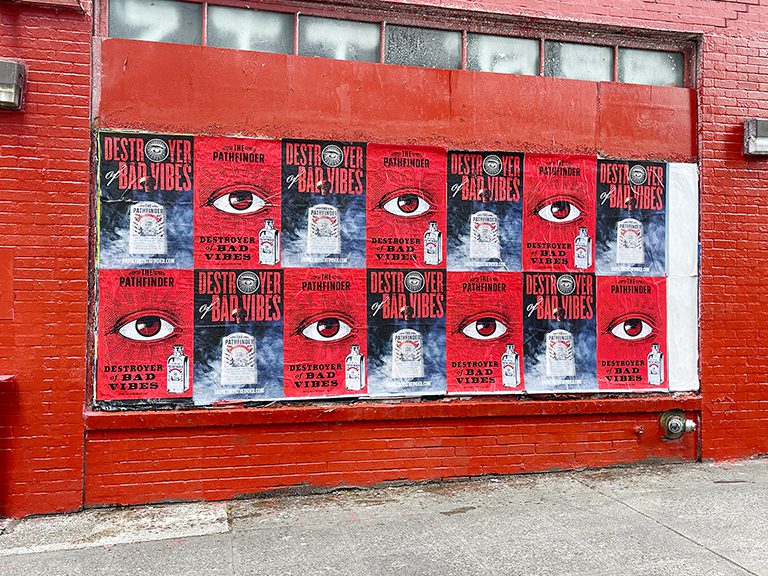
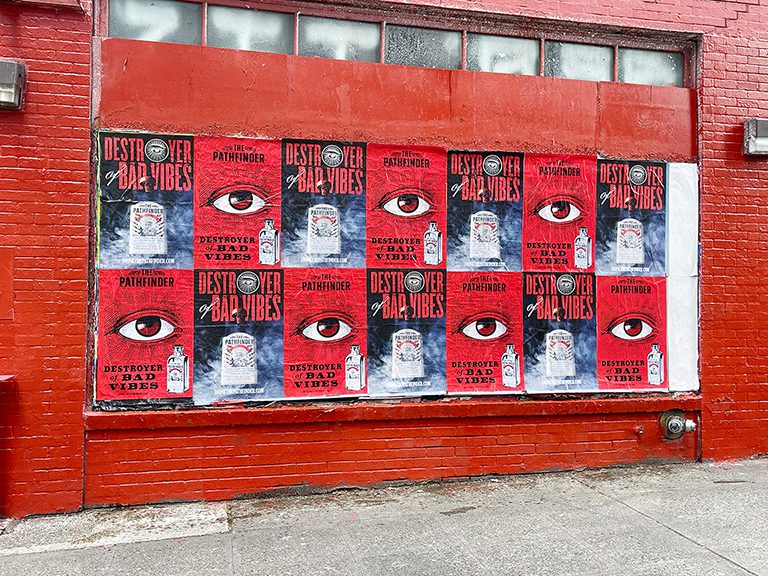
Midtown Reno is the most strategically important fly posting zone in the city for brands targeting Reno’s culturally engaged, independent-minded consumer population. The neighborhood’s South Virginia Street spine between Plumb Lane and California Avenue concentrates the highest density of culturally relevant consumer destinations in Northern Nevada: independent craft beverage producers, vintage and consignment shops, gallery spaces, food halls, farm-to-table restaurants, and the kind of independent creative businesses that signal a neighborhood’s cultural vitality to the educated consumer. Poster culture is already part of Midtown’s visual surface vocabulary — band posters, event flyers, and community announcements occupy walls and windows throughout the district, which means a professionally executed fly posting campaign integrates into the existing visual language of the neighborhood rather than standing apart from it as an incongruous advertising imposition. Construction barriers from ongoing Midtown development projects provide fresh, premium fly posting surfaces. For 48×72 large-format dominance installations, the blank exterior walls of Midtown’s commercial buildings along S Virginia St are among the most compelling fly posting surfaces in Northern Nevada — large enough to carry the format, positioned at pedestrian scale, and visible from both vehicle and foot traffic movement along the corridor.
The historic casino and entertainment core of downtown Reno, running along Virginia Street from 1st Street to 5th Street, has undergone sustained redevelopment investment that has added independent venues, public art installations, and a pedestrian character that extends beyond the legacy casino tourism infrastructure. The Reno Arch — the iconic “The Biggest Little City in the World” neon landmark — anchors the corridor’s visual identity and makes the downtown zone instantly recognizable as a specific place with a specific cultural story. Independent restaurants, bars, live music venues, and arts spaces have made downtown Reno a destination for local residents and regional visitors alike, generating a mixed foot traffic audience that combines the older casino-tourism visitor with the younger Reno resident who frequents downtown for its independent cultural programming. Active downtown redevelopment has produced construction barrier surfaces at multiple points along the Virginia Street corridor — among the cleanest and most visible fly posting placements available in the city. For brands that want to reach both the legacy Reno audience and the new resident demographic that has moved to the city with the arts-and-tech wave, downtown Virginia Street’s mixed visitor-and-local foot traffic is the surface environment that captures both simultaneously.
The UNR campus perimeter — bounded broadly by North Virginia Street to the west and Center Street to the east, with the main campus anchored between them — generates consistent pedestrian traffic from the university’s approximately 21,000 students and its faculty, staff, and graduate research community year-round. The campus-adjacent commercial zone along North Virginia Street and the surrounding blocks supports the independent food, retail, and service infrastructure that the university community accesses daily. Fly posting on campus perimeter walls, along the pedestrian corridors connecting campus to commercial destinations, and on the surfaces of the commercial buildings that serve the university population reaches this concentrated young adult audience at the most routine moments of its daily movement — walking to class, heading to lunch, navigating between residential and academic zones. Wolf Pack game days — particularly Nevada Wolf Pack football home games at Mackay Stadium — create significant event-driven foot traffic surges in the campus zone that temporarily amplify impression volume well beyond typical daily pedestrian counts. For brands targeting the Reno young adult and academic professional demographic, the UNR campus perimeter offers a geographic concentration of that audience that no other Reno zone replicates.
The Riverwalk District along the Truckee River — Reno’s urban outdoor recreation spine — serves a consumer demographic that is distinctly different from both the Midtown arts community and the downtown entertainment visitor. The Truckee River corridor attracts kayakers, cyclists, runners, dog walkers, and the outdoor recreation enthusiast demographic that Burning Man culture has concentrated in the Reno area over decades of playa participation. This is an audience of physically active, environmentally conscious, and community-oriented consumers whose brand affinities align with outdoor recreation equipment, health and wellness products, craft food and beverage, sustainable lifestyle brands, and the progressive consumer categories that have grown alongside Reno’s arts-and-tech identity. Weekend foot traffic along the Riverwalk is particularly strong from spring through fall, when the river corridor becomes one of Reno’s most actively used leisure amenities. Fly posting surfaces adjacent to the Riverwalk — building sides and commercial walls facing the river corridor, construction barriers from downtown development projects near the waterfront, and the commercial zones that serve the outdoor recreation audience — reach this demographic in its natural leisure environment, where attention is directed outward at the landscape and receptivity to street-level visual messaging is at its highest.
Reno’s compact geographic footprint — where Midtown, downtown, the UNR perimeter, and the Riverwalk are all accessible within a short drive of each other — makes multi-zone campaign execution particularly efficient. Both primary fly posting formats are available for Reno campaigns, with format selection driven by whether the campaign objective is broad zone coverage or concentrated surface dominance in a specific Reno neighborhood.
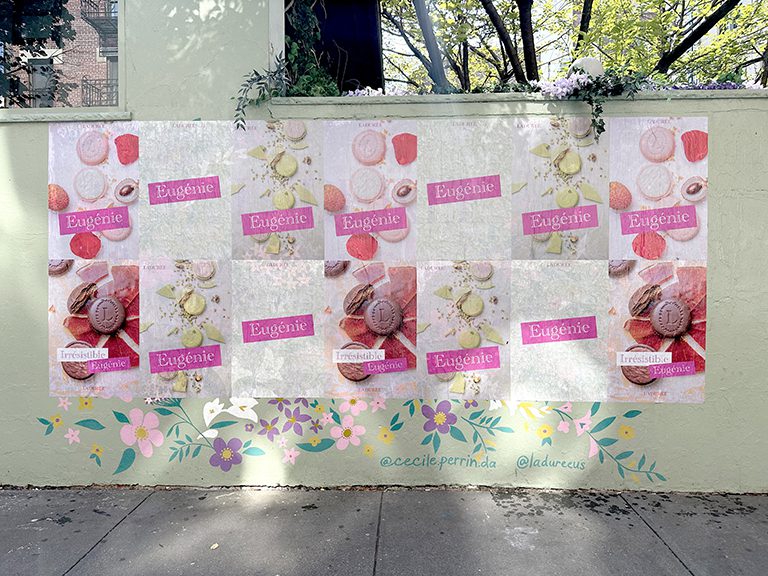
The 24×36 standard format is the right instrument for Reno campaigns that need to cover multiple districts within a unified campaign window — a Midtown and downtown buy running simultaneously, or a UNR perimeter and Riverwalk combination that reaches the student and outdoor recreation audiences within a single installation. At two feet wide by three feet tall, the standard format integrates naturally into Midtown Reno’s existing street-level visual culture, where independent poster placements are a familiar part of the neighborhood’s surface identity. Per-unit efficiency in the standard format allows campaigns to achieve the placement density that multi-zone Reno coverage requires without overextending budget. For brands new to the Reno market that want to test multiple audience segments before concentrating resources in a single zone, the 24×36 format provides the flexibility that a first-campaign coverage strategy needs.
The 48×72 large format — four feet wide by six feet tall — finds its most powerful Reno application on the blank exterior walls of Midtown’s commercial buildings along S Virginia Street and on the construction barriers of downtown’s active development projects. At this scale, an installation becomes a neighborhood-defining visual presence rather than a surface element that competes for attention within a complex visual field. The Midtown corridor’s building stock includes structures with street-facing exterior walls that carry the 48×72 format without visual crowding, positioning large-format installations at pedestrian eye level along one of Northern Nevada’s most culturally active commercial streets. For campaigns announcing major Reno event programming, entertainment launches, or brand entries into the Northern Nevada market with a statement presence, the 48×72 format on a Midtown or downtown Virginia Street surface delivers the kind of singular visual authority that the standard format cannot generate at any quantity.
Both formats run for one to two weeks on-surface in Reno. The Northern Nevada climate — drier than coastal markets, with less atmospheric moisture than even the Las Vegas desert floor — maintains paste adhesion and color saturation through the full campaign window. Reno campaigns can be structured as Northern Nevada standalone buys or as part of a combined Las Vegas and Reno statewide Nevada execution that reaches both Southern and Northern Nevada’s primary urban consumer populations within a single campaign strategy. AGM’s Nevada regional office at (702) 996-1806 coordinates Reno campaign planning alongside Las Vegas and other Nevada market executions. National office contacts: Brooklyn NY (646) 776-2770 · Miami FL (305) 792-4523 · Orlando FL (321) 261-0402 · Los Angeles CA (213) 328-4480.
Award Winning Personalized Service
You will get thoughtful, devoted, and individualized attention from our experienced, qualified, and professional personnel. Being one of the most illustrious agencies in Brooklyn, New York, American Guerrilla Marketing has been awarded the Best of Brooklyn title.
Nationwide
Industry City, Brooklyn, New York 11232
American Guerrilla Marketing
Hours
Mon - Fri: 9 AM - 5 PM
Sat & Sun: Closed
Automate your campaign with AGM’s Request for Proposal Builder. Simply answer a few quick questions about your campaign goals, markets, and timeline, and the system will generate a tailored presentation with recommended strategies, quantities, and pricing. Click the RFP Builder to instantly receive your customized proposal.
Reno campaign planning begins with a conversation about the audience and zone priorities that reflect Reno’s specific cultural geography. Which Reno consumer does the campaign need to reach — the Midtown arts-scene participant, the downtown entertainment visitor, the UNR student and academic, or the Riverwalk outdoor recreation enthusiast? Each of these audiences concentrates in a different zone, moves through different surface environments, and responds to different campaign aesthetics. The zone selection decision is not generic — it requires understanding of how Reno’s distinct neighborhoods relate to each other and which audience is most valuable for the specific brand and campaign objective being pursued.
Surface conditions in Reno are assessed in advance of each campaign execution by AGM’s Nevada operations team. Midtown’s construction barrier availability changes as development projects cycle through their phases — fresh surfaces come online as new projects break ground, and existing barriers are removed as buildings near completion. Downtown Virginia Street’s barrier inventory reflects the pace of active redevelopment across Reno’s historic core. UNR perimeter surfaces are evaluated against the academic calendar to confirm which campaign windows align with peak student presence on and around campus. Current surface conditions are confirmed close to installation timing rather than assumed from prior-campaign records, which means every Reno campaign is placed against an accurate picture of what is actually available at execution time.
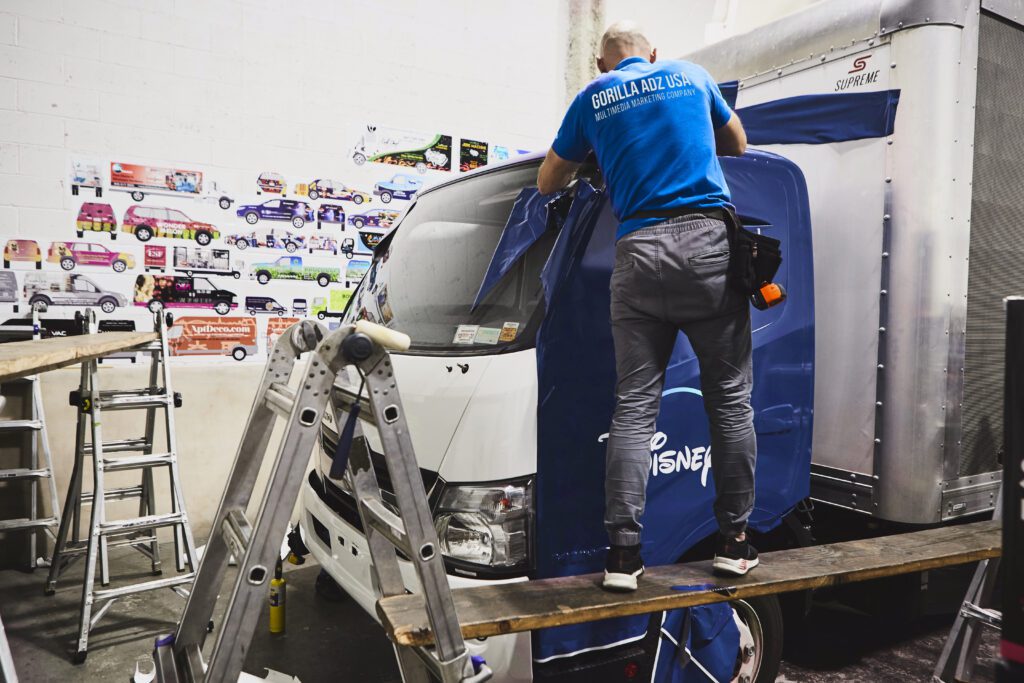
Print production for Reno campaigns is handled entirely in-house at AGM. The posters that go up on Reno surfaces are printed by the same organization executing the installation — not sourced from a regional print vendor whose quality standards and substrate specifications may differ from campaign to campaign. In-house production closes the quality control loop: color accuracy to brand specifications, poster weight and finish appropriate to outdoor paste adhesion, and dimensional precision that matches the intended installation format are all controlled by a single production chain without vendor handoffs. Clients submitting creative assets for Reno campaigns receive finished posters that reflect the brand standards provided, not an approximation filtered through an external vendor’s production tolerances.
Installation in Reno is executed by the AGM crew operating from the regional Nevada base. Every Reno placement is geo-tagged with GPS coordinates at the time of installation and photographed immediately on completion. The geo-tagged photo documentation package delivered to Reno campaign clients captures every placement location across all zones included in the campaign — Midtown, downtown, UNR perimeter, Riverwalk — with the same completeness and geographic verifiability that AGM delivers across all Nevada markets. Clients receive this documentation as a post-campaign proof record that confirms every installation in the campaign reached the zones and surfaces specified in the original plan. For brands running Reno as part of a combined Nevada campaign with Las Vegas, the documentation package covers both markets in a unified delivery through the same regional account relationship.
Campaign monitoring during the active one-to-two-week surface window allows the Nevada operations team to identify any Reno placements that require reinstallation attention and respond from the regional base. The geographic separation between Reno and the Las Vegas regional office — approximately 450 miles — means Reno campaign monitoring relies on the crew returning with the documentation captured at installation time, supplemented by local-area partnerships that can confirm surface conditions during the active window if the campaign requires mid-run assessment. For campaigns requiring a higher level of active monitoring during the Reno campaign window, AGM discusses monitoring logistics during the campaign planning phase and structures the response capability accordingly.
Burning Man has functioned as a cultural formation engine for Reno’s creative and progressive community since the event moved to Nevada’s Black Rock Desert in the early 1990s. Decades of participants returning from the playa to Reno have built a local community that shares certain consistent values: creative self-expression, communal engagement, environmental consciousness, and a distrust of purely commercial culture that makes authentic physical media — like street poster advertising — more resonant than slick digital advertising. This Burning Man-adjacent creative community represents a Reno consumer segment that is unusually receptive to fly posting’s visual language, particularly for brands in outdoor recreation, sustainability, arts and culture, craft food and beverage, and the progressive lifestyle categories that align with the community’s value system. Reaching this audience through street-level placement in Midtown and the Riverwalk corridor is inherently more credible than reaching it through digital channels it has learned to tune out.
Midtown Reno is the neighborhood along South Virginia Street between Plumb Lane and California Avenue that has emerged as the anchor of Reno’s independent cultural scene over the past decade. The district’s concentration of craft beverage producers, vintage retail, independent restaurants, gallery spaces, and food halls makes it the geographic center of Reno’s culturally engaged consumer activity — the neighborhood where the city’s creative class shops, eats, socializes, and gathers for arts and community events. It is the most strategically important fly posting zone in Reno because it concentrates the highest density of culturally engaged foot traffic in a compact, walkable corridor, and because the neighborhood’s existing visual culture — band posters, event flyers, mural commissions — has conditioned its residents to read and engage with street-level imagery as a natural part of the neighborhood’s communicative fabric. A well-executed fly posting campaign in Midtown Reno is not interrupting the neighborhood; it is participating in its ongoing visual conversation.
The University of Nevada, Reno operates on a traditional academic calendar that creates distinct high-foot-traffic windows around the campus perimeter and adjacent commercial zones. Fall semester arrival — typically late August through early September — brings approximately 21,000 students back to campus along with a surge of move-in activity that concentrates the student and family demographic in the UNR zone. Spring semester launch in January and the period leading up to graduation in May are similarly high-traffic moments. Wolf Pack football home games on fall Saturdays create the highest single-event foot traffic surges in the campus zone, temporarily concentrating the university audience, alumni, and sports-entertainment visitors in the North Virginia Street and Center Street area at volumes well above typical weekday pedestrian counts. Brands targeting the Reno young adult and university community should align campaign installation timing with fall semester opening or a major Wolf Pack home game window to maximize impression volume in the UNR perimeter zone.
Reno and Las Vegas are best understood as genuinely different campaign environments rather than as the same Nevada market at different scales. Las Vegas is built around visitor volume, entertainment tourism, and a transient audience that moves through the city’s pedestrian zones during multi-day stays for leisure and convention attendance. Reno’s fly posting audience is primarily local and residential — a city whose permanent population of arts-community participants, university students and faculty, Burning Man-adjacent creatives, outdoor recreation enthusiasts, and arts-and-tech professionals form the core of the fly posting impression base. Campaigns in Las Vegas reach a high-volume, high-turnover visitor audience; campaigns in Reno reach a smaller but more locally embedded and culturally engaged resident population. The creative brief, the surface zone strategy, and the campaign messaging are all meaningfully different between the two markets, and campaigns that treat them as interchangeable are unlikely to perform well in either.
The Truckee River Riverwalk corridor in Reno serves an audience of outdoor recreation enthusiasts — kayakers, cyclists, trail runners, dog walkers, and the physically active leisure consumer that Burning Man’s decades of influence in the region have concentrated in Reno’s population. This demographic skews toward active lifestyle consumer categories: outdoor apparel and equipment, endurance sports nutrition and supplements, craft beverage including craft beer and functional hydration, sustainable food and wellness brands, and the progressive lifestyle categories that align with an environmentally conscious, physically engaged consumer identity. The Riverwalk audience is particularly strong from spring through fall, when the river corridor reaches its highest leisure foot traffic volume, and weekends are the peak impression windows. For brands in outdoor lifestyle, health and wellness, and sustainability-forward consumer categories, the Riverwalk demographic is one of the most targeted audiences available in the Northern Nevada fly posting market.
Yes — and the evolution is well advanced enough that framing Reno as a casino town for campaign planning purposes will produce an incorrectly targeted campaign. The Reno that exists in 2026 has a robust independent arts scene anchored in Midtown, a technology sector that has grown with Bay Area remote work migration and Nevada’s tax environment, a university community of 21,000 students and thousands of faculty and staff, an outdoor recreation demographic shaped by Burning Man culture and geographic proximity to the Sierra Nevada, and a downtown corridor in active redevelopment that has attracted a new generation of independent hospitality and creative businesses. The casino infrastructure is still present, but it no longer defines the cultural character of the city the way it did two decades ago. Fly posting campaigns that speak to Reno’s creative, educated, and outdoor-oriented contemporary identity will outperform campaigns built around the old casino-town framing in the zones where culturally engaged fly posting performs best.
Downtown Reno’s primary fly posting surfaces include construction barriers from the active redevelopment projects along and near Virginia Street, which provide fresh, clean, well-positioned panels in the highest-foot-traffic corridors of the downtown zone. Blank exterior building walls on commercial structures along the Virginia Street spine and on the side streets that connect downtown’s entertainment corridors to the residential and commercial blocks surrounding them offer additional surface inventory, particularly for larger format placements where wall scale supports the 48×72 format without dimensional constraints. Utility infrastructure and transitional building façade sections in the blocks between downtown’s established entertainment core and the developing zones to the north and east provide supplemental surface options. All downtown Reno surfaces are confirmed current through advance scouting prior to each campaign execution — construction phases in the active redevelopment zone change surface availability on a rolling basis, and AGM’s execution plan reflects conditions at the time of installation rather than a static inventory list.
Midtown Reno has a genuine existing fly posting and independent poster culture that makes professionally executed wheat paste campaigns feel native to the neighborhood rather than externally imposed. Band posters, event announcements, community organization flyers, and arts-scene promotions have been part of Midtown’s surface visual vocabulary for years — the result of a local creative and music community that has used street-level physical media as a primary communication channel for its events and projects. This existing poster culture means that a fly posting campaign in Midtown Reno is entering a visual environment that is already literate in the format, whose residents interpret street-level poster presence as a legitimate and familiar form of neighborhood communication. The same poster-culture literacy exists in pockets of downtown Reno around the independent music and arts venues. For campaign aesthetics that prioritize cultural authenticity, Reno’s existing poster culture makes it a particularly receptive environment for the fly posting format.
AGM’s Nevada regional office at 5940 S Rainbow Blvd PMB 1205, Las Vegas NV 89118 — (702) 996-1806 — coordinates Reno campaign planning, logistics, and documentation from the Nevada base that also serves Las Vegas, Henderson, and North Las Vegas. Reno campaigns are planned with Northern Nevada-specific surface knowledge built through prior market execution in the city’s primary fly posting zones. Installation crews travel from the Nevada regional base to execute Reno campaigns, with surface scouting conducted in advance to confirm current availability across Midtown, downtown, the UNR perimeter, and the Riverwalk corridor. Post-installation documentation is delivered through the same regional account relationship as all Nevada campaigns — a single contact point that manages the full Nevada geographic scope without requiring separate regional operators for Northern Nevada. For brands running Reno as part of a combined Nevada state campaign with Las Vegas, coordination flows through the same single regional point of contact with no additional operational friction.
Reno’s fly posting calendar has two primary seasonal windows that align campaign timing with peak audience concentration. Fall — from mid-August through October — captures the UNR fall semester launch, Wolf Pack football home games, the residual Burning Man afterglow when participants return from the Black Rock Desert and the regional community is at its most energized, and the last weeks of Riverwalk outdoor recreation season before Sierra Nevada autumn weather shifts the corridor’s character. Spring — from March through May — captures the UNR spring academic programming, the Riverwalk’s return to full outdoor recreation activity as weather improves, and the community events that mark Reno’s cultural calendar through late spring. Winter campaigns in Reno are viable but see reduced Riverwalk foot traffic and a more interior-focused campus audience dynamic. Year-round campaign viability in Midtown and downtown is stronger than in the Riverwalk zone, which is seasonally dependent on outdoor recreation activity.
University of Nevada Wolf Pack home games — particularly Nevada Wolf Pack football games at Mackay Stadium, which seats approximately 30,000 — generate the largest single-event foot traffic surges in the Reno market, temporarily concentrating the student, alumni, and sports-entertainment audience in the North Virginia Street and Center Street corridors surrounding the campus at volumes well above any typical weekday or weekend pedestrian count. Fly posting campaigns with placements on campus perimeter surfaces in advance of a high-attendance home game accumulate impression volume from the game-day foot traffic in addition to the normal academic-year pedestrian baseline, creating a compound impression effect that makes game-day-aligned campaign timing significantly more impactful than equivalent placements during off-game weeks. For brands targeting the university demographic and the broader Northern Nevada sports entertainment audience, structuring Reno campaign installation timing around a Wolf Pack home game window is one of the highest-yield impression strategies available in the market.
Culturally engaged mid-size markets like Reno have been productive fly posting environments for a consistent set of brand categories across AGM’s campaign history. Entertainment and live event campaigns — concerts, festivals, residencies, film releases — perform particularly well in markets where street-level poster culture is already part of the community’s cultural communication fabric. Consumer lifestyle brands with arts-adjacent or outdoor-recreation-adjacent identities find that Reno’s creative and physically active consumer population responds to the format’s physicality with brand association quality that exceeds digital impression benchmarks. Independent food and beverage brands, craft producers, fitness and wellness companies, and technology brands with a community orientation have all found culturally engaged markets like Reno to be among their most efficient fly posting environments. The common thread is a target consumer who engages actively with the physical environment of their neighborhood — walking, looking, choosing where to spend time — and who interprets street-level brand presence as a signal of authenticity rather than an unwanted advertising intrusion.