American Guerrilla Marketing
Nationwide Service
Media planning, media buying, billboard advertising, & guerrilla marketing
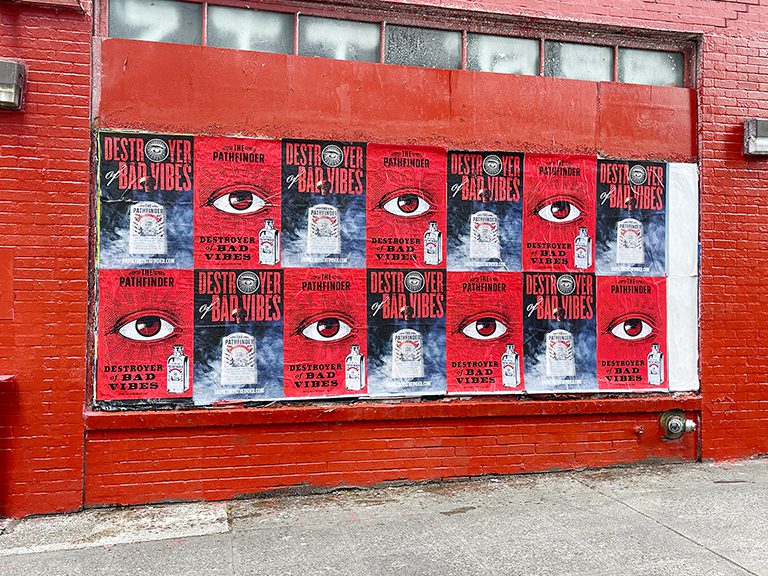
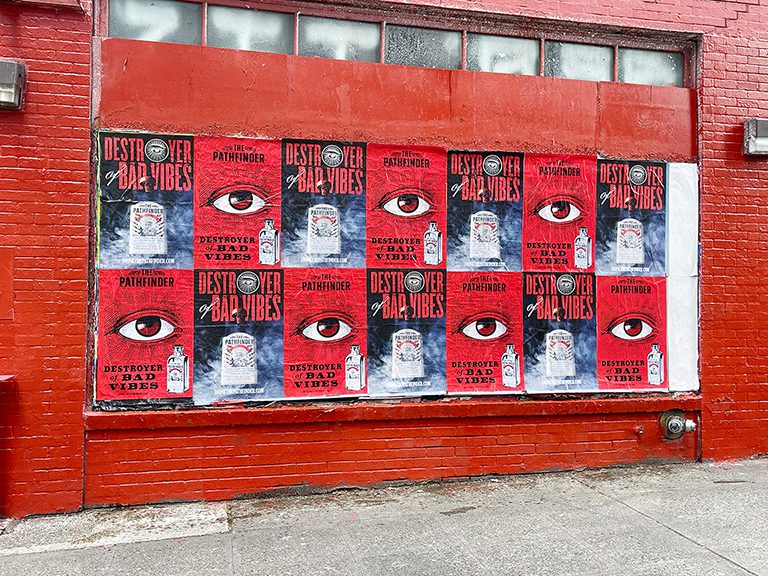
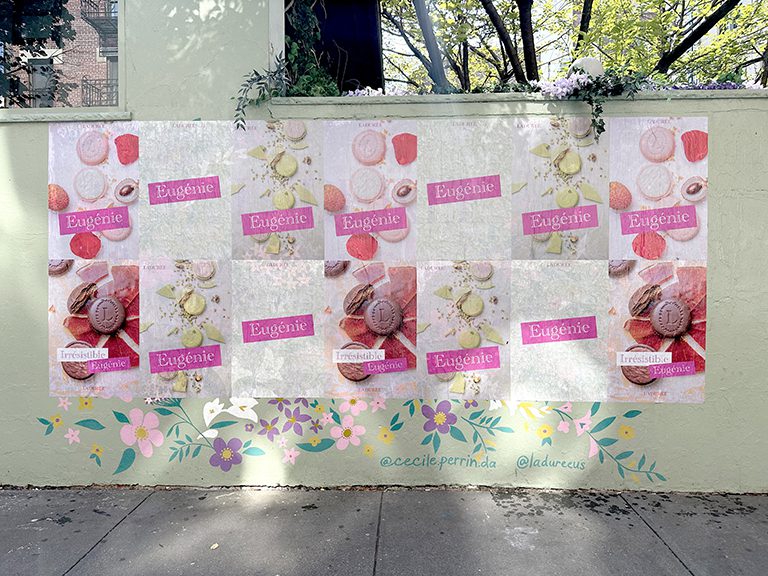
Roosevelt Row’s arts district explosion changed the rules for street advertising in the Southwest. Phoenix’s creative class — 21-to-35, culturally wired, and moving through the city’s best corridors every week — is exactly who fly posting is built to reach.
Phoenix is having a cultural moment that advertising professionals outside the Southwest have been slow to fully absorb. Roosevelt Row — the stretch of arts galleries, independent restaurants, music venues, and creative office spaces running along Roosevelt Street between Central Avenue and 16th Street — has developed over the past decade into one of the most genuinely active arts districts in the American Sun Belt. It didn’t happen overnight, and it wasn’t manufactured by a city marketing department. It happened because artists, small business owners, and independent cultural operators chose to build something real in a stretch of Phoenix that had the bones of a neighborhood waiting to happen.
What that trajectory means for fly posting campaigns is significant. When a street scene develops organically rather than through top-down development, the audience that inhabits it has a specific quality: they pay attention. They walk through the neighborhood with their eyes open because the neighborhood consistently surprises them with new things to notice. They share content from the street on social media because street-level visual culture is part of what drew them to the area in the first place. A fly posting campaign installed on Roosevelt Row lands in that environment — among an audience that is primed to engage with visual creative in a way that other Phoenix corridors simply cannot replicate.
The First Fridays art walk amplifies this effect to an extraordinary degree. On the first Friday of each month, Roosevelt Row absorbs tens of thousands of visitors who walk the district, visit galleries, stop at food trucks and bar patios, and spend three or four hours in direct contact with the neighborhood’s visual environment. A fly posting campaign timed to have fresh posters up on the Thursday or Friday before First Friday reaches an audience in its most receptive state — out of the house, culturally engaged, phone in hand, and actively sharing what they encounter on social media. The organic amplification from a single First Friday exposure event can generate more earned media than a digital campaign running for a full week.
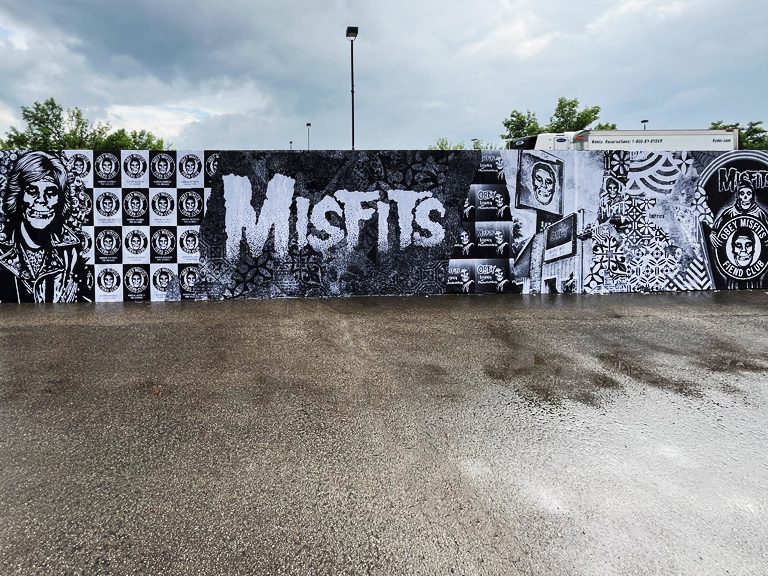
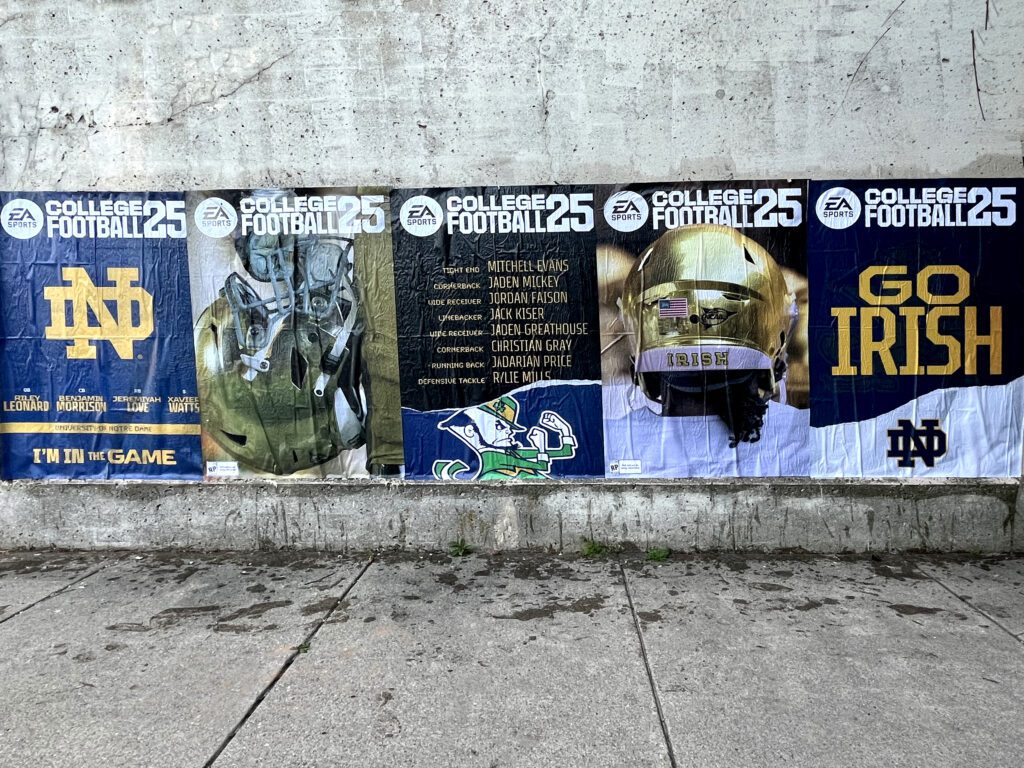
AGM has executed campaigns for a client roster that includes Netflix, EA Sports, The Onion, and Shepard Fairey — brands that needed street presence that felt native to arts and entertainment culture rather than imposed on it. Phoenix’s Roosevelt Row provides exactly the kind of environment where that distinction matters most, and AGM’s approach to location selection and installation reflects the understanding that the right wall in the right neighborhood is worth ten times the wrong wall on a high-traffic boulevard that nobody actually walks.
AGM executes fly posting campaigns across Roosevelt Row, 7th Street, Melrose Village, Midtown, and every Phoenix corridor that moves your audience. Direct crew, in-house printing, GPS documentation — no subcontractors.
Select a city to explore Fly Posting Advertising opportunities.
Phoenix’s fly posting geography extends well beyond Roosevelt Row, though the arts district remains its most high-value zone. The city’s urban core encompasses multiple distinct corridors that each attract different demographic segments and reward different campaign timing strategies. Understanding which corridor serves which objective is the foundation of a Phoenix fly posting campaign that actually performs.
The highest-concentration arts corridor in the Southwest. Roosevelt Row’s gallery density, restaurant-bar mix, and weekend pedestrian traffic make it the premier fly posting zone in Phoenix for campaigns targeting 21-to-35 creative adults. The corridor’s visual culture — murals, outdoor installations, independent signage — creates an environment where fly posting feels at home rather than intrusive. First Fridays traffic peaks create single-evening impression volumes that rival a full week of standard corridor exposure. Blank construction barriers, warehouse walls, and gallery-adjacent surfaces offer premium placement real estate throughout the district.
The 7th Street stretch from McDowell Road north through the dense concentration of bars, music venues, craft cocktail spots, and independent restaurants approaching Camelback Road is Phoenix’s most consistently active nightlife corridor. It carries genuine pedestrian foot traffic seven nights a week, and the audience moving through it late on a Thursday or Saturday night is exactly the 23-to-35 demographic that entertainment campaigns, consumer lifestyle brands, and hospitality launches most want to reach. Posters on 7th Street earn impressions from the morning commute through last call — a full-day impression window that few other Phoenix corridors can match.
Running along 7th Avenue between Camelback Road and Indian School Road, Melrose Village is Phoenix’s boutique retail and LGBTQ+ cultural corridor. The independent shops, vintage stores, coffee houses, and small bars that define the district attract a 21-to-40 audience with high cultural engagement and strong purchasing power. Melrose Village’s street scene is intimate and walkable — exactly the environment where a well-placed fly posting campaign gets noticed rather than skimmed past. Campaign creative that acknowledges the neighborhood’s identity earns additional goodwill from an audience that values authenticity.
Central Avenue through Midtown connects the Roosevelt Row arts zone to the Biltmore commercial district, carrying a mix of light rail commuters, office workers, and young professionals who circulate through the area throughout the workday. The corridor’s professional demographic skews slightly older than Roosevelt Row — 27-to-42, with household income and purchasing power that reflects years of post-college career building. Campaigns targeting creative professionals, financial services, hospitality, and premium consumer goods find the Midtown Central Avenue zone a productive complement to the younger-skewing Roosevelt Row and 7th Street placements.
The 7th Street bar and restaurant strip deserves its own section because it operates differently from every other fly posting zone in Phoenix. Most high-performing street advertising corridors earn their impressions through daytime foot traffic — the lunch crowd, the afternoon pedestrian, the weekend shopper. The 7th Street corridor earns its impressions in both directions. During the day, commuters on surface streets and the Central Avenue light rail see poster placements as they move through the corridor. In the evening and late into the night, bar-hoppers, concert attendees, and restaurant patrons are actively present in the corridor at walking pace, spending two or three hours in close proximity to street-level content.
That evening foot traffic component is what makes the 7th Street strip disproportionately valuable for entertainment campaigns, nightlife brand launches, music releases, and any other campaign targeting an audience that is socially active and out of the house in the evenings. A concert tour campaign, an album release, a new bar or restaurant opening — the audience that fly posting on 7th Street reaches on a Thursday night between 9 PM and midnight is the exact audience those campaigns need to reach, and they’re reaching it at a moment when the audience is already in a social, entertainment-oriented frame of mind.
The physical texture of 7th Street also works in fly posting’s favor. The corridor’s mix of older commercial buildings, converted warehouses, and independent storefronts provides more legitimate blank wall real estate than the newer, glass-and-steel construction that dominates Phoenix’s high-rise districts. Older building stock means more available surfaces, and more available surfaces mean better campaign placement density in the corridor that matters most for nightlife-adjacent campaigns.
Award Winning Personalized Service
You will get thoughtful, devoted, and individualized attention from our experienced, qualified, and professional personnel. Being one of the most illustrious agencies in Brooklyn, New York, American Guerrilla Marketing has been awarded the Best of Brooklyn title.
Nationwide
Industry City, Brooklyn, New York 11232
American Guerrilla Marketing
Hours
Mon - Fri: 9 AM - 5 PM
Sat & Sun: Closed
Automate your campaign with AGM’s Request for Proposal Builder. Simply answer a few quick questions about your campaign goals, markets, and timeline, and the system will generate a tailored presentation with recommended strategies, quantities, and pricing. Click the RFP Builder to instantly receive your customized proposal.
Phoenix’s creative class has grown substantially over the past decade, driven by a combination of Arizona State University’s massive graduate output, an influx of remote workers relocating from Los Angeles, Seattle, and the Bay Area, and the organic development of arts and creative industry jobs in sectors ranging from tech startups to film production to independent media. The result is a 21-to-35 demographic in Phoenix’s urban core that has the income, the cultural engagement, and the social connectivity of a coastal creative class without the media saturation those markets deliver.
In Los Angeles or New York, a 28-year-old creative professional has been exposed to fly posting campaigns in their neighborhood so many times that they’ve developed a sophisticated — and somewhat habituated — filter for street advertising. They notice it, but they’ve seen a lot of it. In Phoenix, that same demographic encounters fly posting with fresher eyes, in a street environment where the practice hasn’t yet reached the volume that dulls attention. The cognitive impact of street-level creative in Phoenix is higher than comparable campaigns in more saturated markets, which translates directly into recall, conversation, and social sharing at rates that exceed what the Phoenix market’s population numbers alone would predict.
This dynamic also explains why entertainment brands, streaming platforms, and consumer lifestyle companies that are expanding from coastal strongholds increasingly include Phoenix in their street advertising campaigns. The market is large enough — approaching five million people in the metro — to justify the investment, and the creative class within it is young enough, digitally connected enough, and culturally active enough to generate organic amplification that extends a campaign’s reach well beyond the poster count. When someone who has 12,000 Instagram followers photographs a well-placed fly posting installation in Roosevelt Row and shares it with their audience, the campaign earns an impression from 12,000 people who weren’t walking past the poster but now feel like they were.
Netflix’s decision to bring American Guerrilla Marketing into a major wheatpasting campaign in Miami reflects the kind of trust that comes from a client understanding the difference between street advertising that performs and street advertising that merely appears. The Netflix campaign required placement in high-pedestrian entertainment corridors that carried both the visual authority and the audience demographic that made sense for a streaming platform series launch — not just visible, but visible to exactly the right people in exactly the right context.
AGM’s execution across Miami’s entertainment corridors applied the same location intelligence that defines every AGM campaign: deliberate surface selection, installation timing calibrated to the moment of peak pedestrian flow, and the kind of physical placement discipline — posters aligned, edges clean, adhesive uniform — that makes the difference between a street campaign that looks like professional creative and one that looks like it was executed by someone who doesn’t know what they’re doing. The documentation delivered to Netflix after installation covered every poster with GPS location data and street-level photography, providing proof of performance that the campaign team used both for internal reporting and for press outreach demonstrating the campaign’s street reach.
The methodology AGM applied in Miami for Netflix is identical to what Phoenix clients receive. Direct crew execution — no subcontracted installation workers — means the quality standard that AGM commits to in the proposal is the quality standard that appears on Phoenix’s streets. GPS documentation means every Phoenix client receives verifiable proof of exactly where their campaign lives in the city. And in-house printing means the visual integrity of the original creative is preserved all the way from the design file to the wall, not degraded through a third-party production chain that has different quality incentives than the brand does.
Phoenix’s fly posting geography calls for a format strategy that matches the character of each target corridor. Roosevelt Row rewards 24×36 density — the visual cadence of multiple poster positions over a single block, creating a rhythm of repetition that builds brand recognition through frequency rather than expecting a single grand statement to carry the full persuasive load. The arts district audience moves through the neighborhood on foot, has the time to register multiple placements over a short distance, and is predisposed to engage with creative visual content. In that environment, 12 well-placed 24×36 posters across three blocks outperform two large-format placements at either end of the same stretch.
Specific high-visibility sites within the Phoenix market — major construction barriers in the downtown core, the blank sides of converted warehouse buildings facing high-traffic intersections, certain prominent walls on the Roosevelt Row corridor itself — reward a 48×72 large-format placement that earns individual visual authority. A four-foot-by-six-foot poster at a site like the Fillmore Street and 3rd Street corner communicates a different level of brand investment and presence than standard-format placements, and for campaigns where that sense of scale and commitment is part of the message, the large format earns its premium.
For most Phoenix campaigns, AGM recommends a blended approach: a foundation of 24×36 placements creating corridor saturation across Roosevelt Row, 7th Street, and Melrose Village, with targeted 48×72 anchor placements at the two or three high-visibility Phoenix sites where individual visual authority matters most. The formats work together rather than competing — density in the corridor builds frequency, anchor placements build scale perception, and the combination creates a campaign presence that feels larger than the poster count alone would suggest.
100 posters: contact us for pricing | 200 posters: contact us for pricing
The density engine of Phoenix fly posting. Two feet wide by three feet tall — the format that saturates Roosevelt Row, 7th Street, and Melrose Village with the repeating visual presence that builds campaign recognition at pace. Multiple creative designs at Contact us for pricing. design. 72-hour rush production available up to 500 posters for time-sensitive Phoenix launches.
100 posters: contact us for pricing | 200 posters: contact us for pricing
Four feet by six feet — for the Phoenix sites that demand a statement rather than repetition. Construction barriers in the downtown core, high-visibility warehouse faces along the Roosevelt Row corridor, major 7th Street intersections where individual visual scale earns its price. Additional creative designs at contact us for pricing each.
Phoenix’s entertainment-oriented, culturally connected 21-to-35 demographic draws a consistent range of industries to street-level advertising in the city. The categories that invest most consistently in Phoenix fly posting share a recognition that their target audience lives in and moves through the city’s arts districts, nightlife corridors, and creative neighborhoods in exactly the way that makes street advertising efficient.
A Phoenix campaign begins with a specific conversation about which corridors matter for the brand’s target demographic. Roosevelt Row, 7th Street, Melrose Village, and Midtown are each distinct enough in character that a campaign optimized for one may perform differently in another. AGM’s planning team maps demographic alignment against campaign objectives, identifies the corridors where the density of target-demographic foot traffic justifies the placement allocation, and builds a neighborhood distribution that concentrates poster density where impressions earn the highest value rather than spreading the campaign thin across the full city.
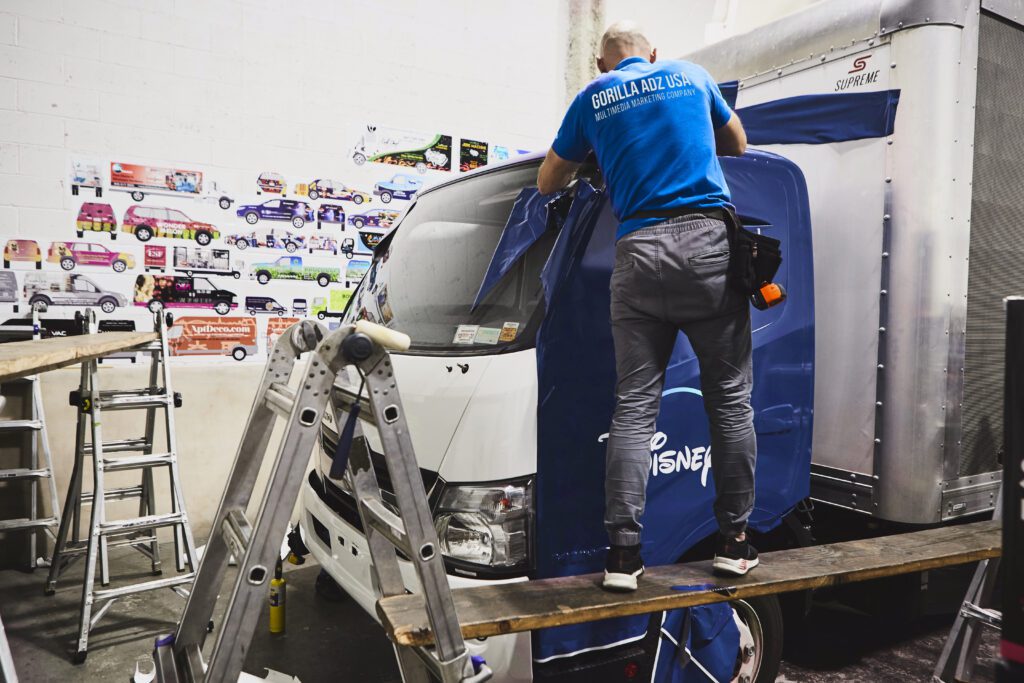
Every Phoenix installation is executed by AGM’s direct crew — the people who print the posters are the same organization whose people put them on the wall. There’s no production hand-off to a subcontractor who has different quality standards and different accountability structures. That direct execution chain means print quality is consistent with what the client approved, installation is clean and professional, and the street-level presentation of the creative matches what the brand invested in creating.
Post-installation, clients receive GPS-documented photo proof of every placement across every Phoenix corridor targeted. Each photograph is taken from street level at installation time, with location data embedded in the image. The documentation package serves as both a proof-of-performance record and a visual archive of the campaign’s presence — useful for internal reporting, for press outreach describing the campaign’s street reach, and for social media content that demonstrates the brand’s investment in Phoenix’s street culture.
Roosevelt Row concentrates Phoenix’s most culturally engaged 21-to-35 adults into a walkable, visually active corridor where street-level creative earns real attention. The district’s gallery culture, independent food and bar scene, and commitment to visual public art create an environment where fly posting feels native rather than intrusive. First Fridays amplifies that effect dramatically — tens of thousands of visitors move through the corridor on the first Friday of each month, creating a single-evening impression window that rivals a full week of standard street exposure in less concentrated zones.
Phoenix’s extreme summer heat — with daytime temperatures regularly exceeding 110°F — creates specific surface conditions that affect both adhesive performance and print longevity. UV intensity in Arizona’s summer sun can accelerate ink fading on posters exposed to direct afternoon sun for extended periods. AGM’s planning team factors these conditions into summer Phoenix campaigns through surface selection (preferring shaded or north-facing walls where possible) and scheduling installations for cooler overnight hours. The October-through-April window remains the strongest period for Phoenix fly posting in terms of both durability and pedestrian activity.
AGM’s minimum Phoenix campaign starts at 100 posters — the threshold at which corridor saturation begins to generate the repetition needed for genuine brand recognition. A 100-poster 24×36 campaign distributed across Roosevelt Row and the 7th Street corridor covers the city’s two highest-performing fly posting zones with enough placement density to earn real impressions from the target demographic.
The 7th Street corridor’s identity is defined by nightlife density — bars, music venues, and independent restaurants that draw an evening crowd seven nights a week. Its peak impression window is evening and late night. Midtown’s Central Avenue corridor, by contrast, is a daytime and commuter-hour zone anchored by office buildings and light rail traffic. The two corridors reach overlapping but distinct segments of Phoenix’s 21-to-40 demographic, and campaigns that incorporate both get access to the same audience at different moments of their daily movement pattern.
Yes — event timing is one of the most effective structures for Phoenix fly posting. AGM designs installation schedules to put posters on street three to seven days before a festival or concert date, creating a visual buildup window that peaks during the 24-to-48 hours of maximum audience mobilization. Phoenix’s Innings Festival, McDowell Mountain Music Festival, and the variety of programming at the Footprint Center and Van Buren all create event-window opportunities that fly posting campaigns can be built around precisely.
Phoenix’s creative class responds most powerfully to fly posting that commits to a strong visual statement rather than trying to communicate too much in too little space. Bold imagery, minimal text, and a clear single message — whether that’s a face, a color field, or a graphic concept — earn attention and recall in the Roosevelt Row and 7th Street visual environment. Creative that tries to function as a digital display ad at poster scale (too much text, too many details) consistently underperforms against simpler, more visually decisive work in Phoenix’s street context.
AGM installs both standard 24×36 and large-format 48×72 poster campaigns in Phoenix. Large-format installations are available at major construction barriers in the downtown core, high-visibility warehouse walls in the Roosevelt Row corridor, and prominent intersection placements where the campaign concept calls for individual visual authority rather than density saturation. A blended campaign — 24×36 for corridor coverage, 48×72 for anchor placements — is available and often the most strategically effective approach for Phoenix.
Rush production for 24×36 Phoenix campaigns is available with a 72-hour turnaround from creative approval to installation, for quantities up to 500 posters. This timeline covers print production and installation, making it possible to have Phoenix street presence within three days of finalizing a campaign — useful for time-sensitive event launches, political campaigns, and brands responding to breaking cultural moments in the market.
First Fridays on Roosevelt Row is the highest single-event demand driver for Phoenix fly posting. Beyond that monthly anchor, the concert calendar at the Footprint Center, the Van Buren, and the Crescent Ballroom drives consistent event-window demand throughout the year. Music festivals, including Innings Festival and McDowell Mountain Music Festival, and major sporting events at State Farm Stadium and Chase Field create additional campaign windows that entertainment brands and consumer product companies build campaigns around regularly.
AGM’s campaign planning process begins with a demographic mapping conversation that aligns the client’s target audience with the Phoenix corridors where that audience actually moves. Rather than defaulting to a geographically dispersed citywide spread, AGM concentrates poster density in the two or three corridors where the target demographic is most concentrated — Roosevelt Row for arts/creative audiences, 7th Street for nightlife-focused campaigns, Melrose Village for boutique retail and LGBTQ+ market segments, Midtown for professional demographics. Concentration in the right corridors outperforms thin citywide distribution every time.
Phoenix’s outdoor light conditions are notably brighter than most US cities, and poster creative should be designed with that environment in mind. High-contrast color combinations, particularly dark backgrounds with bright typography or imagery, tend to hold visual power in full Arizona sunlight more effectively than low-contrast or pastel-forward designs. AGM’s team can provide pre-production guidance on how submitted creative is likely to render at street level in Phoenix’s specific light conditions — and that’s a conversation worth having before printing, not after.