American Guerrilla Marketing
Nationwide Service
Media planning, media buying, billboard advertising, & guerrilla marketing
Orlando runs two separate cities under one name — the global theme park destination that draws 75 million visitors a year, and the local city of hospitality workers, creative professionals, and young residents who’ve built genuine arts neighborhoods in Mills 50, Thornton Park, and Ivanhoe Village. Fly posting reaches both, and knows the difference.
Orlando presents a fly posting challenge that is also its greatest strength: it is genuinely two distinct markets occupying the same geography. The tourist economy along International Drive and the theme park corridors generates foot traffic volumes that dwarf almost any other American market — Orlando regularly ranks as one of the most visited cities on Earth, with Walt Disney World, Universal Studios, and SeaWorld collectively drawing audiences that represent every demographic and every geographic market on the planet. Fly posting in the tourist corridors of the International Drive area reaches an enormous, internationally diverse audience that is physically present, in leisure mode, and actively forming impressions of every brand they encounter.
Simultaneously, Orlando’s resident population has built one of Florida’s most genuine local creative scenes — entirely distinct from the tourist infrastructure that defines the city’s international identity. The Mills 50 arts district along Mills Avenue and Colonial Drive has emerged as a community-driven arts and independent restaurant zone that is authentically local in character, shaped by the creative professionals, hospitality industry workers, and young adults who have made Orlando their home rather than their vacation destination. Thornton Park, Ivanhoe Village, College Park, and SODO each represent distinct neighborhood identities within Orlando’s residential creative geography, with different demographic compositions, different commercial characters, and different advertising values for campaigns targeting the local rather than tourist audience.
The 75 million annual visitors who pass through Orlando’s theme park corridors also have a secondary effect on the local market: they sustain an enormous hospitality workforce — hotel staff, restaurant workers, theme park cast members, event planners — who are among Orlando’s most demographically interesting young adult cohort. These workers are local residents with local consumer behavior, not tourists, but they work in the tourism economy and live in the neighborhoods surrounding it. Reaching them through fly posting in the local creative districts provides access to a demographic that is adjacent to the global entertainment economy in ways that most other American markets’ young adult populations are not.
AGM’s Orlando office at 20 North Orange Avenue provides direct operational presence in one of Florida’s two most important fly posting markets. We print and install every poster under direct in-house management, with GPS-documented photo reporting that verifies your campaign’s real-world performance across Orlando’s distinct neighborhood targets.
Local creative professionals in Mills 50 and Thornton Park. Hospitality workers between shifts. Theme park spillover tourists seeking something real. AGM's Orlando office handles everything — GPS-documented, in-house installed, delivered on your schedule.
Select a city to explore Fly Posting Advertising opportunities.
Mills 50 is Orlando’s most authentically local creative neighborhood — the area along Mills Avenue between Colonial Drive and Virginia Drive where Vietnamese restaurants, independent art galleries, vintage clothing shops, craft cocktail bars, and creative businesses have built a community-driven arts district that belongs to Orlando’s residents rather than its visitors. The neighborhood’s name combines Mills Avenue and the street number 50 — referring to Colonial Drive (State Road 50) — and its character reflects the collision of Orlando’s Vietnamese immigrant community with the wave of young creative professionals and artists who discovered the corridor as an affordable, walkable alternative to the tourist-dominated commercial zones elsewhere in the city. The resulting neighborhood is genuinely distinctive: nowhere else in Central Florida does Vietnamese food, local craft beer, street art, and emerging gallery culture coexist in the same walkable blocks. Fly posting in Mills 50 reaches an audience with extremely high visual awareness, strong local community investment, and social networks that make them outsized amplifiers of campaigns they find compelling.
Thornton Park occupies a specific position in Orlando’s residential creative geography — it is the neighborhood that has attracted Orlando’s most established young professional creative class, the architects, designers, attorneys, and finance professionals who want walkable neighborhood character and high-quality independent dining without the rougher edges of the more pioneer-stage creative districts. The blocks surrounding Lake Eola — Orlando’s central park and the site of the weekly Orlando Farmer’s Market — sustain consistent foot traffic from residents and the broader Orlando community who use the lake’s promenade and the Sunday market as community gathering anchors. Washington Street through Thornton Park carries the neighborhood’s restaurant and bar density, generating regular evening foot traffic from a demographic that is older and more professionally established than Mills 50’s creative pioneer audience. Fly posting in Thornton Park reaches a 28-to-42 professional demographic with disposable income and above-average receptivity to brand campaigns that demonstrate aesthetic quality and local market investment.
Ivanhoe Village along Orange Avenue north of downtown Orlando is one of the city’s most walkable independent retail and dining corridors — a stretch of antique shops, independent restaurants, bars, and creative businesses that serves a mixed demographic of young professionals, longtime Orlando residents, and the creative community that has made North Orange Avenue one of the city’s most consistently interesting commercial streets. The proximity to Ivanhoe Row’s waterfront on Lake Ivanhoe creates a neighborhood character that is distinctly Orlando — outdoor-oriented, community-focused, and defined by the independent businesses that have resisted the franchise homogenization that characterizes so much of Central Florida’s commercial landscape. College Park, adjacent to Ivanhoe Village and extending along Edgewater Drive, is Orlando’s most established family-oriented walkable neighborhood — a commercial strip of restaurants, coffee shops, and local retail that serves a multigenerational residential community with unusually consistent daily foot traffic.
SODO — South of Downtown Orlando — has developed into a mixed residential-commercial zone that bridges the gap between downtown Orlando’s corporate core and the more established Thornton Park neighborhood. The district’s mix of newer residential development, creative commercial tenants, and proximity to downtown’s office concentration makes it a useful campaign target for brands seeking to reach Orlando’s young professional residential market in a slightly less competitive advertising environment than the established creative districts further north. Downtown Orlando itself, along Orange Avenue and Church Street, provides the corporate professional daytime audience and the nightlife concentrated evening audience that every major Florida city’s downtown sustains.
Orlando’s theme park economy generates a specific advertising opportunity through what might be called the spillover effect: visitors who travel to Orlando for theme park experiences routinely venture beyond the immediate park corridors into the city’s local neighborhoods for dining, entertainment, and the “real Orlando” experience that has become a deliberate part of the modern theme park visitor itinerary. International travelers who spend multiple days in Orlando increasingly seek out local restaurants, bars, and cultural experiences that distinguish their trip from generic tourist consumption — and they find those experiences in Mills 50, Thornton Park, and the corridor along Orange Avenue.
This creates a secondary audience in Orlando’s local creative districts that combines resident locals with culturally curious tourists who have self-selected to seek out the authentic local scene. Fly posting campaigns installed in Orlando’s creative neighborhoods reach both groups simultaneously — the regular local audience that encounters posters repeatedly through daily neighborhood activity, and the theme park spillover tourist who encounters the same campaign as part of their deliberate local discovery experience. The combination is unusual: most markets offer either resident-focused or tourist-focused fly posting environments. Orlando’s creative districts genuinely provide both in the same location.
Award Winning Personalized Service
You will get thoughtful, devoted, and individualized attention from our experienced, qualified, and professional personnel. Being one of the most illustrious agencies in Brooklyn, New York, American Guerrilla Marketing has been awarded the Best of Brooklyn title.
Nationwide
Industry City, Brooklyn, New York 11232
American Guerrilla Marketing
Hours
Mon - Fri: 9 AM - 5 PM
Sat & Sun: Closed
Automate your campaign with AGM’s Request for Proposal Builder. Simply answer a few quick questions about your campaign goals, markets, and timeline, and the system will generate a tailored presentation with recommended strategies, quantities, and pricing. Click the RFP Builder to instantly receive your customized proposal.
The 24×36 format at contact us for pricing for 100 posters or contact us for pricing for 200 is the primary format for campaigns targeting Orlando’s local creative neighborhood audience. The walkable scale of Mills 50, Thornton Park, and Ivanhoe Village means a well-planned campaign achieves strong frequency with the resident and regular visitor audience across a two-week window. For music releases, entertainment campaigns, restaurant openings, and brand awareness initiatives targeting Orlando’s 25-to-38 creative and hospitality professional demographic, this format maximizes impressions per dollar in the local district environment.
The 48×72 format at contact us for pricing for 100 posters achieves the kind of landmark-scale presence that Downtown Orlando’s commercial facades and the larger warehouse-character buildings in the Mills 50 and SODO corridors accommodate naturally. Large-format installations on the commercial walls along Orange Avenue and in the broader Mills 50 zone achieve visibility from vehicle traffic as well as pedestrian audiences, extending the effective reach of each placement beyond the foot traffic of the immediate street level. For brand activations, major entertainment releases, and hospitality brand launches that need to signal scale and ambition in the Orlando market, this format communicates brand seriousness in a way that smaller formats cannot.
Orlando campaigns begin with a precise definition of target audience — local creative professional versus tourist versus hospitality workforce — because each requires a different geographic footprint and different timing strategy. Local campaigns concentrate in Mills 50, Thornton Park, Ivanhoe Village, and College Park. Tourism-adjacent campaigns extend into the commercial corridors surrounding International Drive and the Disney Springs area. Hospitality workforce campaigns target the residential corridors and local commercial zones surrounding the major hotel and resort employment centers.
AGM’s Orlando office maintains current knowledge of surface availability across all target districts. Our installation crews work overnight and in early morning hours, when even Orlando’s active tourist corridors quiet sufficiently for efficient installation. Every placement is GPS-tagged and photographed at installation, with a complete documentation package delivered digitally following campaign completion.
Orlando’s entertainment economy generates strong demand for fly posting from the theme park industry’s supplier ecosystem — food and beverage companies, entertainment technology brands, hospitality services companies, and consumer brands that want association with Orlando’s global entertainment economy use fly posting to reach the local hospitality and tourism workforce that is adjacent to but distinct from the tourist audience itself.
The local creative and arts community in Mills 50 and Thornton Park generates consistent demand for gallery openings, independent film events, music performances, and the creative services brands that serve the local creative professional community. Restaurant and bar openings in Orlando’s local creative districts use fly posting extensively for the pre-launch buzz-building that drives opening night attendance and the early neighborhood word-of-mouth that determines whether a new concept becomes a neighborhood regular or a missed opportunity.
Florida-wide consumer brand launches — health and wellness, food delivery platforms, fitness studios, fintech — often make Orlando a priority market alongside Miami and Tampa, specifically because Orlando’s young professional and hospitality worker demographic is one of Florida’s most demographically interesting audiences for consumer product acquisition campaigns.
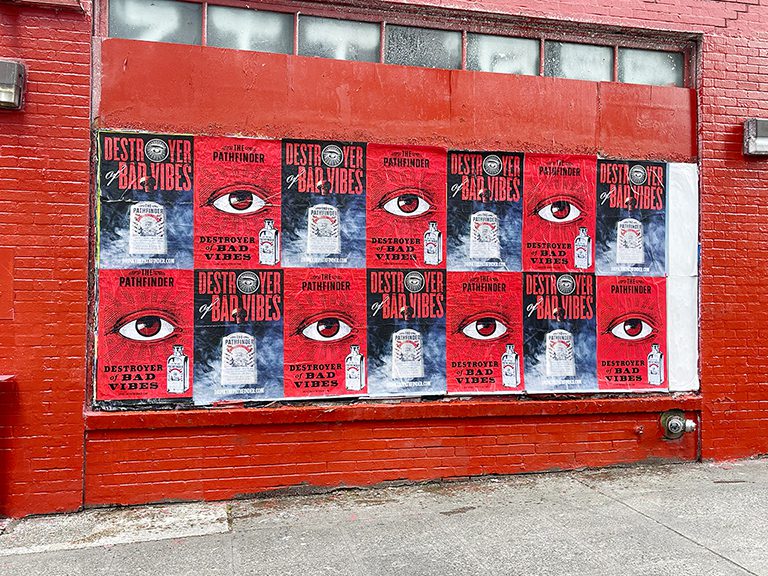
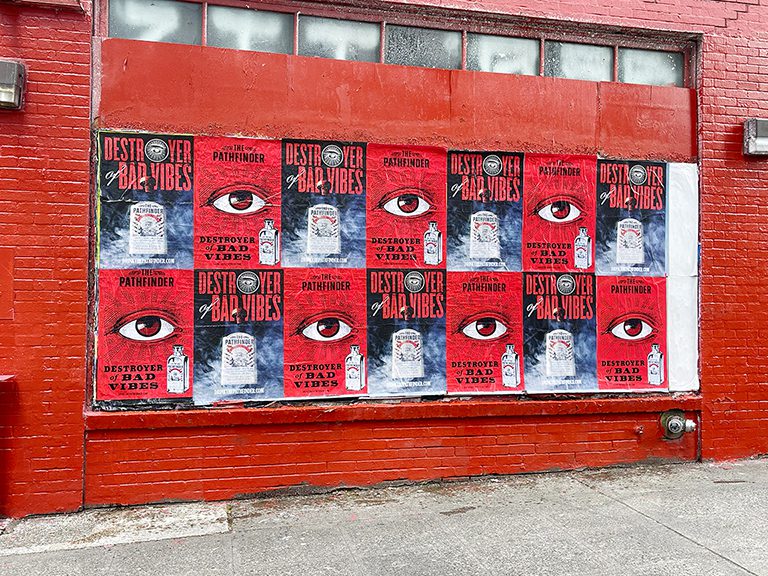
The Onion’s wheatpasting campaign across Manhattan and Washington DC demonstrated a targeting principle that applies directly to Orlando’s local creative district campaigns: the most effective fly posting reaches audiences who already self-identify as culturally sophisticated consumers capable of appreciating the advertiser’s messaging. The Onion’s campaign targeted media professional corridors in both cities — not generic urban audiences, but the specific streets where media professionals, journalists, and culturally engaged adults concentrated. In Orlando, the equivalent targeting logic points directly to Mills 50’s creative professional community, Thornton Park’s established young professional residential base, and Ivanhoe Village’s independent retail corridor — neighborhoods where Orlando’s most culturally engaged residents have specifically chosen to concentrate their commercial and social lives. Campaigns that recognize this self-selection dynamic and bring genuinely creative, intelligent content to these environments consistently outperform generic brand advertising that treats these audiences as undifferentiated urban demographic targets.
Orlando’s tourist economy both helps and requires navigation. The help: tourist foot traffic dramatically amplifies impressions in the corridors where local and visitor audiences overlap — Orlando’s local creative neighborhoods attract culturally curious tourists who seek out local experiences, adding a global audience layer to campaigns targeting the local market. The navigation required: campaigns that want to reach specifically the local Orlando resident and hospitality professional audience should concentrate in the local creative districts (Mills 50, Thornton Park, Ivanhoe Village) rather than the tourist-heavy commercial corridors where the local demographic is diluted by visitor traffic. AGM’s placement planning accounts for this distinction explicitly.
Mills 50 combines the highest concentration of Orlando’s visual arts community, independent restaurant culture, and creative young professionals in a walkable, compact corridor that sustains consistent foot traffic throughout the day and into the evening. The neighborhood’s character — community-built, independent in its commercial identity, and defined by the creative professionals who chose to invest in it — creates an audience that is exceptionally engaged with its physical environment. Fly posting here reaches people who notice what’s on the walls, who talk about it, and whose social networks extend through Orlando’s creative professional community with unusually strong amplification effects.
Yes. Orlando’s hospitality workforce — theme park cast members, hotel staff, restaurant workers, event industry professionals — is among the most demographically interesting young adult cohorts in any Florida market. Reaching them through fly posting in the residential and commercial corridors where they live and spend their off-hours (primarily the local creative districts of Mills 50, Thornton Park, and the residential corridors surrounding the major resort employment zones) is more effective than trying to reach them in the theme park corridors where they work. AGM can plan campaigns specifically around the residential and leisure geography of Orlando’s hospitality workforce based on the specific employment zones and transit corridors that shape where this audience concentrates outside of work hours.
Orlando’s year-round climate supports campaigns in every season without material weather limitations. The tourist-season peaks — summer family vacation season and the holiday season (December through January) — amplify foot traffic in the corridors where tourist and local audiences overlap. For campaigns specifically targeting the local creative and professional audience, the fall and spring shoulder seasons offer the best combination of favorable weather and local audience concentration without the tourist dilution of peak visitor months. Convention season at the Orange County Convention Center — which runs September through May with concentrated event weeks throughout — creates specific professional audience windows for brands targeting the convention and corporate event industry.
Yes. The International Drive and OCCC corridor creates significant professional audience foot traffic during major convention weeks — medical conferences, technology expos, trade shows — that represent specialized audience-window opportunities for brands targeting specific professional sectors. The corridors connecting the OCCC to the International Drive hotel concentration and the restaurant and entertainment zones that convention attendees use during their Orlando visits provide posting environments that reach these concentrated professional audiences during their active discovery and purchasing behavior moments.
Miami and Orlando represent fundamentally different fly posting market characters. Miami’s strength is its global cultural influence — campaigns in Wynwood and South Beach reach internationally connected audiences with extraordinary social documentation reach. Orlando’s strength is the sheer scale of its tourism volume and the uniqueness of its dual local/tourist audience dynamic, combined with genuinely distinctive local creative neighborhoods that provide authentic community targeting unavailable in Miami’s more tourist-dominated commercial geography. Brands that need global cultural cachet should prioritize Miami. Brands that need Florida market reach across both tourist and local creative professional audiences should prioritize Orlando alongside Miami in multi-market Florida campaigns.
The minimum order is 100 posters in the 24×36 format at contact us for pricing including AGM’s in-house printing, installation by our Orlando-based crews, GPS documentation, and the post-campaign photo report. Orlando’s local creative neighborhood geography — Mills 50, Thornton Park, Ivanhoe Village — is concentrated enough that 100 posters achieves meaningful saturation within two of the three districts simultaneously. For comprehensive coverage across all three primary local creative districts plus SODO and downtown, 200 posters at contact us for pricing provides the volume needed.
Yes. AGM’s Orlando office at 20 North Orange Avenue maintains active, current knowledge of surface availability across all of Orlando’s target campaign districts. Our local team scouts locations in person before every campaign, identifying which specific walls are available, which are occupied, and which locations within each district currently offer the highest visibility and audience impressions per placement. This direct local knowledge is one of the most meaningful performance drivers in any Orlando campaign and is significantly more reliable than surface selection based on general market maps or historical knowledge that may not reflect current conditions.
Yes. Orlando is one of four Florida markets where AGM operates alongside Miami, Jacksonville, and Tampa. Multi-city campaigns that need statewide Florida presence can coordinate all four markets through a single AGM engagement with synchronized installation timing and a consolidated Florida-wide reporting package. AGM’s physical offices in both Orlando and Miami provide direct operational presence in two of the four markets, which enhances execution quality and surface knowledge for the two most operationally complex Florida markets.
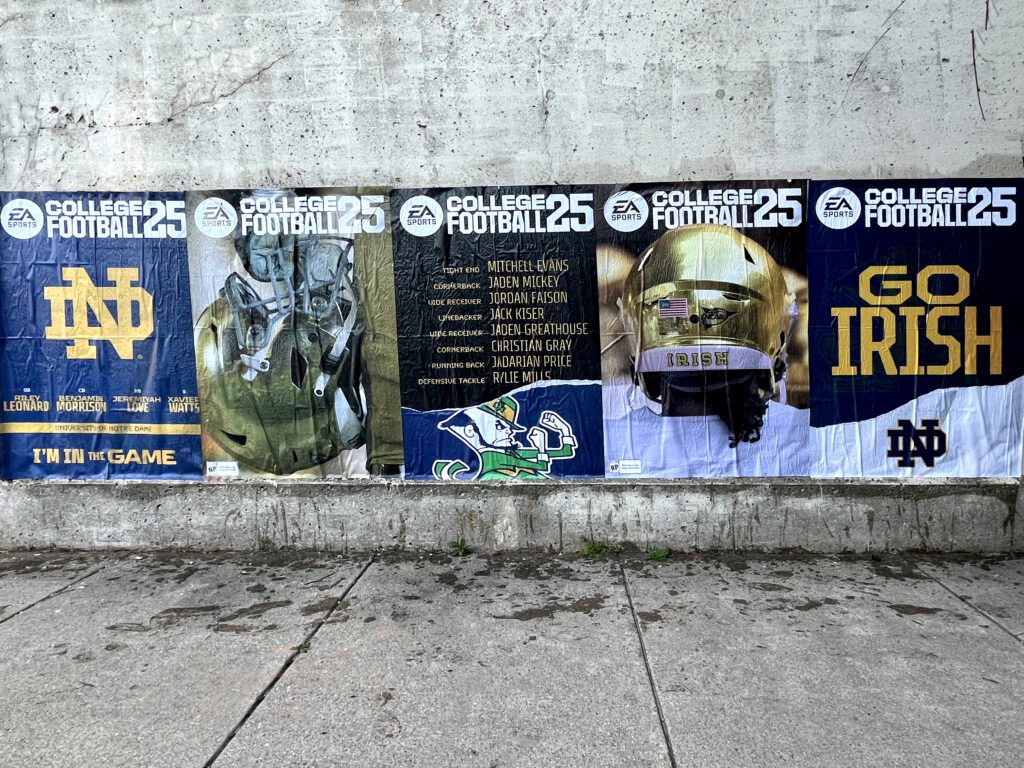
Theme park industry brands — including entertainment technology companies, game developers, and media companies with properties appearing at Orlando’s major attractions — use fly posting to reach both the Orlando local audience and the tourism industry professional community simultaneously. Streaming platforms launching new series or gaming titles find Orlando’s young professional demographic (which skews heavily toward entertainment industry employment) a high-value target for entertainment release campaigns. Concert promoters use fly posting in the local creative districts to reach the music-fan audience that fills venues like the Dr. Phillips Center for the Performing Arts, House of Blues Orlando, and the smaller independent music venues throughout the Mills 50 and Thornton Park corridors.