American Guerrilla Marketing
Nationwide Service
Media planning, media buying, billboard advertising, & guerrilla marketing
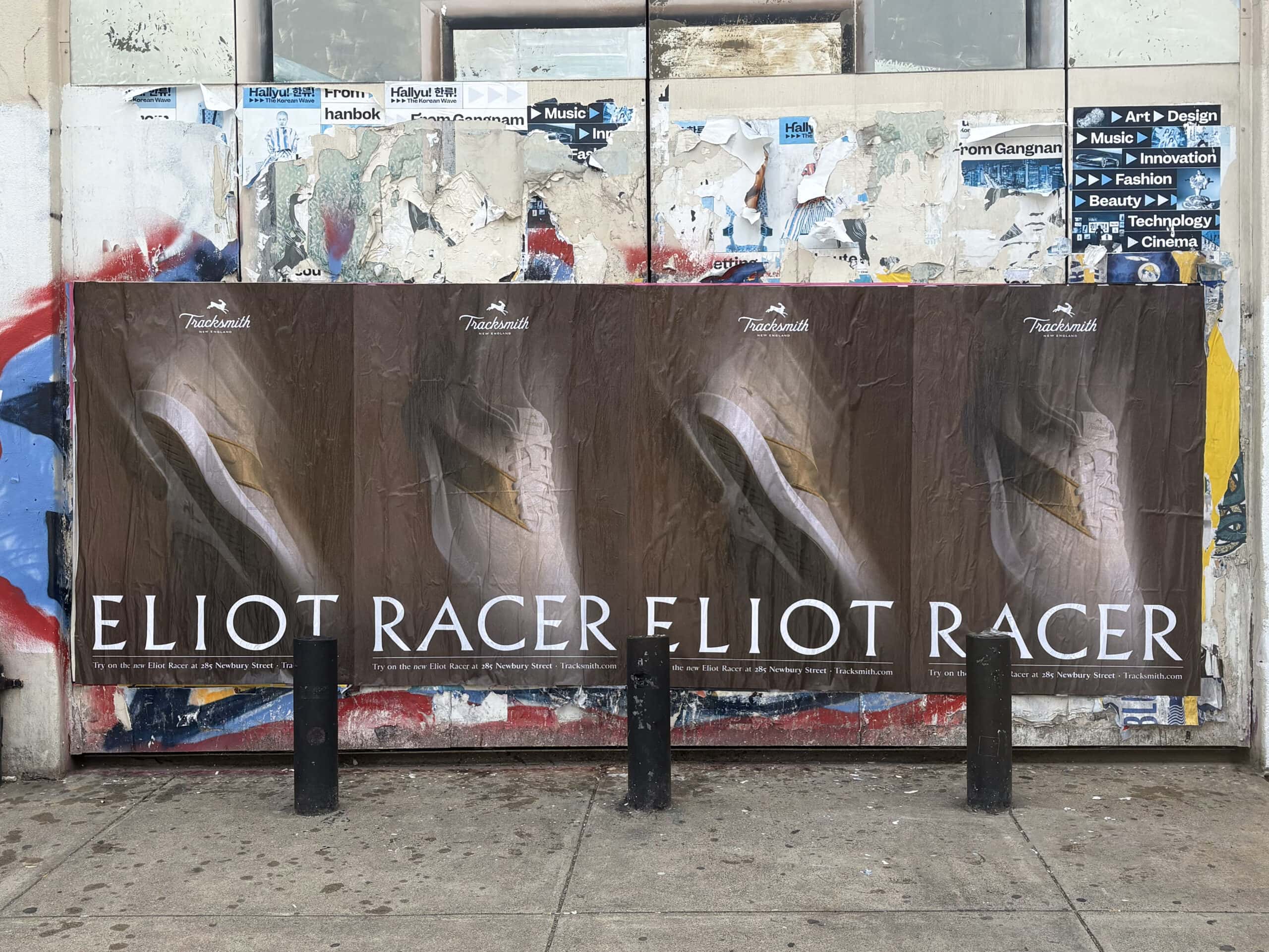
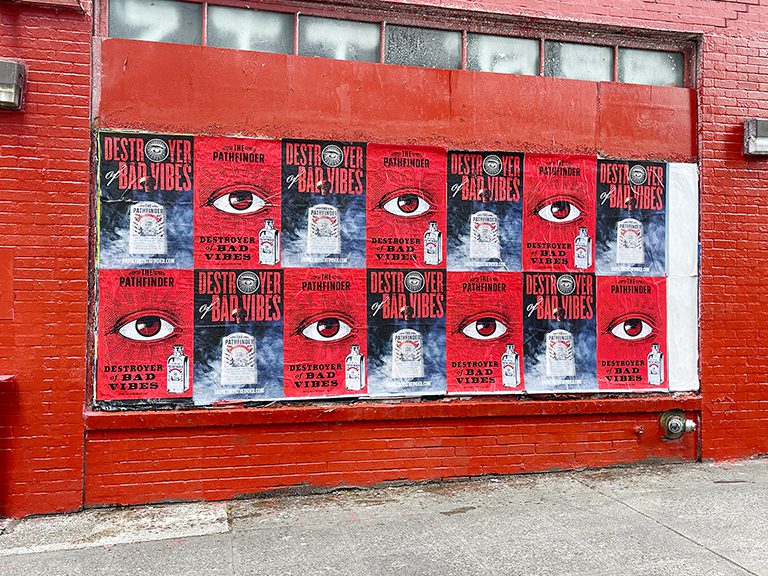
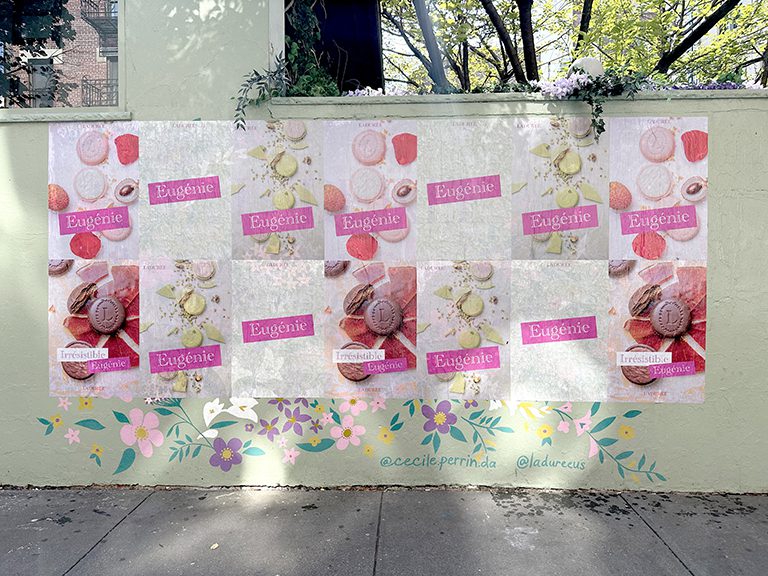
Cedar Rapids’ creative energy has a geography — and it’s concentrated along the 3rd Street SE arts corridor in NewBo, the independent storefronts of Czech Village, and the revitalized pedestrian blocks of Downtown First Avenue. AGM deploys wheat paste campaigns directly into these corridors with in-house crews, GPS documentation, and the arts-district saturation strategy that converts real creative-class audiences.
The New Bohemia arts district — locally shortened to NewBo — stretches along 3rd Street SE between 12th Avenue SE and the Cedar River, and it is the undisputed center of Cedar Rapids’ creative economy. The corridor packs an unusual variety of independently operated businesses into a tight walkable zone: NewBo City Market anchors the district with a permanent indoor public market that generates daily foot traffic from the surrounding neighborhood and weekend traffic from across the metro; craft breweries including Lion Bridge Brewing Company and 7 Hills Brewing Company pull evening crowds that linger at outdoor seating and street-facing bar windows; galleries, studios, and creative agencies occupy the renovated industrial buildings that line 3rd Street SE and back onto the river. The result is a corridor where the same creative-class pedestrian passes the same walls on multiple visits each week — exactly the behavioral loop that makes fly posting’s repeat-impression mechanism tick.
The NewBo audience skews 22–38, heavily weighted toward the independent creative professional, the food-and-beverage industry worker, the gallery patron, and the arts community participant who treats this corridor as a social home rather than an occasional destination. These are people who notice the walls they walk past. They photograph street art. They share images of creative work they encounter in the neighborhood, giving well-executed wheat paste campaigns an organic amplification layer that extends their reach beyond the physical poster count. A brand that resonates with the NewBo audience doesn’t just get seen — it gets introduced into a social network of culturally engaged young adults who influence each other’s purchasing decisions across entertainment, food, fashion, and lifestyle categories.
The physical surface environment in NewBo supports fly posting with practical advantages as well. The district’s renovated industrial buildings carry the large exterior walls and plywood construction barriers that provide the blank canvas for wheat paste placement. The density of foot-facing storefronts means that multiple businesses’ exterior-adjacent surfaces can be activated within a single city block, creating the cluster effect that makes a 100-poster 24×36 campaign feel genuinely saturated rather than scattered. Even at moderate poster counts, NewBo’s compact geography concentrates impressions in a way that larger, more spread-out commercial districts can’t replicate.
NewBo's arts corridor. Czech Village's neighborhood storefronts. Time Check's warehouse walls. AGM places street posters in Cedar Rapids' most culturally engaged corridors — with in-house installation, GPS-documented delivery, and the arts-district saturation strategy that reaches Iowa's creative class where they actually spend their time.
Select a city to explore Fly Posting Advertising opportunities.
Czech Village occupies 16th Avenue SW on Cedar Rapids’ southwest side, and it carries something that newer arts districts often spend years trying to manufacture: genuine neighborhood authenticity earned over decades of continuous community identity. The corridor has been the commercial anchor of Cedar Rapids’ Czech and Slovak heritage community since the early twentieth century, and it maintains a character defined by independently operated businesses — bakeries, taverns, specialty food shops, and boutiques — that have earned the loyalty of neighborhood residents through long-term presence rather than marketing spend. The Czech and Slovak Museum and Library anchors the cultural dimension of the district, drawing visitors from across the region to exhibitions and events that regularly fill the surrounding streets.
For fly posting campaigns, Czech Village offers a demographic and behavioral profile that differs meaningfully from NewBo. The audience skews slightly older — the 28–45 range — and includes a higher proportion of long-term Cedar Rapids residents who have been walking this corridor for years and who carry a deep familiarity with its visual environment. That familiarity creates a different kind of impression quality: a wheat paste poster in Czech Village isn’t just seen by someone passing through; it’s noticed by someone who knows exactly what normally occupies that wall and for whom the presence of something new represents a genuine discovery. The district’s calendar of cultural events — Czech heritage festivals, the summer’s Czech Village Festival, seasonal food events — creates activation windows when visitor volume spikes above the neighborhood’s daily baseline and reaches audiences from outside the immediate zip code.
The surface environment in Czech Village includes the ground-floor exteriors of low-rise commercial buildings, utility structures, and the occasional blank gable-end wall that faces the main corridor. The district’s manageable geographic scale — the main commercial strip runs approximately six blocks — means that a targeted placement strategy can achieve strong saturation of the relevant surfaces without requiring excessive poster volume. A 24×36 campaign of 50–75 posters placed selectively across Czech Village’s most trafficked blocks generates the neighborhood-level awareness that feels organic rather than commercial, which is exactly the tonal register that resonates with a community whose identity runs on independent, locally embedded businesses.
Downtown Cedar Rapids along First Avenue and the surrounding blocks represents the city’s highest-volume commercial pedestrian environment — the zone where office workers, government employees, hotel guests, and midday retail shoppers concentrate on weekday schedules. The post-2008 flood redevelopment of downtown Cedar Rapids transformed First Avenue and its adjacent blocks from a partially abandoned commercial core into a substantially rebuilt urban environment with new mixed-use buildings, a revitalized Czech Village connection via 16th Avenue, and growing restaurant and bar activity driven by relocated businesses and new openings. The downtown’s pedestrian patterns are primarily weekday-morning and midday, making it a stronger target for campaigns reaching the working professional demographic than for weekend entertainment audiences.
What downtown Cedar Rapids offers that NewBo and Czech Village don’t is scale. First Avenue and the surrounding blocks represent a considerably larger geographic canvas, with more surface variety including construction hoardings from ongoing development projects, blank side walls of converted commercial buildings, and utility structures adjacent to the river walk. Large-format 48×72 placements find their strongest Cedar Rapids use case in downtown’s commercial core, where a single well-chosen wall facing a high-traffic pedestrian approach can anchor a campaign’s visual identity for the entire city center. The redevelopment activity that has characterized downtown Cedar Rapids for the past decade means new surface opportunities appear regularly as construction projects proceed, which keeps the downtown posting environment fresher and more varied than more stable commercial districts.
Campaigns targeting the downtown Cedar Rapids workforce — financial services, healthcare administration, legal, insurance, and government sectors — should time their installations to weekday schedules and concentrate placements on the blocks between the major parking structures and the lunch corridor restaurants. The commuter-pedestrian pattern is consistent and predictable: the same professional audiences walk the same blocks between their parking locations and their workplaces each day, making first-avenue-adjacent placement an unusually reliable impression vehicle for the 8:00 AM to 6:00 PM working-day demographic.
Award Winning Personalized Service
You will get thoughtful, devoted, and individualized attention from our experienced, qualified, and professional personnel. Being one of the most illustrious agencies in Brooklyn, New York, American Guerrilla Marketing has been awarded the Best of Brooklyn title.
Nationwide
Industry City, Brooklyn, New York 11232
American Guerrilla Marketing
Hours
Mon - Fri: 9 AM - 5 PM
Sat & Sun: Closed
Automate your campaign with AGM’s Request for Proposal Builder. Simply answer a few quick questions about your campaign goals, markets, and timeline, and the system will generate a tailored presentation with recommended strategies, quantities, and pricing. Click the RFP Builder to instantly receive your customized proposal.
The Time Check neighborhood — one of Cedar Rapids’ oldest residential and light-industrial districts, occupying the area north and west of downtown between the Cedar River and the railroad right-of-way — offers a street-poster environment defined by raw physical character and working-class authenticity. The neighborhood takes its name from a 19th-century bell tower that workers once used to time their factory shifts, and that industrial heritage shows in its physical landscape: brick warehouses with broad exterior walls, rail-adjacent structures with industrial-scale surface area, and the kind of low-key residential density that keeps foot traffic local and loyal rather than tourism-driven.
Time Check has gradually attracted artists, makers, and creative-industry small businesses seeking the cheap overhead and physical space that NewBo’s rising rents no longer provide. That creative migration gives the neighborhood a dual demographic character: long-term working-class residents alongside newly arrived young creative professionals in their mid-twenties who have come for the studio space and the street-level authenticity. For a fly posting campaign, that combination produces an audience that is both culturally receptive to street art and authentically embedded in a neighborhood environment where the posters feel genuinely at home rather than commercially imposed. Brands in the music, arts, independent fashion, and craft beverage categories find Time Check particularly useful because the neighborhood’s visual texture supports their creative positioning without the self-conscious art-district premium that can make NewBo placements feel slightly staged.
The warehouse walls and industrial structures in Time Check provide the largest raw posting surfaces available in Cedar Rapids — blank brick and painted metal expanses that support 48×72 placements with room to spare. For brands seeking a single dominant visual statement rather than distributed saturation, Time Check’s industrial surface inventory offers possibilities that the smaller-scaled buildings of NewBo and Czech Village simply can’t match. A 48×72 wheat paste poster on a Time Check warehouse wall visible from the approach road into the neighborhood functions as a genuine landmark — a fixed visual reference point for everyone who moves through that geography on a regular basis.
Cedar Rapids’ four distinct posting environments each favor a different format approach, and the strongest Cedar Rapids campaigns usually address more than one corridor. The 24×36 format is the workhorse of the NewBo arts district, where the goal is saturation along 3rd Street SE’s compact walkable geography — 100 posters distributed across the brewery-facing walls, the market entrance approaches, the gallery exterior surfaces, and the residential blocks immediately surrounding the arts district creates the kind of blanket presence that makes a campaign feel like it belongs to the neighborhood rather than having been inserted from outside it. Czech Village similarly rewards the 24×36 format’s volume-based approach, particularly when campaign timing aligns with Czech heritage events that swell the corridor’s regular audience with regional visitors.
The 48×72 format earns its premium in downtown Cedar Rapids and Time Check, where individual landmark surfaces can carry significantly more impression weight than a distributed saturation strategy. A single 48×72 placement on a blank building face visible from the pedestrian approach along First Avenue commands every pair of eyes that navigates that block daily — and that surface, visited repeatedly by the same commuter audience, becomes an established visual landmark within the campaign window rather than just another poster. Time Check’s warehouse walls take the large format further still, creating posting surfaces large enough that the artwork itself becomes a neighborhood landmark rather than just an advertisement.
Multi-format campaigns that combine 24×36 saturation in NewBo with 48×72 statement placements in downtown or Time Check deliver the strongest overall Cedar Rapids impact. The saturation layer builds frequency-based recognition among the creative-class audience that circulates through NewBo daily; the large-format layer creates the visual signature that anchors the campaign geographically and gives it the dominant impression that high-traffic commuter audiences respond to. AGM’s planning process for Cedar Rapids campaigns identifies the right balance between these two strategies based on the campaign’s audience, creative assets, and budget.
AGM’s Cedar Rapids campaign process begins with a site-level assessment that maps specific corridor targets, surface types, and placement positions to the audience profile and campaign objective. For a NewBo arts campaign targeting young creative professionals, that assessment identifies the highest-frequency walking surfaces within the brewery-to-market-to-gallery circuit that the district’s core audience navigates on their most regular visits. For a downtown professional campaign, it identifies the commuter-pedestrian approach routes between major parking structures, transit stops, and the main lunch and after-work restaurant clusters. The site assessment is the analytical foundation that separates a campaign placed by someone who knows Cedar Rapids’ actual pedestrian geography from one placed by someone working from a street map.
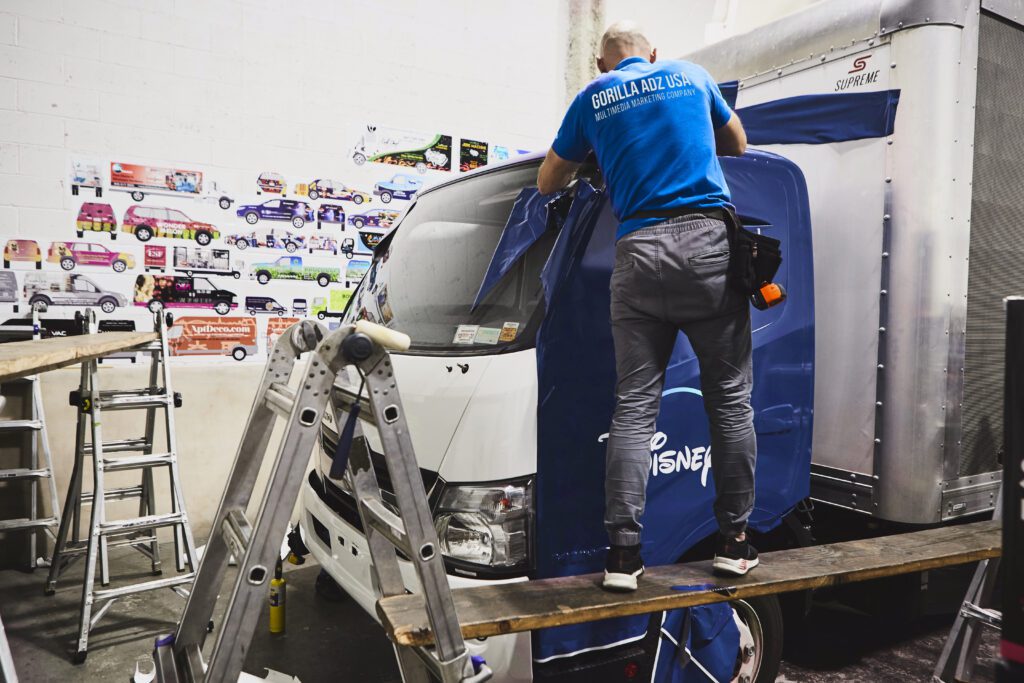
Installation is handled entirely by AGM’s in-house crew — no subcontractors, no third-party operators who receive a location list and instructions via email. The in-house model means that the judgment calls made during installation — which of two adjacent surfaces has better visibility at walking pace, which wall angle catches more afternoon light, which location avoids the shadowed zone of a neighboring structure — are made by someone accountable to AGM’s own quality standards rather than a subcontractor optimizing for their own efficiency. Every placement receives GPS-tagged photography at the time of installation, creating the documentation record that AGM includes in the post-campaign report.
Cedar Rapids campaigns typically install within a single day or across a short two-day window depending on the geographic spread of the corridor targets. The concentrated nature of NewBo and Czech Village means those districts can often be fully installed in a single morning or afternoon session, leaving the downtown and Time Check placements to be completed in the same or following day. The wheat-based adhesive used in all AGM installations is environmentally responsible, weather-resistant to a practical degree, and pressure-wash removable — a standard that maintains AGM’s surface-owner relationships and keeps the operational access that good installation locations require available for future campaign cycles.
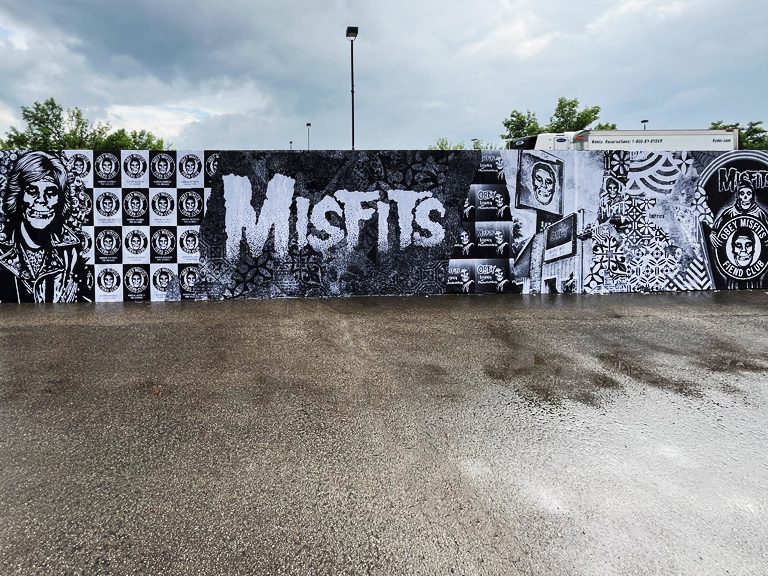
AGM’s work on the Shepard Fairey Sonic Temple Festival 2024 installations in Columbus, Ohio demonstrated the specific strategy that applies most directly to Cedar Rapids’ NewBo corridor: arts district saturation using large-format wheat paste work for a music and arts event. The Sonic Temple campaign concentrated high-quality, visually arresting poster installations within the arts and music venue corridors most frequented by the festival’s target audience — the same arts-engaged, culturally active demographic that circulates through NewBo’s 3rd Street SE corridor on a weekly basis. The campaign didn’t carpet the entire city; it saturated the specific geographic zones where the festival’s audience already spent their time, creating the impression that the event was part of the neighborhood’s visual culture rather than a commercial intrusion.
That concentration strategy — sometimes called corridor saturation — works in Cedar Rapids’ NewBo district for precisely the same reasons it worked in Columbus’ Short North. The creative-class audience that NewBo attracts has a defined and predictable geography: they’re on 3rd Street SE. They’re at the NewBo City Market. They’re at Lion Bridge or 7 Hills. They’re at the galleries and studios between the market and the river. A campaign that places posters across every significant surface in that specific zone encounters its target audience on nearly every walk they take through the neighborhood, creating a repeat-impression frequency that amplifies brand awareness far beyond what a broader, more distributed campaign achieves with the same poster count.
The arts-event framing of the Sonic Temple campaign also illustrated how wheat paste advertising lands differently in arts corridors than in general commercial environments. In NewBo, a thoughtfully designed poster campaign isn’t processed as advertising — it’s processed as cultural content. The same eye that takes in a gallery installation on 3rd Street SE absorbs a well-designed wheat paste poster with a similar quality of engaged attention. That perceptual frame is what makes arts district fly posting unusually effective for music acts, arts events, cultural institutions, creative brands, and any marketer who wants to be received as culturally literate rather than commercially intrusive.
Cedar Rapids’ street poster market responds most consistently to campaigns with a genuine connection to the creative and food culture that defines the city’s most engaged urban neighborhoods. Live music and touring acts — particularly those performing at Paramount Theatre, the McGrath Amphitheatre, the Englert Theatre (a short drive in Iowa City), or the numerous bar venues along 3rd Street SE — find Cedar Rapids fly posting effective because the target audience already circulates through the posting zones as part of their regular nightlife and cultural activity. A band’s posters installed in NewBo two weeks before a Paramount show encounter an audience that is both predisposed to attend and already walking the neighborhood’s bar and venue circuit.
Craft food and beverage brands — local and regional craft breweries, specialty spirits, artisan food producers, and farm-to-table restaurant concepts — align naturally with the NewBo and Czech Village environments, where food culture is a defining feature of the neighborhood commercial identity. A new craft beverage brand entering Cedar Rapids’ bar and restaurant distribution channels can use fly posting in NewBo to build street-level recognition before the product appears on tap or on shelves, ensuring that the first point-of-purchase encounter carries the weight of a brand that already feels familiar from the neighborhood. Independent retail brands, boutique fitness and wellness concepts, and cultural institutions launching exhibitions or programming at the Iowa Museum of Art or the National Czech and Slovak Museum all find Cedar Rapids fly posting useful for building awareness within the creative-class audience that supports these categories.
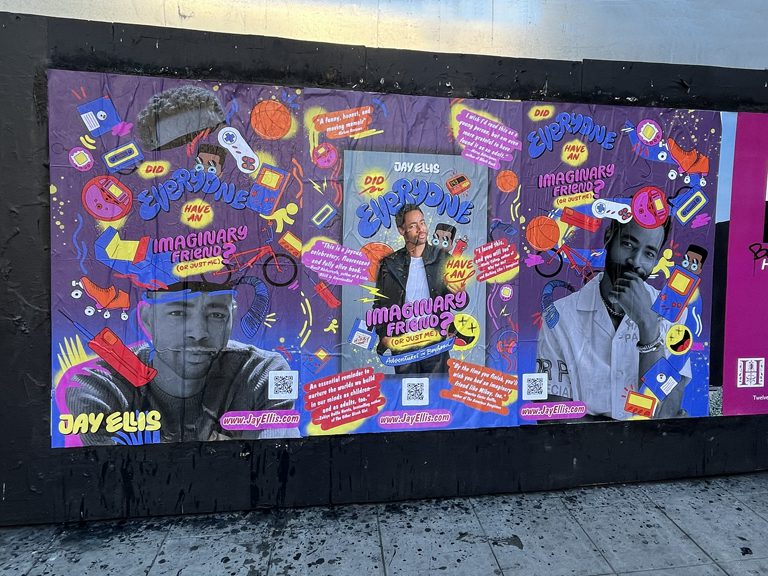
Political campaigns at the state and local level have used Cedar Rapids fly posting as an organizing and awareness tool, particularly in the college-adjacent blocks of downtown and the high-traffic weekend corridors of NewBo and Czech Village. Fashion and apparel brands targeting the 22–35 creative demographic find strong campaign alignment in the arts district environment, where the audience’s cultural awareness makes visual creative quality a material factor in whether a campaign lands as credible or feels out of place. The street poster format rewards brands that invest in genuinely compelling artwork rather than repurposed digital banner art — Cedar Rapids’ creative-class audience is attentive enough to notice the difference.
NewBo — the New Bohemia arts district along 3rd Street SE — is Cedar Rapids’ most productive fly posting zone by nearly every measure: foot traffic volume, demographic alignment with brands that use street advertising, repeat-impression frequency from the audience that visits the corridor multiple times per week, and the cultural receptivity that an arts district audience brings to visually strong creative work. Czech Village on 16th Avenue SW is a strong secondary target for campaigns reaching a slightly older neighborhood-loyal demographic. Downtown Cedar Rapids along First Avenue serves campaigns targeting the working professional commuter audience. Time Check offers the largest raw surface inventory and is the strongest location for 48×72 statement placements.
NewBo’s arts corridor identity fundamentally changes the perceptual frame through which its audience processes visual content on the street. In a neighborhood where galleries, public art installations, and street-facing creative work are part of the everyday environment, a well-designed wheat paste poster isn’t processed as an advertisement — it’s received as cultural content. The same engaged attention that a NewBo visitor brings to a gallery window or a mural brings to a thoughtfully designed fly posting campaign in the same visual landscape. That perceptual shift dramatically increases the quality of the impression — it’s not just seen, it’s considered. Brands that invest in genuinely compelling artwork for their Cedar Rapids campaign are rewarded by the NewBo audience in ways that generic or repurposed creative simply isn’t.
The 24×36 format is the right tool for NewBo arts district saturation campaigns. The district’s compact geography — concentrated along several blocks of 3rd Street SE — rewards high poster volume and tight surface coverage rather than a small number of oversized placements. Distributing 100 24×36 posters across the brewery-facing surfaces, the market approach walls, gallery exteriors, and the residential transition blocks surrounding the core commercial corridor creates genuine saturation — the everywhere quality that makes a campaign feel embedded in the neighborhood rather than visiting it. The 48×72 format makes strategic sense at one or two specific NewBo surfaces where a single dominant wall can serve as the campaign’s visual landmark, but the saturation layer should lead in this district.
Yes — Czech Village and NewBo are natural pairing targets for Cedar Rapids fly posting campaigns because they reach complementary demographics without significant geographic overlap. NewBo’s 3rd Street SE creative-class audience (22–35, arts-forward, nightlife-active) and Czech Village’s 16th Avenue SW neighborhood-loyal audience (28–45, locally embedded, independent-retail focused) respond to similar brand categories from different life-stage perspectives. Running both corridors in the same campaign buy allows a brand to achieve meaningful Cedar Rapids market coverage while maintaining distinct neighborhood positioning in each zone. The geographic distance between the two districts is short enough that both can be installed within the same crew deployment.
I-380 billboard advertising reaches a broad vehicular commuter audience at highway speed with peripheral attention and minimal dwell time. Fly posting in NewBo or Czech Village reaches a targeted pedestrian audience at walking pace with the full quality of engaged visual attention available. The two formats are reaching fundamentally different audience states: the billboard commuter is navigating to a destination; the NewBo pedestrian is already in a discovery mindset, in the neighborhood they chose to be in, with cognitive space to absorb and process what they see on the walls. For brands targeting the creative professional, food-and-beverage, arts, and entertainment categories that dominate Cedar Rapids’ cultural economy, the walking-pace impression in the right neighborhood generates a qualitatively superior brand contact compared to the highway-speed impression regardless of the vehicle count.
The Paramount Theatre’s concert and performance calendar creates consistent fly posting windows throughout the year — campaigns placed 2–3 weeks ahead of a show date in NewBo and downtown saturate the exact audience profile most likely to attend. The McGrath Amphitheatre summer concert series anchors an outdoor entertainment calendar that pulls regional visitors from across eastern Iowa. NewBo Fest — the arts district’s summer neighborhood festival — is one of Cedar Rapids’ highest foot-traffic days and represents an exceptional activation window for any brand targeting the creative-class NewBo audience. The National Czech and Slovak Museum’s rotating exhibition schedule and special events drive targeted cultural-audience traffic through Czech Village. EarthFest and other seasonal events in the Cedar River parks system adjacent to both districts create additional peak windows.
AGM’s surface selection process for Cedar Rapids begins with a site-level assessment of the target corridors that maps foot traffic flow, surface visibility at walking pace, surface condition and adhesion quality, and proximity to the highest-density audience gathering points within each district. Surfaces are evaluated for their angle relative to the pedestrian flow (a surface that faces the direction of approach is more effective than one that faces away), their height above grade (eye-level placement generates more impressions per hour than high wall placement), and their proximity to the social gravity points — breweries, coffee shops, market entrances, venue approaches — that anchor the target audience’s daily circuit. Surfaces that work well are documented in AGM’s operational records and revisited for future Cedar Rapids campaigns, creating institutional knowledge that improves placement quality over time.
The core Cedar Rapids fly posting demographic is the young creative professional and arts community participant in the 22–38 age range who lives in or near NewBo, Czech Village, or the adjacent residential neighborhoods and circulates through the arts district corridor on a regular weekly basis. This audience works in creative, food-service, independent retail, healthcare, or technology sectors; spends discretionary income on experiences (concerts, dining, events) and cultural goods (music, art, independent fashion); and treats the NewBo corridor as a social environment rather than just a shopping destination. Secondary audiences reachable through downtown placements include working professionals 30–50 in the office-commuter corridor, and the regional visitors who travel to Cedar Rapids for cultural events at the Paramount Theatre, the National Czech and Slovak Museum, or the Iowa Museum of Art.
Cedar Rapids fly posting is highly effective for touring music campaigns, particularly for acts with creative-class audience overlap — indie, alternative, hip-hop, electronic, and singer-songwriter genres that align with the NewBo corridor demographic. Campaigns placed 2–4 weeks before a Paramount Theatre, McGrath Amphitheatre, or Iowa City Englert Theatre date (a 25-minute drive that many Cedar Rapids music fans make regularly) build anticipation in exactly the audience most likely to convert from awareness to ticket purchase. The NewBo corridor is the single best targeting zone for pre-show fly posting in Cedar Rapids because the audience that walks 3rd Street SE on a Tuesday evening is the same audience buying tickets to culturally significant touring acts in Iowa.
AGM offers a 72-hour rush installation option for 24×36 campaigns up to 500 posters. Standard campaign deployment in Cedar Rapids typically takes 5–7 business days from final artwork approval to installation completion — this window covers printing, logistics, and the site assessment and installation process. Rush timelines compress the printing and logistics phase and prioritize Cedar Rapids deployment for time-sensitive activations like last-minute tour date announcements, product launch windows, or event-tied campaigns where installation timing relative to the event date materially affects the campaign’s effectiveness. Clients with firm event-tied deadlines should communicate that timeline at the point of initial inquiry to ensure the right delivery path is scoped from the start.
Time Check works best as a fly posting target for campaigns that want to project working-class authenticity, raw street character, and industrial-scale visual presence rather than arts-district polish. The brands and campaigns best suited to Time Check positioning are those in the music (particularly genres with working-class or DIY cultural roots), craft spirits and beverage, independent fashion, and community organizing categories — brands whose identity benefits from the authentic, unglamorous street texture that Time Check’s brick warehouses and rail-adjacent industrial structures provide. The district also works well for campaigns that need a single large-format statement wall that simply isn’t available in NewBo’s more finely scaled commercial buildings. AGM often includes one or two Time Check 48×72 placements as statement anchors for campaigns that are primarily distributed across NewBo and Czech Village at smaller formats.
The typical end-to-end timeline from first contact to installed campaign in Cedar Rapids runs 10–14 business days for a standard campaign. The initial scoping and planning conversation typically takes 1–2 days; artwork preparation and approval (if AGM is producing creative) adds 3–5 days; printing and logistics add 3–4 days; and installation completes within 1–2 days depending on the number of districts in the campaign target area. Rush timelines that compress the process to 7–8 business days are possible for campaigns using existing finalized artwork and the 24×36 format with 72-hour rush print production. Clients should build in additional lead time for campaigns requiring multiple creative designs, as each design adds time to the artwork approval phase.