American Guerrilla Marketing
Nationwide Service
Media planning, media buying, billboard advertising, & guerrilla marketing
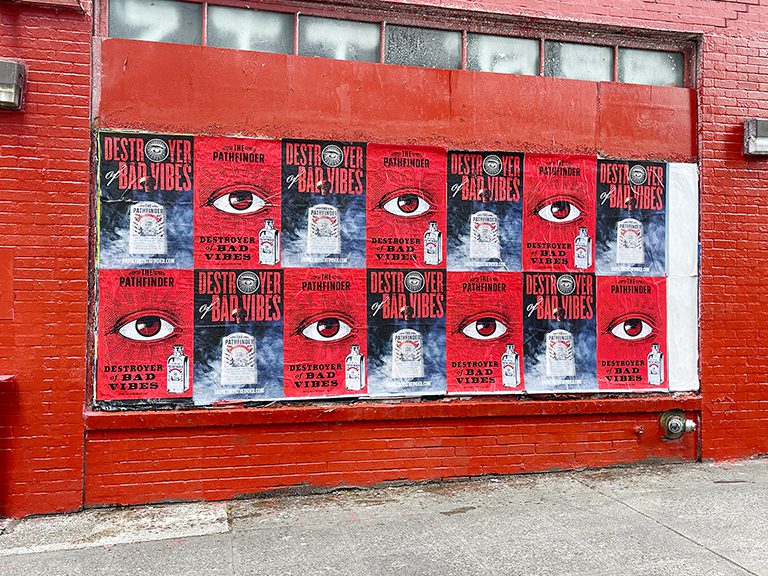
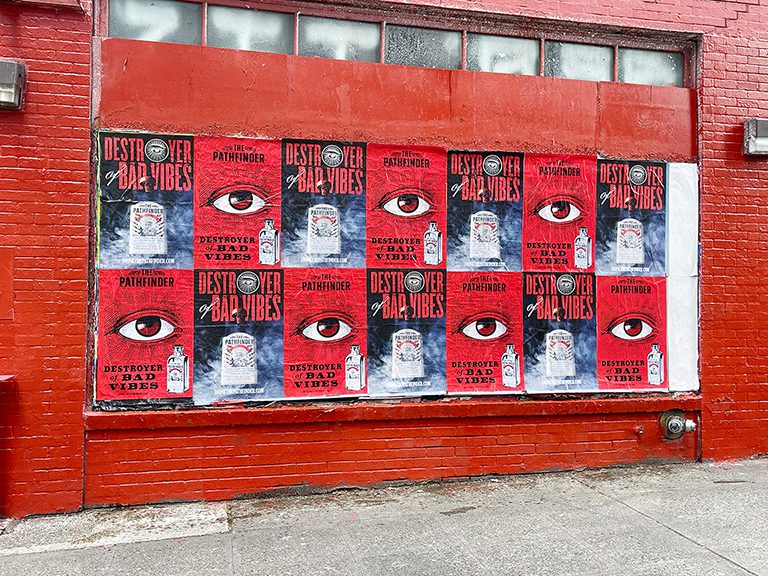
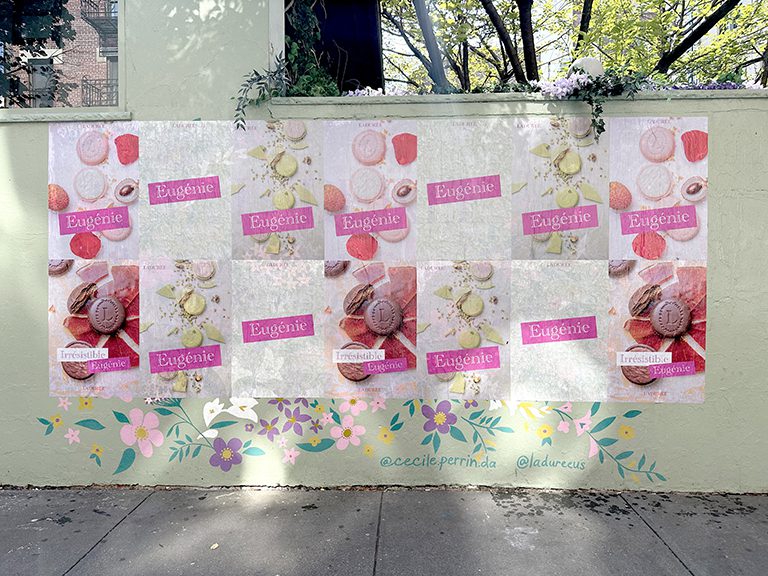
Wheatpaste Murals Nationwide
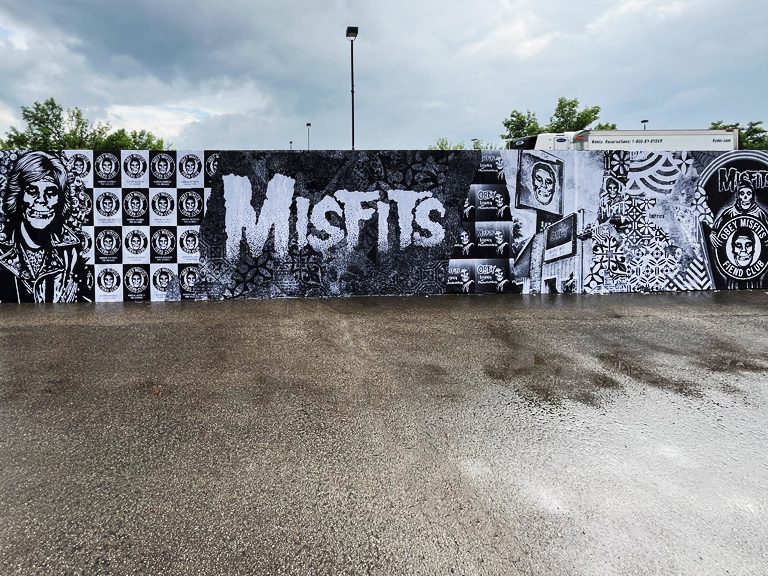
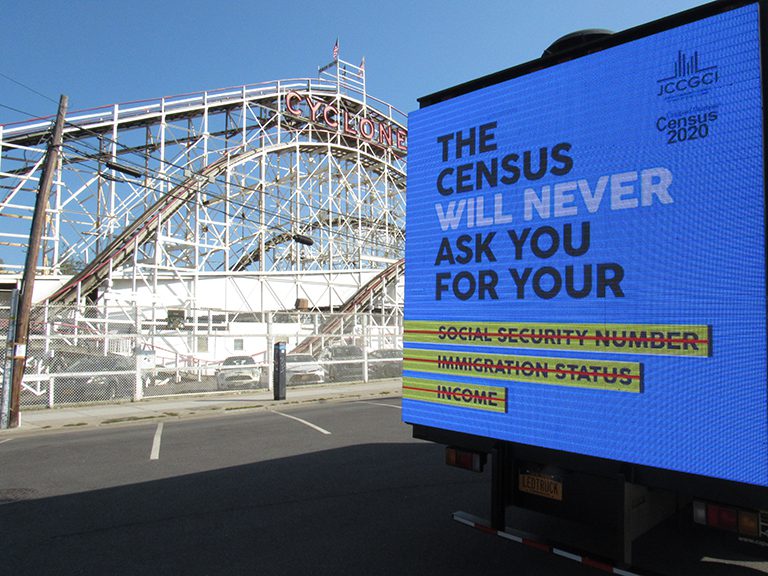
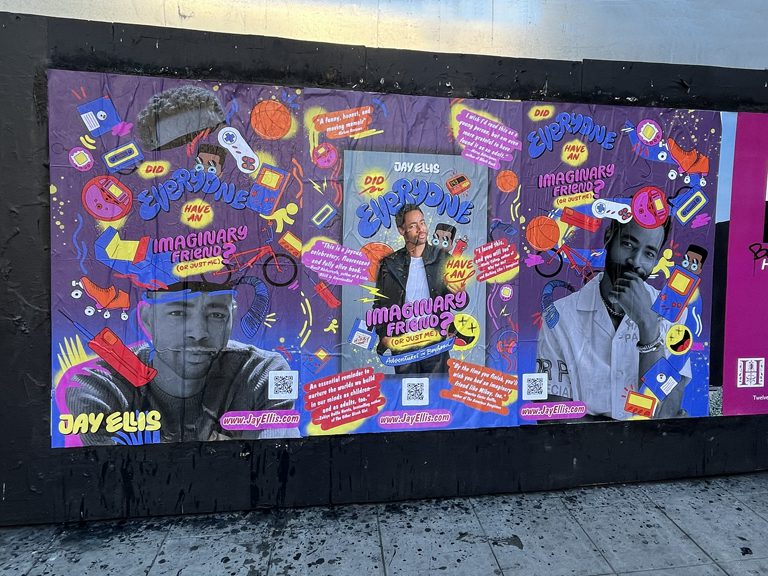
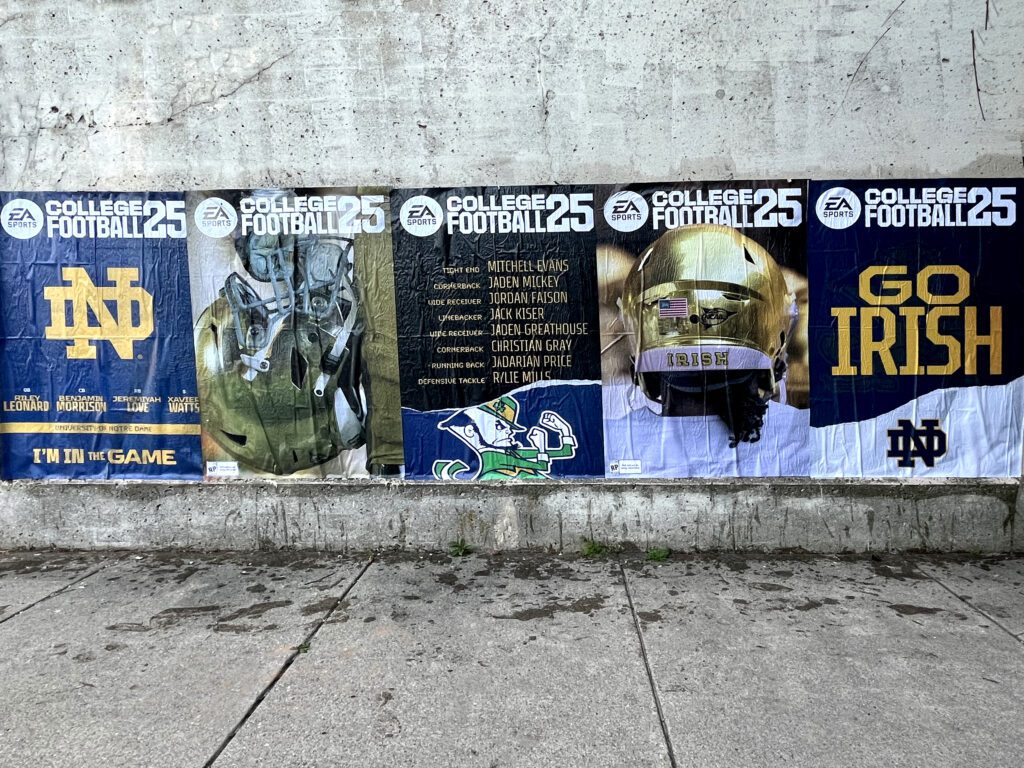
Wheatpaste Murals: National Temporary Mural & Photographic Mural Services


Why Wheatpaste Murals Work Across National Markets
A wheatpaste mural campaign does not behave the same way in every city, and that is exactly why the format works at a national scale for brands that understand how to use it. Every market has its own traffic patterns, wall inventory, pedestrian density, and cultural tone. A corridor that produces thousands of daily impressions in one city might be a dead end in another. A neighborhood that defines street credibility in Chicago looks nothing like its equivalent in Miami or Seattle. The discipline of national mural advertising is knowing which walls carry weight and which ones only look impressive on a site visit.
AGM operates nationwide because the team has built the relationships, the routing logic, and the production infrastructure to execute across diverse urban environments without treating every city like it is interchangeable. That means qualifying each market before a single panel is printed, identifying which placement types—photographic mural, wheatpaste mural, or temporary mural—make the most sense given the brief, the audience, and the campaign window.
The strongest national programs are not built by scaling up a single-market playbook. They are built by stacking well-reasoned local decisions into a coherent system. In a market like Los Angeles, that might mean a hero wall in a high-visibility creative district with support placements threading through surrounding walkable corridors. In a market like New York, it could mean concentrating around a specific neighborhood for maximum saturation rather than spreading impressions too thin across boroughs. In Chicago, a launch tied to a cultural moment might focus on corridors running into the event footprint from multiple approach directions. The format works nationally because it is flexible enough to serve each market on its own terms while maintaining consistent brand quality and execution standards across the entire run.
For brand-level buyers, the value of national mural advertising is that it builds simultaneous market presence in the places where your audience is moving through the world rather than sitting in front of a screen. That kind of physical visibility creates a different kind of memory, and AGM exists to deliver it at scale.
Hero Wall Strategy
The hero wall is the signature face of any mural campaign, and what separates a strong hero placement from a forgettable one is not size—it is route behavior. The question is not how large the wall is; it is whether the wall sits in a position where approach traffic has time to absorb the image and then encounter it again from a secondary angle. That combination of first-read distance and repeat-pass exposure is what makes a photographic mural feel dominant rather than incidental.
In a dense market like New York City, a hero wall on a heavily trafficked intersection in a neighborhood like SoHo or Williamsburg earns impressions from pedestrians, cyclists, delivery traffic, and rideshare circulation all stacking simultaneously. In a market like Los Angeles, the hero logic shifts: the best placements often sit on routes that combine vehicle approach speed with strong pedestrian dwell zones nearby, so the image registers at 35 mph and then gets examined on foot. In Chicago, a hero wall placed along a transit corridor near a major entertainment district can deliver concentrated exposure before an event and again on the way out, doubling the effective impression count without adding media budget.
What all strong hero placements share is that they force attention rather than compete for it. Long sightlines, minimum visual clutter on the opposing face, and proximity to destinations that concentrate the target audience are the variables that define hero-wall quality across every market. For a photographic mural, that environment allows the creative to do its job—communicate brand, message, and presence in a single read. The hero wall does not need to explain the whole campaign; it needs to make the brand unavoidable in the market for the duration of the run.
Support Wall Strategy
The support wall is where frequency gets built. A single hero face creates a first impression; the support layer is what turns that impression into recall. For national campaigns, support wall planning is often where the real strategic work happens because it requires understanding how each local market distributes its foot traffic and where people move at a slower pace than the hero corridor demands.
Across different markets, the support wall almost always belongs near a secondary retail strip, an entertainment cluster, or a neighborhood transition zone—somewhere the audience slows down, stops, or doubles back over the course of a day or week. In a market like Miami, that might mean a support placement threading through a walkable district adjacent to the hero zone. In Austin, it could mean walls near the corridors that feed into entertainment destinations from multiple directions. The point is that the support wall catches the same audience in a different state of mind: less hurried, more receptive, and often closer to the moment of action the campaign is trying to generate.
The support wall makes the hero wall look bigger than it is. When an audience encounters the same campaign in two distinct locations within their natural route, the brand begins to feel embedded in the city rather than placed in it. That shift in perception is worth more than raw impression counts, and it is the reason smart national buyers treat support placements as essential budget rather than optional extras.
Wheatpaste murals: Contact Us!
Award Winning Personalized Service
You will get thoughtful, devoted, and individualized attention from our experienced, qualified, and professional personnel. Being one of the most illustrious agencies in Brooklyn, New York, American Guerrilla Marketing has been awarded the Best of Brooklyn title.
Nationwide
Industry City, Brooklyn, New York 11232
American Guerrilla Marketing
Hours
Mon - Fri: 9 AM - 5 PM
Sat & Sun: Closed
Automate your campaign with AGM’s Request for Proposal Builder.
Automate your campaign with AGM’s Request for Proposal Builder. Simply answer a few quick questions about your campaign goals, markets, and timeline, and the system will generate a tailored presentation with recommended strategies, quantities, and pricing. Click the RFP Builder to instantly receive your customized proposal.
Event-week Layer
The event-week layer is where mural planning becomes a buying decision tied to a specific moment in the market. National campaigns that coordinate around the live event calendar—music festivals, product launches, fashion weeks, sporting events, film premieres, or brand activations—can compress their visibility window into exactly the period when audience intent and market attention peak simultaneously.
The U.S. has no shortage of moments that create this kind of concentrated opportunity. A launch tied to a major music festival in Austin creates a specific pedestrian density and social-capture energy that justifies a tighter, more aggressive placement strategy. A campaign running during a fashion week in New York targets an audience that is professionally attuned to brand signals and actively sharing visual content. A launch layered over a major sporting event in a market like Miami or Chicago gives a mural campaign an audience that is already in a high-engagement state and primed to notice street-level advertising.
The event-week layer is usually a temporary mural play: the campaign does not need longevity, it needs peak intensity. That means timing the install to arrive before the primary audience does and staying live through the long social-media tail that follows the event itself. When planned correctly, this layer can outperform longer-running placements because the impressions it delivers come during a window of maximum attention rather than background exposure.
Follow-through Corridor
The follow-through corridor is the layer that keeps a national campaign alive between its major touchpoints. After the hero wall creates the signature moment and the support placement builds frequency, the follow-through corridor extends the campaign’s reach into the transition zones where audiences move between destinations—from retail to nightlife, from transit to venue, from parking to event entrance.
Across different markets, these corridors tend to look similar in function even when they look different on a map. They are the blocks where foot traffic disperses and reconcentrates across the course of a day. They are the routes people walk more than once in a single trip. They are the spaces where a wheatpaste mural can act as a practical bridge between awareness and action because the audience is moving slowly enough to register detailed messaging, not just the campaign’s visual signature.
For national campaign planning, follow-through corridors matter because they are where the per-market execution logic gets refined. The placement decisions here are more granular than the hero wall and more strategic than a random support face. A well-chosen follow-through placement extends a campaign’s reach without requiring major additional budget, because it compounds existing impressions rather than generating them from scratch. For brands buying national street visibility, this layer is what turns individual city executions into a coherent system that feels coordinated across markets.
Wheatpaste Murals Deployment Table
| Planning Layer | Best Fit Placement Type | Why It Helps | Recommended Format |
|---|---|---|---|
| Hero wall | High-density urban core | Creates dominant signature placement and the image the market remembers | Photographic mural |
| Support wall | Secondary retail or entertainment corridor | Builds frequency across audience routes and increases campaign recall | Wheatpaste mural |
| Event-week layer | Festival, launch, or event footprint | Compresses visibility into the highest-intent window of the campaign | Temporary mural |
| Follow-through corridor | Transition zones between major destinations | Extends campaign reach across daily movement patterns and deepens repetition | Temporary mural plus support media |

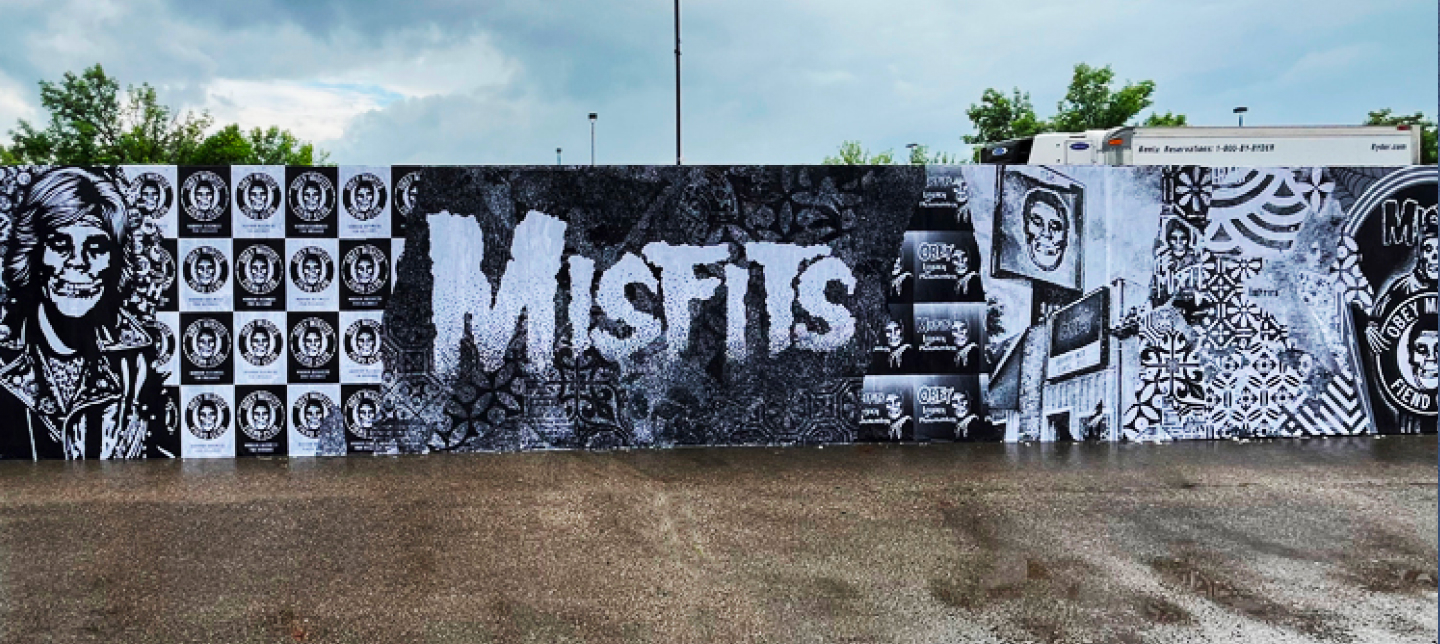
Canal Street at Broadway, Manhattan, New York
Corner masonry wall. Approach traffic converges from multiple directions and pedestrian density is among the highest of any U.S. urban corridor; the mural gets both distance reads and close-range dwell from shoppers, tourists, and commuters. Best fit: national product launch with high social capture priority.
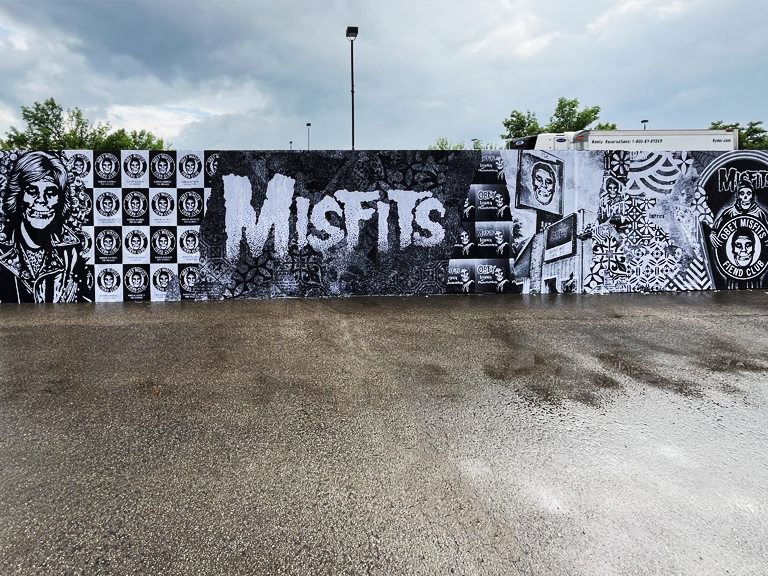
Melrose Avenue at Fairfax Avenue, Los Angeles
Mid-block painted brick wall. The streetwear and entertainment retail corridor draws a concentrated creative-class audience on foot and in slow-moving vehicle traffic, creating sustained dwell and strong organic photography sharing. Best fit: entertainment key-art push or limited-edition drop.
Activation Examples Nationwide
Wicker Park at Milwaukee Avenue, Chicago
Retail edge wall facing pedestrian foot traffic. The zone anchors a high-density nightlife and creative district where audience movement repeats across the same block faces throughout the evening, compounding impression frequency over the course of a campaign week. Best fit: concert, streaming series, or brand activation.
Wynwood Arts District, Miami
Venue-adjacent facade facing foot traffic from multiple gallery and bar entrances. Audiences arrive with phones out and social intent, producing strong organic media capture in addition to raw impression volume. Best fit: fashion, lifestyle, or cultural partnership.
East 6th Street corridor, Austin
)utdoor-facing wall on a route feeding major music venue traffic. The placement catches inbound and outbound audiences across multiple nights, making it ideal for compressed event-week visibility without requiring a lengthy production window. Best fit: music festival sponsorship or launch tied to a live event.
Projected Visibility and Impression Range
These ranges are directional planning estimates, not audited traffic counts. They are useful for comparing wall roles, creative scale, and how a wheatpaste mural system can stack impressions across a two-week run. Actual impression counts vary by market density, wall orientation, and route behavior at the specific placement.
| Wall Size | Estimated Daily Impressions | 2-Week Total Impressions | Placement Type |
|---|---|---|---|
| 180 sq ft | 1,604 | 22,456 | Corridor |
| 320 sq ft | 2,696 | 37,744 | Support |
| 520 sq ft | 4,256 | 59,584 | Support |
| 850 sq ft | 6,830 | 95,620 | Hero |
| 1200 sq ft | 9,560 | 133,840 | Hero |
How AGM Plans National Mural Advertising
AGM approaches national mural campaigns with the same discipline it applies to individual city programs—except scaled across multiple markets simultaneously. The process starts with wall qualification. Before any creative goes to print, AGM scouts and evaluates walls in each target market based on route logic, sightlines, surface condition, audience density, and operational access. A wall that looks compelling on a map has to earn its place in the plan by proving it intercepts the right audience in the right moment.
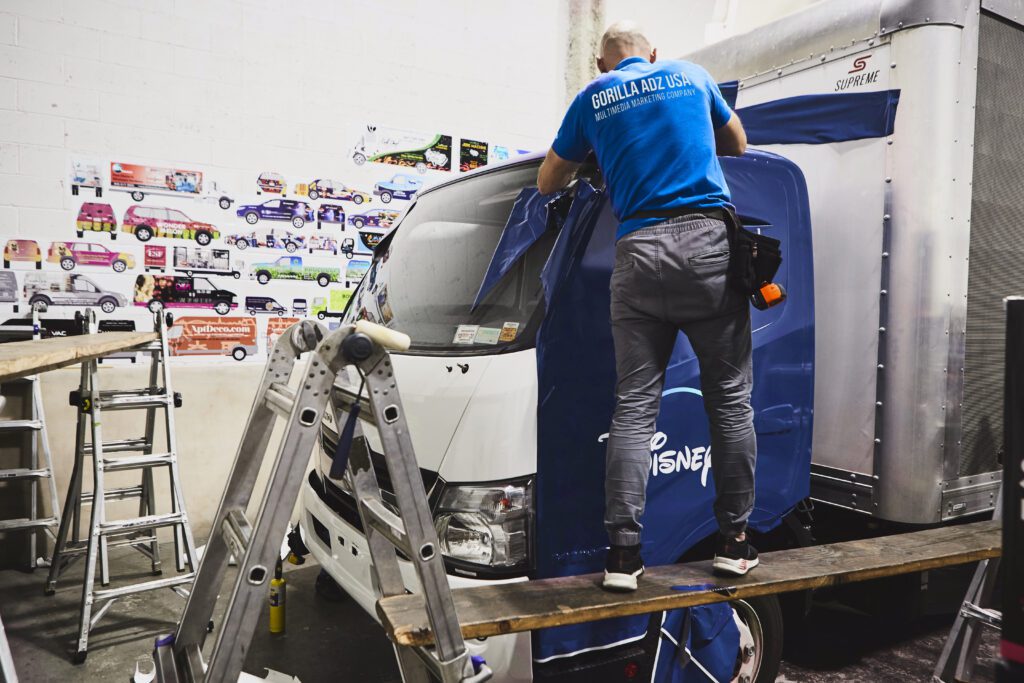
Wall qualification feeds directly into multi-market coordination, which is where most national campaigns either gain or lose efficiency. AGM manages the full production and logistics chain across markets from a single point of contact, so brands are not trying to coordinate multiple regional vendors, inconsistent print standards, and fragmented installation timelines. Creative consistency is enforced at the production level: every panel in every market is printed to the same specifications so that a photographic mural in one city looks as strong as it does in another, regardless of wall size or surface variation.
Regional compliance is handled as part of the planning process, not as an afterthought. Wall permissions, property approvals, and local installation standards vary significantly across cities, and AGM factors those variables into the timeline and execution plan before a campaign goes live. That means brands are not discovering compliance issues on install day.
The final layer is proof of performance. AGM documents each placement with field photography and installation confirmation, so clients have a clear record of what ran, where, and in what condition. For national campaigns, that documentation is not just useful for reporting—it is how brands validate that their investment delivered presence across every market in the plan.
Why Hire American Guerrilla Marketing For National Wheatpaste Murals
AGM is built for national wheatpaste mural work because the team combines market-level planning intelligence with the operational infrastructure to execute consistently across dozens of cities. The difference between a national mural campaign that works and one that simply covers ground is whether the team behind it understands local audience behavior, wall quality, and execution logistics well enough to make smart decisions in every market—not just the ones they know best.
The practical value of working with AGM on a national program is that brands get a single point of accountability for production, placement, installation, compliance, and documentation across every market in the plan. There is no patchwork of regional vendors to coordinate, no inconsistent print standards to reconcile, and no gaps in the proof-of-performance record. Every placement is documented, every install meets the same quality standard, and every market is treated with the same discipline as the anchor city.
AGM also brings a network of wall relationships and installer partnerships across the country that has been built through years of on-the-ground execution. That network is what allows the team to qualify walls quickly in new markets, secure permissions efficiently, and execute on aggressive timelines without sacrificing the quality that a national brand campaign requires. For buyers planning multi-market outdoor advertising that needs to look strong everywhere it runs, AGM is the operator that makes that standard achievable.
Questions Clients Ask About National Wheatpaste Mural Campaigns
Pricing for a national wheatpaste mural campaign is built from the number of markets, wall sizes, placement types, print quantities, surface conditions, and whether the plan calls for one hero face per city or a layered system of hero, support, and corridor placements. A single-market test with one or two walls looks very different from a coordinated multi-market rollout across ten cities running simultaneously. The smartest approach to budgeting is to define the campaign objective first—launch awareness, event-week saturation, sustained brand presence, or frequency-driven recall—and then build the plan around that role. That keeps cost tied to media logic rather than square footage alone. Brands that engage AGM early in the planning process tend to get more out of their budgets because creative, production, approvals, and logistics can be coordinated in advance instead of solved under deadline pressure.
AGM uses a combination of remote market research, route analysis, and on-the-ground scouting to qualify walls in new markets before any production begins. The process starts with identifying the highest-density pedestrian and vehicle corridors in the target area, then cross-referencing those routes with wall inventory based on ownership, surface condition, visibility, and approach sightlines. From that filtered list, the team evaluates which placements best match the campaign brief—whether the priority is hero awareness, event-week frequency, support layering, or a follow-through corridor play. In markets where AGM has not previously operated, the team builds installer relationships and confirms local logistics before committing to placements. The goal is to arrive in every new market with a qualified plan, not an exploratory one, so the execution standard stays consistent regardless of geography.
A wheatpaste mural is a printed panel installed onto a wall surface using a wheat-based adhesive, allowing for photographic-quality imagery, precise brand reproduction, and relatively fast deployment across multiple locations. A painted mural is created directly on the wall by an artist or crew and typically requires more installation time, cannot replicate photographic detail, and is intended for longer-term or permanent use. For national advertising campaigns, wheatpaste murals offer significant advantages in speed, brand consistency, and creative precision: the same image can be produced to identical standards across ten markets in the same week, something painted murals cannot match. Painted murals are the better choice when permanence, singular artistry, and community integration are the primary goals. For time-bound brand campaigns, launches, and event-driven outdoor advertising, printed temporary murals almost always outperform painted alternatives in both execution efficiency and creative fidelity.
The useful life of a wheatpaste mural depends on several factors: wall surface, weather exposure, UV intensity in the market, and whether the campaign is planned for a short burst or a sustained run. In most urban environments, a well-installed wheatpaste panel on a clean surface in a protected location can remain legible and presentable for four to eight weeks or longer. In high-sun markets or exposed outdoor locations, visible fade or surface wear may begin sooner. For national campaigns, AGM factors expected duration into the planning process, matching wall selection and installation method to the intended campaign window rather than assuming every market will behave the same. Short event-week campaigns may not need longevity at all; sustained brand presence campaigns are planned and installed with durability in mind. In either case, AGM schedules removal or replacement based on the campaign timeline rather than leaving panels up past their effective life.
Yes—consistent brand quality across multiple markets is one of the core operational disciplines AGM brings to national campaigns. Every panel in every city is printed from the same production files, to the same color and resolution standards, and installed by crews working from the same installation specifications. Brand consistency does not happen by accident at national scale; it requires centralized production management, standardized quality checkpoints, and clear communication between the central team and every field crew. AGM enforces this across the entire run, which means a photographic mural in Chicago carries the same visual standard as one in Miami or Los Angeles. For brand-level buyers, that consistency matters because national campaigns are often used to signal market presence to retail partners, investors, media, and consumers simultaneously. A single weak execution in one market can undercut the broader narrative the campaign is designed to create.
The best timing for a national wheatpaste mural campaign depends on when audience attention peaks in the markets you are targeting and how that aligns with your campaign objective. For product launches, the strongest runs are the ones where the mural goes live just before the public announcement, giving the street presence time to build before the broader media push lands. For event-driven campaigns, the install should be timed to cover the build-up window and peak through the event footprint rather than starting late and chasing the moment. For sustained brand presence campaigns, timing is less critical than placement quality and system coverage. In practical terms, brands should work backward from the desired live date and allow adequate lead time for creative adaptation, print production, wall qualification, approvals, and field scheduling across every market. Campaigns that start planning eight to twelve weeks in advance typically execute more cleanly and get better placement access than those working on compressed timelines.
Wall permissions and compliance requirements vary significantly from market to market, and AGM treats this variability as a planning input rather than a last-minute problem to solve. The process starts with wall qualification: before any placement is confirmed, AGM establishes the permission structure for that specific wall—who owns it, what the use terms are, whether any local regulations apply to temporary signage, and what the installation and removal expectations look like. In markets with stricter enforcement postures, this step takes longer and may constrain the wall inventory available for the campaign. In markets with more flexible operators and property owners, approvals can move faster. Regardless of market, AGM does not install on walls without documented permission. For national campaigns, the compliance layer is managed centrally and tracked against each market’s confirmed placements so that the client has a clear and accurate record of what ran under what terms.
A national wheatpaste mural campaign earns its ROI when the walls function as market presence rather than decoration, and when that presence connects to measurable downstream behavior. The metrics most brands track include branded search lift across campaign markets, direct social media capture and organic sharing from the placements, location-based foot traffic signals near installed walls, press and media pickup that references the street campaign, and direct sales or site traffic in markets where the campaign ran versus those where it did not. AGM supports this measurement process by providing field documentation—including geo-tagged installation photography and proof-of-performance records—that gives brands a baseline for attributing results to specific placements. The clients who get the clearest ROI picture from national mural campaigns are usually the ones who set measurement parameters before the campaign launches rather than trying to reconstruct them afterward.
The industries that get the most consistent value from national wheatpaste mural campaigns tend to be those where audience identity, cultural relevance, and physical market presence matter alongside digital reach. Entertainment—film, streaming, music, live events—uses national mural programs to signal scale and cultural significance across key release and launch markets. Fashion and streetwear brands use them to establish street authority in cities where credibility is built from the ground up rather than top down. Consumer packaged goods brands running retail launches use them to create visible presence at street level in the markets where distribution is heaviest. Tech and app brands use them to drive branded search and social awareness in dense urban populations. Cause campaigns and cultural partnerships use them to build community-level visibility in markets where outdoor presence reinforces organizational credibility. The common thread is that every one of these categories benefits from the kind of physical, unavoidable market presence that digital advertising cannot replicate.
Wheatpaste murals integrate naturally with a wide range of guerrilla marketing tactics, and multi-format campaigns consistently outperform single-format ones when the pieces are coordinated around a common routing logic. Wild posting, street teams, sticker campaigns, projection mapping, and pop-up activations all function differently at street level but draw on the same principle: concentrated physical presence in the places where your audience is actually moving through the world. A wheatpaste mural campaign provides the large-format visual anchor, while street teams or wild posting in the same zones add frequency and close-range interaction. For event-week campaigns, pairing mural placements with experiential activations in adjacent spaces can create a compressed takeover effect that makes the brand feel omnipresent for the duration of the window. AGM plans integrated guerrilla programs across all of these formats and can advise on how to layer tactics for maximum impact relative to budget.