American Guerrilla Marketing
Nationwide Service
Media planning, media buying, billboard advertising, & guerrilla marketing
Augusta pulses with two distinct rhythms — the world’s attention descends on this city every April for the Masters, and year-round, a large medical university system drives a young professional population that lives, eats, and socializes along Broad Street and the Canal corridor. Both rhythms create exceptional fly posting windows.
Augusta occupies a particular position among Georgia’s secondary markets: it carries outsized national recognition — primarily through the Masters Tournament, one of the most globally watched sporting events in golf — while sustaining a year-round economy anchored by Augusta University, the Medical College of Georgia, and a growing cluster of health sciences employers that collectively represent one of the largest healthcare workforces in the Southeast. The result is a city with two distinct advertising windows and two distinct demographic targets that can be reached through precisely calibrated fly posting campaigns.
During Masters week each April, Augusta’s population effectively doubles. Visitors descend from across the country and internationally, concentrating along the Washington Road corridor approaching Augusta National and filling the restaurants, bars, and shops of Historic Downtown Augusta and Broad Street. The week before and during the tournament represents one of the highest-density advertising windows a brand can access in any mid-sized American city — an audience of affluent golf enthusiasts, sports media professionals, corporate hospitality guests, and casual sports fans who are fully present and actively engaging with their surroundings. Street-level advertising during this window commands attention that no digital format can replicate.
Outside the Masters window, Augusta’s medical corridor drives consistent foot traffic along the areas adjacent to Augusta University Health and the Medical College of Georgia. Medical residents, nursing students, pharmaceutical sales professionals, and healthcare administrators represent a young-to-mid-career professional demographic with disposable income and strong brand awareness. These are people who work long hours and decompress in the restaurants and bars along Broad Street — making street-level advertising along their daily corridors an effective way to build brand recall through repeated exposure during commutes and lunch hour activity.
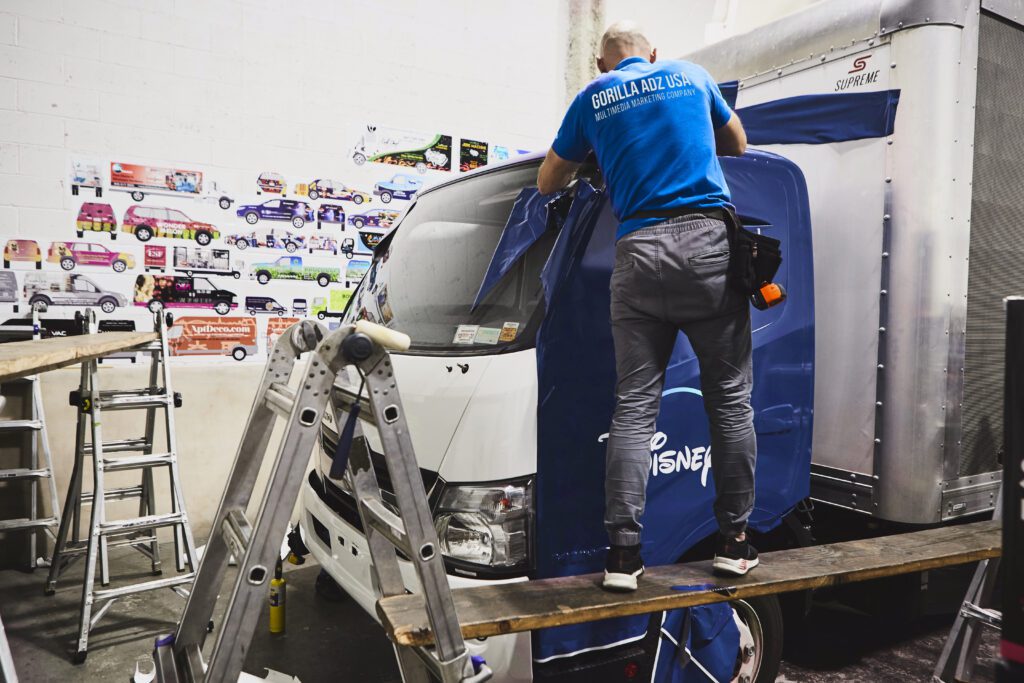
American Guerrilla Marketing operates in Augusta with the same direct-execution model we use in every market: in-house printing, in-house installation crews, and GPS-documented photo reporting that gives you a complete verifiable record of your campaign. No subcontractors manage your creative. No third parties handle your placement decisions. Every poster AGM installs in Augusta goes up under our direct supervision.
Masters week fills fast. Year-round campaigns reach Augusta's medical and creative communities on their daily routes. AGM's crews handle everything from print to install to GPS-documented reporting.
Augusta’s geographic layout concentrates its most relevant advertising zones along a fairly compact set of corridors, making targeted fly posting campaigns particularly efficient in this market.
Broad Street is Augusta’s commercial and cultural spine — a wide downtown boulevard lined with restaurants, craft cocktail bars, music venues, art galleries, and independent retail that serves both the medical university community and Augusta’s general young professional population. The street’s generous sidewalks and mixed-use commercial facades create strong pedestrian visibility for poster installations, and the density of nighttime foot traffic along Broad Street’s restaurant and bar corridor ensures that campaigns installed here reach audiences during their leisure hours, when brand messaging is processed most openly. The stretch between 5th Street and 9th Street is particularly active, housing venues like the Soul Bar and the Willcox that anchor Augusta’s evening social scene. Events at the Augusta Common, an outdoor public space at the western end of Broad Street, regularly draw crowds that amplify foot traffic throughout the surrounding corridor.
Augusta’s historic downtown grid preserves a remarkable collection of late 19th and early 20th century commercial architecture — brick facades, cast-iron storefronts, and mid-rise buildings that create a visually compelling backdrop for fly posting campaigns. The area bounded by Broad Street to the north, Reynolds Street along the Savannah River to the south, and the numbered cross streets hosts a mix of government offices, legal and financial firms, restaurants, and the growing residential conversion of upper floors in historic commercial buildings. Foot traffic here is consistent during business hours and builds significantly on weekend evenings when the restaurant and bar scene activates. The historic texture of the built environment means fly posting installations benefit from a visual contrast that makes them highly noticeable — a contemporary brand campaign on a century-old brick wall commands more attention than the same campaign on a generic modern facade.
The Augusta Canal National Heritage Area represents one of the most distinctive outdoor environments in Georgia — a 19th century industrial canal that powered Augusta’s textile mills now hosts a linear trail used by cyclists, joggers, kayakers, and nature-oriented residents who represent a decidedly active, health-conscious demographic. The Enterprise Mill complex along the canal has been converted into mixed-use residential and commercial space, bringing a residential population to an area that was previously purely industrial. The canal trail connects to broader Augusta outdoor recreation infrastructure and draws users throughout the warmer months at high frequency. Campaigns targeting outdoor lifestyle brands, health and wellness products, and active recreation services find the canal corridor an unusually well-aligned fly posting environment in terms of audience-surface match.
Laney-Walker and the adjacent Bethlehem neighborhood represent Augusta’s historically Black commercial and residential districts, areas with deep community roots and a growing reinvestment presence driven by both local organizations and external development interest. The corridors along Laney-Walker Boulevard and the surrounding residential streets carry cultural significance for Augusta’s Black community analogous to Sweet Auburn’s role in Atlanta — historic weight combined with contemporary energy as new businesses, arts organizations, and community initiatives establish themselves. Campaigns targeting Augusta’s Black professional community, HBCU-connected brands, and social impact organizations find that thoughtful fly posting in Laney-Walker reaches an engaged audience in a context that demonstrates genuine cultural investment rather than extractive advertising.
The Masters Tournament creates one of the most compressed, high-intensity advertising opportunities in the American sports calendar. For roughly ten days in April, Augusta receives national media coverage that amplifies any brand presence in the market. Visitors who attend practice rounds and tournament days move through Augusta’s downtown corridors before and after their time at Augusta National, spending at local restaurants, visiting bars along Broad Street, and generally engaging with Augusta’s commercial environment at a pace and density that far exceeds any normal market condition.
Fly posting campaigns timed to coincide with Masters week achieve two distinct effects: they reach the influx of visitors who are actively present in Augusta’s streets, and they generate social documentation from people who are sharing their Augusta experience across every available platform. A striking poster campaign on Broad Street during Masters week gets photographed by visitors alongside the azaleas and the green jackets — an earned media amplification that multiplies the campaign’s actual reach well beyond its physical footprint.
AGM recommends scheduling Masters-window campaigns for installation approximately two to three days before the tournament begins, ensuring posters are fresh and at maximum visual impact during the peak visitor days. Rush production at the 24×36 format is available for campaigns that need rapid turnaround to meet the April window. Advance planning is strongly recommended — Masters week is Augusta’s most competitive advertising environment, and brands that move early secure the best placement surfaces.
Award Winning Personalized Service
You will get thoughtful, devoted, and individualized attention from our experienced, qualified, and professional personnel. Being one of the most illustrious agencies in Brooklyn, New York, American Guerrilla Marketing has been awarded the Best of Brooklyn title.
Nationwide
Industry City, Brooklyn, New York 11232
American Guerrilla Marketing
Hours
Mon - Fri: 9 AM - 5 PM
Sat & Sun: Closed
Automate your campaign with AGM’s Request for Proposal Builder. Simply answer a few quick questions about your campaign goals, markets, and timeline, and the system will generate a tailored presentation with recommended strategies, quantities, and pricing. Click the RFP Builder to instantly receive your customized proposal.
For Augusta’s compact downtown geography, the 24×36 format at contact us for pricing for 100 posters or contact us for pricing for 200 delivers strong corridor saturation. The city’s walkable core means a well-planned 100-poster campaign reaches the key blocks of Broad Street, Historic Downtown, and the medical corridor with enough frequency that your campaign registers with repeat visitors to the area. This format works particularly well for event-window campaigns, restaurant and bar openings, medical conference promotions, and entertainment releases targeting Augusta’s young professional and student population.
The 48×72 format at contact us for pricing for 100 posters is the right choice for Masters week campaigns that need to command immediate attention in a compressed timeframe. A large-format installation on a Broad Street building or a canal-area warehouse wall is visible from distances that stop visitors in their tracks, generating the kind of physical presence that translates to social media documentation. For sponsors, hospitality brands, and premium consumer products targeting the affluent Masters audience, the 48×72 format communicates brand scale that matches the elevated context of the event.
Augusta campaigns begin with a clear understanding of the campaign window and primary target audience. Is this a Masters-timed activation reaching an out-of-town visitor demographic? A year-round effort targeting Augusta’s medical university community? A restaurant or bar opening reaching the young professional nightlife crowd on Broad Street? The answers determine the placement geography, the timing of installation, and the poster format that maximizes impact within the available budget.
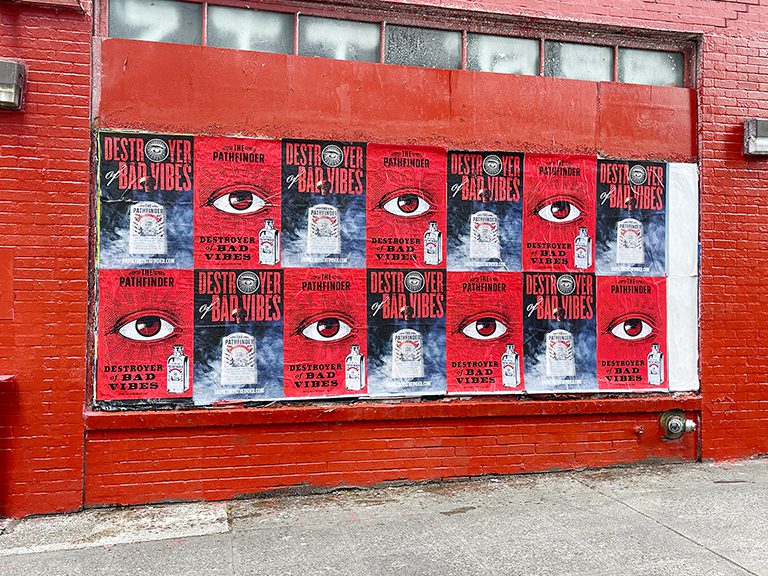
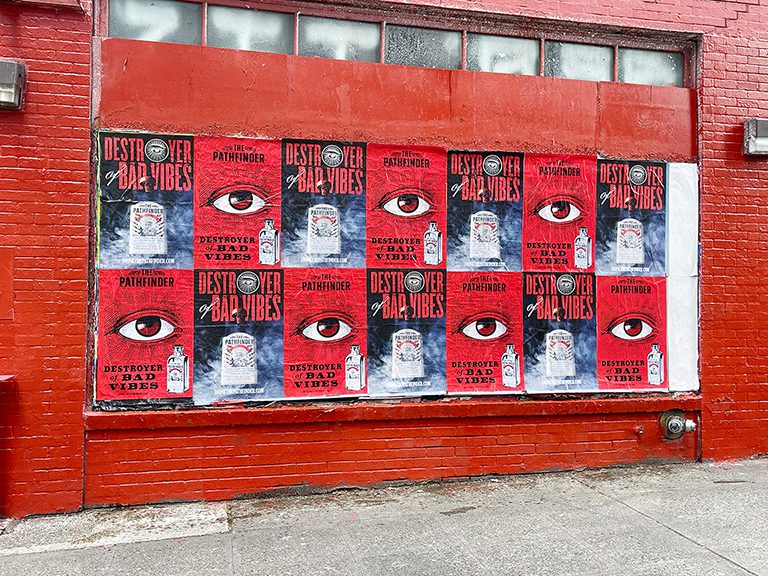
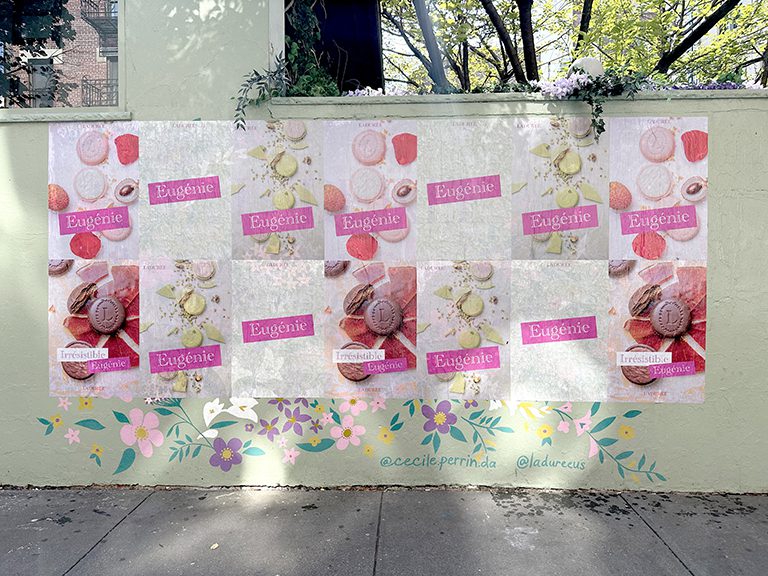
Our placement team surveys Augusta’s target corridors prior to every campaign, identifying the specific walls, construction barriers, and surfaces that offer the highest visibility within our target zones. In Augusta’s historic downtown, older brick structures and commercial buildings provide abundant posting surfaces with a visual character that makes contemporary campaigns particularly striking by contrast. Along the canal and medical corridors, a different surface profile — newer construction, institutional buildings, utility structures — requires different placement strategy to achieve similar impact.
Installation is executed by AGM’s in-house crews using wheat-based adhesive that bonds effectively to a wide range of surfaces and is removable via pressure washing without damage to underlying surfaces. Every installation is GPS-documented immediately upon completion. The final campaign report includes a complete photo log with location coordinates, giving you verifiable proof of performance across every placement in your run.
Augusta’s advertiser mix reflects the city’s dual economic identity. Healthcare and pharmaceutical companies use fly posting to build brand recognition with the medical university community — residents, students, and clinical staff who pass through specific corridors daily and respond to repeated visual impressions. Medical conference sponsors use Augusta fly posting campaigns to establish visibility in the weeks surrounding major conferences held at Augusta University’s facilities.
Sports and hospitality brands targeting Masters week audiences use fly posting to build presence before and during the tournament, reaching both the visiting golf audience and the Augusta residents who serve as hosts, hospitality workers, and local guides during that concentrated period. Premium consumer brands — luxury goods, premium spirits, high-end automotive — find the Masters-adjacent advertising window exceptionally well-matched to their target demographic.
Augusta’s arts and music scene — centered on Broad Street venues and supported by a growing community of local artists and musicians — uses fly posting for concert promotion, gallery opening announcements, and arts festival advertising. The Soul Bar, Midland Valley Arts Park, and the Westobou Festival orbit generate consistent demand for street-level event promotion that reaches Augusta’s arts community where they spend their evenings.
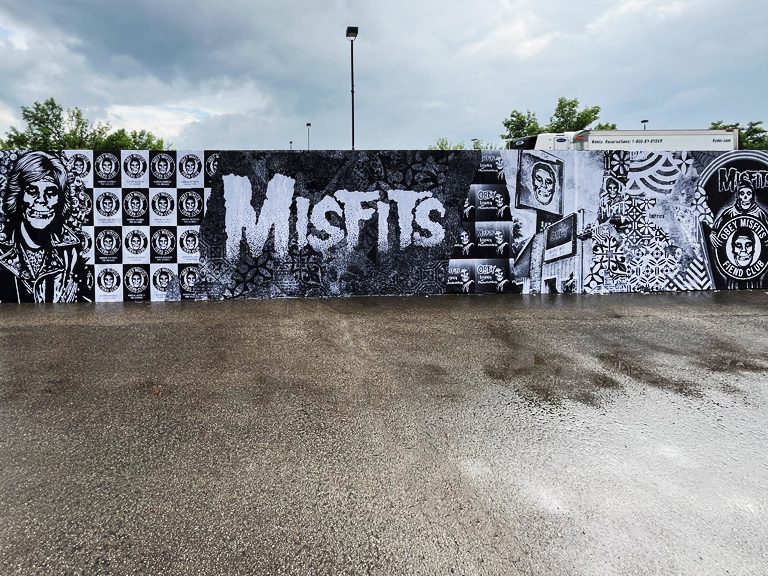
Shepard Fairey’s street poster work for Sonic Temple Festival 2024 demonstrated the power of fly posting as a tool for cultural amplification in markets where an artist’s visual vocabulary has already established credibility. The campaign activated across music festival corridors using large-format installations that functioned simultaneously as advertising and as art — posters that people stopped to photograph and share before they even registered the commercial purpose. This dual function — advertising content that operates as cultural contribution — is particularly relevant in Augusta’s arts community, where audiences are sophisticated enough to distinguish between authentic creative engagement and generic commercial messaging. Brands and artists that approach Augusta’s Broad Street arts corridor with work that genuinely contributes to the city’s visual culture find their campaigns received with a level of engagement that purely transactional advertising never achieves.
The optimal window for Masters-timed fly posting is installation two to three days before the tournament’s official start, with posters fresh and at peak visual quality during the practice rounds when visitor foot traffic in downtown Augusta begins its significant build. The tournament week itself — typically the second full week of April — represents the highest-density window. Brands that need rush production to meet the April timeline can utilize AGM’s 72-hour rush production for 24×36 campaigns. Planning campaigns six to eight weeks in advance of the Masters is strongly recommended to secure the best placement surfaces before competing advertisers fill the available inventory.
Year-round, Broad Street from the 5th Street to 9th Street corridor carries the highest consistent foot traffic of any Augusta zone — particularly during evening hours when the restaurant and bar scene is active. The blocks immediately surrounding Augusta University Health’s main campus and the Medical College of Georgia generate strong daytime pedestrian traffic from medical students, residents, and staff. The Augusta Canal trail area drives active-lifestyle audience foot traffic during morning and late afternoon hours on weekdays and throughout the day on weekends.
Every installation is photographed immediately upon completion with GPS coordinates embedded in the documentation. AGM’s photo reporting package includes wide-angle contextual shots showing each poster in its street environment, close-up detail photography confirming print quality and adhesion quality, and a complete location log that maps each placement to its geographic coordinates. This documentation package is delivered digitally and provides verifiable proof of performance suitable for stakeholder reporting, sponsor recaps, and brand partnership documentation.
Yes. Medical conference timing is one of the more specialized but effective campaign windows in Augusta, particularly for pharmaceutical, medical device, and health services brands targeting clinical decision-makers. AGM plans campaign installations to coincide with conference arrival periods, ensuring that medical professionals checking into downtown hotels and moving through Augusta’s corridors encounter your campaign during their time in the market. Conference-timed campaigns benefit from the same compressed-audience dynamic as Masters week — a specific professional demographic concentrated in a specific geography for a defined period.
Augusta’s market responds particularly well to three categories of fly posting advertiser: event-driven brands targeting the Masters visitor demographic (premium consumer goods, luxury hospitality, sporting goods); health and wellness brands targeting the medical university community (fitness, nutrition, health tech, wellness services); and arts and nightlife brands targeting Augusta’s Broad Street creative community (music, restaurants, bars, local events). Campaigns that align with one of these three distinct audience segments typically achieve the highest engagement in Augusta’s street-level advertising environment.
Yes. AGM’s multi-format capabilities extend to Augusta and include combinations of fly posting with sidewalk stencil activations and other street-level formats. For Masters week activations where brand presence needs to be felt across multiple surfaces and multiple sensory touchpoints simultaneously, a layered approach that combines poster installations on walls with stencil activations on sidewalks creates a more immersive street-level experience. Multi-format campaigns are priced per component and planned as a unified activation with synchronized timing and consolidated documentation.
Augusta’s downtown geography is compact enough that 100 posters in the 24×36 format achieves meaningful coverage of the primary corridors — Broad Street, the Historic Downtown blocks, and the approaches to the medical district. For campaigns targeting Augusta during Masters week that need to reach visiting audiences across multiple arrival corridors including Washington Road and the downtown visitor concentration, 200 posters provides stronger multi-corridor presence. For large-format 48×72 campaigns, 50 to 100 placements in Augusta’s downtown core achieves high-impact saturation within the primary visitor zones.
Yes — the medical university community in Augusta has characteristics that make fly posting particularly effective: they move through predictable daily corridors, they are present in the market consistently over long periods (residents complete multi-year programs), and their daily commutes and lunch breaks take them through a defined set of streets where repeated poster exposure builds brand recall efficiently. Unlike consumer audiences that might only visit a neighborhood occasionally, medical students and residents walk the same routes daily, meaning a well-placed campaign achieves high frequency with this audience at a cost that no digital format can match.
Standard turnaround from brief submission to installed campaign is one to two weeks, covering print production, placement planning, and installation scheduling. For Masters-window campaigns or other time-sensitive activations, AGM’s 72-hour rush production is available for 24×36 campaigns up to 500 posters, compressing the timeline from approved artwork to installed posters to as little as three days. Rush campaigns require confirmed artwork files at the time of brief submission — no file revisions are possible within the rush window without resetting the timeline.
Yes. Augusta is one of four Georgia markets where AGM operates — along with Atlanta, Columbus, and Savannah — and multi-market Georgia campaigns can be planned and executed as unified activations with synchronized installation timing across all markets. Brands releasing products statewide, entertainment campaigns reaching multiple Georgia audiences simultaneously, and event promoters with activity in multiple cities can coordinate all markets through a single AGM engagement with one consolidated reporting deliverable.
AGM uses a wheat-based paste adhesive that provides strong bonding to a wide range of commercial surfaces while remaining pressure-wash removable. The wheat formula is environmentally responsible — it contains no synthetic chemical adhesives and breaks down naturally when exposed to moisture over time. This makes it the appropriate choice for campaigns in historic downtown environments like Augusta’s brick-facade commercial district, where surface preservation is an important consideration and property owners require assurance that advertising installations will not cause long-term damage to their buildings.