American Guerrilla Marketing
Nationwide Service
Media planning, media buying, billboard advertising, & guerrilla marketing
Bridgeport’s South End arts corridor is forming now — warehouse walls open, creative audience present, competition for street-level surface space minimal. This is the market to reach before it matures and pricing catches up with demand.
There is a specific moment in an urban market’s lifecycle when fly posting campaigns deliver their highest return on investment — when a creative community is actively forming, when blank wall inventory is still abundant, when the audience is engaged and concentrated but conventional advertising hasn’t yet caught up to the neighborhood’s rising profile. Bridgeport is in that moment right now. The South End arts corridor along Stratford Avenue is undergoing the kind of warehouse-to-studio conversion cycle that preceded the cultural emergence of neighborhoods like Bushwick, Detroit’s Corktown, and Philadelphia’s Fishtown — artists relocating from more expensive markets, creative businesses choosing affordability over prestige, and a community identity forming around shared aesthetic interests rather than inherited neighborhood reputation. For brands that understand how to read an emerging market, fly posting in Bridgeport today represents the same pre-saturation opportunity those other markets offered before rents caught up and surface competition intensified.
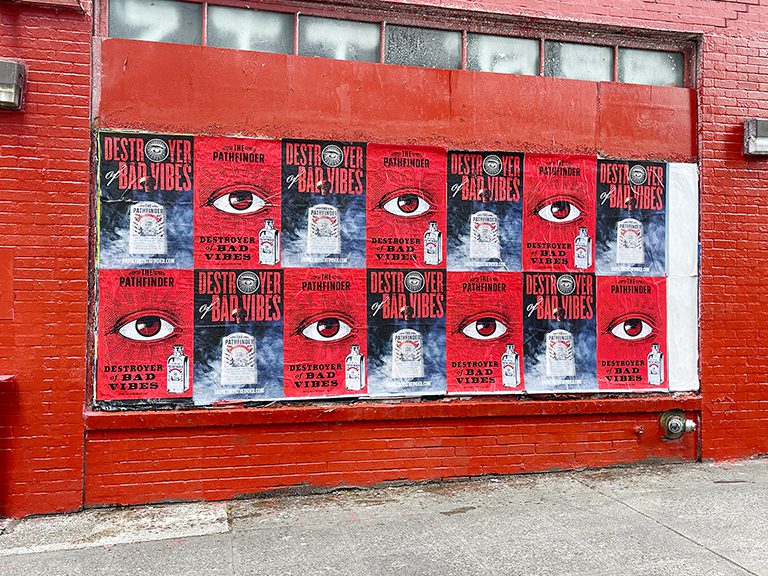
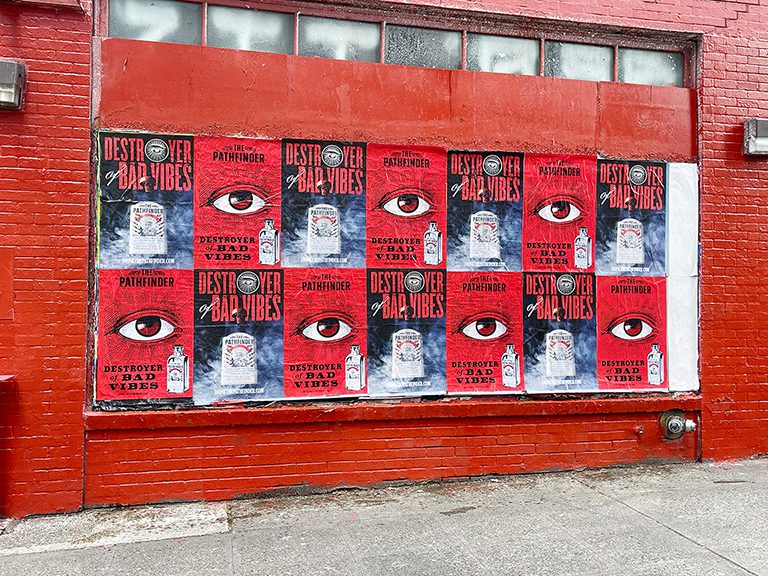
The timing argument is straightforward. When a neighborhood is in early-stage revival, the economics of street poster advertising favor the advertiser dramatically. Available surface inventory is high — development projects generate plywood barriers, converted industrial buildings have blank exterior walls, and the creative businesses moving in haven’t yet covered every available surface with their own programming. The audience is disproportionately young, arts-engaged, and attuned to creative visual work rather than exhausted by an advertising saturation that arrives only once a neighborhood establishes itself as a destination. And the cost of running a fly posting campaign in Bridgeport reflects a market that hasn’t yet priced itself to match the quality of the audience it delivers. That gap is temporary. Brands that move through Bridgeport now are building early-mover advantage with a creative community that will carry those impressions forward as the market matures and their purchasing power and cultural influence grow.
Downtown Bridgeport adds a different dimension to the market picture. The Main Street and Broad Street corridor is in active street-level retail revival, with independent businesses returning to blocks that have been underutilized for years, and the presence of the 18,500-seat Total Mortgage Arena creating reliable and substantial post-event foot traffic spikes throughout the surrounding area. When a major concert or hockey game lets out onto Main Street and Broad Street, the pedestrian volume that flows through that corridor rivals anything available in the larger Connecticut markets — and the demographic skew of that audience, drawn to live entertainment in a city with Bridgeport’s cost profile, includes a high concentration of the 20–38 young adult segment that responds most actively to wheat paste advertising. Housatonic Community College, located centrally within the downtown footprint, adds a consistent daytime student population that moves through the surrounding blocks on regular class schedules, layering an academic demographic onto the entertainment and arts audiences that dominate evenings and weekends.
Fly posting in Bridgeport, CT reaches a community that is in active self-definition — forming its cultural identity, establishing its institutions, and doing so through the art, music, design, and independent business culture that creates exactly the context in which brand messaging through wheatpasting and street posters finds its most receptive audience. Brands operating in beauty and wellness, fashion and lifestyle, entertainment, arts and music, and consumer products targeting young urban adults will find Bridgeport’s South End and downtown corridors genuinely effective at a price point that comparable creative-district markets can’t approach.
AGM handles the full build — in-house printing, direct crew installation across the South End, Barnum District, and downtown corridor, and GPS-documented reporting on every placement. The emerging market window is open. Let's put your campaign in it.
Select a city to explore Fly Posting Advertising opportunities.
Downtown Bridgeport’s flyposting value comes from two overlapping foot traffic sources that activate at different times and reach different audience segments within the same geographic zone. The first is the arena traffic generated by Total Mortgage Arena at 600 Main Street — an 18,500-seat venue that hosts major touring concerts, American Hockey League games, college basketball, and family entertainment events throughout the year. When an event lets out, thousands of people flow through the Main Street and Broad Street corridor on their way to parking, transit, and adjacent restaurants and bars. That post-event foot traffic spike creates high-volume impression windows for wheat paste placements within a several-block radius of the venue, and those impressions land on an audience that is already in an entertainment mindset — predisposed to engage with creative brand messaging at a higher rate than a neutral pedestrian moving through a commercial zone. The second foot traffic source is Housatonic Community College, whose downtown campus puts student pedestrians through the surrounding blocks on weekday schedules throughout the academic year. HCC’s commuter enrollment skews toward the 18–28 demographic that is most receptive to street poster advertising, and the daytime density this population provides fills the foot traffic gap that arena programming doesn’t cover during non-event hours. Together, these two sources make downtown Bridgeport a consistently active fly posting environment across multiple days of the week and multiple times of day — a reliability that emerging market neighborhoods in earlier stages of activation can’t yet offer.
The Barnum District takes its name and its identity from P.T. Barnum, Bridgeport’s most famous native son, whose legacy institution — the Barnum Museum — anchors the neighborhood’s sense of place on Main Street near the corner of Kossuth Street. Beyond the museum, the Barnum District is defined by Barnum Avenue itself, a community-anchored commercial corridor that connects the downtown core to the South End, threading through dense residential blocks that house a predominantly working-class population and the independent businesses that serve it. Barbershops, restaurants, bodegas, clothing retailers, and neighborhood service businesses line the avenue, and the foot traffic on Barnum Avenue is authentic and pedestrian-heavy in a way that distinguishes it from tourist or entertainment corridors — people here move on foot because they live, work, and shop in this neighborhood, not because they drove in from the suburbs for an event. That authenticity matters for wheatpasting campaigns targeting working-class young adult demographics or brands building cultural credibility in communities that respond viscerally to street-level presence over conventional advertising. Fly posting in the Barnum District reaches Bridgeport’s non-arts-district resident population — a large, dense, and genuinely underserved audience from a conventional advertising standpoint whose engagement with street poster campaigns is typically higher than saturation-market equivalents precisely because they encounter less competition for their visual attention on their daily routes.
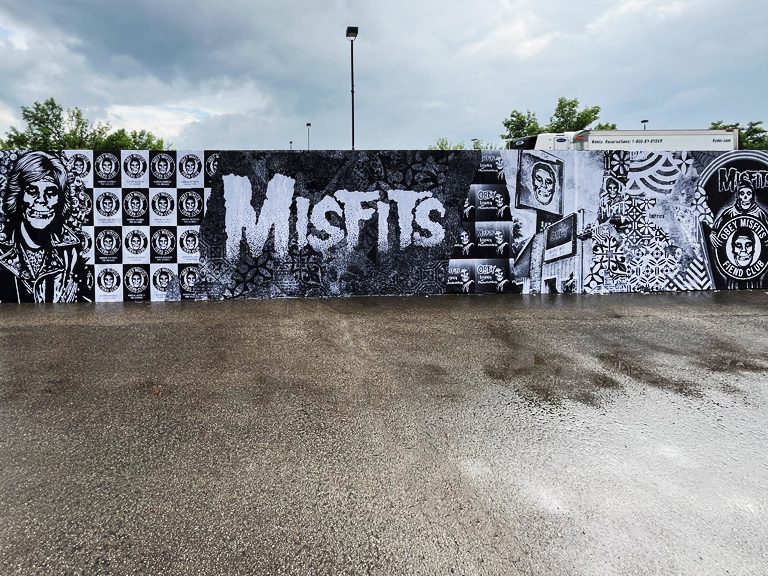
The South End is where Bridgeport’s future is being written, and it is the most strategically compelling location for fly posting in Bridgeport, CT right now. Stratford Avenue and the blocks surrounding it are where warehouse and industrial buildings from Bridgeport’s manufacturing era are being converted to artist studios, gallery spaces, and creative workspace — the same conversion pattern that preceded the cultural emergence of every major American arts district over the past thirty years, from Red Hook and Bushwick in Brooklyn to the Arts District in Los Angeles to Cincinnati’s Over-the-Rhine. The younger artists and creative workers relocating here from New Haven, New York, and Hartford are choosing Bridgeport’s South End specifically because its affordability allows the kind of studio investment and community building that more expensive markets have foreclosed. As those artists establish themselves, they create the gallery programming, event culture, and independent business ecosystem that draws broader audiences — and the most effective way to reach those artists, their peers, and their growing audience base before that ecosystem fully matures is through the street-level visual medium they engage with most actively. Fly posting and wheatpasting campaigns on Stratford Avenue and in the surrounding South End blocks land on surfaces that are available in abundance now, and in front of audiences who are predisposed by profession and aesthetic orientation to engage with high-quality street-level creative work. Brands that want to build credibility with this community should be in the South End while the community is still small enough that a well-executed fly posting campaign constitutes a significant presence rather than just another layer in a crowded visual environment.
The Biossance “Illuminate Your World” campaign — a wheat paste and sidewalk stencil combination executed in beauty and wellness corridors in New York and Los Angeles — demonstrated how precisely targeted street poster advertising can reach beauty-conscious, design-engaged, independent-retail-shopping young women in exactly the neighborhoods where they live and move. The campaign worked in Williamsburg and Silver Lake because those neighborhoods concentrated the specific demographic — creative young adults who seek out independent brands, respond to visual creativity, and make purchasing decisions based on cultural alignment as much as product performance. Bridgeport’s South End is creating the same concentrated demographic profile at an earlier stage of the same cycle. The artists, designers, and creative workers relocating to the Stratford Avenue corridor are the same profile of early-adopter, aesthetically conscious young adult who made Biossance’s campaign land in New York’s arts corridors — they’re just doing it at a cost per reach that a Williamsburg build can’t approach.
This is the structural advantage of the emerging market for beauty and wellness brands, fashion labels, lifestyle products, and any brand category whose core customer is a creative young adult with developed aesthetic sensibility and disposable income below the level that makes mass-market advertising effective. The early creative community in an emerging arts district is disproportionately influential relative to its size — these are the people whose style choices, brand preferences, and cultural recommendations flow outward into broader consumer networks. Reaching them through fly posting in Bridgeport’s South End before the neighborhood achieves mainstream recognition builds the kind of authentic brand credibility that no conventional media buy can manufacture and that typically becomes unavailable in a market once it becomes expensive enough to attract large-scale advertising investment.
Street poster advertising in Bridgeport is also effectively complementary to campaigns running simultaneously in the other Connecticut markets. A brand running wheat paste in New Haven’s Chapel Street zone and Stamford’s Harbor Point district can extend into Bridgeport’s South End and downtown corridor at marginal additional cost, reaching a third, demographically distinct audience segment without the overhead of a separate campaign build. For brands activating Connecticut as part of a broader northeastern regional strategy, Bridgeport adds genuine reach into an underserved emerging market that neither New Haven nor Stamford can replicate.
Award Winning Personalized Service
You will get thoughtful, devoted, and individualized attention from our experienced, qualified, and professional personnel. Being one of the most illustrious agencies in Brooklyn, New York, American Guerrilla Marketing has been awarded the Best of Brooklyn title.
Nationwide
Industry City, Brooklyn, New York 11232
American Guerrilla Marketing
Hours
Mon - Fri: 9 AM - 5 PM
Sat & Sun: Closed
Automate your campaign with AGM’s Request for Proposal Builder. Simply answer a few quick questions about your campaign goals, markets, and timeline, and the system will generate a tailored presentation with recommended strategies, quantities, and pricing. Click the RFP Builder to instantly receive your customized proposal.
The 24″×36″ standard format is the primary recommendation for fly posting campaigns in Bridgeport because it maximizes coverage density across the three distinct corridors that define the market — downtown, the Barnum District, and the South End — without requiring the larger surface availability that the 48″×72″ format demands. In an emerging market like Bridgeport’s South End, where available surface inventory is one of the campaign’s primary advantages, the 24″×36″ format allows brands to build concentrated presence across a larger number of placement positions, creating the repetition of impression that makes street poster campaigns memorable and persuasive. A 100-poster deployment at the standard format can cover the South End, Barnum District, and downtown corridor in a single build with enough density that the target audience encounters the campaign multiple times on their regular pedestrian routes — the impression frequency that makes street poster advertising effective at driving brand recall and cultural credibility.
The 48″×72″ large format makes sense in Bridgeport as an anchor complement to a standard-format coverage campaign — specifically for placements near Total Mortgage Arena on Main Street and Broad Street, where the scale of the venue justifies the scale of the poster and large-format installations photograph particularly well for earned media use. A large-format anchor placement on a building facing the arena foot traffic exit, combined with 24″×36″ coverage through the South End and Barnum District, gives a Bridgeport campaign both the landmark visibility of a dominant placement and the neighborhood penetration of a coverage build. Brands considering Bridgeport for a launch campaign or major activation should think about the two formats as complementary tools rather than mutually exclusive choices — the question is which format to emphasize given the campaign’s primary objective and budget.
Every Bridgeport fly posting campaign begins with neighborhood-level targeting strategy developed specifically around the campaign’s audience profile and objectives. AGM’s team identifies the specific streets, intersections, and surface positions within the South End, Barnum District, and downtown corridor that offer the highest combination of foot traffic, demographic alignment, and surface quality for the campaign’s format size and creative execution. For a campaign targeting Bridgeport’s arts community, that strategy routes differently than a campaign targeting HCC students or the Total Mortgage Arena entertainment audience — neighborhood targeting in Bridgeport is audience-specific, not generic, and it reflects understanding of how different demographic segments move through the city’s distinct commercial and residential zones.
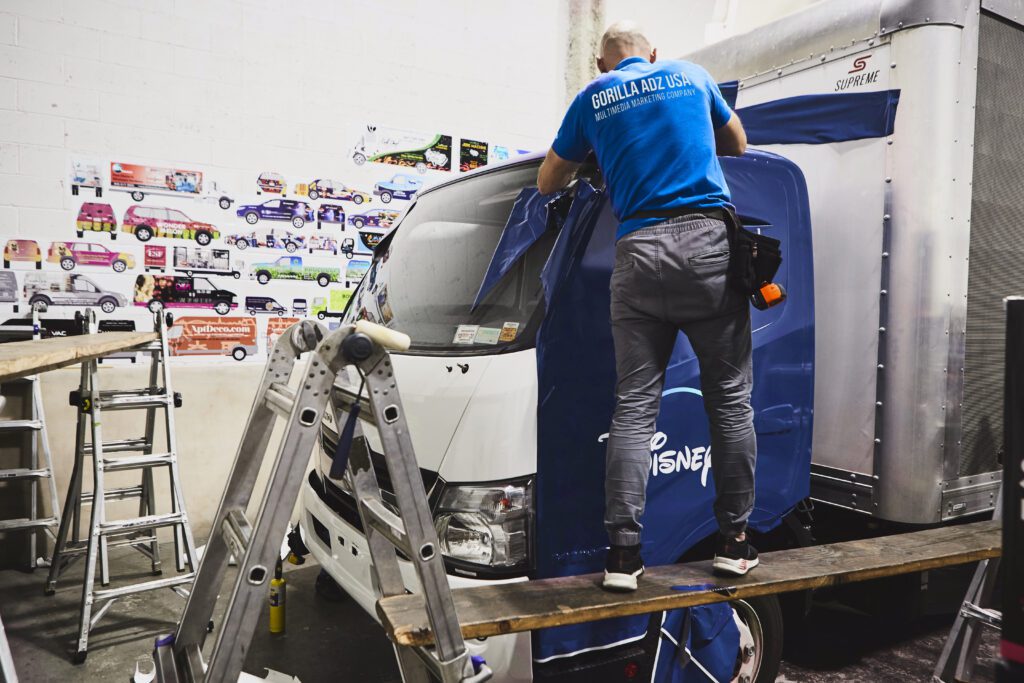
Printing is handled in-house at AGM’s own production facilities, which gives the team control over print quality and production timelines without the variability that comes with third-party print vendors. Wheat-based adhesive is used for all installations — it’s environmentally responsible, biodegradable, and fully removable with pressure washing, which makes the installation process non-destructive and cleanup straightforward when campaigns conclude. All installation in Bridgeport is executed by direct AGM crews, not subcontracted installation teams, maintaining consistent quality and execution discipline from the downtown core through the South End corridor.
Post-campaign reporting delivers GPS-documented photography covering every installation position in the Bridgeport build. Clients receive time-stamped installation photos and geographic location data confirming placement positions across all three neighborhoods in the campaign’s footprint. For brands running Bridgeport as part of a larger Connecticut or multi-state campaign, the Bridgeport documentation integrates into the consolidated reporting package without requiring separate administrative handling. AGM’s reporting gives brands the proof-of-install documentation they need to evaluate reach quality, confirm coverage distribution across neighborhoods, and present campaign results internally — particularly useful for brands building the business case for expanding Connecticut market coverage based on Bridgeport pilot performance.
The brands currently best positioned to benefit from fly posting in Bridgeport fall into a few specific categories defined by the city’s emerging-market demographics and its geographic position in the Connecticut corridor. Entertainment brands — music labels promoting touring artists, streaming platforms launching new content, event promoters working Total Mortgage Arena’s concert and sports calendar — find Bridgeport’s arena-adjacent downtown corridor directly useful for reaching the 20–38 entertainment audience that frequents live events in Fairfield County. A fly posting campaign timed to a specific arena event or touring show can build awareness through the Main Street corridor in the days leading up to the event, reaching the audience at the exact moment of maximum interest and highest conversion potential.
Arts and culture brands — record labels, independent publishers, gallery networks, arts institutions — are natural fits for the South End’s forming creative community, where a well-executed wheat paste campaign builds brand credibility with an audience that is specifically attuned to and influenced by street-level visual work. The South End’s arts community is small enough at this stage that a committed fly posting campaign represents a significant brand presence — not lost in the visual noise of a saturated market, but noticed and remembered by the artists and creative workers who move through Stratford Avenue and the surrounding blocks regularly.
Fashion and lifestyle brands targeting early adopters and creative young adults — the demographic that defines emerging arts district populations — will find Bridgeport’s South End delivering exactly the audience that makes fly posting campaigns in Bushwick, Wicker Park, or Silver Lake effective. The profile is the same: arts-educated, aesthetically conscious, brand-aware but not brand-saturated, and responsive to creative visual work in a way that mass-market advertising can’t replicate. The difference is that reaching this audience in Bridgeport costs a fraction of what it costs in any of those established markets, and the competition for their visual attention is substantially lower because the neighborhood hasn’t yet attracted the advertising density that follows market maturation.
Political campaigns and civic advocacy organizations find Bridgeport’s dense working-class and diverse residential population — concentrated in the Barnum District and throughout the South End residential blocks — an important audience to reach in any statewide Connecticut activation. The community organizations and independent businesses that anchor these neighborhoods are embedded in residential life in ways that conventional outdoor advertising doesn’t penetrate, and street-level fly posting has a visible presence in these corridors that resonates with communities who see their neighborhoods as lived spaces rather than advertising inventory. AGM has executed political fly posting campaigns nationally and understands the message discipline and neighborhood-level targeting that makes this approach effective in dense urban residential markets like Bridgeport’s.
100 posters: contact us for pricing
200 posters: contact us for pricing
Extra creative: contact us for pricing
Recommended for coverage campaigns across Bridgeport’s South End, Barnum District, and downtown corridor. The standard format maximizes placement density across the full range of available surfaces in an emerging market with abundant blank wall inventory. 72-hour rush production available up to 500 qty.
100 posters: contact us for pricing
200 posters: contact us for pricing
Extra creative: contact us for pricing
Best for anchor placements near Total Mortgage Arena on Main Street and Broad Street, where scale matches venue scale and large-format installations create landmark visibility. Ideal as a complement to standard-format coverage builds in the South End and Barnum District.
Campaigns in Bridgeport typically run one to two weeks from installation, with duration varying based on surface conditions, weather, and posting activity in each specific corridor. The South End’s warehouse and industrial walls tend to provide longer campaign windows than higher-competition downtown posting surfaces. Multiple creative executions are available within a single Bridgeport campaign, allowing brands to run different messaging for the South End arts audience versus the downtown entertainment and student corridor without requiring separate deployment timelines for each creative version.
Bridgeport’s South End is in the early stage of an arts-driven revival that creates ideal conditions for fly posting — high available surface inventory, an engaged creative young adult audience that responds actively to visual brand work, and low competition for visual attention compared to more mature arts districts in larger markets. Artists and creative workers relocating to Stratford Avenue and the surrounding blocks from New York and New Haven bring the aesthetic sensibility and brand awareness of those larger markets while remaining reachable at pre-maturation cost levels. The surface inventory and audience engagement quality that define early-stage arts districts make this corridor particularly efficient for brands targeting creative-community demographics before the market fully develops.
Total Mortgage Arena at 600 Main Street is an 18,500-seat venue that generates substantial foot traffic through the Main Street and Broad Street corridor for every event on its calendar — major touring concerts, American Hockey League games, college basketball, and family entertainment shows all produce post-event pedestrian surges that create high-volume impression windows for fly posting placements in the surrounding blocks. AGM’s downtown Bridgeport targeting strategy accounts for event schedules when advising on campaign timing, so placements are positioned to reach maximum foot traffic during the event windows that align with a campaign’s target demographic. For music and entertainment brands specifically, coordinating Bridgeport fly posting with Total Mortgage Arena event dates produces the kind of context-matching that makes street poster advertising particularly effective.
Bridgeport’s fly posting demographic spans three distinct segments that different corridor areas serve most effectively. Downtown and the arena corridor reach the 20–38 entertainment audience that frequents live events and the Housatonic Community College student population on weekdays. The Barnum District on Barnum Avenue reaches working-class young adults and families in dense residential neighborhoods that are chronically underserved by conventional outdoor advertising. The South End arts corridor reaches the creative young adults — artists, designers, musicians, and the community that forms around early-stage arts districts — who are both early adopters of brands that enter their neighborhood authentically and influential within their broader social and cultural networks. Brands targeting any or all of these three segments can structure Bridgeport campaigns to weight poster distribution toward the corridors most concentrated with their specific audience.
Bridgeport, New Haven, and Stamford serve distinct audience profiles and offer different strategic advantages within Connecticut’s four-city market. New Haven’s fly posting is most effective for brands targeting the Yale academic and arts community — a highly educated, culturally engaged audience concentrated around Chapel Street and Whalley Avenue. Stamford is the right choice for reaching NYC-caliber creative and professional young adults at lower cost than a Manhattan build. Bridgeport’s advantage is the pre-saturation emerging market dynamic — a creative community in active formation, surface inventory that exceeds comparable markets at this stage of development, and an authenticity of street-level presence that comes specifically from arriving in a neighborhood before it achieves mainstream advertising saturation. These markets are not interchangeable, and a full Connecticut strategy benefits from all three.
Housatonic Community College’s downtown Bridgeport campus puts a consistent weekday daytime student population through the blocks surrounding the campus and the broader downtown corridor, filling the foot traffic gap that arena programming doesn’t cover during non-event hours. HCC’s commuter enrollment skews toward the 18–28 age range that is among the most receptive demographics for fly posting and street poster advertising, and the student population’s daily movement patterns through downtown Bridgeport create repeated impression opportunities for posters placed on key pedestrian routes between the campus, parking structures, transit stops, and the surrounding commercial blocks. For brands targeting younger adult demographics specifically, HCC’s presence in the downtown footprint is a meaningful factor in the calculation of daytime reach and impression frequency.
The Barnum District on and around Barnum Avenue is a strong fly posting location for campaigns targeting Bridgeport’s working-class and residential community demographics — audiences that are underrepresented in most conventional outdoor advertising buys and therefore encounter less advertising saturation in their daily environment than populations in more heavily commercialized corridors. The foot traffic on Barnum Avenue is authentic and pedestrian-dense because the community lives, shops, and moves on foot in this neighborhood, not because they’ve commuted in for an event or destination. Brands that want to build genuine street-level presence with Bridgeport’s broader residential community rather than only the arts district or entertainment audience will find the Barnum District an important and underutilized fly posting zone.
Bridgeport’s South End offers substantial blank wall inventory on the exterior surfaces of warehouse and industrial buildings in various stages of conversion or vacancy — the same category of surface that defines fly posting in every American arts district in its early formation phase. Downtown, plywood construction barriers on active development projects along Main Street provide additional surface inventory, and the commercial building stock along Broad Street and the arena corridor includes blank and semi-blank exterior walls that work well for standard-format placements. The Barnum Avenue corridor has utility structures and commercial building exteriors typical of a dense urban community commercial strip. AGM’s neighborhood targeting process identifies and evaluates specific surface positions before each campaign build, confirming availability and suitability for the format sizes included in the campaign.
Yes — Bridgeport’s position at the western end of Connecticut’s I-95 corridor, approximately an hour from Midtown Manhattan, makes it a natural and logistically efficient extension for brands already running fly posting campaigns in New York. AGM executes campaigns in both markets and can plan Bridgeport as an add-on to a New York build with minimal additional overhead, reaching a Fairfield County audience that shares the demographic profile of Brooklyn and Lower Manhattan without requiring a separate full campaign build for each market. For brands running New York as their primary market who want Connecticut presence without a full secondary campaign budget, Bridgeport is the first logical extension point — and the creative community forming in the South End represents an additional audience segment that has no direct equivalent in the New York market.
In a saturated market — a well-established arts district in a major city, for example — fly posting campaigns compete for a finite and highly priced pool of available surface inventory, and the target audience has already been exposed to years of advertising in the same corridors, raising the bar for creative work to achieve recall and engagement. In an emerging market like Bridgeport’s South End, the same campaign investment reaches an audience that encounters significantly less visual advertising competition, on surfaces that are available in greater abundance, to a community that is in active self-definition and therefore more attentive to brand messaging that engages with their neighborhood’s cultural identity authentically. The result is higher effective impression quality per dollar spent — not because the audience is less sophisticated, but because the competitive environment is less crowded.
Yes — AGM manages the complete Bridgeport fly posting campaign in-house: neighborhood targeting strategy, in-house printing at AGM’s own production facilities, direct installation by AGM crews (not subcontracted installation teams), and GPS-documented post-campaign reporting with installation photography. Clients can provide print-ready creative files or work with AGM’s production team on design. The full-service model means there is one point of contact, one timeline, and one consolidated reporting deliverable covering the entire Bridgeport campaign — no coordination required between a print vendor, a separate installation crew, and a reporting service.
The 24″×36″ standard format is the best choice for South End coverage because it fits the widest range of available surface positions in the warehouse and industrial corridor along Stratford Avenue, allows for the highest placement density across the neighborhood’s active blocks, and produces the kind of repeated impressions along daily pedestrian routes that make street poster campaigns memorable for a community-scale audience. At the 24″×36″ scale, a 100-poster Bridgeport campaign can concentrate enough placements in the South End corridor to create genuine neighborhood-wide presence — the impression that the brand is embedded in the community rather than passing through. The 48″×72″ format works as a single anchor complement for South End campaigns, placed on a prominent warehouse wall where its scale matches the industrial aesthetic of the district and creates a dominant visual statement.
Standard production and installation timelines for Bridgeport fly posting campaigns run approximately one to two weeks from final creative approval to installation completion, covering the full cycle of in-house printing and crew scheduling. Rush production is available for the 24″×36″ format at quantities up to 500 posters with a 72-hour turnaround on printing, which compresses the overall campaign timeline significantly for time-sensitive activations around specific events, release dates, or campaign launch windows. AGM’s team can advise on the realistic timeline for any specific Bridgeport campaign scope during the initial campaign planning conversation.