American Guerrilla Marketing
Nationwide Service
Media planning, media buying, billboard advertising, & guerrilla marketing
New Orleans has the best fly posting walls in the South, the most concentrated festival calendar in the country, and a street culture that treats visual advertising as participation. AGM executes here all year — with the discipline and documentation the market demands.
New Orleans is the most productive fly posting market in the American South and one of the most effective in the country. That’s not a claim built on tourism volume alone — it’s a function of the city’s specific relationship to street-level visual culture. Mardi Gras decorations stay on ironwork balconies for weeks after the season ends. Second line banners hang from poles in the Tremé for months. Hand-lettered signs appear on the exteriors of bars and restaurants throughout the Marigny without anyone finding them unusual. In New Orleans, the visual environment of the street is actively maintained and collectively contributed to by the people who live there. A fly posting campaign in this city doesn’t interrupt that environment — it participates in it. That distinction matters, because it shapes how the audience receives what’s on the walls.
The Warehouse District has some of the best large-format posting surfaces available anywhere in the United States. Former industrial and commercial buildings along Camp Street, Julia Street, and the lower Magazine Street blocks provide exterior walls of the kind that simply don’t exist in most American cities — multi-story brick and plaster faces that have been stripped of signage and commercial overlay, offering blank slates for 48×72 posters with exceptional visibility from a full block away. The Marigny and Bywater neighborhoods give access to an arts-sophisticated pedestrian audience that moves through Frenchmen Street and St. Claude Avenue nightly, whether or not there’s a specific event drawing them. Magazine Street in the Garden District and Uptown reaches a high-purchasing-power local audience of residents, boutique shoppers, and restaurant-goers. Oretha Castle Haley Boulevard in Central City is a revitalizing corridor with real community presence and a building stock that accommodates fly posting effectively.
The festival calendar — Mardi Gras, Jazz Fest, French Quarter Festival, Essence Festival, Voodoo — creates multiple distinct peak demand windows per year, each reaching a meaningfully different audience. No other American city produces this many high-concentration audience moments across the full calendar. American Guerrilla Marketing has worked in New Orleans extensively and understands how to navigate the city’s surface conditions, its seasonal humidity, and the strategic differences between targeting a Mardi Gras tourist crowd versus a local Marigny arts audience. Here is how AGM executes fly posting in New Orleans.
New Orleans has the walls, the festivals, and the audiences. The Warehouse District's blank brick faces. Frenchmen Street on a Friday night. Magazine Street on a Saturday morning. A million visitors during Mardi Gras. AGM executes in New Orleans with its own team — no subcontractors, no gaps in accountability, complete photo documentation for every placement. Contact us to start planning your New Orleans fly posting campaign.
Select a city to explore Fly Posting Advertising opportunities.
New Orleans spreads across a complex geography, and fly posting strategy here requires precision about which neighborhood reaches which audience. The city’s distinct cultural communities — the arts crowd in the Marigny, the shoppers on Magazine Street, the gallery circuit in the Warehouse District, the community-organization world on Oretha Castle Haley — don’t overlap as much as outsiders assume. Correct neighborhood selection is the difference between a campaign that reaches your target and one that misses entirely.
The Warehouse District is the most important single fly posting zone in New Orleans for large-format campaigns. The neighborhood’s former industrial and commercial building stock — concentrated along Camp Street, St. Charles Avenue, Julia Street’s gallery row, and the lower Magazine Street blocks — provides exterior walls of the kind that define what fly posting is capable of at its best. Multi-story brick and plaster facades, broad concrete building sides, and the perimeter walls of former warehouses now occupied by galleries and creative businesses give AGM access to surfaces that accommodate 48×72 posters with room to breathe. A well-placed large-format poster on a Camp Street building wall is visible from half a block in each direction — commanding, uncluttered, and positioned in a neighborhood that attracts the kind of audience that actually looks at walls.
The Warehouse District also sits at the convergence of several high-value pedestrian flows: the Convention Center on the river side, the French Quarter edge on the French Quarter side, the CBD professional population filtering south along St. Charles, and the Julia Street gallery circuit drawing arts visitors on the first Saturday of each month and during the White Linen Night and Art for Art’s Sake events. A campaign in the Warehouse District reaches multiple audience segments simultaneously without requiring separate geographic coverage.
Frenchmen Street is the most consequential single block in New Orleans for reaching the local arts community. Three or four clubs operating simultaneously every night, a crowd that includes professional musicians, visual artists, writers, bartenders, service-industry workers, and the educated tourists who know to go there instead of Bourbon Street — this is the audience that fly posting was designed for. The posting surfaces adjacent to Frenchmen Street venues, along St. Claude Avenue, on the Royal Street blocks in the Marigny, and along Dauphine Street are among the most naturally receptive in the city. People moving through this corridor are paying attention. They read what’s on walls. They share what they find interesting.
Bywater extends the Marigny’s arts character southward along St. Claude Avenue toward the Lower Ninth Ward boundary. The neighborhood has attracted a significant concentration of working artists, creative professionals, and arts-adjacent businesses over the last decade, and St. Claude is its main commercial and cultural artery. Posting in Bywater reaches a demographic that overlaps with but is distinct from the Frenchmen Street crowd — slightly more residential and settled, with a higher proportion of people who live in New Orleans year-round rather than visiting. For brands targeting the local creative community rather than visitors, Bywater adds precision that Frenchmen Street alone doesn’t provide.
Magazine Street is New Orleans’ premier pedestrian retail and dining corridor, running from the CBD through the Lower Garden District and Garden District into Uptown, where it terminates near Audubon Park. The street is lined with independent boutiques, galleries, antique shops, restaurants, and bars, and it draws a predominantly local audience with significant purchasing power — homeowners, professionals, established residents, and the Tulane and Loyola University community at the Uptown end. This is not the tourist-facing Magazine Street of guidebook fame; the foot traffic on Magazine is genuinely local, especially in the afternoon and on weekend mornings when residents from the surrounding blocks walk to coffee shops and independent shops.
Magazine Street’s posting surfaces include commercial building facades on the older two- and three-story buildings that line the corridor, utility structures at the major cross-street intersections, and the perimeter walls of the commercial properties between Oak Street and Audubon. The Uptown end near Oak Street, Maple Street, and the university blocks is particularly productive for campaigns targeting the 22–35 student and young professional demographic. The Garden District stretch reaches an older, higher-income resident audience. A Magazine Street campaign can be calibrated to either demographic by selecting the specific segment of the corridor most appropriate for the brand.
Oretha Castle Haley Boulevard in Central City is one of New Orleans’ most historically significant commercial corridors — a street that was once the heart of the city’s African American business community, experienced decades of disinvestment, and is now in the midst of a genuine revitalization driven by arts organizations, community nonprofits, and independent businesses. The corridor has a concentration of arts and cultural organizations unlike any other street in New Orleans, and the audience that moves through it is deeply community-rooted, culturally engaged, and attentive to the visual environment in the way that any community actively investing in its own neighborhood’s visual character tends to be. Posting on OCH reaches an audience that many New Orleans campaigns miss entirely by focusing exclusively on the tourist-facing corridors.
The French Quarter itself offers limited fly posting opportunities given its historic designation and tourism-controlled visual environment, but the streets on the Quarter’s perimeter are among the most heavily trafficked in the city. Decatur Street along the river edge, Esplanade Avenue approaching the Marigny boundary, and North Rampart Street along the Quarter’s back edge all carry a mix of tourist traffic, local residents moving between neighborhoods, and the arts community that uses these streets as connective tissue between the Quarter, the Marigny, and the Tremé. Posting in these perimeter corridors captures tourist volume without competing with the interior Quarter’s visual noise, while also reaching the local population that moves through the edges of the neighborhood daily.
No American city produces more high-concentration audience moments per year than New Orleans. The festival calendar here isn’t a supplement to ordinary street activity — it is the structure around which a significant portion of the city’s commercial and cultural life is organized. Each festival window reaches a distinct audience, and a disciplined fly posting strategy treats each one as its own campaign brief.
Mardi Gras is the single largest fly posting window in Louisiana and one of the most valuable street-level advertising windows in the United States. The season runs from Twelfth Night in early January through Fat Tuesday, with the final ten days before Fat Tuesday representing the peak concentration period when over a million visitors are in the city simultaneously. Parade routes cover vast stretches of the city — from the Uptown lakeside routes through the Garden District, down St. Charles Avenue to the French Quarter, and through the Marigny and Tremé — creating foot traffic concentration along corridors that encompass virtually the entire posting geography described above.
Book Mardi Gras campaigns four to six weeks before Fat Tuesday. Installations should go up at minimum three weeks prior, as parade season begins in January and foot traffic in the entertainment corridors, the French Quarter edge, and the Warehouse District begins climbing from the first weekend of the season. Waiting until the week before Fat Tuesday to install sacrifices three to four weeks of prime audience exposure. Demand for the Mardi Gras window is high — early booking secures the installation timeline and ensures placements are positioned before competing visual information accumulates on the same surfaces.
Jazz Fest draws over 450,000 attendees across two weekends at the Fair Grounds Race Course in Mid-City. The festival audience is one of the most distinctive in the country: older on average than most music festivals, with significant disposable income and purchasing power, deeply music-focused, and representing a national demographic that travels to New Orleans specifically for the event rather than combining it with other tourism. The surrounding neighborhoods — Marigny, Bywater, Mid-City, and the French Quarter — see consistent foot traffic surges on festival days as attendees move between the Fair Grounds and the rest of the city’s entertainment infrastructure.
Jazz Fest installations should go up at least two weeks before the first weekend. The period between installation and the final day of the second weekend is the active exposure window, and campaigns that are in place before the first wave of out-of-town attendees arrives capture the full audience concentration from arrival through departure.
French Quarter Festival is one of the most underestimated fly posting windows in New Orleans. The event draws over 700,000 attendees to the French Quarter over four days in April — a scale that rivals Mardi Gras attendance in the core festival zone — but with a more locally-engaged audience that knows and uses the city beyond the Quarter itself. French Quarter Festival frequently overlaps in timing with Jazz Fest weekend, creating a period in late April when New Orleans is simultaneously running two of its largest events and the cumulative audience on the streets is extraordinary. Posting in the Warehouse District, the French Quarter perimeter, and the Magazine Street corridor during this window reaches an audience that is unusually dense and unusually attentive.
Essence Festival draws over 500,000 attendees over the Fourth of July weekend, with a primary focus on African American culture, music, and entertainment. The event is headquartered at the Superdome and the Ernest N. Morial Convention Center, and its audience concentration is geographically distinct from Mardi Gras and Jazz Fest — centered on the CBD and Convention Center area and extending through the French Quarter edge and into the Warehouse District rather than spreading across the full city. For brands targeting an African American cultural audience or urban lifestyle market, Essence is a distinct booking window that requires different neighborhood emphasis than the spring festivals. The timing — July in New Orleans — means summer heat and humidity are at their peak, so campaign duration planning must account for accelerated paper degradation.
Voodoo Fest activates City Park in October with a rock, hip-hop, and electronic music lineup that draws a younger demographic than Jazz Fest. The surrounding Bayou St. John and Mid-City neighborhoods see elevated foot traffic during Voodoo weekend, and posting in the Marigny, Bywater, and Magazine Street corridors reaches the Voodoo audience as it moves through the city’s entertainment infrastructure before and after the festival. October is also one of the best months for poster durability in New Orleans, as temperatures are significantly cooler than summer and humidity is more manageable.
Beyond the major festivals, New Orleans generates consistent street activity through weekly events — Frenchmen Street live music every night of the week, the Oak Street Po-Boy Festival in November, the Freret Street Festival in the spring, Bayou Boogaloo in May along Bayou St. John, and Halloween in New Orleans with the Krewe of Boo parade and bar district concentration. Each of these creates an activation window for campaigns with specific audience alignment. The city’s year-round tourism baseline also means that poster campaigns installed outside of major festival windows still reach a significant non-local audience in the French Quarter perimeter and Warehouse District zones.
Award Winning Personalized Service
You will get thoughtful, devoted, and individualized attention from our experienced, qualified, and professional personnel. Being one of the most illustrious agencies in Brooklyn, New York, American Guerrilla Marketing has been awarded the Best of Brooklyn title.
Nationwide
Industry City, Brooklyn, New York 11232
American Guerrilla Marketing
Hours
Mon - Fri: 9 AM - 5 PM
Sat & Sun: Closed
Automate your campaign with AGM’s Request for Proposal Builder. Simply answer a few quick questions about your campaign goals, markets, and timeline, and the system will generate a tailored presentation with recommended strategies, quantities, and pricing. Click the RFP Builder to instantly receive your customized proposal.
New Orleans supports both standard and large-format fly posting at a level that few American cities can match. The city’s building stock — particularly in the Warehouse District and parts of the Marigny — provides surface opportunities that are genuinely rare in a national context.
The primary format for Marigny, Bywater, Magazine Street, and French Quarter perimeter campaigns. Works across the full range of building facades, utility structures, and commercial perimeter walls in these neighborhoods. Street-level readable at walking pace — right for corridors where the audience is on foot and moving at a pace that allows for sustained visual engagement.
The dominant format for the Warehouse District and select locations in the CBD and Marigny where large blank exterior walls are available. Some of the best large-format posting surfaces in the American South are in the Warehouse District — multi-story brick and plaster walls on Camp Street, Julia Street, and the lower Magazine blocks that make 48×72 posters visually commanding from a full block’s distance.
Mixed-format campaigns are common and effective in New Orleans. A typical approach uses 48×72 in the Warehouse District for dominant large-scale presence, with 24×36 across the Marigny, Magazine Street, and French Quarter perimeter for neighborhood-level saturation. Both formats are planned and priced independently, giving clients full control over format distribution by neighborhood.
AGM does not use subcontractors in New Orleans. Every installation is handled by AGM’s own team — which means the strategy you approve translates directly into what goes on the wall, without intermediaries, without the inconsistencies that come from subcontracted crews operating with incomplete context about a campaign’s objectives.
New Orleans presents a more challenging surface environment than most American cities. The city’s historic building stock — plaster over brick in the Marigny, cast iron and wood-frame in the French Quarter perimeter, older concrete and masonry in the Warehouse District — holds wheat paste differently depending on surface porosity, moisture content, and the presence of existing paint layers. The Marigny’s older residential and commercial buildings often have multiple generations of painted plaster on their facades, which can cause delamination if paste application is not calibrated to the specific surface condition. AGM’s team scouts surfaces before each campaign, eliminating locations where adhesion conditions will cause premature failure and identifying the walls that will hold for the intended campaign duration.
Humidity is the most significant factor in New Orleans campaign planning. The city’s average relative humidity runs above 70% year-round, and summer months from June through September bring heat-humidity combinations that shorten campaign life considerably. Spring campaigns from late February through May and fall campaigns from October through November achieve the best durability. Mardi Gras season in February typically falls within the optimal window. Summer event windows — Essence Festival in July — are executed successfully, but AGM builds shorter expected display periods into summer campaign planning and advises clients accordingly. The spring and fall festival season in New Orleans is not accidental: it’s also the optimal time of year for fly posting.
Documentation is standard on every AGM campaign in New Orleans. Every placement is photographed at the time of installation with geotagged images tied to the specific location address. Clients receive a complete photo report organized by neighborhood — Warehouse District, Marigny/Bywater, Magazine Street, Oretha Castle Haley, French Quarter perimeter — and by installation date, delivered within 48 to 72 hours of campaign completion. The report documents the posting address, surface type, format, and date for every placement. This is not a summary — it is a location-by-location record of every poster in the campaign.
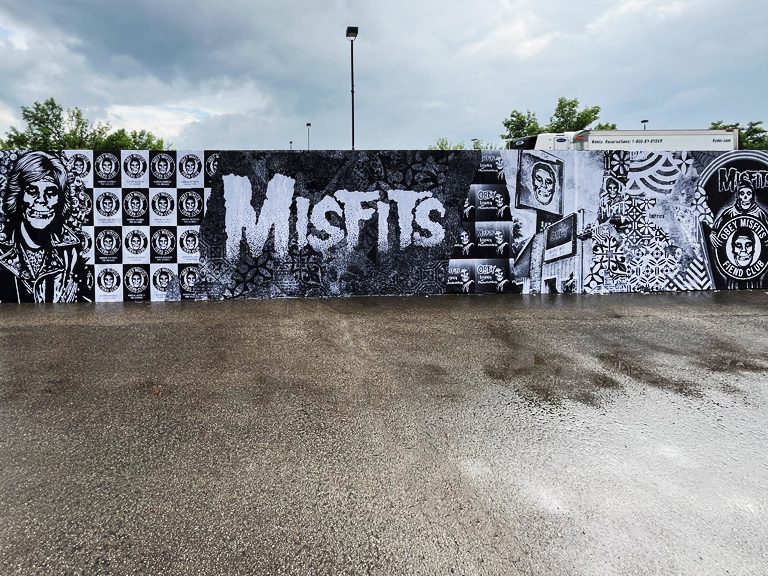
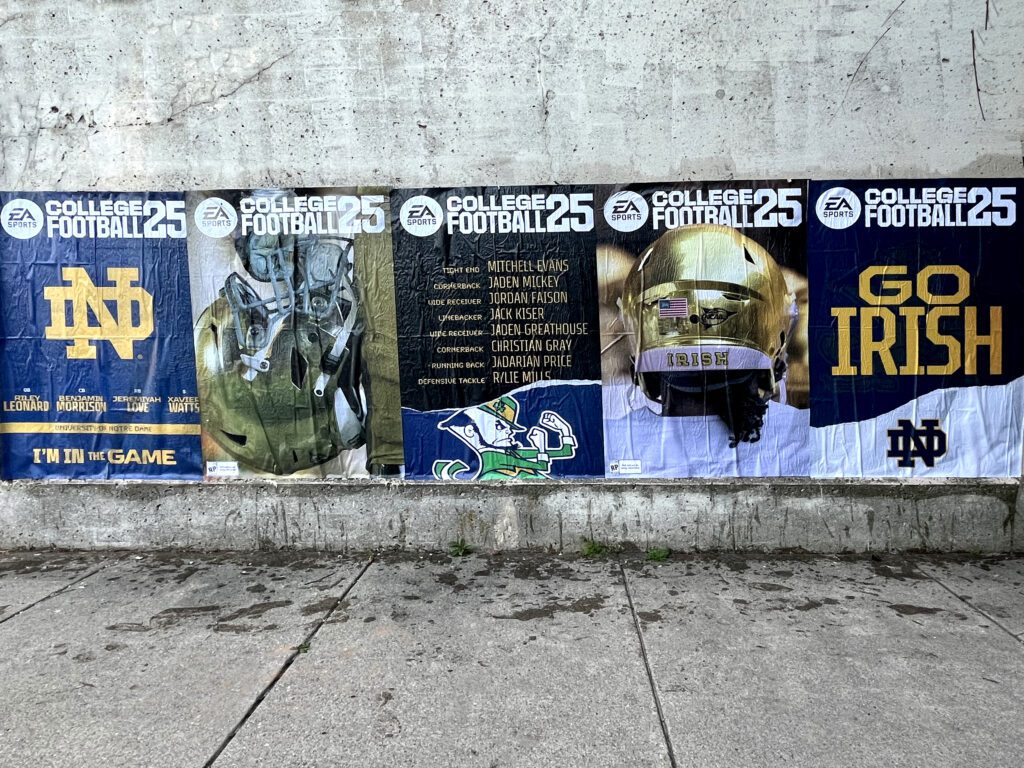
AGM has worked in New Orleans across multiple festival windows and for clients including Netflix, The Onion, EA Sports, Biossance, and Shepard Fairey. The market’s complexity — multiple distinct neighborhoods, variable surface conditions, and a festival calendar that requires precise timing — is why experience here matters. We know which walls hold, which corridors perform, and which festival windows require what lead times. That knowledge is built into every campaign plan we execute in New Orleans.
The Warehouse District offers the best large-format surfaces in the South — multi-story brick and plaster walls along Camp Street, Julia Street, and lower Magazine that accommodate 48×72 posters with exceptional visibility. The Marigny and Bywater give access to an arts-sophisticated local audience along Frenchmen Street and St. Claude Avenue. Magazine Street through the Garden District and Uptown reaches a high-purchasing-power local shopper and resident audience. Oretha Castle Haley Boulevard connects with a deeply community-rooted Central City audience. The French Quarter perimeter on Decatur Street, Esplanade Avenue, and North Rampart captures high tourist and local overlap traffic.
New Orleans has multiple peak windows. Mardi Gras season from January through Fat Tuesday is the largest single window, with over a million visitors in the city at peak. Late April brings Jazz Fest and the French Quarter Festival in overlapping weekends, creating one of the most sustained high-foot-traffic periods of the year. Essence Festival in early July concentrates 500,000-plus attendees around the Superdome. Voodoo in October activates Mid-City and the broader arts community. Fall and spring are also the best seasons for campaign durability given lower humidity and moderate temperatures.
Book four to six weeks before Fat Tuesday. Installations should go up at least three weeks prior to Fat Tuesday, as parade season begins in January and foot traffic in the French Quarter edge, Warehouse District, and entertainment corridors starts building weeks before the peak. Early booking also secures the installation schedule during a period of high demand — Mardi Gras is the most competed-for window in the New Orleans advertising calendar, and late requests risk scheduling conflicts that compress the installation timeline.
Former industrial buildings in the Warehouse District provide exterior walls of a scale and quality that simply don’t exist in most American cities. Multi-story brick and plaster facades on Camp Street, St. Charles Avenue, and the Julia Street gallery row offer blank posting surfaces visible from a full block in both directions. The neighborhood is also a convergence point — it connects the Convention Center, the French Quarter edge, the CBD professional population, and the arts gallery circuit. The audience walking through it is diverse, concentrated, and attentive in the way that people in a visually active neighborhood tend to be.
New Orleans’ average relative humidity exceeds 70% year-round, and summer heat-humidity combinations significantly accelerate paper degradation. Spring campaigns from late February through May and fall campaigns from October through November achieve the best durability. Summer event windows like Essence Festival in July are executed, but clients should plan for a shorter active display period. AGM uses wheat paste formulated for high-humidity conditions and scouts surfaces for those with partial overhead protection from direct rain. Monitoring campaign condition during long-running summer installations is part of AGM’s standard process in this market.
Older wood-frame and masonry commercial buildings along Frenchmen Street, St. Claude Avenue, Royal Street in the Marigny, and Dauphine Street are the primary targets. Building facades adjacent to music venues, bars, and coffee shops see the highest pedestrian dwell time — people waiting to enter venues, standing on sidewalks between sets, and moving slowly between spots on Frenchmen Street. Surface conditions in the Marigny vary significantly by block, and AGM scouts each location before installation to identify the facades with the right combination of adhesion quality and pedestrian visibility.
Yes. AGM installs ahead of Jazz Fest so that posters are in place before the first weekend begins. Jazz Fest draws over 450,000 attendees across two weekends at the Fair Grounds Race Course, and the surrounding neighborhoods — Marigny, Bywater, Mid-City, and the French Quarter perimeter — see sustained foot traffic surges on festival days. Campaigns installed two weeks before the first weekend are active for the full duration of both weekends and the week between them, maximizing exposure across the entire festival footprint.
The French Quarter perimeter — Decatur Street, Esplanade Avenue, North Rampart — mixes high tourist volume with local traffic from the arts community that frequents the Quarter’s edges. It’s the right zone for campaigns that need broad reach across a nationally diverse visitor audience. Magazine Street is predominantly local — residents, boutique shoppers, the Tulane and Loyola university community uptown, and restaurant-goers with higher-than-average purchasing power. Magazine is more precise for brands targeting New Orleans locals and the uptown professional demographic. The two corridors serve different audience profiles and are most powerful in combination for campaigns that need both reach and local precision.
Essence Festival of Culture draws over 500,000 attendees with a primary focus on African American culture, music, and entertainment. The geographic concentration is different from Mardi Gras — the Superdome and Convention Center area is the hub, with audience activity spreading through the CBD and into the French Quarter edge and Warehouse District rather than dispersing across the full city’s parade routes. For brands specifically targeting an African American cultural audience or urban lifestyle market, Essence is a precisely targeted activation window distinct from the broad national tourist mix of Mardi Gras. The two festivals require different neighborhood strategies, different timing, and often appeal to different client categories.
Both formats are productive in New Orleans. 24×36 is the standard for Marigny, Bywater, and Magazine Street, where the neighborhood-scale building stock and the pedestrian pace of movement suit the standard format’s detail and scale. 48×72 is particularly strong in the Warehouse District, where the large blank exterior walls of former industrial buildings make oversized posters visually commanding in a way that few other American markets can replicate. The right format depends on which neighborhoods are in the campaign, and many New Orleans campaigns combine both.
Yes, and this is a common approach. Mixed-format campaigns in New Orleans typically use 48×72 in the Warehouse District for large-scale impact on the best large-wall surfaces in the city, and 24×36 across the Marigny, Bywater, and Magazine Street corridors where the neighborhood scale and building stock suit the standard format. Each format is planned and priced independently. AGM works with clients to determine the right format distribution across neighborhoods based on budget and campaign objectives.
Every installation is photographed at the time of posting with geotagged images tied to the specific location. Clients receive a complete photo report organized by neighborhood and installation date, delivered within 48 to 72 hours of campaign completion. The report documents each placement — address, surface type, format, and date — organized by the neighborhoods covered in the campaign. This is a location-by-location record, not a summary. Every poster in the campaign has a corresponding photograph and address in the documentation.
Entertainment and live events are the most consistent category — touring artists, music releases, film and streaming platform campaigns, and festival promoters all run New Orleans fly posting regularly. Louisiana’s film production incentives have established a significant entertainment industry presence in the city, and production-adjacent promotions are a growing category. Consumer brands in food, beverage, fashion, and lifestyle targeting the arts-forward Marigny and Bywater demographics are strong users. Brands aligning with specific festival audiences — Mardi Gras tourists, Jazz Fest attendees, Essence Festival’s cultural community — also account for a significant share of the campaign calendar. AGM has executed campaigns in New Orleans for clients including Netflix, The Onion, EA Sports, Biossance, and Shepard Fairey.