🚀 NEW WHEATPASTING MARKETS Discover our wheatpasting campaigns in : 🇬🇧 London • 🇨🇦 Canada • 🇲🇽 Mexico City

American Guerrilla Marketing

Nationwide Service

Media planning, media buying, billboard advertising, & guerrilla marketing

Fly Posting in Washington DC

Sidewalk Decals Advertising in Washington DC

The nation’s capital meets guerrilla marketing. AGM deploys wheat paste poster campaigns across Capitol Hill, Adams Morgan, U Street Corridor, Georgetown, Columbia Heights, Shaw, and Navy Yard — reaching DC’s most politically engaged, culturally sophisticated, and brand-influential neighborhoods.

Fly Posting Advertising in Washington DC

Washington DC is unlike any other American city. As the seat of national government, the home of foreign embassies and international institutions, the site of the nation’s most visited museums and monuments, and a residential city of nearly 700,000 people with one of the highest median incomes and educational attainment levels of any major American city, Washington DC presents a fly posting environment of extraordinary density, diversity, and influence. The residents who walk the blocks of Capitol Hill, Adams Morgan, U Street, Georgetown, Columbia Heights, Shaw, and Navy Yard are not a passive consumer audience. They are policy makers, journalists, nonprofit leaders, government attorneys, tech entrepreneurs, diplomats, artists, students, and community organizers — the people who shape national conversations and whose brand choices carry influence far beyond their individual purchasing power.

AGM’s Washington DC fly posting campaigns reach this audience through the neighborhoods where they actually live their daily lives, not through the monumental tourist corridors of the National Mall. The DC that brands need to reach is not the DC of the White House and the Lincoln Memorial. It is the DC of 8th Street SE’s barroom district on Capitol Hill, the DC of 18th Street NW’s restaurant row in Adams Morgan, the DC of the U Street Corridor’s legendary music venues and jazz heritage, the DC of M Street and Wisconsin Avenue’s commercial density in Georgetown, the DC of 11th Street NW’s hipster-meets-Latino commercial character in Columbia Heights, the DC of 7th Street NW’s rapid gentrification through Shaw, and the DC of Half Street SE’s transformation into a destination sports and entertainment district around Nationals Park in Navy Yard. These are the blocks where DC residents spend their lives, form their brand opinions, and generate the social media content that shapes national brand conversations.

Capitol Hill’s residential character is anchored by the Senate and House office buildings, the Library of Congress, Eastern Market, and one of the most densely populated neighborhoods of row houses in the mid-Atlantic. The Hill’s residents — predominantly government workers, policy professionals, lobbyists, journalists, and the young political staff who populate DC’s most politically concentrated neighborhood — are a uniquely influential consumer base whose brand choices and social media activity reach audiences far larger than their personal networks. A fly posting campaign on the blocks of Barracks Row (8th Street SE), Pennsylvania Avenue SE, and the streets surrounding Eastern Market reaches this population during their daily coffee runs, weekend market visits, and neighborhood bar explorations in ways that no targeted digital campaign can match for intimacy and authenticity.

Adams Morgan is Washington DC’s most internationally diverse and culturally layered neighborhood, a densely packed collection of rowhouse apartments, restaurants, bars, boutiques, and nightlife venues centered on the intersection of 18th Street NW and Columbia Road NW. On weekend nights, Adams Morgan’s bar district draws thousands of young Washingtonians from across the city for the kind of high-energy social experience that makes the neighborhood one of DC’s most visible and photographed street environments. But Adams Morgan is equally interesting on Tuesday mornings, when the neighborhood’s international community — representing dozens of nationalities concentrated in the apartment buildings of Columbia Road, Kalorama Road, and the surrounding blocks — conducts daily life through the bakeries, grocery stores, and coffee shops of 18th Street. AGM’s Adams Morgan placements reach both the weekend reveler audience and the daily neighborhood resident audience through placement on building surfaces throughout this vertically dense, visually active streetscape.

The U Street Corridor is Washington DC’s most historically resonant entertainment district. Once known as “Black Broadway” for its remarkable concentration of jazz clubs, theaters, and entertainment venues in the early twentieth century — hosting Duke Ellington, Billie Holiday, and virtually every major figure of American jazz and blues culture — U Street experienced decades of disinvestment after the 1968 riots before emerging in the 1990s as one of DC’s most dynamic nightlife and restaurant destinations. The neighborhood’s dual identity — deeply rooted in African American cultural heritage while simultaneously at the center of DC’s contemporary arts and nightlife scene — creates a posting environment of exceptional cultural richness. The blocks of U Street NW between 9th Street and 16th Street, and the radiating corridors of 14th Street NW and Vermont Avenue NW, carry some of the highest evening pedestrian counts of any DC neighborhood and host the restaurants, bars, music venues, and independent boutiques where DC’s creative and professional class gathers in their social and recreational hours.

Georgetown is Washington DC’s most commercially intense and historically significant neighborhood — a pre-Civil War port town incorporated into the growing capital city whose colonial-era street grid, Federal architecture, and commercial density along M Street NW and Wisconsin Avenue NW have made it one of the most visited shopping and dining destinations in the Mid-Atlantic. Georgetown’s consumer base ranges from university students at Georgetown University to the neighborhood’s established professional class to the tourists and regional visitors who make M Street one of the highest foot-traffic commercial corridors in the entire DC area. AGM’s Georgetown placements operate in the blocks adjacent to and surrounding the M Street and Wisconsin Avenue commercial core, reaching this concentrated and commercially active audience through building surfaces that intercept the dense pedestrian flows generated by Georgetown’s remarkable concentration of retail and restaurant activity.

Columbia Heights has undergone one of the most dramatic commercial and demographic transformations of any DC neighborhood over the past two decades. The blocks of 11th Street NW, 14th Street NW, and Park Road NW that form the neighborhood’s commercial core now host a remarkable mix of independent restaurants, regional chains, boutiques, and community spaces serving a diverse population of longtime Latino residents, young professional gentrifiers, African American families with deep roots in the neighborhood, and Howard University students and faculty from the adjacent LeDroit Park area. The neighborhood’s commercial character — represented by the Target and Best Buy at DC USA alongside independently owned Salvadoran restaurants and Colombian bakeries on the surrounding blocks — makes it one of the most demographically complete and commercially dynamic posting zones in the entire DC market. A campaign that covers 11th Street and 14th Street in Columbia Heights captures a cross-section of DC’s full demographic range that no other single neighborhood can match.

Shaw, directly east of Columbia Heights along 7th Street NW between P Street and Rhode Island Avenue NW, is where DC’s rapid change is most viscerally visible. The neighborhood transitions block by block from longstanding African American community institutions and barbershops to expensive cocktail bars, natural wine shops, and boutique fitness studios serving the young professional class that has poured into Shaw over the past decade. The Howard Theatre anchor, the 9:30 Club concert venue just to the west, and the dense collection of bars and restaurants along 7th Street NW generate extraordinary nightlife foot traffic that makes Shaw one of DC’s highest-value evening posting zones. A fly poster placed on a Shaw building on 7th Street NW is seen by thousands of DC nightlife participants every weekend — the exact consumer demographic that drives trend adoption and brand conversation in the capital’s competitive social media environment.

Navy Yard, clustered around Nationals Park on the Anacostia River’s north bank in Southeast DC, has transformed from a post-industrial no-man’s-land into one of DC’s most energetically developing residential and commercial neighborhoods in less than a decade. Half Street SE, First Street SE, and the blocks of M Street SE surrounding the ballpark have filled with apartments, hotels, restaurants, bars, and the sports and entertainment infrastructure that supports over 80 home games per season at Nationals Park. The game-day audience at Nationals Park — typically 20,000 to 40,000 fans who arrive hours before first pitch and linger after the final out — creates predictable massive concentrations of engaged, socially active, predominantly young and professional consumers in the blocks surrounding the stadium. AGM’s Navy Yard placements are timed and positioned to maximize reach during this game-day audience concentration, supplemented by the neighborhood’s growing year-round residential and office population that activates the restaurants and bars of Half Street and First Street throughout the week.

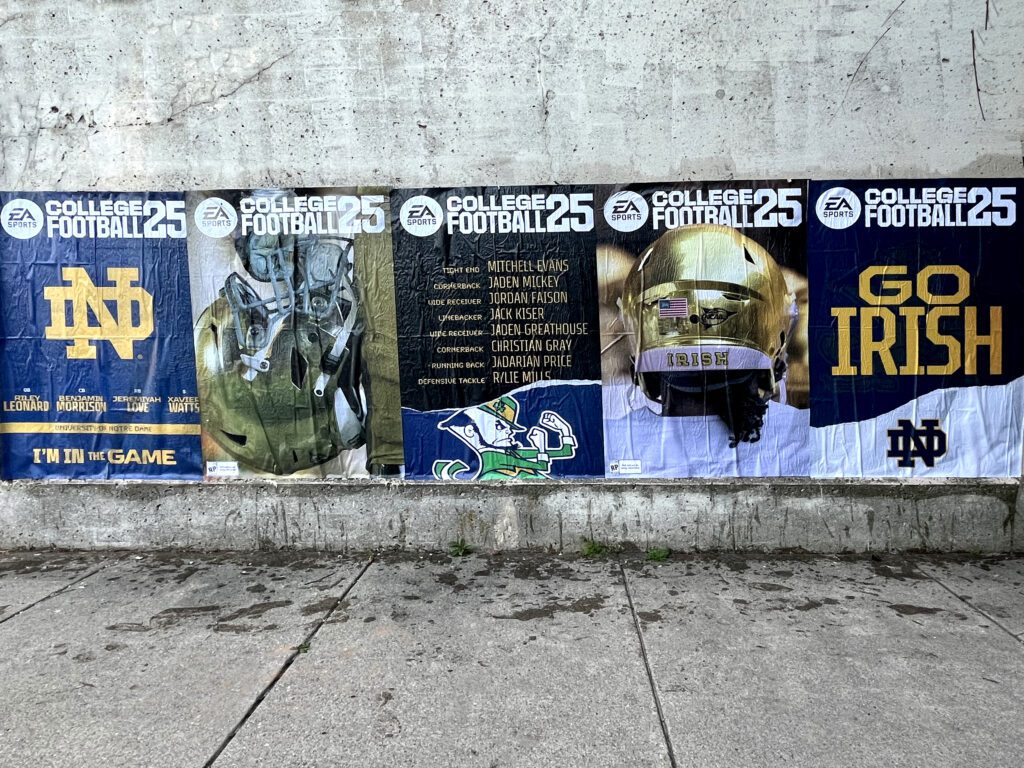
American Guerrilla Marketing brings DC-market experience and operational depth to campaigns in this exceptionally demanding posting environment. The nation’s capital is highly regulated in terms of public space, signage, and visual environment management — DC’s Board of Zoning Adjustment, the Historic Preservation Review Board, and individual business improvement districts like the Capitol Hill BID, the Georgetown BID, and the Shaw-Howard BID maintain active oversight of the visual character of their respective neighborhood environments. AGM navigates these regulatory and organizational frameworks through established permission relationships with private property owners in each DC neighborhood, executing campaigns that are professionally appropriate for the capital city’s exceptional visibility and regulatory scrutiny. Clients including Netflix, EA Sports, The Onion, Biossance, and Shepard Fairey have trusted AGM’s DC market knowledge to deliver campaigns that land with precision and impact in one of the world’s most watched cities.


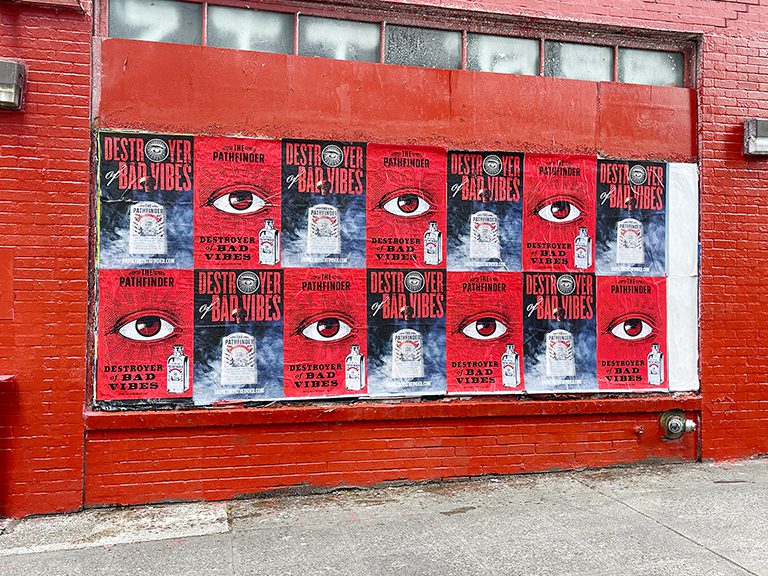
Post DC. Reach the Nation's Capital.

AGM deploys fly posting campaigns across Capitol Hill, Adams Morgan, U Street, Georgetown, Columbia Heights, Shaw, and Navy Yard — reaching Washington DC's most influential neighborhoods with guerrilla poster campaigns that command attention in the world's most watched city.

Browse Cities in Washington DC

Select a city to explore Fly Posting Advertising opportunities.

What Is Fly Posting?

Fly posting is the advertising format that adheres large-format printed posters to outdoor building surfaces using professional adhesive compounds — the wheat paste base that gives the format its common name, wheat paste advertising, augmented in modern professional practice by refined formulations that provide exceptional adhesion and weather resistance. In Washington DC’s uniquely visible urban environment, fly posting carries particular significance as a communication form: the city’s history as a site of political broadsides, protest posters, and revolutionary communication from the Federalist era through the civil rights movement and beyond means that placing a poster on a DC wall connects your brand to a tradition of bold, direct, street-level communication that no other format can claim. DC’s residents understand the language of the posted message intuitively and read it with the attention it has historically commanded.

Professional fly posting in Washington DC differs from guerrilla poster operations in other cities in the intensity of its permission and quality requirements. DC’s neighborhoods — particularly the historic districts of Georgetown, Capitol Hill, and the U Street corridor — are subject to historic preservation oversight that AGM’s site scouting process respects fully. We operate exclusively on private surfaces with property owner permission, use professional-grade materials that present a clean, intentional appearance aligned with the quality standards of DC’s commercial and residential environments, and remove campaign materials promptly at the end of the campaign window. This level of operational professionalism is not merely a legal compliance consideration — it is the baseline standard that DC property owners, BIDs, and neighborhood organizations require for ongoing cooperation with commercial poster campaigns, and AGM has maintained these relationships through years of responsible DC market operation.


Washington Dc Fly Posting Pricing

Washington DC campaign pricing includes comprehensive site scouting across all DC neighborhoods, professional overnight installation by AGM-trained crews, print production coordination, and complete photographic documentation delivered within 48 hours of campaign completion. DC campaigns can be coordinated with Northern Virginia and Maryland suburban deployments for full Metro area coverage. Multi-market DC metro packages are available at bundled pricing. Contact AGM for a custom Washington DC campaign proposal.

Build Your Fly Posting Campaign

    Award Winning Personalized Service

    You will get thoughtful, devoted, and individualized attention from our experienced, qualified, and professional personnel. Being one of the most illustrious agencies in Brooklyn, New York, American Guerrilla Marketing has been awarded the Best of Brooklyn title.

    Nationwide

    Industry City, Brooklyn, New York 11232

    American Guerrilla Marketing

    +1 (646) 776-2770

    [email protected]

    Telegram: @americanguerillamarketing

    Hours

    Mon - Fri: 9 AM - 5 PM

    Sat & Sun: Closed

    Automate your campaign with AGM’s Request for Proposal Builder.

    Automate your campaign with AGM’s Request for Proposal Builder. Simply answer a few quick questions about your campaign goals, markets, and timeline, and the system will generate a tailored presentation with recommended strategies, quantities, and pricing. Click the RFP Builder to instantly receive your customized proposal.

    Washington Dc Campaign Strategy

    Washington DC’s neighborhoods divide into distinct posting zones that serve different campaign objectives, and an effective DC strategy begins with the recognition that Capitol Hill, Adams Morgan, U Street, Georgetown, Columbia Heights, Shaw, and Navy Yard are not interchangeable locations reaching the same consumer. They are distinct communities with distinct demographics, distinct social and commercial rhythms, and distinct optimal campaign approaches that AGM’s neighborhood-level market knowledge helps brands navigate.

    For brands targeting DC’s political and policy professional class — the attorneys, staffers, journalists, and policy advocates who concentrate in Capitol Hill’s residential blocks and downtown DC’s professional corridors — Capitol Hill’s Barracks Row and Eastern Market area are the essential primary posting zones. These consumers carry enormous influence outside their own purchasing decisions: the brands they adopt and discuss become part of the DC political community’s shared cultural vocabulary in ways that ripple outward into national media coverage, social network sharing, and the op-ed conversations that shape how the country’s most influential readers think about brands and categories.

    For brands targeting DC’s arts, music, and nightlife community, U Street and Shaw form the essential pairing. The blocks of U Street NW and 7th Street NW’s bar and restaurant district concentrate the young creative professionals and culturally engaged consumers who drive DC’s brand adoption trends, and the 9:30 Club, the Howard Theatre, and the surrounding music venues deliver predictable weekly concentrations of exactly this demographic every weekend. Adams Morgan’s weekend nightlife extends this posting strategy northward into a neighborhood with overlapping but slightly older and more internationally diverse nightlife demographics.

    For brands seeking the broadest possible DC demographic coverage in the fewest possible posting zones, Columbia Heights provides an unmatched single-neighborhood cross-section of DC’s demographic range. The concentration of Latino community residents, young professionals, African American families, and Howard University affiliates in Columbia Heights’ commercial corridors means that 14th Street NW and 11th Street NW in Columbia Heights deliver a more demographically complete DC campaign than any other single neighborhood posting zone in the city.

    Georgetown and Navy Yard anchor the campaign’s reach into DC’s highest-income consumer (Georgetown’s established professional and university community) and its most rapidly growing entertainment district (Navy Yard’s ballpark and Half Street development). Together they extend the campaign’s geographic reach to both sides of the city’s east-west development axis and both ends of its income spectrum, ensuring full DC market coverage rather than narrow demographic concentration in a single quadrant.

    Washington DC Neighborhood Posting Zones

    Capitol Hill (Barracks Row & Eastern Market)

    Capitol Hill’s commercial and social life concentrates in two distinct nodes: Barracks Row along 8th Street SE, lined with restaurants and bars serving the neighborhood’s politically engaged resident base, and the Eastern Market district along 7th Street SE, where the historic market building anchors a weekend farmers market and flea market that draws shoppers from across DC and the Maryland suburbs. The blocks surrounding these two nodes — Pennsylvania Avenue SE, Independence Avenue SE, and the residential streets of the Hill’s row house neighborhoods — carry daily pedestrian traffic from the congressional staffers, lobbyists, journalists, and government professionals who form Capitol Hill’s distinctive residential community. AGM’s Capitol Hill placements reach this high-influence audience through building surfaces positioned to intercept the neighborhood’s peak foot traffic on Barracks Row on Friday and Saturday evenings and at Eastern Market on weekend mornings.

    Capitol Hill (Barracks Row & Eastern Market)

    Capitol Hill’s commercial and social life concentrates in two distinct nodes: Barracks Row along 8th Street SE, lined with restaurants and bars serving the neighborhood’s politically engaged resident base, and the Eastern Market district along 7th Street SE, where the historic market building anchors a weekend farmers market and flea market that draws shoppers from across DC and the Maryland suburbs. The blocks surrounding these two nodes — Pennsylvania Avenue SE, Independence Avenue SE, and the residential streets of the Hill’s row house neighborhoods — carry daily pedestrian traffic from the congressional staffers, lobbyists, journalists, and government professionals who form Capitol Hill’s distinctive residential community. AGM’s Capitol Hill placements reach this high-influence audience through building surfaces positioned to intercept the neighborhood’s peak foot traffic on Barracks Row on Friday and Saturday evenings and at Eastern Market on weekend mornings.

    U Street Corridor (U Street NW & 14th Street NW)

    The U Street NW corridor between 9th Street and 16th Street, and the intersecting 14th Street NW corridor extending north toward Columbia Heights and south toward Logan Circle, together form the most concentrated nightlife and arts posting zone in Washington DC. The blocks of U Street host the Lincoln Theatre, Ben’s Chili Bowl (the neighborhood’s most iconic landmark), dozens of bars and restaurants, and the commercial fabric of a neighborhood that is simultaneously a historic African American cultural landmark and a contemporary creative district at the apex of DC’s nightlife scene. The 14th Street NW extension of this zone adds the dense collection of independent restaurants, cocktail bars, boutique retailers, and art galleries that have made 14th and U the most talked-about commercial intersection in modern DC. AGM’s U Street placements prioritize the building surfaces along these high-traffic blocks that reach the maximum concentration of DC’s creative and social evening audience.

    Georgetown (M Street NW & Wisconsin Avenue NW)

    Georgetown’s commercial density along M Street NW between Rock Creek Park and Key Bridge, and Wisconsin Avenue NW running north from the M Street intersection, generates some of the highest sustained pedestrian foot traffic counts of any DC corridor — the product of Georgetown University’s 18,000+ students, the neighborhood’s established professional and diplomatic residential community, and the regional visitors and tourists who make Georgetown’s independent and national retail mix a regular destination for shopping and dining. AGM’s Georgetown placements concentrate on the commercial building surfaces of M Street and Wisconsin Avenue’s approach corridors, reaching the pedestrian audience at the natural dwell points — intersection crossings, café approach zones, and building edges — where consumer attention pauses and a well-designed poster commands full visual engagement.

    Columbia Heights (11th Street NW & 14th Street NW)

    Columbia Heights’ commercial blocks along 11th Street NW and 14th Street NW between Park Road and Irving Street NW offer DC’s most demographically complete posting zone: the diverse population of longtime Latino residents, young professional gentrifiers, African American community members, and Howard University-affiliated consumers who share this neighborhood’s commercial corridors creates a cross-section of Washington DC’s full demographic range in a relatively compact geographic area. The DC USA shopping center anchors the 14th Street commercial node, drawing shoppers from across DC’s northern neighborhoods, while the independent restaurants of 11th Street — representing Colombian, Salvadoran, Chinese, American, and fusion cuisines within a two-block stretch — create a foot-traffic environment of extraordinary daily activity. AGM’s Columbia Heights placements treat this neighborhood as the campaign’s demographic-diversity anchor, ensuring reach across DC’s full consumer spectrum.

    Shaw (7th Street NW & Howard Theatre Area)

    Shaw’s 7th Street NW corridor between P Street and Rhode Island Avenue NW has become DC’s most rapidly transforming commercial strip, with the Howard Theatre’s restoration anchoring a block that now hosts an extraordinary concentration of cocktail bars, natural wine shops, independent restaurants, and boutique retail catering to young professional DC. The 9:30 Club at V Street NW and 9th Street NW adds weekly concert traffic from DC’s most respected live music venue to the neighborhood’s nightlife footprint, and the surrounding residential blocks of Biltmore Street, Seaton Street, and Wiltberger Street carry the young professional density that drives Shaw’s commercial transformation. AGM’s Shaw placements capitalize on the neighborhood’s evening and weekend foot traffic peak, with building surface placements that reach the high-concentration audience of bar-hoppers, concert-goers, and neighborhood residents during the hours when Shaw’s commercial activity is most intense.

    Navy Yard (Half Street SE & First Street SE)

    Navy Yard’s transformation around Nationals Park has created a posting environment unlike any other in DC: a rapidly developing residential neighborhood with predictable massive audience concentration spikes on the 80+ game days per Nationals season, supplemented by a growing year-round resident and worker population that animates the bars, restaurants, and retail of Half Street SE and First Street SE seven days a week. AGM’s Navy Yard placements are positioned on building surfaces in the approach corridors from the Navy Yard-Ballpark Metro station and the parking areas north of M Street SE, intercepting the game-day audience as it flows toward the stadium. Pre-game posting zones in Navy Yard deliver impressions to 20,000 to 40,000 engaged, socially active consumers in a two-to-three-hour window — a concentration of audience comparable to a major outdoor festival, recurring 80 times per baseball season.

    Frequently Asked Questions: Fly Posting in Washington DC

    Washington DC has specific regulations governing postings on public property, utility infrastructure, and regulated historic district surfaces. Posting on privately owned surfaces with property owner permission is legal and forms the exclusive basis of AGM’s DC campaigns. DC’s historic district designations — which cover portions of Georgetown, Capitol Hill, and the U Street corridor — require additional care in surface selection to respect preservation guidelines, and AGM’s DC site scouting process incorporates these regulatory considerations fully. Our DC field teams are trained on the specific rules that apply in each neighborhood and work exclusively within the permissions framework that AGM maintains through established property owner relationships across all seven DC posting zones.

    DC’s political culture creates a consumer base that is unusually attentive to the signals brands send through their choice of communication format. Fly posting in DC carries cultural weight that it may not carry in other cities: the format has deep roots in DC’s activist, political, and independent arts communities, and a brand’s decision to use it signals authenticity, directness, and a willingness to claim physical space rather than simply purchasing digital attention. DC’s policy and media community, which is hyperattentive to brand behavior and communication choices, often interprets a well-executed fly posting campaign as evidence of a brand’s confidence and creative sophistication — qualities that resonate powerfully in a city that respects conviction and despises equivocation.

    Influence in DC is neighborhood-specific and audience-dependent. For brands seeking to reach the national policy and political media community, Capitol Hill’s Barracks Row is the highest-influence posting zone in the country — a single well-placed campaign here reaches the staffers, journalists, and advocates who generate national brand coverage through their social networks and professional platforms. For brands seeking to reach DC’s creative and cultural influencers, U Street and Shaw together form the highest-influence creative posting zone, with the added benefit that this audience’s social activity reaches national cultural audiences through DC’s disproportionate influence on national media and creative conversation. For brands seeking broad influential DC consumer reach, Columbia Heights delivers the most demographically complete single-neighborhood audience.

    Georgetown’s exceptional commercial density along M Street and Wisconsin Avenue delivers the highest absolute daily pedestrian counts of any DC neighborhood — the product of Georgetown University’s student population, the neighborhood’s establishment professional residential community, and the regional visitors who make Georgetown a destination commercial district rather than a residential-use neighborhood with commercial amenities. Georgetown fly posting reaches a higher proportion of out-of-neighborhood visitors than any other DC posting zone, making it the strongest choice for brands whose DC campaign is designed to intercept the broader Metro area consumer rather than targeting specific DC residential neighborhoods. The trade-off is that Georgetown’s visitor audience is less demographically concentrated than resident-heavy neighborhoods like Capitol Hill or Columbia Heights.

    Navy Yard’s distinction is the combination of rapid residential neighborhood development and predictable massive audience concentration on Nationals game days. The game-day audience — typically 25,000 to 40,000 fans arriving by Metro and on foot from the Navy Yard-Ballpark station and surrounding parking areas — creates a weekly or twice-weekly mass audience encounter that no other DC neighborhood provides with such regularity and density. For brands targeting the young professional, sports-oriented, and socially active DC consumer, Navy Yard’s game-day posting zones deliver a recurring festival-scale audience concentration that makes it one of the most efficient mass-impression posting environments in the entire city, particularly during the April through October baseball season.

    Washington DC’s international community — concentrated in Adams Morgan, Georgetown, and the Kalorama and Cleveland Park neighborhoods adjacent to the embassy corridors of Massachusetts Avenue NW — is one of the most internationally diverse consumer bases in the United States. Adams Morgan’s posting zone, with its high concentration of Latin American, Ethiopian, Eritrean, and other international community residents in the apartment buildings of Columbia Road and Kalorama Road, delivers particularly strong reach into the city’s immigrant and diplomatic community. Brands with international consumer appeal or that are entering the DC market as part of a national expansion can use Adams Morgan and Georgetown postings to reach this globally minded and internationally connected consumer segment.

    U Street’s identity as Black Broadway — the historical center of American jazz, blues, and Black cultural performance — creates an audience that is unusually attuned to the authenticity and cultural integrity of the brands that claim space in their neighborhood. This heritage demands that brands deploying fly posting on U Street approach the cultural environment with genuine awareness and respect: creative that acknowledges the neighborhood’s musical and cultural history, or that simply speaks directly and honestly without cultural appropriation, is received very differently from creative that exploits Black cultural aesthetics without authentic engagement. AGM advises DC campaign clients on cultural sensitivity considerations for U Street and Jackson Ward-adjacent campaigns as part of our standard planning process.

    For brands new to fly posting in Washington DC, AGM recommends a focused 100-poster campaign concentrated in two to three DC neighborhoods most closely aligned with the target audience, rather than a diluted distribution across all seven posting zones. A concentrated 100-poster campaign in Capitol Hill and U Street, for example, achieves genuine market saturation within those two high-value zones, creating a brand presence that registers as a real phenomenon rather than a scattered set of impressions. First-time DC clients who concentrate their initial campaigns in this way consistently achieve stronger brand recall and organic social amplification than those who spread 100 posters across seven neighborhoods at too low a density to create a coherent brand presence in any of them.

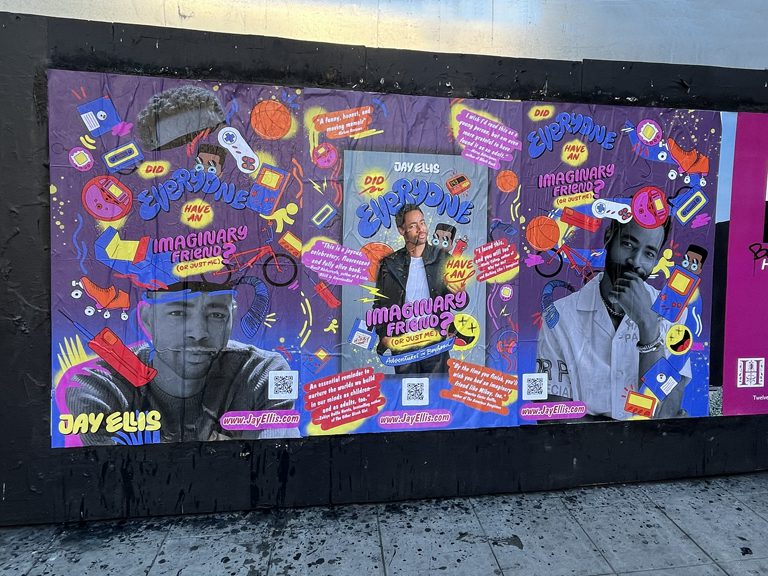
    Every DC campaign receives AGM’s standard full-documentation package: dated photographs from multiple angles of every installation location, GPS coordinates for each placement, and a comprehensive campaign summary report correlating actual placements against the agreed campaign plan. DC campaign photography is particularly compelling given the city’s distinctive architectural environments — a fly poster photographed against Capitol Hill’s Victorian rowhouses, Georgetown’s Federal-era commercial buildings, or the industrial loft facades of Navy Yard produces documentation assets that serve as powerful brand content for social media, press releases, and marketing reports. The documentation package is delivered within 48 hours of campaign completion and is included at no additional charge in all AGM DC campaign pricing.

    Washington DC’s status as the nation’s regulatory capital means that many brands operating in regulated industries — pharmaceuticals, financial services, cannabis, alcohol, political advertising — maintain significant DC market presence and often use fly posting for grassroots awareness campaigns adjacent to lobbying and policy advocacy work. AGM’s DC campaigns comply with applicable advertising regulations for each industry category and can advise on which DC neighborhoods and surface types are most appropriate for regulated-industry campaigns given the specific compliance requirements that apply. AGM does not provide legal compliance advice, but we can coordinate with your legal team to ensure campaign execution aligns with your compliance requirements.

    Adams Morgan and Columbia Heights share geographic proximity but serve strategically different campaign objectives. Adams Morgan delivers a more internationally diverse and somewhat older nightlife-oriented audience concentrated in a relatively compact commercial district that is active primarily on weekend evenings and weekday dinner hours. Columbia Heights delivers a broader, more demographically complete audience including longstanding Latino families, young professionals, African American community residents, and Howard University affiliates across a wider commercial corridor that is active throughout the day, seven days a week. For campaigns prioritizing demographic breadth and daily reach, Columbia Heights is the stronger allocation. For campaigns prioritizing the cosmopolitan, international, and nightlife-oriented DC consumer, Adams Morgan is the primary choice.

    Shaw’s rapid development — bringing thousands of young professionals into a neighborhood adjacent to some of DC’s best music venues and bar districts — has dramatically increased its value as a fly posting zone over the past five years. The neighborhood’s transformation means that AGM’s Shaw campaigns now reach a dual audience: the young professional gentrifiers whose arrival has driven Shaw’s commercial renaissance, and the longstanding community residents whose roots in the neighborhood predate the current development cycle. This demographic combination makes Shaw one of DC’s most interesting posting zones for brands seeking to reach both DC’s emerging professional class and its established working and middle-class communities within a single campaign deployment area.

    Washington DC is one of the most strategically valuable markets for national brand launches precisely because of its disproportionate influence on national media coverage and cultural conversation. A well-executed fly posting campaign in Capitol Hill, U Street, and Georgetown has a realistic probability of generating organic coverage in national publications, political media, and the social media accounts of journalists and policy communicators with national audiences. For this reason, AGM frequently recommends DC as the lead market for national launch campaigns — not because DC is the largest consumer market, but because it is uniquely positioned to generate the earned media amplification that transforms a local guerrilla campaign into a national brand conversation.

    Browse All States

    Explore Fly Posting Advertising opportunities across the United States.

    No locations found

    American Guerrilla Marketing Blog Posts