American Guerrilla Marketing
Nationwide Service
Media planning, media buying, billboard advertising, & guerrilla marketing
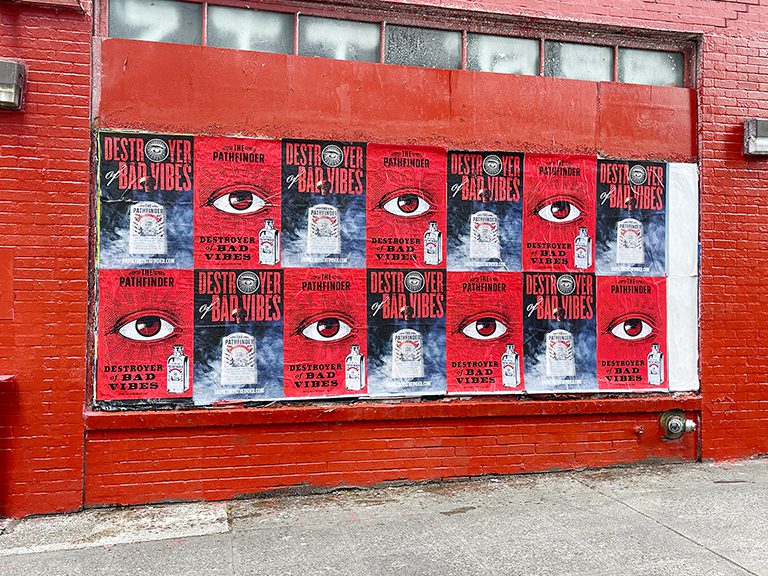
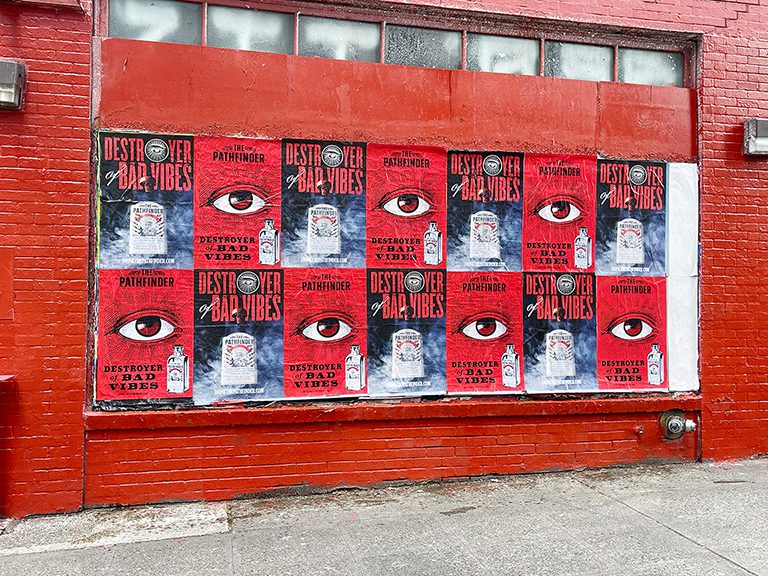
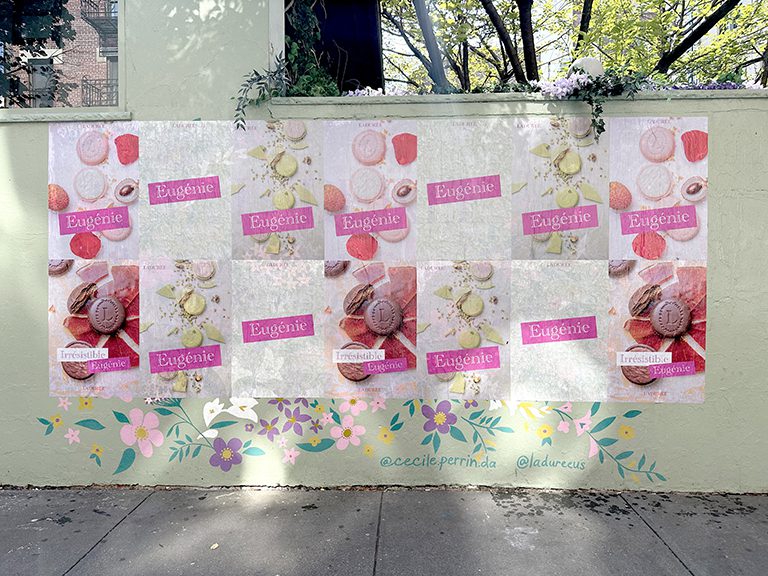
Dickson Street. The U of A campus corridor. Maple Street’s independent retail scene. Fayetteville gives street poster campaigns one of the densest pedestrian environments in the Arkansas Ozarks — AGM puts your creative exactly where the audience walks.
Few environments in the American South pack as much street-level advertising potential per square block as the corridor running from the University of Arkansas campus through Dickson Street and into downtown Fayetteville. The University of Arkansas enrolls more than 28,000 students, and that population creates a pedestrian density that other markets achieve only during major events — here it is the baseline condition of the environment, five days a week through the academic year and well into summer. Add the graduate student population, the faculty and staff workforce, and the young professional residents who chose Fayetteville specifically because it felt like a college town worth staying in after graduation, and you have an audience of 40,000-plus people moving through a concentrated urban corridor on foot every day.
Fly posting in Fayetteville thrives because this audience is visually literate, socially connected, and genuinely attentive to what’s happening at street level. Students and recent graduates in a university town don’t experience the advertising fatigue that numbs consumers in saturated digital-first markets — they look at walls, read posters, photograph interesting creative work, and share it. A well-executed wheatpasting campaign on Dickson Street travels through the U of A campus community via Instagram and group chats within hours of going up. That organic amplification makes the physical poster investment worth considerably more than the print cost and installation fee alone.
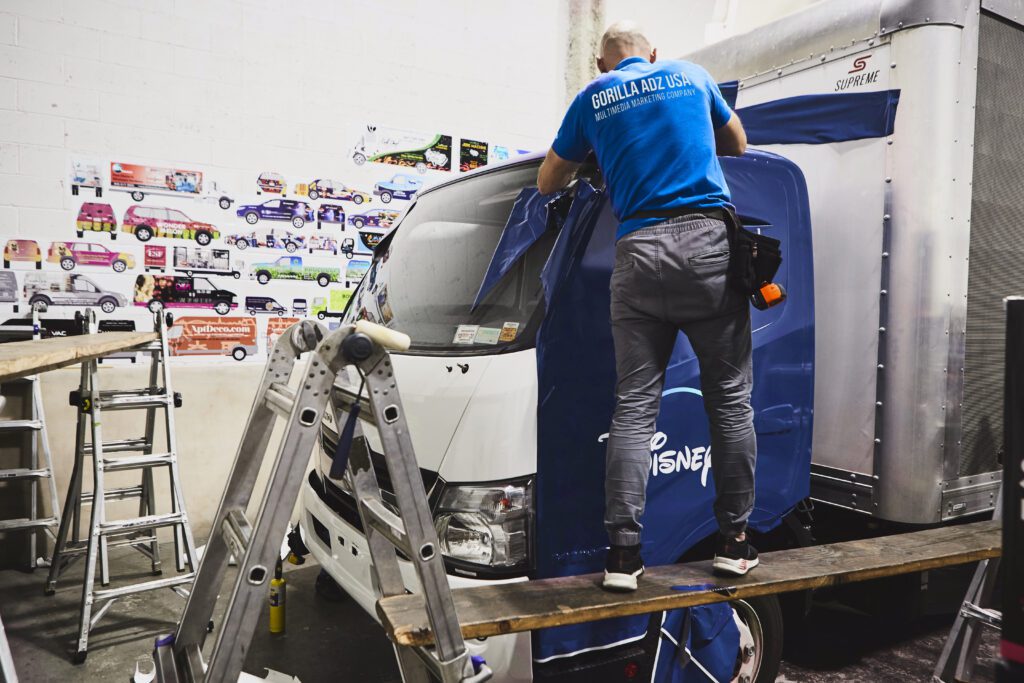
AGM executes Fayetteville fly posting campaigns using in-house installation crews and wheat-based adhesive that adheres cleanly to approved surfaces. Every placement is GPS-tagged and photographed at installation, and post-campaign reporting delivers a complete photo documentation package to your team. No subcontractors. No guessing whether the posters actually went up. You get visual confirmation of every single location before the reporting window closes.
AGM puts your campaign in the corridors where Fayetteville's university and arts audience actually walks — planned, installed, and documented by our own crews from print to proof photo. Tell us your window and we'll build the campaign plan.
Select a city to explore Fly Posting Advertising opportunities.
Fayetteville’s pedestrian environment is organized around a handful of distinct corridors that each attract different audience compositions at different times of day and week. The most effective Fayetteville fly posting campaigns aren’t citywide spreads — they’re precisely targeted sequences in the corridors where your specific audience concentrates most densely.
Dickson Street is the gravitational center of Fayetteville’s nightlife and live music scene — the street that defines how out-of-town visitors understand what Fayetteville is. George’s Majestic Lounge, one of Arkansas’s most beloved live music venues, anchors the west end of the strip. Smoke & Barrel, ONYX Coffee Lab locations, the Smoke House, and a dense succession of bars, restaurants, and late-night venues fill the corridor between College Avenue and Hill Avenue. On a Thursday evening, Dickson Street sees foot traffic that concentrates the university-adjacent audience in a way that no digital targeting parameter can fully replicate. Fly posting on Dickson Street reaches people in an actively social, open-to-discovery mindset that is the ideal mental state for encountering a brand message for the first time.
Running roughly parallel to and south of Dickson Street, Maple Street hosts the independent retail layer of Fayetteville’s commercial life — boutique apparel shops, record stores, coffee bars, and service businesses that attract a slightly older and more brand-selective version of the Dickson Street audience. The people who shop on Maple Street have moved past the first wave of college exploration and are forming more durable brand preferences. They’re the demographic in the 22–30 age window who respond to brands that feel culturally authentic rather than mass-market — which makes them particularly receptive to fly posting creative that demonstrates genuine visual craft. Surfaces along Maple Street and the cross-streets between Maple and Dickson offer layered posting opportunities that reach both daytime shoppers and evening pedestrian traffic.
The University of Arkansas campus corridor — the walkable zone spanning the main campus along Razorback Road, Garland Avenue, and the pedestrian paths connecting campus to the Stadium Drive and Maple Street commercial areas — is one of the highest-density pedestrian environments in Arkansas. During the academic year, thousands of students move through this corridor on foot multiple times per day, creating sustained daily impressions for posters placed on approved surfaces at campus edges and in the commercial transition zone between campus and the Dickson Street corridor. Campaign timing around class schedule peaks — midmorning and afternoon transitions — concentrates impression delivery in the shortest possible windows. Brands targeting the 18–24 demographic with entertainment, beverage, apparel, or technology products should prioritize the campus corridor in their Fayetteville location plan.
Fayetteville Square and the surrounding downtown blocks represent a different audience composition than the campus corridor — older, more professionally established, but still culturally engaged and tied to the university ecosystem as faculty, staff, and long-term residents who chose Fayetteville as a permanent home. The Square hosts seasonal events, farmers markets, concert series, and community gatherings that regularly concentrate thousands of people in a compact walkable zone. The construction of new mixed-use developments around the downtown core has also created an ongoing supply of legal posting surfaces — construction barriers and project hoardings that put brand creative directly in the path of the Square’s regular foot traffic throughout project timelines. Downtown Fayetteville also benefits from the weekend visitor flow from Springdale, Rogers, and Bentonville, adding a regional audience layer on top of the resident base.
University markets behave differently from general consumer markets in ways that directly affect fly posting performance. The core difference is attention mode. In a general consumer environment, most people moving through a commercial corridor are in transit — headed somewhere specific, processing a to-do list, and not particularly open to new inputs. In a college town pedestrian corridor, a significant percentage of the people on the sidewalk are in discovery mode — exploring, socializing, open to what’s around them. That attentional posture is the ideal condition for street-level advertising.
University of Arkansas students also exhibit particularly strong social sharing behavior around notable street-level creative. The Fayetteville arts and culture community has cultivated an appreciation for visual work that means good poster design doesn’t go unacknowledged — it gets photographed and posted. When a fly posting campaign in this corridor earns that social documentation from even a small percentage of the people who encounter it, the effective reach of the campaign multiplies. The 10,000 followers of a popular U of A student account seeing a photo of your poster in the Dickson Street corridor generates impressions that cost zero beyond the street campaign investment.
The Fayetteville graduate student and young professional population — residents in the 24–35 age window who are past the undergraduate phase but remained in or returned to Fayetteville — adds a second layer of purchase-ready consumers who combine the social engagement of a college market with the disposable income of an established working adult. This is the cohort that fills Fayetteville’s restaurant and bar industry with management and career-track workers, staffs the growing tech and creative businesses in the Northwest Arkansas corridor, and makes purchase decisions across consumer electronics, apparel, food, fitness, and entertainment categories with frequency and brand awareness that make them highly valuable advertising targets.
Award Winning Personalized Service
You will get thoughtful, devoted, and individualized attention from our experienced, qualified, and professional personnel. Being one of the most illustrious agencies in Brooklyn, New York, American Guerrilla Marketing has been awarded the Best of Brooklyn title.
Nationwide
Industry City, Brooklyn, New York 11232
American Guerrilla Marketing
Hours
Mon - Fri: 9 AM - 5 PM
Sat & Sun: Closed
Automate your campaign with AGM’s Request for Proposal Builder. Simply answer a few quick questions about your campaign goals, markets, and timeline, and the system will generate a tailored presentation with recommended strategies, quantities, and pricing. Click the RFP Builder to instantly receive your customized proposal.
When Biossance launched their “Illuminate Your World” campaign, the brief called for street-level presence that would reach beauty and wellness consumers in concentrated pedestrian corridors — the kind of audience that walks past a wall rather than scrolling past a feed. AGM executed a campaign combining wheat paste poster placements with sidewalk stencil work, creating a multi-surface campaign presence that extended brand visibility from eye level down to the pavement itself.
The combination format worked because it created unexpected touchpoints across a single pedestrian journey. A consumer walking a block-length route encountered the brand at wall height and then again underfoot — two visually distinct impressions from one creative campaign that reinforced each other without feeling repetitive. The sidewalk stencil element generated substantial organic photography and social sharing, extending the campaign’s reach through user-generated content that the media buy itself didn’t purchase.
The Biossance campaign demonstrates what’s possible when street-level advertising goes beyond a single format and single surface type. For Fayetteville campaigns targeting the beauty, wellness, and personal care audience that concentrates in the Dickson Street and Maple Street corridor — a demographic with strong social sharing habits and high brand awareness in the category — the multi-surface approach combines maximum physical coverage with the social amplification that turns a street campaign into a documented cultural moment.
The scale of a Fayetteville fly posting campaign should be calibrated to the specific corridors you’re targeting and the impression frequency you want to achieve in each. The Dickson Street corridor is relatively compact — roughly six blocks of prime real estate — which means a focused campaign of 100 posters in the 24×36 format can achieve genuine saturation in that single zone. Extending into Maple Street and the campus corridor adds geographic coverage that reaches different audience segments at different times of day, requiring a higher poster count to maintain the visual presence density that makes the campaign feel pervasive rather than scattered.
100 posters: contact us for pricing
200 posters: contact us for pricing
The standard format for Fayetteville campaigns. Runs in concentrated sequences on construction barriers, blank walls in the Dickson Street corridor, and utility-adjacent surfaces in the campus transition zone. The 24×36 scale is immediately readable at sidewalk distance and runs well in the type of clustered multi-poster sequences that create the visual saturation effect that makes a corridor feel branded rather than spotted. Additional creative designs: Contact us for pricing. . 72-hour rush available up to 500 quantity.
100 posters: contact us for pricing
200 posters: contact us for pricing
The 48×72 scale works well on the larger wall surfaces in Fayetteville Square’s surrounding commercial buildings and on the warehouse-scale building faces that appear along the industrial edges of the Dickson Street corridor near the west end of the strip. A single well-placed 48×72 installation at a high-traffic intersection creates the kind of dominant visual moment that photographs well, travels well on social, and establishes creative authority for the campaign beyond what density of smaller posters achieves alone. Additional creative designs: Contact us for pricing. .
A Fayetteville fly posting campaign starts with a conversation about which audience segment you’re targeting and what corridors make the most sense for that demographic. Students on campus, bar-district nightlife consumers on Dickson Street, independent retail shoppers on Maple Street, and downtown professionals near Fayetteville Square are distinct audiences with different spatial routines — a campaign targeting all of them simultaneously requires a broader poster count and more diverse location selection than a focused Dickson Street push for a nightlife or entertainment brand.
AGM’s installation crew knows Fayetteville’s surface landscape — which construction projects have premium barriers, which corners see the heaviest evening pedestrian flow, where the sightlines create natural stopping points that make a poster more likely to be seen and read rather than walked past. That local operational knowledge shapes the final location plan before a single poster goes up, and it’s what separates a well-placed campaign from one that technically covers a neighborhood without actually reaching the people in it.
Timing is particularly important in Fayetteville. The academic calendar creates clear windows of peak and reduced density. Campaigns timed around the start of fall semester (late August), Razorback football home game weekends (September through November), Homecoming, and spring semester’s first weeks reach the maximum possible audience in the corridors. Campaigns running during finals week or the inter-semester gap between December and January operate in a materially thinner pedestrian environment. Understanding these rhythms — and planning your campaign installation around them — is part of what AGM brings to the Fayetteville campaign conversation.
Installation happens at night when surfaces are dry and foot traffic is reduced, allowing crews to work without obstruction and ensure adhesion quality before morning pedestrian traffic validates the placement. GPS coordinates are recorded at each installation point, photographs are taken at completion, and the documentation package is assembled for delivery to your team. The wheat-based adhesive used is environmentally responsible and removes cleanly with a pressure wash when the campaign window ends.
The Fayetteville market attracts fly posting campaigns from a specific set of industries that match the U of A campus and Dickson Street demographic profile. Understanding which categories perform best helps brands assess whether fly posting in this specific market aligns with their campaign objectives before committing budget.
University of Arkansas Razorbacks football is not just a sporting event in Fayetteville — it’s a civic phenomenon that transforms the city’s pedestrian environment on home game Saturdays in ways that no other recurring event does. Donald W. Reynolds Razorback Stadium seats more than 76,000 people, and the tailgate and post-game bar district activity generated by a home game moves an enormous number of people through the Dickson Street corridor and surrounding areas on a timeline concentrated around kickoff and final whistle.
A fly posting campaign installed the week before a Razorback home game sees that elevated foot traffic drive a surge in impressions that the base weekly pedestrian count doesn’t reflect. Out-of-state alumni visitors encounter the creative for the first time in a positive, social context. Local fans who walk Dickson Street for every home game experience the campaign multiple times over a multi-game stretch. Regional visitors from Springdale, Bentonville, Rogers, and Bentonville who travel to Fayetteville for game days encounter street-level campaign creative they wouldn’t see in their home markets.
Brands that can time their Fayetteville campaign installation to align with the Razorback home game schedule — particularly the first home game of the season (maximum excitement) or the rivalry games (maximum regional attention) — extract significantly more value per poster than campaigns running in non-game weeks. AGM can plan installation timing to align with specific game dates and help brands maximize the campaign investment in the Fayetteville pedestrian environment’s highest-traffic windows.
The Dickson Street Entertainment District is the highest-priority corridor for most Fayetteville campaigns — it combines the city’s highest pedestrian density with an evening nightlife audience that is particularly open to brand discovery. The U of A campus corridor is the best option for brands specifically targeting the 18–24 student demographic. Maple Street serves the independent retail and slightly older post-college audience, and the Fayetteville Square area reaches the professional and cultural event crowd. AGM can recommend specific location plans based on your target audience and campaign objectives.
The 28,000-student University of Arkansas enrollment creates a baseline pedestrian density in the campus and Dickson Street corridors that makes Fayetteville one of the more productive fly posting environments in the South relative to its total population size. University audiences are also socially active sharers of street-level creative — a strong fly posting campaign in the campus corridor generates organic social media documentation that extends campaign reach beyond the physical poster count.
Yes. AGM can build a Fayetteville campaign plan focused specifically on the Dickson Street Entertainment District, selecting surfaces within the approximate six-block core of the corridor from College Avenue to Hill Avenue. A 100-poster 24×36 campaign concentrated in this zone creates genuine saturation presence that the evening bar and music venue audience encounters repeatedly across a single corridor over the campaign window.
For a focused Dickson Street presence, 100 posters in the 24×36 format achieves meaningful saturation in the core corridor. Extending the campaign to include the campus corridor and Maple Street simultaneously requires 150–200 posters to maintain presence density across the larger geographic footprint. AGM can advise on the minimum effective count for your specific target corridor and campaign objective during the planning conversation.
Standard lead time from campaign approval to installation is approximately two to three weeks, accounting for printing production and crew scheduling. 72-hour rush production is available for the 24×36 format in quantities up to 500 — contact AGM directly if your campaign window requires faster execution. Campaigns tied to specific event dates or product launch windows should be booked as early as possible to guarantee the installation timing you need.
Yes — the academic year, particularly from late August through late November (fall semester) and January through April (spring semester), produces substantially higher pedestrian density in the campus and Dickson Street corridors than the summer months when enrollment drops significantly. Campaign windows during the academic year deliver materially more impressions per poster per day than equivalent campaigns running in June or July when the student population has dispersed.
Digital advertising targeting university students in Fayetteville reaches people through screens they’re actively trying to scroll past. Fly posting reaches the same demographic in the physical environment where they’re socially engaged and open to discovery — on the street, between classes, heading to a bar, leaving a concert. The physical presence also generates organic social photography that digital-only campaigns don’t produce. The two channels are complementary rather than competitive; many brands run both simultaneously to create reinforcing touchpoints across screen and street.
Yes, and AGM specifically recommends considering this timing alignment for brands targeting the Fayetteville market. Razorback home game weekends bring a surge of out-of-state alumni, regional visitors, and concentrated local social activity through the Dickson Street corridor that significantly multiplies the impression value of posters already installed in the corridor. Installation one week before the first home game captures the full run of home game pedestrian surges across the fall season.
The 24×36 standard format works best for density campaigns along Dickson Street, where the goal is high-repetition visual presence across multiple surfaces in the corridor — construction barriers, blank wall sections, utility-adjacent structures — that collectively create a branded-corridor effect. The 48×72 large format is suited for specific dominant placements at high-visibility wall faces at major intersections or on larger building facades where single-location impact matters more than corridor density.
Location selection on and around Fayetteville Square is based on pedestrian flow patterns, surface availability, and sightlines from the Square’s primary gathering and transit points. AGM prioritizes surfaces with clear sightlines from the directions most pedestrians approach — the corners of Block Avenue and Mountain Street, the southern edge of the Square facing the commercial district, and surfaces along the event corridor used during farmers markets and concert series programming. Crew familiarity with the Square’s event schedule helps time installation around high-activity periods.
Dickson Street on a Friday evening during the academic year routinely sees several thousand pedestrians moving through the bar and restaurant corridor between approximately 8 PM and 2 AM, with peak concentration between 9 PM and midnight. Game day weekends push those counts substantially higher. These figures represent a valuable window for street poster campaigns because the audience is socially engaged, physically present, and spending money — the mental state most conducive to brand discovery and impression retention.
Yes. AGM regularly coordinates campaigns that run consistent creative across multiple Northwest Arkansas markets — Fayetteville and Springdale together represent the core of the NW Arkansas creative and university corridor, and campaigns covering both cities create a regional presence that reaches the full young professional and student demographic across the metro. Multi-market campaigns are managed through a single agreement with coordinated installation timelines and unified reporting.