🚀 NEW WHEATPASTING MARKETS Discover our wheatpasting campaigns in : 🇬🇧 London • 🇨🇦 Canada • 🇲🇽 Mexico City

American Guerrilla Marketing

Nationwide Service

Media planning, media buying, billboard advertising, & guerrilla marketing

Fly Posting in Tucson, AZ

Sidewalk Decals Advertising in Tucson, AZ

The University of Arizona fuels one of the Southwest’s most authentic indie street scenes. 4th Avenue, Congress Street, and Downtown Tucson are built for fly posting — and AGM has been earning Best of Brooklyn recognition executing campaigns exactly like yours.

University of Arizona and Tucson’s Street-Level Cultural Economy

Tucson is a city that took a different path than most of the Sun Belt. While Phoenix built itself outward — sprawling across the desert in a car-dependent grid that made street-level culture an afterthought — Tucson retained a dense, walkable core shaped by the University of Arizona’s long presence and the independent creative economy that grew up around it. The result is a street scene on 4th Avenue and Congress Street that feels less like a planned entertainment district and more like something that happened organically, over decades, because the people who lived there refused to let it become anything else.

The University of Arizona, founded in 1885 and enrolling more than 45,000 students, is the engine that powers Tucson’s street advertising market. That enrollment figure is deceptive in its simplicity — it represents 45,000 people aged 18 to 28 who are living away from home, exploring their identities, spending discretionary money on food, entertainment, and experiences, and moving through the same corridors day after day with open eyes and active social networks. A fly posting campaign that earns genuine attention from a University of Arizona student earns that student’s social media amplification, their word-of-mouth recommendation, and the attention of every peer in their social circle who they influence in real time. In a market this age-concentrated and socially interconnected, organic amplification from a strong street campaign compounds faster than it does almost anywhere else.

The young creative professional layer that has developed around Tucson’s arts infrastructure adds a second audience dimension. Graduates who stayed in Tucson after completing their degrees — drawn by affordable rent, a genuinely supportive arts community, and the kind of independent cultural scene that larger and more expensive cities have systematically priced out — have built an ecosystem of studios, galleries, independent labels, small press publishers, and creative service businesses that gives Tucson a cultural density that consistently outperforms what its population size alone would predict. For brands that need to reach creatives who lead rather than follow, Tucson’s 25-to-38 artist and maker demographic is among the most culturally influential audiences per capita in Arizona.

American Guerrilla Marketing brings to Tucson the same execution standard it applies in its most demanding national markets. AGM’s Best of Brooklyn recognition reflects the quality discipline that the agency’s team applies regardless of where a campaign runs — and Tucson clients receive direct-crew installation, in-house printing, and GPS-documented post-campaign reporting that equals what major national brands in New York, Los Angeles, and Miami receive as baseline deliverables. The Tucson market may be smaller than Phoenix, but AGM’s service standard does not scale down to match it.


Tucson's Independent Scene Is Ready for Your Campaign

AGM executes fly posting across 4th Avenue, Congress Street, the University of Arizona corridor, and Downtown Tucson. Direct crew installation, in-house printing, GPS-documented proof of every placement.

Browse Cities in Arizona

Select a city to explore Fly Posting Advertising opportunities.

Where Fly Posting Lives In Tucson

Tucson’s fly posting geography is concentrated into a remarkably compact area for a city of its size. The zone that runs from the University of Arizona’s campus edge through 4th Avenue and down into Downtown Tucson’s Congress Street corridor is walkable from end to end in under an hour — which means a well-executed fly posting campaign covering the full stretch creates a visual saturation experience for Tucson pedestrians that is more intense than campaigns in more geographically dispersed markets. The audience doesn’t just encounter the campaign once — they encounter it repeatedly over the course of a single day as they move between the campus, 4th Avenue bars and restaurants, and downtown venues along Congress.

4th Avenue Entertainment District

The most distinctive pedestrian corridor in Tucson and the natural home of fly posting campaigns targeting the 18-to-30 creative demographic. 4th Avenue, running south from University Boulevard through the heart of the entertainment district, concentrates a density of bars, music venues, vintage and independent retail shops, restaurants, and cultural institutions that rivals any comparable corridor in the Southwest for sheer variety. The street scene is active from mid-afternoon through late night on weekends and carries strong pedestrian traffic throughout the weekday evening hours as well. 4th Avenue Street Fair, held twice annually, draws hundreds of thousands of visitors to the corridor — one of Arizona’s largest outdoor street events and a campaign timing opportunity with no equivalent in Tucson’s calendar.

Congress Street — Historic Core Arts Corridor

Congress Street through Downtown Tucson is Tucson’s original arts and entertainment street, anchored by the historic Hotel Congress — a landmark from 1919 that houses Club Congress, one of the longest-running music venues in the Southwest, and a restaurant and bar scene that draws both long-time locals and out-of-town visitors throughout the year. The Rialto Theatre, an early-20th-century venue that hosts mid-size touring acts and is widely recognized as one of the best small concert venues in the country, sits on Congress as well. The corridor’s combination of historic architecture, active music venue programming, and arts-adjacent retail creates a pedestrian environment where fly posting earns sustained attention from an audience that is there by choice, culturally engaged, and actively paying attention to what surrounds them.

University of Arizona Corridor — Campus Edge

The streets surrounding the University of Arizona campus — University Boulevard, Speedway Boulevard, and Park Avenue — carry the densest concentration of student-age pedestrian traffic in Tucson. This is the zone where the on-campus population transitions into the off-campus commercial environment: the coffee shops, record stores, independent restaurants, and casual bars that serve the U of A student body throughout the academic year. Campaign timing in this corridor is synchronized with the academic calendar — fall semester opening weeks, major sporting event periods, and the late-spring stretch before finals generate particularly high pedestrian density. Brands targeting the college-age segment find this corridor delivers the most concentrated 18-to-24 audience in the market.

Downtown Tucson Arts District

Stretching through the blocks surrounding the Tucson Museum of Art, the Fox Tucson Theatre, and the surrounding gallery and restaurant zone, Downtown Tucson’s arts district carries a demographic that blends U of A graduate students and arts faculty with the independent creative professionals who anchor Tucson’s maker culture. The 4th Avenue Merchants Association programming, First Sundays at the Museum, and various independent arts event series generate consistent foot traffic through this zone on a calendar that runs year-round. For campaigns targeting the older edge of Tucson’s creative class — the 28-to-40 artist, gallery professional, and university-adjacent creative — the Downtown arts district delivers a more artistically sophisticated audience than 4th Avenue’s younger-skewing corridor.


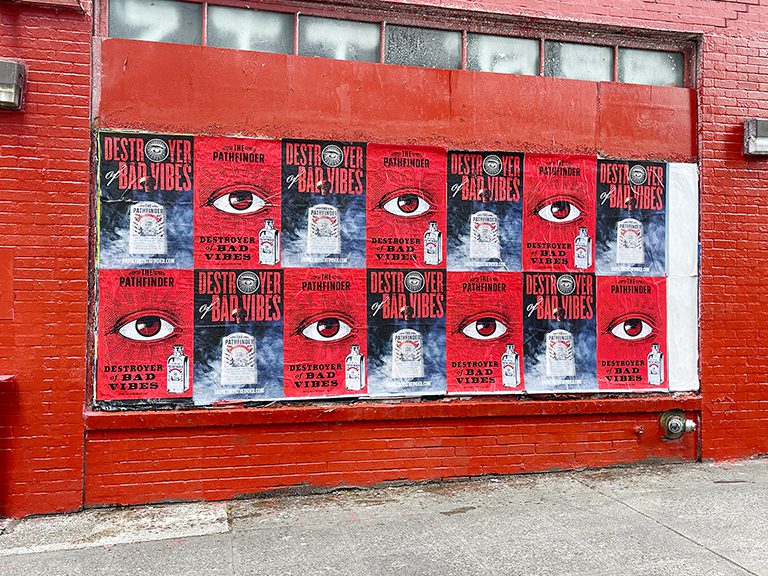
4th Avenue: Tucson's Definitive Independent Entertainment Corridor

There is no single corridor in Arizona quite like 4th Avenue. It is not curated. It did not emerge from a city planning initiative or a developer’s vision of what an arts district should look like. It accumulated over decades through the decisions of independent business owners who chose this street because the rent was manageable, the foot traffic was real, and the community of people who spent time there valued exactly the kind of business that had something genuine to offer. The result is a corridor with a texture that cannot be replicated by design — vintage stores operating next to head shops operating next to vegan restaurants operating next to craft cocktail bars operating next to record stores that still sell vinyl to people who actually listen to it.

For fly posting campaigns, this texture is the entire point. The audience that moves through 4th Avenue is not there because someone marketed it to them — they’re there because they want to be there, because it is the kind of place that they have chosen as a reflection of who they are. That self-selection process produces an audience with an unusually high level of cultural engagement and an unusually low tolerance for advertising that feels fake or generic. A fly posting campaign on 4th Avenue that arrives with creative that respects the neighborhood’s aesthetic identity earns disproportionate attention and organic social sharing from an audience that can immediately distinguish between something authentic and something trying to appear authentic.

The 4th Avenue Street Fair is the largest single event in Tucson’s annual calendar, running over two weekends — one in spring and one in winter — and drawing estimates of 300,000 to 500,000 visitors across both events combined. During Street Fair weekends, 4th Avenue absorbs a foot traffic volume that transforms it temporarily into one of the most densely pedestrianized corridors in the entire Southwest. Fly posting campaigns timed to have fresh installations in place for Street Fair weekend earn a concentrated impression opportunity that is, quite simply, the highest-volume single-event exposure available in Tucson’s entire advertising landscape.

Beyond the Street Fair, 4th Avenue’s Tuesday-through-Sunday pedestrian patterns are strong enough that a campaign installed on a Thursday evening reaches a meaningful cumulative audience without any event timing required. The corridor’s bars and music venues operate on schedules that keep the street active through the weekend and into the mid-week evening hours, creating an impression window that extends further into the week than most comparable corridors in mid-size American cities.

Build Your Fly Posting Campaign

    Award Winning Personalized Service

    You will get thoughtful, devoted, and individualized attention from our experienced, qualified, and professional personnel. Being one of the most illustrious agencies in Brooklyn, New York, American Guerrilla Marketing has been awarded the Best of Brooklyn title.

    Nationwide

    Industry City, Brooklyn, New York 11232

    American Guerrilla Marketing

    +1 (646) 776-2770

    [email protected]

    Telegram: @americanguerillamarketing

    Hours

    Mon - Fri: 9 AM - 5 PM

    Sat & Sun: Closed

    Automate your campaign with AGM’s Request for Proposal Builder.

    Automate your campaign with AGM’s Request for Proposal Builder. Simply answer a few quick questions about your campaign goals, markets, and timeline, and the system will generate a tailored presentation with recommended strategies, quantities, and pricing. Click the RFP Builder to instantly receive your customized proposal.

    Student And Young Creative Demographics: Who Tucson Campaigns Reach

    Understanding Tucson’s demographic structure is essential for designing a fly posting campaign that actually delivers against its objectives. The market is not monolithic — the 18-to-22 undergraduate student who lives in a dorm and moves through the campus-edge corridor is a fundamentally different audience from the 28-to-35 graduate student, artist, or creative professional who has been in Tucson for several years and lives closer to 4th Avenue or Downtown. Both are worth reaching, but they respond to different creative approaches and spend time in different parts of the city’s fly posting geography.

    The undergraduate student population is concentrated in the U of A campus-edge zone. This group has the highest social media activity, the fastest content-sharing reflexes, and the strongest peer-influence dynamics of any segment in the Tucson market. When an 18-to-22 student sees a fly posting campaign on their daily walk to campus and shares it on Instagram or TikTok, the reach extends through a peer network of fellow students from across the country — many of whom are the same target demographic the brand is trying to reach in other markets. Tucson undergraduate campaigns have an outsized digital amplification coefficient relative to their street-level poster count because of how aggressively this age group shares visual content from their physical environment.

    The older creative class demographic — the 26-to-38 maker, artist, musician, or small business operator who chose to stay in or move to Tucson for its affordability and cultural authenticity — is concentrated in the 4th Avenue and Congress Street zones and represents a different kind of value. This audience has real purchasing power, professional networks that extend beyond Tucson, and a position in Tucson’s cultural hierarchy as tastemakers whose preferences carry weight in the city’s independent community. Reaching this demographic with fly posting in the corridors they consider their own carries a legitimacy signal that translates into the kind of brand endorsement that money can’t buy through traditional advertising channels.

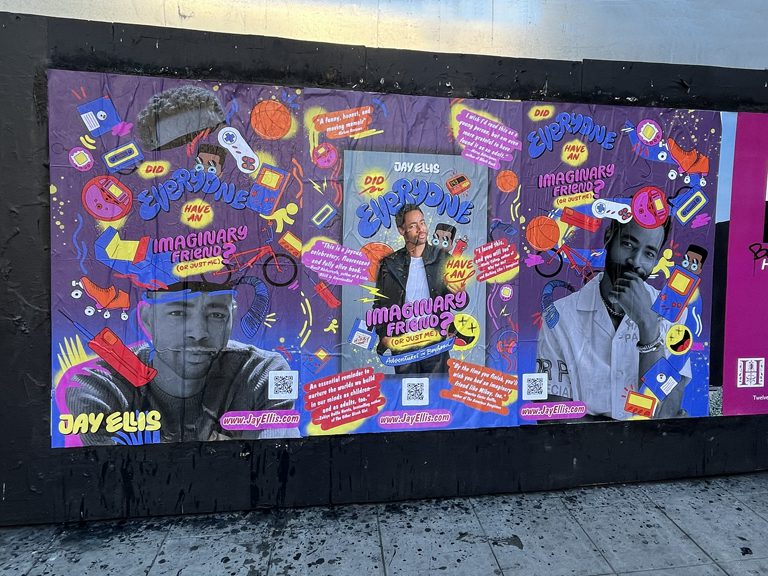
    Case Study: Jay Ellis Wheatpasting, Manhattan

    Jay Ellis’s street campaign in Manhattan brought AGM into neighborhoods that have a long and specific relationship with wheatpaste culture — Williamsburg, the Lower East Side, and Hell’s Kitchen each carry decades of street poster history that makes them among the most discerning environments in the world for evaluating whether a fly posting campaign deserves to be there. Campaigns that arrive in these neighborhoods with sloppily executed posters, poor location selection, or creative that doesn’t hold its own against the surrounding visual environment get ignored at best and actively dismissed at worst.

    AGM’s execution of the Jay Ellis campaign required neighborhood-level location intelligence — understanding not just which streets had surface availability, but which surfaces within those streets had the visual authority and audience exposure to justify placement. Williamsburg’s Bedford Avenue corridor demanded different surface selection than the Lower East Side’s Orchard Street strip, which demanded different placement logic from Hell’s Kitchen’s 9th and 10th Avenue bars and theater district. The campaign documentation delivered after installation captured every placement in its specific neighborhood context, giving the campaign team a complete visual record of how the creative had been distributed across three distinct Manhattan micro-markets.

    Tucson’s own micro-market structure — the distinction between 4th Avenue’s indie energy and Congress Street’s historical character and the campus-edge corridor’s student-specific environment — demands the same neighborhood-level location intelligence that made the Jay Ellis campaign effective in Manhattan. A poster that earns genuine attention from a 4th Avenue regular in Tucson may not earn the same response from a Congress Street arts-scene habitué, just as a Williamsburg placement decision that works for a certain artist campaign doesn’t automatically translate to the Lower East Side. AGM applies market-specific location intelligence to Tucson that reflects the city’s actual street culture, not a generic approach imported from another market that happens to hit Tucson’s surface inventory without understanding what those surfaces mean to the people who walk past them every day. AGM’s nationwide scope — operating across markets from New York and Los Angeles to mid-size college towns — means the Tucson team benefits from pattern recognition across dozens of similar indie cultural markets that have informed what works and what doesn’t.

    Campaign Format Decisions For Tucson

    Tucson’s fly posting geography strongly favors the standard 24×36 format for the majority of campaign placements. The 4th Avenue corridor is a walking-pace environment — people moving along the avenue do so slowly, browsing storefronts and interacting with friends, and a sequence of 24×36 posters spaced across a half-mile stretch earns multiple impressions from the same pedestrians as they move through the zone over the course of an evening. The cumulative effect of that repetition is the fundamental mechanism by which fly posting builds brand recognition at speed, and 4th Avenue’s physical scale is perfectly sized to let it work.

    Congress Street’s built environment offers specific sites where larger format earns its premium. The blank side walls of older buildings along Congress — particularly those adjacent to the Rialto Theatre and the Hotel Congress — are among the most historically significant fly posting surfaces in Tucson, with a visual authority that comes from decades of cultural use. A 48×72 placement on a prominent Congress Street building face near one of these institutions earns the kind of individual attention that 24×36 posters, however densely arranged, cannot match in isolation. For campaigns where visual scale is part of the message — album art, film campaigns, large-scale brand statements — these Congress Street anchor sites deliver a presence that the surrounding neighborhood immediately recognizes as significant.

    For most Tucson campaigns, AGM’s recommendation is a 24×36 foundation covering 4th Avenue, Congress Street, and the campus-edge corridor with density, supplemented by one or two 48×72 anchor placements at the Congress Street sites that carry the most cultural authority. This combination uses the strength of each format in the environment where it performs best, producing a campaign presence that feels complete rather than tentative.

    24×36 — Standard Format

    100 posters: contact us for pricing  |  200 posters: contact us for pricing

    The Tucson workhorse format. Two feet wide, three feet tall — built for the corridor-density approach that 4th Avenue and Congress Street reward. Multiple creative designs available at contact us for pricing each. 72-hour rush production available for quantities up to 500, making it possible to launch a Tucson campaign in advance of a 4th Avenue Street Fair weekend or a Rialto Theatre date on short notice.

    48×72 — Large Format

    100 posters: contact us for pricing  |  200 posters: contact us for pricing

    Four feet wide, six feet tall. Reserved for Tucson’s highest-authority surfaces — Congress Street building walls, major 4th Avenue corner placements, Downtown arts district anchor sites where a single poster earns the individual visual authority that Tucson’s street culture recognizes and responds to. Additional designs at contact us for pricing each.

    How AGM Plans and Installs in Tucson

    Planning a Tucson fly posting campaign begins with a conversation about the target audience segment within the city. The undergraduate student and the 30-year-old independent musician occupy the same city but different corridors, and a campaign designed to reach one will land differently in the other’s zone. AGM’s team identifies which specific Tucson neighborhoods align with the campaign’s demographic objective, maps a poster distribution plan that concentrates density where the target audience is actually present, and schedules installation to align with the event calendar or academic timing that creates the highest foot traffic in the target zone.

    All printing is handled in-house by AGM — the same organization that talks to the client about the campaign is the same organization that produces the printed posters and puts them on the wall. There are no subcontractors. That direct chain of custody from briefing to installation means quality consistency is maintained through every stage of the process without the accountability gaps that emerge when production is handed off to a third party that operates under different quality standards and different financial incentives. Tucson’s indie street audience is observant enough to notice when a poster installation has been executed with care versus when it was rushed, and AGM’s installation standard reflects the respect that Tucson’s street culture deserves.

    Post-installation documentation for every Tucson campaign includes GPS-pinned photography of each placement taken at installation time. The reporting package that clients receive captures the full campaign footprint — which surfaces were used, which corridors they covered, and what the poster looked like in its actual installed context on Tucson’s street. That documentation gives Tucson clients the same proof of performance transparency that AGM’s largest national clients receive as a standard expectation.

    Who Books Fly Posting Campaigns In Tucson

    Tucson’s fly posting client base reflects the city’s indie creative economy. Independent music venues — the Rialto Theatre, Club Congress at Hotel Congress, 191 Toole, and the full roster of smaller 4th Avenue bars that host live music — are among the most consistent fly posting clients in the market. Concert promoters and venue operators who want pre-show street presence in the 4th Avenue and Congress Street corridors use fly posting to build anticipatory buzz among the Tucson audience in the days leading up to a performance. A poster campaign that hits 4th Avenue three days before a sold-out show generates conversation among exactly the audience that will be in the venue on the night of the performance — and creates social pressure among the people who didn’t get tickets to buy early next time.

    National touring acts with Tucson dates on their itinerary use fly posting to establish street presence in the city before their arrival. For artists whose brand identity is rooted in street culture — hip-hop acts, indie rock bands, electronic artists with roots in club culture, and any performer whose audience self-identifies as culturally engaged and resistant to mass-market advertising — fly posting on 4th Avenue and Congress Street communicates directly in the visual language that audience already speaks. It signals that the artist understands Tucson’s scene and is showing up with respect for it, not just passing through to sell tickets.

    University of Arizona student organizations, academic departments, and campus event organizers use fly posting to promote events and programming to both the on-campus population and the broader Tucson cultural community. Academic conferences, arts festivals, public lectures by prominent figures, and major university events all benefit from street presence that extends the awareness campaign beyond campus bulletin boards and social media into the physical corridor where Tucson’s broader creative community actually lives.

    Brands launching products in the Southwest — particularly those whose target demographic indexes heavily toward educated 18-to-35 consumers — include Tucson in their fly posting campaigns as an efficient market for reaching the college-age and young creative segments that drive early adoption and peer amplification. Tucson’s organic-sharing culture means that a brand that earns genuine street credibility in this market benefits from amplification through the city’s tightly connected creative and academic networks in ways that paid advertising simply cannot replicate.

    Frequently Asked Questions: Fly Posting in Tucson

    The U of A campus shapes Tucson’s fly posting geography in two direct ways: it concentrates the 18-to-24 undergraduate demographic in the campus-edge corridor along University Boulevard and Speedway Boulevard, and it drives the academic calendar that creates predictable foot traffic peaks (fall semester opening, major game days, spring events before finals) that smart campaigns align with. Beyond the undergraduate population, the university’s graduate programs and arts faculty contribute to the older creative professional layer that inhabits 4th Avenue and Congress Street — the demographic for whom the campus-edge zone is background rather than destination.

    4th Avenue combines the three elements that make fly posting work at its best: genuine pedestrian foot traffic at walking pace, a culturally engaged 18-to-38 audience that pays attention to its visual environment, and the kind of organic indie street texture — accumulated over decades of independent business ownership — that creates the right context for creative street advertising to feel native rather than intrusive. The bi-annual 4th Avenue Street Fair, drawing hundreds of thousands of visitors over two annual weekend events, adds a campaign timing opportunity with no equivalent in Tucson’s advertising landscape.

    The strongest campaign windows near the University of Arizona campus are the fall semester opening period (late August through September, when students are arriving and establishing routines in new neighborhoods), home football game weeks in October and November (when campus and surrounding corridors surge with fans and alumni), and the late-winter semester period from January through March (when the academic year is in full swing and social calendars are active). Spring semester’s final weeks before finals season slow foot traffic significantly as students shift into study mode.

    Yes — independent venues and promoters are among the most consistent fly posting clients in Tucson. AGM works with venue operators, tour management teams, and independent promoters to design campaign timing and neighborhood distribution that maximizes pre-show street presence in the corridors where Tucson’s music audience actually moves. Campaigns timed to the week of a Rialto Theatre or Club Congress show generate the anticipatory awareness that supports ticket sales and builds artist credibility with Tucson’s discerning live music community.

    Tucson’s desert climate — low humidity, limited rainfall, and consistent sunshine — is favorable for poster durability compared to coastal or humid markets. Installations in the fall through spring window (October through April) hold up well for the full one-to-two-week campaign duration under most surface conditions. Tucson’s monsoon season (July through September) brings the highest moisture exposure of the year and is worth factoring into summer campaign planning. Most Tucson clients time their campaigns to the academic year and entertainment season, which naturally avoids the wettest weeks of summer.

    Congress Street and 4th Avenue each have distinct characters that produce different campaign dynamics. 4th Avenue is higher-energy and younger-skewing — a bar-and-independent-retail corridor where the 18-to-30 audience is the primary and overwhelming presence. Congress Street is more historically grounded, with the institutional weight of venues like the Rialto Theatre and Hotel Congress shaping the corridor’s cultural register. The Congress Street audience tends slightly older and more artistically oriented — graduate students, arts professionals, and the creative class residents who patronize the Hotel Congress bar and the Fox Tucson Theatre. Campaigns intended for both demographics benefit from placement in both corridors, as the two streets amplify each other rather than overlapping completely.

    Yes — and Tucson’s young creative professional demographic (the 26-to-38 artist, maker, designer, and independent business owner who lives near 4th Avenue and Congress Street) is one of the most reliably fly-posting-receptive segments of any market AGM operates in. This audience has consciously chosen a lifestyle that values independent culture over mainstream commerce, and they respond with genuine interest to street advertising that arrives in their corridors with a visual identity that respects the aesthetic standard of the neighborhood. Campaigns placed on 4th Avenue and Congress Street with creative that meets Tucson’s indie cultural register consistently earn organic social sharing from this demographic at rates well above what the campaign’s poster count alone would predict.

    AGM’s minimum Tucson campaign starts at contact us for pricing — the 100-poster 24×36 package that provides enough placement density across 4th Avenue and Congress Street to achieve genuine corridor saturation in Tucson’s primary fly posting zones. At this scale, the campaign covers both core corridors with enough individual placement positions to earn the frequency of impression that turns a street advertising campaign from a single fleeting encounter into a recognized brand presence. Contact AGM to discuss how this starting package can be optimized for Tucson’s specific corridors and the campaign’s target demographic.

    AGM’s campaign planning process includes pre-installation location assessment as a standard component of every Tucson campaign. Before posters go to the wall, the team evaluates target corridor surface availability, confirms that selected sites align with the campaign’s visual and regulatory requirements, and maps the specific installation route that delivers the intended neighborhood distribution. This planning step ensures that poster density concentrates where it earns the most impressions from the target demographic rather than defaulting to whatever surface happens to be available on installation day.

    Absolutely — Tucson is routinely included in Arizona-wide campaigns alongside Phoenix, Mesa, and Scottsdale. Running Tucson simultaneously with Phoenix covers both the state’s largest entertainment market and its college-town cultural center in a single coordinated execution that achieves true statewide coverage rather than a Phoenix-centric campaign that leaves Tucson’s distinct audience unaddressed. AGM manages logistics, installation timing, and GPS documentation across all Arizona markets and delivers a consolidated reporting package that covers the full statewide campaign footprint.

    Phoenix and Tucson serve fundamentally different campaign objectives in the Arizona market. Phoenix delivers volume, metro-scale density, and the creative-class concentration that entertainment and streaming brands most need at scale. Tucson delivers the indie cultural authenticity, campus-adjacent student density, and peer-influencer social dynamics that brands targeting early adopters and cultural tastemakers most value. In Phoenix, you saturate a large, fast-moving market. In Tucson, you earn cultural credibility in a smaller, more tightly connected community where genuine street presence carries qualitative weight that exceeds what the raw impression numbers suggest. Many brands that prioritize authenticity signal choose to include Tucson in their Arizona campaigns precisely because the market’s organic amplification potential outperforms markets twice its population size.

    Browse All States

    Explore Fly Posting Advertising opportunities across the United States.

    No locations found

    American Guerrilla Marketing Blog Posts