American Guerrilla Marketing
Nationwide Service
Media planning, media buying, billboard advertising, & guerrilla marketing
Garrison Avenue is writing a new chapter. Fort Smith’s downtown revitalization has opened some of the most compelling wall real estate in the River Valley — and AGM’s in-house crews are ready to put your campaign in front of the audiences rebuilding this corridor.
Downtown revitalization movements create fly posting opportunities that established, fully built-out commercial districts simply cannot match. Active renovation projects generate construction barriers and scaffolding hoardings — the premier posting surfaces in the industry — while the influx of new businesses, galleries, and food and beverage operators pulls in exactly the kind of young, curious, culturally engaged audience that responds best to street-level creative work. Fort Smith is currently in the middle of one of the more ambitious downtown revitalization efforts in Arkansas, and the Garrison Avenue corridor is at the center of it.
Garrison Avenue has been the commercial spine of Fort Smith since the frontier era, and its current chapter is arguably its most interesting. The street stretches through downtown from the Arkansas River toward the civic center, passing through a corridor that now mixes established storefronts with newly opened independent restaurants, art galleries, and entertainment venues that have moved in as the revitalization investment has taken hold. The Belle Grove Historic District — a concentrated zone of Victorian-era commercial and residential architecture — adds pedestrian-scale streetscape character that makes the area genuinely pleasant to walk through, which in turn generates the kind of unhurried pedestrian traffic that reads posters rather than rushing past them.
Arkansas’s second-largest city also functions as the commercial hub of the River Valley region, drawing shoppers, diners, and entertainment seekers from Sebastian County, Crawford County, and the cross-border communities in eastern Oklahoma. That regional draw expands the effective audience of a Fort Smith fly posting campaign well beyond the city’s residential base — your campaign reaches both the downtown resident and the regional visitor who drove in for a weekend dinner and gallery walk.
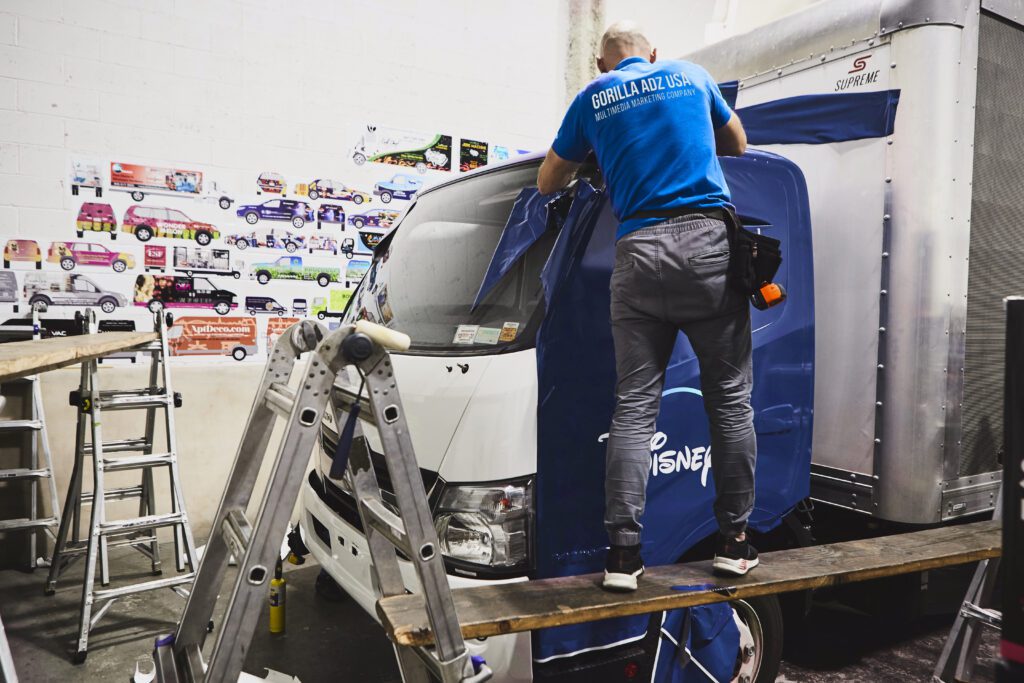
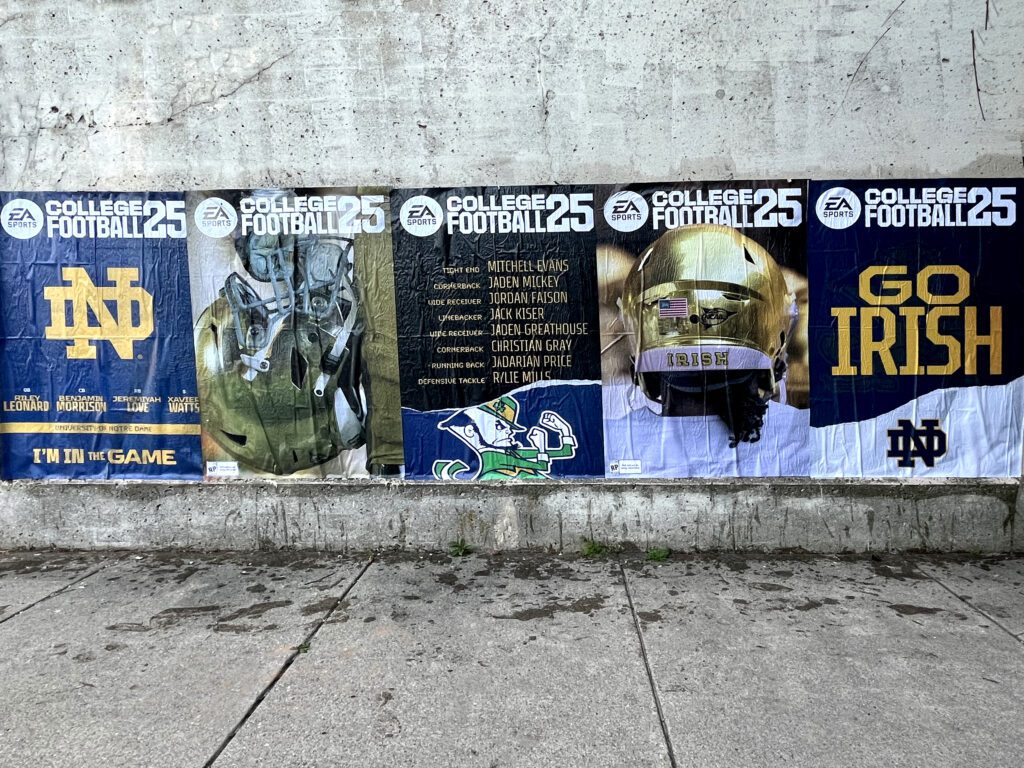
American Guerrilla Marketing brings the same in-house execution model to Fort Smith that has earned an industry-recognized Best of Brooklyn award and executed campaigns for clients including Shepard Fairey, EA Sports, and Netflix: our own crews, GPS-documented installation, and photo reporting delivered to your team for every placement. No subcontractors, no dropped balls, no surfaces billed but not delivered.
Fort Smith's revitalization corridor is one of the most active fly posting environments in Arkansas right now. AGM installs, documents, and reports — in-house crews, GPS-verified placement proof, no subcontractors. Let's build your campaign plan.
Select a city to explore Fly Posting Advertising opportunities.
The Fort Smith fly posting opportunity is concentrated in three distinct zones that each attract different audience compositions. Understanding the character of each corridor helps brands decide whether a focused single-zone campaign or a multi-zone spread across the downtown area makes more strategic sense for their specific objectives.
The primary commercial artery of downtown Fort Smith, Garrison Avenue runs east-west through the core of the revitalization zone and carries the highest pedestrian concentration of any street in the city’s central district. The galleries, restaurants, and bars that have opened along Garrison over the past several years have shifted the corridor’s identity from purely utilitarian commercial toward something with genuine cultural character — a place people choose to go rather than simply pass through. The buildings along Garrison Avenue tend toward the substantial scale of late-19th and early-20th century commercial construction, which means wall faces are larger than in most residential-adjacent streets, creating excellent surfaces for both standard 24×36 poster sequences and the kind of large-format 48×72 dominant placements that make a campaign feel architecturally integrated with the environment rather than just slapped on.
Belle Grove is one of the largest concentrations of Victorian-era architecture in the Arkansas River Valley — a neighborhood of ornate commercial buildings, converted historic homes, and carefully maintained streetscapes that has become a destination for heritage tourism, gallery visits, and architectural appreciation. The district attracts visitors specifically because it’s interesting to walk through, which generates the kind of leisurely pedestrian traffic — people who are looking around, noticing their environment, willing to stop and read — that is ideal for fly posting. Surfaces in and around Belle Grove include construction and renovation project barriers on buildings undergoing the historic restoration that the district’s revival requires, as well as blank wall faces on commercial buildings at district edges where residential and commercial character transitions. The audience here skews slightly older and more affluent than the core Garrison Avenue bar-district crowd — art patrons, design professionals, and heritage tourism visitors who bring significant purchasing power and cultural engagement to the corridor.
The broader downtown Fort Smith area — the blocks surrounding the federal courthouse complex, the civic center, the Fort Smith Regional Art Museum, and the commercial district that radiates from Garrison Avenue — represents the connective tissue of the city’s revitalization geography. This zone sees consistent weekday foot traffic from government workers, legal professionals, healthcare employees, and civic-sector workers who form the professional backbone of the downtown economy, layered with weekend foot traffic from the entertainment and dining visitors who fill Garrison Avenue’s growing restaurant and bar scene. Fly posting in the downtown core reaches the working professional who passes the same walls five days a week — building frequency and brand familiarity in a way that one-time exposure events cannot achieve — as well as the less-frequent weekend visitor who encounters the campaign fresh in a positive social context.
Fort Smith sits in an interesting market position: it’s large enough to deliver meaningful campaign reach (the city proper tops 90,000 residents and the regional metro draws from a significantly larger population), but it hasn’t yet attracted the national brand attention that drives up street-level advertising costs in markets like Fayetteville or Little Rock. That gap represents a genuine pricing efficiency for brands willing to look past the obvious Arkansas markets.
The brands that benefit most from this efficiency are those targeting a 25–40 professional demographic that either lives in Fort Smith or works in the downtown commercial zone. That demographic is precisely the one that has been the primary engine of the Garrison Avenue revitalization — young professionals who chose to invest in the downtown area, opened businesses, renovated buildings, and established the cultural infrastructure that is now drawing more activity into the corridor. They are brand-conscious, socially engaged, and deeply invested in the identity of the neighborhood they’re helping build. A fly posting campaign that treats their neighborhood as a serious market — with well-designed, professionally executed creative work — communicates brand values in ways that demographic specifically respects.
The regional draw of Fort Smith also deserves more credit than it typically receives in media planning conversations. Sebastian County is the third-most-populous county in Arkansas, and Fort Smith anchors a bi-state metropolitan area that includes communities in eastern Oklahoma. A fly posting campaign in the Garrison Avenue corridor reaches not only the Fort Smith resident but the regional shopper from Van Buren, Greenwood, Roland, and Sallisaw who makes regular trips into downtown Fort Smith for dining, entertainment, and retail — an audience that has no equivalent exposure to street poster advertising in their own communities.
Award Winning Personalized Service
You will get thoughtful, devoted, and individualized attention from our experienced, qualified, and professional personnel. Being one of the most illustrious agencies in Brooklyn, New York, American Guerrilla Marketing has been awarded the Best of Brooklyn title.
Nationwide
Industry City, Brooklyn, New York 11232
American Guerrilla Marketing
Hours
Mon - Fri: 9 AM - 5 PM
Sat & Sun: Closed
Automate your campaign with AGM’s Request for Proposal Builder. Simply answer a few quick questions about your campaign goals, markets, and timeline, and the system will generate a tailored presentation with recommended strategies, quantities, and pricing. Click the RFP Builder to instantly receive your customized proposal.
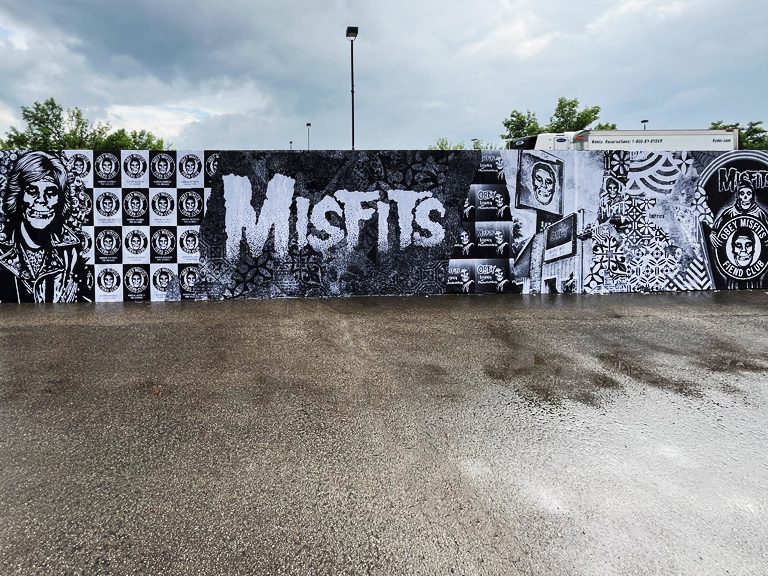
When AGM partnered on installations for Shepard Fairey’s Sonic Temple Festival 2024 work in Columbus, Ohio, the execution required a combination of large-format technical precision and the kind of creative sensitivity that major artists demand from their execution partners. Shepard Fairey has defined the aesthetic language of contemporary street art — his OBEY Giant work established a global visual vocabulary that millions of people recognize. Executing installations at that level of creative ambition requires crews who understand that the execution quality is itself part of the creative statement.
The Sonic Temple campaign demonstrated AGM’s capability at the large-format end of the fly posting spectrum — the 48×72 and larger installations that turn a building face into a visual anchor for an entire block. In Fort Smith’s Garrison Avenue corridor, that scale of execution is particularly relevant given the substantial building faces available along the street’s older commercial architecture. Brands that want to establish a dominant visual presence in the Fort Smith downtown — rather than simply achieving coverage — have the surface environment to support the kind of large-format, architecturally integrated poster work that the Shepard Fairey campaign exemplified.
The Sonic Temple partnership also reflects the client caliber that AGM brings to every execution regardless of market size. The same attention to installation quality, surface preparation, and creative execution that the Fairey campaign demanded in Columbus is what AGM applies to every Fort Smith campaign — because the creative work deserves it regardless of whether the market is a coastal city or a revitalizing downtown corridor in the Arkansas River Valley.
Fort Smith’s building scale is a genuine strategic asset. The older commercial construction along Garrison Avenue presents wall faces that are simply larger than what’s available in most newer commercial corridors — 20-foot blank walls on the side of a two-story Victorian commercial building are not uncommon in the Belle Grove zone and along the Garrison Avenue corridor’s older blocks. That surface scale makes Fort Smith one of the more suitable Arkansas markets for large-format 48×72 installations that would look proportionally overwhelming in a corridor with smaller building faces.
100 posters: contact us for pricing
200 posters: contact us for pricing
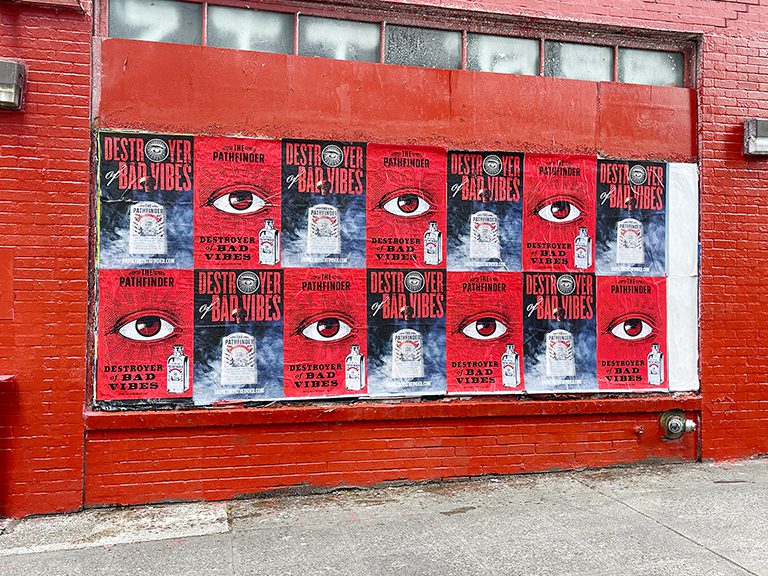
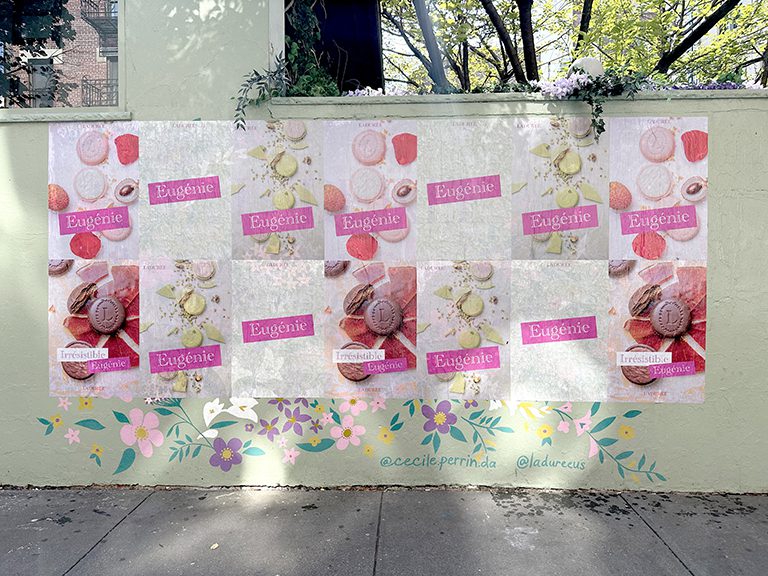
The standard format runs in sequential groupings on construction hoardings, blank commercial walls, and utility-adjacent structures throughout the Garrison Avenue corridor and the downtown core. For campaigns prioritizing coverage density across multiple blocks of the revitalization corridor — hitting as many pedestrian touchpoints as possible across the campaign window — the 24×36 format delivers the most impressions per campaign dollar. Additional creative designs: Contact us for pricing. . 72-hour rush production available up to 500 quantity.
100 posters: contact us for pricing
200 posters: contact us for pricing
The large format is exceptionally well-suited to Fort Smith given the building scale of the Garrison Avenue corridor. A well-placed 48×72 installation on the blank face of a substantial Victorian commercial building creates a visual statement that reads from across the street, registers from a moving vehicle on the parallel access road, and provides the kind of photogenic street presence that generates organic social documentation. For launch campaigns and brand debut moments in the Fort Smith market, the 48×72 format creates authority that density campaigns alone cannot achieve. Additional creative designs: Contact us for pricing. .
Fort Smith campaign planning begins with an understanding of your target audience within the city’s geography. The weekday professional workforce that populates the downtown core follows predictable patterns — commute corridors along Garrison and Rogers Avenues, lunch routes between the courthouse complex and the Garrison restaurant corridor, after-work social movement toward the bars and music venues that have opened in the revitalization zone. AGM’s crew familiarity with these patterns shapes surface selection to put your campaign in the path of that professional audience during the hours when it’s most active.
Weekend traffic in Fort Smith follows a different pattern — the regional audience driving in from surrounding communities concentrates around the entertainment corridor along Garrison Avenue, the River Market area near the Arkansas River, and the retail zones south and west of the downtown core. Campaigns targeting this regional Saturday audience benefit from surface selection that prioritizes the entry routes into downtown Fort Smith from the US-64 corridor and I-540 approaches — the walls that regional visitors pass on the way into the city before they reach the core entertainment zone.
Installation in Fort Smith happens on approved surfaces — construction site hoardings on the active renovation projects that are a constant feature of the revitalization corridor, blank commercial walls with property owner agreements, and permitted structures in the downtown core. Every placement is GPS-tagged and photographed at installation. Post-campaign reporting delivers a complete documentation package to your team, organized by address and GPS coordinate, so you can verify coverage across every dollar of campaign investment. The wheat-based adhesive used is environmentally responsible and pressure-washes clean when the campaign window closes.
Campaign duration in Fort Smith typically runs one to two weeks. The River Valley climate — hot and humid summers, mild winters — affects surface adhesion conditions in ways that AGM crews factor into both the installation technique and the campaign timing recommendations provided during planning. Summer campaigns require more careful adhesion management; fall and spring campaigns offer the most favorable weather conditions for maximum poster durability throughout the campaign window.
The Fort Smith fly posting market is most productive for brands whose target audience aligns with the demographics driving the downtown revitalization — young professionals, arts community members, regional commercial visitors, and the family and civic audiences that participate in the city’s growing cultural programming. These are the specific industry categories that generate the strongest results in the Fort Smith street environment.
One of the most underappreciated aspects of fly posting in Fort Smith is the regional amplification effect. Fort Smith is not just a city — it’s the commercial anchor of a bi-state regional economy spanning eastern Arkansas and eastern Oklahoma. On any given Saturday, a meaningful percentage of the people walking Garrison Avenue drove in from Van Buren, Greenwood, Alma, Barling, Fort Coffee, Roland, or Pocola. These regional visitors have no equivalent exposure to street poster advertising in their own communities, which means their Fort Smith encounter with your campaign creative is not one of dozens of impressions received in a saturated advertising environment — it’s one of the few physical brand messages they’ve seen all week.
That low-clutter regional context makes the Fort Smith impression more valuable per contact than an equivalent impression in a more advertising-dense market. The regional visitor is not habituated to the visual noise of a major metro street environment. When they see a well-executed fly posting campaign on Garrison Avenue, it registers. It gets noticed, remembered, and frequently photographed — because it’s genuinely different from what they encounter in the smaller communities where they spend most of their daily lives.
For brands with distribution across the River Valley region — in retail channels, food service, healthcare, or entertainment — the Fort Smith fly posting campaign functions as a regional broadcast from a single installation location. The posters stay up in Fort Smith while the audience comes to them from surrounding communities, concentrating regional exposure in a single installation effort rather than requiring individual campaigns in each smaller community across the region.
The ongoing downtown revitalization investment along the Garrison Avenue corridor has created two simultaneous advantages for fly posting campaigns: a supply of premium construction-barrier posting surfaces from active renovation projects, and a growing arts-and-dining audience of young professionals who chose to invest in the downtown area and are particularly receptive to well-executed street-level creative work. The combination makes Fort Smith a more productive fly posting market right now than at any previous point in the city’s commercial history.
The densest pedestrian concentration on Garrison Avenue occurs in the blocks between North 6th Street and North 11th Street, where the greatest concentration of operating restaurants, bars, and galleries generates consistent evening and weekend foot traffic. The blocks immediately adjacent to the Fort Smith Regional Art Museum see elevated pedestrian activity during exhibition openings and programming events. AGM surface selection prioritizes the highest-traffic sections of the corridor based on your campaign timing and target audience profile.
Belle Grove’s pedestrian character — people walking to appreciate architecture, visit galleries, and explore the district’s historic character — generates the kind of leisurely, observant foot traffic that reads and retains poster creative more effectively than commuter-speed passersby. The district’s audience also skews toward arts patrons and design-aware consumers who notice and respond to high-quality creative execution. Including Belle Grove surfaces in a Fort Smith campaign extends reach to an audience segment meaningfully different from the core Garrison Avenue bar-district crowd.
Fort Smith’s older commercial construction along Garrison Avenue presents building faces that are large enough to support the 48×72 format far more effectively than most commercial corridors of comparable population size. For brands that want a dominant visual statement rather than density coverage, Fort Smith is one of the few Arkansas markets where the large-format installation looks proportionally correct on the available wall surfaces rather than being squeezed into a space it doesn’t quite fit. The 24×36 format remains the better choice for coverage-density campaigns across multiple blocks.
AGM’s crew conducts advance surface reconnaissance in Fort Smith to identify the highest-quality approved posting locations — prioritizing construction project hoardings on active renovation sites, blank commercial walls with property owner agreements, and utility-adjacent structures in the downtown core. Sightlines, pedestrian approach angles, and proximity to high-traffic intersections all factor into surface selection. The goal is surfaces that are seen, not just covered, by the maximum number of people in your target demographic.
Yes — this is one of Fort Smith’s most distinctive advantages as a fly posting market. Because the city serves as the commercial hub for a regional audience from Sebastian County, Crawford County, and eastern Oklahoma, a campaign installed in the Garrison Avenue downtown corridor reaches regional visitors who drove in specifically because Fort Smith is their primary destination for dining, entertainment, and shopping. That regional amplification expands the effective reach of a Fort Smith campaign substantially beyond the city’s resident population.
Installation in Fort Smith typically occurs over one to two nights, depending on the total poster count and the geographic spread of the campaign location plan. A focused 100-poster Garrison Avenue corridor campaign can typically be completed in a single installation night. Campaigns covering the broader downtown core, Belle Grove, and multiple corridor zones may require two installation nights to maintain crew quality standards at each individual placement. GPS photo documentation is captured during installation and compiled into the post-campaign reporting package.
Brands targeting the 25–40 young professional demographic that has been the primary engine of Garrison Avenue’s cultural and commercial revival get the most direct audience alignment from Garrison Avenue fly posting. Beyond that core demographic, arts and cultural event promoters, food and beverage brands with regional distribution ambitions, music and entertainment releases, and outdoor lifestyle brands targeting the River Valley outdoor recreation community all find strong audience alignment in the Garrison Avenue corridor and surrounding downtown zone.
Established commercial corridors in larger markets like Little Rock or Fayetteville have fully built-out retail and dining environments with lower availability of premium construction-barrier posting surfaces. Fort Smith’s active revitalization means there is currently a higher-than-average supply of those premium surfaces — construction hoardings on renovation projects — exactly when the audience flowing into the corridor is at its fastest growth rate. That supply-and-audience alignment creates a window of fly posting opportunity that is genuinely better right now than it will be once the revitalization stabilizes and construction surfaces become less abundant.
Yes. AGM can introduce a second creative design at any point during the campaign window — either replacing initial placements on a scheduled rotation or supplementing with new surfaces to increase coverage. Adding a second creative design to a 24×36 campaign runs Contact us for pricing. . For campaigns that want to A/B test creative performance in the Fort Smith market, a split installation with two designs across different zones of the corridor provides directional data on which creative resonates more strongly with the audience in each location.
Post-campaign reporting for Fort Smith campaigns includes a GPS-coordinate-organized photo documentation package showing every placement — surface, location, creative condition at time of installation. The report is delivered to your team within the agreed reporting window after installation completes. Photos are organized by street address and GPS coordinate, and the full package serves as verifiable proof of installation for internal marketing reporting, agency documentation, and media audit purposes.
Yes. AGM works with property owners and site managers in Fort Smith to identify and secure approved posting surfaces before any campaign installation begins. Construction project managers, commercial building owners, and property management companies are all part of the surface approval process. This ensures every placement is legally permitted, that surfaces are appropriate for installation quality, and that there are no removal requests that would cut the campaign duration short. Only confirmed approved surfaces go into the final campaign location plan.