🚀 NEW WHEATPASTING MARKETS Discover our wheatpasting campaigns in : 🇬🇧 London • 🇨🇦 Canada • 🇲🇽 Mexico City

American Guerrilla Marketing

Nationwide Service

Media planning, media buying, billboard advertising, & guerrilla marketing

Fly Posting in San Antonio, TX

Sidewalk Decals Advertising in San Antonio, TX

From the Pearl District to Southtown to King William — fly posting campaigns that capture San Antonio’s spirit.

Guerrilla Poster Advertising in the Alamo City

San Antonio is the seventh-largest city in the United States and occupies a cultural position that is genuinely unlike any other major American urban market. With a city population of 1.5 million and a metropolitan area of 2.6 million, San Antonio is a significant market by any measure — but it’s the city’s demographic and cultural depth that makes it extraordinary for fly posting campaigns. San Antonio is 63% Hispanic and Latino, making it the most authentically Latino large city in America. It is simultaneously home to five major military installations — Joint Base San Antonio, Lackland Air Force Base, Randolph Air Force Base, Fort Sam Houston, and Camp Bullis — with 80,000 or more active duty military personnel and a total military-connected community that some estimates place above 250,000 people when dependents, veterans, and civilian workers are included. These two defining communities — the deep-rooted Tejano cultural tradition and the highly organized military population — shape San Antonio’s consumer landscape in ways that are invisible to brands relying on national demographic averages and highly legible to fly posting campaigns designed with local intelligence.

San Antonio’s tourism economy adds a third dimension. The River Walk — a 15-mile network of riverside walkways through downtown San Antonio — attracts over 40 million visitors per year, making it one of the most visited tourist attractions in the United States. The Alamo, Mission San José, and the broader San Antonio Missions UNESCO World Heritage Site draw heritage tourists from around the world. The Pearl District, a luxury mixed-use development built on the site of the historic Pearl Brewery, hosts a farmers market that draws 20,000 or more attendees on peak weekend mornings and has become one of the most celebrated urban public spaces in Texas. This tourism infrastructure creates a permanent stream of visitor foot traffic through San Antonio’s most active neighborhoods — visitors who are in an active discovery and consumption mindset, walking rather than driving, and receptive to the kind of brand discovery that fly posting provides at its best.

The Alamo City’s university population — more than 100,000 students across the University of Texas at San Antonio, Trinity University, St. Mary’s University, and the San Antonio College system — is concentrated in neighborhoods adjacent to the city’s most active entertainment corridors. UTSA’s downtown campus, opened in 2022 with initial enrollment growing rapidly toward its target of 10,000 students, sits within walking distance of the Pearl District and Tobin Hill. Trinity’s campus is minutes from the Pearl on the city’s north side. St. Mary’s University feeds directly into the Tobin Hill and North St. Mary’s Strip bar scene that runs along N. St. Mary’s Street between downtown and the Quarry District. These students represent San Antonio’s most brand-receptive demographic — young adults at the life stage where cultural affinities and brand loyalties are most actively being formed, concentrated in the exact neighborhoods where fly posting is most effective.

San Antonio also hosts Fiesta San Antonio, one of the largest civic celebrations in the United States. Eleven days each April, Fiesta draws 3.5 million people to street events, parades, concerts, and neighborhood parties across the city. The Battle of Flowers Parade through downtown, the Fiesta Flambeau parade along Broadway Street, the NIOSA (Night in Old San Antonio) celebration in La Villita, and the Texas Cavaliers River Parade along the River Walk collectively generate the kind of pedestrian concentration that makes fly posting campaigns placed in the days before Fiesta begins some of the most impactful placements AGM executes anywhere in the country. For brands that want to reach San Antonio at its most culturally alive, Fiesta timing is the most powerful campaign window of the year.

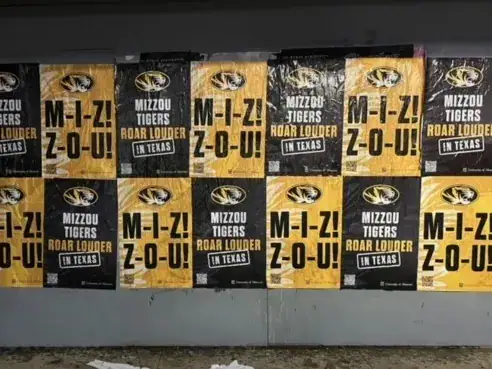
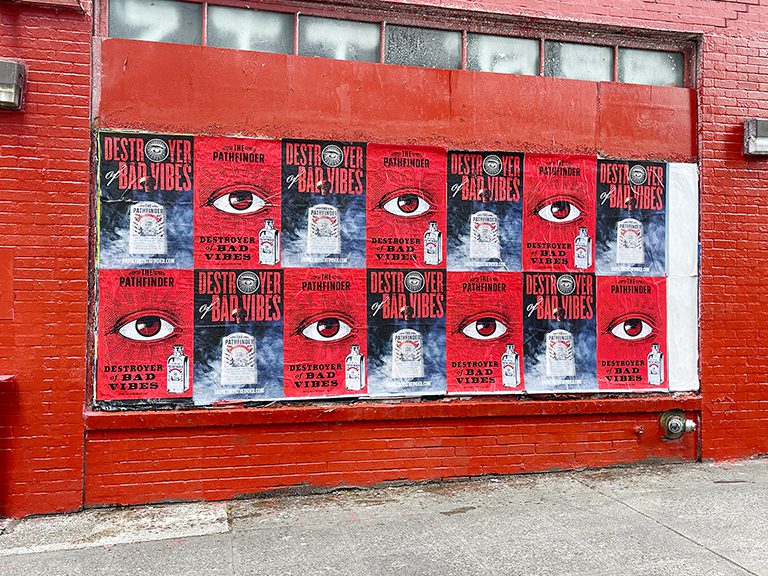
Ready to Plaster San Antonio?

From the Pearl District's farmers market walls to Southtown's First Friday galleries to Tobin Hill's late-night music strip — AGM puts your campaign on the surfaces that San Antonio's most engaged communities walk past every day. Get your free San Antonio campaign quote.

Browse Cities in Texas

Select a city to explore Fly Posting Advertising opportunities.

What Is Fly Posting — The San Antonio Heritage Perspective

San Antonio’s relationship with public visual communication is three centuries old. The city’s history — as a Spanish colonial settlement, a Mexican state capital, a contested battleground for Texas independence, and the most culturally continuous major city in the American Southwest — has produced a tradition of public visual culture that makes fly posting feel not like an import from somewhere else but like a natural expression of the city’s communicative identity. In a city where the missions speak through their façades and the Fiesta’s cascarones, flowers, and ribbons transform every public space into a canvas, the idea of meaningful imagery on urban walls is native rather than foreign.

The Tejano music tradition is perhaps the most vivid illustration of this heritage. Tejano concerts in San Antonio’s South Side and West Side venues have been announced through handbill and poster culture for generations — long before digital promotion existed, San Antonio’s Mexican-American community built its live music economy through the physical presence of imagery on walls, telephone poles, and storefront windows. When a contemporary fly posting campaign appears on the walls of Southtown’s South Alamo Street corridor, it is participating in a visual tradition that local audiences recognize, whether consciously or not, as authentically belonging to their city’s cultural landscape. That recognition translates to a quality of engagement — a sense that the campaign is speaking the neighborhood’s language rather than broadcasting into it from outside.

The military dimension of San Antonio’s cultural identity adds another layer to fly posting’s effectiveness here. Military communities are characterized by strong social cohesion, high in-group communication density, and a tendency toward brand loyalty once trust is established. They are also communities with predictable geographic concentration — military families near Lackland live along specific corridors south and west of downtown; personnel connected to Fort Sam Houston cluster in the Government Hill and Alamo Heights neighborhoods to the north. A fly posting campaign that reaches the military community in these geographic zones reaches an audience that talks to each other, makes purchasing decisions communally, and remembers where they first encountered a brand. In San Antonio, the military community is not a niche audience — it is one of the city’s two or three defining demographic forces, and fly posting campaigns designed with their geography and culture in mind deliver a quality of community reach that digital targeting struggles to replicate.


San Antonio Fly Posting Pricing

AGM’s San Antonio fly posting packages include complete location scouting across the city’s highest-value entertainment and cultural corridors, professional installation, and full photo documentation delivered within 48 hours. San Antonio campaigns can be paired with other Texas market placements for statewide coverage.

Contact AGM for custom statewide Texas pricing that includes San Antonio alongside Houston, Dallas, and Austin. Fiesta season and Spurs playoff timing packages are available with advance booking.

Build Your Fly Posting Campaign

    Award Winning Personalized Service

    You will get thoughtful, devoted, and individualized attention from our experienced, qualified, and professional personnel. Being one of the most illustrious agencies in Brooklyn, New York, American Guerrilla Marketing has been awarded the Best of Brooklyn title.

    Nationwide

    Industry City, Brooklyn, New York 11232

    American Guerrilla Marketing

    +1 (646) 776-2770

    [email protected]

    Telegram: @americanguerillamarketing

    Hours

    Mon - Fri: 9 AM - 5 PM

    Sat & Sun: Closed

    Automate your campaign with AGM’s Request for Proposal Builder.

    Automate your campaign with AGM’s Request for Proposal Builder. Simply answer a few quick questions about your campaign goals, markets, and timeline, and the system will generate a tailored presentation with recommended strategies, quantities, and pricing. Click the RFP Builder to instantly receive your customized proposal.

    Campaign Strategy For San Antonio

    Fly posting strategy in San Antonio requires a more nuanced cultural calibration than almost any other Texas market. The city’s 63% Hispanic and Latino population means that campaigns which feel generic, tone-deaf, or culturally uninformed underperform significantly, while campaigns that demonstrate authentic cultural awareness and respect consistently outperform national benchmarks for engagement. AGM’s San Antonio work begins with a cultural briefing process — understanding not just where your audience is located but how they relate to the visual tradition of their community and what kinds of campaign imagery will feel native versus imported. This is not a patronizing exercise in demographic targeting; it is a fundamental requirement for competent marketing in a city where cultural identity is the organizing framework of daily life.

    The Pearl District and Southtown represent San Antonio’s two most commercially developed entertainment corridors, and they serve distinct but overlapping audiences. The Pearl, centered on E. Grayson Street and Broadway Street in the Museum Reach neighborhood, draws a more affluent, tourism-adjacent crowd that includes out-of-town visitors, local professionals, and the UTSA downtown campus community. The Pearl’s weekend farmers market is one of the best-attended public markets in Texas, and its restaurant and retail mix attracts the kind of discretionary-income consumer who makes brand decisions in leisure contexts. Southtown, anchored by South Alamo Street between downtown and the Blue Star Arts Complex, draws San Antonio’s arts and creative community — local artists, gallery visitors, restaurant industry workers, and the neighborhood-loyal residents of King William and the surrounding historic blocks. Both corridors reward fly posting, but they require different creative tones and different placement strategies to achieve the quality of audience alignment that makes a campaign feel locally right rather than generically present.

    The North St. Mary’s Strip — N. St. Mary’s Street between downtown and the neighborhoods immediately north, sometimes called “the Strip” by local residents — is San Antonio’s most concentrated late-night entertainment corridor. The area’s cluster of bars, the small music venue Sam’s Burger Joint (which books nationally touring punk, rock, and alternative acts in a 300-person capacity space with legendary intimacy), Paper Tiger, and the Lonesome Rose define a distinctly San Antonio nightlife culture that skews younger (21–32) and more musically engaged than the Pearl’s daytime crowd. Fly posting on the Strip reaches a demographic that’s actively building its music and cultural tastes, making it the right zone for record labels, touring promoters, and lifestyle brands targeting the early-adopter segment of San Antonio’s young adult population.

    The AT&T Center — home of the San Antonio Spurs and the city’s primary arena for touring concerts — provides a recurring event-timing opportunity that AGM coordinates around carefully. Spurs game nights, particularly high-profile matchups and playoff scenarios, concentrate foot traffic in the Bowie Street corridor and the downtown restaurant scene north of the AT&T Center. Campaigns that place posters in the Southtown and downtown corridors in the days before a high-profile Spurs home game benefit from the pre-game restaurant and bar circuit that San Antonio’s passionate basketball fanbase runs through on game evenings. The Spurs’ cultural significance in San Antonio — perhaps no other NBA franchise has more deeply integrated into its city’s identity — makes Spurs-adjacent campaign timing one of the highest-value event windows available in the San Antonio market.

    Fiesta San Antonio deserves specific strategic consideration for any brand launching or refreshing its San Antonio presence in the first half of the year. The celebration’s eleven-day span in April encompasses over 100 individual events across the city — from the NIOSA celebration in La Villita Historic Arts Village to the Fiesta Flambeau parade along Broadway Street to the Texas Cavaliers River Parade and dozens of smaller neighborhood events. AGM recommends pre-Fiesta campaign drops — posters going up in the Pearl, Southtown, King William, and Tobin Hill corridors three to five days before Fiesta’s opening — to establish campaign visibility before the influx of 3.5 million attendees maximizes street-level competition for visual attention. Brands that have used Fiesta timing for San Antonio fly posting campaigns consistently report both the highest impression counts and the highest social media amplification of any San Antonio campaign window.

    Neighborhood & Corridor Targeting in San Antonio

    Pearl District / Broadway Corridor

    The Pearl District is San Antonio’s most celebrated urban development success story — the historic Pearl Brewery complex, built between 1883 and 1894 on the north bank of the San Antonio River, has been transformed into a mixed-use neighborhood of restaurants, boutique hotels, offices, apartments, and retail anchored by the Hotel Emma and The Pearl’s weekend farmers market. The Saturday and Sunday market draws 20,000 or more attendees per day during peak season, creating extraordinary concentration of the city’s most affluent and culturally engaged residents in a compact walkable zone. The surrounding Broadway Street corridor extends the Pearl’s commercial footprint northward toward Alamo Heights, passing the San Antonio Museum of Art and the densely planted restaurant and bar strip between downtown and the Witte Museum. Poster surfaces in the Pearl are limited by the development’s design standards but abundant in the adjacent Broadway Street commercial corridor and the warehouse and light-industrial blocks immediately east and south of the core Pearl development.

    Southtown / South Alamo Street

    Southtown’s South Alamo Street corridor, running from downtown south past the Blue Star Arts Complex to the King William Historic District boundary, is San Antonio’s arts and gallery district — the zone where First Friday monthly art walks draw thousands of residents and visitors into a street-level gallery experience that has been running continuously for over two decades. The Blue Star Contemporary Art Museum anchors the southern end of the corridor, while the Rosella Coffee and restaurants including Biga on the Banks draw a broader arts-adjacent dining crowd throughout the week. Fly posting in Southtown reaches San Antonio’s arts community with exceptional precision — this is not a passing tourist crowd but a population of committed cultural participants who return to these streets weekly and notice what appears on the walls around them. The mix of older commercial buildings, warehouse facades, and urban-scale blank walls in the corridor provides excellent posting surfaces that hold posters well through San Antonio’s variable weather.

    Tobin Hill / N. St. Mary’s Strip

    The Tobin Hill neighborhood immediately north of downtown San Antonio is one of the city’s most rapidly gentrifying residential zones, drawing artists, young professionals, and UTSA downtown students in growing numbers. The N. St. Mary’s Strip along N. St. Mary’s Street is the neighborhood’s commercial spine — a concentration of bars, small music venues, and late-night restaurants that defines San Antonio’s indie music and nightlife scene. Sam’s Burger Joint, Paper Tiger, the Lonesome Rose, and Alamo City Music Hall collectively make this the highest-density live music zone in San Antonio outside of the downtown River Walk entertainment complex. The Strip’s late-night pedestrian population peaks between 9 PM and 2 AM on weekends, with additional mid-week activity driven by live music programming that draws dedicated music fans across the city. This is AGM’s top recommendation for music-focused San Antonio campaigns.

    King William Historic District

    The King William Historic District, San Antonio’s grandest Victorian-era residential neighborhood south of downtown, sits at the intersection of art, history, and community in a way that is distinctly San Antonian. The neighborhood’s beautifully preserved nineteenth-century mansions — built by German merchant families in the 1870s and 1880s — now house a mix of bed-and-breakfasts, artist studios, boutique residences, and event venues. The King William Cultural Arts District designation reflects the neighborhood’s contemporary function as home to working artists and cultural institutions. The King William Fair, held on the neighborhood’s grand streets each May, is one of San Antonio’s most beloved community events and draws 35,000 or more attendees. Fly posting in King William reaches the city’s cultural community in its home neighborhood — an audience that values creative craft and treats the visual environment of their streets with the same care they bring to the architecture that surrounds them.

    Five Points / W. Commerce Street Corridor

    The Five Points intersection at W. Commerce Street, Fredericksburg Road, and Culebra Road sits at the heart of San Antonio’s West Side — the most densely Latino neighborhood in the city and one of the most culturally significant Mexican-American communities in the United States. The corridor’s independent businesses, family restaurants, and community institutions reflect a commercial culture that has been owned, operated, and frequented by San Antonio’s Latino population for generations. Fly posting here requires the deepest cultural sensitivity and the most locally informed creative strategy of any San Antonio zone, but for brands with genuine cultural alignment and Spanish-language or bilingual creative capability, Five Points provides access to an audience that is underserved by conventional advertising and exceptionally loyal to brands that engage them authentically at the community level.

    Why Choose American Guerrilla Marketing?

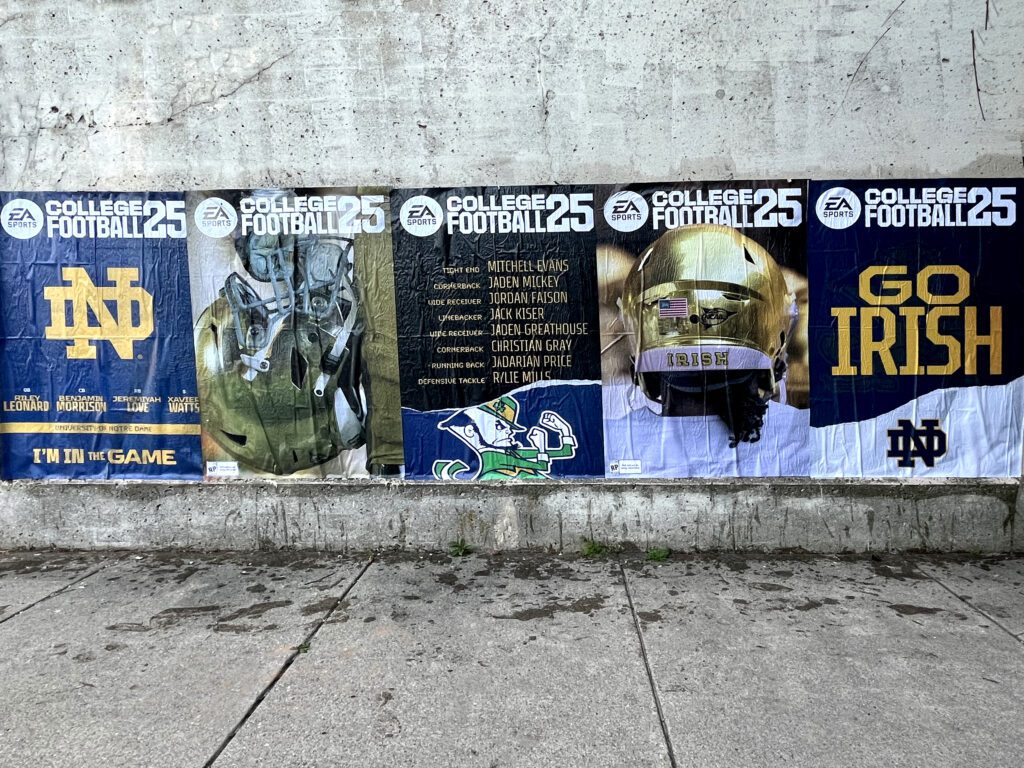
    American Guerrilla Marketing has executed campaigns for clients including Netflix, The Onion, EA Sports, Biossance, and Shepard Fairey — a roster that speaks to our ability to handle campaigns with demanding creative standards and precise operational requirements. In San Antonio specifically, our team brings cultural awareness that translates into better campaign outcomes. We understand that San Antonio is not a generic Texas market — it is the most Latino large city in America, the most military-concentrated city in America, and a tourist destination with a contact us for pricing billion annual visitor economy, all layered into a single medium-sized city with distinct neighborhood identities that require specific, locally informed placement strategies.

    Our San Antonio campaign process begins with a cultural context conversation that most guerrilla marketing vendors skip entirely. We ask about your brand’s relationship to the Latino and military communities in this market, what language your creative speaks, and what cultural signals your campaign sends to a neighborhood whose residents have been defining their community’s visual identity for 300 years. That conversation informs placement decisions that go beyond demographic geography — it determines whether your campaign will be received as a natural addition to a neighborhood’s visual landscape or as a generic intrusion from a brand that didn’t do its homework. The difference in reception between those two outcomes is measurable in engagement, in social sharing, and ultimately in the commercial impact your campaign achieves.

    Operationally, our San Antonio crew maintains active relationships with surface owners in the Pearl, Southtown, Tobin Hill, and King William corridors — relationships that give our clients access to the best posting surfaces in each zone rather than the leftover walls that other vendors settle for. Every San Antonio campaign is documented with full timestamped photography, delivered within 48 hours of installation, and organized by neighborhood and individual placement so clients can verify campaign execution from anywhere in the country.

    San Antonio Fly Posting FAQ

    Reaching San Antonio’s Latino community with cultural authenticity requires more than placing posters in Latino neighborhoods — it requires creative that earns its place on the walls of those communities. AGM’s approach to culturally aligned campaigns in San Antonio begins with an honest assessment of the brand’s positioning relative to the city’s Latino cultural identity: Does the creative use imagery, language, and aesthetic references that resonate with the community’s own sense of itself? Does the campaign feel like it was made with knowledge of Tejano culture, San Antonio’s culinary heritage, the Fiesta tradition, and the neighborhood’s own visual language? Spanish-language or bilingual creative is a starting point, not an endpoint. The neighborhoods of the West Side, the South Side, and the East Side each have specific cultural identities within the broader Latino community, and campaigns that engage with that specificity — rather than treating all of San Antonio’s Latino neighborhoods as interchangeable — achieve demonstrably better engagement. AGM can advise on placement strategies and creative direction that positions your campaign as a respectful participant in these communities rather than a generic advertiser passing through.

    San Antonio’s highest consistent pedestrian traffic concentrations occur in five zones. The Pearl District on weekend mornings during farmers market hours — Saturday and Sunday from 9 AM to 1 PM — draws 15,000 to 20,000 or more attendees into a compact walkable space. The River Walk through downtown is the city’s highest total volume pedestrian zone, with 40 million annual visitors, though the tourist-oriented character of the River Walk crowd and the limited posting surfaces in the River Walk corridor itself mean that adjacent streets and the downtown entertainment district around it provide better campaign value than the walk itself. Southtown’s South Alamo Street peaks on First Friday evenings and weekend afternoons. The N. St. Mary’s Strip reaches its peak on Friday and Saturday nights after 9 PM. During Fiesta San Antonio each April, the Fiesta parade routes along Broadway, Commerce, and St. Mary’s Street generate extraordinary pedestrian concentration — potentially the highest single-event foot traffic in San Antonio’s annual calendar outside of the Spurs’ most celebrated playoff runs.

    Yes, though military community targeting in San Antonio requires geographic precision and an understanding of where military families and personnel live and socialize outside the bases themselves. Active duty military personnel are concentrated in residential corridors south and southwest of downtown near Lackland, in the Government Hill neighborhood north of Fort Sam Houston, and in the suburban communities of Converse, Universal City, and Schertz near Randolph. The entertainment venues and restaurants that the military community frequents most heavily are clustered in the downtown River Walk area, along Fredericksburg Road, and in the Loop 1604 suburban commercial zones that serve the communities adjacent to each installation. AGM’s approach to military community targeting in San Antonio combines downtown and near-downtown placements — where military personnel socialize on leave — with targeted neighborhood placements in the specific residential corridors where military families live. Brands that resonate strongly with military culture, such as fitness, apparel, sports, and consumer tech, have found San Antonio’s military community to be one of the most brand-loyal and word-of-mouth-active audiences in the Texas market.

    The Pearl District and Southtown serve different audiences and produce different ROI profiles depending on campaign objectives. The Pearl delivers superior ROI for premium consumer brands, food and beverage launches, and hospitality campaigns targeting the affluent, tourism-adjacent, culturally engaged consumer. The Pearl’s demographic is slightly older (30–50) with higher household income and a strong record of discretionary spending on quality experiences. Southtown delivers superior ROI for entertainment brands, arts-adjacent consumer campaigns, and any brand that needs to establish credibility with San Antonio’s arts community rather than simply reaching a large volume of high-income consumers. Southtown’s audience includes the artists, gallery operators, creative professionals, and community arts advocates who determine what is culturally relevant in San Antonio — an audience whose endorsement through social sharing and word of mouth amplifies campaign impact beyond what impression counts alone suggest. The strongest San Antonio campaigns often use both zones simultaneously, allocating budget and format to each based on these distinct ROI drivers.

    Yes — Fiesta and Spurs playoff timing are two of AGM’s most requested San Antonio campaign windows, and both require advance planning to execute effectively. For Fiesta, AGM recommends booking the campaign three to five weeks before the celebration’s April start date. The pre-Fiesta window allows time for location scouting, surface confirmation, and poster production, and AGM’s recommended campaign timing targets installation three to five days before Fiesta’s opening events — getting posters on walls before the initial surge of 3.5 million eventual attendees begins filling the city’s streets. For Spurs playoff campaigns, timing is necessarily more reactive since playoff schedules aren’t known far in advance, but AGM maintains a San Antonio rapid-response protocol specifically for Spurs post-season scenarios that can execute a campaign within 72 hours of a booking confirmation. Both event windows generate social media amplification well above normal San Antonio campaign baselines because the events themselves are photographed and shared extensively, and posters in the background of event photography reach far beyond their physical location.

    San Antonio’s fly posting market has developed strongest demand from four industry categories. Music and live entertainment brands use San Antonio posting extensively for touring acts appearing at the AT&T Center (now Frost Bank Center), Paper Tiger, Sam’s Burger Joint, and the Majestic Theatre — all venues that draw passionate local audiences who actively seek music discovery information from the posters and street-level imagery they encounter in entertainment districts. Food and beverage brands with Texas regional distribution find San Antonio highly receptive, particularly brands with authentic cultural positioning that aligns with the city’s strong culinary identity rooted in Tex-Mex, BBQ, and the blended Mexican and American food culture unique to South Texas. Apparel and streetwear brands find the Pearl District and Southtown combination particularly effective for reaching San Antonio’s fashion-conscious creative class. And increasingly, cannabis lifestyle brands marketing accessories, apparel, and culture products — operating carefully within the bounds of Texas law — have found San Antonio’s young adult population to be a highly engaged fly posting audience for culturally aligned cannabis-adjacent campaigns.

    The River Walk’s 40 million annual visitors represent an extraordinary audience in volume terms, but the physical structure of the River Walk corridor and its predominantly tourism-oriented character create strategic nuances for fly posting placement. The River Walk itself — the sunken walkway along the San Antonio River below street level — has very limited posting surfaces and is managed under strict city regulations that prevent standard fly posting approaches. The higher-value tourist-facing placement opportunities are on the street-level commercial corridors immediately adjacent to downtown: Commerce Street, Houston Street, and St. Mary’s Street between the convention center and the entertainment district. Tourists who surface from the River Walk and explore these adjacent streets encounter fly posting campaigns in a discovery context — they’re already in an exploratory mindset, looking for experiences rather than destinations, and a well-placed campaign can redirect their attention and spending decisions effectively. AGM designs San Antonio campaigns that leverage tourist foot traffic on the street-level approaches to the River Walk rather than attempting to compete within the River Walk’s restricted posting environment.

    San Antonio’s climate presents a different set of challenges than Houston’s humidity — the city’s semi-arid environment, with summer temperatures regularly exceeding 100°F and relatively low annual rainfall outside of spring storm season, creates a heat-stress environment where certain paste formulations and paper stocks can fail prematurely through drying, cracking, or delamination at the edges. AGM’s San Antonio campaigns use paste formulations specifically designed for hot and dry surface conditions — formulations that maintain bond integrity through the city’s intense summer heat cycles without the moisture-related bubbling that is the primary failure mode in Houston. During spring storm season, which brings occasional heavy rainfall to San Antonio in March, April, and May, AGM uses weather-treated print stock and reinforced edge sealing to manage the brief but intense rainfall events that can saturate paper quickly. Under normal conditions, AGM targets a minimum two-week viable lifespan for San Antonio placements — and campaigns placed in the cooler months of October through February, when temperatures are more moderate and wind is the primary weather variable, regularly exceed three weeks of strong visibility.

    Cultural sensitivity in San Antonio isn’t a checkbox — it’s a campaign planning discipline that AGM treats as core to execution quality in this market. Our approach begins with a pre-campaign conversation about your brand’s cultural positioning relative to San Antonio’s Latino community: What language does your creative speak, literally and figuratively? What visual tradition does it draw from, and how does that tradition relate to the communities in the neighborhoods where you’re placing? Are there cultural reference points — Fiesta, Tejano music, the Missions, the culinary heritage — that your campaign can engage with authentically, or would such engagement feel forced given your brand’s actual identity? We help clients navigate these questions honestly, because a culturally tone-deaf campaign in San Antonio doesn’t just underperform — it can actively damage brand perception in a community with long cultural memory and strong social networks. For brands with genuinely aligned cultural positioning, AGM’s San Antonio campaigns are designed to feel like a natural expression of the community’s visual language. For brands with more distant cultural positioning, we counsel a respectful approach that acknowledges the neighborhood context without overreaching.

    Yes, and bilingual campaigns are among the most effective formats in San Antonio for brands targeting the city’s Latino community. AGM fully supports bilingual creative in the San Antonio market — our placement planning, print coordination, and crew execution process is format-neutral and works equally well with English-only, Spanish-only, or bilingual Spanish and English creative. For campaigns targeting the West Side, South Side, and other predominantly Spanish-speaking neighborhoods in San Antonio, Spanish-language or bilingual creative typically outperforms English-only material by a meaningful margin in terms of community reception and social sharing behavior. For campaigns targeting Southtown, the Pearl District, and the N. St. Mary’s Strip — which serve more demographically mixed audiences — bilingual creative that leads with Spanish and includes English acknowledges the neighborhood’s cultural character without excluding the English-primary segment of the audience. AGM recommends consulting with a native Spanish speaker or a San Antonio-based cultural consultant on the specific language and tone of bilingual creative before finalizing art for a San Antonio campaign — the difference between Tejano Spanish and generic Spanish-language marketing copy is immediately perceptible to San Antonio’s Latino community, and that difference materially affects campaign reception.

    Browse All States

    Explore Fly Posting Advertising opportunities across the United States.

    No locations found

    American Guerrilla Marketing Blog Posts