🚀 NEW WHEATPASTING MARKETS Discover our wheatpasting campaigns in : 🇬🇧 London • 🇨🇦 Canada • 🇲🇽 Mexico City

American Guerrilla Marketing

Nationwide Service

Media planning, media buying, billboard advertising, & guerrilla marketing

Fly Posting in South Bend, IN

Fly Posting in South Bend, IN

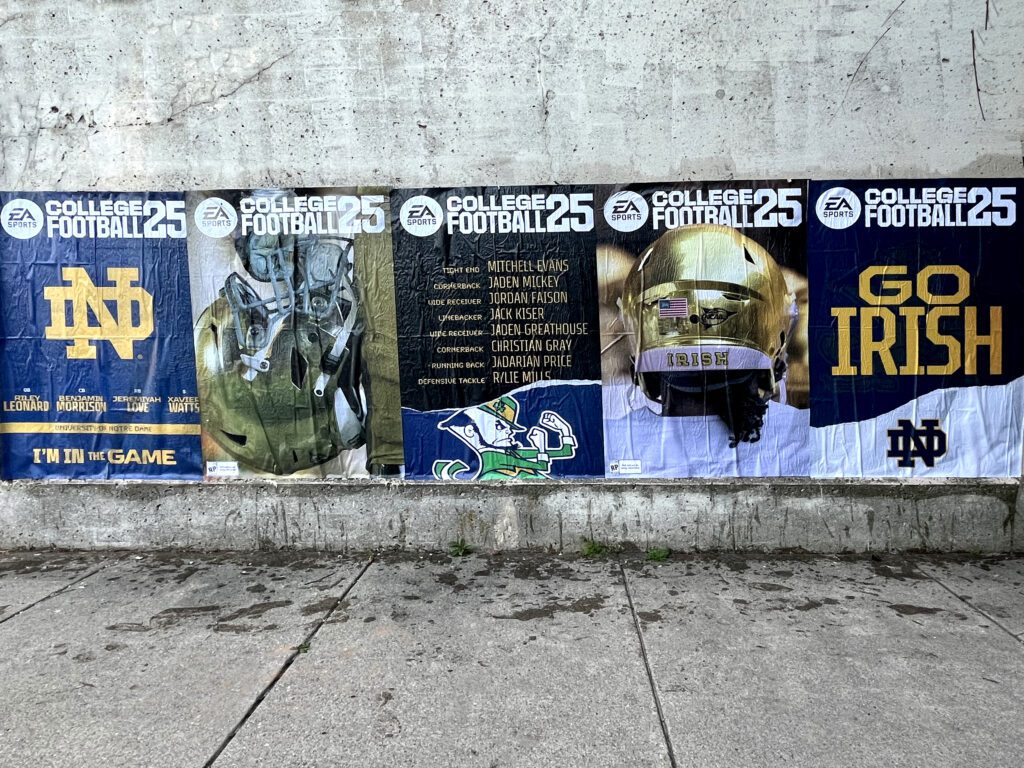
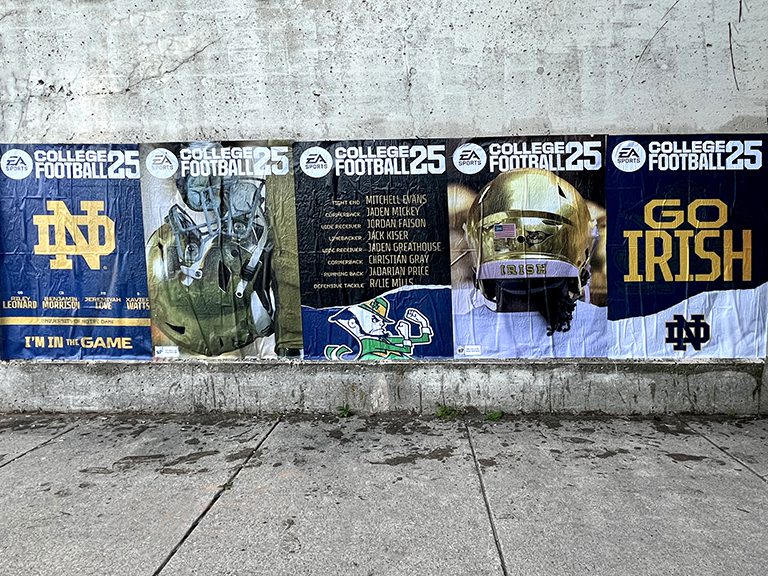
Notre Dame is one of the most powerful brand communities in American sports — and the campus-edge corridors where student and fan traffic concentrates on game weekends create a fly posting environment with no equivalent in northern Indiana. Downtown South Bend’s revival adds year-round pedestrian depth. AGM installs and documents every placement.

Notre Dame Campus Culture and South Bend’s Street Advertising Opportunity

There are university markets, and then there is Notre Dame. The difference isn’t enrollment numbers — Notre Dame’s undergraduate population of approximately 8,900 students is modest by state flagship standards — it’s the national brand gravity that the university exercises through its football program, its alumni network, and the cultural weight of the Fighting Irish identity across North American sports fandom. On a Notre Dame home football weekend, South Bend receives visitors from every state in the country: alumni traveling from New York, Chicago, Los Angeles, and Boston; families arriving for the collegiate experience that their student described all summer; fans who don’t have a personal connection to the university but treat Notre Dame games as pilgrimage events. The campus-edge corridors where this visitor population concentrates — along US-31, Angela Boulevard, and the streets connecting the campus perimeter to South Bend’s dining and entertainment zones — become high-pedestrian advertising environments that no other event in northern Indiana can replicate.

The strategic logic for fly posting in South Bend begins with those eight home football weekends per season. Each game weekend functions as a self-contained advertising event: a defined arrival window starting Thursday evening, a peak pedestrian density on Friday and Saturday, and a departure window Sunday morning. Wheat paste poster campaigns installed in the week before each home game reach the full game-weekend visitor audience at its highest concentration, then continue reaching the regular student and resident pedestrian population throughout the week that follows. The impression architecture of a South Bend campaign is thus structured around recurring weekly events rather than the sustained background density that drives campaigns in larger markets — a fundamentally different timing logic that rewards planning aligned to Notre Dame’s home schedule rather than generic seasonal assumptions.

Downtown South Bend has added a second, independent campaign dimension through the city’s Smart Streets infrastructure investment and the River District development that has concentrated new pedestrian activity in Colfax Avenue and Michigan Street corridors over the past several years. The downtown renaissance has made South Bend genuinely walkable and commercially active in ways that didn’t exist a decade ago — creating a fly posting environment that functions independently of the Notre Dame calendar, reaching South Bend residents, young professionals, and arts-community members through the year-round commercial and entertainment activity that downtown has generated.

The East Bank Village creative corridor along the St. Joseph River adds an arts-district dimension rooted in the adaptive reuse of the former Studebaker industrial campus — a narrative of creative economy emerging from manufacturing heritage that Fort Wayne also knows, but that South Bend executes through a different geographic and community character. Together, the Notre Dame campus edge, downtown South Bend, and the East Bank Village give fly posting campaigns in this market three distinct zones with three distinct audience profiles and three independent reasons to run.


Ready to Post in South Bend?

AGM executes fly posting and wheatpasting campaigns along the Notre Dame campus edge, through downtown South Bend, and into East Bank Village with in-house installation crews and GPS-documented reporting. Eight home game weekends. A national alumni audience. Your brand on the walls where they walk.

Browse Cities in Indiana

Select a city to explore Fly Posting Advertising opportunities.

Why South Bend Works For Street Poster Advertising

South Bend operates as a university market with national reach — which is the most important single sentence for understanding why fly posting here works differently than it does in any other Indiana city. When Notre Dame football draws 80,000 fans to Notre Dame Stadium for a home game, a meaningful percentage of that audience is encountering South Bend’s commercial and entertainment corridors while navigating the campus-edge and downtown environments during the extended game weekend. These visitors make restaurant reservations, visit downtown South Bend, and move through the pedestrian corridors where AGM places wheat paste campaigns. A brand visible in these corridors during a Notre Dame home weekend reaches an audience that includes Notre Dame graduates in their 30s and 40s with significant discretionary income, families traveling for the collegiate atmosphere, and out-of-state sports fans who are experiencing South Bend for the first time and forming impressions they carry home to markets that typically cost multiples of a South Bend campaign to reach directly.

South Bend’s downtown revival has transformed the Colfax Avenue and Michigan Street corridors into a genuinely active pedestrian environment anchored by restaurants, arts venues, and independent retail that didn’t exist at this density five years ago. The Morris Performing Arts Center on Michigan Street — a restored 1920s theater with a robust performing arts calendar — generates consistent event-night pedestrian traffic in the downtown corridor throughout the fall and winter seasons. The South Bend Cubs minor league baseball season through the summer brings family-oriented outdoor event audiences to Four Winds Field adjacent to the downtown core.

Notre Dame’s academic calendar creates a structured seasonal rhythm: the university is in full session from late August through early May, with the home football schedule from September through November concentrating the highest-density pedestrian windows within that academic period. Graduate students and faculty maintain campus-adjacent activity through winter and spring semesters even after the football season closes — sustaining a pedestrian demographic of higher average education and income than typical undergraduate campus markets.

Indiana’s third-largest city with approximately 103,000 residents is compact enough that fly posting campaigns achieve meaningful saturation within the key pedestrian zones at poster counts accessible to mid-size budgets. South Bend doesn’t require the massive campaign quantities that New York or Chicago demand to achieve pedestrian visibility — a focused 24×36 campaign in the campus-edge corridors and downtown can saturate the target geography efficiently because the walking distances between zones are short and the pedestrian audience moves through a contained network of connected streets.


South Bend Neighborhood Breakdown

Notre Dame Campus Edge

The corridors along US-31 north of downtown and Angela Boulevard approaching the campus from the east are where the Notre Dame pedestrian economy most visibly activates. On game weekends, these streets carry the fan, alumni, and family traffic moving between South Bend’s dining and entertainment zones and the campus perimeter — the physical connection between the commercial city and the self-contained university environment. Independent restaurants, sports bars, and entertainment businesses that serve the Notre Dame community have concentrated along these approach corridors, creating a commercial strip whose customer base shifts from residential students during the academic week to a national visitor composition on game weekends.

Wheat paste poster campaigns along the Notre Dame campus edge intercept both populations in the same physical zone. During the academic week, the audience is undergraduate and graduate students navigating between campus and off-campus commercial areas. During game weekends, that audience is augmented by tens of thousands of visitors moving through the same streets from dramatically more diverse geographic and demographic origins. A campaign installed in the days before a home game reaches the student population first, then continues running through the elevated game-weekend visitor concentration and the post-weekend return to academic-week baseline — earning impressions across multiple distinct audience compositions within a single installation window.

Downtown South Bend — Colfax Avenue and Michigan Street

Downtown South Bend has undergone a genuine urban renaissance since the Smart Streets reconstruction projects reconfigured Colfax Avenue and Michigan Street from one-way arterial roads into two-way, pedestrian-friendly corridors with wider sidewalks, improved lighting, and street-level commercial activation. The transformation has made downtown South Bend walkable in a way that previous downtown configurations actively discouraged — creating a pedestrian environment that now supports the kind of independent restaurant, arts venue, and retail concentration that generates consistent evening and weekend foot traffic.

The Morris Performing Arts Center anchors the Michigan Street arts corridor with a full-season performing arts calendar of touring Broadway productions, concerts, and cultural events that generates consistent event-night audience foot traffic in the downtown. The surrounding restaurant and bar ecosystem that has grown up around the Morris draws pre-show dining crowds and post-show socializing that extend downtown pedestrian activity beyond the events themselves. Fly posting campaigns in the downtown corridor reach this performing arts audience, the young professional residential and dining demographic that has moved into South Bend’s revitalized downtown neighborhoods, and the Notre Dame community that regularly uses downtown South Bend for off-campus socializing and dining throughout the academic year.

West Washington Street Corridor

West Washington Street serves as South Bend’s mixed residential and commercial corridor connecting downtown to the western neighborhoods, with a character that mixes independent retail, service businesses, and food establishments serving the young professional and working-class residential communities on either side of the commercial strip. The demographic along West Washington Street is more broadly South Bend than the distinctly Notre Dame-oriented campus-edge corridors — it’s where city residents who aren’t affiliated with the university do daily commercial life, creating a pedestrian audience with economic diversity and age range that complements the more demographically concentrated campus-edge and downtown arts zones.

For campaigns targeting the South Bend resident population rather than the Notre Dame visitor audience, West Washington Street provides a community-level reach that neither the campus edge nor the downtown arts corridor delivers. Consumer goods brands building South Bend market penetration, political campaigns reaching city voters across multiple precincts, civic organizations, and regional consumer brands building northern Indiana coverage all find the West Washington Street corridor an efficient complement to the more event-oriented targeting logic of the campus-edge zones.

East Bank Village — Studebaker Corridor

East Bank Village occupies the former Studebaker manufacturing campus along the St. Joseph River, where creative economy investment has been transforming the industrial buildings into arts organizations, event venues, restaurants, and creative workspace. The area carries the narrative weight of South Bend’s industrial heritage — Studebaker was one of the defining American automotive manufacturers for decades before closing operations in 1963 — now repurposed as a symbol of the city’s creative economy ambition rather than its manufacturing decline. This narrative context makes East Bank Village a distinctive arts district environment: the buildings carry visible history, the spaces have genuine industrial character, and the community that has gathered here is arts-motivated and creatively oriented.

Fly posting campaigns in East Bank Village reach the arts professional, creative economy, and gallery-attending demographic that has developed around the Studebaker redevelopment corridor. The audience is distinct from the Notre Dame game-weekend visitor composition — it’s South Bend’s own emerging arts community rather than a national sports tourism audience. For brands targeting creative professionals, arts organizations, cultural institutions, and lifestyle consumers with arts community affiliations, East Bank Village provides a targeting environment that complements the event-driven reach of the campus-edge corridors with year-round arts community pedestrian access.

Build Your Fly Posting Campaign

    Award Winning Personalized Service

    You will get thoughtful, devoted, and individualized attention from our experienced, qualified, and professional personnel. Being one of the most illustrious agencies in Brooklyn, New York, American Guerrilla Marketing has been awarded the Best of Brooklyn title.

    Nationwide

    Industry City, Brooklyn, New York 11232

    American Guerrilla Marketing

    +1 (646) 776-2770

    [email protected]

    Telegram: @americanguerillamarketing

    Hours

    Mon - Fri: 9 AM - 5 PM

    Sat & Sun: Closed

    Automate your campaign with AGM’s Request for Proposal Builder.

    Automate your campaign with AGM’s Request for Proposal Builder. Simply answer a few quick questions about your campaign goals, markets, and timeline, and the system will generate a tailored presentation with recommended strategies, quantities, and pricing. Click the RFP Builder to instantly receive your customized proposal.

    Notre Dame Game Weekend Strategy — The Highest-traffic Days Of The Year

    Eight times per Notre Dame football season, South Bend experiences a pedestrian density surge that overwhelms every other day of the year by comparison. The home game weekend timeline begins with Thursday evening arrivals from out-of-state alumni and fan groups, builds through Friday’s tailgate and entertainment district activity, peaks on Saturday with the pregame corridor traffic and the post-game evening dispersal through downtown South Bend and campus-edge bars, and winds down through Sunday morning departures. A fly posting campaign designed around this weekly event calendar needs to be installed by Wednesday at the latest to capture the full Thursday-through-Saturday visitor audience at maximum density.

    The demographic composition of Notre Dame home game weekends is unlike any other Indiana pedestrian event in terms of the average income level, geographic diversity, and brand sophistication of the visitor population. Notre Dame graduates are disproportionately represented in law, finance, medicine, consulting, and executive corporate positions — the professional demographic that many premium consumer brands most want to reach but finds expensive and elusive through conventional targeting. The campus-edge corridors during game weekends deliver a concentrated hour of exposure to this professional alumni demographic that no digital targeting approach can replicate at comparable cost per meaningful encounter.

    Family visitors represent a second distinct game-weekend demographic segment. Notre Dame’s family-focused campus culture draws student parents, siblings, and grandparents to home games at rates that athletic programs with younger or less family-oriented cultures don’t match. These family groups navigate South Bend’s restaurants, hotels, and commercial corridors with purchasing patterns shaped by travel, celebration, and the experience of a meaningful family weekend — creating a specific consumer context that brands in food, hospitality, gifts, and family lifestyle categories can reach through strategic campus-edge placement during game weekends.

    International visitors add a third dimension entirely unique to Notre Dame among Indiana institutions. The university’s global brand recognition draws international alumni and fans from Ireland, England, and elsewhere who treat Notre Dame home games as legitimate international travel destinations. This international visitor layer in South Bend’s game-weekend pedestrian population doesn’t appear in any other Indiana city’s street advertising environment and represents a genuinely distinctive audience composition for brands with global brand relevance.

    South Bend's Downtown Revival and Year-Round Pedestrian Infrastructure

    The Smart Streets project that converted Colfax Avenue and Michigan Street from high-speed one-way arterials into pedestrian-friendly two-way corridors was completed in phases through the 2010s and dramatically changed the walkability calculus of downtown South Bend. Pedestrian traffic on Michigan Street increased significantly after the conversion — not because the population changed, but because the street environment became conducive to walking rather than hostile to it. Wider sidewalks, slower traffic, better lighting, and street-level commercial activation created a downtown pedestrian experience that South Bend residents were willing to engage with rather than avoid.

    The River District development along the St. Joseph River has added riverfront amenity that generates outdoor pedestrian activity and creates a downtown gathering environment that didn’t exist in the previous era of South Bend’s urban form. Combined with the performing arts calendar at the Morris, the sports seasons of the South Bend Cubs minor league team, and the growing restaurant scene along Colfax and Michigan, downtown South Bend now sustains evening and weekend pedestrian activity through all four seasons rather than concentrating it during football season and otherwise going quiet.

    This year-round downtown pedestrian infrastructure is important for fly posting campaign planning because it creates genuine off-season campaign utility. Brands that want to maintain South Bend presence through the winter and spring — when Notre Dame’s academic calendar continues but the football season has ended — find a downtown pedestrian environment that functions independently as an advertising venue rather than requiring football season timing to justify South Bend campaign inclusion.

    Poster Format Strategy For South Bend

    The 24×36 format is the campaign workhorse for South Bend’s campus-edge corridor saturation. The Notre Dame approach corridors along US-31 and Angela Boulevard have the pedestrian character — people walking between points rather than driving — that rewards dense multi-position coverage within a defined zone. Multiple 24×36 positions within the campus-edge commercial strip give a campaign the impression frequency across the game-weekend visitor population that a single large-format piece can’t match. At 100 posters for contact us for pricing or 200 posters for contact us for pricing the 24×36 campaign delivers South Bend coverage at a cost structure that makes inclusion in a broader Indiana multi-city campaign straightforward. Additional creative executions at Contact us for pricing. allow game-specific messaging rotations — a different creative for the season opener versus a late-season rivalry game, for example, keeping the campaign relevant throughout the full football schedule.

    Rush fulfillment within 72 hours for 24×36 campaigns up to 500 posters creates a meaningful capability for Notre Dame game-weekend campaigns confirmed on short notice. A brand that makes a decision Thursday to be in South Bend for the following weekend’s game can receive a full campaign installation by Tuesday or Wednesday of game week — enough lead time to be present through the full Thursday-through-Saturday visitor window. This rush capability is AGM’s answer to the reality that Notre Dame game weekend decisions are often made closer to the event than standard campaign timelines accommodate.

    The 48×72 format earns its highest-value positions during game weeks — anchor placements on the high-visibility walls at the primary commercial intersections of the campus-edge approach corridors, where a single large-format piece encounters the full volume of inbound game-weekend pedestrian traffic without requiring saturation coverage of the entire zone. A well-positioned 48×72 installation near a key campus-edge commercial corner during game week creates the kind of unavoidable brand encounter that the format is designed for: a piece large enough that it can’t be missed by pedestrians approaching from either direction of the corridor. At 100 pieces for contact us for pricing or 200 pieces for contact us for pricing large-format South Bend campaigns are most appropriate for brands where a dominant statement at a specific high-traffic game-week position carries more strategic value than broad corridor saturation.

    24″ × 36″ Fly Posting

    • 72-hour rush available (up to 500 qty)
    • Campus-edge corridor saturation for game-week visitor reach
    • Downtown and East Bank Village year-round coverage

    48″ × 72″ Wheatpaste

    • Game-week anchor placements on high-visibility campus-edge walls
    • Downtown statement installations for performing arts season
    • Season-launch dominant presence for football window campaigns

    South Bend Campaign Timing — Football Season, Graduation, and Year-Round Windows

    The Notre Dame football home schedule from September through November is the primary campaign calendar anchor in South Bend. Each home game weekend creates a predictable pedestrian density surge that structures campaign installation timing decisions throughout the fall. AGM recommends installing South Bend campaigns in the week preceding the specific home game weekend targeted — or, for brands running full-season activations, installing at the beginning of the home schedule in September and maintaining campaign presence through the late November final home game with creative refresh rotations. A season-long South Bend presence covers all eight home game weekends while also sustaining year-round student and downtown resident impression accumulation between game weeks.

    Notre Dame graduation weekends in May create a second high-visitor-volume event outside the football calendar. Commencement ceremonies at Notre Dame draw graduating students’ families from across the country for multi-day visits that replicate the game-weekend dynamic in terms of elevated out-of-state visitor density in South Bend’s hospitality and commercial corridors. Brands targeting families, young professionals transitioning from college to career, or the same affluent alumni demographic that drives game-weekend visitor composition will find graduation weekends a targeted second window within the academic year.

    Spring semester — January through May — sustains the campus academic demographic without the game-weekend visitor overlay. The spring semester is the right window for brands targeting the Notre Dame student and graduate student community specifically, when the pedestrian audience is disproportionately composed of enrolled students rather than the tourist and alumni visitor composition that dominates fall football season. Brands in digital products, consumer apps, financial services, and career-adjacent categories often find the spring semester installation window more appropriate for their student-specific messaging than the fall’s event-tourist audience mix.

    Summer South Bend campaigns, while outside the academic calendar, benefit from the South Bend Cubs minor league baseball season at Four Winds Field and the East Bank Village arts programming that generates arts community pedestrian activity through the summer months. The summer audience in South Bend skews toward South Bend residents and arts community members rather than the Notre Dame-affiliated demographic that dominates the academic year — a different but genuine audience for brands building year-round South Bend market presence rather than targeting specifically the Notre Dame visitor and student populations.

    How Agm's Work Connects To South Bend's Campaign Opportunities

    The Party to the Polls × Daybreaker Purple Tour 2024 activation across 15 states demonstrated AGM’s capacity to coordinate university and civic engagement fly posting campaigns at a scale and complexity that individual market operators couldn’t execute. South Bend’s campus-edge and downtown corridors are exactly the kind of university-adjacent urban environment where the Party to the Polls campaign logic applied — reaching a politically engaged, college-affiliated audience through street-level presence in the pedestrian corridors where they actually live and move. For civic campaigns, advocacy organizations, and brands with political or social alignment objectives in the Notre Dame and South Bend community, the game-weekend pedestrian environment provides a concentrated civic engagement reach that digital advertising targeting college-educated young adults has consistently struggled to replicate at comparable cost.

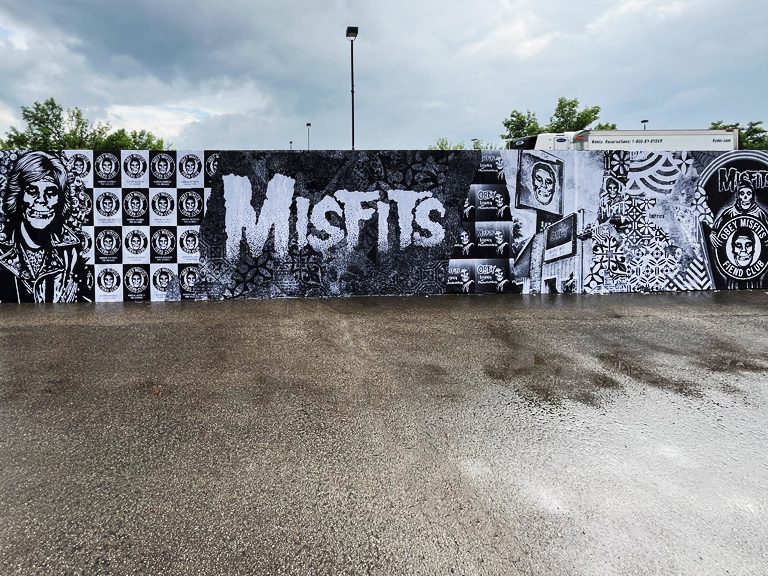
    Shepard Fairey’s poster installation work at Sonic Temple Festival 2024 illustrated how arts-adjacent street poster campaigns can function as cultural expression in environments where the audience already treats visual street communication as part of the neighborhood’s identity. East Bank Village in South Bend carries exactly that kind of arts-district cultural permission — a neighborhood where the former Studebaker factory’s adaptive reuse story lives in the physical character of the buildings, and where the arts community that has gathered around that redevelopment treats street-level visual culture as native to the space rather than foreign to it. Campaigns executed in East Bank Village with genuine visual ambition earn neighborhood acceptance in a way that generic commercial poster work in an arts district frequently fails to achieve.

    Netflix’s wheatpasting campaigns demonstrated the saturation logic that makes entertainment corridor fly posting work for major entertainment brand launches — concentrating large-format street presence across high-pedestrian zones where the target audience already engages with entertainment discovery as a normal part of their daily navigation. The Notre Dame campus-edge corridors during game weekends function on a compressed version of that same saturation logic: a bounded pedestrian geography, a concentrated audience in entertainment and discovery mode, and a time window — the 48 hours of peak game-weekend foot traffic — where impression accumulation happens at a rate that no multi-week campaign in a quieter market can match. A campaign that gets seen by 40,000 pedestrians over a single game weekend has achieved impression counts that would require weeks of sustained presence in a smaller market.

    Industries That Campaign in South Bend

    University-affiliated brands targeting the Notre Dame student and alumni community represent one of South Bend’s most active campaign categories. Financial services companies running student banking and investment account campaigns, consumer apps targeting the college-age early adopter demographic, career platforms and professional services brands reaching soon-to-graduate seniors, and lifestyle brands with Notre Dame cultural alignment all find the campus-edge corridor fly posting environment a uniquely precise reach vehicle for the specific Notre Dame demographic they’re trying to build relationships with.

    Entertainment companies, streaming platforms, and media brands launching content during the fall season find Notre Dame game weekends an unusually efficient reach window for the entertainment-consuming college and alumni demographic. A streaming platform’s fall season launch timed to coincide with the first few Notre Dame home games in September can achieve significant impression density within the campus community and the visiting alumni population simultaneously — two overlapping but distinct entertainment consumer segments reached through a single South Bend campaign installation.

    Alumni-targeted brands — premium consumer goods, financial products, travel, and career-adjacent services — find South Bend game weekends one of the few physical environments where the Notre Dame alumni demographic concentrates in a walkable, visible geography accessible to street poster advertising. Alumni who are sophisticated enough to use ad blockers and premium streaming subscriptions that eliminate traditional advertising exposure are nevertheless physically present on campus-edge streets during game weekends, navigating the same pedestrian environment where wheat paste campaigns run. The physical encounter bypasses all the digital barriers that make this affluent, educated demographic so expensive and difficult to reach through conventional advertising channels.

    Civic organizations, advocacy campaigns, and political operations running South Bend and northern Indiana activations find the combination of campus-edge, downtown, and residential corridor coverage in South Bend an efficient multi-demographic reach vehicle. The student vote, the young professional downtown demographic, and the broader South Bend residential community all intersect within the city’s walkable commercial geography — making a well-structured South Bend fly posting campaign a comprehensive northern Indiana urban market activation in a single compact geography.

    The Agm Campaign Process In South Bend

    AGM’s South Bend campaign planning begins with a schedule review — identifying which Notre Dame home games or academic calendar events the campaign will target, and structuring installation timing backward from those event windows to ensure poster presence is in place before peak visitor arrival. For game-week campaigns, the installation target is typically Monday or Tuesday of game week, giving the campaign time to establish visibility before Thursday’s visitor arrival wave and ensuring full presence through the Saturday game-day peak. For full-season campaigns covering multiple home games, the installation plan includes a single coordinated deployment at the start of the season with scheduled refreshes to maintain creative quality through the later game weeks.

    All printing is in-house at AGM — no third-party print vendors, no outsourced production, no timeline uncertainty from external fulfillment. This direct production capability is what makes 72-hour rush installations viable when a South Bend game-week decision is confirmed on short notice. For brands that identify the South Bend opportunity after the general campaign window has already opened, rush production within 72 hours for 24×36 campaigns up to 500 pieces is the mechanism that allows campaign participation in the current game week rather than the next one.

    Installation crews arrive in South Bend with wheat-based adhesive — environmentally responsible, bonds to approved urban surfaces, removable by pressure washing — and complete all placements in the targeted zones within the campaign’s designated installation window. Every poster position is documented with GPS-tagged photography at time of installation. South Bend’s installation crews operate with knowledge of the campus-edge and downtown posting environments specific to this market, including surface availability patterns across the football season’s different weeks and the competitive posting activity that characterizes specific zones during high-demand game weekends.

    Post-campaign reporting is delivered as a complete documentation package: installation location records with addresses, GPS-tagged proof-of-placement photographs, installation timing documentation, and any relevant campaign condition observations from the installation crews. AGM treats every South Bend campaign — regardless of whether it’s a 100-poster fall season opener or a 200-poster multi-zone game-week activation — with the same reporting accountability standard that campaigns for AGM’s nationally recognized clients receive. The proof-of-performance documentation exists for the same reason at every scale: brands investing in street poster advertising need evidence that the campaign was executed as planned.

    Frequently Asked Questions — Fly Posting in South Bend

    Notre Dame’s home football schedule from September through November — typically eight home games — structures the primary campaign timing calendar in South Bend. Each home game weekend delivers a pedestrian density surge from out-of-state alumni, fans, and families that represents South Bend’s highest foot traffic days of the year. Campaigns installed in the week before each home game are present during the Thursday through Saturday peak visitor window. AGM recommends confirming game-week campaigns by the Monday of the target week to allow production and installation before Thursday’s visitor arrival wave.

    The Notre Dame campus-edge corridors along US-31 and Angela Boulevard deliver the Notre Dame student, alumni, family visitor, and sports fan demographic concentrated around game weekends — a nationally composed audience with high average income and strong brand engagement. Downtown South Bend delivers a broader resident and arts community demographic through the year-round commercial and performing arts corridors along Colfax and Michigan — the South Bend population independent of the Notre Dame event calendar. Both zones are valuable; the right choice depends on whether a campaign targets the Notre Dame community specifically or South Bend residents and arts community members more broadly.

    Yes, meaningfully so. East Bank Village’s arts community audience is South Bend’s own creative economy — arts professionals, gallery attendees, independent creatives, and the young professional demographic attracted to the Studebaker redevelopment corridor’s narrative and aesthetic. This audience is distinct from the Notre Dame visitor composition that defines game-weekend campus-edge demographics, and distinct from the broader residential population of West Washington Street. For brands targeting South Bend’s arts-forward creative community specifically, East Bank Village is the most precisely matched zone in the city.

    AGM schedules South Bend game-week installations for the Monday or Tuesday preceding the target game weekend, ensuring campaign presence is fully deployed before Thursday’s out-of-state visitor arrival begins. For brands running full-season campaigns covering multiple home games, AGM plans a seasonal installation at the start of the football schedule in September with scheduled creative refreshes for later game weeks. Rush installations within 72 hours for 24×36 campaigns up to 500 posters are available for campaigns confirmed on short notice relative to a specific game weekend.

    Alumni targeting through street poster advertising is inherently contextual rather than individually targeted — campaigns in the campus-edge corridors reach the game-weekend visitor population, which is heavily alumni-composed, as part of a broader audience that also includes students, families, and general fans. The Notre Dame alumni demographic is disproportionately represented among game-weekend campus-edge pedestrian visitors compared to any other Indiana market’s pedestrian composition, making campus-edge game-week campaigns a high-precision alumni reach vehicle within the broader South Bend pedestrian population.

    Notre Dame Stadium holds approximately 80,000 fans, and game weekends draw a broader visiting population beyond ticket holders — alumni and families staying in South Bend without attending the game, fans exploring the campus and city environment. The campus-edge commercial corridors carry concentrated traffic from Thursday evening through Saturday night as this combined visitor population moves between hotels, restaurants, tailgate zones, and the stadium. This volume is the highest concentrated foot traffic event in northern Indiana, and significantly exceeds ordinary South Bend pedestrian density in these corridors during academic weeks.

    South Bend’s Smart Streets reconstruction and the ongoing River District development have generated construction activity in the downtown core that periodically creates plywood barrier and blank facade surface inventory in the pedestrian corridors along Colfax and Michigan. The downtown revival has also attracted new construction projects — restaurant conversions, mixed-use developments, and adaptive reuse projects — that cycle fresh posting surfaces through the downtown geography. AGM’s campaign planning accounts for current surface availability in South Bend’s downtown during the pre-campaign neighborhood mapping process.

    The 24×36 format is the standard for campus-edge corridor saturation campaigns — building the impression frequency that repeated pedestrian visitors and game-week audiences encounter across multiple positions within the zone. The 48×72 format earns its place at specific high-visibility anchor positions on the campus-edge approach corridors where game-weekend foot traffic volume justifies a dominant single-piece statement. Many South Bend campaigns combine both: 24×36 for broad corridor coverage and 48×72 for one or two landmark positions at the highest-traffic corner locations.

    Indianapolis offers scale, sustained year-round event-driven density, and the single most powerful sports event window in the Midwest through the Indianapolis 500. South Bend offers something different: compressed game-weekend visitor surges with a nationally composed, high-income alumni demographic that Indianapolis doesn’t replicate. For brands targeting the Notre Dame community specifically — alumni, students, or the brand-affiliated fan base — South Bend delivers direct access to that audience that a general Indianapolis campaign can’t match. For statewide Indiana campaigns, both markets serve complementary objectives and are frequently run simultaneously.

    The Notre Dame football home schedule from September through late November is the strongest campaign window — particularly the first few home games of the season in September when football enthusiasm, student enrollment, and visitor volume all peak simultaneously. Graduation weekends in May create a second high-visitor-density event. Year-round downtown and East Bank Village campaigns can run in any month, with the fall academic season delivering highest resident and student pedestrian density and summer maintaining arts community activity through the East Bank Village and Cubs baseball calendar.

    Yes, though Notre Dame is not technically a Big Ten member — it operates as an independent in football while participating in the ACC for other sports. Coordinating South Bend with IU Bloomington or Purdue West Lafayette campaigns creates a northern Indiana plus central Indiana university market combination that covers different demographic segments: Notre Dame’s nationally composed alumni and student community, IU’s large arts-oriented state university community, and Purdue’s STEM-dominant university demographic. AGM executes multi-market Indiana campaigns with unified management and consolidated reporting across all included markets.

    Yes. Every South Bend installation is documented with GPS-tagged proof-of-placement photography at the time of posting. Clients receive a complete post-campaign reporting package with installation location records, proof photographs for each placement, and installation timing documentation. This reporting standard applies to all South Bend campaigns regardless of size — from 100-poster game-week campus-edge activations to multi-zone deployments covering campus edge, downtown, and East Bank Village simultaneously.

    Browse All States

    Explore Fly Posting Advertising opportunities across the United States.

    No locations found

    American Guerrilla Marketing Blog Posts