American Guerrilla Marketing
Nationwide Service
Media planning, media buying, billboard advertising, & guerrilla marketing
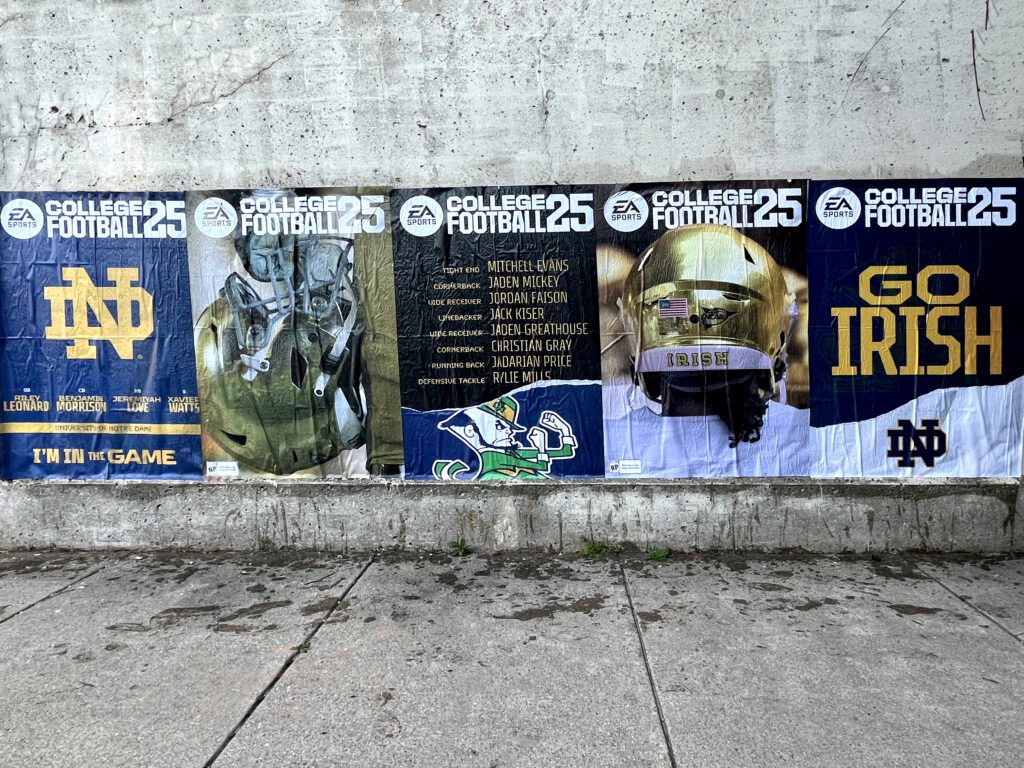
Sioux City’s Historic Fourth Street packs bars, music venues, and independent retailers into walking blocks at the edge of the Missouri River — making it the most concentrated entertainment corridor in Iowa’s northwest corner. AGM deploys wheat paste campaigns across Fourth Street, Pearl Street’s arts district, and the Tyson Events Center approach zone, reaching a regional audience that draws from three states.
Historic Fourth Street is the commercial and cultural spine of Sioux City’s downtown entertainment district — a concentrated stretch where bars, live music venues, comedy clubs, independent restaurants, and specialty retailers occupy consecutive storefronts within a few city blocks above the Missouri River bluff. The corridor’s density is its defining characteristic: on a weekend evening, Fourth Street compresses a remarkable variety of entertainment options into a walking geography that encourages venue-hopping, extended outdoor presence, and the kind of relaxed, exploratory pedestrian behavior that makes fly posting’s street-level impression mechanism most effective.
The entertainment concentration on Fourth Street isn’t accidental — it reflects decades of intentional district development that has made this corridor the nightlife address for the entire northwest Iowa region. Sioux City isn’t just drawing from its own 85,000 residents on a Saturday night; it’s drawing from Storm Lake, Spencer, LeMars, and the rural agricultural communities of western Iowa whose residents treat a trip to Sioux City’s Fourth Street as their regional city entertainment experience. That regional pull amplifies the effective audience of a Fourth Street fly posting campaign beyond the resident population into the broader northwest Iowa catchment that Sioux City has earned as the area’s commercial and cultural center.
From a fly posting mechanics standpoint, Fourth Street offers something that few corridors of its size can match: a pedestrian audience that is already moving slowly, already engaged with its surrounding environment, and already in a discovery mindset. The entertainment-district pedestrian who has left their car at a Fourth Street parking garage and is walking the corridor looking for where to eat or drink next is the most receptive outdoor advertising audience in Sioux City. They have time, leisure, and social energy — all the conditions that make brand discovery through street-level posters not just possible but genuinely enjoyable. A well-designed wheat paste campaign in this environment doesn’t compete with the audience’s attention; it adds to the visual richness of an environment they’re already actively exploring.
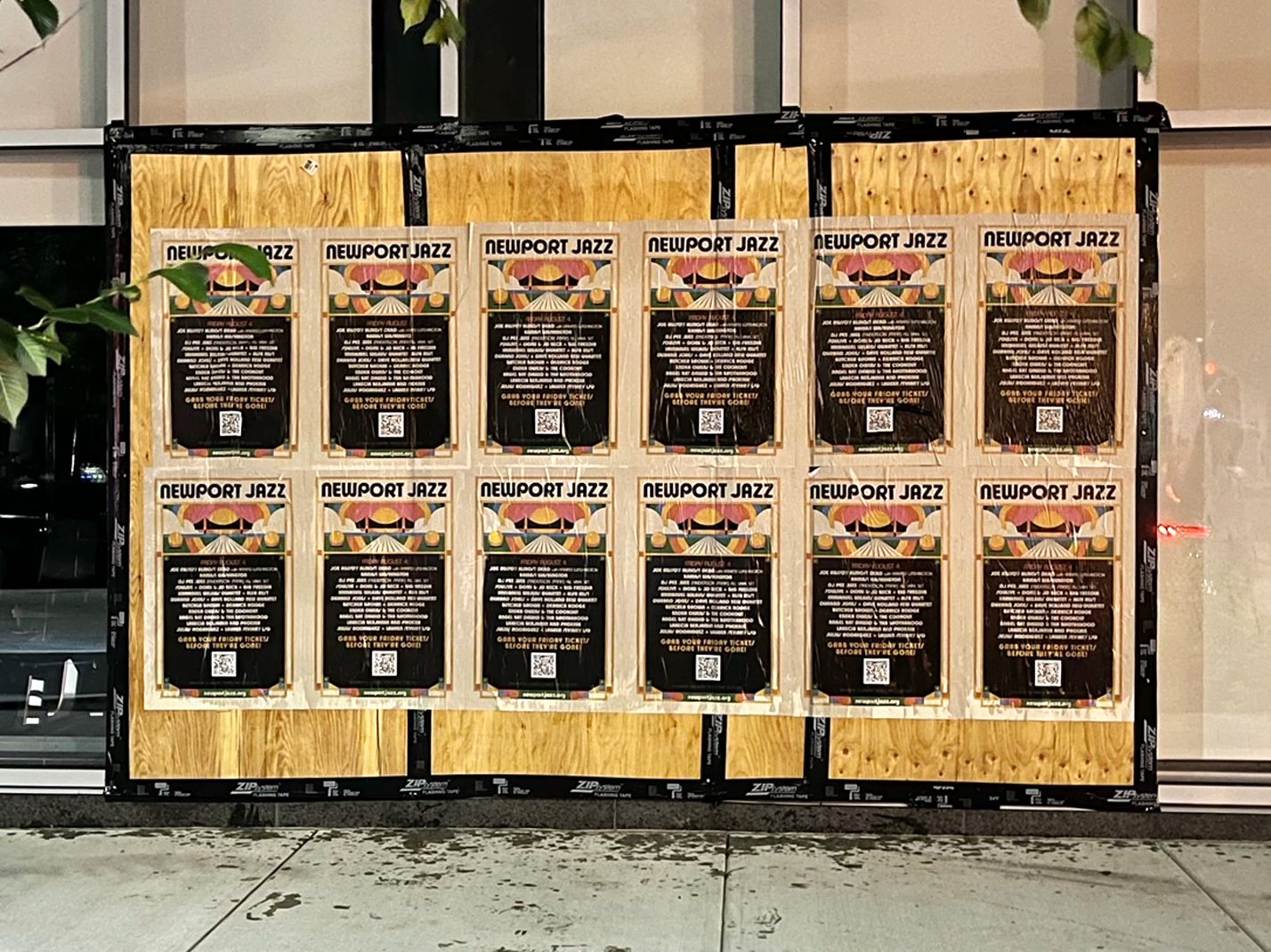
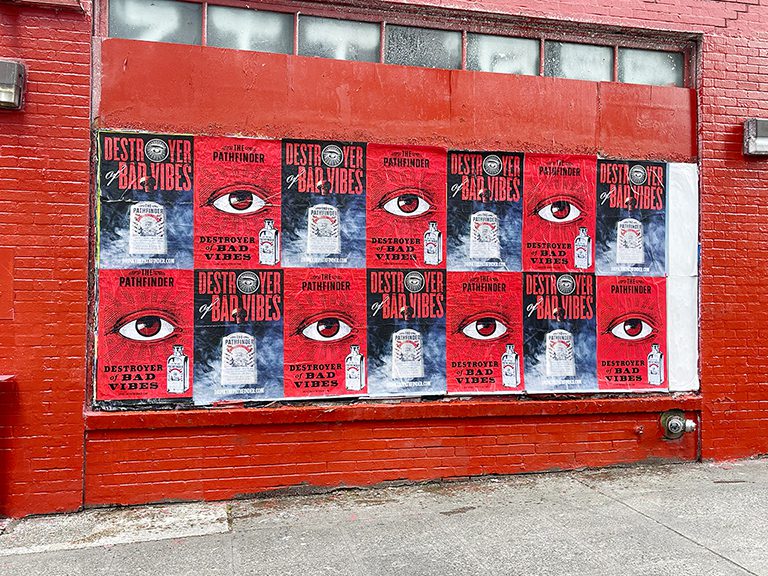
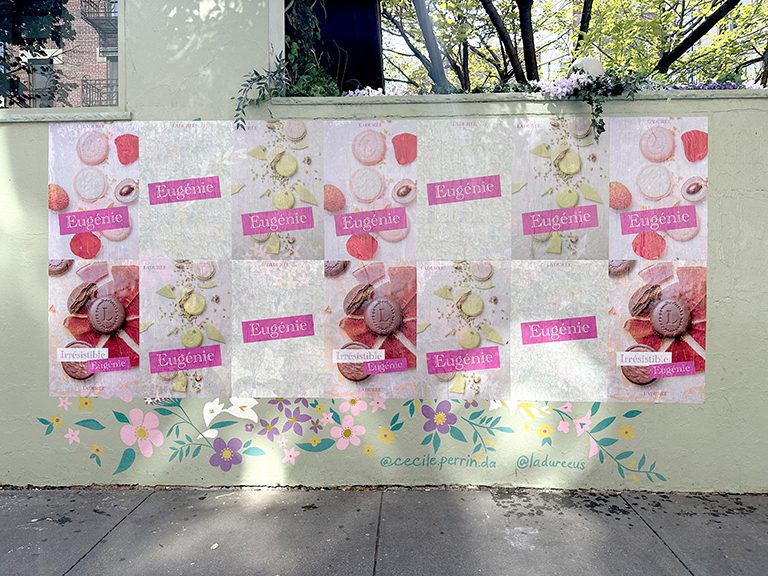
Historic Fourth Street's bar and venue stack. Pearl Street's arts corridor. The Tyson Events Center approach zone. AGM places wheat paste campaigns in Sioux City's most entertainment-dense corridors — reaching the resident audience and the three-state regional visitors who make this city Iowa's northwest entertainment capital.
Select a city to explore Fly Posting Advertising opportunities.
The most productive fly posting surfaces on Historic Fourth Street occupy the blocks between Nebraska Street and Jackson Street, where the bar and venue concentration is tightest and the evening foot traffic is most sustained. The exteriors of the entertainment buildings themselves — the building faces adjacent to venue entrances, the side walls of corner establishments visible from multiple approach angles, the blank commercial faces between storefronts that break up the continuous retail frontage — provide the core posting surface inventory of the corridor. Construction barriers from ongoing downtown development and the utility structures along the service corridors behind Fourth Street add supplementary surface options that give campaigns the depth of coverage needed for saturation rather than scattered placement.
Fourth Street’s posting surfaces have a physical character that supports both 24×36 and 48×72 formats, but the corridor’s intimate scale — buildings are low-rise, typically two to four stories, and the street width creates a relatively close pedestrian-to-surface distance — makes 24×36 the format that achieves the highest saturation efficiency. At this pedestrian proximity, a 24×36 poster reads clearly and commands attention without requiring the oversized scale of the 48×72 format to register. The case for 48×72 on Fourth Street is strongest at the corner building positions where the larger format reads both from the cross-street approach and from the main corridor simultaneously, giving a single placement two distinct high-traffic viewing angles.
Evening timing is Fourth Street’s peak window, but the corridor carries meaningful lunchtime and afternoon foot traffic from the surrounding downtown office and government workforce that makes daytime impressions available as well. AGM’s installation schedule for Fourth Street campaigns accounts for this temporal pattern — posters that need to register with the weekend entertainment audience are installed early in the week to be fully cured and readable by Thursday evening when the weekend entertainment cycle begins. This timing standard maximizes the campaign’s visibility during the highest-foot-traffic window without sacrificing the full campaign duration to a post-peak installation.
Pearl Street runs parallel to Fourth Street one block north, and it carries a distinctly different commercial character — less nightlife-oriented, more arts and creative-business focused, with a profile of independently operated galleries, studios, boutiques, and specialty services that attract a broader demographic cross-section than the entertainment-concentrated Fourth Street corridor. The Sioux City Art Center sits within the broader Pearl Street and downtown arts ecosystem, anchoring a cultural institution that draws exhibition visitors, educational program participants, and arts-community members from across the three-state region to Sioux City’s downtown on a consistent calendar schedule.
Pearl Street’s audience for fly posting campaigns skews older than Fourth Street’s nightlife crowd — more 28–50, with a higher proportion of arts-affiliated professionals, independent business owners, and the culturally engaged community members who support the city’s arts institutions as donors, volunteers, and program participants. This demographic carries different brand affinities than the young entertainment crowd on Fourth Street: they’re more likely to respond to premium food and beverage messaging, cultural institution campaigns, design-led lifestyle brands, and arts events than to entertainment-venue promotions and consumer tech launches. Pearl Street and Fourth Street together cover a complementary range of Sioux City’s culturally active adult demographic that gives a combined campaign meaningful breadth across the city’s most engaged consumer segments.
The physical environment on Pearl Street supports fly posting with a mix of low-rise commercial building exteriors, gallery-adjacent wall surfaces, and the occasional blank gable end or warehouse face visible from the pedestrian approach along the block. Surface availability is slightly less dense than Fourth Street’s entertainment-concentrated corridor, which makes selective placement more important in Pearl Street — the goal is identifying the surfaces that encounter the highest proportion of the arts-oriented audience rather than maximizing surface count across the full corridor. AGM’s site assessment for Pearl Street campaigns maps specific placement positions against the pedestrian flow patterns generated by the Art Center, gallery openings, and the Pearl Street commercial storefronts that anchor the corridor’s daily foot traffic.
Award Winning Personalized Service
You will get thoughtful, devoted, and individualized attention from our experienced, qualified, and professional personnel. Being one of the most illustrious agencies in Brooklyn, New York, American Guerrilla Marketing has been awarded the Best of Brooklyn title.
Nationwide
Industry City, Brooklyn, New York 11232
American Guerrilla Marketing
Hours
Mon - Fri: 9 AM - 5 PM
Sat & Sun: Closed
Automate your campaign with AGM’s Request for Proposal Builder. Simply answer a few quick questions about your campaign goals, markets, and timeline, and the system will generate a tailored presentation with recommended strategies, quantities, and pricing. Click the RFP Builder to instantly receive your customized proposal.
Tyson Events Center — Sioux City’s 10,000-capacity arena — sits at the corner of 4th Street and Pearl Street in the heart of the downtown entertainment district, and its event calendar generates the highest single-day pedestrian volume spikes in the Sioux City market. The arena hosts major touring concerts, professional and college sporting events, family entertainment shows, and regional conventions throughout the year, drawing audiences from across the three-state region — northwest Iowa, southeast South Dakota, and northeast Nebraska — who arrive in Sioux City specifically for the event and navigate the downtown environment in the hours before and after.
The pre-show fly posting window — campaigns installed 1–3 weeks ahead of a major Tyson Events Center date — creates a specific and exceptionally productive campaign timing opportunity. The audience that walks the arena’s approach blocks along 4th Street and Pearl Street on event night is identifiable in advance: they bought tickets to a specific show, they have disposable entertainment income, they’re in Sioux City specifically for the cultural or entertainment experience, and they are navigating an environment they may not visit on a non-event day. For campaigns promoting a product, brand, or experience with relevance to the event’s audience demographic, the Tyson approach corridor is a targeting zone of unusual precision — the audience that encounters the posters on event night is the audience the campaign was designed to reach, concentrated in the same blocks, in the same receptive leisure mindset, at the same predictable moment.
Tyson Events Center’s position within the Fourth Street and Pearl Street entertainment corridor means that pre-show fly posting campaigns in the arena’s surrounding blocks reach not just the event audience but the broader Fourth Street nightlife crowd that uses the same corridor on event nights — an amplification of the audience that makes Tyson-adjacent placements productive beyond their direct event-audience value. The arena’s event calendar is publicly available and predictable well in advance, giving campaigns with event-tied timing the lead time needed to plan installation around the specific show dates most relevant to the campaign’s target demographic.
Floyd Boulevard extends through Sioux City’s commercial and residential midtown zone, carrying the kind of independently operated retail, service, and food commerce that serves the city’s everyday resident population rather than the regional visitor base that Fourth Street and Tyson Events Center attract. The Floyd Boulevard corridor represents Sioux City’s neighborhood commercial fabric — the businesses that Sioux City residents rely on weekly rather than the entertainment destinations that visitors make special trips to access. Hair salons, independent restaurants, coffee shops, specialty retail, and neighborhood-service businesses line Floyd’s midtown blocks, generating a foot traffic pattern that is more evenly distributed across the week and across dayparts than the entertainment-concentrated Fourth Street corridor.
The Floyd Boulevard audience for fly posting is the everyday Sioux City resident — the 25–45 professional or family-stage adult who shops, eats, and circulates through the neighborhood’s commercial corridor as part of their normal weekly routine. This audience responds to different campaign categories than the Fourth Street entertainment crowd: healthcare and wellness services, independent food and grocery brands, community event promotions, local business launches, and neighborhood-oriented consumer products all find Floyd Boulevard a productive targeting zone. Campaigns that want to reach Sioux City’s resident base rather than the regional visitor audience should include Floyd Boulevard in their planning alongside the more entertainment-oriented Fourth Street and Tyson corridors.
The surface environment on Floyd Boulevard includes the building exteriors of low-rise commercial blocks, utility structures along the corridor, and the construction-adjacent surfaces that appear as midtown redevelopment activity generates temporary blank posting surfaces. The 24×36 format is the appropriate scale for Floyd Boulevard’s neighborhood-commercial character — the corridor’s intimate building scale and relatively close pedestrian-to-building relationship makes oversized 48×72 placements feel disproportionate to the environment, while 24×36 posters at strategic positions along the main commercial blocks create the neighborhood visibility that resident-audience campaigns require.
The Stoney Creek corridor extends the downtown Sioux City posting geography into the blocks south and east of the Fourth Street entertainment district, carrying the mixed commercial and hospitality character of a downtown transition zone. The Stoney Creek Inn and Conference Center anchors this area, generating consistent hotel-guest foot traffic that includes the out-of-town business visitors, regional conference attendees, and Tyson Events Center performers and crew who use the Stoney Creek properties as their Sioux City base. This hotel-adjacent posting zone adds a visitor-audience targeting layer to the Fourth Street and Tyson corridor campaigns that otherwise concentrate on the resident and regional entertainment audience.
Hotel-adjacent fly posting targeting works through a specific mechanism: out-of-town visitors navigating an unfamiliar city on foot are demonstrably more receptive to environmental advertising than residents who have processed their familiar streets into background. The hotel guest walking from the Stoney Creek Inn to Fourth Street for dinner is perceiving that walk with the heightened environmental attention of someone exploring a new place — and a wheat paste poster encountered in that heightened-perception state creates a qualitatively stronger impression than the same poster creates for a Sioux City resident who has walked the same block a hundred times. For brands with regional or tourism-adjacent messaging, the Stoney Creek corridor’s hotel-guest foot traffic adds a valuable visitor-audience component to the broader Sioux City campaign geography.
The Stoney Creek corridor’s surface environment is transitional — lower building density than Fourth Street, with more surface area per block but fewer of the entertainment-venue exteriors that provide the prime posting surfaces in the core entertainment district. The best Stoney Creek placements are on the blank commercial building faces visible from the pedestrian approach between the hotel properties and the Fourth Street corridor, positioned to intercept hotel guests as they navigate from their lodging to the evening entertainment zone. These transitional corridor placements bridge the hotel-guest arrival experience to the entertainment district discovery, creating brand impressions at the moment when the visitor’s environmental receptivity is at its highest.
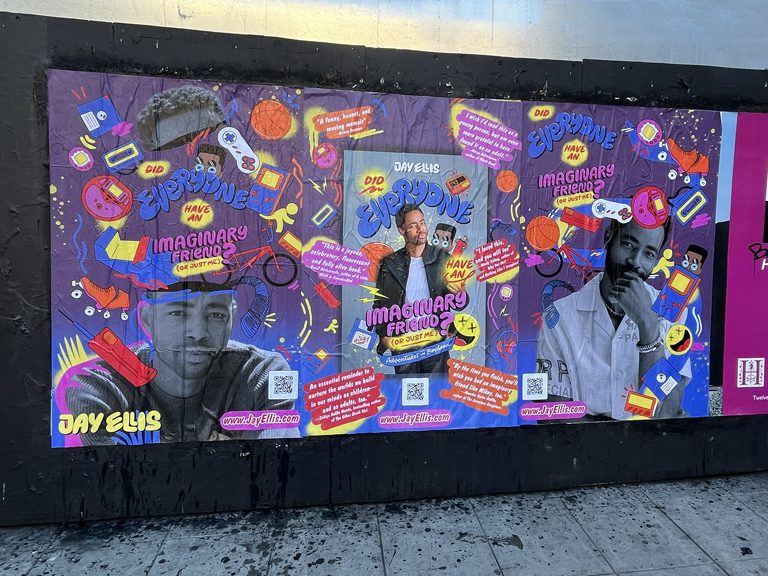
AGM’s Jay Ellis wheatpasting campaign — executed across Williamsburg, the Lower East Side, and Hell’s Kitchen in Manhattan — is the case study most directly applicable to Sioux City’s Historic Fourth Street strategy. The Jay Ellis campaign concentrated wheat paste installations in Manhattan’s most entertainment-dense bar and venue corridors during a release window, creating saturation in the specific pedestrian environments where the campaign’s target audience spends its entertainment time. The strategy’s logic was geographic precision: rather than distributing posters across a broad metropolitan area, the campaign identified the corridors where the target demographic was physically present in the highest concentration and the most receptive state, and it saturated those corridors to the exclusion of broader but less precise geographic coverage.
Williamsburg’s bar and venue corridors, the Lower East Side’s music and nightlife density, and Hell’s Kitchen’s entertainment district character each mirror the Fourth Street environment in key respects — the entertainment-stack concentration, the young adult 21–34 demographic, the walking pace and leisure mindset of the pedestrian audience, and the visual environment’s receptivity to bold street-level creative work. The difference between the Manhattan corridors and Fourth Street isn’t the strategic logic — it’s the scale. Manhattan’s corridors carry dramatically higher pedestrian volume at any given moment, but Sioux City’s Fourth Street achieves the same saturation effect with proportionally fewer posters because the geography is more compact and the audience more concentrated relative to the posting surface inventory.
The Jay Ellis model applied to Fourth Street means concentrating the poster campaign in the blocks of highest venue density, optimizing surfaces for evening-hour visibility, and using creative that lands with the visual confidence that a live music and entertainment audience responds to. The campaign isn’t asking the Fourth Street audience to engage with corporate brand advertising — it’s presenting a cultural proposition in the visual language of the environment they’ve chosen to spend their evening in. That distinction in creative register is what makes well-executed entertainment corridor fly posting feel like discovery rather than advertising, and it’s why the Jay Ellis Manhattan model translates directly to Sioux City’s Fourth Street entertainment stack.
Sioux City sits at the convergence of Iowa, South Dakota, and Nebraska at the Missouri River, and that geographic position has made it the commercial and entertainment center for a tristate region whose combined catchment extends considerably beyond its resident population. Sioux Falls, South Dakota is 90 miles north. Omaha, Nebraska is 100 miles south. The rural agricultural communities of northwest Iowa, southeast South Dakota, and northeast Nebraska — whose county seats rarely provide entertainment or commercial destinations of Sioux City’s density — all treat the city as their regional urban center for shopping, dining, concerts, and nightlife.
For fly posting campaigns, the three-state regional hub function means that a Sioux City campaign reaches an audience larger than the city’s resident population would suggest. Regional visitors from South Dakota and Nebraska who arrive in Sioux City for a Tyson Events Center concert, a Fourth Street weekend, or a shopping trip to the city’s commercial corridors encounter fly posting with the heightened environmental awareness of people experiencing a place that isn’t their daily routine. The regional visitor in Sioux City has made a deliberate decision to be in the city — they’ve driven an hour or more to get there — and they’re navigating with the active attention that out-of-town experiences produce. That heightened attention state makes a well-positioned wheat paste poster more likely to register, be photographed, and be shared among the regional visitor audience than among Sioux City’s own residents who have processed the city’s visual environment into background.
Brands with explicit regional geographic goals — covering the northwest Iowa/southeast South Dakota/northeast Nebraska tri-state market — find that Sioux City fly posting achieves regional reach that the resident population numbers don’t fully account for. A concert, product, or brand campaign that saturates Sioux City’s Fourth Street and Tyson Events Center corridors is placing itself in front of the audience that carries that exposure back to Sioux Falls, Norfolk, O’Neill, and the rural communities of the tri-state region — creating an informal word-of-mouth and social sharing distribution that extends the campaign’s geographic reach well beyond the posting zones themselves.
Fourth Street’s intimate building scale and compact pedestrian geography strongly favor the 24×36 format as the workhorse of Sioux City fly posting campaigns. The corridor’s low-rise commercial buildings, close building-to-building distances, and dense venue-frontage create a posting environment where 24×36 posters achieve strong visual presence at the walking pace of the evening entertainment audience without the scale requirements of the 48×72 format. One hundred 24×36 posters concentrated in the core Fourth Street blocks between Nebraska Street and Jackson Street achieves the blanket saturation that creates the everywhere quality — the sense that a campaign belongs to the corridor rather than visiting it — that entertainment district fly posting is designed to produce.
The 48×72 format earns its investment in Sioux City at specific sites where the larger scale amplifies impact beyond what the 24×36 format can deliver. The blank building end-walls on the corners of Fourth Street and Nebraska Street, Fourth Street and Pierce Street, and the wide building face visible from the Tyson Events Center approach on Pearl Street all represent 48×72 opportunities where a single dominant placement becomes a visual landmark within the campaign geography. For concert campaigns tied to a specific Tyson Events Center date, a single 48×72 wheat paste placement on the arena’s immediate approach blocks can function as the campaign’s geographic anchor — the most visible single placement that every event-goer walks past on their way into the venue, creating the maximum per-surface impression count of any position in the city.
Sioux City campaigns most often use a combined approach: 24×36 saturation across the Fourth Street corridor’s full entertainment-zone surface inventory, with two or three 48×72 statement placements at the Tyson Events Center approach and the corner building positions that command both the cross-street and corridor viewing angles. This combination delivers the frequency-based brand recognition that saturation produces alongside the dominant landmark impressions that the large-format placements contribute, creating a campaign that feels both pervasive in the entertainment corridor and visually authoritative at the highest-traffic surface positions.
Live music touring campaigns represent Sioux City’s most historically active fly posting category, driven by Tyson Events Center’s consistent concert and entertainment calendar. Acts with audiences in the 21–38 age range — country, rock, hip-hop, pop, and electronic genres — find Fourth Street and Tyson approach corridor placements effective for pre-show awareness building in exactly the audience that buys tickets to shows in the Sioux City market. The geographic overlap between Sioux City’s entertainment audience and the regional visitor audience that travels from the tri-state area for major concerts makes fly posting campaigns with Tyson event timing a natural investment for touring promoters who need to reach both the resident and regional ticket-buying audience simultaneously.
Food and beverage brands entering the Sioux City market — craft beer and spirits brands seeking tap and shelf placement across Fourth Street’s bar and restaurant scene, regional food brands launching in Hy-Vee and independent grocery channels, and new restaurant concepts building pre-opening awareness — find the Fourth Street and Floyd Boulevard combination effective for reaching both the entertainment crowd and the everyday resident consumer audience. The bar and restaurant ecosystem on Fourth Street is both the tastemaker environment for Sioux City’s beverage market and the most visible consumer-facing geography in the city, making it the natural launch zone for food and beverage brand introductions.
Healthcare and wellness brands targeting the young adult 21–34 demographic find Sioux City fly posting productive in the Fourth Street and Pearl Street corridors, where the entertainment and arts audiences have the demographic characteristics most relevant to new healthcare, fitness, mental wellness, and insurance product categories targeting the under-35 age range. Political campaigns at the congressional and state legislative level use Sioux City fly posting during primary and general election cycles to reach the young adult voter base that concentrates in and around the downtown entertainment district. Apparel, streetwear, and independent fashion brands targeting the regional youth and young adult market use Fourth Street campaigns as their Sioux City market entry tool, building recognition in the city’s highest-visibility entertainment corridor as the foundation for subsequent retail distribution and e-commerce awareness in the broader tri-state region.
AGM’s Sioux City campaign planning process begins with a corridor-level site assessment that maps specific surface positions across Fourth Street, Pearl Street, Floyd Boulevard, the Tyson Events Center approach blocks, and the Stoney Creek transition zone against the campaign’s target audience profile, timing, and creative format. The site assessment identifies which specific surface positions generate the highest proportion of the target demographic’s impressions — evening entertainment-crowd surfaces differ from daytime professional surfaces differ from weekend retail-visitor surfaces, and the right campaign plan targets the surfaces that match the audience’s behavioral pattern rather than simply maximizing surface count across all available positions.
Installation is handled entirely by AGM’s in-house crew, maintaining the operational quality and accountability standards that the company’s direct-execution model produces across all markets. Sioux City installations are documented with GPS-tagged photography at each placement position, and the post-campaign report includes location-specific images with GPS coordinates confirming placement geography across all target corridors. For Tyson Events Center campaign timing, AGM’s planning process coordinates installation timing to ensure all posters are placed and cured for visibility at least 10–14 days before the event date, maximizing the campaign’s pre-show awareness window for the regional visitor audience that makes travel and entertainment decisions in the weeks preceding a major show.
Sioux City campaigns typically run 1–2 weeks in the standard window. The city’s Midwestern climate affects outdoor longevity seasonally — summer campaigns from May through September benefit from the most reliable adhesion conditions, while fall campaigns through October remain viable and productive. Sioux City’s position in Iowa’s northwest corner makes late-spring and early-fall campaigns particularly effective for reaching both resident and regional audiences when outdoor entertainment activity and mobility are at their seasonal peak. Rush installation on a 72-hour timeline is available for 24×36 campaigns up to 500 posters, supporting time-sensitive Tyson Events Center campaign activations or product launch windows with firm event-tied installation deadlines.
Live music touring campaigns represent Sioux City’s most historically active fly posting category, driven by Tyson Events Center’s consistent concert and entertainment calendar. Acts with audiences in the 21–38 age range — country, rock, hip-hop, pop, and electronic genres — find Fourth Street and Tyson approach corridor placements effective for pre-show awareness building in exactly the audience that buys tickets to shows in the Sioux City market. The geographic overlap between Sioux City’s entertainment audience and the regional visitor audience that travels from the tri-state area for major concerts makes fly posting campaigns with Tyson event timing a natural investment for touring promoters who need to reach both the resident and regional ticket-buying audience simultaneously.
Food and beverage brands entering the Sioux City market — craft beer and spirits brands seeking tap and shelf placement across Fourth Street’s bar and restaurant scene, regional food brands launching in Hy-Vee and independent grocery channels, and new restaurant concepts building pre-opening awareness — find the Fourth Street and Floyd Boulevard combination effective for reaching both the entertainment crowd and the everyday resident consumer audience. The bar and restaurant ecosystem on Fourth Street is both the tastemaker environment for Sioux City’s beverage market and the most visible consumer-facing geography in the city, making it the natural launch zone for food and beverage brand introductions.
Healthcare and wellness brands targeting the young adult 21–34 demographic find Sioux City fly posting productive in the Fourth Street and Pearl Street corridors, where the entertainment and arts audiences have the demographic characteristics most relevant to new healthcare, fitness, mental wellness, and insurance product categories targeting the under-35 age range. Political campaigns at the congressional and state legislative level use Sioux City fly posting during primary and general election cycles to reach the young adult voter base that concentrates in and around the downtown entertainment district. Apparel, streetwear, and independent fashion brands targeting the regional youth and young adult market use Fourth Street campaigns as their Sioux City market entry tool, building recognition in the city’s highest-visibility entertainment corridor as the foundation for subsequent retail distribution and e-commerce awareness in the broader tri-state region.
Fourth Street delivers the entertainment-district concentration that fly posting’s repeat-impression mechanism works best in: a pedestrian audience already moving slowly in a leisure and discovery mindset, a high density of venue and bar entrances that anchor the evening foot traffic pattern, and a corridor that concentrates the 21–34 entertainment-spending demographic within a compact walkable geography. The evening audience on Fourth Street between Nebraska Street and Jackson Street isn’t commuting or running errands — they’re actively exploring the corridor, which dramatically increases their receptivity to the visual environment around them. A wheat paste campaign in this environment encounters the ideal audience in the ideal behavioral state, which is why entertainment corridor fly posting consistently outperforms broader geographic distribution at comparable poster counts.
Sioux City draws visitors from northwest Iowa, southeast South Dakota, and northeast Nebraska — a tristate catchment considerably larger than the city’s resident population. Regional visitors who travel 45–90 minutes to Sioux City for entertainment, concerts, or shopping are navigating the city with the heightened environmental awareness of people in an unfamiliar place, making them substantially more receptive to fly posting than residents who have processed their daily environment into background. A Fourth Street campaign captures both Sioux City’s resident audience and the regional visitor base that treats the city as their entertainment capital — extending effective reach into a tristate geographic footprint without requiring campaigns in South Dakota or Nebraska markets.
Yes — Tyson Events Center concert campaigns are one of AGM’s most common Sioux City activation types. Installation timing is planned to ensure all posters are placed and visually prominent 10–14 days before the event date, building pre-show awareness in the weeks when the regional audience is making their final ticket and travel decisions. Placement positions in the Tyson approach corridors along 4th Street and Pearl Street, plus the Fourth Street entertainment blocks adjacent to the arena, intercept both the committed ticket buyer building anticipation and the fence-sitter who needs a few more exposures to convert from awareness to purchase. Event-tied timelines should be communicated at the initial campaign inquiry to ensure rush print production options are scoped if needed.
Pearl Street reaches a different demographic and behavioral profile than Fourth Street’s nightlife-concentrated entertainment audience. Where Fourth Street draws predominantly 21–34 bar and venue visitors on weekend evenings, Pearl Street attracts arts-affiliated community members, independent business patrons, and cultural institution participants across a broader age range (28–50) and a more distributed weekly schedule. Pearl Street audiences respond more strongly to arts institution campaigns, premium lifestyle brands, cultural events, and community-oriented messaging than to the entertainment-product and consumer-tech campaigns that resonate most on Fourth Street. The two corridors are best used together for campaigns that want to cover the full spectrum of Sioux City’s culturally engaged adult demographic rather than concentrating exclusively on either the nightlife or arts audience.
Regional visitors from South Dakota’s southeast corner (Sioux Falls, Yankton, Vermillion) and Nebraska’s northeast (Norfolk, O’Neill, Hartington) arrive in Sioux City and navigate the downtown entertainment district on foot before and after the events, concerts, or shopping trips that brought them to the city. These visitors encounter Fourth Street, Pearl Street, and Tyson Events Center approach corridor fly posting with the full receptivity of people exploring an environment they visit less frequently than their home city. The impression that a regional visitor takes home from Sioux City’s streets travels with them back to their origin community and circulates through their social networks — creating geographic amplification of the campaign’s reach into communities where AGM doesn’t deploy posters directly.
Major Tyson Events Center concerts — particularly country, rock, and hip-hop acts with broad regional appeal — generate the highest single-event foot traffic peaks in the Sioux City market and create the strongest pre-show engagement windows for fly posting campaigns. Fourth Street weekend evenings without a specific Tyson event still produce strong entertainment-crowd foot traffic that rewards sustained campaigns running across multiple weekends rather than single-event windows. The Sioux City Symphony Orchestra’s performance seasons at the Orpheum Theatre draw an older and more culturally formal audience than Fourth Street’s bar crowd, creating an additional campaign timing window for arts-oriented campaigns that want to reach the Sioux City performing arts audience in the blocks adjacent to the Orpheum. Local and regional music festival events in the summer provide additional peak weeks when both resident and regional attendance amplifies standard Fourth Street foot traffic.
The Stoney Creek corridor is most effective as a secondary addition to campaigns that are primarily targeting the Fourth Street entertainment core. Its strongest value is the hotel-guest foot traffic from the Stoney Creek Inn and Conference Center — out-of-town visitors navigating on foot between their lodging and the downtown entertainment district are an exceptionally receptive audience for fly posting because they’re in an unfamiliar environment, moving slowly, and actively processing the visual details of the streets around them. For campaigns with regional visitor reach as a specific objective — concerts, regional consumer product launches, tourism-adjacent brands — adding Stoney Creek corridor placements to a Fourth Street campaign captures the regional visitor audience at the point where their environmental receptivity peaks: the first-time navigation of the blocks between their hotel and the entertainment destination that brought them to Sioux City.
The 24×36 format is the stronger strategic choice for Fourth Street saturation campaigns. The corridor’s compact, low-rise building scale creates a pedestrian-to-surface proximity that makes 24×36 posters visually effective without requiring the 48×72 format’s additional scale. At the walking pace of an entertainment-district pedestrian, a 24×36 poster is legible and impactful from the distances that Fourth Street’s close building geometry creates — there’s no need to scale up to 48×72 to compensate for distance. Volume and distribution across the core Fourth Street entertainment blocks will outperform a smaller number of 48×72 placements in most Fourth Street campaign scenarios. The 48×72 format is most valuable in Sioux City at the specific corner and arena-approach positions where the larger scale reads from both the cross-street and the corridor simultaneously, giving a single placement a dual-angle visual reach that justifies the format premium.
Standard Sioux City fly posting campaigns run 1–2 weeks in most conditions. Summer campaigns — May through August — benefit from the most favorable outdoor adhesion conditions and typically achieve the full standard duration without significant weather interference. Fall campaigns through October perform reliably. Sioux City’s position in the continental interior means weather events — particularly heavy rain or wind — can occasionally shorten campaign life on exposed outdoor surfaces, though the wheat-based adhesive AGM uses is formulated for weather resistance appropriate to standard outdoor campaign exposure. AGM provides market-specific timing guidance for clients with campaigns in or near Iowa’s late-fall and winter windows, where freeze-thaw conditions can materially affect outdoor adhesion quality and campaign display longevity.
Sioux City fly posting is effective for club and venue-level touring campaigns as well as major arena activations. The Fourth Street bar and venue corridor includes mid-capacity live music venues — Anthem, The Marquee, and the bar stages at multiple Fourth Street establishments — whose audiences are concentrated in exactly the blocks where fly posting campaigns saturate their surfaces. A club-level touring act playing a Fourth Street venue benefits from the same corridor saturation strategy as a Tyson Events Center arena campaign, scaled to the venue’s capacity: 50–75 24×36 posters concentrated in the blocks immediately surrounding the venue creates the neighborhood-level presence that makes a club show feel like a culturally significant event in its local context rather than an incidental entertainment option. The 24×36 format at 100 posters is the practical campaign floor for Sioux City music venue campaigns; aggressive saturation campaigns for competitive weekend slots may warrant the 200-poster option to ensure the campaign outweighs competing poster campaigns during busy Fourth Street entertainment weekends.
Food and beverage brands entering the Sioux City bar and restaurant market use Fourth Street campaigns to build the street-level recognition that supports distribution conversation with venue buyers and bartenders. Healthcare and wellness brands — primary care, dental, mental health, and fitness categories — targeting young adults in the 21–34 range find Fourth Street and Floyd Boulevard campaigns productive for reaching the demographic that tends to delay healthcare decisions until a visible brand signal prompts engagement. Apparel and streetwear brands targeting the regional youth market use Fourth Street campaigns to establish Sioux City credibility that radiates into the tri-state youth market via social sharing. Regional political campaigns use Sioux City fly posting as an organizing visibility tool in congressional district cycles that include the northwest Iowa counties that Sioux City anchors. Community events, nonprofit fundraising, and civic campaigns benefit from the high community identification that Sioux City residents have with their downtown — a neighborhood-level campaign in the Fourth Street corridor communicates community belonging in a way that digital advertising targeting Sioux City zip codes simply cannot replicate.
AGM’s Sioux City campaign documentation follows the same GPS-tagged photography standard used in every market nationwide. Each poster installation receives a geotagged image at the time of posting, capturing the specific placement position, surface context, and surrounding geography that confirms the installation’s location within the campaign target zone. Post-campaign reports organize the Sioux City documentation by corridor — Fourth Street, Pearl Street, Floyd Boulevard, Tyson approach, Stoney Creek — giving clients clear geographic verification of coverage across each target zone in the deployment. Digital delivery of the complete report package occurs within a few business days of the final installation date. For campaigns including Sioux City as part of a broader Iowa multi-city buy, the Sioux City documentation is presented as a discrete city chapter within the combined state-level report, with the same GPS-coordinate verification that applies to every other city in the campaign.