American Guerrilla Marketing
Nationwide Service
Media planning, media buying, billboard advertising, & guerrilla marketing
Fly Posting in Knoxville, TN
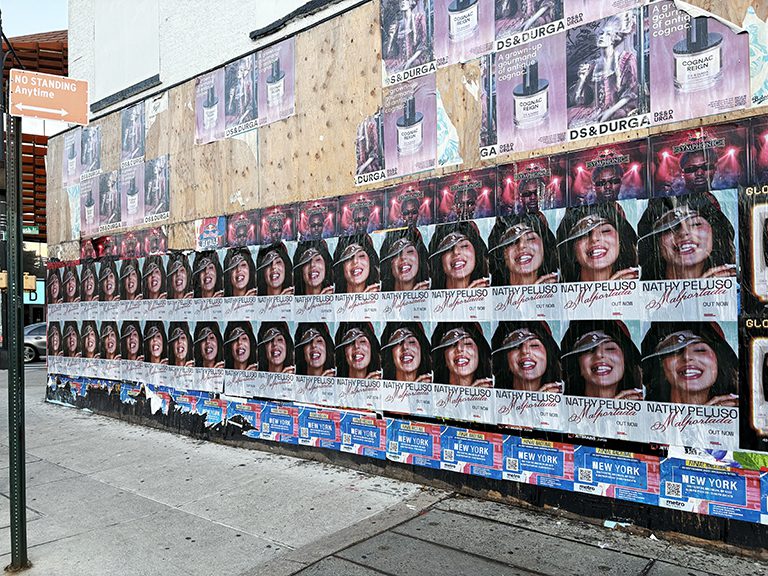
From the Old City to Market Square to the UT Strip — guerrilla poster campaigns built for Vol Nation and East Tennessee’s thriving creative scene.
Knoxville sits at a crossroads that makes it one of the most interesting mid-size advertising markets in the South. It is a flagship state university city — home to the University of Tennessee’s 28,000-plus-student main campus and the passionate Vol Nation fanbase that transforms Neyland Stadium into the loudest venue in college football several Saturdays each fall. It is an Appalachian gateway — the last major city before the Great Smoky Mountains National Park, which receives 14 million visitors annually, more than Yellowstone and the Grand Canyon combined. And it is an emerging creative and culinary city — a place where a decade of concentrated investment in Market Square, Old City, and Gay Street has produced a genuinely distinctive restaurant, music, and arts scene that is beginning to attract the kind of national attention that earlier characterized Chattanooga’s much-publicized urban revival. For fly posting campaigns, these three identities translate into three distinct audience segments that can be reached simultaneously through strategic neighborhood deployment.
The University of Tennessee’s presence reshapes Knoxville’s demographics in ways that matter enormously for advertising strategy. The UT campus injects 28,000 students into a city with a total population of roughly 192,000 — meaning that students represent nearly 15 percent of the city’s population and a much higher percentage of its cultural conversation. These are 18-to-24-year-olds who are in the most brand-formative years of their lives, making their first independent purchasing decisions for everything from music streaming services to clothing brands to food choices to live entertainment. They congregate on Cumberland Avenue — called “The Strip” by locals — the bar and restaurant corridor that runs along the western edge of campus. They gather on Market Square for the weekly outdoor farmers market and summer concert series. They pack Old City’s music venues on Friday and Saturday nights. And on seven Saturdays in the fall, 102,455 of their closest friends descend on Neyland Stadium for Tennessee Volunteers football games, creating the largest single-day concentration of foot traffic in the entire city by an enormous margin.
Beyond the student population, Knoxville has developed a young professional creative class that is distinct from both the student body and the surrounding suburban commuter population. These are Knoxville natives who chose to stay in their city, transplants from larger metros who have followed Knoxville’s cultural revival, and former UT students who graduated and decided to build careers in a city they’d grown to love. They live in 4th & Gill’s historic bungalow district, in Fort Sanders’ dense urban neighborhood adjacent to campus, along the South Waterfront’s developing residential corridor, and in the cluster of neighborhoods that orbit Market Square and Gay Street. They are the audience that makes Knoxville’s independent restaurant scene viable, that supports Old City’s music venues night after night, and that has driven the craft brewery culture that has established Knoxville as one of the better craft beer cities in the South. Fly posting in their neighborhoods reaches the segment of the Knoxville market that functions as the city’s taste leadership.
American Guerrilla Marketing executes Knoxville fly posting campaigns with the same operational precision and creative intelligence that has earned the trust of clients including Netflix, EA Sports, The Onion, Biossance, and Shepard Fairey. Our Knoxville campaigns are built around real local knowledge of where different audience segments actually spend their time — not geographic assumptions based on the city’s overall demographic profile.
Ready to Reach Vol Nation?
From game-day Cumberland Avenue to Old City's weekend music scene — AGM builds Knoxville fly posting campaigns that capture the full energy of East Tennessee's most exciting city.
Our Campaign Locations
Browse Cities in Tennessee
Select a city to explore Fly Posting Advertising opportunities.
Fly Posting At Stadium Scale: Why Knoxville's Density Events Matter
The concept of density is central to understanding why fly posting works in Knoxville in ways that feel qualitatively different from how it works in markets without a major university stadium. On a typical weekday, Knoxville’s downtown and university-adjacent neighborhoods generate steady but moderate pedestrian foot traffic — the kind of daily exposure that makes fly posting effective for sustained brand-awareness campaigns. But on Tennessee Volunteers football Saturdays, the geography transforms. Neyland Stadium’s 102,455 capacity makes it one of the five largest stadiums in the world by seating, and the surrounding streets, bars, restaurants, and parking lots fill with fans who arrive hours before kickoff and remain in the area well after the final whistle. The Cumberland Avenue Strip — the primary bar corridor adjacent to campus — can see 30,000 or more people moving through it on a home game Saturday between noon and midnight. Every poster on every surface in that corridor is seen multiple times by multiple people who are in a heightened emotional state, surrounded by their community, and maximally receptive to the social signals around them.
This game-day density effect is something AGM specifically plans Knoxville campaigns around. For any brand whose target demographic overlaps with the UT fan base — which is to say virtually any brand targeting 18-to-50 Southern consumers — timing a Knoxville fly posting campaign to align with home game weekends multiplies impression delivery dramatically. A campaign installed on Thursday before a Saturday home game and maintained through the week captures game-day peak impressions plus the normal weekly foot traffic between game weekends. AGM maintains a UT home game calendar and factors it into every Knoxville campaign scheduling discussion as a matter of standard practice.
Beyond football, the Market Square weekly events calendar creates a secondary recurring density moment that AGM factors into campaign scheduling throughout the non-football season. Market Square’s Wednesday and Saturday outdoor farmers market regularly draws 2,000 or more visitors to the central downtown space. The summer concert series brings additional crowd events to the square’s outdoor stage. First Friday gallery openings throughout downtown and Old City draw the creative community to galleries and independent businesses for monthly evening events. These recurring micro-density moments compound the effectiveness of a Knoxville fly posting campaign throughout the year, not just during football season.
Knoxville Fly Posting Pricing
Knoxville pricing includes professional installation, pre-campaign location scouting across all target neighborhoods, surface preparation, and comprehensive geo-tagged post-campaign documentation. Campaigns timed to UT home football game weekends are available with game-day scheduling coordination. Smoky Mountains tourism season campaigns (summer and fall leaf season) available with extended-run pricing. Contact AGM for Knoxville-specific campaign quotes.
Build Your Fly Posting Campaign
Award Winning Personalized Service
You will get thoughtful, devoted, and individualized attention from our experienced, qualified, and professional personnel. Being one of the most illustrious agencies in Brooklyn, New York, American Guerrilla Marketing has been awarded the Best of Brooklyn title.
Nationwide
Industry City, Brooklyn, New York 11232
American Guerrilla Marketing
Hours
Mon - Fri: 9 AM - 5 PM
Sat & Sun: Closed
Automate your campaign with AGM’s Request for Proposal Builder.
Automate your campaign with AGM’s Request for Proposal Builder. Simply answer a few quick questions about your campaign goals, markets, and timeline, and the system will generate a tailored presentation with recommended strategies, quantities, and pricing. Click the RFP Builder to instantly receive your customized proposal.
Knoxville Campaign Strategy
The central strategic insight for Knoxville fly posting is that the city’s most valuable advertising windows are defined by events and institutional calendars rather than by fixed neighborhood demographics alone. Unlike cities where audience density is relatively stable throughout the year, Knoxville’s audience profile shifts dramatically based on what the University of Tennessee is doing, what the Smoky Mountains tourism season is doing, and what Market Square’s event calendar is generating. A campaign that ignores these rhythms and simply places posters in static locations throughout the year is missing the city’s most powerful amplification windows.
For entertainment brands — music labels, touring acts, streaming platforms, film studios — the strongest Knoxville campaign windows are the fall football season (September through November home games), the spring semester’s arts and concert season (February through April), and the first weeks of fall semester re-entry (late August) when the new student class is arriving and forming its initial brand relationships with the Knoxville market. For outdoor, lifestyle, and consumer brands targeting Knoxville’s Great Smoky Mountains tourism adjacency, the summer peak (June through August) and the fall leaf season (October through early November) are the high-visitor windows when Knoxville’s hotels, restaurants, and downtown corridors see elevated foot traffic from out-of-state visitors using the city as a base for Smoky Mountains access.
A dual-tier Knoxville campaign structure works exceptionally well for most brands. The student-facing tier deploys on Cumberland Avenue (The Strip), the Fort Sanders residential corridors adjacent to campus, and the Old City venues that serve the UT student social scene. The community-facing tier covers Market Square and Gay Street, the 4th & Gill neighborhood, and the South Waterfront corridor where Knoxville’s post-student creative class lives and socializes. Running both tiers simultaneously ensures that a Knoxville campaign reaches both the city’s largest demographic segment (students and university community) and its most culturally influential resident segment (young creative professionals and established arts community).
For campaigns specifically targeting Knoxville’s outdoor and adventure-adjacent audience — a rapidly growing demographic as Knoxville’s proximity to the Smokies has fueled in-migration of outdoor enthusiasts — the Market Square neighborhood and the South Waterfront’s developing recreation infrastructure are the key posting zones. The 4th & Gill neighborhood’s weekend cycling and running culture creates additional touchpoints for outdoor brand campaigns that want to reach active lifestyle consumers in their natural geographic habitat.
Knoxville Neighborhood & Corridor Targeting
Old City (Jackson Avenue)
Knoxville’s arts and independent music district, anchored by the Jackson Avenue warehouse blocks. Old City hosts the city’s premier independent music venues — including International and The International — alongside art galleries, cocktail bars, and the creative community that makes the neighborhood Knoxville’s equivalent of East Nashville. The district’s exposed brick warehouse aesthetics provide outstanding surfaces for large-format poster campaigns. Weekend evenings draw a mixed-age creative audience from across the Knoxville metro.
Market Square
The historic central square of downtown Knoxville, surrounded by restaurants, bars, and boutique retail. Wednesday and Saturday farmers markets draw 2,000-plus regular visitors. Summer concert series and special event activations throughout the year make Market Square Knoxville’s primary community gathering point. The adjacent Gay Street corridor — Knoxville’s primary downtown main street — extends the foot traffic zone northward through the heart of the city’s restaurant and entertainment district.
Cumberland Avenue (The Strip)
The primary commercial corridor serving UT’s 28,000-plus students, running along the western edge of campus. The Strip’s concentration of bars, restaurants, music venues, and student-serving retail generates sustained daily foot traffic from the UT community. On home football Saturdays, Cumberland Avenue becomes one of the densest pedestrian corridors in Tennessee. AGM’s Strip placements target the building surfaces along Cumberland and the adjacent side streets that feed foot traffic between campus and the downtown core.
4th & Gill / Fort Sanders
Two adjacent historic residential neighborhoods that form the backbone of Knoxville’s young professional residential community. Fort Sanders sits immediately northwest of the UT campus and is one of the densest student residential areas in the city. 4th & Gill is the more established historic district attracting young families and creative professionals who want walkable neighborhood amenity without the undergraduate intensity of Fort Sanders. Both neighborhoods create daily pedestrian exposure for fly posting through their concentrated residential and retail corridors.
South Waterfront / World’s Fair Park
The Tennessee River waterfront south of downtown is Knoxville’s most actively developing new neighborhood. Suttree Landing Park, the Urban Wilderness trail system, and the developing residential and commercial nodes along the waterfront create an emerging foot traffic zone that is growing rapidly with each year of new development. World’s Fair Park, adjacent to the UT campus on the western edge of downtown, adds outdoor event space and festival-season foot traffic to the zone.
Why Choose Agm For Knoxville Fly Posting?
AGM’s national client roster — Netflix, EA Sports, The Onion, Biossance, Shepard Fairey — reflects the standard of operational precision and creative insight that we apply to every market, including Knoxville. Our Knoxville crews are not general contractors renting a bucket of paste and a ladder. They are trained installation specialists who understand which surfaces in Old City, the Strip, and Market Square provide the best adhesion conditions, which property owners have established posting relationships with AGM, and how to execute campaign drops on the compressed timelines that UT game week schedules demand.
For entertainment brands launching in Knoxville, we offer the specific advantage of understanding the UT entertainment calendar — which campus organizations book venues, when major concerts at Thompson-Boling (now Food City Center) are scheduled, and when the student population’s attention is most concentrated. That knowledge turns a general Knoxville poster campaign into a precision entertainment industry deployment that can match posting windows to peak audience engagement in ways that general outdoor advertising cannot.
Frequently Asked Questions — Knoxville Fly Posting
UT game days transform Knoxville’s downtown and university-adjacent corridors into one of the densest pedestrian environments in Tennessee. Neyland Stadium’s 102,455 capacity makes game-day Saturdays a unique amplification window for any fly posting campaign that has been installed in advance of the crowd. AGM’s standard recommendation for game-day-optimized Knoxville campaigns is to install posters on the Tuesday or Wednesday before a Saturday home game, ensuring that the campaign is fresh and fully visible for peak game-day foot traffic while also capturing the regular weekly foot traffic between game days. The Cumberland Avenue Strip, the downtown Gay Street corridor, and the blocks between campus and Market Square are the three highest-value zones for game-day impression delivery. On-campus posting requires separate University authorization and is not part of AGM’s standard Knoxville offering.
Raw foot traffic peaks in three distinct patterns in Knoxville. The absolute highest single-day volume is Cumberland Avenue on UT home football Saturdays — easily the highest pedestrian concentration in the city. For consistent weekly foot traffic throughout the year, Market Square’s Wednesday and Saturday farmers market windows and the Old City weekend nightlife peak are the most reliable high-volume windows. For sustained daily exposure, the Gay Street downtown corridor and the Fort Sanders residential corridors adjacent to campus generate the most consistent daily foot traffic year-round. AGM recommends a placement strategy that captures all three traffic patterns rather than concentrating exclusively on any single one.
Yes, and Smoky Mountains tourism adjacency is one of Knoxville’s most distinctive campaign opportunities. The Great Smoky Mountains National Park — the most visited national park in the United States, with 14 million annual visitors — is accessed via Sevierville, Gatlinburg, and Pigeon Forge, all of which are within 30 to 45 minutes of downtown Knoxville. Many Smoky Mountains visitors use Knoxville as a base camp, staying in Knoxville hotels and visiting the park on day trips. This visitor population flows through Knoxville’s downtown and hotel corridor, creating a tourism-adjacent impression opportunity that is distinct from both the student audience and the resident creative community. AGM can focus Knoxville placements specifically on the hotel corridor, the Gateway to the Smokies wayfinding zone on Henley Street, and the western entrance approach to the city to maximize reach among Smoky Mountains tourist traffic.
Knoxville’s fly posting clientele divides cleanly into three categories. The largest is entertainment brands — touring musicians playing shows at Thompson-Boling Arena (Food City Center), Mill & Mine, International, or Tennessee Theatre; record labels supporting Tennessee-based artists; and streaming platforms building awareness in the college market. The second category is outdoor and lifestyle brands targeting Knoxville’s adventure-oriented young adult demographic and the Smoky Mountains tourist adjacency — brands in outdoor gear, apparel, and active lifestyle categories have found Knoxville an exceptionally receptive market. The third category is consumer brands using college markets as launch platforms for new products targeting 18-to-24-year-olds — snack and beverage brands, apparel companies, tech products, and entertainment subscriptions all run regular college market campaigns in Knoxville as part of broader national university strategies.
Old City and Market Square serve distinct audience segments in Knoxville, which is exactly why most effective campaigns use both. Old City’s Jackson Avenue warehouse district draws a self-selecting creative audience — music fans, artists, and entertainment enthusiasts who are specifically seeking the kind of independent venue culture that Old City offers. This is a smaller but highly engaged audience that is deeply receptive to music, arts, and entertainment brand advertising. Market Square draws a broader cross-section of Knoxville life — farmers market regulars, downtown residents, office workers grabbing lunch, tourists orienting themselves to the city, and weekend dining-and-drinks crowds. Market Square campaigns reach a wider demographic range, while Old City campaigns reach a more intensely engaged cultural audience. For entertainment brands, Old City is essential. For consumer brands seeking broad downtown reach, Market Square is typically the primary recommendation.
Absolutely — football season timing is one of AGM’s most common Knoxville campaign configurations. The UT football home schedule typically includes six or seven home games per season between September and November, creating a recurring weekly mega-event that amplifies campaign impressions dramatically. AGM’s football season Knoxville packages are structured around the home game calendar, with installations timed to be fresh for the first home game and maintained or refreshed through the final home date of the regular season. For brands that want to reach the entire spectrum of the Tennessee Vol fanbase — which extends far beyond the student body to include Knoxville residents, East Tennessee alumni, and visitors driving to Knoxville specifically for game weekends — the football season window provides an unparalleled concentration of the target audience in a defined geographic footprint.
Knoxville’s built environment varies significantly by neighborhood in ways that affect format choice. Old City’s Jackson Avenue warehouse district features the city’s largest and most visually prominent wall surfaces — multi-story brick facades with blank secondary walls that are perfectly suited to 48″×72″ large-format campaigns. These anchor placements function as near-billboard-scale installations in a pedestrian environment, and they have become iconic elements of Old City’s visual landscape. Market Square’s retail corridor and Gay Street’s restaurant zone feature smaller-scale storefronts where the 24″×36″ format creates the right proportional presence without overwhelming the pedestrian scale of the street. Cumberland Avenue’s Strip is a mixed environment — some large commercial facades accommodate large format, while the denser sections of bar and restaurant storefronts work better with standard-format saturation. AGM conducts format-specific scouting for every Knoxville campaign to match poster sizes to the specific surfaces where each format will perform at its highest visual impact.
Remote campaign management is standard practice for AGM’s Knoxville clients. The majority of our Knoxville campaigns are booked by entertainment industry clients in Nashville, New York, or Los Angeles who want Knoxville market presence without sending a local team to manage the execution. AGM’s remote coordination process begins with a comprehensive campaign brief — your creative files, timing requirements, neighborhood targeting objectives, and any specific location preferences — submitted digitally. From that brief, AGM produces a proposed placement map with specific location descriptions, format assignments, and an installation timeline for your review and approval. Once approved, our Knoxville crew executes the installation and delivers a complete photo documentation package within 48 hours. Remote clients receive the same documentation quality and coverage confidence as clients with local market presence, and our Knoxville account managers are available for real-time communication throughout the execution window.
The Oak Ridge National Laboratory community — one of the largest science and energy research facilities in the country, employing approximately 6,000 scientists, engineers, and support staff — is located 25 miles west of downtown Knoxville and draws a significant professional population that commutes through or lives in the Knoxville metro. This research-oriented demographic with above-average income and education levels is reached through Knoxville fly posting campaigns targeting the western residential corridors where ORNL commuters concentrate — particularly the Bearden, West Knoxville, and Farragut areas — and through the downtown Knoxville entertainment districts where ORNL professionals spend leisure time. Brands in technology, outdoor gear, premium consumer goods, and educational services find the ORNL-adjacent demographic a high-value target segment within the broader Knoxville campaign.
Knoxville’s climate is characterized by moderate humidity and significant temperature variation across seasons — hot, humid summers with frequent afternoon thunderstorms, and cold winters with occasional ice and snow. Summer campaigns in Knoxville face the same high-humidity adhesion challenges as other Southern Tennessee markets, and AGM uses moisture-resistant formulations calibrated for the region’s summer conditions. Fall campaigns — which include the critical football season window — typically encounter the most favorable weather conditions for poster longevity, with lower humidity, moderate temperatures, and relatively dry conditions through mid-October. Winter campaigns face cold-weather adhesion challenges that AGM addresses through temperature-appropriate formulation adjustments and installation timing that avoids freezing surface temperatures. Spring campaigns in Knoxville face higher rainfall risk from the region’s spring storm season. AGM provides weather monitoring throughout the campaign window and schedules replacement installations for any posters that show weather-related degradation before the campaign’s planned end date.
Our Campaign Locations
Browse All States
Explore Fly Posting Advertising opportunities across the United States.
49 States • 192 Cities