American Guerrilla Marketing
Nationwide Service
Media planning, media buying, billboard advertising, & guerrilla marketing
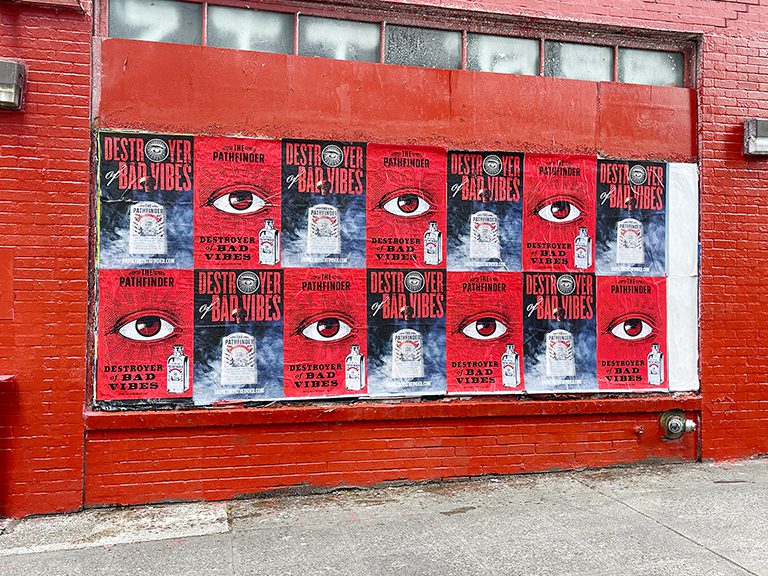
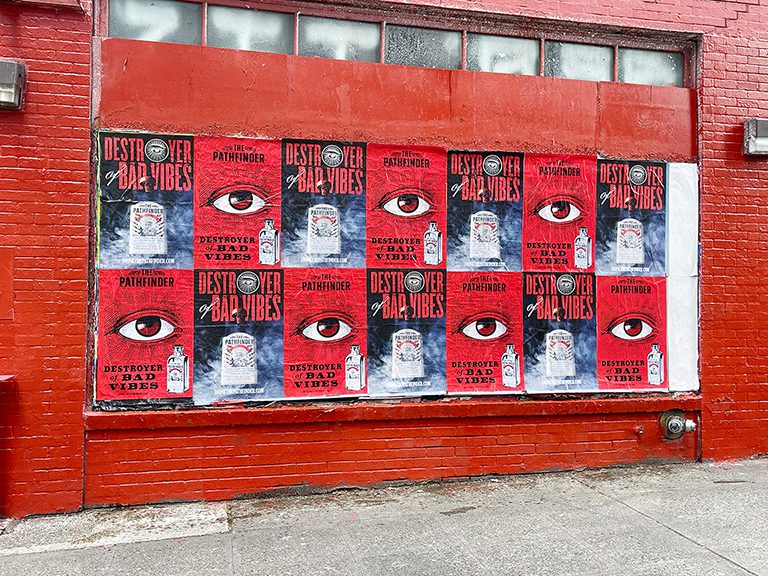
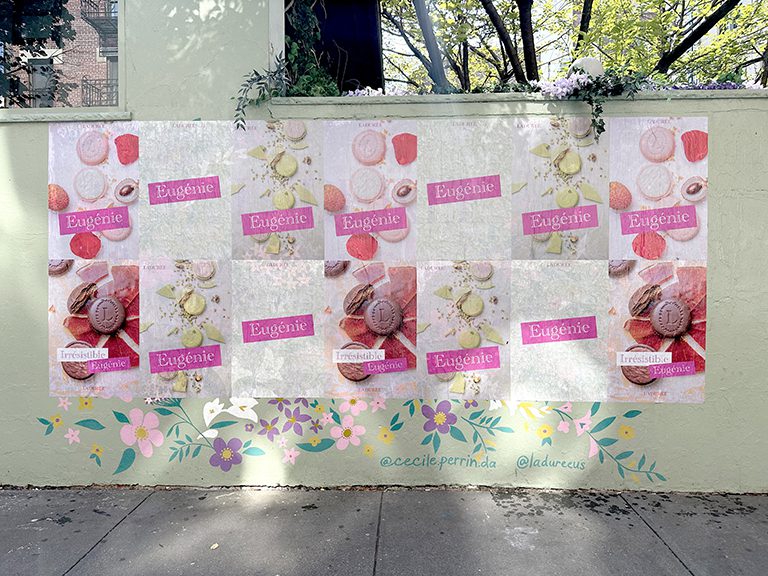
Nebraska’s largest city has the surface stock to match. Nineteenth-century warehouse brick in the Old Market, a genuine arts district in Benson, and fast-growing nightlife in the Blackstone District — Omaha delivers fly posting conditions that national brands consistently underestimate. AGM brings in-house crews, precision placement, and GPS-documented proof to every campaign.
Omaha’s identity in the national advertising conversation is shaped by a persistent misconception: that it’s a big small city, a regional hub rather than a genuine market. The reality is more interesting. Omaha is home to five Fortune 500 companies — Berkshire Hathaway, Union Pacific, Mutual of Omaha, Conagra Brands, and Kiewit Corporation — giving the city a professional-class population, an established entertainment infrastructure, and a level of consumer sophistication that most secondary markets lack. The unemployment rate consistently runs below the national average. Household incomes in Omaha’s established neighborhoods trend substantially higher than per-capita state figures suggest. And the city’s built environment — particularly the Old Market district — is among the most distinctive and fly posting-ready urban landscapes anywhere in the central United States.
What distinguishes Omaha from comparable mid-size American cities for fly posting purposes is the specific architectural character of its entertainment core. The Old Market is built on converted commercial and warehouse structures from the 1880s through the 1920s — a cohesive historic district with exterior walls of painted and unpainted brick, large building sides facing high-traffic pedestrian corridors, and a physical scale that accommodates large-format wheat paste posters in ways that generic suburban commercial architecture never can. The cobblestone streets and preserved building stock draw a consistent foot traffic mix of tourists, young professionals, arts audiences, and diners throughout the week. This is not a district that comes alive only on weekends — it generates pedestrian traffic seven days a week, which means a two-week fly posting window in the Old Market delivers genuine daily impression accumulation rather than weekend-only reach.
Beyond the Old Market, Omaha has developed a network of distinct entertainment and arts neighborhoods over the past decade — Benson on the northwest side with its independent music scene, Midtown with the Turner Park development and growing young-professional residential density, and the Blackstone District on Farnam Street emerging as one of the fastest-growing nightlife and dining destinations in the metro. This neighborhood diversification gives Omaha’s fly posting campaigns genuine geographic and demographic range. A campaign that runs across the Old Market, Benson, and Blackstone simultaneously reaches three meaningfully different audience segments — the tourist and dining crowd, the independent arts community, and the nightlife-going young professional — without overlapping the same individuals across placements. That demographic layering is what makes Omaha one of the most complete fly posting markets in the Great Plains.
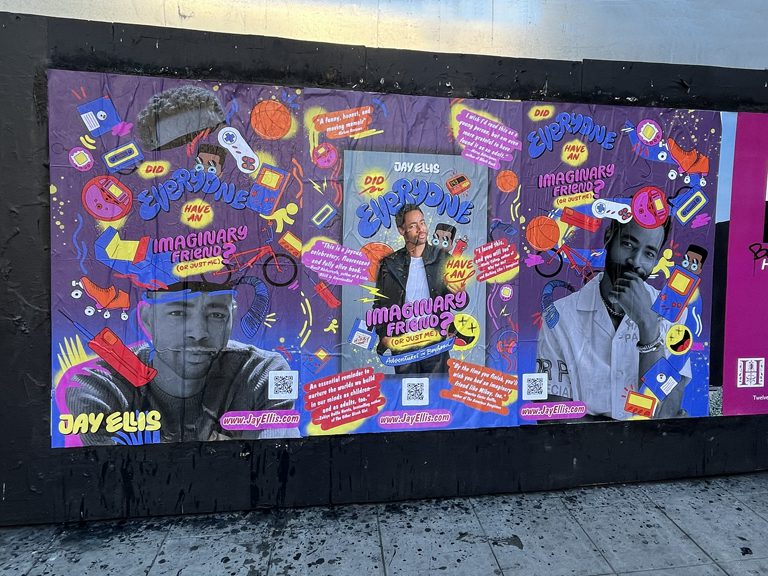
When AGM executed the Jay Ellis Manhattan campaign — placing street posters across Williamsburg, the Lower East Side, and Hell’s Kitchen in a talent-adjacent entertainment release window — the execution model was the same one we apply to Omaha: specific surface targeting in the neighborhoods where the target audience actually concentrates, large-format placements that command attention rather than blending in, and GPS-documented photo proof that lets the campaign team see exactly where every poster landed. Omaha deserves and receives exactly that level of campaign discipline.
Warehouse brick in the Old Market, a real arts scene in Benson, and fast-growing nightlife in Blackstone — Omaha's surface landscape and audience profile are built for fly posting. AGM handles everything: surface targeting, in-house print, crew installation, and GPS-documented photo proof. Tell us your neighborhoods, your timing, and your creative.
Select a city to explore Fly Posting Advertising opportunities.
If you’ve never run a fly posting campaign in a historic warehouse district, the surface advantage is difficult to fully appreciate until you see it in execution. In generic commercial corridors — strip malls, concrete block retail buildings, glass-and-steel office construction — the available fly posting surfaces are limited and often mediocre: plywood barriers on construction sites, painted utility structures, occasional building sides with adequate smoothness. The creative lands, but without a backdrop that contributes to its visual impact.
The Old Market is different. The 19th-century warehouse construction that defines the district produces building exteriors with large, contiguous wall faces — sometimes thirty or forty feet wide and multiple stories tall — in painted or unpainted brick that holds wheat paste at extremely high adhesion quality. These walls are not incidental surfaces; they are landmark surfaces. A 48×72 fly posting placement on a well-chosen Old Market warehouse exterior occupies the visual field of everyone who passes that building for the duration of the campaign. It doesn’t blend with the surrounding environment — it becomes part of it. The building’s scale, age, and visual weight lend the posted creative a gravitas that the same creative on a suburban plywood barrier simply doesn’t generate.
The cobblestone street grid of the Old Market also contributes to poster visibility in a specific way: pedestrian movement on cobblestone is slower, more deliberate, and more attentive than movement on standard pavement. People navigating cobblestone streets — particularly tourists and first-time visitors exploring the district on foot — move at a pace that allows genuine engagement with what’s on the walls around them. The Old Market’s architecture forces a kind of visual attention that efficient urban sidewalks do not. A poster placed correctly in this environment is not glimpsed; it’s encountered.
For brands that have run fly posting in major coastal cities, the Old Market’s surface quality will feel familiar. For brands running their first Omaha campaign, it will likely exceed expectations. The district genuinely competes with the surface landscapes of Chicago’s Wicker Park, Brooklyn’s Williamsburg, or Los Angeles’s Arts District — and does so at a fraction of the media cost those markets command. This is the central case for Omaha as a fly posting destination: world-class surface quality at mid-market pricing.
Omaha’s fly posting geography divides across four primary neighborhoods, each offering distinct surface conditions, audience demographics, and campaign timing logic. AGM maps placements across these zones based on campaign objectives, target demographics, and the specific surface opportunities available at the time of installation.
The Old Market is Omaha’s premier fly posting environment and the surface zone where AGM concentrates large-format 48×72 placements for maximum visual impact. The district’s warehouse construction from the late 19th and early 20th centuries provides the largest and smoothest exterior wall surfaces available in any Nebraska market — building sides facing Howard Street, Harney Street, and the alley network between 10th and 13th Streets offer posting positions that function as visual anchors for the entire district. Foot traffic through the Old Market on evenings and weekends is concentrated and diverse: tourists visiting the historic cobblestone district, local diners and bar-goers, arts audiences attending the galleries and performance venues that populate the neighborhood, and Omaha’s young professional community treating the district as its social center. Peak pedestrian density runs Thursday through Saturday evenings, with substantial daytime weekend traffic from the tourism and brunch audiences. A fly posting campaign concentrated in the Old Market reaches Omaha’s broadest and most visible public audience from a single district.
Benson is Omaha’s independent arts and music district, occupying the northwest side of the city along Maple Street between roughly 52nd and 62nd Streets. Unlike the Old Market — which draws a diverse mix including tourists and suburban diners — Benson’s audience is overwhelmingly local and community-embedded: independent music fans, gallery-goers, craft beer and cocktail bar regulars, and the artists and creative professionals who actually live in the neighborhood. Benson already has a visual culture that includes murals, show posters, and community art installations — a context in which fly posting participates authentically rather than appearing as an intrusion. The Benson neighborhood hosts live music most nights of the week at venues including O’Leaver’s, The Waiting Room, and Reverb Lounge, creating consistent late-evening foot traffic from a culturally engaged audience that is precisely the target for music, entertainment, and arts-adjacent brand campaigns. 24×36 poster density throughout the Maple Street corridor builds frequency with this resident community in a way that large-format Old Market placements aimed at tourists cannot replicate.
Midtown Crossing is the mixed-use development complex anchoring Midtown Omaha’s revitalization — a concentration of residential apartments, co-working spaces, restaurants, retail, and Turner Park, the outdoor green space that hosts Omaha’s summer concert series and community events. The development has attracted a young professional and creative-class residential population to Midtown, and the park programming activates the surrounding blocks on concert nights and weekend events throughout the warmer months. The demographic here skews toward the 27-to-40 professional range — college-educated, higher-income than the city median, brand-conscious, and digitally active. Fly posting in the commercial zones surrounding Turner Park and Midtown Crossing reaches this audience in the leisure and community-engagement environment of their home neighborhood, rather than in a tourist-facing district like the Old Market. The Turner Park concert series creates specific high-foot-traffic windows from May through September; campaigns timed to those events reach a pre-engaged entertainment audience in exactly the right frame of mind for brand discovery.
The Blackstone District has emerged as one of Omaha’s fastest-growing entertainment destinations over the past several years — a four-block stretch of Farnam Street anchored by a boutique hotel, independent restaurants, cocktail bars, and a nightlife scene that draws the young professional crowd that used to center entirely on the Old Market. The district’s development pace has been significant: new construction alongside historic commercial buildings creates an active construction barrier presence alongside available building-side posting surfaces. Weekend evening foot traffic through the Blackstone corridor is dense and brand-attentive — the audience here is specifically going out, spending on food and drinks, and in the experiential, discovery-oriented mindset that makes entertainment and lifestyle brand messaging particularly effective. For brands seeking reach into Omaha’s emerging nightlife geography outside the Old Market’s established tourist circuit, the Blackstone District is the highest-growth fly posting zone in the city.
Award Winning Personalized Service
You will get thoughtful, devoted, and individualized attention from our experienced, qualified, and professional personnel. Being one of the most illustrious agencies in Brooklyn, New York, American Guerrilla Marketing has been awarded the Best of Brooklyn title.
Nationwide
Industry City, Brooklyn, New York 11232
American Guerrilla Marketing
Hours
Mon - Fri: 9 AM - 5 PM
Sat & Sun: Closed
Automate your campaign with AGM’s Request for Proposal Builder. Simply answer a few quick questions about your campaign goals, markets, and timeline, and the system will generate a tailored presentation with recommended strategies, quantities, and pricing. Click the RFP Builder to instantly receive your customized proposal.
AGM brings full in-house fly posting capability to Omaha in both standard formats. Print production, crew installation, paste materials, and GPS-documented photo proof are all included in campaign pricing — no third-party vendors, no subcontracted installation, no ambiguity about where your campaign ran or what it looked like when it went up.
The density format for Omaha campaigns. At roughly two feet by three feet, the 24×36 is built for volume — distributing your campaign across multiple Omaha neighborhoods simultaneously for maximum geographic reach and impression frequency. In Benson’s Maple Street corridor, 24×36 saturation posting builds frequency with the local arts community across the full campaign window.
The dominance format for Omaha’s best surfaces. At four feet by six feet, the 48×72 is designed for the Old Market’s warehouse walls — building exteriors where the scale of the surface matches the scale of the creative. A single 48×72 placement on a well-chosen Old Market wall can function as the campaign’s visual anchor for the full two-week window.
The most effective Omaha campaigns layer both formats: 48×72 statement placements on the Old Market’s premier warehouse walls plus 24×36 saturation posting through Benson, Midtown Crossing, and the Blackstone District. This combination delivers landmark visibility in Omaha’s highest-prestige posting environment alongside broad neighborhood coverage of the arts, young professional, and nightlife audiences concentrated in the city’s growing entertainment geography. Contact AGM to scope the right format combination for your Omaha campaign objectives and budget.
AGM’s Omaha campaign process starts before a single poster is printed. Pre-campaign surface scouting walks every target zone — Old Market warehouse faces, Benson Maple Street building sides, Midtown Crossing commercial blocks, and the Blackstone District’s Farnam Street corridor — to assess specific walls, barriers, and exterior surfaces against our placement criteria. We evaluate surface smoothness, structural integrity, paste durability factors, traffic exposure from both pedestrian and vehicle angles, and whether the specific location delivers the visual impact the campaign brief requires. Surface selection in Omaha is a judgment process, not a random distribution — and the quality of those judgments is what separates a professionally executed fly posting campaign from a generic poster scatter.
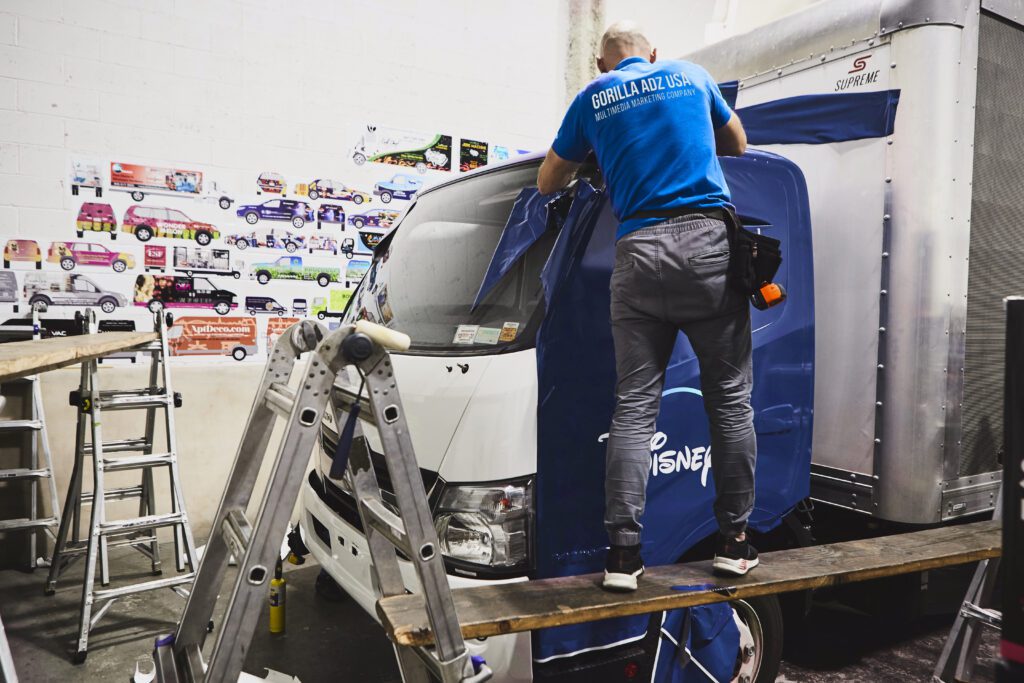
Following surface confirmation, print production runs entirely through AGM’s in-house facility. Your approved creative goes directly to our printing operation — no outsourced print shop with its own quality variables, no color drift between proof and production, no missed deadline from an external vendor. The posters that come off our press are the posters that go on Omaha’s walls. AGM’s installation crews handle all paste application and placement on the ground in Omaha. Every placement is a deliberate act by our trained personnel under our supervision — not a contract job dispatched to a local labor pool.
Immediately following installation, our teams photograph every placement with GPS-enabled documentation. The resulting post-campaign photo report accounts for every poster in every location — the specific wall, the block, the street address, and the geolocation coordinates of the placement. For multi-neighborhood Omaha campaigns covering the Old Market, Benson, and Blackstone simultaneously, the report documents all placements across all zones in a single comprehensive package. You see the Old Market warehouse wall placements, the Benson Maple Street density posting, and the Blackstone District corner placements — all geotagged and photographed at installation. There is no ambiguity, no representative sampling, no trust-me reporting. The GPS photo proof is a complete and unambiguous accounting of the campaign as executed.
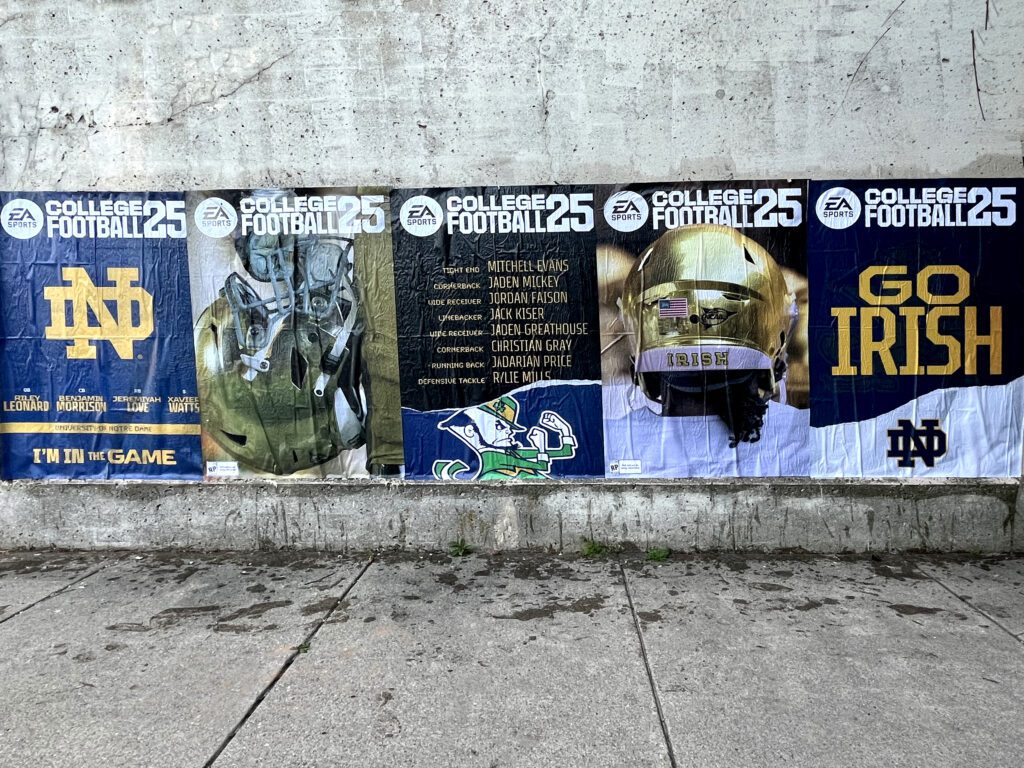
AGM’s Best of Brooklyn award recognition reflects the standard of execution that this process produces. The brands that have trusted us with their campaigns — Netflix, The Onion, EA Sports, Biossance, and Shepard Fairey among them — chose AGM specifically because the zero-subcontractor, GPS-documented model eliminates the quality and verification gaps that third-party or locally subcontracted fly posting campaigns routinely produce. Omaha clients get that same standard.
Omaha’s market composition makes it well-suited for a specific set of brand categories and campaign objectives that the city’s size and consumer profile support more effectively than its reputation might suggest. Understanding where Omaha fly posting performs best helps brands allocate campaign budgets correctly and set realistic expectations for reach and response.
Entertainment brands running multi-city national campaigns consistently include Omaha for its combination of Fortune 500 corporate headquarters presence and a young-professional, arts-adjacent consumer base that indexes highly for early adoption of entertainment products. A streaming service, gaming title, or touring act that deploys fly posting in Omaha’s Old Market and Benson simultaneously reaches both the brand-sophisticated professional-class audience and the independent-arts, music-community audience in a single campaign window. These are the two consumer segments that drive early adoption, word-of-mouth amplification, and social sharing — and they both concentrate in Omaha’s entertainment neighborhoods.
The Fortune 500 corporate presence in Omaha also creates a specific brand campaign context that doesn’t exist in most secondary markets. Berkshire Hathaway’s headquarters makes Omaha one of the most visited secondary cities in the United States for a specific category of business traveler — financial professionals, investors, and corporate executives who travel to Omaha for meetings, conferences, and the annual Berkshire Hathaway shareholders meeting. Fly posting campaigns running during high-traffic corporate event periods in Omaha reach not just local residents but an audience of business and finance professionals who would never otherwise encounter the brand through Omaha-market advertising. That reach extension is an unusual bonus for brands whose target audience includes the financial and corporate professional segment.
Local and regional brands — Omaha-area restaurants launching new locations, regional retailers entering the Nebraska market, service businesses building brand awareness with the young professional population — find fly posting in the Old Market and Blackstone District cost-effective for the quality of audience exposure delivered. The advertising cost per impression in Omaha is substantially lower than equivalent entertainment-district fly posting in Chicago, Kansas City, or Denver, with audience profile and attention quality that competes with those larger markets. For brands with Midwest regional objectives, Omaha offers major-market surface quality at secondary-market pricing.
The Old Market’s building stock dates primarily from the 1880s through the 1920s — a period when commercial and warehouse construction used brick and masonry at a scale that modern construction doesn’t replicate. The result is large, contiguous exterior wall faces in painted or unpainted brick that holds wheat paste at high adhesion quality for the full campaign window. These walls are not incidental posting surfaces — they are architecturally significant building exteriors that lend posted creative a visual authority and scale that generic commercial surfaces cannot provide. A 48×72 placement on a well-chosen Old Market warehouse wall operates as a visual landmark for everyone who passes that building during the two-week campaign duration.
Benson’s existing visual culture — murals on building sides, show posters in bar windows, gallery announcements on utility structures — means its residents are already habituated to noticing and interpreting imagery on walls. A fly posting campaign in Benson participates in this visual ecosystem rather than interrupting it, which significantly affects how the creative is received. The Benson audience does not treat street posters as advertising clutter; they treat them as part of the neighborhood’s cultural texture. That reception dynamic makes Benson one of the most effective neighborhood-level fly posting environments in Omaha for brands whose creative has genuine cultural resonance with an independent arts and music community.
Omaha is home to Berkshire Hathaway, Union Pacific, Mutual of Omaha, Conagra Brands, and Kiewit Corporation — five Fortune 500 companies whose combined corporate presence gives the city a professional-class population with substantially higher disposable income and consumer sophistication than its metro population alone would predict. The Berkshire Hathaway annual shareholders meeting in particular draws tens of thousands of investors and business professionals to Omaha each spring — a period when the city’s hotel capacity fills and the Old Market and downtown zones carry a concentrated mix of high-net-worth visitors alongside the regular Omaha audience. Brands targeting the financial and corporate professional segment find Omaha’s Fortune 500 context creates unusual access to that demographic through fly posting in the entertainment districts those visitors frequent.
Omaha competes favorably on almost every ROI metric. The Old Market’s surface quality rivals historic entertainment districts in cities that cost two to three times more to campaign in. The city’s consumer profile — professional-class income, arts-adjacent consumption patterns, above-average early adoption rates — matches or exceeds comparable mid-size markets like Indianapolis, Kansas City, or Louisville in brand receptivity. The advertising saturation level is lower than in major metros, meaning street-level posters command more share-of-attention per placement. And Omaha’s population stability — relatively low residential turnover compared to coastal cities — ensures that the same consumers see campaign posters repeatedly across the posting window, building cumulative brand familiarity at a cost that coastal-market fly posting cannot approach.
The Blackstone District pulls a concentrated 25-to-40 young professional crowd on Friday and Saturday evenings — Omaha residents who are specifically seeking an alternative to the Old Market’s more tourist-heavy social scene. The demographic skews toward college-educated professionals with above-median incomes, working in Omaha’s corporate, healthcare, and technology sectors, and spending freely on food, drinks, and experiences. This is a brand-receptive, trend-forward audience that responds strongly to entertainment, apparel, food and beverage, and lifestyle brand advertising encountered in the physical environment of their social life. The Blackstone District is one of the fastest-growing nightlife zones in Omaha, and its audience will continue to expand as new openings draw more of the city’s young professional population away from the Old Market’s tourist-dominated Friday nights.
Yes. Single-neighborhood campaigns are a standard option — a brand that wants to reach specifically the Benson arts community, or specifically the Old Market tourist and dining audience, or specifically the Blackstone District nightlife crowd can concentrate the full campaign budget in one zone for maximum saturation within that neighborhood. A 100-poster 24×36 campaign concentrated entirely in the Benson Maple Street corridor, for example, achieves thorough saturation coverage of that specific neighborhood audience. The right scope depends on whether your objective is deep penetration in a specific Omaha community or broad multi-neighborhood reach across multiple audience segments simultaneously.
Midtown Crossing places residential, commercial, and recreational programming in a single walkable development complex, which means the residents who live there are also the people who shop, eat, and socialize there. This self-contained pedestrian ecosystem creates high-frequency exposure for posters placed in the commercial zones and surrounding blocks — the same residents encounter the same campaign multiple times daily as part of their regular movement patterns. The Turner Park concert series programming amplifies this baseline frequency on event evenings, adding out-of-neighborhood visitors to the resident audience for the concert window. The Midtown Crossing poster audience is one of the most stable and repeat-exposure-concentrated in Omaha.
A single-format entry-level Omaha campaign starts at contact us for pricing for 100 posters in the 24×36 format. A multi-neighborhood campaign running 200 posters in 24×36 across the Old Market, Benson, and Blackstone simultaneously costs contact us for pricing. For large-format dominance — 48×72 placements on the Old Market’s warehouse walls and key Blackstone corridor positions — 100 posters run contact us for pricing scaling to contact us for pricing for 200 placements. Comprehensive campaigns combining both formats across multiple neighborhoods will involve custom scoping; the range typically falls between contact us for pricing and contact us for pricing depending on the neighborhood mix, format split, and number of distinct creative designs. Contact AGM for a campaign-specific quote based on your objectives and geography.
AGM maintains an ongoing knowledge of Omaha’s surface landscape — which walls are available, which building owners permit posting, which construction projects have accessible plywood barriers, and which surfaces consistently outperform others in terms of paste adhesion and traffic exposure. Pre-campaign scouting refreshes this knowledge for each specific campaign to account for new construction, surface changes, and shifts in the local physical environment. Surfaces in our network are privately owned walls and barriers where posting is legally permitted. We don’t place on public property or surfaces without authorization. The result is a curated surface portfolio in Omaha that reflects real access and real performance rather than theoretical availability.
Standard turnaround from final creative approval to installation is approximately one to two weeks — time covering print production and crew scheduling. For campaigns with existing ready-to-print creative, the timeline compresses toward the shorter end. Rush production with faster turnaround is available with advance coordination; bring your required installation date to us early and we’ll work backward to a feasible timeline. Campaigns tied to specific events — a concert at the CHI Health Center, a product launch date, a corporate event window — benefit from the earliest possible booking to guarantee installation before the target window opens.
The Jay Ellis wheatpasting campaign in Manhattan — placements across Williamsburg, the Lower East Side, and Hell’s Kitchen around an entertainment release window — demonstrated that talent-adjacent campaigns require neighborhood-level precision to land correctly. The audience a celebrity-adjacent brand wants to reach concentrates in specific districts with specific cultural profiles; generic city-wide distribution misses the cultural context that makes the creative resonate. AGM’s approach in Omaha applies the same precision: Benson for the independent arts audience, the Old Market for the entertainment and arts-going crowd, Blackstone for the aspirational young professional scene. Each neighborhood has a distinct cultural register, and placing the right campaign in the right neighborhood is the discipline that separates effective fly posting from expensive wallpaper.
At 100 posters in the 24×36 format, a campaign covers one or two Omaha neighborhoods with solid saturation — enough placement density to build meaningful frequency with the target community over the two-week window. At 200 posters, the campaign can cover three or four neighborhoods simultaneously with comparable density in each zone, achieving both geographic breadth and per-neighborhood frequency. The contact us for pricing incremental cost between 100 and 200 posters in the 24×36 format makes the 200-poster option one of the most cost-efficient scaling decisions in outdoor poster advertising — essentially doubling coverage for a 22% budget increase. For most Omaha campaigns with multi-neighborhood objectives, the 200-poster option is the higher-value choice.
Yes, materially. The Turner Park concert series runs throughout the warmer months — late spring through early fall — and activates the Midtown Crossing area on concert evenings with foot traffic from across Omaha. Brands running fly posting in the Midtown zone that overlaps with a Turner Park concert event benefit from the concentrated event audience on top of the baseline resident foot traffic. Checking the Turner Park programming calendar when scheduling a Midtown Omaha campaign is a straightforward step that can meaningfully increase impression volume during the campaign window. AGM factors event programming into installation timing recommendations for every Omaha campaign that includes the Midtown zone.