American Guerrilla Marketing
Nationwide Service
Media planning, media buying, billboard advertising, & guerrilla marketing
From Atlanta’s Beltline trail to the cobblestone corridors of Savannah’s historic squares, Georgia’s walkable streets carry the audiences that entertainment, music, beauty, and consumer brands need to reach. AGM runs full-service fly posting campaigns statewide — print, installation, GPS-documented reporting, zero subcontractors.
Georgia has built one of the most culturally productive creative economies in the country over the past two decades, and the physical streets of its cities carry that energy in ways that make fly posting an unusually effective advertising format. American Guerrilla Marketing executes full-service fly posting campaigns statewide — from the creative density of Atlanta’s Old Fourth Ward to the design-literate foot traffic of Savannah’s Broughton Street — with in-house installation crews, GPS-stamped site photography, and wheat-based adhesive that installs and removes cleanly from approved surfaces. No subcontractors. No accountability gaps between brief and execution.
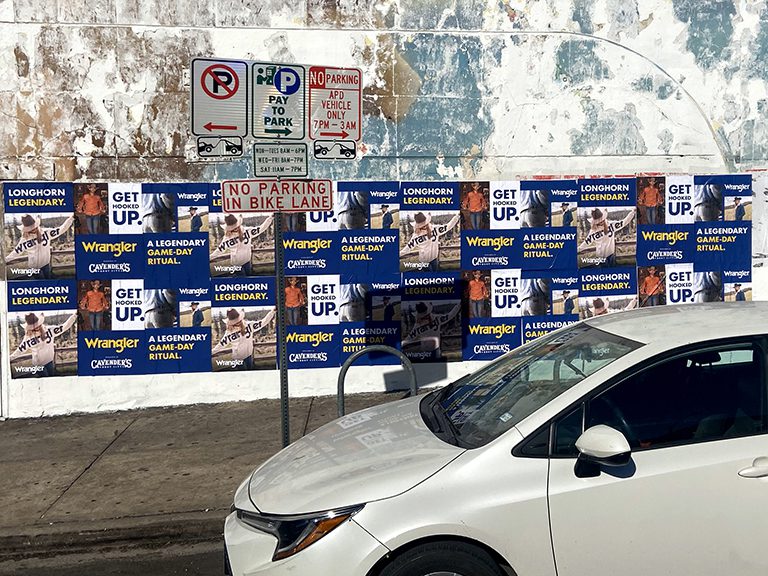
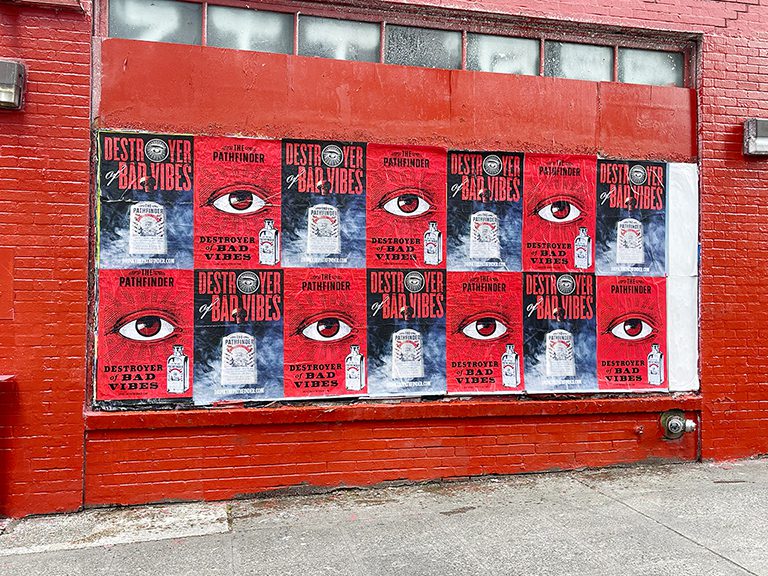
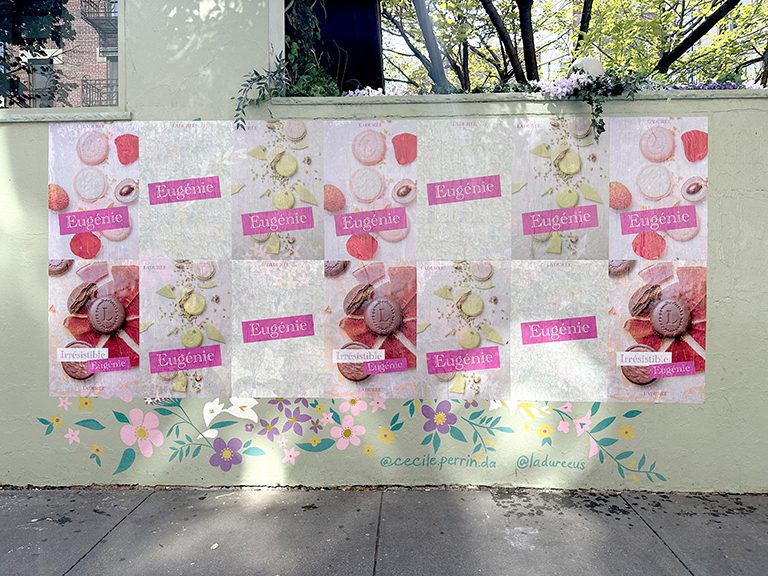
Fly posting — also called wheatpasting or wheat paste advertising — involves applying large-format printed posters to walls, construction hoardings, and approved surfaces using a paste adhesive. The format is particularly effective in walkable urban corridors where pedestrian density is high and repeated visual exposures happen naturally across a campaign’s run. Georgia’s cities — Atlanta above all, but also Augusta, Columbus, and Savannah — each carry walkable commercial, arts, and entertainment corridors where fly posting generates the kind of sustained visual presence that digital-only campaigns cannot replicate and traditional outdoor formats rarely achieve at this scale.
The Georgia street advertising market is stratified by city type and audience profile in ways that require genuine geographic knowledge to navigate well. Atlanta operates as a major metro with the full spectrum of creative district types — arts neighborhoods, entertainment corridors, university-adjacent zones, design districts, and HBCU-adjacent commercial corridors — that support large-scale, multi-neighborhood fly posting runs. Augusta, Columbus, and Savannah are smaller markets with defined high-foot-traffic zones where targeted campaigns can achieve significant neighborhood saturation at lower minimum quantities. AGM’s campaigns are built around this geographic intelligence, not around generic placement databases.
Georgia campaigns are available in 24″×36″ standard and 48″×72″ large-format configurations. Standard format campaigns work best in pedestrian-scale corridors where close-range viewing is the primary exposure mode — coffee shop blocks, music venue strips, gallery neighborhoods, and transit corridors. Large-format campaigns are suited to construction site hoardings, blank arterial walls, and high-visibility surfaces where the poster needs to register at vehicle speed or across an open plaza. AGM’s installation team selects format placement based on the physical context of each target location.
AGM handles every piece of a Georgia fly posting campaign — brief, print, install, GPS report. Whether you're targeting Atlanta, Savannah, Augusta, Columbus, or all four markets at once, we build campaigns that reach the audiences who matter to your brand at street level.
Georgia sits at the intersection of two of the country’s most powerful cultural forces: the hip-hop economy centered in Atlanta and the Southern entertainment production corridor anchored by the state’s film and television industry. These two forces create an environment where visual street culture is not peripheral to how Georgia’s urban audiences engage with brands — it is central. A fly posting campaign in Georgia is an entry into a visual conversation that the creative class is already having at street level every day, in neighborhoods where outdoor murals, street art, and wheat-pasted posters have been part of the visual vocabulary for decades.
The music industry infrastructure in Georgia — concentrated in Atlanta’s midtown recording studio corridor and the surrounding neighborhoods — creates a permanent resident population of industry professionals, artists, managers, publicists, and fans who navigate the city with a street-culture fluency that makes well-executed poster work immediately legible. Record labels, streaming platforms, concert promoters, entertainment attorneys, and merchandise brands have used fly posting in Atlanta to reach this community because the format carries the same cultural register as the music itself. No other advertising format achieves that kind of in-group resonance in this particular audience.
Georgia’s entertainment infrastructure extends well beyond music. The state’s production tax incentives have attracted major studio projects, premium streaming shoots, and independent productions at a volume that has made the Atlanta metro one of the largest film and television production regions in the world. Tyler Perry Studios, Netflix productions, and major studio releases have all used Georgia locations extensively over the past decade. This production ecosystem generates a workforce of creative professionals — directors, producers, casting directors, set designers, and on-camera talent — who are concentrated in Atlanta neighborhoods and increasingly visible in Savannah’s growing production community.
Morehouse College, Spelman College, Clark Atlanta University, and Morris Brown College form one of the densest concentrations of historically Black colleges and universities anywhere in the country, all located within a tight geographic cluster in Atlanta’s West End and Vine City neighborhoods. The combined student and faculty population of these institutions represents an audience with documented outsized influence on music, fashion, gaming, and consumer culture trends. Brands seeking to reach 18-to-24-year-old Black consumers with cultural credibility — not just demographic volume — consistently find that fly posting in the corridors adjacent to Atlanta’s HBCU cluster produces campaign resonance that demographic targeting alone cannot achieve.
The HBCU corridor extends into the surrounding neighborhood infrastructure that students use daily: the commercial blocks of Lee Street, the dining corridors near Cascade Road, the transit routes connecting campus to the city’s broader creative geography. AGM’s campaigns in this zone are built to follow the audience through their actual daily movement, not to position a brand at a single campus perimeter and hope for awareness spillover. The result is coverage that reflects how the audience actually lives in the city rather than how an outside planning team imagines they might.
Award Winning Personalized Service
You will get thoughtful, devoted, and individualized attention from our experienced, qualified, and professional personnel. Being one of the most illustrious agencies in Brooklyn, New York, American Guerrilla Marketing has been awarded the Best of Brooklyn title.
Nationwide
Industry City, Brooklyn, New York 11232
American Guerrilla Marketing
Hours
Mon - Fri: 9 AM - 5 PM
Sat & Sun: Closed
Automate your campaign with AGM’s Request for Proposal Builder. Simply answer a few quick questions about your campaign goals, markets, and timeline, and the system will generate a tailored presentation with recommended strategies, quantities, and pricing. Click the RFP Builder to instantly receive your customized proposal.
Running a fly posting campaign across multiple Georgia cities simultaneously requires coordination infrastructure that most street advertising vendors simply cannot provide. AGM operates with in-house installation crews across its markets, managed by a central project team that oversees briefing, location scouting, print logistics, crew deployment, and GPS-documented reporting for every city in a statewide run. When a brand needs to activate in Atlanta and Savannah simultaneously — or across all four Georgia markets within a single launch window — AGM has the operational depth to execute without sacrificing installation quality or reporting standards in any individual city.
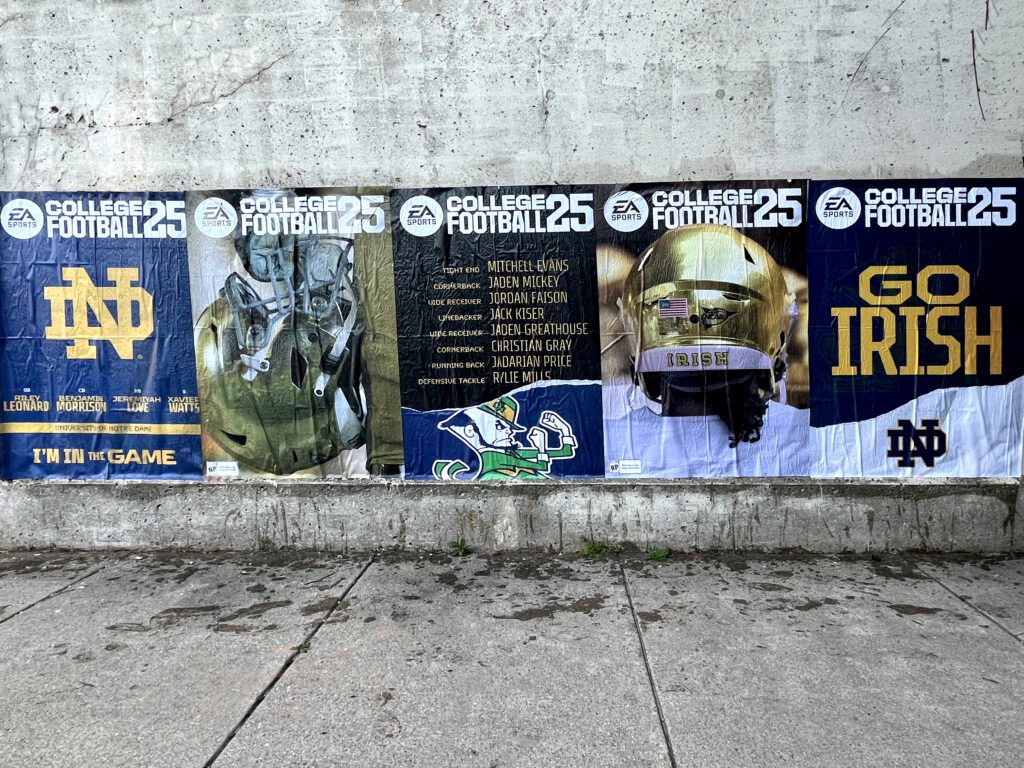
Multi-city Georgia campaigns are structured so that each city gets its own location map, its own installation crew, and its own post-campaign GPS photo report. The campaign brief maps quantities and priorities for each market, and AGM’s project team coordinates the execution timeline to align installation across all cities within the required window. This is the same operational framework that powered the EA Sports FC 25 multi-city simultaneous launch — a campaign that required poster deployment across multiple markets within the same activation period without any coordination gaps or documentation failures.
Atlanta is Georgia’s largest and most complex fly posting market. The city’s creative geography spans multiple districts with distinct audience profiles: the Old Fourth Ward and Ponce City Market corridor anchoring the millennial creative class along the Beltline; Little Five Points carrying the independent music and arts community; Sweet Auburn serving as a cultural touchstone for Atlanta’s Black professional audience; West Midtown’s design district hosting agency and studio professionals; and Inman Park providing premium residential demographics. AGM’s Atlanta campaigns are constructed neighborhood by neighborhood based on the specific audience the campaign needs to reach, not as blanket city coverage that treats every block equally.
Augusta earns its highest-value advertising window every April, when the Masters Tournament drives international media attention and an affluent sports-oriented audience into its downtown corridors. Broad Street, Augusta’s primary arts and dining spine, sees substantial foot traffic increases during tournament week and the surrounding days of practice rounds and pre-tournament events. Year-round, Augusta’s medical professional community — centered around Augusta University Medical Center and AU Health — provides a consistent, high-income audience in the downtown and surrounding corridors. The Laney-Walker neighborhood and the Augusta Canal area add additional audience layers for brands targeting arts, culture, and outdoor recreation demographics.
Columbus presents a dual-audience market driven by two forces that rarely appear in the same mid-size city: a growing arts and creative community anchored in Uptown Columbus, and a substantial military and military-adjacent population connected to Fort Moore, one of the U.S. Army’s largest training installations. The RiverCenter for the Performing Arts and the Springer Opera House generate cultural foot traffic through Uptown Columbus’s compact pedestrian core. The Chattahoochee Riverwalk provides a walkable riverfront corridor that connects Uptown to Midtown Columbus. Columbus’s contained geography means a well-placed campaign can achieve strong neighborhood saturation at lower quantities than comparable coverage in a larger metro.
Savannah is anchored by two complementary audience sources: the Savannah College of Art and Design, whose campus is woven across the city’s historic squares and district, and a robust tourism economy driven by Savannah’s landmark architecture, River Street waterfront, and nationally recognized food and arts scene. SCAD brings globally recruited design students and faculty with an art-world visual literacy that makes the city unusually receptive to well-executed poster campaigns. Broughton Street anchors Savannah’s commercial foot traffic, while Forsyth Park and City Market create additional gathering points that extend campaign reach into the residential and visitor segments simultaneously.
When EA Sports needed to launch FC 25 across multiple North American markets in a single activation window, the campaign required simultaneous deployment — posters appearing in multiple cities within the same days, GPS documentation delivered from every location. This kind of synchronized multi-city execution is a specialized operational capability. Most street advertising vendors work through a patchwork of local subcontractors who have limited coordination with each other, no shared reporting standards, and no central accountability for cross-market timing. AGM’s in-house model — direct crews, direct oversight, direct reporting — made the EA Sports campaign possible within the compressed launch window the brand required.
The FC 25 activation is directly relevant to any brand considering a statewide Georgia campaign because it demonstrates exactly the infrastructure needed. Activating in Atlanta while simultaneously running in Augusta, Columbus, and Savannah requires the same cross-market coordination that EA Sports needed across national markets — and AGM’s operational model handles it without the execution gaps that subcontracted campaigns routinely produce. For brands launching into Georgia with a defined window — an album drop, a streaming premiere, a product release, or a political campaign push — the ability to reach all four Georgia markets simultaneously changes the effectiveness ceiling of what a street advertising campaign can achieve.
The gaming audience EA Sports reached through the FC 25 launch has significant demographic overlap with Georgia’s HBCU community and the broader hip-hop and streetwear culture concentrated in Atlanta’s creative neighborhoods. Gaming, music, and street visual culture have fused into a shared consumer identity for the 18-to-28-year-old demographic that runs through Morehouse’s West End corridor, the blocks around Little Five Points, and the pedestrian zones near Clark Atlanta’s campus. These audiences respond to physical brand presence in ways that digital display advertising cannot replicate — because the poster is in their physical world, not competing for attention against twelve other pieces of content on a screen.
Every Georgia fly posting campaign begins with a briefing process that identifies the target cities, the priority neighborhoods within each city, the campaign timing, the poster format, and the quantity breakdown. From that brief, AGM builds a location map for each market — identifying the specific walls, corridors, and intersections where installation will occur. Location maps are built from direct knowledge of each neighborhood’s foot traffic patterns and visual context, not sourced from a generic placement vendor database.
Printing is handled in-house and shipped to market on a timeline that aligns with the installation window. AGM’s in-house print capacity means quality is controlled from design file through finished installed poster. Installation crews execute the campaign on the agreed timeline and photograph every location with GPS-stamped documentation. Post-campaign reporting is delivered to the client as a full location log with timestamped installation photos for every site, GPS coordinates, and a neighborhood coverage summary formatted for both internal stakeholder review and social channel amplification.
Standard Georgia campaigns operate on a two-to-three-week window from brief completion to installation. For time-sensitive campaign windows — the Masters Tournament in Augusta, Atlanta’s summer festival season, Savannah Film Festival, product launch dates, or political campaign inflection points — AGM offers 72-hour rush production and deployment for 24″×36″ campaigns up to 500 units. Campaign posters typically remain installed and visible for one to two weeks from the date of installation.
The workhorse format for Georgia’s pedestrian corridors, arts districts, and entertainment neighborhoods. Effective at eye level for foot traffic in walkable zones. Campaigns typically run one to two weeks.
Maximum visual scale for construction site hoardings, blank building walls, and high-visibility arterial surfaces across Georgia’s major city corridors.
American Guerrilla Marketing has executed fly posting and wheatpasting campaigns for Netflix, The Onion, EA Sports, Biossance, and Shepard Fairey, in addition to national political campaigns, entertainment industry launches, and consumer brand activations across the country. AGM is a Best of Brooklyn award winner and operates nationwide with in-house installation crews — no subcontractors, no accountability hand-offs between brief and execution. Every campaign uses wheat-based adhesive that is environmentally responsible and pressure-wash removable. GPS-documented photo reporting is standard on every campaign, giving brands verification, stakeholder reporting material, and social amplification content from a single deliverable.
AGM operates statewide across Georgia, including Atlanta, Augusta, Columbus, and Savannah. Campaigns can target a single city, multiple cities simultaneously, or all four Georgia markets within a unified statewide activation.
Georgia hosts one of the largest film and television production industries in the country, a hip-hop and R&B music scene that has defined American popular music for three decades, and a historically Black college and university network with documented outsized cultural influence. The state’s creative workforce has a strong baseline orientation toward street culture, independent music, and design, which makes fly posting a format with unusually high resonance in Georgia compared to markets without that cultural foundation.
Statewide Georgia campaigns are typically structured at 100 posters per active market as a baseline, though multi-city campaign packages can be configured to balance quantities across cities based on each market’s pedestrian density and the brand’s geographic priorities.
AGM’s installation team works with approved surfaces, property owner agreements, and market-specific placement standards in each Georgia city. Campaigns are structured around legally defensible placement strategies that reflect direct knowledge of each market’s compliance environment rather than assumptions based on generic urban flyposting norms.
Yes. The cluster of Morehouse College, Spelman College, Clark Atlanta University, and Morris Brown College in Atlanta’s West End and Vine City neighborhoods creates a concentrated campus and neighborhood corridor that AGM can target as a specific component of an Atlanta or Georgia statewide campaign. Placement in this zone focuses on the commercial and pedestrian corridors surrounding the campuses, not just the perimeter.
Georgia’s creative density is significantly higher than comparable Southern states. The concentration of music industry infrastructure in Atlanta, a nationally significant film and television production corridor, four major HBCUs in close geographic proximity, and SCAD’s global design institution in Savannah means that the audiences who encounter fly posting in Georgia have a higher baseline familiarity with street art and visual culture — which translates into stronger campaign awareness and recall.
Standard multi-city Georgia campaigns are executed within a two-to-three-week window from brief completion to installation. For time-sensitive launches, 72-hour rush production and deployment is available for 24″×36″ format campaigns up to 500 units in qualifying Georgia markets.
Yes. Every poster location installed as part of a Georgia campaign is documented with GPS-stamped photography as a standard component of AGM’s post-campaign reporting package. There are no exceptions based on market size or campaign quantity.
Georgia campaigns can be expanded into a regional or national campaign covering adjacent and distant markets. AGM operates nationwide and can coordinate simultaneous multi-state activation using the same in-house crew and reporting infrastructure that powers its statewide Georgia deployments.
Post-campaign reporting includes a complete location log with GPS coordinates for every installation site, timestamped photography from every installed poster, a summary of the neighborhoods and corridors activated, and a formatted report suitable for internal stakeholder review, media buyer documentation, and social channel amplification by the brand’s own team.
Georgia’s active film and television production industry creates a resident workforce of production professionals, crew members, casting directors, and entertainment industry workers concentrated in the Atlanta metro and increasingly in Savannah. Campaign timing can be structured around major theatrical release windows, streaming platform premiere dates, studio announcement cycles, and production season patterns to reach this professional audience at moments of highest industry engagement.