American Guerrilla Marketing
Nationwide Service
Media planning, media buying, billboard advertising, & guerrilla marketing
The Coronado Theatre is the anchor of northern Illinois’s most ambitious downtown arts revival. Live music. Independent galleries. A blue-collar creative community building something real in Illinois’s second-largest city. Rockford is ready for street poster advertising — and AGM executes here with in-house crews, GPS documentation, and no subcontractors.
The Coronado Theatre has stood on East State Street in downtown Rockford since 1927 — a Spanish Baroque atmospheric showpiece with a starfield ceiling, ornate plasterwork, and a 2,400-seat auditorium that still draws gasps from first-time visitors nearly a century after it opened. For decades, it functioned as a symbol of what Rockford used to be: a prosperous industrial city with the cultural infrastructure to match. Today it functions as something different — the anchor of a genuine downtown arts revival that has been slowly, deliberately rebuilding northern Illinois’s second city into a destination with real creative momentum.
The Coronado’s full restoration and reactivation as a touring concert and events venue has done what performing arts anchors always do in mid-size cities: it has drawn the surrounding infrastructure toward it. Restaurants have opened in the surrounding blocks. Independent galleries have claimed storefront space along the State Street and Main Street corridors. Music venues have established themselves in the downtown core, drawing regional audiences for shows that a previous generation of Rockford residents would have driven to Chicago to see. The creative class that once left Rockford for larger markets is beginning to find reasons to stay — and in some cases, to return.
For fly posting campaigns, this arts revival creates exactly the conditions that make street poster advertising most effective. The Coronado corridor now carries the kind of culturally engaged foot traffic that was previously absent from downtown Rockford. Gallery openings pull creative-community audiences out of residential neighborhoods and into walkable streets. Concert nights concentrate entertainment-going adults in the blocks surrounding the Coronado. The visual culture of the arts revival — murals appearing on building facades, independent retail with thoughtfully designed storefronts, the general aesthetic intentionality of a neighborhood being rebuilt by creative people — creates a visual environment that reads fly posting campaigns as a natural, welcome part of the street scene rather than an intrusion.
The Coronado Theatre corridor, Auburn Street, and Rockford's arts district are waiting. AGM brings the same GPS-documented, in-house execution that national brands rely on — to a market that's been overlooked for too long. No subcontractors. Full accountability. Real results on northern Illinois streets.
Rockford is Illinois’s second-largest city — a fact that surprises people who haven’t looked at the map recently. With a metropolitan population of over 330,000, the Rockford metro is larger than many cities that receive significantly more advertising attention. It’s large enough to sustain genuine commercial infrastructure and cultural institutions, but it exists in the media shadow of Chicago — which means that national brands buying Illinois media routinely bypass Rockford in favor of Chicago DMA spending that doesn’t actually reach Rockford consumers effectively.
That advertising gap is the central strategic opportunity for fly posting in Rockford. The city’s young adult population — particularly the blue-collar creative demographic that forms the backbone of Rockford’s arts revival — is almost entirely underserved by premium advertising formats. These are people who work in manufacturing, logistics, healthcare, and skilled trades during the day and show up to Coronado concerts and gallery openings on weekends. They are active consumers of entertainment and cultural experiences. They spend money on music, food, and going out. And they almost never see street-level advertising campaigns that feel like they were made specifically for them — because most campaigns don’t bother to reach them in their own city.
When a fly posting campaign appears in downtown Rockford, it stands out precisely because the market isn’t saturated with competing street poster campaigns. There’s no visual noise to compete with. The surfaces are available. The corridors are less contested. And the audience’s novelty response — the heightened attention that comes from seeing something new and unexpected in a familiar environment — is more powerful in Rockford than in a market like Chicago where street poster campaigns are a constant fixture of the visual landscape. AGM has seen this dynamic play out in comparable secondary markets across the country: the less-activated the market, the stronger the per-impression impact of a well-executed campaign.
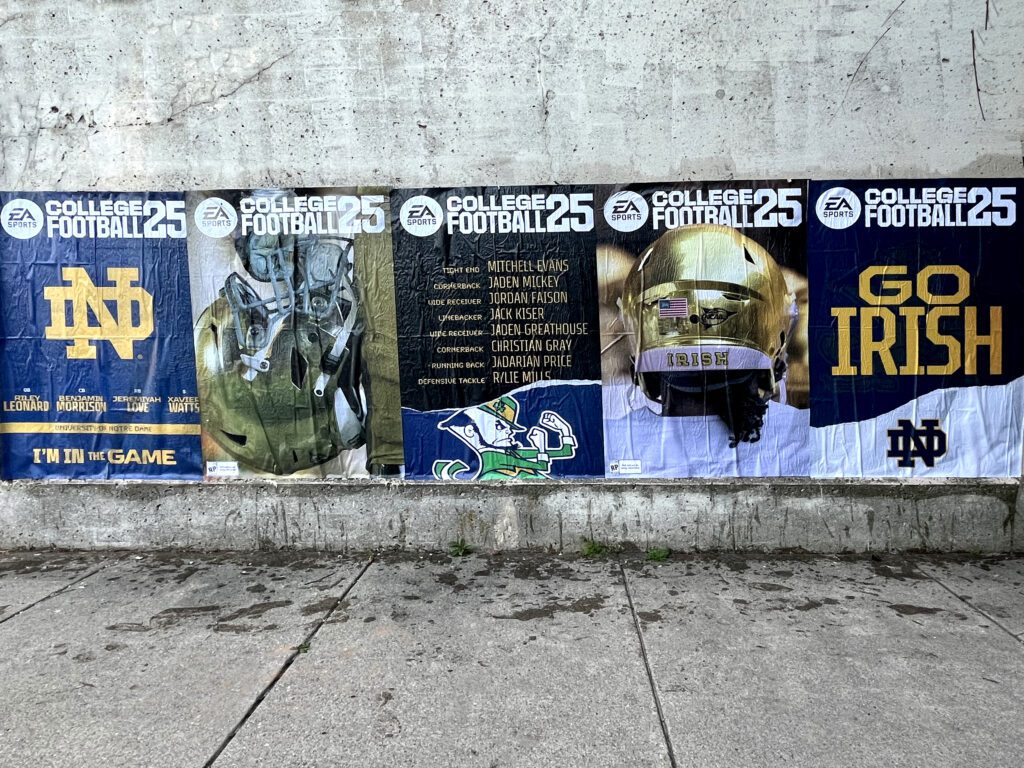
AGM’s experience executing in demanding national markets — client relationships with Netflix, EA Sports, The Onion, Biossance, and Shepard Fairey; campaigns across fifteen states for Party to the Polls; multi-city simultaneous launches for EA Sports FC 25 — means that the same production quality, installation precision, and GPS documentation that top-tier national clients require is what Rockford campaigns receive. There is no secondary-market quality tier at AGM. Every city gets the full standard.
The blocks surrounding the Coronado Theatre on East State Street are the epicenter of Rockford’s fly posting opportunity. On concert nights, this corridor fills with audiences arriving by foot and by car from across the metro, moving through downtown’s restaurant and bar district before and after shows. The Coronado programs everything from major touring rock and country acts to comedy specials and theatrical productions — its audience profile is broad, covering the full young and middle-adult entertainment demographic in the Rockford metro. Fly posting installations placed two to three weeks before major Coronado shows reach both the entertainment audience in advance of the event and the broader downtown population that moves through the corridor during regular weekday and weekend activity.
The wider downtown footprint extends along Main Street and along the Rock River frontage, where Rockford has invested in river walk infrastructure and outdoor gathering spaces that attract residents throughout the warmer months. The combination of Coronado foot traffic and the general downtown revitalization investment has created a commercial corridor that supports consistent daytime and evening pedestrian activity — the foundation that makes fly posting viable in any market. Downtown Rockford’s walls and surfaces have been largely underutilized for street poster advertising, which means a campaign deployed here encounters surfaces with minimal existing poster competition.
Auburn Street is one of Rockford’s primary commercial arteries, a busy east-west corridor that cuts through several of the city’s densely populated residential neighborhoods and connects the downtown core to the city’s broader commercial geography. The strip along Auburn carries consistent daytime foot traffic from working-class and young adult residents who shop, eat, and move through the corridor as part of their daily routines — not as entertainment destination visitors, but as local residents going about their lives. That everyday foot traffic pattern makes Auburn Street a high-frequency impression zone: the same people pass the same walls multiple times throughout a campaign week, building the repetition that drives brand recognition.
The Auburn Street audience skews toward working-class young adults in their mid-20s to late 30s — the core of Rockford’s blue-collar creative demographic. These are people who work with their hands, who value authenticity and substance over polish, and who respond to brands that show up in their actual neighborhood rather than just in the entertainment zones that attract attention from the arts revival crowd. A fly posting campaign that covers both Auburn Street and the Coronado corridor reaches both dimensions of Rockford’s young adult population: the arts-engaged creative community and the working-class residents who are the city’s demographic majority.
West State Street extends from downtown Rockford westward through a commercial corridor that serves dense residential neighborhoods with consistent working-class and mixed-income demographics. The western corridor’s retail and service businesses — grocery stores, restaurants, auto services, specialty shops — create daily foot traffic patterns that differ from the entertainment-oriented flows of the Coronado district. West State Street campaigns reach Rockford residents in their neighborhood commercial context: people making everyday purchasing decisions, running errands, and moving through their local community rather than visiting the city for a special event. This contextual difference matters for campaign strategy — brands whose message is relevant to everyday life rather than entertainment occasions often find West State Street to be the most efficient fly posting zone in the Rockford market.
East State Street forms the eastern commercial spine of Rockford, anchored by the Coronado at its western end and extending eastward through a mix of retail, restaurants, and community institutions that serve the city’s East Side neighborhoods. The East State corridor carries the Coronado’s cultural gravity — the audience that arrives for shows at the theatre moves along East State, and the restaurants and bars that have established themselves in proximity to the Coronado benefit from that concentrated entertainment traffic. Beyond the immediate Coronado zone, East State transitions into a more residential commercial character, serving neighborhood residents with daily-use retail and food options. Fly posting along the East State corridor reaches both the cultural audience concentrated near the Coronado and the broader residential community that uses the street as a daily commercial artery.
Award Winning Personalized Service
You will get thoughtful, devoted, and individualized attention from our experienced, qualified, and professional personnel. Being one of the most illustrious agencies in Brooklyn, New York, American Guerrilla Marketing has been awarded the Best of Brooklyn title.
Nationwide
Industry City, Brooklyn, New York 11232
American Guerrilla Marketing
Hours
Mon - Fri: 9 AM - 5 PM
Sat & Sun: Closed
Automate your campaign with AGM’s Request for Proposal Builder. Simply answer a few quick questions about your campaign goals, markets, and timeline, and the system will generate a tailored presentation with recommended strategies, quantities, and pricing. Click the RFP Builder to instantly receive your customized proposal.
The arts community that has been building in Rockford over the past decade is not a vanity project or a municipal marketing initiative — it’s a genuine grassroots creative ecosystem, driven by working artists who have chosen to build their practices in an affordable, supportive community rather than competing for space and resources in Chicago or Milwaukee. The Rockford Art Museum, established since 1913 and with a collection of over 4,700 works, provides institutional depth. Independent gallery spaces that have emerged in the downtown corridor provide the raw creative energy and community gathering function that institutional museums alone cannot. Music venues — from the Coronado’s touring scale down to the intimate independent stages that book local and regional acts — create a live music infrastructure that keeps cultural energy circulating through the city year-round.
The visual arts community in Rockford has developed a particular sensitivity to street-level visual culture. Artists who work in Rockford engage with the built environment as a canvas — murals have appeared on building facades in the arts district, and the community’s visual sophistication has grown alongside its creative ambitions. A well-executed fly posting campaign in the Rockford arts district lands in a community that evaluates visual advertising with the critical attention of people who think seriously about visual communication. That’s both a challenge and an opportunity: the campaign has to be good to earn its place in the visual environment, but a campaign that earns its place gets noticed, discussed, and shared by a community that acts as a genuine multiplier for street advertising effectiveness.
The Rock River corridor adds a physical and seasonal dimension to Rockford’s arts scene. The river runs through downtown Rockford, and the parks, trails, and gathering spaces along its banks have been the site of outdoor arts events, summer concerts, and community festivals that bring concentrated audiences into the outdoor environment during warm months. Fly posting campaigns timed to outdoor programming along the Rock River reach a leisure audience that is simultaneously engaged with Rockford’s cultural life and in a relaxed, discovery-positive mindset — the combination that makes entertainment and lifestyle brand campaigns most effective in outdoor contexts.
Rockford’s most distinctive and valuable fly posting audience is the one that the advertising industry consistently overlooks: blue-collar young adults who are also culturally engaged, creative in their personal lives, and active participants in the city’s arts and music scene. This demographic doesn’t fit neatly into the “creative professional” category that most agencies use to describe the target audience for street poster campaigns — they don’t work at agencies or tech companies or design studios. They work at manufacturing plants, logistics operations, hospitals, and skilled trades businesses. But they show up to concerts at the Coronado. They go to gallery openings. They follow local bands. They are, in every meaningful behavioral sense, the exact audience that entertainment and lifestyle brands want to reach — without the premium CPMs that come with targeting the same audience in Chicago or Milwaukee.
The blue-collar creative demographic is also among the most brand-loyal audiences in any market. They don’t have the disposable income to experiment promiscuously with every new brand that appears in their social media feed — but when they find a brand that resonates with their identity, their values, and their aesthetic sensibility, they stick with it and advocate for it among their social networks. Reaching this demographic through fly posting in Rockford creates a different quality of brand relationship than reaching a comparable demographic through digital advertising: the physical presence of a street poster campaign signals investment, authenticity, and local relevance in ways that a social media ad cannot.
Beer and spirits brands, independent music labels, regional event promoters, and consumer brands with working-class aesthetic credibility have all found Rockford’s blue-collar creative audience to be remarkably responsive to fly posting campaigns. The key is genuine creative investment — the Rockford audience will reward campaigns that treat them as a sophisticated audience worth creating for, and they will ignore campaigns that feel like generic advertising that happened to appear in their neighborhood. AGM’s role is to get the campaign to the right surfaces in the right corridors; the client’s job is to bring creative that respects the audience’s intelligence.
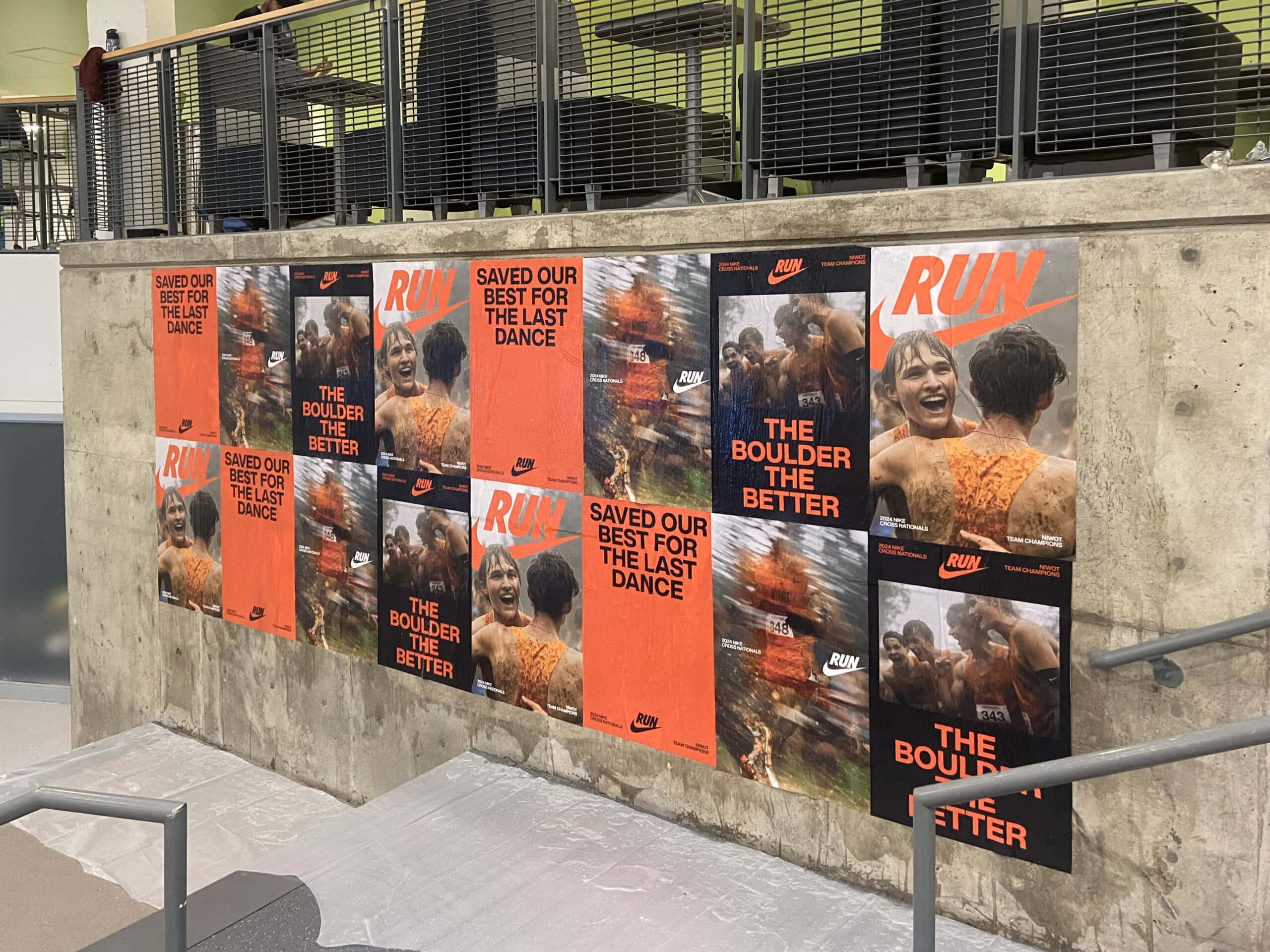
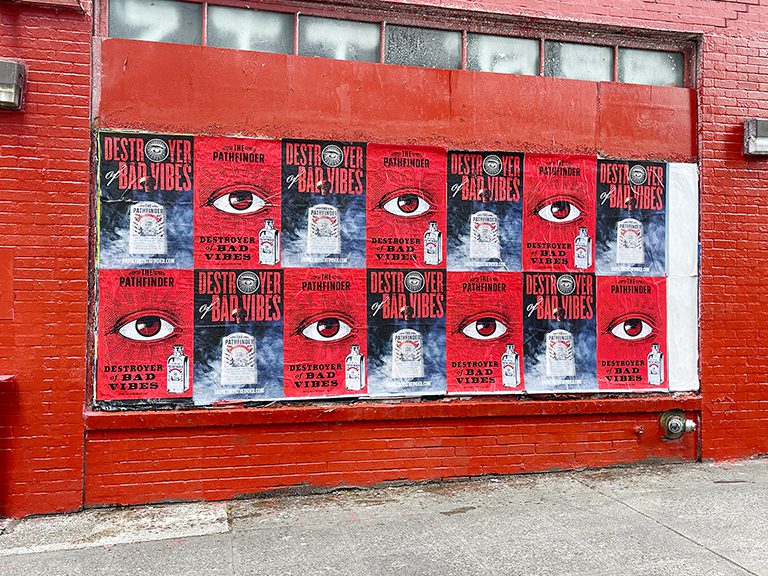
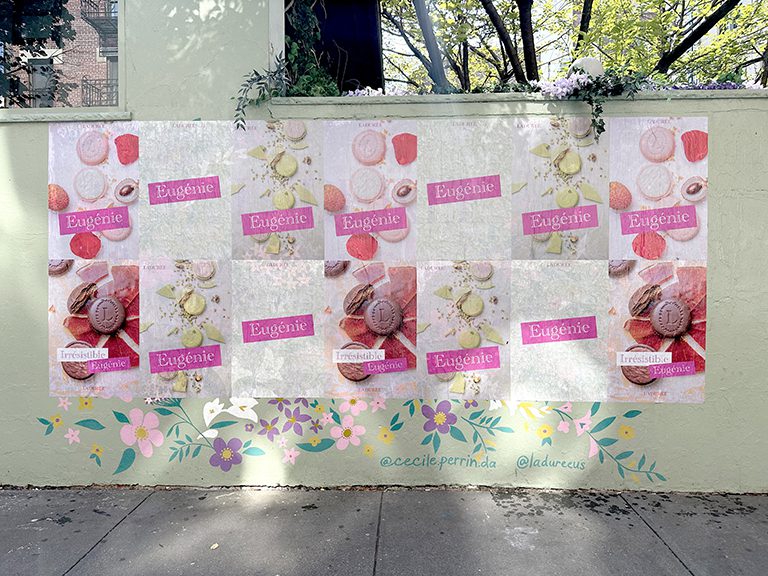
Rockford’s mid-size market geography means that 100-poster 24×36 campaigns typically achieve strong corridor saturation without the need to scale up to the 200-poster counts that Chicago campaigns require for comparable neighborhood coverage. The key corridors — the Coronado district, Auburn Street, West State, and East State — are geographically manageable within a 100-poster footprint, creating meaningful presence across the city’s primary fly posting zones without overextending the campaign into areas with lower return on poster investment.
The 24×36 format builds the repetition that converts initial awareness into genuine brand recognition. A Rockford resident who drives along East State Street three times during a campaign week will see the campaign each time — and those repeated exposures compound into the kind of familiarity that makes brand preference possible. For campaigns targeting multiple audience segments — the arts community near the Coronado and the working-class community along Auburn Street simultaneously — the 24×36 format’s cost efficiency makes multi-corridor coverage financially achievable without requiring a budget increase.
The 48×72 format makes its strongest case in Rockford for placements directly adjacent to the Coronado Theatre. The venue’s architectural scale creates visual context in which a large-format poster reads as a peer to its surroundings rather than an intrusion — a statement piece that acknowledges the grandeur of the Coronado while adding contemporary visual energy to the corridor. For entertainment campaigns timed to specific Coronado productions, a 48×72 installation on a high-sightline wall near the theatre entrance creates a marquee advertising presence that the Coronado’s audience will encounter repeatedly on the evening of the show and in the days leading up to it.
The Coronado Theatre’s programming calendar drives the most clearly defined campaign windows in Rockford. The venue’s concert season runs heavily in spring and fall, with summer programming that varies by year. Fly posting campaigns timed to specific Coronado shows — particularly major touring acts that draw regional audiences from across northern Illinois — benefit from the advance awareness effect that pre-show fly posting creates. Two to three weeks before a high-profile Coronado show, the city is primed for entertainment advertising: residents have seen the show announcement, are discussing whether to attend, and are in a decision-making mindset that makes entertainment-adjacent campaigns most effective.
Summer brings its own set of Rockford campaign opportunities. The outdoor festival season along the Rock River and in the city’s parks creates concentrated audience events that generate foot traffic comparable to the Coronado on its busiest concert nights. Rock Cut State Park, located on Rockford’s north side, draws outdoor recreation visitors throughout the summer and creates secondary audience flows in the commercial corridors between the park and downtown. Campaigns running during peak summer outdoor season reach Rockford residents in their most active, socially engaged seasonal mode.
Fall is strong for campaigns targeting the arts and cultural community, as gallery programs and music venue bookings pick up after the summer outdoor season and the Coronado’s primary concert calendar returns to full capacity. The back-to-school period in late August and early September also generates a meaningful uptick in foot traffic in Rockford’s commercial corridors as families, young adults, and returning students reactivate their spending patterns after summer travel and outdoor activity. Spring campaigns — particularly from March through May — benefit from the return of warm-weather pedestrian activity and the anticipation of summer entertainment programming that begins circulating in local media and social networks.
AGM’s track record in secondary markets is built on a simple principle: the same operational quality that national entertainment clients require in Miami or New York is what every client receives, regardless of market size. When AGM ran a wheatpasting campaign for Netflix across Miami’s entertainment corridors, the documentation framework, the installation precision, and the GPS reporting standard were the same as what AGM delivers in Rockford. When EA Sports coordinated a multi-city simultaneous street launch for FC 25, the installation teams in every participating city operated from the same quality standard — because AGM’s in-house operation doesn’t have a secondary-market tier that cuts corners on crew quality or reporting accountability.
For Rockford clients, that consistency translates into a specific set of practical guarantees. The posters installed in Rockford are produced on the same in-house equipment that produces posters for national entertainment brands. The installation crews are AGM’s own employees, not local subcontractors hired to fulfill a job they’ve never been briefed on. The GPS documentation and post-campaign reporting that arrives after a Rockford campaign is the same format, the same detail level, and the same accountability standard as the reporting that Netflix or The Onion receives after a campaign in a major metro. What changes between markets is the neighborhood map and the surface targets — not the standard of execution.
AGM’s national scale also means that Rockford can be part of larger coordinated campaigns. A brand running fly posting across Illinois — Chicago, Aurora, Joliet, and Rockford simultaneously — benefits from AGM’s ability to manage all four markets through a single campaign management relationship, with unified creative, coordinated installation scheduling, and a consolidated post-campaign report. Rockford doesn’t have to be a standalone add-on to a Chicago campaign — it can be a fully integrated component of a statewide Illinois strategy, executed with the same precision as every other market in the plan.
Entertainment and music clients are the most natural fit for Rockford fly posting campaigns. Concert promoters booking shows at the Coronado and smaller Rockford venues use street poster advertising to build advance awareness in the corridors where their target audience lives and moves. Regional touring acts with Midwest routing use Rockford fly posting as the local activation component of a broader Illinois or northern Illinois campaign strategy. Music festivals and outdoor events timed to the summer calendar use street posters to generate the physical community presence that social media alone cannot deliver.
Consumer brands targeting working-class young adults in secondary Illinois markets use Rockford as a cost-efficient proving ground for campaign concepts that they may later scale into larger markets. A food or beverage brand testing a new product in the Midwest, an apparel brand building regional credibility in Illinois outside Chicago, a financial product targeting blue-collar consumers — all find Rockford’s underserved advertising landscape to be a high-return entry point. The low competition for surfaces and the high novelty response of the local audience produce impression values that often exceed what comparable budgets achieve in saturated major markets.
Local businesses and civic organizations represent a significant category of Rockford fly posting clients. Downtown restaurants and bars use street posters to build awareness among residents who may not follow local media closely but move through the corridors where the campaign appears. Gallery spaces and independent venues use fly posting to announce events and build audience relationships with the broader Rockford creative community. Political campaigns and nonprofit organizations use the format to reach Rockford voters and community members in the specific neighborhoods where their message has the greatest relevance.
Every Rockford campaign begins with a neighborhood targeting conversation that establishes priority zones based on the client’s demographic targets and campaign objectives. For most Rockford campaigns, the conversation centers on three choices: how much weight to put on the Coronado entertainment corridor versus the working-class commercial corridors along Auburn and West State Street, whether to include the arts district specifically or to treat it as part of the broader downtown footprint, and whether the campaign timing aligns with a specific Coronado programming window or serves a general awareness goal.
From that conversation, AGM develops a specific surface map: the exact installation targets across the agreed corridors, chosen for pedestrian volume, surface quality, and audience demographic concentration. In-house printing is coordinated to the campaign schedule, with posters produced to the same quality standards that AGM maintains across all markets. Rockford installation crews — AGM’s own employees — execute the installation route using wheat-based adhesive that bonds securely and removes cleanly with pressure washing at campaign end.
Documentation occurs throughout installation. Every placement is photographed with GPS coordinates recorded, creating the evidentiary record that AGM delivers as a post-campaign report. Rockford clients receive photos of each installation, GPS location data, and a complete placement count — the same accountability framework that every AGM client in every market receives, regardless of whether the client is a major national entertainment brand or a local Rockford business running its first street poster campaign. That consistency is the foundation of AGM’s value proposition: predictable, documented, accountable execution in every market we serve.
For entertainment-adjacent campaigns, yes — the Coronado corridor is the highest-value anchor point in Rockford. It draws concentrated entertainment audiences and creates a cultural context in which fly posting campaigns feel especially relevant. For campaigns targeting the working-class young adult demographic more broadly, Auburn Street and the West State corridor offer complementary coverage that reaches Rockford residents in their everyday commercial environment rather than only in entertainment contexts.
Rockford offers lower surface competition and a more pronounced novelty response from the local audience — factors that typically produce stronger per-impression brand awareness than the same budget achieves in Chicago’s more saturated market. For brands whose target audience includes working-class and creative young adults in northern Illinois, Rockford delivers cost-per-impression efficiency that Chicago campaigns can’t match at comparable budget levels.
The blue-collar creative demographic — working adults who are also active participants in Rockford’s arts and music scene — is almost entirely underserved by premium advertising formats. They’re large in number, concentrated in Rockford’s commercial corridors, and highly brand-loyal once they’ve adopted a brand that resonates with their identity. Reaching them through fly posting delivers the combination of physical authenticity and neighborhood relevance that digital advertising simply cannot replicate.
Yes. AGM can schedule installation to coincide with the two-to-three-week anticipation window before a specific Coronado production, maximizing campaign relevance by reaching the entertainment audience when ticket purchase decisions are most active. Campaigns can also extend through a show’s full run for clients who want sustained presence across the entire performance window.
Yes, meaningfully. Downtown and the Coronado corridor reach an arts and entertainment-oriented audience concentrated in evening and weekend hours. Auburn Street reaches a working-class residential audience in everyday commercial contexts throughout the week. The strongest Rockford campaigns cover both zones, reaching distinct audience segments with consistent messaging across different daily contexts. Many clients find that the working-class corridor coverage along Auburn produces awareness among consumers who would otherwise be unreachable in a downtown-only campaign.
Yes. AGM regularly executes coordinated multi-city Illinois campaigns that include Rockford alongside Chicago, Joliet, and Aurora. Rockford integrates fully into a statewide campaign plan with unified creative, coordinated installation timing, and a consolidated post-campaign report covering all markets. Rockford doesn’t have to be a standalone secondary activation — it’s a full participant in any multi-city Illinois strategy AGM manages.
The minimum is 100 posters in the 24×36 format at contact us for pricing. In Rockford specifically, a 100-poster deployment achieves meaningful corridor saturation across the key downtown and Auburn Street zones — a tighter geographic concentration than Chicago requires for comparable neighborhood presence. The 48×72 format starts at contact us for pricing for 100 placements, with the Coronado corridor being the natural anchor for large-format Rockford campaigns.
No. Every AGM installation is carried out by AGM’s own in-house crews. Rockford campaigns receive the same employee-executed installation quality and the same GPS documentation standards as campaigns AGM runs for national entertainment brands in major metros. There is no secondary-market subcontractor tier at AGM — every market gets the full operational standard.
Entertainment promoters and music clients are the most frequent Rockford fly posting users, anchored to the Coronado Theatre programming calendar. Consumer brands targeting blue-collar and working-class young adults — particularly food, beverage, and apparel brands — use Rockford as a cost-efficient Midwest secondary market. Local businesses, galleries, and civic organizations use the format for community-level awareness campaigns in the corridors where their audiences concentrate.
Every placement is photographed during and after installation, with GPS coordinates recorded for each surface. Clients receive a full post-campaign report: installation photos organized by location, GPS data, and a complete placement count. This is the same documentation standard AGM delivers in every market — Rockford clients receive the same GPS-documented proof of performance that national entertainment brands require in major metros.
Fall and spring align with the Coronado’s peak concert programming and deliver concentrated entertainment audience foot traffic in the downtown corridor. Summer is strong for campaigns targeting outdoor and festival-adjacent audiences along the Rock River corridor and in the city’s parks. Spring rebound (March–May) is the strongest general-awareness window, as warm weather returns and residents re-engage with Rockford’s commercial and cultural life after winter. Winter campaigns are viable in the indoor entertainment corridors near the Coronado and along the covered portions of downtown’s commercial blocks.
Yes — and in many respects more effective on a cost-per-impression basis than Chicago campaigns. Northern Illinois markets like Rockford are underserved by street-level advertising, which means the novelty response is stronger, the surface competition is lower, and the local audience’s awareness lift from a well-executed campaign is more pronounced. For brands building northern Illinois market presence beyond the Chicago DMA, Rockford fly posting is one of the most efficient tools available.