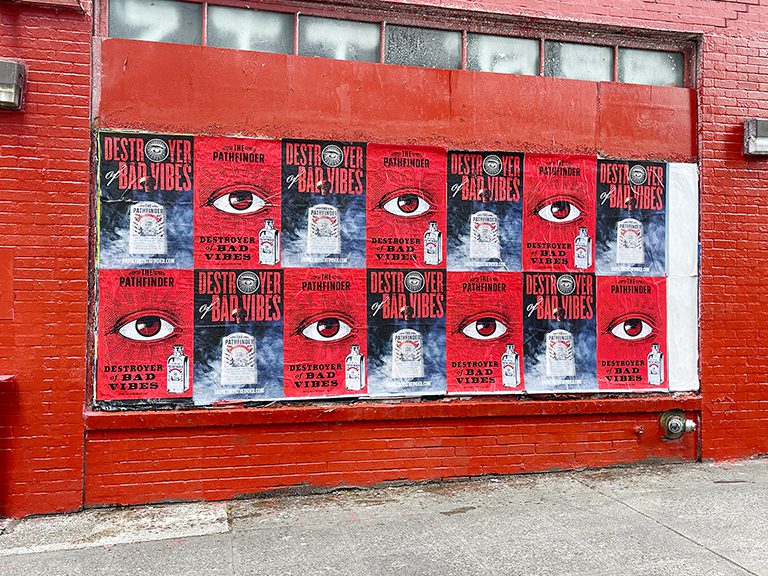
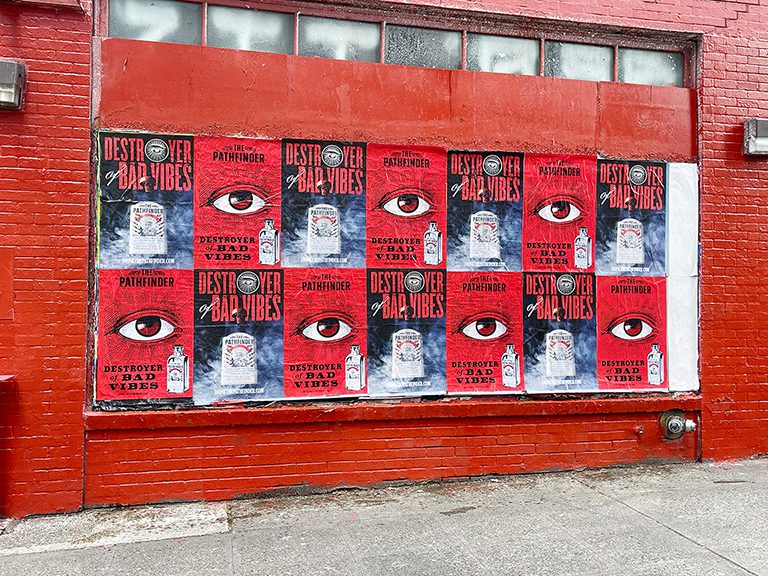
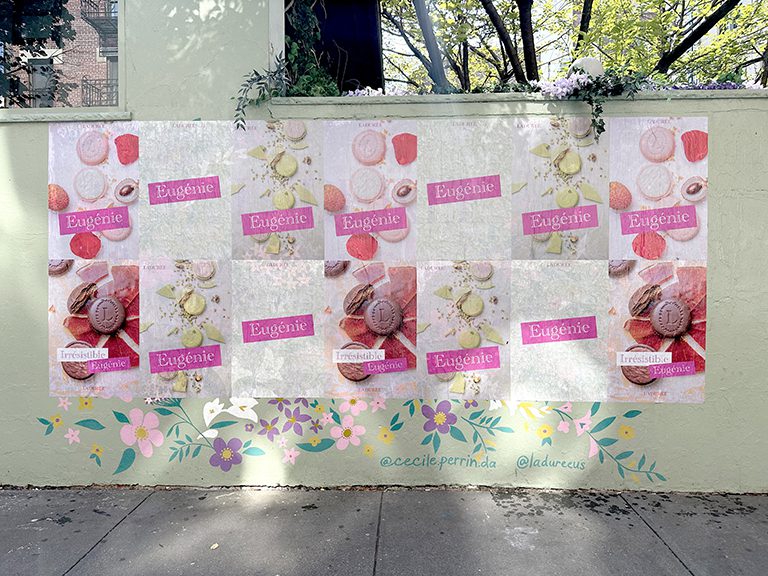
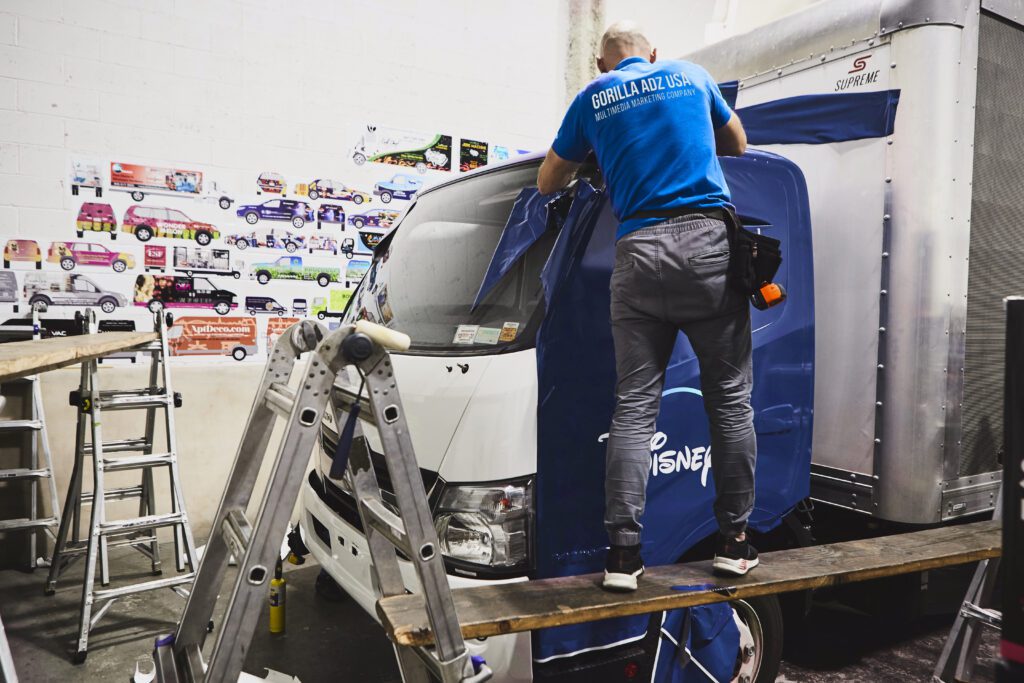
🚀 NEW WHEATPASTING MARKETS Discover our wheatpasting campaigns in : 🇬🇧 London

American Guerrilla Marketing

Nationwide serivce

Media planning, media buying, billboard advertising, & guerrilla marketing

Pavement Stencil Advertising

Pavement Stencil Advertising for Brands

Brand messages applied to the pavement at convention center approaches, stadium exteriors, retail corridors, pedestrian bridges, and corporate campuses. AGM runs permitted, professionally executed pavement stencil campaigns across the United States.

Pavement Stencil Advertising

What Are Hand-Painted Murals?

A hand-painted mural is exactly what the name says: artwork applied directly to a wall surface by a painter, using brushes, rollers, and spray equipment, with every element of the design built up on-site rather than reproduced from a prefabricated print. The design is created in advance and transferred to the wall using a grid or projection system, but the actual mark-making is done by a human artist standing in front of the wall with paint in hand.

This distinction matters more than it might seem. A vinyl-wrapped or digitally printed mural installation looks precise and clean, because it comes off a commercial printer. A hand-painted mural has texture. It has the grain of the wall beneath it, the slight variations in brushwork, the way the paint catches morning light differently than midday light. When someone photographs a hand-painted mural, they are photographing something that is genuinely there on the wall, integrated into the surface, not a flat image applied on top of it.

For brands, this difference has a direct and measurable effect on how the mural performs as content. Social posts featuring hand-painted murals consistently generate higher engagement than posts featuring printed format outdoor advertising, because the hand-painted mural triggers the brain’s art recognition before it triggers its advertising recognition. People engage with it as a discovery rather than an interruption.

At AGM, hand-painted murals are our core medium. We have been placing them on walls in New York since before the current mural advertising market existed. Our artists come from the neighborhoods where they work. They know the walls, the light, the pedestrian patterns, and the cultural codes that make a mural feel right in a specific location. We do not send generic crews to paint generic murals. We match the right artist to the right wall for every project.

Hand-painted murals are also built to last. Exterior-grade paints applied correctly to a properly prepared wall surface can hold their color and detail for three to seven years with minimal maintenance. Compared to the lifecycle of most paid media placements, which run for days or weeks, a well-executed hand-painted mural is an asset that keeps generating impressions long after the initial campaign ends.

Hand-painted murals in established mural neighborhoods like Bushwick and Wynwood routinely appear in editorial photography, travel features, and lifestyle content for months and years after installation, continuing to generate brand impressions at zero ongoing cost.


Put Something Real on a Real Wall.

Hand-painted brand murals in the cities and neighborhoods where it matters. Call AGM to get started.

How Pavement Stencil Campaigns Work

The pavement stencil campaign process begins with a detailed site and campaign brief. Unlike urban sidewalk stencil programs where we draw on an established location network, pavement stencil campaigns often target specific facilities or venues where we need to establish authorization and assess site conditions before any production begins.

Campaign Workflow

  • Site brief and authorization: You tell us the facility or venue you want to target, your campaign goal, your message, and your timeline. We determine the authorization pathway: venue management agreement, municipal permit, facility operator consent, or a combination. We do not begin any production until authorization is confirmed.
  • Site assessment: Our team visits or remotely assesses the target pavement area. We evaluate surface type (concrete, asphalt, aggregate), condition, expected foot traffic volume and patterns, and visibility from the primary pedestrian approach directions. This assessment drives both the stencil design scale and the application type recommendation.
  • Application type selection: Based on campaign duration, surface type, authorization terms, and brand requirements, we recommend paint stencil, chalk stencil, or reverse graffiti. In some multi-site campaigns, different locations get different application types based on their specific surface and authorization conditions.
  • Stencil design and template production: Templates are designed to your brand specifications and scaled to the site geometry. A wide approach corridor at a convention center gets a different template design than a pedestrian bridge with a constrained footprint. We optimize for visibility from the primary approach direction at each specific location.
  • Crew deployment and installation: Our installation crew deploys at the confirmed site during the agreed installation window. Convention center exterior work is typically scheduled during off-hours before events begin. Stadium approach work is often done the day of or the day before the target event or campaign window opens. Corporate campus work is scheduled around facility operating hours and employee movement patterns.
  • Monitoring and documentation: We document every installation and monitor campaign performance over its run. High-traffic pavement stencils at major venue approaches wear faster than lower-traffic applications. We advise on reapplication timing for multi-week campaigns at high-wear locations.
  • Campaign close: Removal or natural fade completion, depending on application type and campaign terms. Site documentation goes to you for campaign records.

Where AGM Deploys Pavement Stencils

Pavement stencil advertising through AGM reaches specific destination venue types across the United States. Here is how we approach each primary environment.

Convention Center Approaches

Javits Center, New York City: The Jacob K. Javits Convention Center on the West Side of Manhattan is one of the largest and most-attended convention facilities in the United States. The exterior pavement on the 11th Avenue and 34th to 40th Street perimeter carries foot traffic from tens of thousands of convention attendees, industry professionals, and trade show participants during major events. A pavement stencil campaign on the Javits exterior approach puts your brand in front of a concentrated, often industry-specific audience at exactly the moment they are walking into the event where your brand wants to be known.

Pavement stencil placement in the Javits perimeter zone requires coordination with both the Javits Center management and, depending on specific locations, NYC DOT. AGM manages both. We have familiarity with the site and its authorization requirements and do not treat this as a novel permit situation.

McCormick Place, Chicago: The largest convention center complex in North America, McCormick Place on Lake Shore Drive in Chicago hosts the largest trade shows in multiple industries, from technology to food service to housewares. The exterior pavement approach areas on 23rd Street and the pedestrian connector zones between the main campus buildings carry event-specific foot traffic that can reach 60,000 to 80,000 attendees over a multi-day trade show run. Pavement stencil campaigns at McCormick Place time well to specific events where your brand’s audience is concentrated.

Los Angeles Convention Center: The LA Convention Center at Figueroa Street in downtown Los Angeles handles major consumer and trade events throughout the calendar year, including E3, Anime Expo, and various industry conventions. The exterior pavement approach from the 7th Street Metro Center subway station and along Figueroa carries foot traffic from downtown LA and transit-arriving attendees. Stencil placement along these approach corridors creates brand presence that bookends the transit experience for the significant portion of LA convention attendees who arrive via Metro.

Stadium Approaches

Madison Square Garden, New York City: The 7th Avenue approach to MSG is one of the most heavily trafficked event venue corridors in the United States. On event nights, the block from Penn Station north to the Garden entrance carries a continuous flow of concert-goers, basketball fans, hockey attendees, and boxing audiences. The exterior pavement along this corridor is one of the highest-impression pavement stencil locations available to brands in New York City. The demographic skew varies by event: a Rangers game pulls a different audience than a pop concert, and campaign timing relative to event programming matters significantly.

Barclays Center, Brooklyn: The Atlantic Avenue exterior approach to Barclays Center is one of the busiest event venue approaches in Brooklyn. The Atlantic Avenue blocks between Flatbush Avenue and the arena entrance serve as the primary pedestrian corridor for four subway lines (2/3/4/5/B/D/N/Q) converging at Atlantic Terminal. The pavement approach zone on Atlantic Avenue and Pacific Street handles event crowds of 18,000 to 20,000 in addition to the daily commuter foot traffic that uses Atlantic Terminal regardless of events. Stencil placement on the Barclays approach reaches both populations.

Soldier Field, Chicago: The Museum Campus approach to Soldier Field along the lakefront connects transit connections at Museum Campus/11th Street station to the stadium. This pedestrian approach zone on game days channels Bears fans from the transit hub through the museum grounds to the stadium entrance. The pavement along this corridor sees concentrated foot traffic during game days and major events at the stadium. A pavement stencil campaign on the Soldier Field approach is necessarily event-timed, which makes audience concentration and demographic specificity particularly high.

Retail Center Pavement

Outdoor retail centers, lifestyle shopping districts, and open-air mall approach zones provide pavement stencil opportunities in commercial environments where foot traffic volume and consumer intent both run high. A shopper moving through a lifestyle retail center is already in purchase mode. A brand stencil in their path during that specific behavioral state is hitting them at a moment of commercial receptivity that is difficult to achieve through any other outdoor format.

We run pavement stencil campaigns in outdoor retail center environments in markets across the United States. Location authorization in these environments typically flows through the retail center management company or property owner rather than through municipal permit processes. We have experience working within both structures and can advise on timeline and process for specific retail environments you have in mind.

Parking Structures and Pedestrian Bridges

Covered and uncovered parking structure walkways adjacent to retail or event venues, and the pedestrian bridge connections between transit stops and destination venues, represent high-dwell, captive-attention pavement environments. A person walking from a parking structure to a retail destination or an event venue is in a transitional state, moving through a confined corridor where there is limited competing attention stimulus. A stencil in this space is not competing with building facades, signage, vehicle traffic, and all the other visual inputs of an open street environment. It has the pavement surface relatively to itself.

Pedestrian bridge surfaces vary significantly in material and condition. We assess each bridge surface individually before recommending an application type. Smooth concrete bridge decks hold paint stencils well. Coated steel deck surfaces may be better served by chalk stencil or reverse graffiti to avoid any surface interaction questions with the bridge management authority.

Corporate Campus Pavement

Campus-based companies in technology, finance, healthcare, and other sectors use pavement stencil advertising on their own facilities for internal communications, wayfinding, product launch announcements, and culture-building campaigns. AGM runs pavement stencil programs on corporate campuses as part of internal marketing and communications activations for companies that want to create physical moments within their own controlled environment.

Corporate campus work is distinct from public pavement work in one important respect: the client controls the surface and can authorize placement directly without external permit processes. This typically shortens the lead time significantly and allows for more creative risk-taking in the design and messaging since the audience is known and the approval chain is internal.

A 20-location pavement stencil campaign at $3,989 placed across convention center exterior approaches during a major multi-day trade show can reach 50,000 or more targeted industry professionals in a single event window. No other format achieves that kind of precise, context-timed exposure at that cost level.

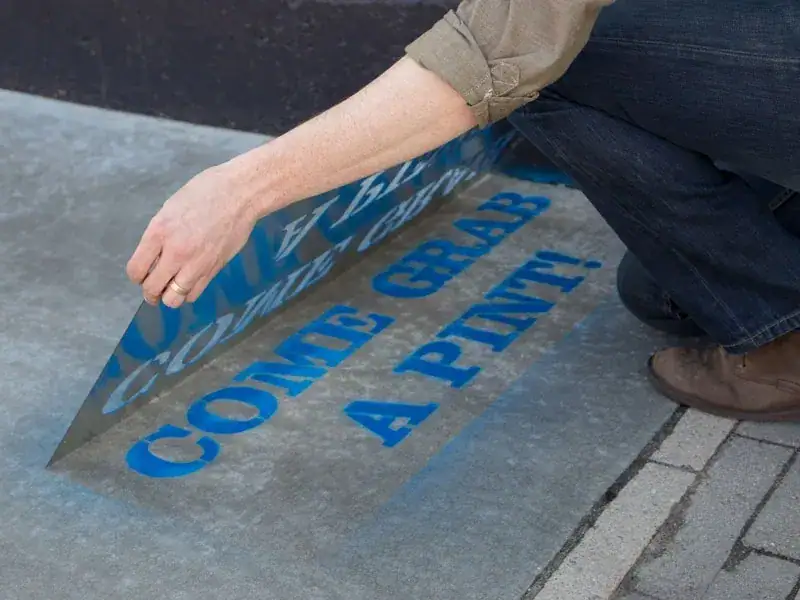
Types Of Pavement Stencil Application

Understanding the three application types AGM uses in pavement stencil campaigns helps you choose the right approach for your specific campaign context.

Paint Stencil (Most Durable)

Paint stencil advertising uses spray-applied exterior paint through a cut template to produce a permanent or semi-permanent brand impression on the pavement surface. This is the most durable application type for pavement stencil work and is appropriate for campaigns running four weeks or longer, for locations with heavy foot traffic where chalk would wear too quickly, and for brands that want maximum visual impact over the campaign duration.

Paint stencils on exterior concrete and asphalt surfaces typically last three to eight weeks in most climates, with wear from foot traffic and weather being the primary durability factors. High-traffic convention center and stadium approach zones wear faster than lower-traffic corporate campus or parking structure applications. Removal at campaign close requires appropriate surface treatment; we discuss cleanup approach for each installation as part of campaign planning.

Chalk Stencil (Removable)

Chalk stencil advertising uses water-soluble chalk applied through a stencil template to produce a temporary brand impression that fades naturally with rain and foot traffic. This is the appropriate application for campaigns with short durations (one to two weeks), for locations where fully reversible application is required by venue or permit conditions, and for brands that want a temporary brand moment rather than a lasting impression.

Chalk stencils fade more gracefully than they disappear. The edges soften before the image disappears entirely, which can actually create an interesting visual effect over the life of a short campaign. The waterproof quality of chalk also means that light rain does not immediately destroy the image; it takes sustained rain or pressure washing for full removal. In dry climates, chalk stencils can last considerably longer than expected. In high-rainfall periods, considerably shorter.

Reverse Graffiti (Eco Option, No Chemical Application)

Reverse graffiti, also called clean tagging or clean advertising, creates a stencil image by selectively cleaning the pavement through a template rather than applying any material. The brand image appears as the cleaned area contrasts against the surrounding dirty pavement. No paint, no chalk, no adhesive: the only input is cleaning agent and labor.

The eco dimension of reverse graffiti resonates with brands that have sustainability commitments and want outdoor advertising that they can truthfully describe as zero-waste. The temporary nature of the format, as the cleaned areas gradually become dirty again to match their surroundings, also aligns with campaigns that want a time-limited outdoor presence without the cleanup obligations of paint stencil work.

Reverse graffiti is most effective on pavement surfaces that have a meaningful contrast between their clean and dirty states. Urban pavement with years of accumulated traffic film works well. Recently cleaned or lighter-colored concrete does not create enough contrast for the image to read clearly. We assess contrast potential at each site before recommending this application type.

Who Uses Pavement Stencil Advertising

The client profile for pavement stencil advertising at commercial and institutional venues is distinct from typical sidewalk stencil clients. These are brands that understand the value of precise context alignment: being present in the exact physical location where their target audience is concentrated, at the specific moment when that audience is in a relevant behavioral or professional mindset.

Trade Show Exhibitors and Sponsors

Brands exhibiting at or sponsoring major industry trade shows use pavement stencil advertising on convention center exterior approaches to build brand awareness before attendees walk in the door. If 40,000 industry professionals are attending a trade show over three days, and your brand’s stencil is on the primary pedestrian approach from the nearest transit hub to the main entrance, every one of those 40,000 people sees your brand before they see your booth. That brand impression, made while they are in a professional and receptive context, sets up the booth conversation differently than a general awareness campaign ever could.

Entertainment and Venue Sponsors

Sponsors of stadium-based events, concert series, or entertainment venue programs use pavement stencil advertising on venue approaches to activate their sponsorship in the physical environment. A beer brand that sponsors an arena concert series can place stencils on the stadium approach pavement for every show in the series, connecting their brand to the event experience at the literal entrance to that experience. This physical presence reinforces the sponsorship in a way that digital and broadcast sponsorship identification cannot.

Consumer Brands Launching in New Markets

Consumer brands entering a new city or region use pavement stencil campaigns in commercial pavement environments as an accelerated awareness driver. A food brand launching in the Chicago market that places stencils on the McCormick Place exterior approach during a major food industry show, the pavement near the Chicago Riverwalk commercial zone, and the approach to Michigan Avenue retail reaches three distinct audience contexts in the target market with a single coordinated campaign.

Corporate and Institutional Communications

Internal communications campaigns, product launch announcements for employee audiences, and campus culture programs use pavement stencils on controlled corporate or institutional grounds. Universities use chalk stencil programs for orientation week, fundraising campaigns, and departmental announcements. Corporate campuses use paint or chalk stencils for product launches, values campaigns, and internal event promotion. In these controlled environments, the authorization is simpler and the audience definition is precise.

Plan Your Pavement Stencil Campaign

Tell us your target venue or location type, your geography, your timeline, and your campaign goal. We respond within 24-48 hours with a proposal.

    Award Winning Personalized Service

    You will get thoughtful, devoted, and individualized attention from our experienced, qualified, and professional personnel. Being one of the most illustrious agencies in Brooklyn, New York, American Guerrilla Marketing has been awarded the Best of Brooklyn title.

    Nationwide

    Industry City, Brooklyn, New York 11232

    American Guerrilla Marketing

    +1 (646) 776-2770

    [email protected]

    Telegram: @americanguerillamarketing

    Hours

    Mon - Fri: 9 AM - 5 PM

    Sat & Sun: Closed

    Automate your campaign with AGM’s Request for Proposal Builder.

    Automate your campaign with AGM’s Request for Proposal Builder. Simply answer a few quick questions about your campaign goals, markets, and timeline, and the system will generate a tailored presentation with recommended strategies, quantities, and pricing. Click the RFP Builder to instantly receive your customized proposal.

    Why AGM for Pavement Stencil Advertising

    Pavement stencil advertising at commercial and institutional venues is a category that rewards experience with the specific environments, authorization processes, and surface conditions involved. A generic outdoor advertising shop that handles display boards and transit ads does not bring the same site-specific knowledge to a convention center exterior pavement campaign that a field marketing operation with hands-on installation experience does.

    AGM has executed pavement stencil programs at convention center approaches, stadium exterior corridors, retail center walkways, and corporate campus environments. We have navigated authorization conversations with venue management teams across multiple markets. We know how to assess pavement surfaces in the field rather than from satellite imagery. We know when a paint stencil is the right call and when chalk or reverse graffiti better serves the campaign and the venue relationship.

    The permit and authorization process for pavement stencil work at commercial venues is different from the municipal permit process for public sidewalk stencils. Venue management teams have their own approval timelines, their own requirements for documentation and insurance, and their own preferences about when and how installation happens. We understand how to work within those frameworks in a way that gets campaigns approved and installed without burning relationships or creating friction that limits future access.

    Our installation crews are trained, professional, and equipped for commercial venue environments. They show up on time, execute cleanly, and leave the location better than they found it. In venues where your brand’s presence as a marketer will be visible to the facility staff and management, how you conduct the installation matters. We take that seriously because our ability to return to those venues on future campaigns depends on it.

    The commercial pavement stencil space is less crowded with competitors than urban sidewalk stencil work, which means there is real opportunity for brands that move quickly and execute well. A pavement stencil campaign at the Javits Center exterior during your industry’s biggest annual trade show is not a tactic every exhibitor is running. Being one of the few brands with a visible pavement presence at that show creates a disproportionate awareness impact relative to the investment.

    Frequently Asked Questions: Pavement Stencil Advertising

    The format is the same: a brand image applied through a cut stencil template onto an exterior surface. The difference is the application environment. Sidewalk stencil advertising operates in urban public pedestrian environments: city sidewalks, neighborhood corridors, transit approaches in residential and retail areas. Pavement stencil advertising targets commercial and institutional pavement environments: convention center exterior approaches, stadium corridors, retail center walkways, corporate campus pathways, and other destination venue grounds. The audience context, authorization pathway, and campaign objectives are different across these two environments.

    Smooth poured concrete is ideal for both paint and chalk stencil applications. Asphalt surfaces accept paint stencils well and chalk stencils adequately. Aggregate and textured concrete surfaces work for paint stencils with appropriate application technique. Cobblestone and brick surfaces are generally not suitable for stencil work due to irregular texture. Very new concrete may resist paint adhesion until it has cured for at least 28 days. We assess surface suitability at each target location before production begins.

    It depends on the venue and the campaign type. Many convention centers allow pavement stencil advertising when properly authorized through their marketing, events, or operations departments, particularly when the campaign is tied to a current event at the venue. AGM handles the authorization conversation with venue management as part of our standard campaign process. We do not execute pavement stencil work at any facility without confirmed authorization from the appropriate venue authority.

    Reverse graffiti is generally perceived as lower-risk by venue operators and municipal authorities because it involves cleaning rather than adding any material to the pavement. No paint, no chalk, no adhesive is applied. The image is created by removing surface grime through a stencil template. This reduced-intervention profile often makes authorization conversations easier for reverse graffiti than for paint stencil campaigns. However, we do not assume authorization is automatic. We still confirm with venue operators and relevant authorities before executing any pavement campaign, regardless of application type.

    Yes, and this is one of the most effective ways to run a pavement stencil program. Placing stencils on convention center exterior approaches the week before and during a specific trade show, or on stadium approaches the week of a major concert or game series, concentrates your brand impression at precisely the moment when the audience you want to reach is physically present at that location. Event-timed campaigns require coordinating the installation window with the authorization timeline, which is why early planning contact is important. Rush programs for last-minute event tie-ins are possible but carry the 50% rush surcharge.

    Paint stencils in high-traffic commercial pavement environments like convention center approaches or stadium exterior corridors typically last two to four weeks before showing significant wear. Chalk stencils in these environments may last only one to two weeks due to the high foot volume and potential for street cleaning. Reverse graffiti in commercial environments lasts two to six weeks depending on how quickly the cleaned areas re-accumulate dirt at the pace of the surrounding surface. We factor wear expectations into campaign planning and advise on reapplication timing for extended programs.

    Yes. While New York City is our primary market, AGM runs pavement stencil campaigns across the United States. Chicago (Javits Center, Soldier Field, Michigan Avenue), Los Angeles (LA Convention Center, Staples Center approach, Venice Beach boardwalk), and other major markets are all within our operational footprint. Multi-city campaigns are custom-quoted based on market count, location volume, and timeline. Contact us with your target markets and we outline what is achievable and at what cost.

    For a standard program at a convention center or stadium, two to four weeks from first contact to installation is a realistic target. Authorization from venue management takes time that varies significantly by venue and by how proactively they manage outside marketing requests. Permit processing adds additional time in municipal jurisdictions. Stencil template production requires approximately one week after design approval. Build in as much lead time as possible, especially when targeting specific event dates where the installation window is fixed and non-negotiable.

    American Guerrilla Marketing Blog Posts