🚀 NEW WHEATPASTING MARKETS Discover our wheatpasting campaigns in : 🇬🇧 London • 🇨🇦 Canada • 🇲🇽 Mexico City

American Guerrilla Marketing

Nationwide Service

Media planning, media buying, billboard advertising, & guerrilla marketing

Fly Posting in Iowa

Sidewalk Decals Advertising in Iowa

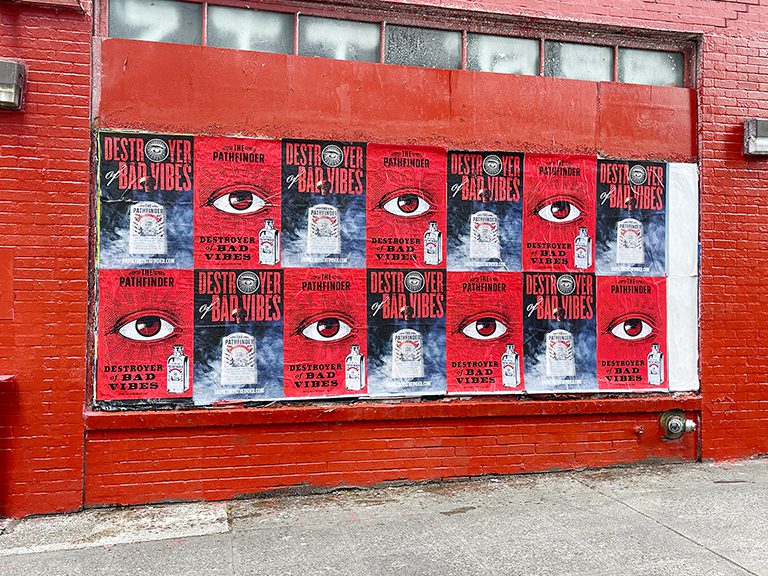
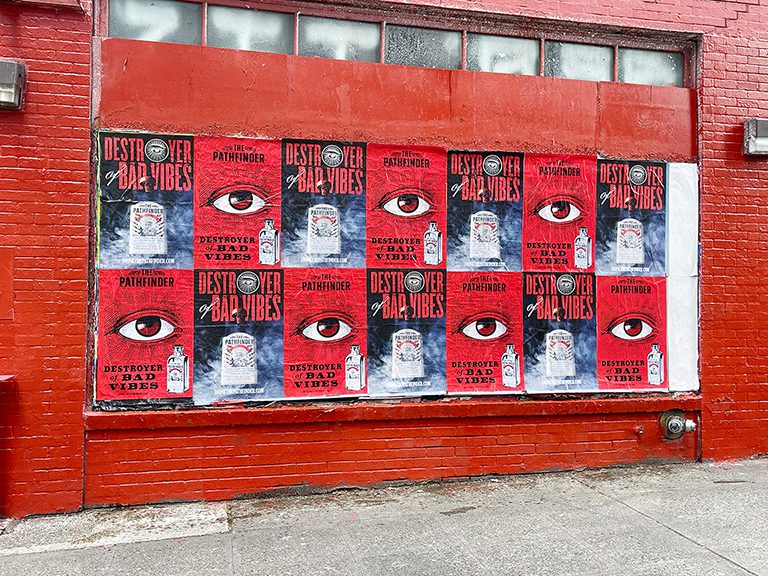
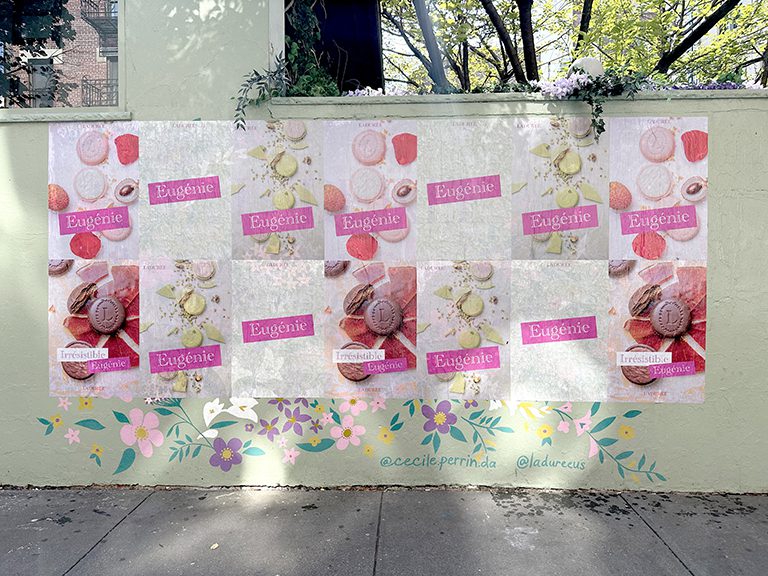
Three Big Ten university markets. A state fair drawing over a million visitors in August. A Des Moines tech corridor growing faster than any comparable Midwestern capital. AGM deploys wheat paste campaigns across Iowa’s most pedestrian-dense urban environments — with in-house installation crews and GPS-documented reporting at every location.

Iowa’s University Markets and the Street Poster Concentration Problem

Most states have one major university market. Iowa has three that matter for fly posting — and they’re each distinct enough to require their own campaign logic. The University of Iowa anchors Iowa City with approximately 32,000 students feeding daily into the Ped Mall pedestrian corridor, the Melrose Avenue strip, and the dense residential blocks between campus and the bars and restaurants along Gilbert Street and Burlington Street. Iowa State University drives enrollment into Ames, filling Lincoln Way’s Campustown corridor with the concentrated foot traffic that makes street poster advertising the natural format of first choice for any brand targeting that age group. The University of Northern Iowa completes the triad in Cedar Falls, where College Hill and the 23rd Street commercial strip pack the pedestrian density that rewards wheat paste placement with high repeat-impression frequency.

What separates university markets from other high-traffic environments is the behavioral pattern of the audience that lives inside them. College students walk. They navigate from their apartments to class, from class to coffee shops, from coffee shops to bars and record stores and music venues, dozens of times a week, along routes they know by feel. A wheat paste poster installed on a high-rotation walking route between a residence hall cluster and the nearest food or entertainment corridor gets absorbed by the same set of eyes, in the same receptive headspace, repeatedly across the campaign’s lifespan. The third sighting of a poster becomes recognition; the seventh becomes cultural familiarity. That compounding repetition is the core mechanism that makes fly posting outperform other formats for brand discovery in university environments.

Iowa’s university markets are particularly productive for touring music acts building anticipation before Kinnick Stadium or Xtream Arena dates, streaming platforms looking to accelerate subscription velocity among 18–24-year-olds, food and beverage brands entering Iowa’s bar and restaurant distribution channels, political campaigns targeting college-age voter registration and turnout, and apparel and lifestyle brands positioning themselves inside the creative pipeline before it disperses into the professional workforce. Campaigns that establish genuine street-level recognition in Iowa City in September are embedding themselves inside the cultural reference framework of people who will carry that brand memory into careers in Chicago, Minneapolis, Denver, and Des Moines for the next three decades.


Plan Your Iowa Fly Posting Campaign

From Iowa City's Ped Mall to Des Moines' East Village to Sioux City's Fourth Street corridor — AGM deploys across Iowa with in-house crews, GPS documentation, and the multi-city coordination that Iowa's geography demands.

Browse Cities in Iowa

Select a city to explore Fly Posting Advertising opportunities.

The Iowa State Fair Window: Why August Rewrites Des Moines' Campaign Geography

The Iowa State Fair runs eleven days every August at the Iowa State Fairgrounds on E. Grand Avenue in Des Moines — four miles southeast of downtown — drawing more than one million visitors to a single metro area in less than two weeks. No other event in Iowa concentrates pedestrian volume at this scale, and no other activation window aligns as many distinct demographic segments simultaneously: families from every corner of the state, agricultural industry professionals, food and beverage vendors from across the Midwest, political organizers targeting the civic-minded attendee base, and the general public arriving from rural counties that rarely generate pedestrian advertising opportunities.

The strategic fly posting opportunity around the fair isn’t limited to the fairgrounds perimeter. It lives in the Des Moines corridors that function as the fair’s basecamp. Hotels along University Avenue, Fleur Drive, and Army Post Road fill with out-of-town visitors walking unfamiliar streets — a behavioral state that dramatically increases receptivity to environmental advertising. The E. 30th Street corridor between the fairgrounds and the downtown core experiences elevated pedestrian flow throughout fair week, particularly in the evening hours when fair-goers migrate toward downtown restaurants and bars. The east side of Des Moines — normally a secondary fly posting zone — transforms into genuinely high-value territory when fair traffic reshapes the neighborhood’s daily rhythm for eleven consecutive days.

Brands that time Iowa State campaigns to the fair window can use fly posting to create the impression of city-wide cultural presence before attendees ever pass the fairgrounds gate. A campaign that wallpapers the pedestrian corridors linking downtown hotels, major parking structures, and the fair’s main entrances looks like saturation to an out-of-town visitor who encounters it three or four times across their Des Moines stay. AGM plans fair-window campaigns around these travel pattern dynamics — understanding where foot traffic flows between arrival and the fairgrounds, and between the fairgrounds and evening entertainment, rather than concentrating exclusively on the fairgrounds approach.


Agricultural Brands And The Harvest Season Campaign Calendar

Iowa isn’t simply a consumer market layered on top of farm country — it’s the center of American agricultural production, and that identity creates a campaign timing structure that shapes urban advertising in ways that aren’t visible from a standard demographic analysis. The fall harvest window, stretching from late September through October, reshapes Iowa’s commercial rhythm in ways that affect even the downtown advertising environment. Food processing companies headquartered in Cedar Rapids, Waterloo, and Iowa City use the harvest period to synchronize brand activity with the industry’s peak operational moment. Agricultural equipment manufacturers with consumer-facing marketing programs target Des Moines and Cedar Rapids metro areas — where their professional workforce shops and socializes — during the fall window when industry engagement runs at its highest pitch.

Street poster advertising connects to harvest season strategy because it operates at the street level of the exact commercial neighborhoods where Iowa’s food and agricultural industry’s urban workforce lives its after-work life. A wheat paste campaign positioned in Des Moines’ East Village in October sits directly in front of the brand managers, distribution professionals, food entrepreneurs, and creative directors who form the human interface between Iowa’s agricultural economy and its consumer-facing retail identity. These aren’t farm operators — they’re the professionals who translate raw production into branded products, and they’re precisely the audience that responds to sophisticated, culturally aware street-level creative.

The seasonal logic also applies to food and beverage brands using Iowa as a retail launch territory. A flyposting campaign running through September and October — building street-level awareness in Iowa City’s student corridors, Cedar Rapids’ NewBo district, and Des Moines’ East Village and Ingersoll Avenue — can accelerate retail velocity when new shelf placements go live in October and November. The poster campaign functions as brand conditioning in the weeks before purchase opportunity opens, so that consumers who encounter a product on a Hy-Vee shelf in early November already carry a recognition signal from their neighborhood streets.

Build Your Fly Posting Campaign

    Award Winning Personalized Service

    You will get thoughtful, devoted, and individualized attention from our experienced, qualified, and professional personnel. Being one of the most illustrious agencies in Brooklyn, New York, American Guerrilla Marketing has been awarded the Best of Brooklyn title.

    Nationwide

    Industry City, Brooklyn, New York 11232

    American Guerrilla Marketing

    +1 (646) 776-2770

    [email protected]

    Telegram: @americanguerillamarketing

    Hours

    Mon - Fri: 9 AM - 5 PM

    Sat & Sun: Closed

    Automate your campaign with AGM’s Request for Proposal Builder.

    Automate your campaign with AGM’s Request for Proposal Builder. Simply answer a few quick questions about your campaign goals, markets, and timeline, and the system will generate a tailored presentation with recommended strategies, quantities, and pricing. Click the RFP Builder to instantly receive your customized proposal.

    Des Moines: Iowa's Fastest-growing Street-level Advertising Market

    Des Moines has been quietly assembling one of the Midwest’s most interesting creative and professional labor markets over the past fifteen years. The city’s deep insurance and financial services sector — which employs more people per capita in white-collar professional roles than almost any other mid-sized American metro — has seeded a broader professional class that has diversified into technology, fintech, healthcare, marketing, and creative services. Principal Financial Group, Nationwide, Wells Fargo’s regional operations center, and a growing cluster of venture-backed startups have built a Des Moines workforce demographic that skews educated, financially capable, and culturally curious — exactly the audience that turns street-level brand exposure into commercial action.

    The East Village neighborhood along E Grand Avenue and E 6th Street has become the geographic anchor of Des Moines’ creative scene. Independent restaurants, cocktail bars, boutiques, and creative agencies have concentrated there over fifteen years of intentional development, creating the walkable density that supports fly posting with strong repeat-impression frequency. Ingersoll Avenue contributes a second independent corridor on the near-west side, where a distinct but equally engaged professional demographic of adults 30–45 rotates through wine bars, specialty retail, and upscale casual dining. Western Gateway, anchored by the John and Mary Pappajohn Sculpture Park, draws a culturally aspirational crowd for whom public art and street-level creative are established parts of their visual environment rather than novelties.

    Des Moines’ tech and startup sector has imported visual sophistication from larger markets. Remote workers and transplants from Brooklyn, Austin, and Portland who have settled in East Village and Drake neighborhoods carry expectations about what culturally significant brand communication looks like — and for those audiences, fly posting isn’t an underground tactic. It’s the established visual language of premium cultural marketing, and they respond to it with exactly the engaged recognition that brands are counting on when they choose street-level advertising over programmatic display.

    Iowa Markets Where AGM Deploys

    Cedar Rapids

    Iowa’s second-largest city contains a street scene that gets consistently underestimated by national marketing plans that see only the population number. The New Bohemia arts district — locally known as NewBo — along 3rd Street SE concentrates galleries, craft breweries, specialty food vendors, and independent creative businesses within a compact, highly walkable zone that generates genuine creative-class foot traffic seven days a week. Czech Village along 16th Avenue SW adds a distinct residential and commercial character with loyal neighborhood patrons who support established independent shops with the consistency that makes sustained poster campaigns effective. Downtown Cedar Rapids along First Avenue has undergone significant post-flood redevelopment, creating the blank building surfaces and revitalized commercial pedestrian core that support wheat paste placements with strong visibility. The Time Check neighborhood offers the raw wall surfaces and working-class street authenticity that makes a fly posting campaign feel genuinely embedded in a community rather than commercially imposed from outside it.

    Davenport

    Davenport serves as the entertainment and cultural anchor of the Quad Cities — the four-city metro spanning the Iowa-Illinois border with Bettendorf, Rock Island, and Moline. Its downtown corridor along Main Street and Brady Street packages independent restaurants, live music venues, and bars within walking distance of the Mississippi Riverfront along River Drive, creating the pedestrian loop that supports concentrated fly posting campaigns with high repeat-exposure potential. The Village of East Davenport along Mound Street carries an independent boutique and restaurant character that draws a weekend-heavy, regionally mobile professional demographic from across the Quad Cities. A campaign anchored in Davenport reaches not just the city’s resident base but the regional visitors from three states who treat downtown Davenport as their primary entertainment destination.

    Des Moines

    Iowa’s capital represents the state’s most developed and diverse street-level advertising market. East Village’s concentration of creative professionals, the Court Avenue entertainment district’s bar and restaurant density, the Drake University neighborhood’s student and young-faculty foot traffic, the Ingersoll Avenue independent corridor, and the Western Gateway arts district collectively give AGM five distinct audience pools to target within a single coordinated campaign. The growing volume of tech workers and fintech professionals who have chosen Des Moines over larger metros has elevated the cultural awareness and brand sophistication of the street-level advertising audience across all of these corridors.

    Sioux City

    Sioux City’s position at the convergence of Iowa, South Dakota, and Nebraska makes it the regional commercial and entertainment hub for northwest Iowa and significant portions of two neighboring states. Its Historic Fourth Street entertainment corridor concentrates bars, live music venues, and independent retailers within a compact series of walkable blocks adjacent to the Missouri River. The Tyson Events Center anchors a sports and concert calendar that drives consistent regional visitor flow from across the tristate area throughout the year. Pearl Street’s arts corridor and the Floyd Boulevard retail zone add demographic depth beyond the entertainment core, reaching arts-engaged residents and neighborhood-loyal shoppers who respond to sustained wheat paste campaigns over time.

    Sizing Iowa Fly Posting Campaigns By Market And Objective

    The right format for an Iowa fly posting campaign depends on the specific market, the campaign objective, and the surface characteristics of the target corridors. University markets — Iowa City, Ames, and Cedar Falls — favor the 24×36 format’s capacity for high-frequency saturation along well-defined walking routes. One hundred posters of this size distributed strategically across Iowa City’s Ped Mall zone, the Burlington Street restaurant corridor, and the residential blocks south of campus creates genuine visual saturation — the kind of everywhere presence that makes a touring act, product launch, or brand entry feel ambient and culturally established rather than a single isolated impression. Volume and distribution matter more than size in university environments, where the repeat-impression mechanism is the primary driver of campaign effectiveness.

    The 48×72 format earns its larger investment in markets where a smaller number of dominant placements outperforms broad saturation. Des Moines’ East Village corridor — where a single well-positioned wall on E Grand Avenue or E 6th Street commands repeated attention from both pedestrians and the slow vehicle traffic that navigates the neighborhood — is the clearest Iowa example. Davenport’s Riverfront zone along River Drive and the warehouse walls of the Brady Street corridor also support the larger format effectively, creating visual anchors that define a campaign’s geographic identity rather than filling in the background.

    Multi-format campaigns — combining 24×36 posters for saturation across high-rotation corridors with 48×72 placements at landmark wall positions — deliver the strongest overall impact in markets like Des Moines and Cedar Rapids where surface variety supports both strategies. AGM’s campaign planning process identifies the optimal format mix for each specific market and objective before any installation begins.

    How AGM Executes Fly Posting Campaigns Across Iowa

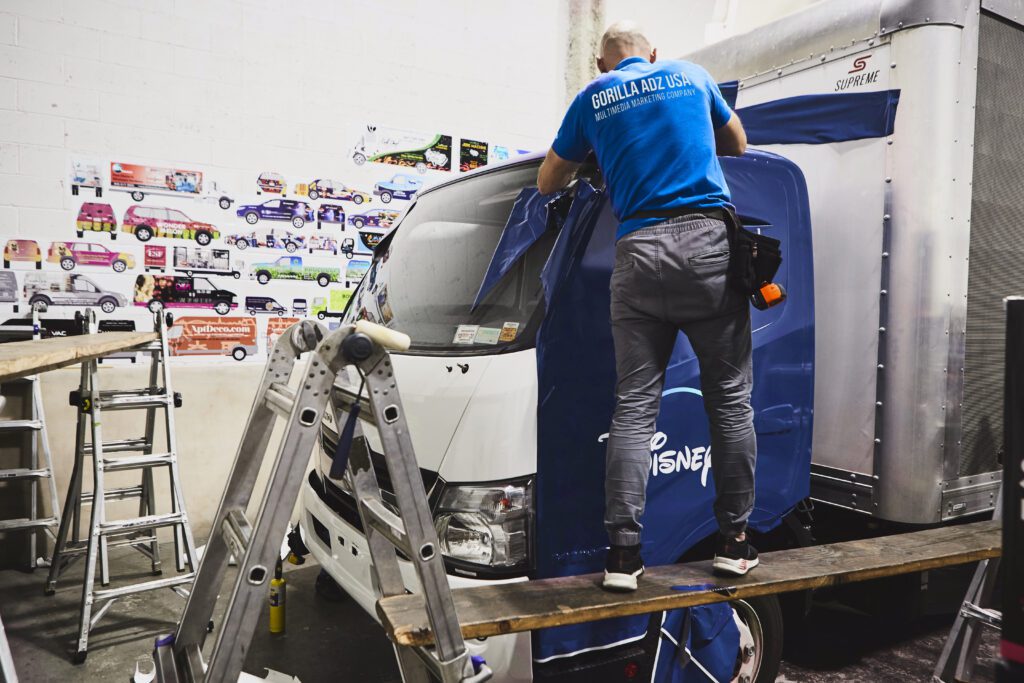
    Iowa’s geography presents a logistics challenge that distinguishes it from denser coastal markets: Cedar Rapids, Davenport, Des Moines, and Sioux City each occupy separate metro footprints spread across a state that spans 321 miles east to west. Covering multiple Iowa markets within the same campaign window requires the kind of coordinated in-house operations that AGM maintains as a direct execution model — no subcontractors, no third-party installation crews, no telephone-game instructions degrading the quality between campaign brief and street result. AGM’s field crews handle Iowa deployments directly, which means planning accuracy, installation standards, and documentation quality remain consistent whether the campaign is in East Village or on Fourth Street.

    Campaign planning begins with a neighborhood-level site evaluation for each target market in the buy. AGM identifies the specific corridors, surface types, and placement positions that will deliver the highest repeat-impression frequency for the demographic being targeted in each city. Installation timing accounts for foot traffic peak windows — evening and weekend hours for entertainment-facing campaigns, morning and midday windows for professional commuter audiences. Every posted location receives GPS tagging and photographic documentation at the moment of installation, with the complete post-campaign report delivered to the client digitally after campaign completion.

    Iowa campaigns typically run one to two weeks as a standard window, though surface conditions, competitive posting activity, and weather factors all affect actual campaign duration. The wheat-based adhesive that AGM uses is environmentally responsible and pressure-wash removable — both practically and from an operational relationship standpoint, this matters because it keeps AGM’s surface access agreements intact across markets and preserves the ability to execute in the same locations for future campaign cycles. That access continuity is one of the practical competitive advantages of working with an operator that has maintained active Iowa market presence over time.

    The Party To The Polls × Daybreaker Purple Tour: What Multi-state Simultaneous Deployment Looks Like

    The Party to the Polls × Daybreaker Purple Tour 2024 is the most directly instructive case study for brands considering Iowa fly posting. The campaign executed across fifteen states simultaneously — reaching multiple metropolitan areas within the same narrow activation window — which required AGM to deploy in-house crews across every target market at the same time rather than sequencing cities or relying on regional subcontractors who operate outside a unified quality and accountability framework. The campaign demonstrated that simultaneous multi-city deployment isn’t just logistically possible at scale — it’s operationally reproducible with consistent execution standards across every market in the buy.

    For Iowa specifically, the Purple Tour model addresses the market’s fundamental geographic challenge: Cedar Rapids, Des Moines, Davenport, and Sioux City don’t cluster within a single metro area. A brand that wants all four markets touched in the same campaign window needs a deployment capacity that can coordinate multiple crews across multiple cities simultaneously, not a vendor that covers one metro and subcontracts the rest to whoever is available locally. AGM’s Iowa capability covers all four major markets as a single coordinated campaign buy — same installation window, same reporting standards, same creative execution quality in every city.

    The Purple Tour’s civic-engagement framing also demonstrated the street poster format’s particular resonance in Iowa’s university towns. Iowa City’s role in presidential primary cycles — and the broader culture of civic participation embedded in the state’s university communities — means that campaigns with meaningful social dimensions achieve earned media amplification and organic social sharing that multiplies their effective reach well beyond the installed poster count. When a campaign resonates culturally with the audience walking past it, the photography and social sharing that follows can extend the campaign’s reach by a meaningful multiple of its installed surface area.

    Industries That Deploy Fly Posting Most Effectively in Iowa

    Live entertainment and touring music represent Iowa’s most historically active fly posting category. The state’s concert venue network — Wells Fargo Arena and Lauridsen Amphitheater in Des Moines, Xtream Arena in Coralville, the Capitol Theatre in Davenport, Tyson Events Center in Sioux City, and the University of Iowa’s campus event calendar in Iowa City — generates a sustained event calendar that drives pre-show awareness campaigns with reliable conversion logic. Posters placed 2–4 weeks ahead of a show date in the venue’s surrounding neighborhood reach both committed ticket holders and the fence-sitting second-tier buyer who needs another exposure to convert.

    Food and beverage brands use Iowa fly posting for craft beverage launches, bar and restaurant distribution channel entry campaigns, and farm-to-table brand awareness activations timed to harvest season. Technology companies recruiting from Des Moines’ growing professional workforce use East Village and Western Gateway campaigns to signal cultural alignment to the technical and creative talent they’re competing to hire. Apparel and streetwear brands targeting the university market deploy through Iowa City and Ames campaigns during back-to-school windows when the full student population is present and active. Political organizations — at the presidential primary, congressional, and state legislative levels — have historically used Iowa fly posting as a ground-level visibility and organizing tool, particularly during the precinct caucus organizing periods that give Iowa disproportionate national political attention.

    Iowa Fly Posting Formats And Campaign Investment

    24″ × 36″ Street Poster

    • 100 posters: contact us for pricing
    • 200 posters: contact us for pricing
    • Additional creative: contact us for pricing
    • 72-hour rush available up to 500 qty
    • Best for: university corridor saturation, multi-city Iowa coverage, high-frequency walking routes

    48″ × 72″ Large Format

    • 100 posters: contact us for pricing
    • 200 posters: contact us for pricing
    • Additional creative: contact us for pricing
    • Best for: Des Moines East Village statement walls, Riverfront landmark placements, event anchor zones

    Frequently Asked Questions: Iowa Fly Posting Campaigns

    Iowa’s distinguishing factors are its concentration of Big Ten university foot traffic across three separate metro areas, the Iowa State Fair’s outsized impact on Des Moines’ pedestrian geography each August, and the agricultural industry’s influence on campaign timing and brand category. Illinois and Minnesota have denser single-metro concentrations in Chicago and Minneapolis, but Iowa’s university towns — Iowa City and Ames especially — deliver impression frequencies per block that rival those larger cities in specific corridors. The harvest season campaign window in September and October is genuinely unique to Iowa’s market structure among Midwestern states.

    Late May through October offers the most favorable conditions for Iowa fly posting, giving campaigns the longest viable outdoor lifespan before winter weather shortens surface adhesion quality. Within that window, August is the peak month for Des Moines campaigns due to the State Fair’s million-plus visitor concentration. September and October combine returning university populations with harvest-season commercial energy across Cedar Rapids, Iowa City, and Des Moines. Spring campaigns in March through May are viable and benefit from the post-winter reopening of pedestrian corridors that see sharply higher foot traffic after months of cold-weather suppression.

    Yes — simultaneous multi-city Iowa deployment is a standard AGM campaign structure. All four major markets can be included in a single campaign buy with coordinated installation timing. AGM’s in-house crews operate in each market without relying on regional subcontractors, which means execution quality, surface selection standards, and GPS documentation are consistent whether the campaign is in East Village or in the NewBo district or on Fourth Street. Campaign planning identifies specific neighborhood targets and surface mixes for each city within a unified creative and timing framework.

    The fair’s eleven-day run reshapes Des Moines’ pedestrian geography beyond the fairgrounds perimeter. Hotel corridors along University Avenue, Fleur Drive, and Army Post Road carry unusually high volumes of out-of-town pedestrians who are navigating unfamiliar streets with elevated receptivity to environmental advertising. The E. 30th Street corridor between the fairgrounds and the downtown core experiences elevated foot traffic particularly in evening hours when fair-goers migrate toward restaurants and bars. AGM designs fair-window campaigns around these travel patterns — prioritizing surfaces along the routes fair attendees actually walk rather than concentrating only at the fairgrounds entrance.

    Entertainment and live music campaigns have historically performed strongest in Iowa given the state’s active venue network across all four major markets. Food and beverage brands — particularly craft beer, spirits, specialty food, and farm-to-table concepts — find Iowa’s food culture exceptionally receptive, especially when campaigns align with the fall harvest window. Technology companies recruiting from Des Moines’ professional workforce use East Village campaigns to signal cultural fit. Political campaigns use Iowa fly posting heavily during presidential primary cycles and organizing windows given the state’s first-in-the-nation caucus calendar. Apparel and lifestyle brands targeting the 18–28 demographic use Iowa City and Ames campaigns during back-to-school and homecoming windows.

    Iowa City and Ames function as significant fly posting markets in their own right despite their smaller total populations. University enrollment drives pedestrian density in both cities to levels that rival much larger metros in specific corridors. Iowa City’s Ped Mall — one of the longest pedestrian-only commercial zones in the Midwest — and the surrounding Gilbert Street and Burlington Street restaurant corridors deliver impression frequencies comparable to dense urban neighborhoods in cities three times the size. Ames’ Lincoln Way Campustown generates similar concentration. Both cities are viable standalone targets for university-focused campaigns and can be added to a broader Iowa multi-city buy as well.

    Summer and early fall campaigns in Iowa typically achieve the standard one-to-two-week display window. The dry heat of July and August actually benefits adhesion longevity on surfaces that aren’t exposed to consistent moisture. Heavy rain events, particularly in spring, can accelerate softening on surfaces that retain moisture or have poor drainage. Fall campaigns through October generally perform reliably. Winter campaigns — from November through March — face increased pressure from freeze-thaw cycles and precipitation events that can shorten effective display life materially, which is one reason AGM recommends spring or summer timing for brands whose campaign effectiveness depends on extended street presence.

    Billboard advertising in Iowa — concentrated along I-80, I-35, and the major highway corridors connecting the state’s metro areas — reaches vehicle traffic at distance during commute windows, with processing happening at highway speed and peripheral attention. Fly posting operates at walking pace in the neighborhoods where the target audience lives, socializes, and makes purchasing decisions, creating a fundamentally different quality of brand contact. A poster encountered at eye level on a familiar neighborhood block is experienced more like discovering something than being advertised to. That distinction in the perception of the impression is what makes fly posting effective for brand categories that depend on cultural credibility — entertainment, food and beverage, fashion, and civic campaigns all benefit from the “discovered” quality that street-level placement produces.

    Food, beverage, and agriculture-adjacent brands have natural alignment with Iowa fly posting given the state’s food identity and the urban consumer base that has grown up around it. Craft brewery and distillery launches, farm-to-table restaurant openings, specialty food product introductions into grocery and bar channels, and agribusiness consumer-facing brand campaigns all find receptive audiences in Iowa’s urban neighborhoods. Des Moines’ East Village and Cedar Rapids’ NewBo district are particularly strong targets for food-related campaigns because food culture is central to both neighborhoods’ commercial identities. Harvest-season timing in September and October amplifies receptivity to locally sourced food and beverage messaging across all four major Iowa markets.

    Every installation in Iowa receives GPS-tagged photography at the time of posting — not a batch report at the end of the campaign, but location-specific documentation created at each installation point. The post-campaign report delivered to clients includes images of each poster in its installed position with GPS coordinates confirming placement geography. This documentation standard applies uniformly across all Iowa markets, from East Village placements in Des Moines to Fourth Street installations in Sioux City. Digital reports are delivered after campaign completion, typically within a few business days of the final installation date. Clients can verify coverage by market, neighborhood, and specific location based on the documentation package.

    For university market saturation in Iowa City, Ames, and Cedar Falls, the 24×36 format is the stronger strategic choice in most campaign scenarios. Campus-adjacent corridors reward frequency — the goal is encountering the same audience multiple times across their daily walking routes, which requires volume and geographic distribution rather than a smaller number of oversized placements. One hundred 24×36 posters spread across Iowa City’s Ped Mall zone, the Melrose Avenue corridor, and the residential blocks between campus and downtown generates substantially more total impressions than the same investment in fewer 48×72 placements. The 48×72 format makes strategic sense at specific landmark surfaces within these markets — a blank warehouse wall visible from the main campus approach road, or a plywood construction barrier on the busiest commercial block — where a single dominant placement can anchor the campaign’s visual identity.

    Multi-city Iowa campaigns are planned as single coordinated deployments, with installation in each city timed to align within the same campaign window rather than sequenced over multiple weeks. AGM’s in-house crews handle each market directly, which means the coordination happens internally through a single chain of operational accountability rather than through external vendors who require separate briefing, quality monitoring, and independent accountability structures. The planning process establishes neighborhood targets, surface priorities, and installation sequences for each city in the buy before any crews are mobilized, ensuring that the campaign executes as a coherent geographic strategy across all four markets rather than as a collection of loosely connected city-level activations.

    Browse All States

    Explore Fly Posting Advertising opportunities across the United States.

    No locations found

    American Guerrilla Marketing Blog Posts