American Guerrilla Marketing
Nationwide Service
Media planning, media buying, billboard advertising, & guerrilla marketing
Rack Card Distribution
Rack Card Distribution: Placement & Advertising Service
We place your 4x9 rack cards in acrylic display holders at hotel lobbies, airport lounges, museum gift shops, tourist information centers, convention center lobbies, and performing arts venues in New York, Chicago, and Los Angeles. Your brand sits in front of people who are in active discovery mode, looking for something to do, somewhere to eat, or a service to use.
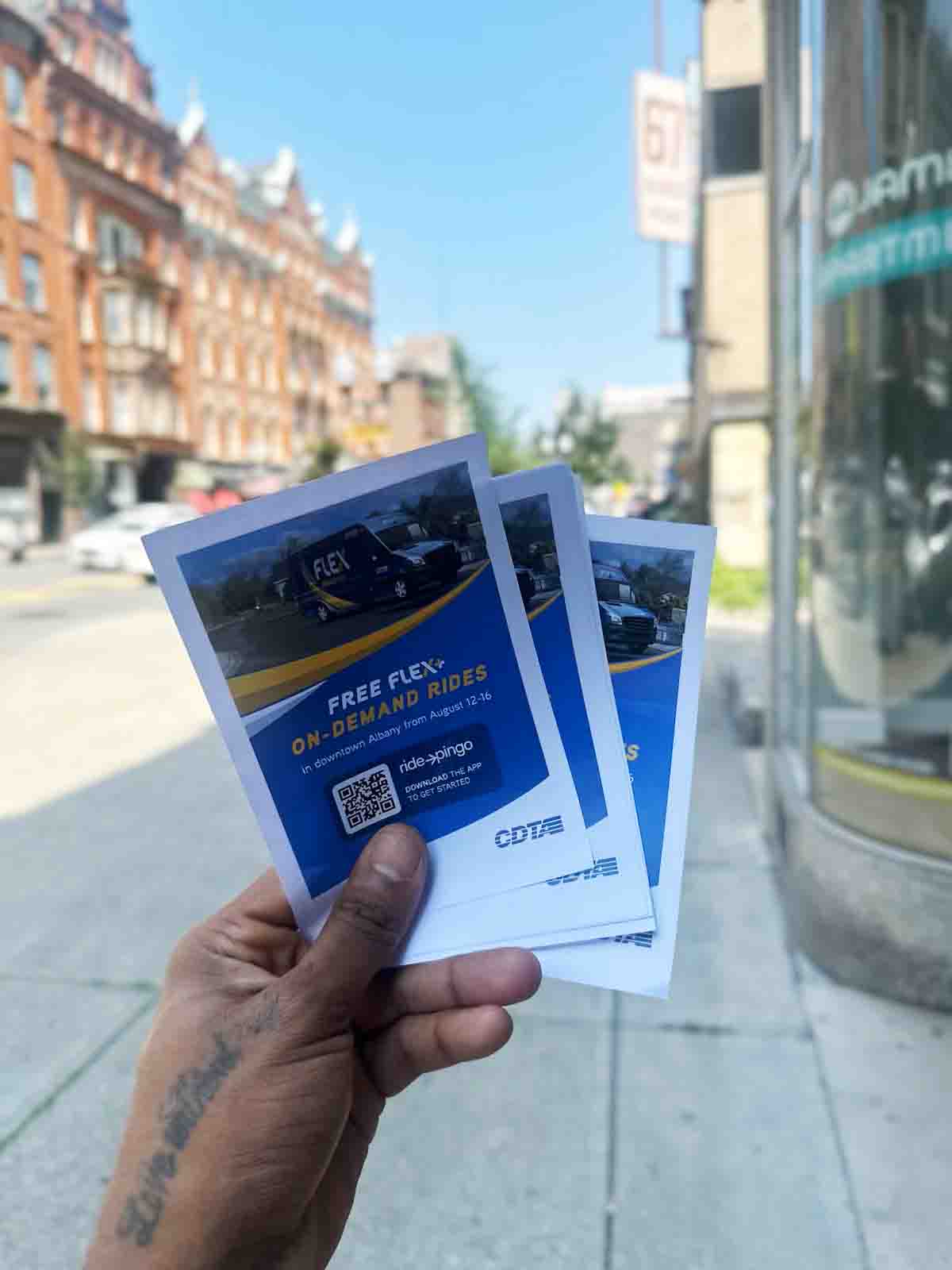
Rack card distribution puts your marketing materials where people have time to read them and a reason to take them. We handle the placement relationships, the display management, and the replenishment so your cards are always visible and always available.
What Is Rack Card Distribution?
Rack card distribution is the placement of standard-format promotional cards in acrylic display holders at high-traffic locations where consumers naturally pause to seek information, browse options, or plan their time. The rack card format is defined by its dimensions: typically 4 inches wide by 9 inches tall, the standard size that fits in the acrylic rack holders found in hotel lobbies, visitor centers, and similar locations across the country.
The format has been in continuous use for decades because it works. A rack card in the right location reaches a consumer who is already in a state of active discovery. The hotel guest standing at the lobby display is asking themselves what to do tonight or where to eat. The convention attendee pausing at the venue’s information display is looking for local options near the conference center. The museum visitor browsing the gift shop rack is considering how to extend their day. In all of these cases, the consumer is actively receptive to the information a rack card provides, not passively scrolling through content they did not ask for.
The physical size of a rack card is also a genuine advantage over smaller formats. At 4×9 inches, a rack card has room for a full-color image, a headline, a concise description of the offer, contact information, and a QR code or URL, all without feeling crowded. The card is large enough to be noticed from three feet away but small enough to slip into a pocket, a hotel key card holder, or a bag. It does not get recycled at the counter because there is no room for it. It travels with the consumer.
Rack card distribution is particularly effective for categories where the consumer is making decisions in an unfamiliar geography. Tourists, convention attendees, and hotel guests in a new city are actively seeking recommendations. They are more open to discovering a new restaurant, a local tour, a retail experience, or a service provider than they are at home where their regular habits govern their choices. A well-placed rack card in that context is not an interruption. It is useful information at the right moment.
The format also works well for locals who use the same high-traffic discovery environments. A New York City resident who regularly passes through Grand Central Terminal or a Chicago resident who visits Millennium Park is in a slightly different discovery mode than they are in their neighborhood, but they are still more receptive to rack card content than they would be to a banner ad served on their phone while they are at home.
Physical marketing materials in discovery environments like hotel lobbies and tourist information centers consistently outperform digital formats in reach among out-of-town visitors, who are actively seeking local recommendations and have limited existing relationships with local service providers.
Get Your Brand Into the Right Hands at the Right Moment.
Rack card distribution in hotel lobbies, airports, tourist centers, and more across NYC, Chicago, and LA. Call AGM for a placement quote.
How The Agm Rack Card Distribution Service Works
Running an effective rack card distribution program requires more than printing cards and dropping them off at a few locations. The placements need to be in the right venues, the display holders need to be maintained, and the cards need to be replenished before they run out. Here is how we manage all of it.
Campaign Planning and Location Strategy
We start by understanding your campaign objectives. Who are you trying to reach, and where are they most likely to be when they are in a discovery mindset? A restaurant targeting tourists should be in hotel lobbies and tourist information centers. A local tour company should be in hotel concierge areas and performing arts venues. A convention-adjacent service should be in convention center lobbies and airport lounges frequented by business travelers. We help you identify the right location types and specific venues for your target audience before a single card is printed.
Rack Card Design Specifications
Rack cards need to be designed specifically for the format. The standard 4×9 dimension has specific bleed requirements for print production, and the content hierarchy needs to account for the way rack cards are viewed in the display holder, where the bottom third of the card is often obscured. Your headline and primary visual need to sit in the top two-thirds of the card where they are visible from the rack. We can advise on design specifications or, if you need design support, refer you to our production partners. Every card we distribute is printed on card stock appropriate for the display environment and expected handling life.
Display Holder Placement
We supply and install branded acrylic rack card holders at each placement location. The holders are clear acrylic, which keeps the focus on your card rather than the display itself, and sized for the standard 4×9 format. We work with venue management at each location to confirm the placement position, which matters because a rack holder that is hidden behind a counter sees a fraction of the traffic that one positioned at eye level near the venue entrance does. Position negotiation is part of the service, not an afterthought.
Initial Load and Distribution
Once holders are placed, we load each with your rack cards and photograph the placement for our program records and your confirmation. We provide a placement report at the start of each campaign that includes the full list of active locations with addresses, photos, and estimated daily traffic volumes for each venue. You know exactly where your cards are before we invoice for the first distribution cycle.
Ongoing Replenishment
Empty racks are dead placements. We monitor each location on a scheduled basis and reload cards that have been taken. For high-traffic locations like major hotel lobbies and airport lounges, replenishment may be needed weekly or biweekly. For lower-traffic venues, monthly replenishment is typically sufficient. We adjust the schedule based on actual consumption rates observed during the campaign, not arbitrary timelines set at the start.
Campaign Reporting
We provide distribution reports at regular intervals throughout the campaign. Reports include active location counts, cards distributed per location, total campaign distribution volume, and any notes on placement changes or venue-level performance observations. For campaigns using QR codes, we can layer in scan data that gives you direct attribution from card distribution to digital engagement.
Where AGM Distributes Rack Cards
Our placement network covers the high-traffic discovery environments in New York City, Chicago, and Los Angeles where consumers are most receptive to rack card content. These are not generic business parks or suburban strip malls. They are the locations where people go when they are actively seeking information and open to discovering something new.
New York City
New York’s hotel corridor runs through Midtown Manhattan, where the concentration of major hotels between 34th and 59th Streets creates one of the densest rack card distribution networks in the country. Hotel lobbies in this zone receive both tourist traffic and business traveler traffic, which makes them effective for a wide range of rack card categories. The Staten Island Ferry terminal is an underused placement location with substantial daily traffic from both tourists doing the free ride and commuters from Staten Island who have dwell time on the ferry and in the terminal. Grand Central Terminal’s information areas are among the highest-traffic discovery environments in the city, with tens of thousands of daily visitors who are often pausing to plan their time in midtown. Madison Square Garden’s box office lobby area serves event audiences who are already in a spending mindset and looking for dining, entertainment, and accommodation options before and after events. JFK and LaGuardia airport lounges capture arriving visitors at the moment they are making plans for their time in the city.
Chicago
Chicago’s O’Hare International Airport is one of the busiest airports in the world, with consistent volumes of domestic and international arrivals who are planning their time in the city. Lounge and gate areas near baggage claim provide long dwell time and a high-discovery mindset. The Millennium Park visitor center sits adjacent to one of Chicago’s most visited landmarks and serves a mix of tourist visitors and locals who are already in an experience-seeking frame of mind. Navy Pier’s retail and event spaces attract both tourist and local traffic across a wide demographic range, making it effective for consumer-facing brands in food, entertainment, and hospitality categories.
Los Angeles
LAX is the entry point for millions of visitors to Los Angeles each year, and arrivals concourse and baggage claim areas provide a strong rack card distribution environment for brands targeting tourists and business travelers. Venice Beach information kiosks attract the coastal tourist traffic that is looking for activities, restaurants, and experiences along the Westside. The Hollywood tourist corridor, along Hollywood Boulevard and the surrounding blocks, draws consistent tourist traffic for whom local recommendations in a rack card display are more useful than a Google search in an unfamiliar city. Convention and event spaces in downtown Los Angeles serve the business traveler and conference attendee segment, which is highly responsive to rack card content in categories like dining, transportation, hotels, and local services.
Who Uses Rack Card Distribution
Rack card distribution serves any brand whose audience is present in the discovery environments where we place materials. The format is particularly effective for categories where geographic proximity and timing are the primary purchase triggers.
Tourism and Experience Brands
Tours, attractions, boat cruises, helicopter rides, cultural experiences, and sightseeing operations are the natural users of hotel lobby and tourist information center rack card placements. A visitor deciding what to do on their second day in New York City who picks up a rack card for a specific tour is far closer to making a booking than the same visitor who encounters an online ad for the same tour while browsing at home before their trip. Physical presence in the discovery environment is the key differentiator.
Restaurants and Dining
Restaurants benefit enormously from rack card placement in hotel lobbies and concierge areas near their location. A hotel concierge who keeps a restaurant’s rack cards in the lobby display because the restaurant provides them is a direct referral pipeline. When the hotel guest asks the front desk where to eat, the rack card on the nearby display reinforces the verbal recommendation with a physical takeaway that includes the address, the phone number, and a menu highlight or special offer. Many strong restaurant campaigns run hotel lobby rack cards as a permanent part of their local marketing mix.
Transportation and Hospitality Services
Car services, private transportation companies, day tours, ferry operators, and airport transfer services use rack card placement at airports, hotels, and convention centers to reach business and leisure travelers at the exact moment they are organizing their ground transportation. A rack card in the JFK arrivals area for a Manhattan car service reaches the traveler at the moment of maximum need, before they have already booked an alternative.
Events, Performing Arts, and Entertainment Venues
Concert venues, theaters, comedy clubs, art galleries, and event spaces use rack card distribution to reach potential audiences in hotel lobbies, adjacent venues, and tourist information centers. A performing arts center that places rack cards in the hotel lobbies surrounding its venue is advertising to exactly the kind of visitor who books tickets to shows while traveling. Seasonal events and festivals use rack card distribution to build awareness among the hotel and airport-capture audience who may not be reached by local digital or out-of-home media.
Retail and Local Business
Independent retail stores, specialty food shops, and local service providers use rack card distribution to extend their reach beyond the neighborhood where their storefront is located. A boutique in SoHo that places rack cards in Midtown hotel lobbies captures tourist spending that otherwise goes to the chain retail options that tourists default to when they have no local guidance.
Rack Card Distribution: Program Pricing
Rack card distribution pricing depends on the number and type of placement locations, the geographic scope of the campaign, campaign duration, card print volume, and the frequency of replenishment visits. Every program is custom-quoted based on the specific venues, cities, and timeline you need. We do not use a generic per-location rate card because the cost of placing and maintaining a display at a major airport lounge is different from the cost at a neighborhood gym.
To get a program quote, contact us with your target cities, preferred venue types, approximate number of locations, campaign duration, and any specific locations you know you want to be in. We will put together a scope and a written proposal within two business days.
Program pricing typically includes display holder supply and installation, initial card distribution, scheduled replenishment visits, placement photography at launch, and campaign reporting. Card printing can be quoted separately if you need production support.
Get A Rack Card Distribution Quote
Tell us your target cities, the venue types you want to be in, your campaign timeline, and the audience you are trying to reach. We will send you a program proposal with specific locations, estimated traffic volumes, and pricing within two business days.
Award Winning Personalized Service
You will get thoughtful, devoted, and individualized attention from our experienced, qualified, and professional personnel. Being one of the most illustrious agencies in Brooklyn, New York, American Guerrilla Marketing has been awarded the Best of Brooklyn title.
Nationwide
Industry City, Brooklyn, New York 11232
American Guerrilla Marketing
Hours
Mon - Fri: 9 AM - 5 PM
Sat & Sun: Closed
Automate your campaign with AGM’s Request for Proposal Builder.
Automate your campaign with AGM’s Request for Proposal Builder. Simply answer a few quick questions about your campaign goals, markets, and timeline, and the system will generate a tailored presentation with recommended strategies, quantities, and pricing. Click the RFP Builder to instantly receive your customized proposal.
Why AGM for Rack Card Distribution
Running a rack card distribution program that actually performs requires sustained operational discipline over the full life of the campaign. It is not glamorous work. It is showing up at the hotel lobby, counting the cards, refilling the rack, and doing the same thing again next week. A lot of agencies will take a rack card distribution budget, do the initial placement, and then let the program drift as cards run out and racks go empty. That is not how we operate.
We built our placement networks in New York, Chicago, and Los Angeles through years of maintaining real relationships with venue managers, hotel general managers, and tourist information administrators. Those relationships are built on consistency. When we say we will restock, we restock. When we say a card will be at a specific location, it will be there. The venues that partner with us do so because we make their lives easier, not harder, and that means they continue to give us preferential placement and to keep our display holders in the right positions.
We also bring strategic judgment to the placement selection process. Not every hotel lobby is the same. A business travel hotel in Midtown Manhattan attracts a different guest than a boutique hotel in the Lower East Side, and a rack card program that treats them identically will underperform in both. We match your program to the venues where your target audience is most likely to be in a receptive state, and we weight the distribution toward the locations that the consumption data shows are working best.
The format is simple. The work of executing it well is not. If you want a rack card distribution program that runs correctly from setup through the final reporting period, call us. We will put together a program that covers the right locations, in the right cities, for the right audience, with the operational follow-through that keeps it performing across the full campaign.
Frequently Asked Questions
The standard rack card size is 4 inches wide by 9 inches tall. This is the dimension that fits the acrylic display holders found in hotel lobbies, tourist information centers, and other standard rack card display locations. Some campaigns use a slightly oversized format, typically 4.25 by 9 or 4 by 11 inches, but we recommend confirming display holder dimensions before printing to ensure compatibility. We can advise on print specifications and production at the start of each program.
Rack cards are larger at 4×9 inches and held in acrylic display racks, making them more visible from a distance and better suited for information-rich content. They are placed in high-volume, often single-visit discovery environments like hotel lobbies, airports, and tourist centers, where consumers are in active discovery mode. Take-one boxes hold smaller business card-sized materials and are placed in repeat-visit neighborhood environments like coffee shops and barbershops, where the same consumer encounters the brand multiple times. The two formats serve different audience states: rack cards work for discovery in unfamiliar places; take-one boxes work for repeat exposure in familiar neighborhood environments. Many campaigns use both formats to cover both audience situations.
We track consumption by monitoring card inventory at each placement during replenishment visits. The difference between the card count we loaded and the count we find at the next visit gives us a direct measure of cards taken per location per time period. For campaigns using QR codes, digital scan data from the unique code provides an additional engagement metric that connects physical card distribution to digital actions. We include consumption data by location in our regular campaign reports so you can see which venues are driving the most card pickups.
Yes, if those venues are part of our existing placement network or if we can secure placement through our business development contacts. We have established relationships with hotel management companies, tourist information operators, and venue administrators in New York, Chicago, and Los Angeles. If you have specific venues in mind, tell us at the outset and we will confirm availability and access before the program launches. For venues that are not already in our network, we will tell you honestly whether we can secure access and on what timeline.
We recommend 14-point card stock with UV coating for standard outdoor rack card displays. The coating protects against moisture, fingerprints, and the handling wear that comes from multiple people touching the same card over weeks of display. For hotel lobbies and premium discovery environments, a 16-point stock with a soft-touch matte laminate reads as higher quality and differentiates the card from lower-production competitors in the same rack. Gloss UV is appropriate for most general use cases and is typically the most cost-effective option. If you need print production support, we can connect you with our production partners.
We recommend a minimum of two to three weeks lead time for program setup, which allows time for venue confirmation, display holder installation, and card delivery. For campaigns that require cards to be printed from scratch, add your printer’s production lead time, typically five to ten business days, to that timeline. For campaigns with specific launch dates tied to events or seasonal windows, contact us as early as possible. Premium venues in high-demand locations may have limited availability during peak tourism periods like summer and the holiday season.
Yes. We can coordinate simultaneous rack card programs across New York, Chicago, and Los Angeles with unified reporting and a single point of contact. Multi-city programs allow you to compare venue performance across markets and adjust distribution volume to concentrate cards in the locations and cities that drive the best results. For brands entering new markets or running national tourism campaigns, multi-city rack card distribution is one of the most cost-effective ways to establish physical presence in multiple places simultaneously.
Yes, and in some contexts it is more relevant than it was a decade ago. The saturation of digital advertising has made physical marketing materials in the right context stand out more than they did when physical and digital competed more evenly. A rack card in a hotel lobby competes with zero other digital ads for the attention of the person standing in front of it. That person is not scrolling past it. They either pick it up or they do not, and if they pick it up, they hold your brand in their hand for as long as they hold the card. That kind of contact does not happen in a digital feed. The rack card format also crosses demographic lines that some digital channels miss: older travelers, international visitors, and consumers who are less digitally engaged in their leisure time all respond to physical marketing materials in discovery environments at rates that digital channels do not consistently replicate.