American Guerrilla Marketing
Nationwide Service
Media planning, media buying, billboard advertising, & guerrilla marketing
Montana’s fastest-growing city draws tech transplants, MSU students, ski resort visitors, and outdoor industry professionals under one roof. AGM’s wheatpaste campaigns reach all of them on the streets where Bozeman actually lives.
Bozeman’s growth story is one of the most consequential demographic shifts in the contemporary American West. A reliably quiet university town a decade ago, it has become Montana’s fastest-growing city, driven by an influx of remote professionals and tech workers relocating from coastal metros, outdoor industry transplants who prioritized proximity to world-class terrain over urban density, and a wave of real estate investment that has fundamentally reshaped the city’s economic profile. The resulting demographic mix — Montana State University students and faculty, established local families, ski-culture enthusiasts, and affluent remote workers arriving from Austin, Seattle, and the Bay Area — creates a street advertising audience with unusual depth and concentrated purchasing power relative to Bozeman’s actual population count.
Downtown Main Street is the core of Bozeman’s walkable identity and the entry point for any serious fly posting campaign in this market. The pedestrian corridor between Grand Avenue and Church Street sees consistent foot traffic from every one of these demographic groups — the Tuesday afternoon coffee shop session of the remote worker, the Friday evening dinner crowd of the young professional transplant, the Saturday morning farmers market attendance of the established local household, and the Sunday brunch tourism that accompanies Bozeman’s growing regional visitor base. For a wheatpaste poster campaign, this corridor is not just a location; it is the meeting point of Bozeman’s otherwise-segmented audiences in a single walkable zone.
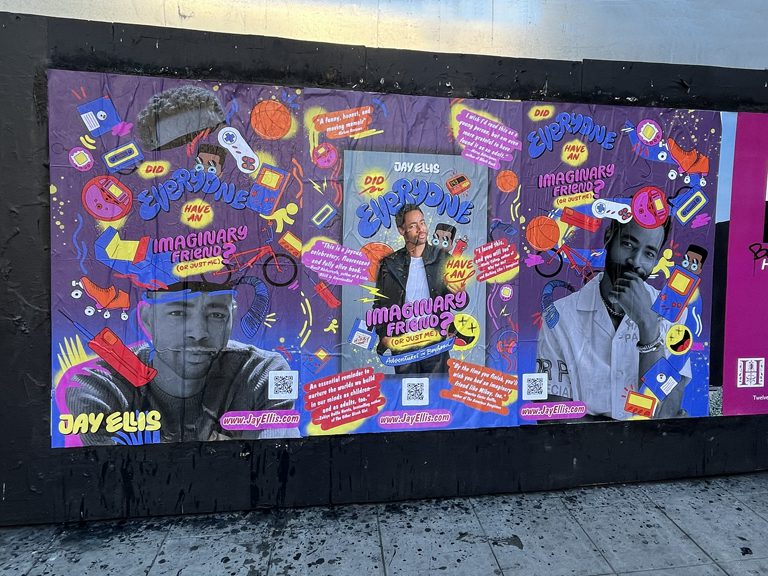
Among AGM’s industry recognitions is the Best of Brooklyn award, earned through consistent, high-quality campaign execution across markets ranging from midtown Manhattan to the emerging second-tier cities that now define America’s most interesting growth geography. AGM’s work with Jay Ellis on a Manhattan street poster campaign demonstrated the kind of cultural-moment, high-impact execution that applies directly to Bozeman’s more concentrated but equally sophisticated market. The Jay Ellis campaign required reading the audience’s relationship to street-level media with precision — understanding which walls would carry the message and which wouldn’t, and why timing mattered as much as placement. That same analytical discipline drives every Bozeman campaign AGM executes.
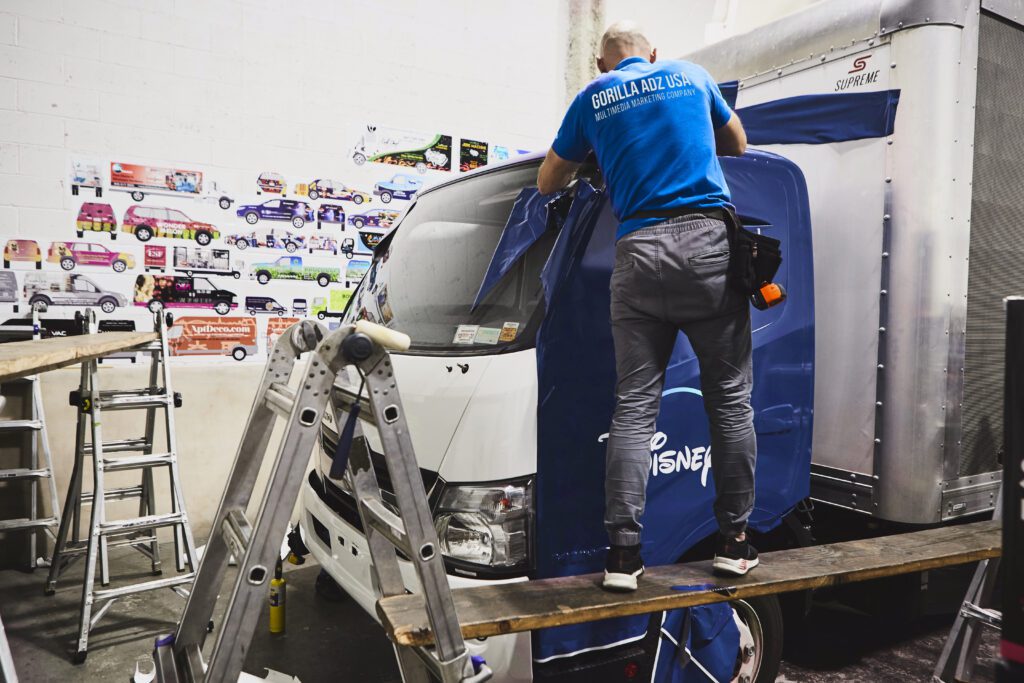
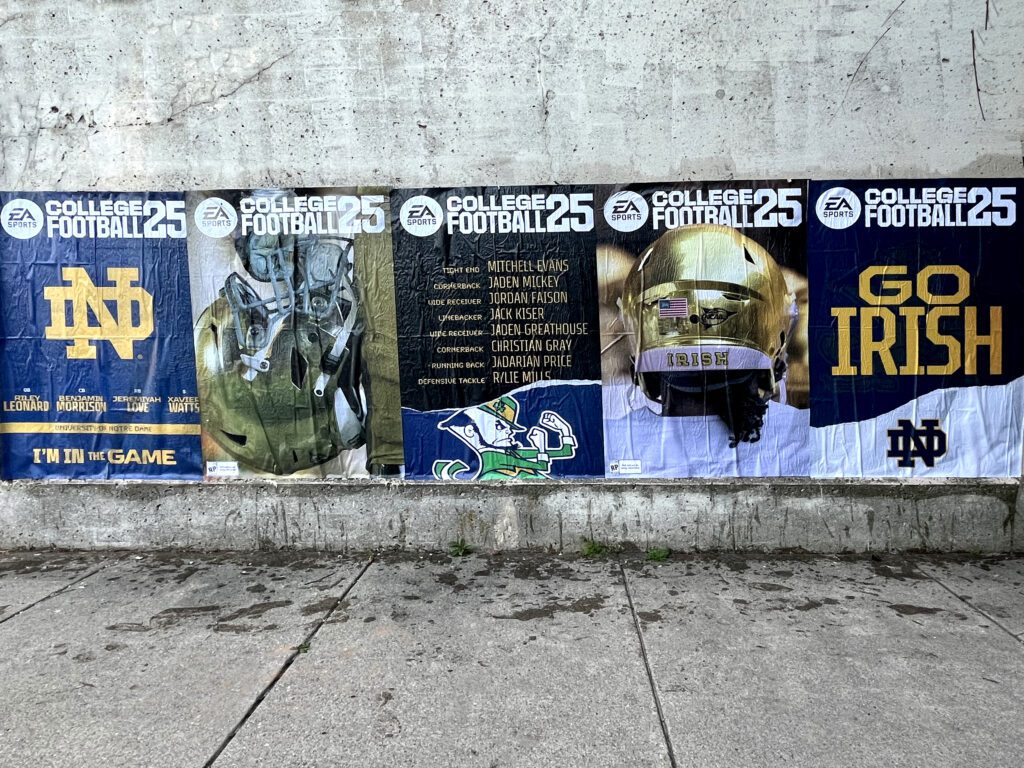
AGM controls the entire campaign lifecycle — printing, installation, and documentation all happen in-house, with no production-to-installation handoffs and no subcontractors entering the process at any stage. The brand that approved the creative sees exactly that creative on the walls where Bozeman’s audience moves. Clients including Netflix, EA Sports, Biossance, and The Onion have relied on this model across national campaigns because the alternative — coordinating between separate print vendors and third-party posting crews — introduces quality variance that AGM’s structure eliminates entirely. Campaign documentation takes the form of GPS-stamped photography delivered as a location-verified proof package: every wall, every intersection, timestamped and organized by district.
Bozeman’s tourism dimension layers an opportunity onto the city’s permanent population that most Montana markets cannot offer. The Gallatin Valley functions as the gateway corridor to two major ski areas — Bridger Bowl and Big Sky Resort — drawing high-income visitors from across the country through the city’s commercial and entertainment zones for the better part of the year. A fly posting campaign in Bozeman doesn’t reach only the people who live here; it reaches a rotating population of resort visitors, outdoor tourists, and destination travelers who are in a recreational spending mindset and are moving through exactly the downtown and Midtown corridors where street poster campaigns operate. That tourism layer meaningfully amplifies the effective audience of any Bozeman campaign beyond what the permanent population alone would suggest.
AGM has run street poster campaigns for Jay Ellis, Netflix, EA Sports, and Biossance. The same in-house print, field installation, and GPS-documented proof system that executes those national campaigns works in Bozeman. Tell us who you're reaching and we'll map the campaign around them.
Select a city to explore Fly Posting Advertising opportunities.
Downtown Main Street is the highest foot-traffic zone in Bozeman and the most diverse audience aggregation point in the city. The pedestrian corridor from Grand Avenue to Church Street pulls together the widest cross-section of Bozeman’s demographic mix in a single walkable stretch: MSU students moving between campus and downtown amenities, tech transplants working remotely from coffee shops and coworking spaces, local professionals on lunch breaks, tourists exploring what the city has to offer, and the outdoor enthusiast demographic that is increasingly the defining population of the Gallatin Valley. No other single zone in Bozeman puts your brand in front of this range of people simultaneously.
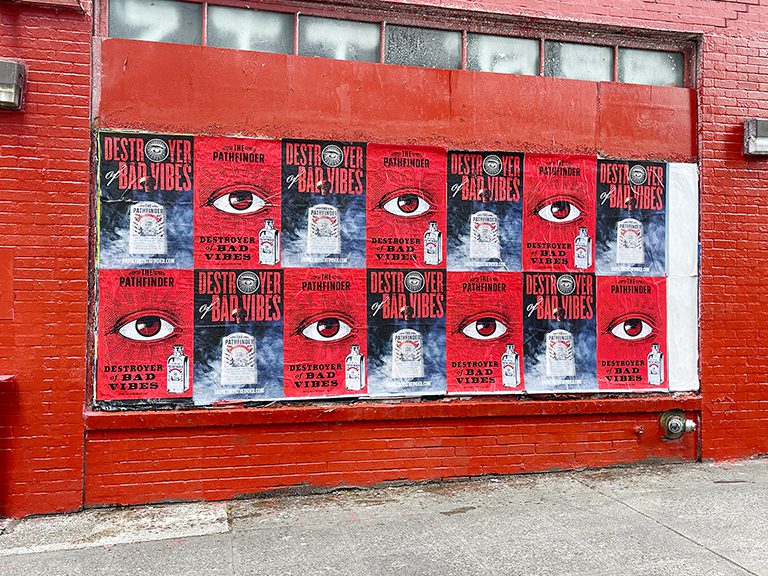
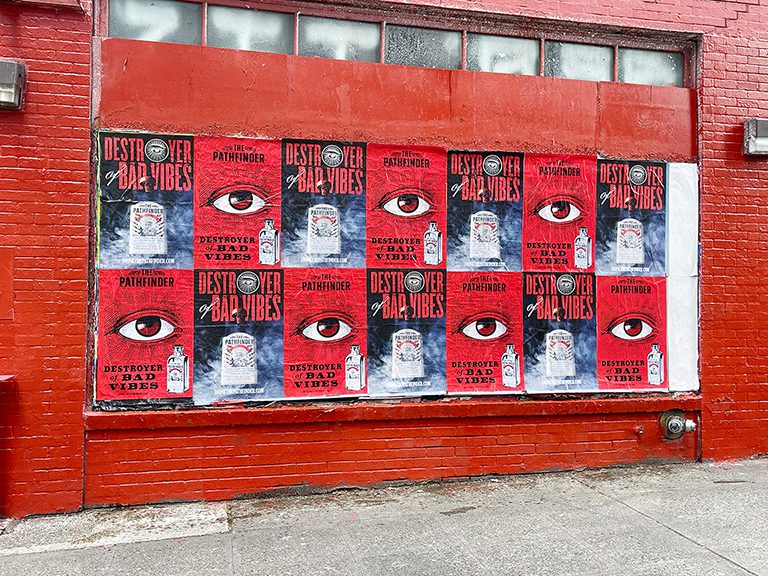
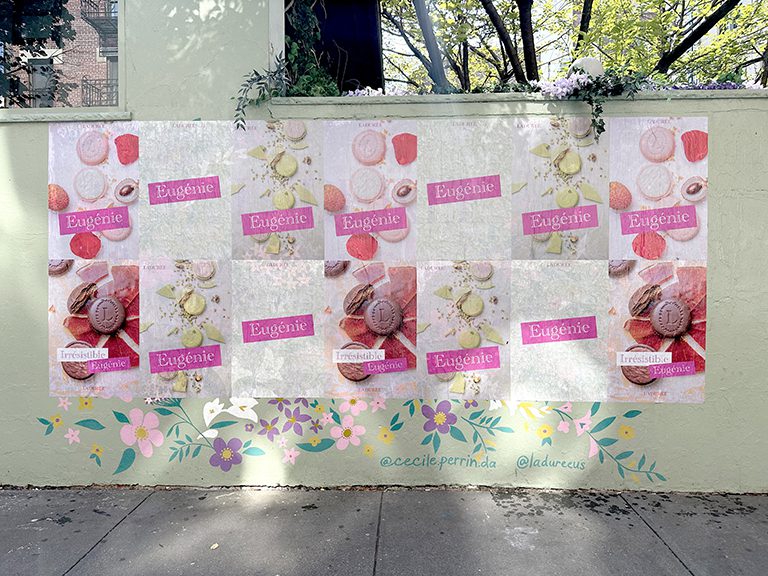
The building architecture along Main Street — a mix of historic brick facades, newer mixed-use commercial construction, and the blank wall opportunities on side streets — provides the kind of surface variety that allows both 24×36 and 48×72 poster formats to operate effectively. Blank walls on streets perpendicular to Main, construction barriers around active development projects (of which there are many given Bozeman’s growth pace), and building sides visible from the Main Street pedestrian flow all serve as viable wheat paste advertising surfaces. The density of pedestrian movement on this corridor during afternoon and evening hours rivals what AGM sees in mid-size urban markets outside Montana entirely.
Weekend farmers market programming on Main Street concentrates this already-dense foot traffic into an even more compressed window during the warm-weather months — a campaign timing consideration that AGM factors into launch scheduling for Bozeman campaigns. The combination of weekday professional foot traffic and weekend market and event activity makes the Main Street corridor an anchor location that no comprehensive Bozeman poster campaign can afford to leave uncovered.
Montana State University enrolls approximately 17,000 students and employs a faculty and staff community that adds several thousand more daily presences to the campus footprint. The perimeter corridors — Kagy Boulevard, College Avenue, and South 11th Avenue — form the ring around MSU where student and campus-visitor traffic moves consistently throughout the academic year from late August through early May. Fly posting on the building walls and structures along these corridors reaches an audience at the precise age and life stage where brand impressions have the longest downstream lifetime value: the 18-to-26-year-old forming preferences and purchasing habits that will persist for decades.
The MSU campus perimeter also captures a faculty and staff audience with established professional incomes and spending patterns that differ significantly from the student population. Department buildings, research facilities, and the commercial services that have developed along the campus edge serve a professional academic demographic that consumes culture, entertainment, outdoor recreation, and consumer brands at rates that graduate-level incomes support. A poster campaign on the campus perimeter reaches both populations with a single placement strategy.
Game days and major university programming events create foot traffic spikes along the campus perimeter that can multiply the standard weekly impression count significantly. MSU football games, major speakers, and cultural programming all funnel audience movement through the Kagy and College Avenue corridors. AGM’s Bozeman campaign planning accounts for these event windows, and timing a poster campaign to launch in the week before a major campus event can dramatically increase the impression delivery relative to a campaign running in a quiet academic week.
The Bridger Canyon Road corridor is the primary artery connecting Bozeman to Bridger Bowl ski area, and during ski season it carries a consistent flow of high-income, brand-conscious outdoor enthusiasts through a zone that has very limited traditional outdoor advertising presence. This absence of competing media creates a white space opportunity for fly posting on the commercial structures, gear shop walls, and permitted surfaces that line the route out of town and serve the resort-bound traffic stream. For outdoor, ski, and adventure brands, no other posting location in Bozeman speaks more directly to the audience segment they’re trying to reach.
The Bridger Canyon gateway zone is not limited to ski season utility. Trail access to the Bridger Range draws hikers, trail runners, mountain bikers, and backcountry enthusiasts through this corridor during the shoulder seasons and summer, creating a year-round audience of outdoor recreation participants who represent the core demographic for the outdoor industry brands that have increasingly made Bozeman their regional marketing priority. Posting along the gateway zone captures these audiences during trips that are defined by their outdoor recreation identity, creating a contextual fit between the brand message and the reader’s immediate state of mind that downtown placements cannot replicate.
The commercial node at the base of Bridger Canyon — gear shops, coffee, convenience, and the gathering infrastructure that serves resort traffic — concentrates foot traffic from incoming and outgoing resort visitors at a point where they are either anticipating the day ahead or processing the experience just finished. Both psychological states create receptive conditions for a brand impression that connects to the outdoor recreation lifestyle. AGM’s location scouting for Bozeman campaigns identifies the highest-value surfaces in this gateway zone for clients whose target demographic skews toward the active outdoor market.
North 7th Avenue is Bozeman’s emerging commercial-arts corridor and the city’s most direct analog to the kind of hip, independent-business district that drives the cultural identity of larger western cities. Independent breweries, creative agencies, fitness studios, food businesses, and the gathering infrastructure of Bozeman’s young professional and remote-worker class have concentrated along North 7th in numbers that have accelerated dramatically over the past five years. This is the Bozeman district that most closely resembles the urban commercial environments where fly posting has always performed most effectively — independent, walkable, and populated by an audience that is inherently comfortable with and receptive to street-level advertising in the wheat paste tradition.
The building stock along North 7th Avenue includes a mix of commercial construction from multiple eras, with the blank wall opportunities that accompany that architectural variety. Independent business owners in this corridor are generally more receptive to the visual energy of fly posting than the managed commercial properties that dominate other parts of the city, creating an environment where wheat paste campaigns feel contextually appropriate rather than incongruous. For brands targeting Bozeman’s creative class, independent business community, and young professional demographic, Midtown delivers the audience without the competition from more established advertising presence that downtown Main Street carries.
The North 7th corridor is also the area where Bozeman’s remote worker and tech transplant population concentrates its commercial activity outside of downtown. Coworking spaces, specialty coffee, and the independent restaurants that serve the work-from-anywhere professional class all cluster here. A Midtown Bozeman fly posting campaign reaches this demographic in their neighborhood rather than their tourist zone, which creates a different — and for many brands more valuable — kind of brand relationship built on genuine local relevance rather than generic urban presence.
AGM Bozeman campaigns are structured around two core fly posting formats, each optimized for a different campaign objective. The format selection should be driven by whether your priority is geographic coverage across multiple Bozeman districts — reach — or maximum visual impact at the highest-value individual locations — dominance. Both formats use wheat paste adhesion for durability through Bozeman’s four-season weather profile, and both are produced entirely in-house by AGM’s production team.
Two feet by three feet, the 24×36 is the format that builds a city-is-covered presence. In a market like Bozeman — compact enough that 100 to 200 posters can achieve genuine saturation, but diverse enough that multiple districts require independent coverage — the 24×36 format gives you the density to be everywhere simultaneously: Main Street, the MSU perimeter, Midtown, and the Bridger Canyon gateway all covered in a single campaign run.
Bozeman’s relatively compact urban footprint means that 200 posters at 24×36 creates a saturation effect that larger markets require 500-plus placements to achieve. The city is walkable, the audience is concentrated, and the format works with that density to build the impression that the brand is woven into the city’s visual fabric.
At four feet wide and six feet tall, the 48×72 wheat paste format is built for the walls where you want Bozeman to feel the weight of the campaign rather than simply notice it. A single 48×72 poster on the right blank wall on Main Street or along North 7th Avenue creates a presence that reads from across the street and down the block — the kind of visual dominance that 24×36 posters achieve through quantity rather than individual scale.
The 48×72 format is the choice for brands whose creative is built to command a wall rather than populate one — high-contrast imagery, bold typography, and visual designs that gain power from scale. For entertainment launches, major brand moments, and campaigns where a specific Bozeman wall needs to carry the entire brand statement, this is the format.
The most effective Bozeman campaigns we build layer multiple locations across the city’s distinct audience zones. A typical structure: 48×72 posters anchor the two or three highest-visibility walls on Main Street and North 7th Avenue, while 24×36 posters spread the campaign across the MSU campus perimeter, the Bridger Canyon gateway commercial zone, and the secondary streets feeding into Bozeman’s pedestrian core.
This layered approach ensures that the campaign captures every major demographic segment in Bozeman — the student and faculty audience, the tech transplant and remote worker, the downtown professional, the outdoor recreation enthusiast, and the resort visitor — without relying on any single district to carry the full audience weight. Campaign planning for this structure begins with a district prioritization conversation about which Bozeman audiences matter most to your brand objectives.
Award Winning Personalized Service
You will get thoughtful, devoted, and individualized attention from our experienced, qualified, and professional personnel. Being one of the most illustrious agencies in Brooklyn, New York, American Guerrilla Marketing has been awarded the Best of Brooklyn title.
Nationwide
Industry City, Brooklyn, New York 11232
American Guerrilla Marketing
Hours
Mon - Fri: 9 AM - 5 PM
Sat & Sun: Closed
Automate your campaign with AGM’s Request for Proposal Builder. Simply answer a few quick questions about your campaign goals, markets, and timeline, and the system will generate a tailored presentation with recommended strategies, quantities, and pricing. Click the RFP Builder to instantly receive your customized proposal.
The tech transplant and remote worker demographic that has reshaped Bozeman over the past decade is a particularly well-matched audience for street poster advertising. These are people who relocated from coastal metros where fly posting and wheatpaste campaigns are established parts of the visual environment — they have a learned fluency with street-level media that the general Montana population is still developing. They recognize the format, they read what’s on the walls they walk past, and they respond to it. The North 7th Avenue Midtown corridor and the downtown Main Street zone are where this demographic concentrates its commercial activity, and a well-executed poster campaign in those zones reaches them in their own neighborhoods rather than in an interruptive digital channel. AGM’s Bozeman campaigns specifically map posting locations to the commercial patterns of this demographic — coffee shop clusters, coworking spaces, the independent businesses they frequent daily.
It affects it significantly, and factoring it into campaign planning is one of the most impactful strategic decisions available for Bozeman campaigns targeting the student demographic. The academic year runs late August through early May, with peak campus population density during fall and spring semesters. A campaign targeted at the MSU audience launched during these windows captures 17,000 students at their highest concentration on and around campus — compared to the summer months when many students have dispersed to internships, seasonal employment, and home communities. For non-student targeting, the inverse consideration applies: summer brings Bozeman’s tourism peak, inflating the downtown and resort-corridor audience at the exact moment campus traffic is at its annual low. AGM helps clients identify which campaign timing window aligns with their specific Bozeman audience priority before any production or scheduling decisions are locked.
The Bridger Canyon Road gateway zone is specifically designed to intercept this audience at the point of maximum relevance — en route to or from the resort, moving through a commercial zone where the brand context of outdoor recreation and winter sport is most directly mirrored. Visitors driving into Bozeman from Bridger Bowl or routing through the city from Big Sky resort pass through and spend time in downtown Bozeman in numbers that are significantly higher during peak ski season than at any other time of year. Campaigns that combine Bridger Canyon gateway placements with downtown Main Street coverage capture this audience at both ends of their visit — the gateway zone during active resort transit and downtown during the dining, shopping, and accommodation activity that surrounds a ski trip to the area. For ski, outdoor gear, and travel brands, this dual-zone strategy in Bozeman delivers one of the most contextually aligned audience interactions available in any Montana posting campaign.
Bozeman delivers a fundamentally different ROI calculation than a major metro campaign — one that is often more favorable for brands targeting specific demographic profiles. In a large market, campaign budget buys a share of audience attention in a highly competitive visual environment where dozens of formats compete for the same pedestrian eyeballs. In Bozeman, the same budget achieves near-total saturation of a highly defined, high-income, brand-receptive audience with minimal competitive noise. The tech transplant, outdoor enthusiast, and resort-visitor demographic concentrated in Bozeman has household income levels and purchasing behavior that rival much larger metro markets, while the cost to reach them with street-level media is a fraction of what comparable metro placement would require. For brands whose audience is defined by lifestyle and purchasing behavior rather than raw population count, Bozeman’s efficiency advantage is substantial.
Bozeman experiences genuine seasonal variation in its effective audience composition, and the smart response is to match campaign timing to the specific audience mix your brand is targeting rather than treating it as a year-round uniform market. Summer brings the highest tourist volume and the lowest student presence — ideal for hospitality, consumer brands, and lifestyle advertisers targeting the visitor economy. Fall and spring semesters bring the highest campus population density — ideal for brands targeting the student and young professional demographic. Winter activates the ski resort visitor flow through the Bridger Canyon corridor while concentrating the permanent resident population in the downtown and Midtown commercial zones where foot traffic is somewhat compressed by cold weather. AGM’s campaign planning process maps your target demographic to the seasonal window where their Bozeman concentration peaks, then schedules accordingly.
Bozeman is arguably the single best fly posting market in Montana — and one of the best in the Mountain West — for outdoor and adventure brands. The city’s permanent population includes a disproportionate concentration of outdoor recreation enthusiasts, gear-literate consumers, and the brand-aware demographic that outdoor industry companies spend significant media budgets trying to reach. The Bridger Canyon gateway zone captures active outdoor enthusiasts in motion; the downtown Main Street corridor reaches them during the commercial activity that surrounds their recreation lifestyle; the Midtown North 7th zone captures the more urban-leaning outdoor consumer in their neighborhood commercial environment. Three distinct posting zones, three access points to the same core audience. For outdoor brands, that multi-zone coverage of a deeply relevant consumer population in a single compact market is nearly impossible to replicate at this cost efficiency in any other Montana city.
Main Street delivers Bozeman’s most diverse audience mix — every demographic segment passes through it. North 7th Avenue Midtown delivers a more concentrated version of a specific audience segment: the creative class, the remote worker, the young professional, the independent business owner and their customer base. If Main Street is where you talk to all of Bozeman simultaneously, Midtown is where you have a more targeted conversation with the city’s emerging cultural and professional core. For brands whose identity connects to independence, craft, creativity, and the kind of intentional consumer behavior that characterizes that demographic, Midtown posting creates a contextual alignment between the brand and its audience’s environment that Main Street’s more general foot traffic can’t quite replicate. The two zones are not substitutes for each other — they’re complementary targeting instruments, and many effective Bozeman campaigns run both.
The entry point is 100 posters at the 24×36 format for contact us for pricing which in a market as compact as Bozeman achieves genuine presence across the downtown Main Street corridor and one or two additional zones. This is a meaningful floor — not a token buy — because Bozeman’s density means 100 placements go farther than the same quantity would in a sprawling suburban market. For brands new to Bozeman fly posting, 100 posters at 24×36 is a realistic test of the format and the city before scaling to 200 posters or introducing the 48×72 oversized format for a subsequent campaign. The creative add-on cost of contact us for pricing for a second design allows brands with multiple messages or creative versions to test audience response to different executions within the same campaign run, which the compact Bozeman geography makes easier to read than in larger, more dispersed markets.
University-adjacent market campaigns are a meaningful part of AGM’s campaign history. The combination of high population density, audience concentration in specific geographic corridors, and the cultural receptivity to street-level advertising that characterizes university towns makes them particularly effective fly posting environments — and Bozeman with MSU’s 17,000-student campus is a strong example of that dynamic. AGM’s operational approach in university-adjacent markets focuses heavily on the campus perimeter corridors where student foot traffic is highest and most sustained: the commuter routes, the commercial adjacencies, and the gathering infrastructure that serves campus life. The timing dimension of academic-year campaign planning is a layer AGM brings to Bozeman engagements that vendors without specific university-market experience typically don’t incorporate into their campaign recommendations.
Multi-city Montana campaigns are an AGM capability that distinguishes us from local or regional posting vendors who operate in a single market. Brands seeking statewide Montana presence — covering Bozeman’s tech and outdoor tourism demographic alongside Billings’ energy professional market, Missoula’s university and outdoor recreation community, and Great Falls’ northern plains commercial hub — can execute across all four cities through a single AGM engagement. This eliminates the coordination overhead of managing separate vendor relationships in each market and ensures consistent creative quality, documentation standards, and campaign timing across the full state. Multi-city campaigns also benefit from a unified strategic conversation about how the different Montana markets relate to each other and what audience segments are unique to each versus shared across the state.
Peak impression delivery in the Bridger Canyon gateway zone aligns directly with Bridger Bowl’s operating season, which typically runs from December through April. The combination of weekend resort traffic, midweek skier days, and the ski trip activity that surrounds each resort visit concentrates the outdoor enthusiast and resort visitor audience in this corridor at levels that are genuinely higher than any other point in the year. Shoulder season shoulder periods — late October and November as snow builds, and May as the season winds down — see elevated outdoor recreation traffic from the hiking and backcountry community transitioning between summer and winter modes, which maintains audience quality in the gateway zone even outside the core ski season. Summer activity on trails accessing the Bridger Range continues to drive traffic through the corridor, making it a viable year-round posting location rather than a purely ski-season asset.
Bozeman’s poster audience — particularly the tech transplant, creative professional, and outdoor enthusiast segments — has a sophisticated visual literacy that rewards creative work built for the format rather than adapted from it. These are people who have seen genuinely excellent wheat paste campaigns in the cities they relocated from, and who respond to posters that understand the medium: bold at scale, readable at distance, and with enough visual ambition to justify the physical presence of a large piece of printed work on a wall. AGM’s role in Bozeman campaigns is execution and placement strategy, not creative development — that stays with your team. But the guidance we provide consistently is this: design for the wall first, the zoom-in second. Bozeman’s audience reads posters as they walk past them in motion, not as they examine them up close. Scale, contrast, and clarity at distance are the design criteria that matter most for this specific posting environment.