American Guerrilla Marketing
Nationwide Service
Media planning, media buying, billboard advertising, & guerrilla marketing
The city that invented the street mural as a community institution now hosts the country’s densest concentration of tech workers. AGM executes wheatpasting and street poster campaigns across the Mission, SoMa, Haight-Ashbury, the Castro, and beyond — reaching both audiences at once.
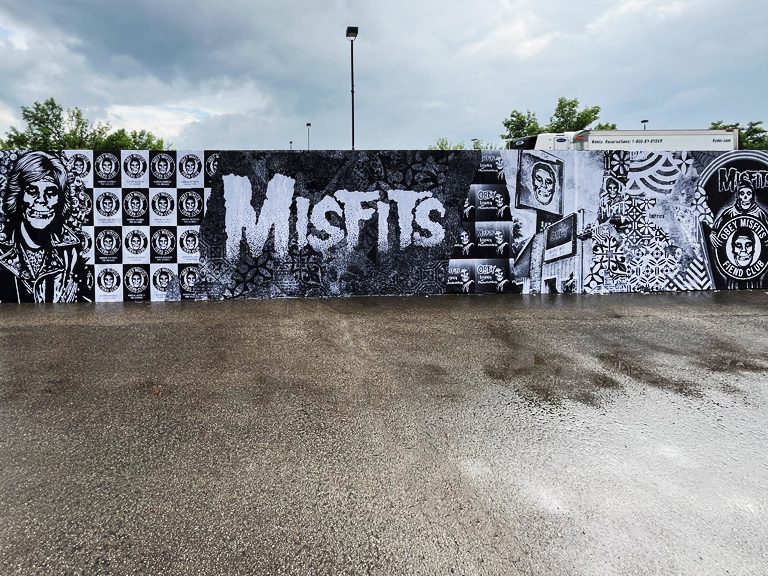
Clarion Alley runs one block between Valencia and Mission Streets, and on any given afternoon, the murals covering every surface of its 200-foot length represent four decades of unbroken visual culture — political, artistic, activist, and always intensely local. The Mission District has been producing street art and street posters as a form of communication since the 1970s, when Chicano artists and community organizers turned the neighborhood’s blank walls into a public gallery that predated the gallery district concept by fifteen years. That tradition is still active. It’s also what has primed the Mission’s pedestrian population to engage seriously with what appears on its walls — not dismiss it. Fly posting in San Francisco works in the Mission because the neighborhood has spent half a century building a visual literacy in its residents that makes street-level imagery genuinely effective as a communication tool.
The unexpected dimension is what happens a few blocks north and east. South of Market — SoMa — is the densest concentration of technology company offices in any American urban neighborhood, with thousands of engineers, designers, product managers, and startup employees walking the same warehouse-conversion corridors that the Mission’s mural culture bleeds into at the edges. These two worlds — the fifty-year street art tradition of the Mission and the global technology industry workforce of SoMa — share transit lines, lunch spots on Valencia Street, and weekend foot traffic through neighborhoods like the Castro and Haight-Ashbury. A fly posting campaign in San Francisco can reach both audiences with the same installation, because in this city more than almost anywhere else, the tastemaker creative and the technology professional are frequently the same person.
Wheatpasting campaigns in San Francisco benefit from the city’s physical layout in ways that don’t apply in other markets. San Francisco’s topography forces pedestrian concentration into the flat, walkable corridors — Valencia Street, 24th Street, Haight Street, Castro Street, and the SoMa blocks between Harrison and Howard — in ways that make street poster placements consistently high-visibility throughout a campaign window. The city is built for walking. Its residents walk it habitually, repeatedly, and with a level of visual attention shaped by decades of a street art culture that has trained them to look at walls. AGM’s nationwide installation crews bring the same GPS-documented execution standard to San Francisco that has earned AGM recognition across markets — every placement tracked, photographed, and delivered in a comprehensive post-campaign reporting package.
AGM executes street poster and wheatpasting campaigns across the Mission District, SoMa, Haight-Ashbury, the Castro, and Tenderloin arts corridor. GPS-documented reporting, nationwide installation crews, Best of Brooklyn award-winning execution standard.
Select a city to explore Fly Posting Advertising opportunities.
The Mission District is the anchor of San Francisco fly posting for the same reason it’s the anchor of the city’s street art culture: the neighborhood’s walls have been a communication medium for so long that its population is conditioned to read them. Valencia Street between 16th Street and 24th Street is the neighborhood’s primary pedestrian commercial spine — restaurants, bars, independent bookshops, specialty coffee, and vintage retail line both sides of a walkable corridor that draws consistent foot traffic seven days a week from morning through late evening. The 24th Street Latino cultural corridor extends east toward BART, with its own character — taquerias, panaderias, community organization storefronts, and the Precita Eyes murals that anchor the neighborhood’s visual identity. The Mission demographic is primarily 28-40, creative professional, and strongly arts and community oriented — the kind of audience that notices street poster advertising not as an intrusion but as a contribution to the visual environment. Surface availability is exceptional: the Mission has Clarion Alley, blank wall sections on the buildings facing the alley parallels between Valencia and Mission, utility structures throughout the 16th Street and 24th Street cross-corridors, and construction barriers on the new residential infill projects that continue to alter the neighborhood’s eastern edge. For entertainment, arts, music, and independent brand campaigns, the Mission is the highest-quality posting environment in San Francisco.
South of Market is where San Francisco’s street poster advertising opportunity diverges most dramatically from the Mission District’s arts-and-culture orientation. The neighborhood between Howard Street and the Bay, from 4th Street west to 11th Street, is a dense grid of technology company offices, design studios, architecture firms, and startup headquarters occupying converted warehouses and new commercial construction in roughly equal measure. The weekday lunchtime foot traffic through the blocks between Folsom and Bryant Streets, and along the 2nd Street and 3rd Street corridors, is composed primarily of 25-38 technology industry professionals — the demographic most sought by consumer tech brands, gaming companies, streaming platforms, and premium consumer goods companies. Chase Center’s proximity at Mission Bay pulls entertainment event traffic into SoMa’s western edge on concert and game nights, adding a live-entertainment audience layer to the neighborhood’s weekday tech-worker baseline. The warehouse-conversion buildings along Folsom Street, the construction barriers on active SoMa development projects, and the fence lines throughout the neighborhood’s industrial-to-commercial transition zones provide substantial large-surface posting inventory that makes SoMa a natural target for 48×72 large-format wheat paste campaigns. For tech brands, gaming companies, and entertainment platforms seeking to reach the professional tech workforce in its primary downtown environment, SoMa fly posting is a direct channel to that demographic at eye level, on the streets it walks every day.
Haight-Ashbury carries a countercultural brand identity built over six decades — the Summer of Love, the record stores, the psychedelic poster tradition that originated on Haight Street in the 1960s and created a visual design language still referenced by music and culture brands worldwide. The neighborhood today is a blend of that legacy with a contemporary independent retail corridor on Haight Street between Masonic and Stanyan Street that draws both longtime residents and visitors seeking the Haight experience. Amoeba Music, independent clothing boutiques, vintage shops, head shops, and specialty food and beverage retailers line Haight Street in a density that creates sustained pedestrian browsing behavior from a mixed demographic of local residents, UCSF students from the Parnassus Heights campus a few blocks south, and cultural tourists who specifically make the trip to Haight-Ashbury as part of the San Francisco experience. The fly posting surface landscape on Haight Street includes utility structures, fence lines along the residential side streets immediately north and south of Haight, and blank facade sections on the commercial buildings throughout the retail corridor. For music labels, independent brands, festival promoters, and countercultural-adjacent campaigns, the Haight-Ashbury visual environment provides a cultural context that amplifies brand credibility in ways that more neutral posting zones cannot.
The Castro is one of San Francisco’s most walkable and consistently active retail and nightlife corridors — Castro Street between Market and 19th Street generates foot traffic seven days a week from early morning through late evening, with the bars, restaurants, boutiques, and coffee shops on both sides of the street creating a commercial strip where pedestrian dwell time is among the highest in the city. The Castro Theatre anchors a film and arts programming calendar that brings a specific kind of arts-engaged audience into the neighborhood on screening nights — the kind of audience that streaming platforms and independent film distributors want to reach with street poster campaigns timed to release windows. The neighborhood’s strong community identity and high community engagement level means that street poster campaigns generate not just passive impressions but active engagement: residents notice what’s new on the walls, comment on it, share it, and integrate it into the neighborhood’s visual conversation. For entertainment, arts, and lifestyle brands with a natural affinity for the Castro’s audience, fly posting here functions as community-level brand integration rather than broadcast advertising. The Castro’s compact geographic scale — the primary foot traffic corridor is concentrated on a few blocks of Castro Street — makes it efficient to achieve significant saturation with a targeted 24×36 campaign that covers the main corridor thoroughly.
The Tenderloin is one of San Francisco’s most underutilized fly posting zones, which is part of what makes it strategically interesting. The corridor running from UN Plaza through the arts organizations and performance spaces concentrated on Taylor Street, Turk Street, and the surrounding blocks has genuine pedestrian density from a transit-dependent population moving through the neighborhood between Civic Center, the Tenderloin’s residential blocks, and the theater and arts venue cluster that has slowly built itself into the neighborhood’s fabric. The arts organizations, theater spaces, and community venues on Taylor and Turk draw a progressive, arts-engaged audience that differs meaningfully from the tech-heavy SoMa demographic while maintaining strong entertainment and culture brand receptivity. For advocacy campaigns, arts and culture brands, social impact organizations, and entertainment brands running campaigns aligned with progressive community values, the Tenderloin arts corridor provides access to a genuinely engaged audience in a comparatively low visual-clutter environment — fewer competing brand placements than Mission or SoMa means individual posters stand out more sharply against the surrounding surface landscape. The Civic Center adjacency also puts fly posting campaigns in front of the municipal workers, nonprofit professionals, and transit commuters who move through the UN Plaza and Civic Center BART zones throughout the workday.
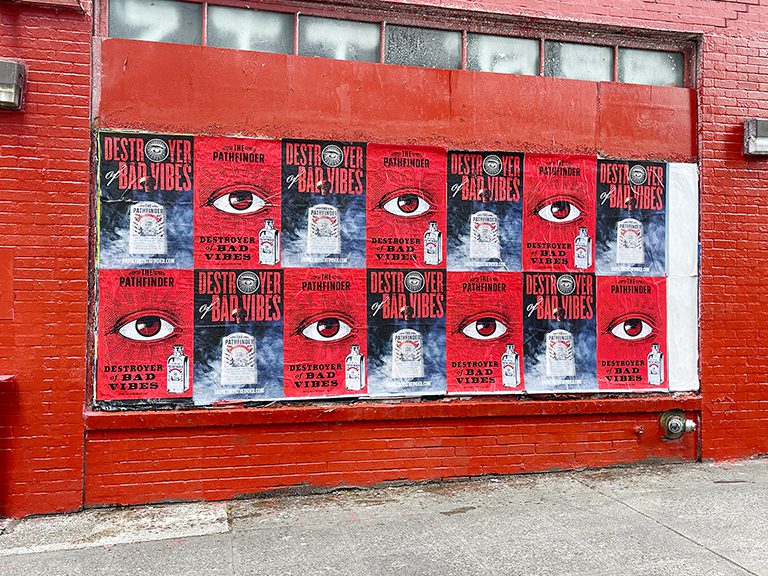
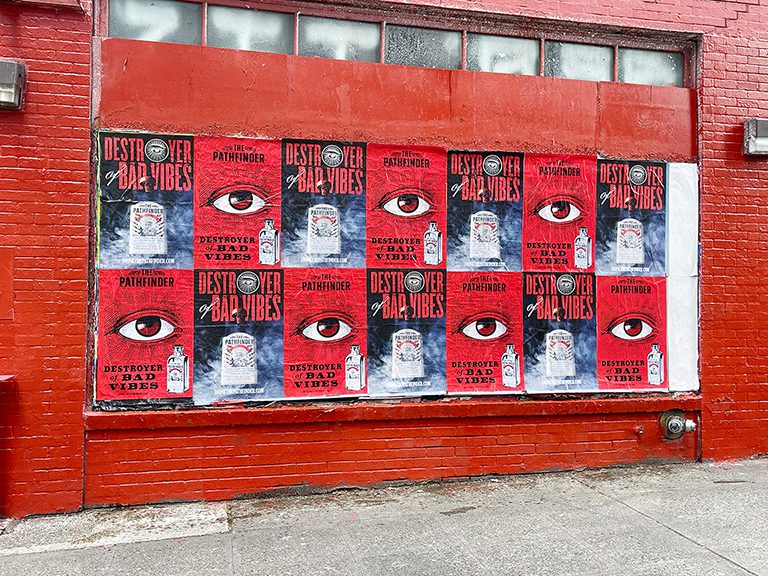
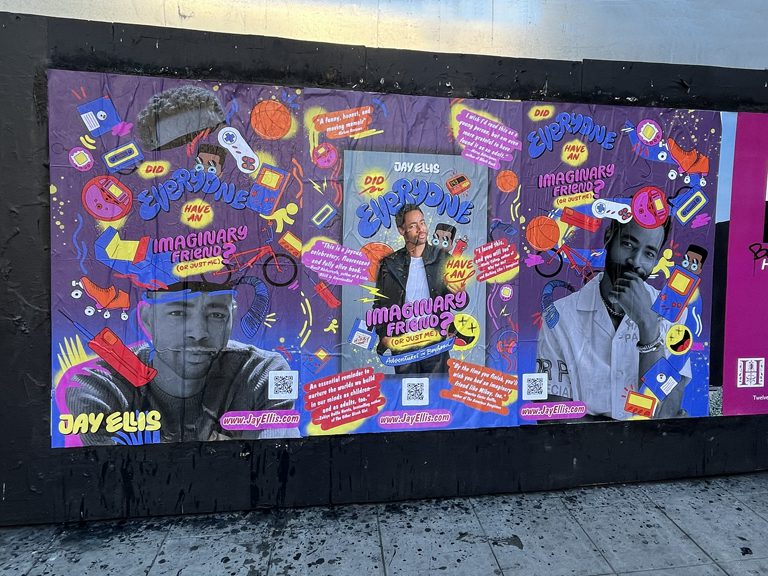
The Jay Ellis wheatpasting campaign in Manhattan — executed in Williamsburg, the Lower East Side, and Hell’s Kitchen — demonstrated the standard template for how entertainment industry brands use street posters in urban corridors during release windows. Williamsburg’s creative professional residential concentration, the Lower East Side’s nightlife and arts district character, and Hell’s Kitchen’s theater and entertainment zone each served a distinct function in the campaign: Williamsburg reached the content-consuming young professional who shapes word-of-mouth in the entertainment category; the LES reached the nightlife and arts audience that drives discovery in adjacent cultural categories; Hell’s Kitchen reached the industry worker and arts consumer who moves through the theater district as part of daily life.
San Francisco’s neighborhood structure maps directly onto that logic. The Mission District functions like Williamsburg — the creative professional residential neighborhood where the content-consuming tastemaker audience lives and walks daily. SoMa functions like the LES — a dense commercial zone where the young professional entertainment consumer congregates for work and for the post-work dining and bar activity that concentrates in the neighborhood’s Harrison Street and 2nd Street corridors. The Castro functions like Hell’s Kitchen — a neighborhood whose identity is defined in part by its relationship to arts and entertainment programming, most visibly through the Castro Theatre’s film and event calendar, which draws an audience with proven entertainment brand receptivity. Fly posting across Mission, SoMa, and the Castro in a coordinated release window campaign creates the same stratified audience reach that the Jay Ellis Manhattan campaign achieved, adapted to San Francisco’s specific geographic and demographic structure.
For streaming platforms, music labels, film distributors, and gaming companies with product releases timed to specific windows, this model provides a concrete neighborhood strategy for San Francisco wheatpasting campaigns. AGM maps the installation across all three neighborhoods, times the deployment to coincide with the campaign’s release or announcement window, and documents every placement with GPS-tagged photography for client reporting. The result is a campaign where the street-level presence is felt across the entertainment-responsive tiers of the San Francisco audience simultaneously — not sequentially, and not at random.
Award Winning Personalized Service
You will get thoughtful, devoted, and individualized attention from our experienced, qualified, and professional personnel. Being one of the most illustrious agencies in Brooklyn, New York, American Guerrilla Marketing has been awarded the Best of Brooklyn title.
Nationwide
Industry City, Brooklyn, New York 11232
American Guerrilla Marketing
Hours
Mon - Fri: 9 AM - 5 PM
Sat & Sun: Closed
Automate your campaign with AGM’s Request for Proposal Builder. Simply answer a few quick questions about your campaign goals, markets, and timeline, and the system will generate a tailored presentation with recommended strategies, quantities, and pricing. Click the RFP Builder to instantly receive your customized proposal.
San Francisco’s physical environment creates two distinct format opportunities. The 24×36 standard format is the right tool for the Mission District, the Castro, and Haight-Ashbury — neighborhoods where the pedestrian corridors are human-scale, the viewing distances are short, and posters placed at eye level on fence lines, utility structures, and low facade sections are encountered at close range by an audience moving at walking pace. In these environments, the standard format builds density across a corridor efficiently, creating the kind of repeated impression that builds awareness across a campaign window without requiring the surface area that large-format wheat paste demands.
SoMa is where the 48×72 large-format wheat paste makes its strongest case. The warehouse-conversion buildings along Folsom Street and the Bryant Street corridor have facade sections that are genuinely large — multi-story blank concrete or brick surfaces where a 24×36 poster disappears into the wall rather than commanding it. The 48×72 format on a SoMa warehouse wall creates a billboard-scale impression at street level, visible from across the block and carrying visual authority that communicates brand scale and campaign intentionality. For technology brands, gaming companies, and entertainment platforms that want to signal cultural weight in the SoMa tech corridor, the 48×72 placement on a Folsom Street warehouse wall is the single highest-impact placement in the San Francisco market.
100 posters — contact us for pricing
200 posters — contact us for pricing
Extra creative: contact us for pricing
The ideal format for density coverage along Valencia Street and 24th Street in the Mission, the Castro Street corridor, and Haight Street through Haight-Ashbury. Multiple creatives support multi-neighborhood campaigns with audience-specific messaging. 72-hour rush production up to 500 quantity for release window campaigns where timing is critical.
100 posters — contact us for pricing
200 posters — contact us for pricing
Extra creative: contact us for pricing
Built for SoMa’s warehouse facades, construction barriers on active development projects, and any San Francisco surface where dominant-scale visual presence drives the campaign’s impact. The format that tech brands, gaming companies, and entertainment platforms use to signal cultural weight at the street level in San Francisco’s technology corridor. Exceptional alongside Chase Center event programming.
San Francisco campaigns begin with the same neighborhood mapping process AGM applies across all markets — pedestrian volume data, demographic concentration by neighborhood and time of day, and current surface inventory across the target corridors. San Francisco’s neighborhoods have distinct surface landscapes that change as new development alters the building stock. The Mission’s surface availability shifts as new residential infill replaces older commercial buildings along the neighborhood’s eastern corridors. SoMa’s surface inventory is among the richest in the city for large-format placements but varies block by block based on building use and facade orientation. AGM’s team maps current availability in each neighborhood before campaign planning is finalized, ensuring that the strategy is based on actual surfaces that exist at time of installation rather than historical assumptions about what was available in a previous campaign cycle.
San Francisco’s climate requires specific attention in adhesive application and paper selection. The marine layer that rolls in from the Bay — particularly during summer months and in neighborhoods close to the waterfront — creates higher-humidity conditions that can affect adhesive bond strength if not accounted for in the installation process. AGM’s installation crews use wheat-based adhesive formulations and paper stock combinations that perform reliably under the Bay Area’s marine layer conditions, and surface selection across all five AGM San Francisco neighborhoods prioritizes locations with appropriate exposure orientation and surface material characteristics for the city’s climate. The result is poster retention that holds through the full campaign window without premature degradation from moisture or temperature cycling.
Post-campaign documentation follows the same GPS-tagged, timestamped photography standard that AGM applies in every market. Every placement in the Mission, SoMa, Haight-Ashbury, the Castro, and the Tenderloin arts corridor is documented with precise location data and delivered in a comprehensive reporting package at campaign close. AGM’s Best of Brooklyn-recognized execution standard applies equally to San Francisco campaigns — the same installation quality, the same documentation rigor, and the same commitment to placing every poster in a location that maximizes its effective impression window for the target audience.
San Francisco’s fly posting audience is unusual in its combination of demographic sophistication and genuine visual receptivity. Technology industry professionals — engineers, designers, product managers, UX researchers — move through SoMa’s corridors daily with a specific relationship to visual media: they build it, they consume it voraciously, and they’re specifically attentive to design quality and brand positioning signals in visual advertising. A street poster campaign in SoMa that’s visually strong and contextually relevant to the tech professional demographic generates a quality of attention that most advertising channels can’t access in that audience segment, because tech workers are among the highest ad-blocking cohorts in digital media while remaining genuinely responsive to physical-world visual content that meets a quality threshold.
The Mission District’s creative professional demographic — musicians, designers, writers, filmmakers, and the broader arts community that populates the neighborhood’s bars and coffee shops on Valencia Street — represents the tastemaker tier that shapes cultural adoption across the Bay Area and beyond. When this audience discovers something on the walls of the Mission that seems to belong there — that has the visual credibility and cultural fluency to sit alongside the neighborhood’s existing mural and street art culture — it shares it. The earned amplification from the Mission’s arts and creative professional community extends fly posting campaigns well beyond the physical streets where AGM installs them.
The Castro’s highly community-engaged audience, Haight-Ashbury’s blend of longtime residents and cultural tourists, and the Tenderloin arts corridor’s diverse, transit-reliant population round out a San Francisco fly posting audience that spans creative professionals, technology workers, arts community participants, and the culturally engaged general public in a city that is, per capita, one of the most arts-literate in the United States.
The Mission District’s effectiveness comes from a half-century of street art and poster culture that has built genuine visual literacy in its resident population. The audience walking Valencia Street and 24th Street isn’t just tolerating visual content on the walls around them — they’re actively engaging with it, because the neighborhood has established a tradition of treating those walls as a communication medium. That primed engagement, combined with the Mission’s creative professional demographic and consistent seven-day-a-week foot traffic, makes it the highest-quality fly posting environment in San Francisco. The surface inventory — Clarion Alley, blank facade sections on the alley-facing buildings between Valencia and Mission, utility structures throughout the cross-corridor grid — is also strong relative to other SF neighborhoods.
SoMa’s technology industry workforce walks the neighborhood’s streets every weekday for the full workday — morning commute, lunch breaks, afternoon coffee, and post-work dining and bar activity on the Harrison Street and 2nd Street corridors. Street poster placements on the warehouse facades, construction barriers, and utility structures along SoMa’s primary pedestrian corridors intercept that audience repeatedly throughout the workweek, generating cumulative impression frequency rather than single-contact reach. Tech workers are high ad-blockers in digital channels but genuinely responsive to physical-world visual media that meets a quality threshold — making fly posting in SoMa a direct channel to a demographic that many advertising strategies struggle to reach effectively.
SoMa’s fly posting campaigns are dominated by consumer technology brands, gaming companies, streaming platforms, and enterprise software companies targeting the technology professional demographic. The neighborhood’s dense concentration of tech industry employees — and the broader startup culture that radiates outward from the SoMa office cluster — makes it the most direct channel for reaching early adopters and technology influencers at street level. Consumer brands with strong tech-forward positioning — premium hardware, app-based services, gaming peripherals — also find SoMa effective. Entertainment platforms targeting the 25-40 tech professional audience run coordinated SoMa plus Mission campaigns to reach both the tech worker and the creative professional tiers of SF’s content-consuming audience simultaneously.
San Francisco’s street art tradition — rooted in the Mission District’s mural culture and the Haight-Ashbury’s psychedelic poster heritage — has created an urban population that is specifically trained to pay attention to visual content on the walls around them. This has two effects on fly posting campaigns: the audience engages more actively with what it finds on its streets than in cities without this visual culture foundation, and the bar for visual quality is correspondingly higher. Campaigns that look like they belong in the San Francisco visual environment — that have genuine creative quality rather than generic ad-design aesthetics — generate significantly stronger engagement and earned social amplification than campaigns that read as purely commercial placements. AGM’s experience in the SF market includes guidance on what visual approaches perform well in each neighborhood’s specific cultural context.
The 48×72 large-format wheat paste is definitively the right choice for SoMa’s warehouse wall surfaces. The converted industrial buildings along Folsom Street, Bryant Street, and the cross-streets between Howard and Brannan have multi-story blank facades that dwarf the 24×36 standard format. A 48×72 placement on those surfaces fills the architectural scale of the wall, creates a billboard-level impression from across the block, and communicates brand authority through the sheer scale of the visual presence. For technology product launches, entertainment releases, and gaming campaigns that use SoMa as their primary San Francisco neighborhood, the 48×72 placement on a Folsom Street or Bryant Street warehouse wall is the campaign’s visual anchor — the placement that defines the campaign’s street-level impact in the market.
San Francisco’s conference calendar — Salesforce’s Dreamforce, Google Next, Apple WWDC, and numerous industry-specific gatherings — brings the national and global technology professional community into SoMa and the Moscone Center zone repeatedly throughout the year. Fly posting campaigns timed to these conference windows reach a dramatically expanded version of the SoMa tech professional audience: not just the local Bay Area tech workforce but the national and international industry visitor audience that congregates in the same SoMa blocks during conference weeks. For brands launching products, announcing partnerships, or building awareness in the enterprise technology space, a SoMa fly posting campaign installed 48-72 hours before a major conference opens reaches that audience during its highest-attention, highest-discovery-mode period of the year.
The Castro is one of SF’s most effective fly posting zones for brands with genuine affinity for its audience. Castro Street between Market and 19th Street generates consistent foot traffic seven days a week with a high pedestrian dwell time — people are browsing, not rushing — that translates into strong per-impression engagement from each poster placement. The neighborhood’s high community cohesion means that new brand appearances on its walls are noticed and discussed within the community social network faster than in lower-cohesion neighborhoods. For entertainment, arts, streaming, and lifestyle brands whose positioning aligns with the Castro’s values and cultural identity, fly posting here functions more like community brand integration than broadcast advertising — and generates corresponding levels of authentic community engagement and earned social amplification.
The Mission District and Haight-Ashbury both have strong visual cultures and independent-brand-oriented pedestrian demographics, but they serve different brand positioning contexts. The Mission’s visual culture is rooted in political and community art traditions — the audience responds to brands that demonstrate genuine community connection and cultural credibility. Haight-Ashbury’s visual culture is rooted in the countercultural and psychedelic poster tradition — the audience responds to brands that signal independent, anti-mainstream positioning, whether in music, fashion, lifestyle, or cannabis. A music label, independent festival, or countercultural lifestyle brand that fits naturally into the Haight’s visual landscape will perform differently there than a consumer tech company targeting the Mission’s creative professional demographic. Both neighborhoods are effective; which one leads the campaign depends on brand positioning and target demographic alignment.
San Francisco’s marine layer — the summer fog pattern that rolls in from the Bay, particularly in the afternoon and overnight — creates higher ambient humidity in coastal-facing neighborhoods like the Mission, the Castro, and parts of SoMa than in more sheltered urban environments. AGM accounts for this in both paper stock selection and adhesive application technique. The wheat-based adhesive formulation AGM uses is specifically chosen for performance in higher-humidity conditions, and paper stock selection for San Francisco campaigns prioritizes outdoor-grade weight and coating that resists moisture absorption without sacrificing the adhesive bond. When surface selection and installation technique are managed correctly — as they are in every AGM San Francisco campaign — poster retention holds reliably through the full 1-2 week campaign window even in the foggier Mission and Castro corridors.
Chase Center’s concert and Golden State Warriors event calendar generates event-night foot traffic through the SoMa and Mission Bay corridors that substantially amplifies impression volumes for fly posting placements in those zones. AGM can coordinate campaign installation to coincide with high-profile Chase Center programming — major concerts, playoff games, marquee Warriors home games — placing fresh posters in the corridors where event traffic will concentrate on the 48 hours immediately surrounding each event. For entertainment, lifestyle, and consumer brands whose target demographic overlaps with the Chase Center audience, this event-timing strategy delivers impression volumes significantly above the neighborhood’s baseline weekday figures, concentrating campaign reach into windows of peak audience engagement with the SoMa and Mission Bay geographic zone.
AGM’s standard San Francisco posting coverage spans the Mission District, SoMa, Haight-Ashbury, the Castro, and the Tenderloin arts corridor — but additional neighborhoods are available on request. Noe Valley’s 24th Street corridor, the Dogpatch neighborhood south of SoMa, the Divisadero corridor through Alamo Square, and the Lower Haight on Haight Street between Divisadero and Fillmore all offer fly posting surface availability with distinct demographic profiles that may be relevant depending on campaign objectives. Clients with specific geographic or demographic targets outside the five standard neighborhoods can discuss custom placement zones with AGM’s campaign team during the planning process.