American Guerrilla Marketing
Nationwide Service
Media planning, media buying, billboard advertising, & guerrilla marketing
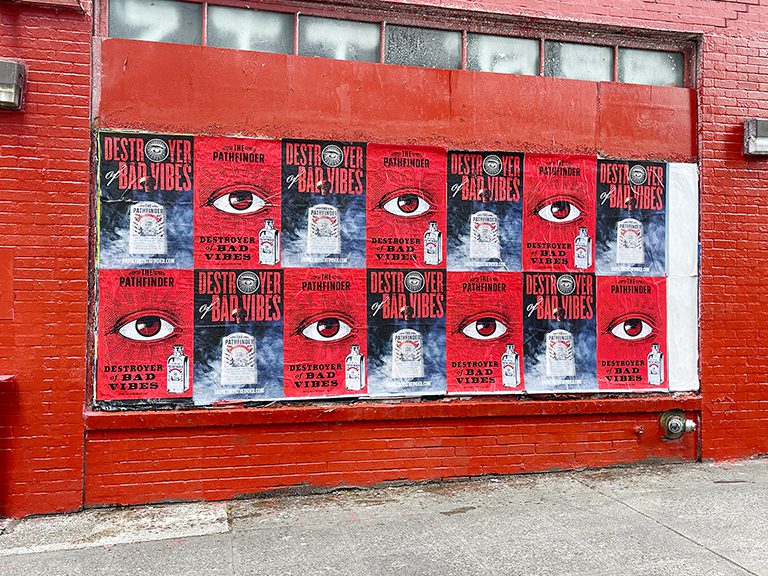
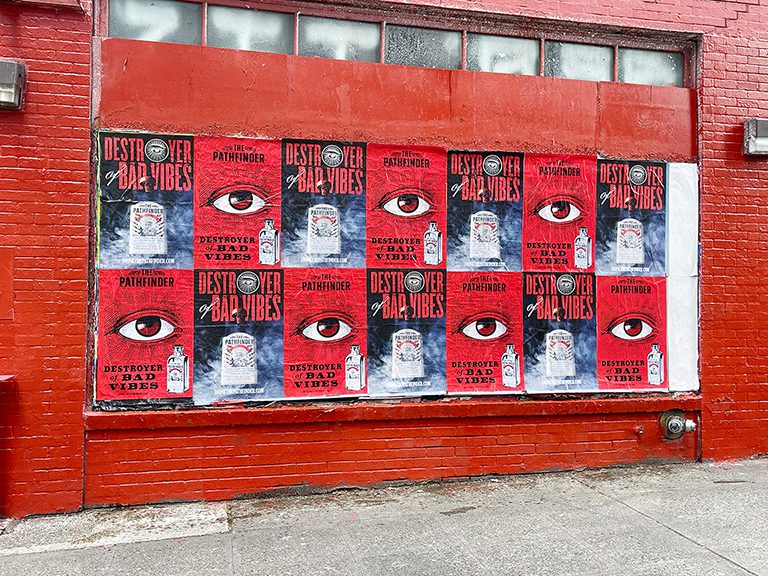
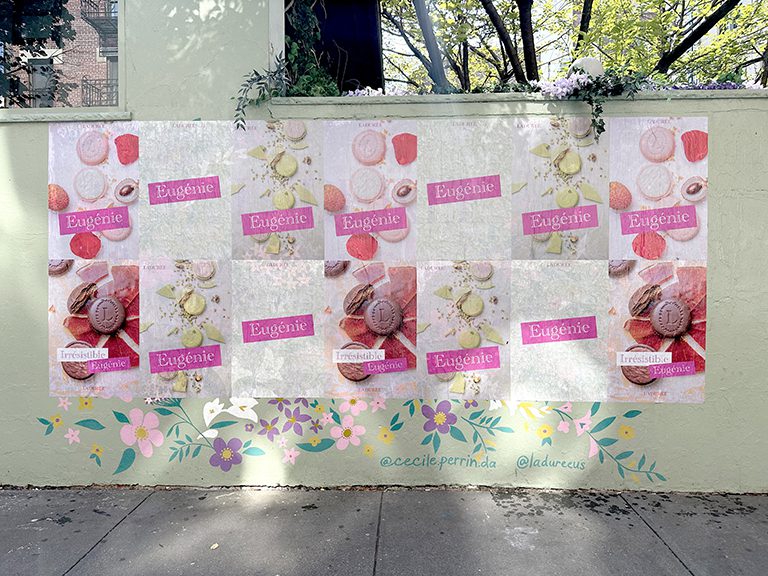
AGM executes wheatpasting and street poster campaigns in Columbia — USC’s Five Points college entertainment district, the Vista arts and dining corridor on Gervais Street, the Main Street downtown business spine, and Devine Street’s independent retail community. Printed, installed, GPS-documented by direct crews.
Columbia’s fly posting story begins where every great university city’s story begins: at the bars. Specifically, at the convergence of Harden Street, Saluda Avenue, and Devine Street that forms Five Points — South Carolina’s oldest continuous college bar district and the social anchor for USC’s 35,000-plus student enrollment. Five Points is not simply a bar cluster; it is an entire social ecology built around the rhythm of the university academic calendar, the weekend migration of the student body from on-campus dormitories and off-campus apartments in the Shandon and Forest Acres neighborhoods, and the daily commercial foot traffic of the USC community conducting the business of student life in the blocks between the campus perimeter and the neighborhood’s restaurant and nightlife core. No other South Carolina market concentrates a comparable volume of 18-to-24-year-old pedestrian activity into a posting zone this compact — and that demographic concentration is precisely what makes Columbia one of the Southeast’s most productive university city fly posting markets.
For campaign planning, Five Points represents something specific and rare: a pedestrian-scale entertainment district with consistent, demographically predictable foot traffic concentrated across a posting zone small enough to saturate with 100 to 200 posters at the coverage density that feels genuinely inescapable to the audience moving through it. The building facades along Harden Street’s bar block, the Saluda Avenue restaurant and boutique corridor, and the side streets threading between Five Points and the campus on Blossom Street and Marion Street all carry the natural pedestrian flow of a student population whose daily geography is defined entirely by the walkable distance between campus buildings and the neighborhood that serves them. A fly posting campaign placed in Five Points does not compete against other outdoor campaigns for the USC student’s visual attention — it occupies visual territory that effectively no other format reaches consistently in this specific high-value university audience environment.
Columbia carries a second advertising dimension that most southeastern university cities lack: it is the South Carolina state capital. Gervais Street in the Vista district runs directly from the State House steps through the government office and lobbying corridor that concentrates South Carolina’s advocacy organizations, law firms, political consultants, and state agency offices into a walkable professional zone. The professionals who walk Gervais Street between their offices and the Vista’s restaurants and bars during the working week represent the specific audience that political campaigns, advocacy organizations, and issue-based communication efforts need to reach during the moments before and after their policy-making work — in the physical environment of their professional commute rather than through the digital channels those same professionals filter aggressively during their working hours. Fly posting on the Vista’s building facades and outdoor surfaces creates political and advocacy campaign presence in the most concentrated professional communication environment available anywhere in South Carolina.
The dual-market efficiency that Columbia provides — the 35,000-student campus market concentrated in Five Points and along Devine Street alongside the state government professional community concentrated in the Vista and on Gervais Street — on a walkable geography spanning no more than a mile and a half makes Columbia one of the most cost-efficient fly posting markets in the entire Southeast. A 200-poster campaign can reach both populations in a single installation run, covering the student entertainment corridor and the government professional zone with one campaign plan, one installation day, and one GPS-documented reporting package. That combined reach across two distinct and separately valuable audience types distinguishes Columbia from other South Carolina cities that access only one of these two populations at a time.
AGM executes wheatpasting and street poster campaigns in USC's Five Points entertainment district, the Vista arts and Gervais Street corridor, Main Street downtown Columbia, and Devine Street's independent retail community — direct crews, GPS-documented, no subcontractors.
Select a city to explore Fly Posting Advertising opportunities.
Five Points sits at the triangle formed by the convergence of Harden, Saluda, and Devine streets, approximately a ten-minute walk southwest of the USC Horseshoe. The blocks of Harden Street between Blossom Street and Devine Street carry the bar and restaurant density that makes Five Points the primary social geography for USC’s undergraduate student body — a concentrated corridor of bar facades, late-night restaurant storefronts, and the outdoor pedestrian environment of a college town nightlife zone operating seven nights a week during the academic year. The Saluda Avenue branch of Five Points extends the entertainment zone into a calmer restaurant and boutique corridor that carries afternoon and early evening foot traffic from the student population and the Shandon neighborhood’s young professional residents. Fly posting on the building facades along Harden Street’s bar block and the Saluda Avenue independent commercial stretch reaches the USC undergraduate and graduate student audience in their most socially concentrated pedestrian environment — surfaces the same demographic passes multiple times per week throughout the full academic calendar.
The Vista district occupies the blocks between Assembly Street and the Congaree River, anchored on Gervais Street’s gallery, restaurant, and bar corridor running southwest from the State House steps to the base of the Gervais Street bridge. The Vista’s gallery and restaurant scene on Gervais and on the parallel Lincoln Street warehouse district draws both the government professional audience from the State House corridor and the arts and entertainment audience from the broader Columbia metro. Colonial Life Arena at 801 Lincoln Street anchors the Vista’s event-driven foot traffic with a concert and live entertainment calendar drawing audiences from across the Columbia metro and the broader midlands region of South Carolina. The Huger Street warehouse zone on the Vista’s eastern edge provides large blank industrial wall surfaces where 48×72 installations achieve their greatest visual dominance — the former warehouse facades hold a large-format wheat paste in a way that smaller commercial storefronts in other Columbia districts cannot match for scale or impact.
Columbia’s Main Street between Lady Street and Washington Street forms the city’s traditional downtown commercial corridor — a mix of office towers, ground-floor retail and dining establishments, and the pedestrian infrastructure of a working state capital’s business day. The lunchtime foot traffic on Main Street from the government office and legal professional community represents a consistent, economically active audience for consumer goods, financial services, and professional service brands that need to reach the Columbia working professional outside the entertainment context of Five Points and the Vista. Main Street’s posting locations include the retail and commercial building facades along the corridor, the cross-street blocks connecting to Senate Street and Laurel Street, and the parking structure facades that face the pedestrian sidewalk at major downtown intersections. The midday lunch foot traffic on Main Street is among the most economically active in the Columbia market.
Devine Street between Harden Street and Beltline Boulevard serves the Shandon neighborhood’s independent retail and dining community — the boutique-scale shopping corridor that draws the USC student population and the Shandon-Forest Acres young professional residential community for daily and weekly retail and dining activity beyond the bar-centric Five Points environment. Independent bookstores, specialty food and wine retailers, neighborhood restaurants, and personal service businesses on Devine Street create a pedestrian commercial environment with consistent daytime and early evening foot traffic from the USC-adjacent demographic’s non-nightlife spending routines. A fly posting campaign on Devine Street’s independently-owned building facades and adjacent commercial surfaces reaches the Columbia arts, food, and retail consumer in their community shopping context — a slightly older and more settled demographic than Five Points, but geographically walkable and demographically contiguous to the campus community.
The streets immediately surrounding the USC campus perimeter generate continuous student and faculty pedestrian traffic between campus buildings and the off-campus commercial ecosystem. Greene Street on the campus’s north edge, Sumter Street on the east, Assembly Street on the west near the Strom Thurmond Wellness and Fitness Center, and Blossom Street on the southern boundary each carry the consistent on-foot traffic of the 35,000-student campus’s daily movement patterns. Fly posting in the campus perimeter zone reaches the student audience in the routine transition moments between academic buildings, dining halls, and the off-campus residential neighborhoods — the pedestrian context where ambient advertising is most naturally absorbed without the competitive entertainment-environment noise of an active nightlife district. Campaign installations along Greene Street near the Carolina Coliseum and on Sumter Street adjacent to the Thomas Cooper Library capture the student audience at their heaviest between-class pedestrian movement windows.
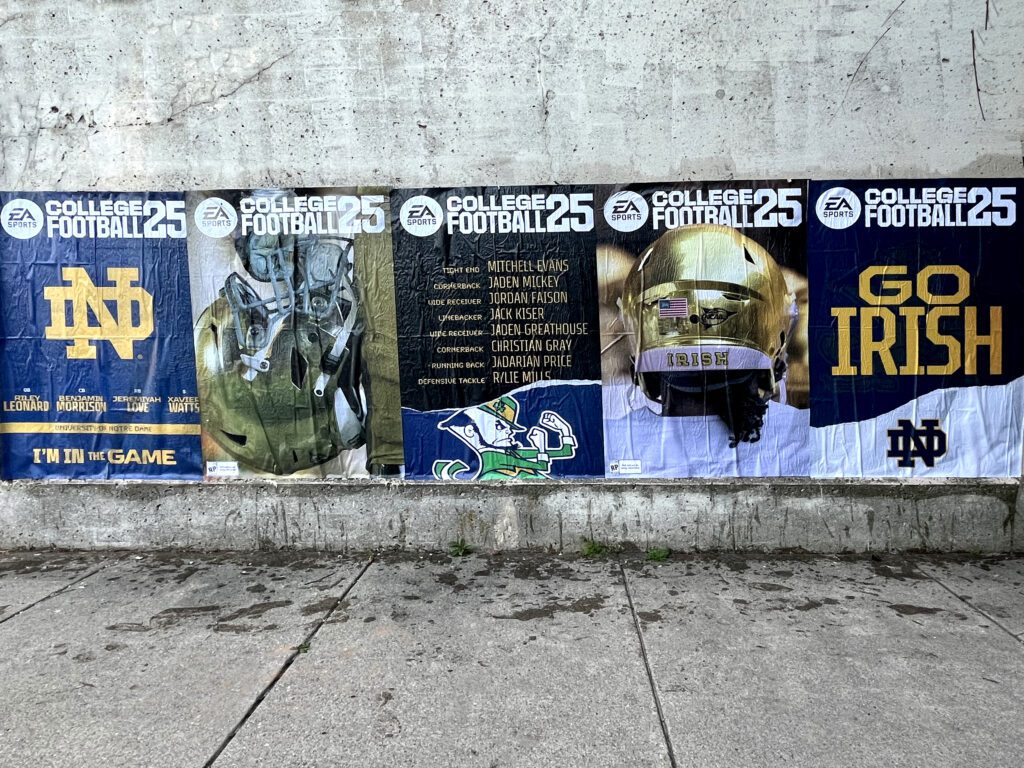
When EA Sports launched FC 25 — the latest installment in the world’s best-selling football simulation franchise — across multiple US cities in a rapid simultaneous rollout, the campaign required precision placement in the campus-adjacent corridors where the gaming audience concentrates most reliably. University neighborhood commercial zones consistently outperform other fly posting environments for gaming releases because the core 18-to-24 demographic’s daily pedestrian geography aligns exactly with the same compact entertainment districts — campus perimeter streets, college bar corridors, campus-area dining zones — where fly posting achieves its highest visibility-per-poster efficiency. AGM’s execution of the EA Sports FC 25 multi-city wheatpasting campaign demonstrated precisely how a major gaming release uses the student entertainment district’s pedestrian density to achieve physical-world awareness penetration that digital advertising alone cannot replicate at the ground level of the college-town market. For campaigns where the target audience is young male sports gaming enthusiasts aged 18 to 24, the USC campus-adjacent corridors of Columbia’s Five Points and campus perimeter represent the highest-concentration posting environment available in the South Carolina market.
The EA Sports campaign also demonstrated the value of Columbia’s dual-audience geography: fly posting in the Vista during a major gaming launch reached the 25-to-35 professional male demographic that continues to be a core gaming audience even after leaving the campus environment — extending the campaign’s reach from the student core into the young professional tier without requiring separate markets, separate installation days, or separate campaign planning. A single Columbia fly posting booking, planned with both Five Points and the Vista in the installation route, can reach the gaming audience across its full young adult demographic range.
Award Winning Personalized Service
You will get thoughtful, devoted, and individualized attention from our experienced, qualified, and professional personnel. Being one of the most illustrious agencies in Brooklyn, New York, American Guerrilla Marketing has been awarded the Best of Brooklyn title.
Nationwide
Industry City, Brooklyn, New York 11232
American Guerrilla Marketing
Hours
Mon - Fri: 9 AM - 5 PM
Sat & Sun: Closed
Automate your campaign with AGM’s Request for Proposal Builder. Simply answer a few quick questions about your campaign goals, markets, and timeline, and the system will generate a tailored presentation with recommended strategies, quantities, and pricing. Click the RFP Builder to instantly receive your customized proposal.
A Columbia fly posting campaign begins with a surface scouting and route planning process matched to the specific districts the client’s campaign needs to reach. Five Points, the Vista, Main Street, Devine Street, and the USC campus perimeter each serve different demographic segments and support different campaign objectives — AGM’s Columbia planning identifies which zones produce the best match for the campaign’s target audience and installs accordingly, rather than defaulting to a generic city-wide scatter approach. Surface selection prioritizes permissioned private-property walls, high-traffic commercial facades, and outdoor structures in the target zones where audience concentration is highest and the visual dominance of each installation is greatest within its immediate block environment.
All Columbia installations are GPS-stamped at the moment of posting, with photographs documenting the location, the street context, and the poster’s full visibility condition delivered in a complete post-campaign report within 24 hours of the final installation. Campaign timing in Columbia is planned against the USC academic calendar — the peak installation windows run from late August through late April, capturing the full fall and spring semesters when student foot traffic in Five Points and along the campus perimeter is at its annual high. Summer campaigns targeting the broader Columbia professional and government audience use the Vista and Main Street zones where foot traffic is less dependent on the academic calendar.
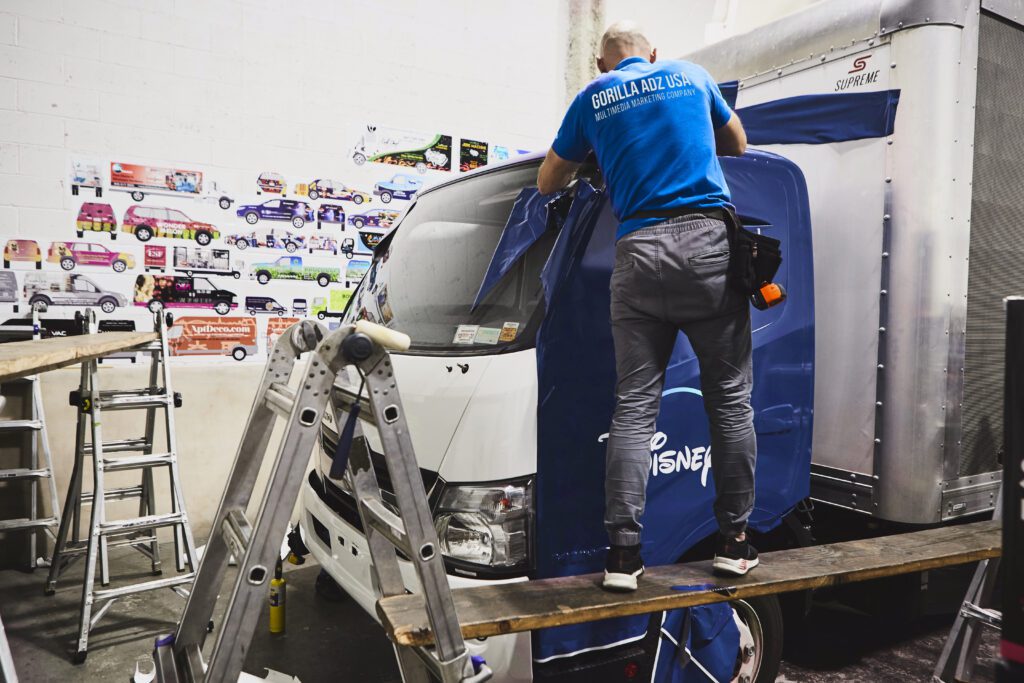
AGM is a direct-execution company: we print the posters and our own crews install them, without subcontracting installation to local vendors. That direct execution model means quality control on every surface, consistent installation standards across every zone in the campaign route, and photo documentation that reflects the actual installed condition rather than a subcontractor’s claimed coverage. Clients include EA Sports, Netflix, The Onion, Biossance, and political campaigns — all managed with the same direct-execution and GPS documentation standards applied to every Columbia booking.
Entertainment and gaming releases targeting the USC student demographic use Five Points and the campus perimeter corridors as the primary posting zones in the Columbia market — the student audience’s concentration and pedestrian consistency make these zones the highest-efficiency posting environment in the city for 18-to-24 demographic campaigns. Concert and live event promotions for Colonial Life Arena and the Vista’s smaller venues use the Lincoln Street and Gervais Street corridors where the event audience is already conditioned to look for entertainment announcements in the physical environment. Food and beverage brand launches targeting the campus-area restaurant and bar community reach the Columbia student audience at the intersection of their highest commercial activity and their most brand-receptive pedestrian context.
Consumer goods campaigns positioning for the 18-to-24 demographic use the Five Points entertainment corridor for the highest-concentration university market reach available anywhere in South Carolina. Political and advocacy campaigns targeting the South Carolina government professional audience use the Gervais Street Vista corridor as their primary Columbia posting environment — reaching the lobbyists, agency staff, and political professionals who shape South Carolina policy in their daily professional commute environment. Academic program recruitment campaigns for USC’s graduate and professional schools reach the undergraduate campus population through the campus perimeter posting zone, where the audience is already in the on-campus mindset that makes graduate program recruitment messaging most relevant.
100 posters: contact us for pricing · 200 posters: contact us for pricing · Extra creative: contact us for pricing · 72-hour rush available up to 500 qty. Best for Columbia campaigns covering Five Points, Devine Street, and the USC campus perimeter simultaneously — the 24×36 format’s surface efficiency across the many posting locations in these pedestrian corridors creates consistent brand presence at the coverage density that makes the USC student market feel saturation-level reached throughout the academic zone.
100 posters: contact us for pricing · 200 posters: contact us for pricing · Extra creative: contact us for pricing. Best for the warehouse building facades along Lincoln Street and Huger Street in the Vista district — where the industrial building scale justifies the large format’s visual dominance and the arts and entertainment audience approaching Colonial Life Arena and the Gervais Street gallery corridor is conditioned to engage with large-scale creative communication as part of the district’s visual environment.
Columbia campaigns run at AGM’s standard national pricing: 24×36 format at contact us for pricing for 100 posters and contact us for pricing for 200 posters, with additional creative designs available at Contact us for pricing. and 72-hour rush service available up to 500 posters. The 48×72 large format starts at contact us for pricing for 100 posters and contact us for pricing for 200 posters, with extra creative at Contact us for pricing. . Contact AGM for a specific Columbia campaign quote including zone-by-zone route planning.
USC’s enrollment is the single most important factor in Columbia’s fly posting geography. A student body of 35,000 creates consistent, daily pedestrian activity in a compact walkable zone — Five Points, the Devine Street corridor, and the campus perimeter streets — that is unmatched by any other Columbia commercial district in terms of demographic concentration and foot traffic predictability. Campaign routes built around this student geography achieve a cost-per-thousand-impressions ratio that would require a much larger poster count to replicate in a more geographically dispersed market. USC’s fall and spring semesters, from late August through late April, represent Columbia’s peak fly posting windows for the university demographic.
Five Points is the triangular neighborhood at the convergence of Harden Street, Saluda Avenue, and Devine Street — approximately a half-mile southwest of the USC Horseshoe — that has served as the university’s primary off-campus entertainment and dining district for generations. The neighborhood’s concentration of bars, restaurants, late-night food businesses, and independent retail creates consistent pedestrian activity from the USC community seven evenings a week during the academic year, plus heavy lunchtime and afternoon foot traffic during the week. No other Columbia neighborhood combines this level of demographic consistency, pedestrian density, and frequency of repeat audience contact for the 18-to-22-year-old undergraduate student demographic.
Five Points serves primarily the current USC undergraduate student population — 18-to-22 years old, entertainment-focused, high social frequency in the neighborhood. The Vista serves a broader and somewhat older audience mix: the state government and legal professionals who work in the Gervais Street corridor, the 25-to-35 young professional population that has moved to Columbia after graduation, the arts and gallery community that engages with the Vista’s cultural programming, and the broad Columbia metro audience attending events at Colonial Life Arena. A comprehensive Columbia fly posting strategy uses Five Points for deep penetration into the student demographic and the Vista for reach into the government professional and young adult post-university population.
Yes — and it is one of the most compelling reasons to run a fly posting campaign in Columbia specifically. The Vista district’s Gervais Street corridor runs directly from the State House steps through the lobbying and advocacy professional zone, and the Main Street downtown corridor is within walking distance of the Statehouse complex. Political campaigns, issue advocacy organizations, and policy-focused brands that need to reach South Carolina legislators, legislative staff, lobbyists, and government agency professionals find the Vista corridor and Main Street a far more targeted and cost-effective communication environment than statewide broadcast or digital advertising that wastes significant spend outside the capital city professional target.
The EA Sports FC 25 multi-city wheatpasting campaign demonstrated that university neighborhood commercial zones — Five Points-type entertainment districts adjacent to major campus populations — consistently deliver the highest visibility-per-poster efficiency for gaming releases targeting the 18-to-24 male demographic. The campaign’s simultaneous multi-city rollout showed that a student entertainment district’s pedestrian density creates awareness penetration at street level that digital advertising alone cannot replicate in the physical environment of the campus-area commercial zone. For gaming brands, entertainment streaming services, and consumer tech companies whose core demographic is college students, a Columbia fly posting campaign concentrated in Five Points and the USC campus perimeter delivers the on-campus reach that no other format in the South Carolina market matches.
Colonial Life Arena at 801 Lincoln Street in the Vista hosts a consistent calendar of major concert, sports, and entertainment events throughout the year — each event concentrating a large audience in the Vista district whose arrival and departure creates amplified foot traffic on Lincoln Street, Gervais Street, and the surrounding Vista corridors. Fly posting campaigns timed to major Colonial Life Arena events — particularly large touring concerts or NCAA events — benefit from the event-day audience concentration multiplying the normal Vista foot traffic volume. AGM can advise on optimal installation timing relative to the Colonial Life Arena event schedule to maximize campaign visibility during the highest-traffic event windows.
Post-campaign documentation for Columbia includes GPS-referenced photographs of each Five Points, Vista, Main Street, Devine Street, and campus perimeter installation showing the specific location, the surrounding street context, and the poster’s full visibility condition. All documentation is GPS-stamped at the moment of installation and delivered digitally in a complete post-campaign report within 24 hours of the final installation in the campaign route. Multi-zone Columbia campaigns organize documentation by district, so the client can verify coverage across each specific neighborhood zone in their campaign plan.
The USC academic year — running from late August through late April with the fall and spring semesters — is the optimal window for Columbia fly posting campaigns targeting the student demographic. Fall semester (August through December) is particularly strong because it captures Welcome Week, Greek rush, football season at Williams-Brice Stadium, and the full social calendar of the academic fall, all of which drive peak pedestrian activity in Five Points and along the campus perimeter. Spring semester (January through April) captures the full spring social calendar leading up to graduation. Summer campaigns targeting the government professional and broader Columbia adult market run effectively in the Vista and on Main Street regardless of the academic calendar.
Yes. A combined South Carolina fly posting campaign covering Columbia, Greenville, and Charleston — or any two of these three markets — gives a brand meaningful statewide coverage across the university student, the mid-state urban professional, and the coastal tourism and entertainment markets in a single coordinated AGM booking with one plan, one contact, and one reporting package. Columbia’s student and government markets, Greenville’s walkable downtown professional community, and Charleston’s tourism and arts audience serve complementary demographic profiles in a genuinely comprehensive South Carolina strategy. Contact AGM for combined South Carolina campaign pricing.
Five Points is an entertainment-first district whose foot traffic peaks in the evenings and weekends when the student bar and restaurant scene is most active. Devine Street between Harden and Beltline is a daytime independent retail and dining corridor whose foot traffic peaks during lunch, afternoon, and early evening from the Shandon residential community and the broader mid-Columbia consumer who shops at its boutiques and eats at its independent restaurants. A campaign pairing Five Points installations with Devine Street coverage extends the reach from the purely nightlife-concentrated student audience into the slightly older young professional and arts-adjacent residential consumer — the Shandon demographic that is post-university but remains geographically and culturally contiguous to the USC campus community.
Yes. Political campaigns, ballot measure advocacy organizations, issue-based advocacy groups, and political consulting clients that need physical-world presence in the South Carolina capital market have used AGM’s fly posting services to reach the government professional audience in the Vista and on Main Street. The Gervais Street corridor’s concentration of lobbying firms, advocacy organizations, legislative staff offices, and state agency buildings makes it the most targeted political professional communication environment available in the Columbia market. Fly posting in this zone reaches the political professional in their daily commute context — before and after the legislative meetings and advocacy sessions where their work on South Carolina policy actually happens.