American Guerrilla Marketing
Nationwide Service
Media planning, media buying, billboard advertising, & guerrilla marketing
Street-level poster campaigns across the most tourism-concentrated state in America. American Guerrilla Marketing prints, installs, and GPS-documents every Nevada placement from our permanent Las Vegas office — no subcontractors, no gaps in accountability.
No state in America concentrates foot traffic, visitor volume, and entertainment-economy density the way Nevada does. Las Vegas alone draws more than 40 million visitors per year — a number that rivals the entire population of many countries and generates a pedestrian-entertainment environment unlike anything else in the American West. Those visitors walk the Arts District, crowd Fremont Street, explore off-Strip corridors, and move through neighborhoods with their attention directed outward at the physical city around them. Fly posting drops a brand message directly into that experience — not as an interruption to digital scrolling, but as part of the built landscape people are actively reading.
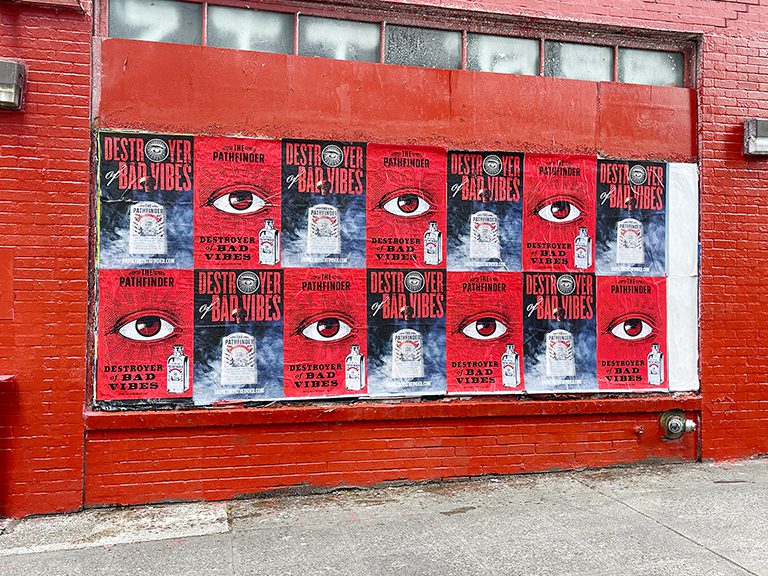
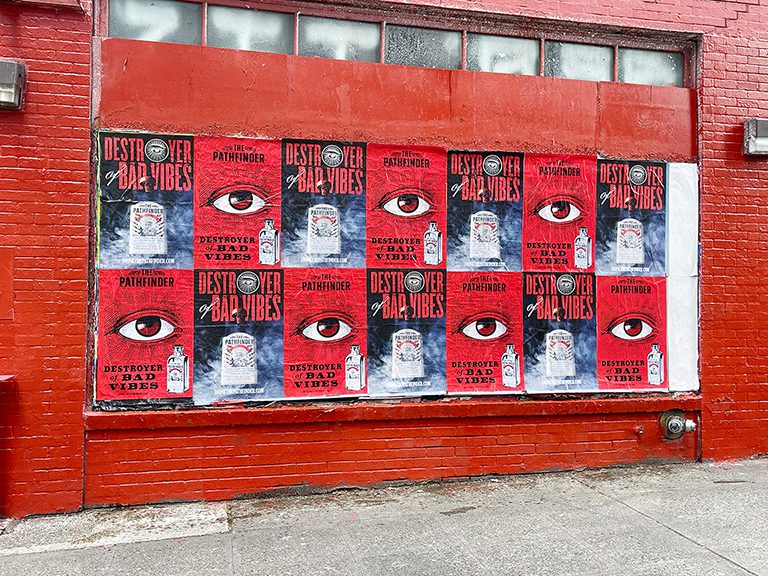
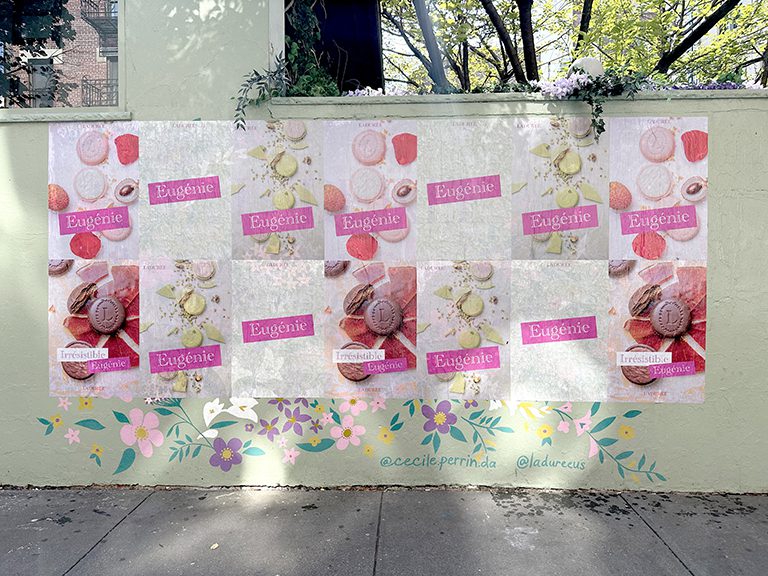
Fly posting — called wheatpasting, wheat paste advertising, and street poster advertising in different contexts — is the practice of printing large-format posters and applying them to high-visibility urban surfaces using a durable paste adhesive. The result is a format that registers as part of the neighborhood rather than imposed upon it. Guerrilla poster advertising has built brand awareness and cultural credibility for entertainment releases, fashion labels, consumer lifestyle brands, and civic campaigns for decades, precisely because the medium reads as authentic presence rather than purchased placement. In Nevada, where the built environment is one of the primary consumer experiences, that authenticity matters considerably.
Nevada’s fly posting story is anchored in Las Vegas but extends meaningfully beyond it. Reno operates as a fully distinct secondary market with its own cultural character — Midtown arts, the University of Nevada campus, the progressive independent community that Burning Man regional culture has cultivated across Northern Nevada. The two cities are not interchangeable markets; each has its own surface landscape, its own demographic concentrations, and its own campaign logic. A Nevada state fly posting strategy that treats Las Vegas and Reno as a single undifferentiated buy is leaving audience reach on the table.
Beyond both urban centers, rural Nevada presents a genuinely different challenge. Mining communities, ranching economies, and spread-out populations across the Nevada high desert are difficult or impossible to reach through digital advertising with the kind of geographic precision that physical media delivers. Poster campaigns in rural Nevada markets reach residents through formats that meet them in the community spaces — hardware stores, feed supply corridors, Main Street commercial blocks — where no digital channel has reliable penetration. It is a different kind of reach, but it is real and it is exclusive to physical media.
Nevada’s desert climate is an operational advantage that campaigns benefit from even when brand managers do not explicitly plan for it. Low ambient humidity slows the degradation of wheat paste adhesion, extending the visual integrity of installations through the full campaign window. Consistent dry air maintains color saturation in ways that humid coastal markets cannot — the yellows, reds, and blacks in a poster’s design remain visually vivid for the duration of the one-to-two-week surface window rather than fading or wicking. For campaigns where color accuracy and visual impact over a sustained period matter, Nevada’s environment actively works in the campaign’s favor.
American Guerrilla Marketing maintains a permanent operational base in Nevada through its Las Vegas office at 5940 S Rainbow Blvd PMB 1205, Las Vegas NV 89118, reachable at (702) 996-1806. This is not a logistics hub or a forwarding address — it is a working office with local crew knowledge of Nevada’s surface landscape, municipal context, and audience geography. Nevada campaigns are planned, executed, and documented by the same organization operating inside the market. No subcontractors are ever used in AGM installations. That direct-execution model is what makes GPS-documented photo proof meaningful: every image in the post-campaign package represents an actual placement by the team accountable for the campaign.
The client roster that AGM has built over its operating history reflects a consistent pattern: premium brands with exacting standards for execution quality and market credibility choose this format because it delivers what digital cannot. When Biossance needed to establish credibility for a beauty and lifestyle product launch across high-value coastal urban markets, the company turned to fly posting specifically because the format places premium brand imagery at street level in front of a sophisticated consumer audience without the intermediary of an algorithm. Nevada’s Las Vegas market carries a comparable premium consumer profile — the visitors walking the 18b Arts District, attending First Friday, or exploring Fremont Street on a weekend evening are exactly the culturally engaged consumer that fly posting reaches with outsized efficiency. That credibility translates directly to Nevada campaigns for brands targeting the state’s visitor economy.
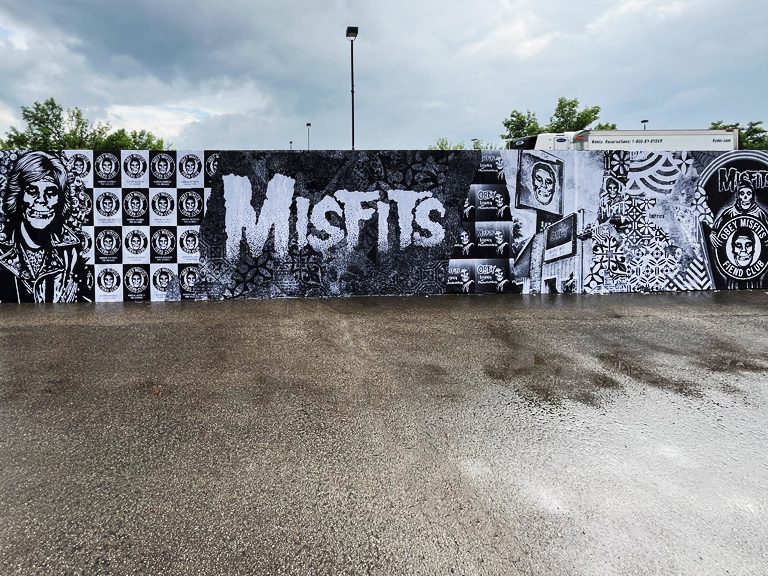
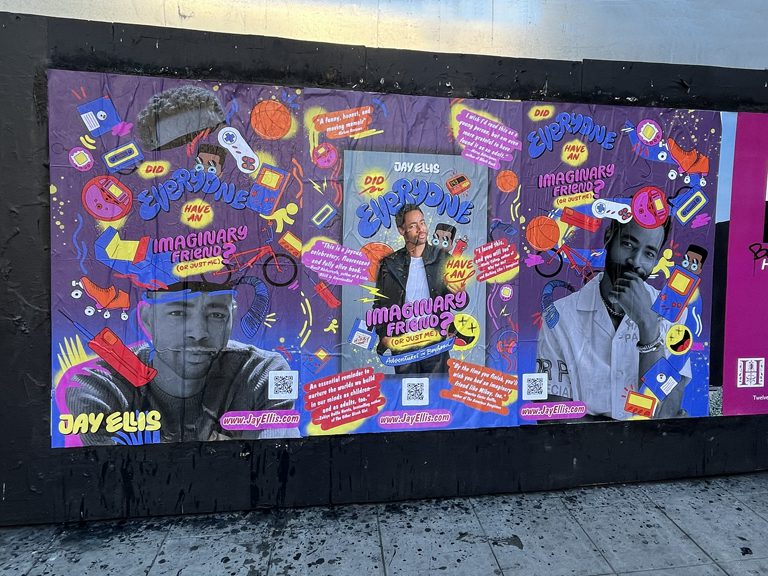
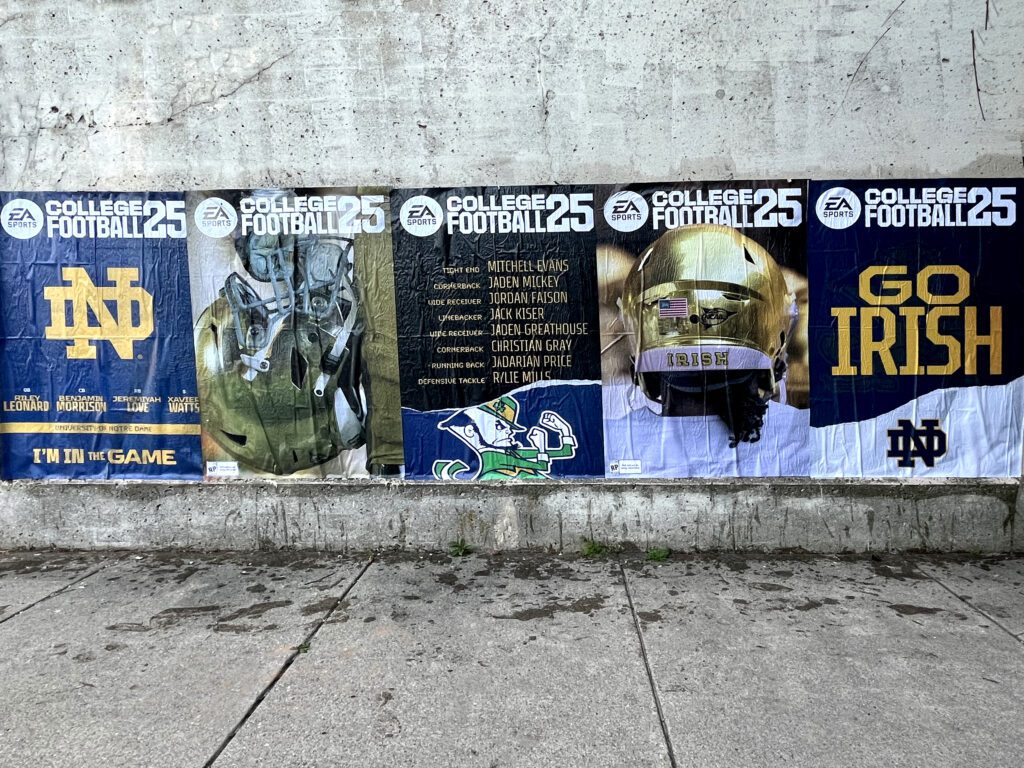
AGM’s recognition with the Best of Brooklyn award and its track record of campaigns for clients including Netflix, The Onion, EA Sports, Biossance, and Shepard Fairey represents operational proof that the format delivers at premium scale. Nevada campaigns — whether anchored in Las Vegas, extended to Reno, or structured as multi-city state buys — benefit from the same execution rigor that has made AGM the operator of choice for brands with no margin for missed placements or inconsistent proof-of-performance.
AGM's Las Vegas office is operational and ready to plan your Nevada fly posting campaign — from 18b Arts District anchor placements to a coordinated Las Vegas and Reno state-wide buy. We print, install, and GPS-document every placement with no subcontractors in the chain.
Select a city to explore Fly Posting Advertising opportunities.
Nevada’s fly posting surface landscape is concentrated in four distinct zones that serve different audience profiles across the state’s two primary urban markets. Each zone carries specific surface characteristics, demographic compositions, and campaign advantages that inform format selection and placement density decisions.
The 18b Arts District is the most culturally embedded fly posting surface landscape in Las Vegas outside the Strip. The district’s warehouse-era building stock — former industrial and commercial structures from Las Vegas’ mid-century development period — provides large blank exterior walls that hold wheat paste adhesion with exceptional tenacity and hold visual attention for the duration and beyond. The neighborhood draws the city’s creative class: working artists, graphic designers, musicians, gallerists, and the arts-engaged professional population that clusters around the First Friday art walk. First Friday draws thousands of attendees monthly in a concentrated pedestrian event that makes the district one of the most dense fly posting audience moments in Nevada’s calendar. Construction barriers from ongoing Arts District development provide additional premium surface inventory that replenishes on a rolling basis. For campaigns targeting culturally engaged Nevada consumers, the 18b Arts District is the anchor surface zone — and it is where large-format 48×72 dominance poster installations make the strongest brand statement available in the state.
Fremont Street is the original Las Vegas entertainment spine — the downtown corridor that predates the Strip and carries a distinctive character that locals and adventurous visitors seek out specifically because it is not the Strip. The Fremont Street Experience, Container Park, and the independent bars, restaurants, and venues lining the surrounding blocks generate dense evening and weekend foot traffic from an audience that skews more locally embedded than the mid-Strip casino floor demographic. Ongoing downtown Las Vegas redevelopment has produced a consistent and replenishing inventory of construction barrier surfaces — among the highest-visibility fly posting placements available in the city. The Fremont Street audience is a dual-market environment: campaigns here reach both the repeat Las Vegas visitor who considers Fremont Street part of their authentic Las Vegas experience and the local resident who gravitates toward downtown as a regular entertainment destination. For brands wanting to speak to Las Vegas culture rather than the tourist-facing identity of the Strip, Fremont Street is the first surface zone to consider.
Virginia Street through Midtown Reno — running roughly from Plumb Lane north to California Avenue — is the anchor of Reno’s independent cultural scene and the most fertile fly posting environment in Northern Nevada. The neighborhood has attracted vintage retail, craft beverage producers, galleries, independent restaurants, and food halls that collectively draw the city’s most culturally engaged consumer foot traffic. Poster culture is already part of Midtown Reno’s surface visual vocabulary, which means a well-executed fly posting campaign integrates into the neighborhood’s aesthetic identity rather than disrupting it. The University of Nevada, Reno campus sits adjacent to this corridor, adding a concentrated student and faculty audience to the existing arts community. For brands seeking market entry into Northern Nevada, Midtown Reno’s S Virginia St corridor is where that campaign should be anchored.
Henderson’s revitalized downtown arts and dining corridor along Water Street represents one of the most significant fly posting surface opportunities in the broader Las Vegas metropolitan area outside the urban core. The district has attracted murals, independent restaurants, event programming, and a walkable pedestrian environment that stands in genuine contrast to the suburban commercial sprawl that defines much of Southern Nevada’s built landscape. Water Street’s evening and weekend pedestrian density, combined with the suburban professional demographic that anchors Henderson’s residential population, creates a fly posting audience profile that skews toward higher household income and established consumer purchasing capacity. Construction barriers from ongoing Water Street revitalization provide fresh surface inventory on a regular basis, making this a consistently active zone for new placements. For campaigns targeting the Las Vegas metro’s suburban professional market in their own neighborhood environment, Henderson’s Water Street District is the most effective surface zone available.
American Guerrilla Marketing offers two primary fly posting formats for Nevada campaigns. Format selection is driven by campaign objectives: whether the goal is market-wide density of impressions across multiple zones or concentrated visual dominance at a specific, high-value surface location.
The 24×36 format is the strategic workhorse for Nevada fly posting campaigns that need to cover ground. At two feet wide by three feet tall, the standard format is large enough to command attention from pedestrians at conversational distance and efficient enough in per-unit cost to allow placement across multiple zones within a single campaign budget. For statewide Nevada strategies — combining Las Vegas and Reno in a single buy, or blanketing multiple Las Vegas districts simultaneously — the 24×36 format provides the coverage density that multi-market impression strategies require. Nevada’s dry climate preserves adhesion and color fidelity across the full campaign window, keeping standard format placements visually sharp through day seven and beyond.
The 48×72 format — four feet wide by six feet tall — is the dominance play for Nevada fly posting campaigns where a single placement needs to own its environment. At this scale, a poster does not compete for attention within a visual field; it becomes the visual reference point for the surface it occupies. Nevada has the wall inventory to support this format at scale: the 18b Arts District’s warehouse exterior walls, downtown Reno’s historic building facades, and the construction barrier corridors of Fremont Street all provide surfaces where 48×72 installations achieve the kind of brand presence that stops foot traffic. A single well-sited 48×72 placement in a high-density Nevada entertainment zone becomes a locational landmark during the campaign window.
Both formats carry a campaign duration of one to two weeks on-surface. Nevada’s low-humidity desert environment supports adhesion quality at the upper end of this range, giving campaigns the full window to accumulate impressions across the pedestrian zones where placements are concentrated. Many Nevada campaigns combine both format types — deploying 24×36 posters for broad zone coverage and reserving 48×72 placements for the highest-value anchor surfaces in the campaign geography.
For Nevada campaigns spanning multiple cities — a combined Las Vegas and Reno buy, or a four-market execution covering Las Vegas, Henderson, North Las Vegas, and Reno simultaneously — pricing is structured per market segment. Contact AGM’s Las Vegas office at (702) 996-1806 to discuss multi-market Nevada campaign architecture and volume pricing. AGM’s national offices are also reachable at: Brooklyn NY (646) 776-2770 · Miami FL (305) 792-4523 · Orlando FL (321) 261-0402 · Los Angeles CA (213) 328-4480.
Award Winning Personalized Service
You will get thoughtful, devoted, and individualized attention from our experienced, qualified, and professional personnel. Being one of the most illustrious agencies in Brooklyn, New York, American Guerrilla Marketing has been awarded the Best of Brooklyn title.
Nationwide
Industry City, Brooklyn, New York 11232
American Guerrilla Marketing
Hours
Mon - Fri: 9 AM - 5 PM
Sat & Sun: Closed
Automate your campaign with AGM’s Request for Proposal Builder. Simply answer a few quick questions about your campaign goals, markets, and timeline, and the system will generate a tailored presentation with recommended strategies, quantities, and pricing. Click the RFP Builder to instantly receive your customized proposal.
Nevada fly posting campaigns begin with a strategic planning conversation between the client and AGM’s Las Vegas team. That conversation establishes campaign objectives, identifies the target audience profile in geographic terms — which Nevada markets, which districts within those markets, which surface types best reach the target consumer — and determines the format mix that serves those objectives within the campaign budget. For statewide Nevada campaigns, this planning stage includes an explicit assessment of whether a Las Vegas-anchored buy achieves the reach objectives or whether a combined Las Vegas and Reno execution better serves a brand looking to speak to both Southern and Northern Nevada.
Following strategic alignment, AGM generates a surface zone recommendation that identifies specific districts, surface types, and approximate placement counts per zone. Clients provide approved creative assets in print-ready format, and AGM’s in-house print production runs every poster to specification without third-party vendor involvement. The same organization planning the campaign is the organization printing the posters. Print quality control happens internally, which means color fidelity to brand standards is maintained at the source rather than depending on an external vendor’s consistency.
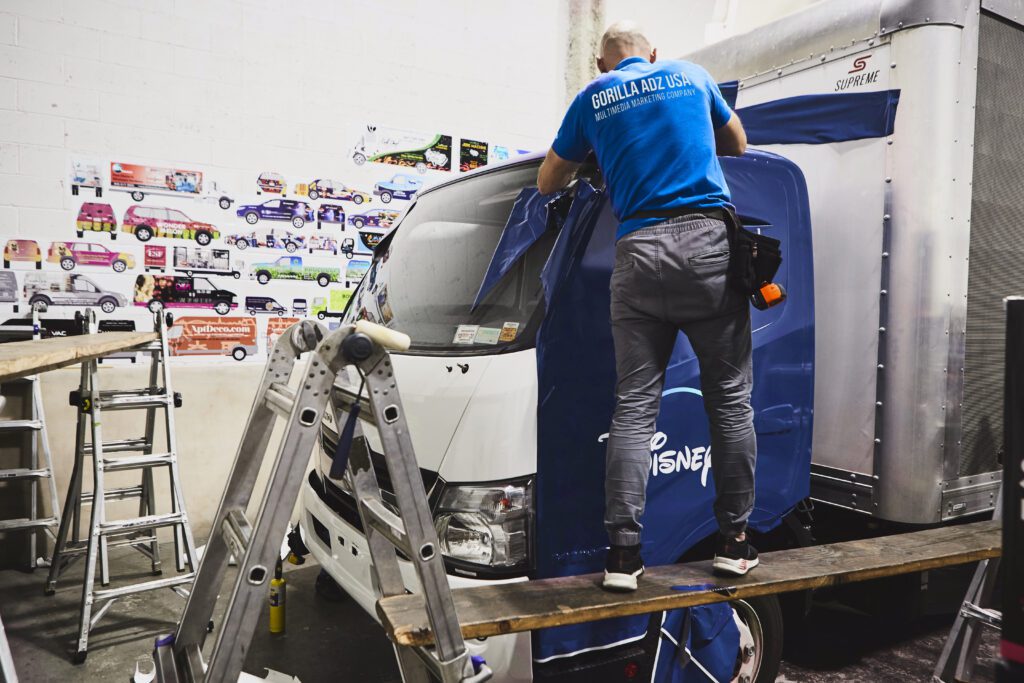
Installation crews execute according to the approved zone plan. In Las Vegas, AGM’s permanent local crew operates with daily market familiarity — knowledge of which surfaces are cleanest, which barriers are freshest, and which zones are generating the highest current foot traffic. Every installation is GPS-tagged at the time of placement and photographed for the post-campaign documentation package. There are no intermediary subcontractors between AGM and the Nevada wall where your poster goes up. The crew executing the installation is the crew accountable for the documentation, which makes the GPS photo proof a verifiable record rather than a compiled report from a third party.
Campaign monitoring during the active one-to-two-week window allows AGM’s Nevada team to identify any placement that has been compromised and respond with reinstallation if needed. At campaign close, clients receive a complete photo documentation package covering every placement location — geographic confirmation that the campaign reached the zones and surfaces specified in the plan. For brands that require proof-of-performance for internal reporting or agency billing verification, this GPS-documented photo package is the standard AGM delivers on every Nevada execution.
Fly posting regulations in Nevada vary by municipality and surface type. AGM’s approach in every Nevada market focuses campaigns on legally available surfaces: construction barriers where property owner or contractor permission has been obtained, privately owned blank walls where placement rights have been established, and designated surfaces where fly posting is permitted under local ordinance. AGM’s Las Vegas-based team understands the regulatory environment across Nevada’s primary markets at the city and county level, and campaign surface zones are planned accordingly. Clients with specific regulatory questions about Nevada compliance receive direct answers during the planning consultation — AGM does not build campaigns around legally uncertain placements.
Nevada’s desert climate is technically favorable for fly posting in ways that coastal and humid markets are not. Low ambient humidity reduces moisture penetration into the paste bond, slowing the degradation that shortens campaign windows in wet environments. Consistent dry air maintains adhesion quality across the full one-to-two-week campaign duration. Color saturation holds better in Nevada’s low-humidity conditions than in markets where atmospheric moisture causes inks to bleed or fade — the visual intensity of a poster’s design remains intact longer, which means the impression value of each placement accumulates over a longer active window. For campaigns where sustained visual quality across the full campaign window matters, Nevada’s environment is an operational asset.
Las Vegas presents a fly posting dynamic that no other American city replicates. More than 40 million annual visitors move through Las Vegas entertainment districts in a state of active physical engagement with the city — walking, looking, experiencing. These visitors are not commuters staring at phones; they are present in the built environment in a way that makes street-level advertising genuinely interruptive in the best sense. Add to this the city’s dense local residential population, its active arts community, and its campus-adjacent markets, and Las Vegas becomes a fly posting environment where a single well-planned campaign can reach multiple distinct audience segments across a compact geographic footprint. No algorithm can replicate the kind of attention that a physically present, engaged pedestrian gives to a well-placed street poster on Fremont Street at 9 pm.
Traditional billboard advertising in Nevada — particularly in Las Vegas — operates in one of the most visually competitive and expensive out-of-home markets in the country. Strip-area billboard faces command premium rates and compete with an advertising environment so saturated that individual placements struggle to achieve differentiated recall. Fly posting operates at street level, in the pedestrian zones where people move slowly enough to read and absorb a message, on surfaces that read as part of the neighborhood rather than as purchased media. The cultural register is entirely different — fly posting carries an authenticity and editorial credibility that billboard placements cannot reproduce. It is also significantly more cost-efficient per impression in the markets where both formats compete, allowing campaigns to achieve multi-zone Nevada coverage within a budget that would fund only a single billboard face in Strip-adjacent inventory.
The standard AGM fly posting campaign in Nevada carries a one-to-two-week on-surface duration. This window reflects the operational arc of a poster installation’s active impression period — the span during which adhesion quality, color saturation, and undisturbed surface presence combine to deliver consistent visual impact. Nevada’s desert climate generally supports placements at the upper end of this range, with low humidity maintaining paste bond integrity longer than humid coastal markets. For campaigns tied to specific Nevada events — a Las Vegas convention, a Reno music festival, a statewide product launch — installation timing is calibrated to place posters in peak foot traffic zones several days before the target event, allowing awareness to build before the moment of maximum audience concentration.
This is one of fly posting’s most specific and defensible advantages in the Nevada market. The casino tourism audience is uniquely resistant to digital advertising while in-market: visitors to Las Vegas and Reno are frequently in environments where phone use is minimal, where attention is directed outward at the physical city, and where the sensory experience of the destination is the primary focus. Fly posting installations on Fremont Street, in the 18b Arts District, and on the pedestrian corridors adjacent to entertainment zones reach this audience during precisely the moments when their attention is most available to street-level stimuli. No digital format can reliably place a brand message in front of a person walking Fremont East at 10 pm with the same environmental certainty as a correctly sited street poster.
Yes. AGM maintains a permanent operational presence in Nevada through its Las Vegas office at 5940 S Rainbow Blvd PMB 1205, Las Vegas NV 89118 — reachable directly at (702) 996-1806. This is not a virtual office or a subcontractor arrangement passed off as a local presence. It is a working team with active market knowledge of Nevada’s surface landscape, established surface relationships across Las Vegas’s primary fly posting zones, and the operational capacity to plan, install, and document Nevada campaigns without the coordination overhead of managing out-of-state crews. For Las Vegas campaigns specifically, this local footprint means same-market response capability during the active campaign window if any placement requires attention or reinstallation.
Nevada’s tourism economy creates what is accurately described as a captive street audience — millions of people who have specifically traveled to a physical destination to inhabit its built environment. Digital advertising follows these visitors through their feeds and apps, competing in an auction market against every other advertiser who has purchased the same audience segments. A fly posting installation on a surface in the Las Vegas Arts District or on a Fremont Street construction barrier is a singular physical presence that occupies exactly one surface at exactly one location. There is no auction mechanism, no competing ad unit, and no algorithm determining whether the message reaches the audience. The poster is there. The audience walks by. That is a form of media certainty that programmatic digital simply does not offer.
Nevada fly posting campaigns have delivered documented results across entertainment and live events (concerts, residencies, shows, festivals), consumer food and beverage brands entering the Nevada market, fashion and streetwear labels launching in Las Vegas retail, film and television promotional campaigns targeting Nevada markets, gaming and technology companies reaching Nevada’s growing tech and innovation community, and premium consumer lifestyle brands targeting the high-value Las Vegas visitor demographic. The consistent thread across successful Nevada fly posting campaigns is a target audience that concentrates its physical presence in the pedestrian entertainment zones where fly posting surfaces are most available and most visible. If that audience is yours, the format is worth serious evaluation.
Every AGM Nevada installation is GPS-tagged and photographed at the time of placement by the crew executing the installation. Clients receive a post-campaign photo documentation package that provides visual and geographic confirmation of every placement location. Because AGM operates without subcontractors — the team installing the campaign is the team accountable for its documentation — there is no information gap between what was planned and what appears in the post-campaign report. The GPS coordinates embedded in installation photos provide verifiable location data, and the photographic record gives clients a permanent visual archive of their Nevada street-level presence that can be used for internal reporting, agency review, or campaign portfolio documentation.
For statewide Nevada campaigns that combine Las Vegas and Reno — or all four Nevada markets — in a single coordinated buy, the 24×36 format typically delivers the best balance of per-unit efficiency and placement density. The standard format enables higher placement counts across multiple cities within a defined campaign budget, generating the cumulative impression frequency that multi-market strategies depend on. The 48×72 large format is most effective when a specific anchor zone within the campaign — the 18b Arts District, a Fremont Street corridor block, or a downtown Reno warehouse facade — warrants a dominance-scale statement placement. Many statewide Nevada campaigns deploy both formats in combination: standard for city-wide density, large format for anchor presence at the campaign’s geographic centerpiece.
Yes. Multi-city Nevada campaigns — coordinating placements across Las Vegas, Henderson, North Las Vegas, and Reno within a single campaign window — fall within AGM’s standard operational scope. The Las Vegas office serves as the Nevada campaign coordination hub, managing crew deployment, surface zone execution, and installation documentation across markets. For brands building Nevada-wide awareness — a statewide product launch, a regional entertainment release, or a consumer campaign targeting Nevada’s full urban audience footprint — the multi-city structure allows a single creative campaign to achieve geographic reach that no individual-market buy can replicate. Reach AGM’s Las Vegas team at (702) 996-1806 to discuss multi-city Nevada campaign structure, timing, and pricing.