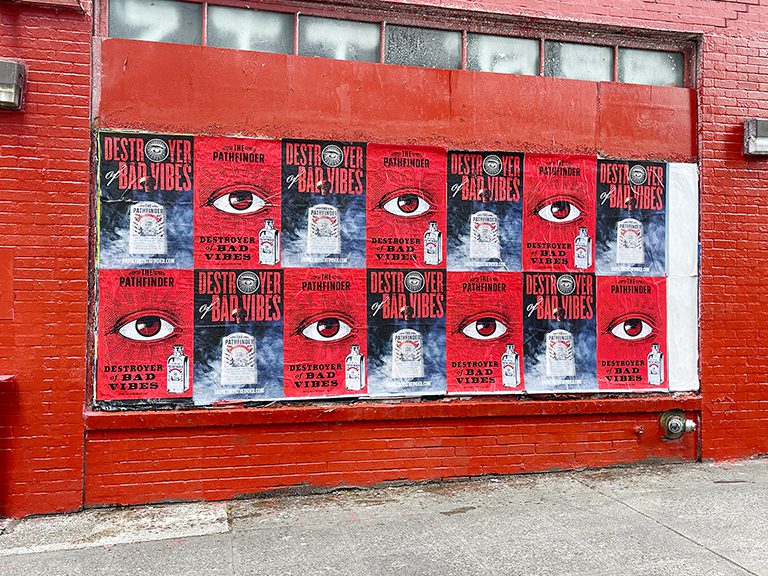
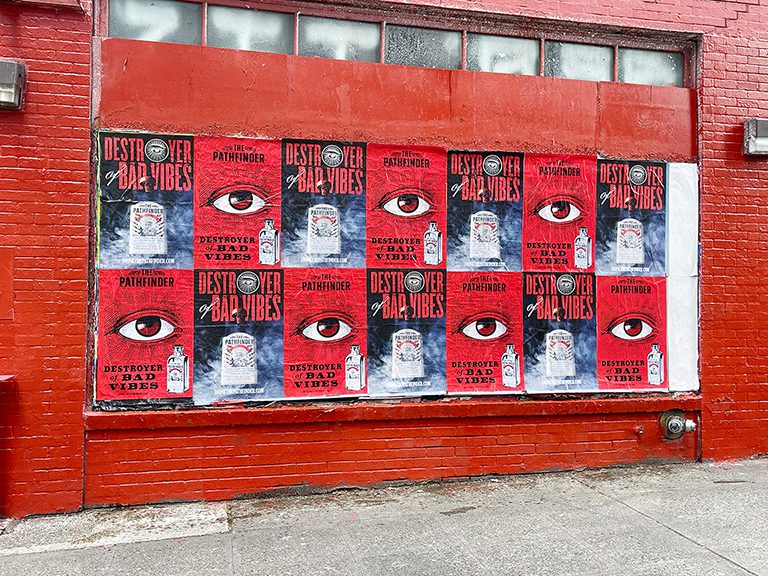
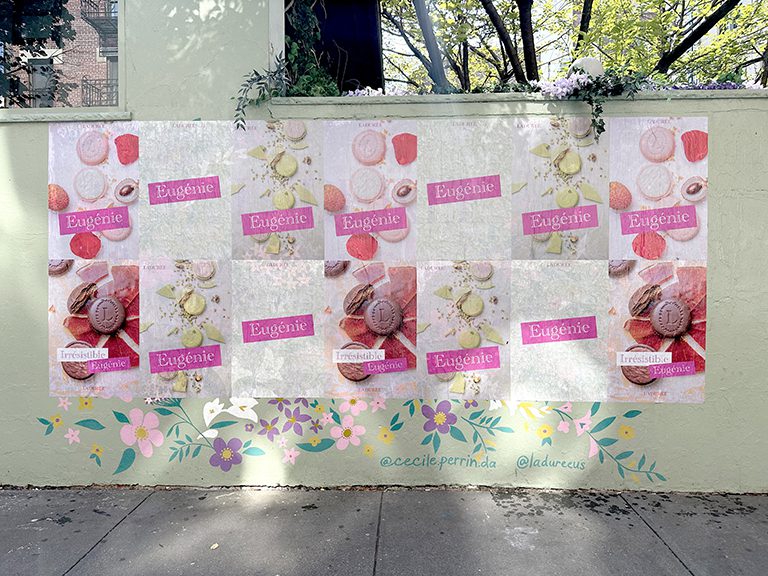
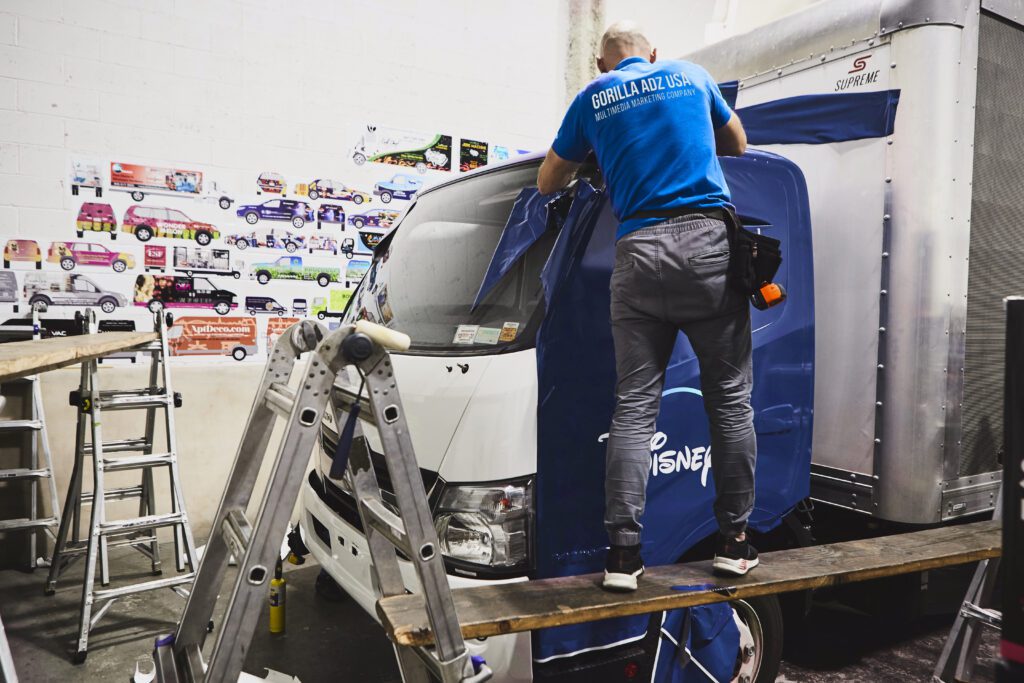
🚀 NEW WHEATPASTING MARKETS Discover our wheatpasting campaigns in : 🇬🇧 London

American Guerrilla Marketing

Nationwide serivce

Media planning, media buying, billboard advertising, & guerrilla marketing

Take-One Card Advertising

Take-One Card Advertising: Counter Display Programs

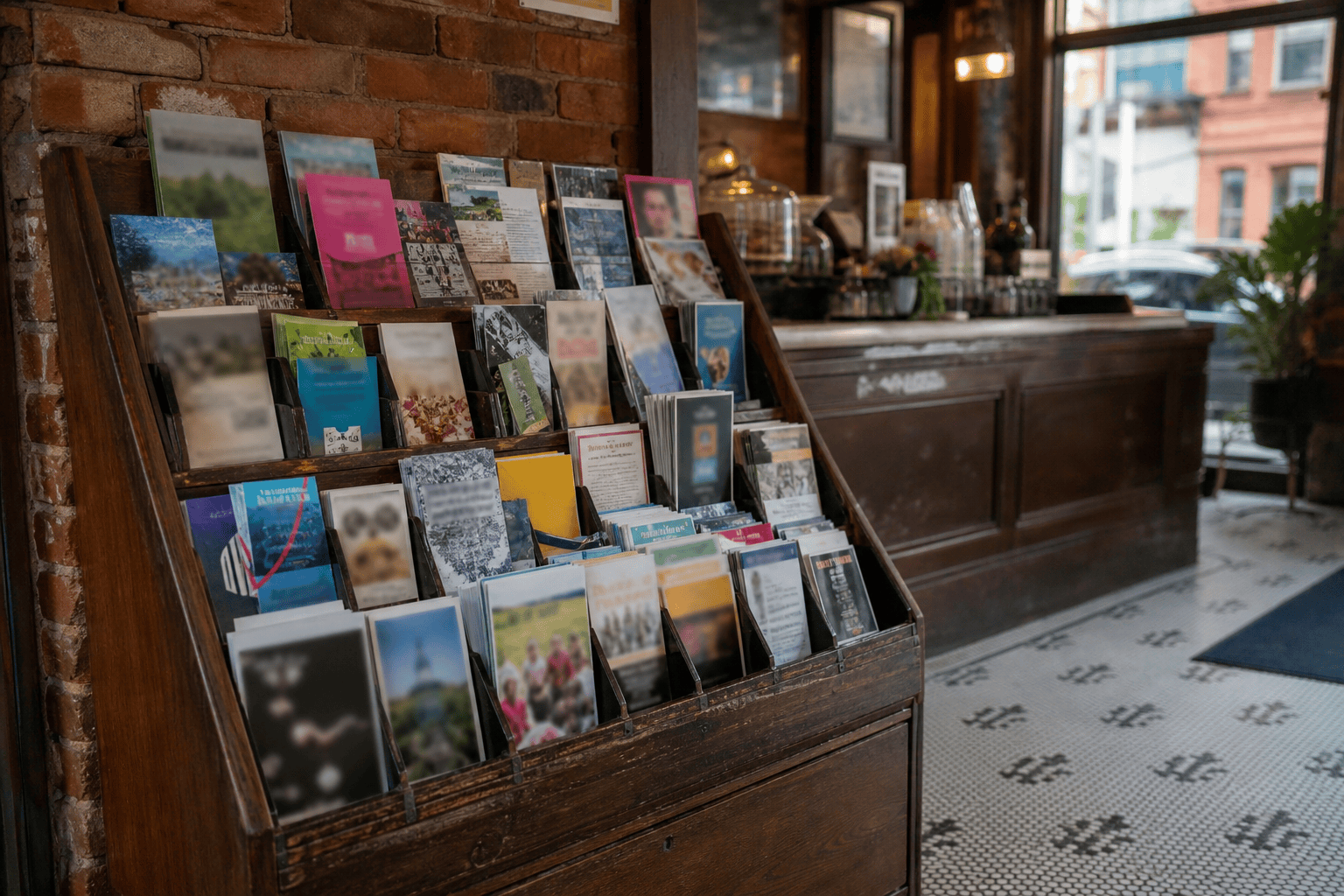
Small-format cards placed at eye level inside the coffee shops, bars, gyms, barbershops, and college spots your audience actually uses. Consumers pick them up because they want to. That self-selection changes everything.

Take-One Card Advertising

What Take-One Card Advertising Actually Is

A take-one card is a small-format printed promotional card, typically 3.5×5 or 4×6 inches, placed inside a counter-top dispenser at a partner venue. When someone walks into a coffee shop in Williamsburg, grabs their oat latte, and notices a stack of cards near the register, they pick one up because it caught their eye. Not because an ad algorithm served it to them. Not because a screen interrupted their scroll. Because they chose to.

That distinction matters. At American Guerrilla Marketing, we have spent years placing promotional materials in the physical spaces where New Yorkers actually spend time. Take-one cards are one of the most underrated tools in that playbook. The cost per impression is low, the targeting precision is high, and the consumer is in a mindset to receive new information. They walked into that gym or that coffee shop already in a receptive, exploratory mode. Your card is waiting for them right there at the counter.

The format goes by a few names: counter display cards, point-of-sale take-ones, promotional rack cards, business card advertising. The idea is the same across all of them. You print a compact card, you place it in a location your target audience frequents, and you let the consumer self-select by picking it up. No algorithm. No interruption. No forced impression that breeds resentment.

We run take-one card programs across New York City and can extend placements into other markets depending on your campaign goals. Our venue network covers coffee shops across Williamsburg, Park Slope, and Chelsea; bars and lounges from the East Village down to the Lower East Side; gyms in Flatiron, the Upper East Side, and Brooklyn; barbershops and salons in Crown Heights, Bushwick, and Harlem; and college campus locations near NYU, Columbia, and Pratt. Every location in our network is vetted. We do not place cards in venues that do not align with the brand or the audience you are trying to reach.

Take-one card programs generate consumer-initiated contact. The person who picks up your card made a choice to engage. That single act of self-selection separates this format from nearly every form of paid digital advertising running today.

The cards themselves are full-color printed pieces, typically on sturdy card stock with either matte or gloss finish. We can accommodate QR codes for direct digital activation, short URLs, offer codes, or any call to action your campaign requires. Design specs are straightforward: 4×6 or 3.5×5, full bleed color, 300 DPI minimum. If you do not have print-ready files, we can connect you with our design team to get there.

Unlike outdoor formats that require permits and placement windows, take-one cards operate through our established venue relationships. The dispensers go on the counter, the cards are stocked, and the program runs for the duration of your campaign. We track stock levels and resupply so your cards are always available, not sitting in a box in someone’s back room.


Put Your Brand in the Right Hands.

Counter display advertising in the neighborhoods where your audience actually shows up. Talk to AGM about building your take-one box program.

How Take-one Card Programs Work

The process is more direct than most clients expect. Once you reach out and we understand your target audience, geography, and campaign goal, we pull together a placement map from our venue network. You review it, we adjust if needed, and then you send us your printed cards or place the print order through our production team.

Dispensers go into partner venues. Our team handles installation, restocking, and program monitoring. At the end of the campaign window, we pull the dispensers and report on estimated reach based on venue foot traffic data and cards distributed.

Step-by-Step Process

  • Discovery call: We learn your target audience, geography, campaign duration, and goal. Is this a product launch? An event promotion? A restaurant opening? A QR code activation? The objective shapes the placement strategy.
  • Venue map: We select locations from our network that match your audience profile. A gym promotion goes into gyms. A bar special goes into bars. A college promotion goes near campuses. We do not scatter cards randomly across the city.
  • Card production: You provide print-ready files or we connect you with design resources. Cards are printed to spec (4×6 or 3.5×5, full color, matte or gloss, QR code if needed).
  • Dispenser installation: Our team places dispensers at partner venues, stocked with your cards. Locations are agreed upon before launch so there are no surprises.
  • Active monitoring: We resupply cards throughout the campaign window so dispensers stay stocked. A depleted dispenser is a missed opportunity we prevent by staying on top of inventory.
  • Campaign close: Dispensers come down, final report goes out. We share estimated reach figures, cards distributed, and placement documentation so you can tie results back to your campaign metrics.

The timeline from inquiry to live program typically runs two to three weeks depending on how quickly card production is completed. Rush programs are possible with advance discussion. If you have cards already printed, the timeline shortens considerably.

Where AGM Places Take-One Cards

Location selection is not random. We built a venue network over years of field work in New York City and have mapped it by neighborhood, venue type, demographic profile, and foot traffic patterns. When you run a take-one card program through AGM, your cards are in the right rooms, not just any room.

Coffee Shops

Counter traffic at independent coffee shops in Williamsburg, Park Slope, and Chelsea runs high across morning and midday hours. These are dwell locations, spots where people sit, open their laptops, and spend time. A card placed near the register gets seen by dozens of people per hour during peak windows. The demographic skews toward 25-40, college educated, urban, and digitally active. Great for app launches, event promotion, lifestyle brands, and local business awareness campaigns.

Bars and Lounges

The bar scene in the East Village and Lower East Side draws a different crowd than Midtown. These are neighborhood regulars and destination visitors, often aged 24-35, with disposable income and an openness to discovering new things. A take-one card near the bar rail or at the host stand gets picked up during the natural wait time that defines bar culture. People standing around looking for something to do with their hands will pick up and read your card.

Gyms and Fitness Studios

Gym placement is some of the most targeted consumer access available through a take-one card program. Flatiron, the Upper East Side, and Brooklyn gym members are health-conscious, often high-income, and looking for new things in the fitness, wellness, nutrition, and lifestyle categories. Cards near the front desk or in the lobby hit them at a moment when their attention is free, between check-in and their workout or on the way out when they have two minutes before their next thing.

Barbershops and Salons

Crown Heights, Bushwick, and Harlem have neighborhood barbershops and salons that serve as genuine community hubs. Clients sit in chairs for 30 to 60 minutes. They are present, relaxed, and in a conversation-friendly mindset. A take-one card on the counter gets noticed, discussed, and often picked up for later. These placements work especially well for community-oriented brands, entertainment, events, and anything with a neighborhood connection.

College Campuses

Near NYU in the Village, Columbia at 116th Street, and Pratt in Clinton Hill, we have access to campus-adjacent locations where students congregate. Campus coffee shops, study spots, and transit-adjacent venues near these schools provide concentrated access to the college demographic without the bureaucracy of official on-campus placement programs. If your target audience is 18-24, college-educated, and urban, this is where they physically are.

Our venue network spans 200+ partner locations across Manhattan and Brooklyn, with active placement programs in the Bronx, Queens, and emerging neighborhoods as our network expands. Every location is verified, regularly visited, and held to display standards before your cards go in.

Who Uses Take-one Card Programs

The range of clients who run take-one card programs is wider than most people expect. The format is small, but the use cases are substantial.

Event Promoters and Entertainment Companies

Event promotion is one of the clearest fits for take-one cards. A music festival, comedy night, pop-up dinner, or art opening needs to reach people who are already out in the city doing things. Those people are in bars. They are in coffee shops. They are at the gym at 7 AM. A card in their hand with a date, a QR code to the ticket link, and a reason to care is more effective than a Facebook event invite they never saw because the algorithm did not prioritize it.

Restaurants and Bars

New restaurant openings, happy hour specials, new menu launches, and loyalty program rollouts all translate well to the take-one format. A restaurant that places cards in coffee shops in the same neighborhood is catching people before they have decided where to eat tonight. A bar placing cards in gyms is catching the post-workout crowd that will be looking for a drink in a few hours. The geography of placement can be as strategic as the card design itself.

Retail Brands and E-Commerce

Discount codes, QR code activations, new product announcements, and pop-up store locations are all well-suited for take-one distribution. An e-commerce brand that wants to break into the physical world without committing to a full retail build-out can test neighborhood reach through take-one placements for a fraction of the cost. If the code on your card is trackable, you have a direct attribution line from card to conversion.

Health, Wellness, and Fitness Brands

Gym placement is particularly powerful for health and wellness brands. Supplement companies, fitness apps, nutrition services, yoga studios, running clubs, and physical therapy practices all have audiences that are literally in gyms right now. A take-one card program targeting Flatiron and Brooklyn gym locations puts your brand in front of the exact person you want to reach at exactly the moment they are thinking about their body and their health.

Local Services and Professional Firms

Accountants, lawyers, therapists, tutors, photographers, and local service providers all benefit from hyper-local brand awareness. A therapist who places cards in coffee shops near their Brooklyn Heights office is reaching potential clients who live or work in the neighborhood and are already dealing with the pressures of New York City life. The format is low-pressure and self-initiated. Nobody feels sold to when they pick up a card themselves.

Nonprofits and Cause-Based Organizations

Community outreach, volunteer recruitment, donation drives, and awareness campaigns all benefit from physical placement in high-trust venues. A nonprofit placing take-one cards in independent coffee shops and neighborhood barbershops gets visibility in spaces that already carry community credibility. The venue’s reputation transfers to some degree to anything displayed there.


Pricing and Program Details

Take-one card program pricing at AGM is custom-quoted based on the number of venues, the campaign duration, the geographic footprint, and whether card production is included. Because placement networks vary significantly by neighborhood and venue type, and because card quantities depend on foot traffic at specific locations, we do not publish a one-size-fits-all rate card for this service.

What we can tell you is that take-one card programs are consistently among the most cost-efficient programs we run on a cost-per-engaged-consumer basis. You are not paying for impressions that scroll past. You are paying for a card in the hand of someone who chose to pick it up. That distinction shows up in the math when you track your results.

The typical inquiry-to-proposal turnaround is 24 to 48 hours for standard programs. Contact us at (646) 776-2770 or [email protected] and tell us your audience, your geography, and your goal. We come back with a recommended venue map and a quote that reflects the actual scope of what you want to run.

Program Variable Details
Card Size Options 3.5×5 or 4×6 inches, full bleed color
Finish Options Matte or gloss; QR code compatible on both
Minimum Run Contact for program minimums based on venue count
Campaign Duration Typically 2-6 weeks; extended programs available
Venue Types Coffee shops, bars, gyms, salons, barbershops, campus-adjacent
Primary Markets Manhattan, Brooklyn, Queens, Bronx; other cities available
Restocking Included in program fee; AGM monitors and restocks
Rush Availability Available; discuss timeline on inquiry call

Ready To Talk Numbers?

Tell us your target neighborhood, your audience, and what you are promoting. We put together a venue map and a custom proposal within 24-48 hours.

    Award Winning Personalized Service

    You will get thoughtful, devoted, and individualized attention from our experienced, qualified, and professional personnel. Being one of the most illustrious agencies in Brooklyn, New York, American Guerrilla Marketing has been awarded the Best of Brooklyn title.

    Nationwide

    Industry City, Brooklyn, New York 11232

    American Guerrilla Marketing

    +1 (646) 776-2770

    [email protected]

    Telegram: @americanguerillamarketing

    Hours

    Mon - Fri: 9 AM - 5 PM

    Sat & Sun: Closed

    Automate your campaign with AGM’s Request for Proposal Builder.

    Automate your campaign with AGM’s Request for Proposal Builder. Simply answer a few quick questions about your campaign goals, markets, and timeline, and the system will generate a tailored presentation with recommended strategies, quantities, and pricing. Click the RFP Builder to instantly receive your customized proposal.

    Design Specs For Take-one Cards

    Getting the card right is as important as placing it in the right location. A poorly designed take-one card defeats the purpose of the entire program. Here is what works.

    Physical Specs

    • Size: 4×6 inches or 3.5×5 inches. Both fit standard counter dispensers. 4×6 has more visual real estate; 3.5×5 has a more compact, portable feel that some audiences prefer.
    • Resolution: 300 DPI minimum. 400 DPI preferred for fine detail or small type.
    • File format: PDF preferred. High-resolution JPEG or PNG accepted. Bleed of 0.125 inches on all sides for print-ready files.
    • Stock: 14pt or 16pt card stock standard. Heavier stock communicates quality and holds up better in counter dispensers.
    • Finish: Matte finish works well for QR codes (reduces glare for camera scan). Gloss finish delivers sharper color reproduction for image-heavy designs.

    Design Principles That Convert

    • One primary message: A take-one card is not a brochure. You have one shot. Lead with the most compelling thing you have to say.
    • QR code placement: Front face, lower third, large enough to scan at arm’s length. Do not bury it on the back where most people never look.
    • Offer specificity: “15% off your first order at checkout” outperforms “visit our website” by a significant margin. Give the consumer a reason to act now.
    • Contact or URL: Every card should have a clear next step: scan this, go here, call this number, use this code.
    • Brand legibility: Your logo and brand name should be immediately recognizable from 18 inches away. This is often how someone notices the card from across the counter before walking over to pick it up.

    Why AGM for Take-One Card Advertising

    We are not a print shop that also handles distribution. We are a field marketing operation with boots on the ground in New York City and beyond. The take-one card service at AGM lives inside a broader network of street-level marketing experience that includes outdoor advertising, event activations, and neighborhood-specific campaigns that most digital-first agencies have never touched.

    Our team has placed promotional materials at thousands of locations across New York City. We know which coffee shops in Williamsburg have counter space that actually works for dispensers. We know which gyms in Flatiron allow placement and which ones do not. We know the difference between a barbershop in Crown Heights that serves a genuine community and one that is a pass-through with no dwell time. That field knowledge is not something you find in a media kit or an audience segment. It comes from years of showing up in person.

    When you run a take-one card program with AGM, you get that knowledge applied to your campaign from the first conversation. We are not guessing at which venues work. We are drawing on a tested and maintained network to place your cards where your specific audience actually goes.

    We also care about accountability. If a dispenser runs out, we know and we restock. If a venue changes their counter layout and our dispenser is no longer prominent, we address it. The value of a take-one card program is only as real as the cards that are actually being picked up, and that requires active management, not a one-time drop and hope.

    The consumer trust element matters too. A card picked up voluntarily in a neighborhood coffee shop carries a different weight than a display ad that followed someone around the internet for three weeks. Self-selection implies interest. That interest is the foundation of a more receptive audience. It does not guarantee conversion, but it starts the relationship from a better place than interruption-based formats typically do.

    If you are launching something new, promoting an event, running a neighborhood campaign, or looking for a physical touchpoint that complements your digital marketing, take-one cards are worth serious consideration. The cost of entry is low. The targeting can be precise. And the consumer you reach picked up your card on their own. That is a meaningful start.

    Reach us at (646) 776-2770 or [email protected]. Tell us what you are working on and we will tell you what we can do.

    Frequently Asked Questions

    A take-one card is a promotional card, typically 3.5×5 or 4×6 inches, placed in a counter-top dispenser at a partner venue for public self-selection. A business card is a personal contact tool exchanged one-to-one. Take-one cards are marketing materials designed for broad consumer pickup at point-of-sale or point-of-interest locations. They carry campaign messaging, offers, QR codes, and brand calls to action. They are placed in dispensers so any consumer at that location can pick one up on their own terms.

    Our NYC venue network includes coffee shops in Williamsburg, Park Slope, and Chelsea; bars in the East Village and Lower East Side; gyms in Flatiron, the Upper East Side, and Brooklyn; barbershops and salons in Crown Heights, Bushwick, and Harlem; and campus-adjacent venues near NYU, Columbia, and Pratt. Placement is tailored to your target audience and campaign geography. We pull the specific venues that match your audience profile, not every venue we have access to.

    Both options are available. If you have print-ready files and a printer you trust, you ship cards to us and we handle placement. If you need production support, we can connect you with our print production resources to get cards made to spec. Either way, we manage dispenser placement, stocking, monitoring, and restocking throughout the campaign window.

    The most direct tracking method is a unique QR code that routes to a campaign-specific landing page or a unique promo code that consumers enter at checkout. Both give you a direct attribution line from card pickup to digital action. You can also use a unique phone number or URL that is exclusive to the take-one program so any traffic through those channels is attributed to the campaign. We report on cards distributed and estimated reach based on venue foot traffic so you have both quantitative and directional data.

    Most programs run two to six weeks. Event promotions typically run four to eight weeks leading up to the event date, then come down after. Brand awareness campaigns and ongoing discount programs often run on a rolling monthly basis with card restocking throughout. We structure the timeline based on your campaign goal and budget. Rush programs for last-minute event promotion are possible with advance discussion of timeline and card production lead times.

    Yes. While our deepest venue network is in New York City, AGM operates nationally. We can run take-one card programs in Los Angeles, Chicago, Miami, Austin, Boston, and other major markets. Coverage and venue density vary by market. Contact us with your target geography and we will outline what is available and what timeline to expect for setup in markets outside our primary NYC footprint.

    Minimum quantities depend on venue count, campaign duration, and average foot traffic per location. A single-venue test program requires far fewer cards than a 20-venue city-wide campaign. We discuss quantities with you during the proposal phase so print runs match the actual scope of placement. We would rather help you print the right amount than have you overrun and store several thousand cards you will never use.

    The difference is the network, the relationship, and the management. Anyone can print cards and leave a stack on a random counter. What AGM brings is a vetted venue network where we have established relationships, agreed placement terms, and dispenser infrastructure. Cards placed through our program are in sanctioned locations, in proper dispensers, monitored and restocked. They are not swept off a coffee table and thrown away by a shop owner who never agreed to host them. The program integrity is what makes the consumer self-selection rate meaningful.

    American Guerrilla Marketing Blog Posts