
November 24, 2026
Best Experiential Campaigns: How It Actually Works
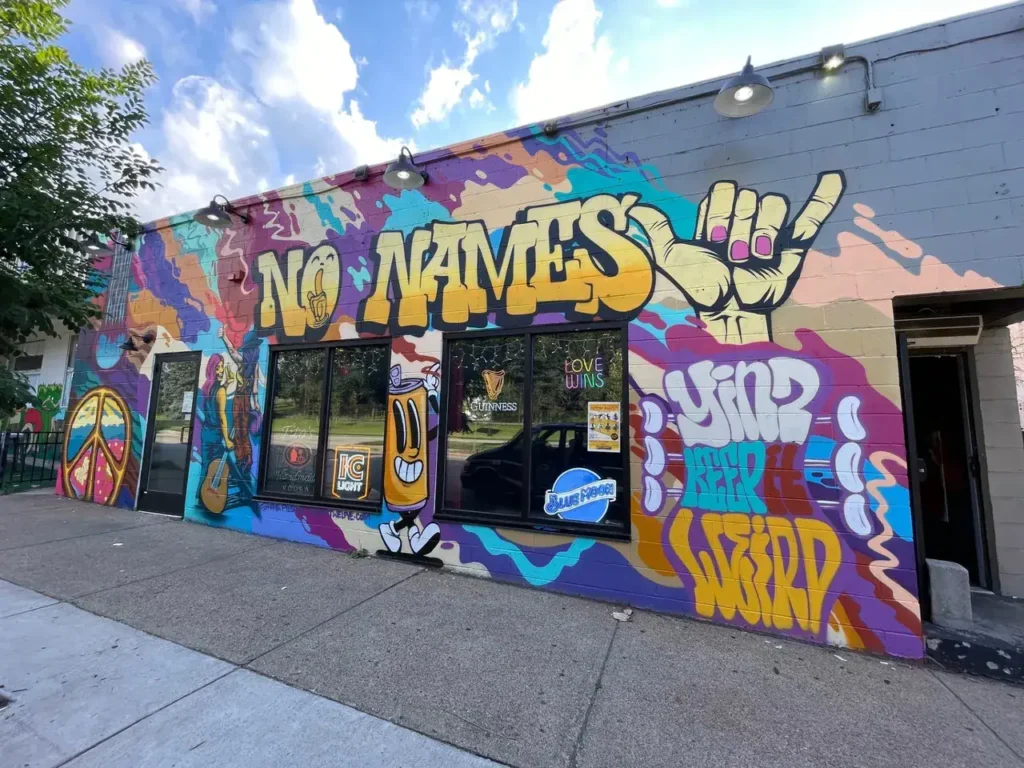
Every roundup of the best experiential campaigns is a highlight reel shot in the first ninety minutes of day one, before the sun moved, before the queue got ugly, before someone discovered the generator was audible inside the activation.
I have staffed streets, venue perimeters, festival gates and conference sidewalks. The difference between a great experiential marketing campaign and an expensive afternoon is almost never the creative idea. It is footfall maths, staffing ratios, dwell time, weather contingency and whether anyone planned how the thing ends.
This page is the operational version. What a street team actually does hour by hour, how many people you need, what time of day to put them out, what breaks, and what we talk clients out of before anyone builds anything.
The buyer problem looks like this. Leadership wants “an experience”. You have a date, a market and a target number of conversations. You do not know if that number is achievable on that street on that day. You do not know how many staff that is. You do not know whether the thing needs permission, power, a footprint, a permit conversation with a venue, or just six people and a plan.
Let us go through it properly.
What the great experiential marketing campaigns actually share
The famous ones look wildly different and are structurally identical underneath.
They happened where the audience already was. Nobody travelled to them. The activation sat on the path between the train and the venue, or on the plaza outside the convention hall at the hour the sessions break. Build an experience somewhere people must be diverted to reach and your attendance becomes a media-buying problem you did not budget for.
They had a short entry cost. The best street-level work asks for under ten seconds of commitment before a person gets something. A long signup, a four-question qualifier or a queue with no visible end kills throughput. Give first, ask second.
They were legible from thirty feet. People decide whether to approach before they are close enough to read anything. Silhouette, colour, staff posture and a single large word do that job. A beautiful six-point brand statement does not.
They were staffed by people who were briefed, not just hired. The single largest quality variable in experiential is whether the person on the pavement can answer the second question. Not the first one, which is on the sign. The second one.
They were pre-seeded. The strongest activations did not rely on passing traffic alone. There was poster and decal work in the surrounding blocks for one to three weeks beforehand, so the thing on the plaza was recognised rather than discovered cold.
That last point is the one most buyers skip, and it is the one that most reliably doubles the result.
Throughput maths, which is the real brief
Before anything else, establish the number.
A single staffer doing a short handoff interaction (sample, card, scan, one sentence) can serve a lot of people in an hour on a busy sidewalk. A staffer doing a real conversation with a product demonstration serves very few. Those are different campaigns with different headcounts and you cannot swap between them on the day.
So we ask four questions:
1. What is the interaction, exactly, from the first word to the handoff? 2. How long does it take, honestly, including the awkward part where someone asks a question off script? 3. How many hours are you live, and how many of those are actually peak? 4. What is the target number?
Divide and you get your headcount. Then add a shift supervisor, because a team of eight without a lead degrades by hour three, and add float for someone being sick.
Most briefs arrive with a target that implies either half the stated headcount is wasted or the team would have to work three times faster than any human does. Fixing that in planning is the highest-value hour of the whole project.
Peak hours are narrower than people think
Footfall is not flat. A district has two or three spikes and a long dead middle, and the spikes move by day of week.
Business districts spike on the morning commute, again at the lunch hour, and again at the evening exit. The middle of the afternoon is very quiet and staffing it is mostly waste.
Transit nodes spike hard and briefly. You can do enormous volume in ninety minutes at a station mouth and almost nothing an hour later.
Event and venue perimeters have one of the best windows in the business: the hour before doors and the fifteen minutes of egress. Egress is intense, concentrated and surprisingly receptive, because people are leaving in a group and talking to each other.
Campus districts run on class change, which is predictable, and on the academic calendar, which is brutal. The same block that delivers your best week in early September delivers nothing in late December.
Weekend retail and nightlife spike late and run long.
The practical consequence: it is almost always better to run three sharp four-hour shifts across three days than one flat twelve-hour day. Same labour, far more contact, far less staff fatigue.
What a day actually looks like
Here is a normal street team deployment.
Call time is typically ninety minutes before first contact. The team meets somewhere with a bathroom and a place to stage materials, because tailgating out of a van on a public street is slow and looks bad.
Briefing is twenty to thirty minutes. Not a script reading. The lead walks the team through the interaction, the second question, the three things they must never say, the pitch for anyone who is clearly not the target, and the exact boundary of where they may stand.
That boundary matters more than anything else in the brief. Standing on private forecourt with the building manager’s agreement is a completely different situation from standing on a public sidewalk, which is itself governed by local rules that vary by municipality and are enforced inconsistently. This is a grey area, not a settled yes or no, and it is why we do the permission work before the creative work. We ask property owners, venue operations teams and site managers. We document what we are told. We do not give legal advice and we will not tell you a placement is permitted.
Kit check: materials counted, tally sheets or scanners tested, water for the team, weather layers, charging.
Deployment is in pairs. Solo staffers underperform badly and they are more exposed. Pairs produce more conversations, cover each other’s breaks and keep energy up.
Rotation every forty-five to sixty minutes. Positions get stale and so do people. A staffer who has stood on the same corner for three hours is visibly worse than one who moved twice.
The lead does not hand out anything. The lead counts, repositions, solves problems, handles anyone who objects, and talks to the property contact. A working lead is a lead who is not leading.
Debrief at the end, on the day, fifteen minutes. What worked, which corner outperformed, what question kept coming up, what we change tomorrow. Written down. This is how day two beats day one by a wide margin.
The formats inside experiential, and when each earns its place
Street teams and handoffs
The workhorse. Pairs on foot, high volume, short interaction. Best for awareness, trial, driving people to a nearby door, and collecting a light signal.
Sampling
Street Teams plus product. Adds logistics: storage, temperature if relevant, refuse management, and a much stronger stopping power. People stop for a thing.
Footprint activations
A built structure, a truck, a tent, a container. Highest production value, highest dependency count. You now need a site agreement, power or a quiet generator, a load-in and load-out window, weather ballast and usually security overnight.
Footprints are worth it when dwell time is the objective: you want people inside for several minutes, doing something, being photographed. They are a poor choice when the objective is raw contact volume, because the footprint reduces your coverage to one point instead of six.
Costumed and character work
Very high stopping power, very short staff endurance. Rotation every twenty to thirty minutes in anything warm, and a dedicated handler who is not in costume.
Projection as an experiential anchor
Light on a building after dark, with a small team working the crowd that gathers. This is an elegant pairing: the projection creates the reason to stop, the team converts it. Constraints are real though. You need full dark, which in midsummer in northern markets means a late start, a light-coloured unglazed surface, a throw distance and somewhere legitimate to put the rig.
LED trucks as a mobile anchor
A truck with a high-brightness LED wall parked near the activation, or running a loop around it. Gives a street team something to point at and extends reach well beyond the block the team is standing on.
What goes wrong, every time, in the same order
Weather. This is the number one failure and most plans treat it as an afterthought. Rain does not reduce your footfall by a bit, it changes pedestrian behaviour entirely: people walk faster, look down, carry umbrellas that physically prevent handoffs, and will not stop. You need a wet plan that is not “we will see”. The wet plan is usually: move to covered ground, move under an awning or a transit entrance with permission, shorten the interaction, or reschedule.
Heat is worse than people expect. Over about ninety degrees in direct sun, staff quality collapses after two hours no matter how good they are. You need shade, water, shorter rotations and genuinely shorter shifts.
Cold kills dwell time. People will take something and keep walking. Design for that rather than fighting it.
Understaffing the peak. Teams get spread evenly across the day instead of loaded into the spike. Fix the shift pattern and the same labour produces far more.
Materials running out at hour two. Count against your throughput maths, not against a gut feel, and stage resupply.
The lead getting absorbed into the line. Covered above. It is the most common silent failure.
No photography plan. Everyone assumes someone is shooting. Assign it. A dedicated shooter for ninety minutes at the peak is worth more than six hours of phone photos.
No end. Load-out is a real operation with a real time cost and it always happens when everyone is tired. Plan it like the install.
What we talk clients out of
A footprint build when the objective is reach. If you want contact volume, six pairs on foot across the district beat one beautiful structure on one plaza. The structure photographs better. The pairs perform better.
A twelve-hour single day. Split it. Three four-hour peaks across three days wins, almost always.
Long data capture at the point of contact. Every field you add to a form on a sidewalk costs you a meaningful share of completions. Take the minimum, send them somewhere else for the rest.
Scripts. Scripted staff sound scripted and people walk past them. Brief on intent, boundaries and the three forbidden statements, then let them talk.
Running it cold. Activating in a district with no prior presence wastes the first day on explaining what this is. Two or three weeks of poster and decal work in the surrounding blocks changes the tone of every conversation, because people arrive already half-aware.
Any date that collides with a bigger event you did not check. If the city is hosting something large, your street team is invisible, your parking is gone and your site contacts are unreachable. This check takes twenty minutes and saves whole programmes.
Promising a specific number of qualified leads. We will build to a throughput target and report honestly against it. We will not guarantee human behaviour on a public street.
Staffing the team, which decides the quality
The largest quality variable in experiential is not the build or the creative. It is whether the person on the pavement can answer the second question.
The first question is on the sign. Anyone can handle it. The second question is the real one, and it arrives constantly: what is this actually for, does it work with what I already have, where is it, when does it open, is this for me. A staffer who stalls there loses the conversation and usually the person.
So the brief has to cover intent rather than wording. We tell teams what the product is for, who it is genuinely not for, the three statements they must never make, and what to do when they do not know, which is to say so and hand over something that answers it. A staffer who admits a gap reads as honest. A staffer who improvises reads as a salesperson and people leave.
Recruitment matters less than people assume, within reason. Energy and comfort talking to strangers are the traits that predict performance, and neither correlates with experience in the category. What does matter is the same team across multiple days. A crew on day two is noticeably better than the same crew on day one, because they have heard the objections already and stopped reading from memory. Rotating in fresh faces every day throws that away and resets you to day one performance repeatedly.
Pay attention to the shift lead specifically. The lead hands out nothing, counts, repositions, solves problems, handles objections and talks to the property contact. A lead absorbed into the line is the most common silent failure on a street activation, and it usually happens around hour two when the queue builds and helping feels obvious.
Measuring it without making numbers up
The honest package:
What we will not do is convert a street tally into an “impressions” figure with a multiplier. That number is decoration.
Markets change the plan more than the creative does
Dense walkable cores give you pedestrians moving slowly enough to engage, continuous footfall rather than spikes, and plenty of surface for pre-seeding. This is the easiest environment for street teams and the hardest for footprints, because space is contested.
Car-first metros break street teams almost entirely outside a few corridors and entertainment districts. If your audience is in a vehicle, an LED truck route and poster work along the corridor will outperform any number of people on a pavement.
Campus districts are the highest-yield environment in the country for a short window, and the window is set by the academic calendar, not by your launch date. Build around it.
Event cities run on the convention calendar. The sidewalk outside a major venue during a large show is some of the densest qualified footfall available anywhere, and everyone else knows it too, so site agreements get taken early.
Climate sets the shape of the year. Northern markets lose outdoor dwell time entirely for several months. Hot southern markets push the usable hours to early morning and evening through high summer.
The pairing that consistently works
If I could change one thing about how experiential gets bought, it would be this: stop treating the activation day as the campaign.
The pattern that performs is a three-week poster and sidewalk decal presence in the blocks around the site, building recognition and pointing at the date, then the activation itself, then a short tail of the same posters updated or left to run out.
Posters do the frequency work that humans cannot do economically. The street team does the conversion work that paper cannot do at all. Decals on the approach do the last fifty feet of wayfinding. Together they turn a one-day event into a presence people remember being around.
If you are already planning a street team, the first thing I would add is not more staff hours. It is the poster campaign in front of it.
Frequently asked questions
How many staff do I actually need?
Work backwards from throughput. Decide the exact interaction, time it honestly including off-script questions, multiply by your target, divide across your genuine peak hours rather than the whole day, then add a shift lead who hands out nothing and a float for absence. Most briefs arrive with a headcount that does not match the stated target in either direction.
What time of day works best?
Narrow spikes, not flat days. Business districts deliver on the morning commute, lunch and the evening exit. Transit nodes deliver hard for about ninety minutes. Venue perimeters deliver in the hour before doors and during egress. Three sharp four-hour shifts across three days usually beat one twelve-hour day on the same labour.
What happens if it rains?
Behaviour changes, not just volume. People walk faster, look down and carry umbrellas that physically block a handoff. The wet plan has to be decided in advance: shift to covered ground with permission, shorten the interaction, or move the date. Treating weather as a day-of judgement call is how activations fail quietly.
Do we need permission to put a team on the sidewalk?
It is a grey area. Rules vary by municipality and enforcement is inconsistent even within a single city, so there is no general answer. We work from private forecourts, venue perimeters and property agreements wherever possible, document what site contacts tell us, and define exact standing boundaries in the brief. We do not give legal advice.
Can you prove it worked?
With honest instruments, yes. Live tally counts per pair and position, scans or redemptions, a dedicated short URL, timestamped photography, written daily debriefs, and branded search and direct lift in the market against a control. What we will not do is multiply a tally by a factor and present the result as impressions.
What is the most common mistake you see?
Running the activation cold. A single day on a street where nobody has seen your name spends its first hours on explanation. Two or three weeks of poster and decal presence in the surrounding blocks beforehand changes every conversation, because people arrive already half-recognising you.
Request a campaign quote
Give us the market, the dates, the audience, the exact interaction you want and the number you are trying to hit. We will come back with a throughput model, a shift pattern, a staffing structure, a weather plan, a permission approach and a view on whether the surrounding blocks need pre-seeding first.
If the honest answer is that your target is not achievable on that street on that day, we will say so before you book anything.
Request a campaign quote.

Ready to Run Your Campaign?
Call us or email us. We’ll tell you exactly what we can do in your market and what it costs.
Related Services
Explore similar advertising solutions offered by American Guerrilla Marketing.
American Guerrilla Marketing — Los Angeles
Street-level campaigns in Los Angeles and nationwide. Wheatpasting, LED trucks, street teams, and more.
(646) 776-2770
Related Articles
-
MKG Experiential Marketing: How It Actually Works
November 25, 2026
-
Cambridge Projection Advertising: Permissions, Corridors
November 25, 2026
-
Cincinnati Projection Advertising: Permits and Corridors
November 25, 2026
-
Projection Advertising in Long Beach, California
November 25, 2026
-
Experiential Marketing Agency Jobs vs the Alternatives
November 25, 2026